

C0287 on 2013-2015 Cadillac XTS: Chassis Communication Fault Guide
Code C0287 on a 2013-2015 Cadillac XTS indicates a communication problem on the chassis network, not a single failed part. It's often caused by a wiring issue or a faulty module like the Multi-Axis sensor. This is a complex issue requiring professional diagnosis.
- C0287 on your Cadillac XTS is a network problem, not a simple sensor failure. It means the brake control module is getting bad information.
- The most common fix is replacing the Multi-Axis (Yaw/Inertia) sensor, especially if codes C0186 and C0196 are also present.
- The second most likely cause is a damaged wire or corroded connector in the chassis communication harness.
- Do not replace expensive modules like the EBCM or power steering rack without a thorough network diagnosis first.
- This is not a beginner-friendly DIY repair. Accurate diagnosis requires professional tools and knowledge of vehicle networks.
What's Unique About the 2013-2015 Cadillac XTS
The Cadillac XTS features multiple complex data networks for its advanced safety and comfort systems. Code C0287 is often tied to the 'Chassis Expansion Bus,' a sub-network connecting various sensors and modules. TSBs for this platform highlight that communication codes, including C0287, are frequently caused by wiring harness problems or a single faulty module (like the Multi-Axis sensor) disrupting the entire network, rather than a failure of a major component like the EBCM itself. GM has issued multiple bulletins related to harness chafing and connector pin issues across various models, underscoring the sensitivity of these communication networks.
Diagnostic Flowchart
Tap your situation to follow the diagnostic path that matches what you're seeing on this vehicle.
Symptoms You May Notice
- Service Stability/Stabilitrak message on the driver information center
- ABS warning light illuminated
- Traction Control warning light illuminated
- "Steering Assist is Reduced Drive with Care" message
- Loss of power steering assist
- Cruise control may be disabled
- Replacing the Electronic Brake Control Module (EBCM) without diagnosing the network. The EBCM is often just the messenger reporting the fault, not the cause.
- Replacing the Power Steering Rack/Motor when a loss of assist is caused by a communication error, not a mechanical failure of the rack itself.
Most Likely Causes
- Faulty Multi-Axis / Yaw Rate Sensor 🔴 High Probability → Shop Suspension Yaw Sensor As highlighted in GM Technical Service Bulletin PIT5187A, a faulty Multi-Axis sensor (which includes the longitudinal accelerometer) is a common cause for a C0287 symptom 71 (invalid data) code, often accompanied by other communication DTCs. The TSB explicitly states this is a known failure point and warns technicians "Do Not Replace EBCM for this concern.& 🎬 Watch: Professional diagnostic steps for a faulty GM yaw rate sensor.quot; The sensor is also referred to as an Inertia Measurement Unit (IMU) or Inertia Sensor Module.
How to confirm: A technician will use a high-end scan tool to check for specific symptom codes (like 71, 4B, or 5A) associated with C0287 and check data streams from the sensor. If other related codes like C0186 (Yaw Rate Sensor Invalid Data) and C0196 (Lateral Accelerometer Invalid Data) are present with symptom 71, it strongly points to this sensor being the single point of failure. The presence of code C056D with symptom 39, stored in the sensor module itself, confirms an internal electronic failure.
Typical fix: Replace the Multi-Axis sensor and perform the necessary configuration and Yaw Rate Sensor Learn/Calibration procedure using a GM-compatible scan tool (TIS2WEB). Failure to properly configure the new sensor can lead to persistent codes or unwanted stability control activation.
Est. part cost: $80-$200 - Wiring Harness Issue (Short/Open/Corrosion) 🟡 Medium Probability The Chassis Expansion Bus wiring runs through various parts of the vehicle, making it susceptible to chafing, corrosion, or damage from vibration and engine movement. TSB PIT5076E specifically directs technicians to diagnose the chassis bus if C0287 and other U-codes are present and won't clear. GM has also released general bulletins about harness damage from contact with brackets, such as below the battery tray or near transmission components on similar platforms.
How to confirm: A technician will perform a visual inspection of the harness and use a multimeter to check for continuity, shorts to ground, and proper resistance (around 60 ohms) at the diagnostic link connector pins 12 and 13. They may also check for proper bus voltages (around 2.3V and 2.6V). A "tug test" on wires at connectors is also recommended to find unseated pins, as internal wire damage can exist without visible damage to the harness loom.
Typical fix: Repair the damaged section of the wiring harness and protect it from future damage using sleeves or re-routing. This is often a labor-intensive process of tracing wires. In some cases, a connector pigtail may need to be replaced.
Est. part cost: $10-$50 - Faulty Electronic Brake Control Module (EBCM) ⚪ Low Probability → Shop ABS Control Module While the EBCM sets the code, it is less commonly the root cause compared to sensor or wiring failures. TSB PIT5187A explicitly warns against replacing the EBCM for this issue when Multi-Axis sensor codes are present.
How to confirm: This is typically diagnosed by exclusion. If the Multi-Axis sensor, all wiring, bus resistance/voltages, and all other modules on the chassis bus test good, the EBCM itself may be faulty.
Typical fix: Replace the Electronic Brake Control Module. This part is often VIN-locked and requires programming by a dealer or specialized shop.
Est. part cost: $400-$900
Rare But Worth Checking
- Faulty Power Steering Control Module (PSCM): The PSCM is a key module on the chassis bus. A failure within the PSCM can disrupt network communication, causing other modules like the EBCM to set codes. A PSCM calibration error is also noted in TSB 20-NA-113 as a cause for persistent DTCs.
Diagnosis Steps
- Connect a professional-grade scan tool capable of reading GM-specific chassis codes and data.
- Check all modules for DTCs. Pay close attention to the symptom bytes (e.g., 71, 4B, 5A) associated with C0287.
- Review the list of non-communicating modules on the Chassis Expansion Bus.
- If C0186, C0196, and C0287 are all present with symptom 71, suspect the Multi-Axis sensor as per TSB PIT5187A. Also check for a C056D in the Multi-Axis sensor module itself.
- If multiple U-codes are present with C0287, follow TSB PIT5076E and diagnose the chassis bus wiring. Check resistance between pins 12 and 13 at the DLC; it should be approximately 60 ohms. A reading of 120 ohms indicates an open in the bus or a missing terminating resistor.
- Check bus voltages on pins 12 (CAN High) and 13 (CAN Low); they should be around 2.6V and 2.3V respectively at rest.
- Inspect the wiring harness for any visible signs of damage, chafing, or corrosion, particularly near the EBCM, PSCM, Multi-Axis sensor, and at known trouble spots like the area below the battery tray and near transmission brackets.
- If a specific module is suspected, a technician may disconnect it from the bus to see if communication with other modules is restored.
- If the sensor is replaced, use TIS2WEB to select "IMU (Inertia Sensor Mod 🎬 Watch: How to perform a yaw rate sensor learn procedure.ule)" to configure the sensor's orientation, then perform the Yaw Rate Sensor Learn/Calibration procedure as specified by the manufacturer.
Parts You'll Likely Need
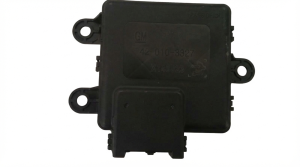
- Multi-Axis Acceleration Sensor
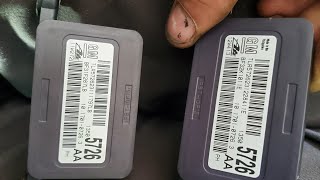
(OEM #13581120, 13505726 (alternate))— This sensor (also called a Yaw Rate Sensor or Inertia Sensor) is a very common point of failure that causes C0287, especially with a 'symptom 71' code, as noted in GM TSBs.
Trusted brands: ACDelco
OEM price range: $150-$250
Aftermarket price range: $80-$150 - Electronic Brake Control Module (EBCM) — This is a less common failure but may be required if all wiring and other modules on the bus test correctly. It is the module that ultimately sets the code.
Trusted brands: ACDelco
OEM price range: $600-$900
Aftermarket price range: Varies (often remanufactured)
Related Codes That Often Appear With This One
- U0077 — This code directly indicates a communication failure on the Chassis Expansion Bus, which is the network C0287 relates to.
- C0186, C0196 — These codes relate to the Yaw Rate Sensor and Lateral Accelerometer, which are housed in the same Multi-Axis sensor assembly as the Longitudinal Accelerometer (C0287). Seeing them together with symptom 71 strongly points to a faulty Multi-Axis sensor.
- U0125, U0126 — These are generic codes for lost communication with the Multi-axis Acceleration Sensor Module and Steering Angle Sensor Module, respectively. They are listed alongside C0287 in TSB #PIT5076E as indicators of a chassis bus problem.
- C056D — This code, set in the Multi-Axis sensor module itself, often with symptom 39 (internal electronic failure), is a direct indicator that the sensor has failed and is the root cause of the C0287 being set by the EBCM.
Technical Service Bulletins (TSBs) & Recalls
- PIT5076E: Addresses multiple communication DTCs, including C0287, and advises diagnosing the chassis bus for faults.
- PIT5187A: Identifies a faulty Multi-Axis sensor as the primary cause for C0287 with symptom 71.
- 20-NA-113: Discusses PSCM calibration errors causing persistent DTCs.
Platform-Specific Known Issues
- TSB #PIT5076E directly addresses C0287 appearing with other communication codes (U0074, U0126, etc.) and advises diagnosing the chassis bus wiring for faults. It also suggests checking the MDI cable to DLC connection as a potential source of diagnostic error.
- TSB #PIT5187A identifies a faulty Multi-Axis sensor as a primary cause for C0287 (symptom 71) along with C0186 and C0196, leading to 'Service Traction' or 'Service Stability' messages.
- TSB #20-NA-113 discusses a PSCM calibration error that can cause DTCs to remain current even after a fault is resolved, leading to persistent steering warning messages. A PSCM reprogram may be needed.
- A forum member on CaddyInfo forums described an intermittent C1287 (a related steering sensor code) that only occurred when the car was stopped with the wheel straight, highlighting the sometimes specific and hard-to-replicate nature of these sensor and communication faults.
Mechanic-Grade Diagnostic Values
- Chassis Expansion Bus Resistance — expected: ~60 Ohms. Failure: A reading of ~120 Ohms indicates an open circuit or one of the two terminating resistors is offline. An open-loop (OL) reading indicates a break in the bus wiring.
- Chassis Expansion Bus Voltage (at rest) — expected: Pin 12 (CAN-H): ~2.6V, Pin 13 (CAN-L): ~2.3V. Failure: Voltages that are stuck high, low, or at 0V indicate a short to power, short to ground, or an open circuit.
- Multi-Axis Sensor Ground Circuit Resistance — expected: Less than 5 Ohms. Failure: Resistance of 5 Ohms or greater indicates a poor ground connection for the sensor.
- Multi-Axis Sensor 12V Reference Circuit — expected: Test lamp illuminates. Failure: If the test lamp does not illuminate, there is an open or short in the power supply circuit from the EBCM.
Hidden / Shadow Codes Worth Checking
- C0287 with Symptom Byte 71: Indicates 'Invalid Data' from the Longitudinal Acceleration Sensor. The EBCM is receiving a signal, but its value is outside the plausible range. This strongly points to a faulty sensor rather than a complete wiring break. (see via GM GDS2 or equivalent professional scan tool that can read manufacturer-specific symptom codes.)
- C0287 with Symptom Byte 5A: Indicates the sensor's data is 'Not Plausible' when compared to other vehicle data (like speed). This can also be set if the sensor's orientation configuration was not performed correctly after replacement. (see via GM GDS2 or equivalent professional scan tool.)
- C0287 with Symptom Byte 4B: Indicates the 'Calibration Not Learned'. This code sets specifically when the sensor has been replaced or disconnected and the mandatory Yaw Rate Sensor Learn procedure has not been completed. (see via GM GDS2 or equivalent professional scan tool.)
- C056D with Symptom Byte 39: An 'Internal Electronic Failure' code stored within the Multi-Axis Sensor (IMU) module itself. If this code is present, it is definitive proof that the sensor has failed internally and must be replaced. (see via GM GDS2 or equivalent professional scan tool, when checking for codes within the Inertia Sensor Module/Multi-Axis Sensor Module.)
Scan Tool Commands That Help
- GDS2 / TIS2WEB: IMU (Inertia Sensor Module) Configuration/Setup — This is the first, mandatory step immediately after installing a new Multi-Axis sensor. It uses the SPS (Service Programming System) to configure the sensor's physical orientation within the vehicle. Skipping this can cause a C0287 5A code.
- GDS2: Yaw Rate Sensor Learn / Vehicle Yaw Sensor Learn — This is the second mandatory step after installing a new Multi-Axis sensor (and after performing the IMU configuration). It calibrates the sensor's zero-point on a level surface. It must be performed to clear a C0287 4B code.
Wiring & Ground Locations
- Multi-Axis Sensor — Under the center console, typically requiring removal of console trim pieces to access.. This is the physical location of the most common part that fails, causing code C0287.
- G305 / G203 — At the base of the left kick panel, near the driver's left foot.. These are primary interior ground points for multiple modules and data lines, including the Body Control Module. A poor connection here can cause various communication faults.
- Harness Chafe Point — The wiring harness area below the battery tray and near the transmission cooler line brackets.. A GM bulletin for similar platforms identifies this area as prone to harness chafing, which can cause shorts/opens on the Chassis bus, leading to U0077 and C0287 codes.
Real Owner Repair Stories
- ScannerDanner Forum (2013 Cadillac XTS with 25,000 miles) — Random misfires and a wide array of random codes from multiple modules, including communication codes.
❌ Tried (didn't work) Replacing the battery.
✅ What actually fixed it The final fix was not posted, but professional advice given was to perform a detailed visual inspection of wiring harnesses, specifically in areas with evidence of rodent activity (like above the transmission), and to check all major vehicle grounds before condemning any modules.
"I Checked Everything" — The Actual Cause
- A GM service document notes that harness chafing can damage internal wires without leaving any visible marks on the outer harness conduit. A technician may perform a visual inspection and find nothing, but the fault persists. The actual cause is only found by opening the harness loom in suspected areas (like below the battery tray) or by performing a 'tug test' on individual wires at the connector.
OEM Part Supersession History
13581120, 13505726, 13575610, 13575611, 12784983→13514501— Standard part evolution for improved reliability or manufacturing changes.
Heads up: The newest part number (13514501) is the correct, backward-compatible service replacement for all previous numbers listed for this vehicle application.
Helpful Videos

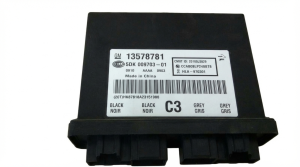
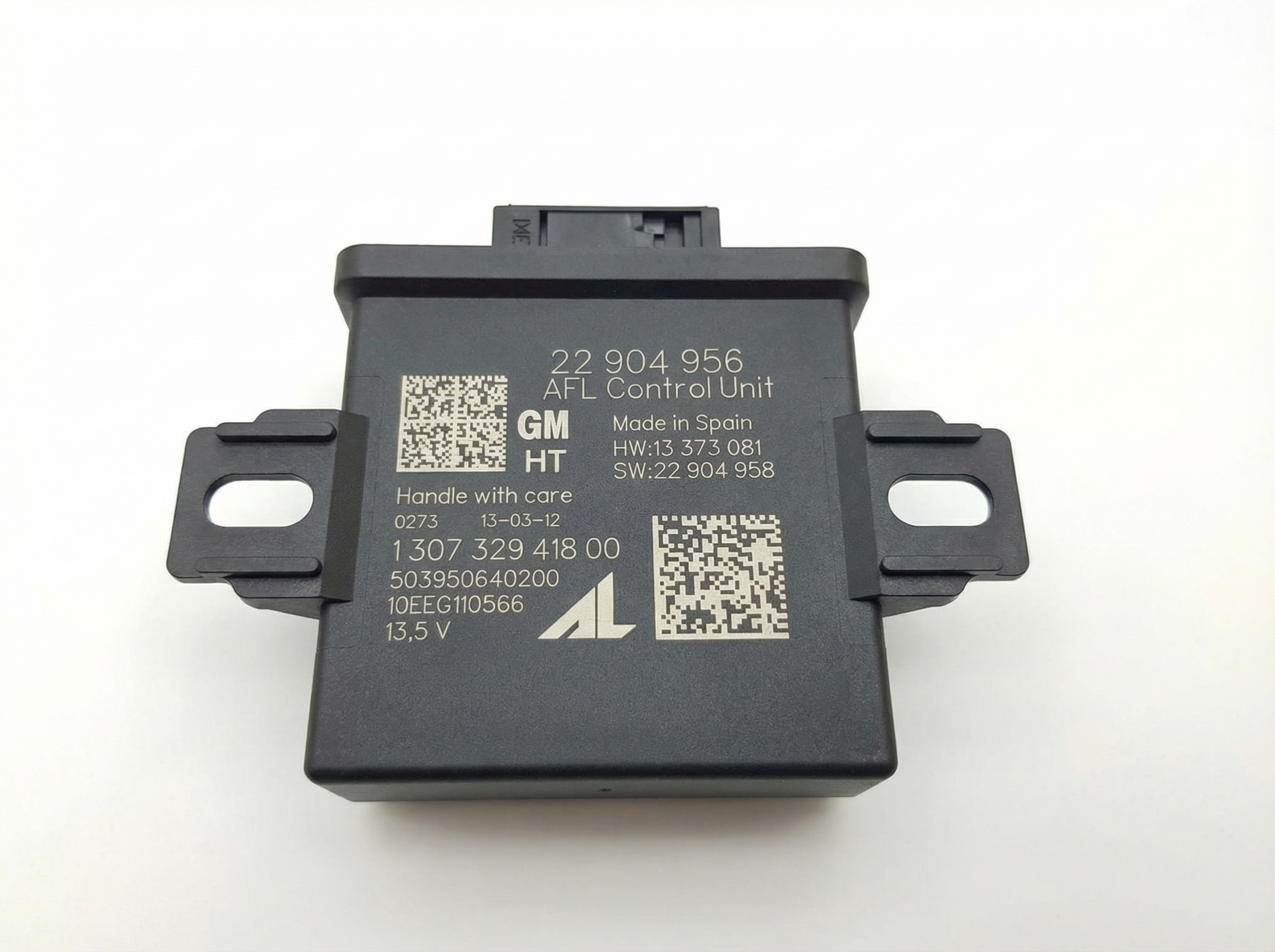
We Have This Part in Stock

The information in this article is provided for general reference and educational purposes only. Vehicle specifications, procedures, and part compatibility can vary by production date, trim level, and region. Always consult your vehicle's factory service manual and verify part numbers before purchasing or performing repairs. Safety-critical components such as airbags, seat belts, and braking systems should be installed by a qualified professional.
- Cadillac XTS:
- 🧭 Diagnostic Flowchart
- 🎬 Helpful Videos
- 🛍️ Shop This Part
- What's Unique About the 2013-2015 Cadillac XTS
- Symptoms You May Notice
- Most Likely Causes
- Rare But Worth Checking
- Diagnosis Steps
- Parts You'll Likely Need
- Related Codes That Often Appear With This One
- Technical Service Bulletins (TSBs) & Recalls
- Platform-Specific Known Issues
- Mechanic-Grade Diagnostic Values
- Hidden / Shadow Codes Worth Checking
- Scan Tool Commands That Help
- Wiring & Ground Locations
- Real Owner Repair Stories
- "I Checked Everything" — The Actual Cause
- OEM Part Supersession History
- 🎟️ Get 5% Off