

OBD-II Code C0321: Transfer Case Lock Circuit Malfunction
What C0321 means, why it triggers, and how to fix it
- Code C0321 disables your 4WD system and locks the vehicle in 2WD due to an electrical fault in the transfer case lock circuit.
- Inspect the wiring harness and under-vehicle connectors (like GM's X109) for corrosion or chafing before replacing any expensive parts.
- Test the lock solenoid resistance at the shift motor; a reading outside the 10-42 ohm range confirms the motor requires replacement.
- Replacing the shift motor or TCCM requires a bi-directional scan tool to perform a mandatory 'Transfer Case Motor Relearn' procedure.
What Does C0321 Mean?
Code C0321 means the Transfer Case Control Module (TCCM) detected an electrical fault in the transfer case lock circuit. This circuit engages a lock inside the transfer case motor to hold it in the selected gear (like 2WD or 4WD). To prevent mechanical damage, the TCCM disables the 4WD system entirely.
Technical definition: The official SAE definition is 'Transfer Case Lock Circuit Malfunction.' The TCCM detected an open, short to ground, or short to battery in the transfer case actuator's lock solenoid circuit. The TCCM monitors voltage on this circuit during commanded shifts; if the return voltage falls outside expected parameters for at least one second, it logs the code.
Can I Drive With C0321?
Yes, But With Caution. Yes, you can drive, but the Transfer Case Control Module (TCCM) disables the 4WD system to prevent damage, locking the vehicle in two-wheel drive. Ignoring the fault risks internal transfer case wear over time, but it will not leave you stranded. The primary danger is lacking 4WD traction in snow or off-road conditions.
Common Causes
- Damaged or Corroded Wiring/Connectors (Very Common) — The wiring harness leading to the transfer case is exposed to road salt and debris. Wires break, rub through on the frame, or connector pins corrode, causing an open or short circuit. Missing weather seals on connectors are the primary cause of water intrusion.
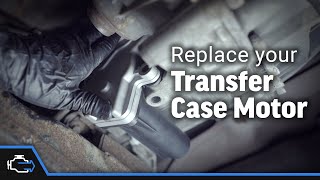
- Failed Transfer Case Shift Motor (Encoder Motor) (Common) — The electric motor that shifts the transfer case contains the lock solenoid. This solenoid fails internally, creating an electrical fault. If the internal solenoid fails, you must replace the entire motor assembly. 🎬 See this step-by-step transfer case motor replacement walkthrough
- Blown Fuse (Common) — A fuse protecting the transfer case system (often labeled TREC or 4WD) blows due to a power surge or a short circuit elsewhere in the system. This is a simple, frequently overlooked cause.
- Poor Ground Connection (Common) — A corroded or loose ground wire for the TCCM or transfer case assembly causes voltage drops. The module interprets this instability as a circuit malfunction.
- Faulty Transfer Case Control Module (TCCM) (Less Common) — The control module fails internally, failing to send the correct voltage to the lock circuit or misinterpreting the return signal. This usually happens after wiring and the shift motor are ruled out.
- Faulty 4WD Selector Switch (Rare) — A faulty dashboard selector switch sends erratic signals to the TCCM, contributing to electrical faults after other components are replaced.
- Low Battery Voltage (Rare) — The 4WD system requires 9-18 volts to operate correctly. A weak battery causes control modules to set seemingly unrelated electrical fault codes.
- Internal Transfer Case Mechanical Failure (Very Rare) — Internal mechanical binding within the transfer case prevents the lock mechanism from engaging, accompanied by significant mechanical noise.
Symptoms
- Service 4WD Light is On — The 'Service 4WD' or similar warning message illuminates permanently on the dashboard.
- Cannot Shift Into or Out of 4WD — The system is disabled. Pressing the 4WD selection buttons (4HI, 4LO, Auto) has no effect.
- 4WD Selector Switch Lights are Off or Flashing — The indicator lights on the 4WD switch turn off completely or flash to indicate a system fault.
- No Clicking Noise from Transfer Case — A distinct 'click' should be audible from the encoder motor when the lock is commanded on/off. Its absence indicates a solenoid failure.
- 4WD Engages Erratically or Binds — Before complete failure, the 4WD system engages on its own or binds during turns while in 2WD mode.
Diagnostic Flowchart
Tap your situation to follow the diagnostic path that matches what you're seeing on this code.
Common Fixes & Costs
- Repair Damaged Wiring or Connector — Parts: $10-$75, Labor: $150-$300, ~1.5 hr book time (Intermediate)
- Replace Transfer Case Shift Motor (Encoder Motor) — Parts: $150-$500, Labor: $150-$225, ~1.2 hr book time (DIY)
- Replace Blown Fuse — Parts: $1-$10, Labor: $0-$50, ~0.2 hr book time (DIY)
- Clean or Repair Ground Connection — Parts: $1-$15, Labor: $75-$150, ~0.8 hr book time (DIY)
- Replace Transfer Case Control Module (TCCM) — Parts: $200-$600, Labor: $150-$300, ~2 hr book time (Professional)
Used vs. New Parts: Buying Guide
When a used part is worth it: A used Transfer Case Shift Motor from a low-mileage, non-corroded donor vehicle is a cost-effective option for older trucks. Buying a used TCCM is not recommended due to the high risk of it being faulty and the need for professional reprogramming.
Donor-vehicle mileage cap: roughly under 70000 miles for the part to have meaningful remaining life.
Donor quality checklist:
- Verify the donor vehicle part number matches exactly.
- Inspect the electrical connector on the used part for any signs of corrosion or bent pins.
- Avoid parts from vehicles in the 'Salt Belt' as corrosion is the primary failure mode.
- Buy from a salvage yard offering at least a 30-day warranty.
Decision logic:
- If The failed part is the TCCM → Buy new (OEM or reputable aftermarket). A used module requires expensive reprogramming and has an unknown history.
- If The failed part is the Shift Motor and the vehicle is newer or has low miles → Buy a new OEM or high-quality aftermarket part for maximum longevity.
- If The failed part is the Shift Motor, the vehicle is older (>150k miles), and budget is the main concern → A used motor from a low-mileage donor is a reasonable choice, but its remaining lifespan is unknown.
Warranty tradeoff: Used parts typically have a 30-day exchange-only warranty. New aftermarket parts offer a 1-year to limited lifetime warranty. New OEM parts carry a 1-2 year warranty.
Worst-case if a used part fails: $150 - $300 if a used part fails shortly after installation, representing the cost of repeat labor.
What Happens If You Wait — Timeline
- Immediate: The TCCM detects an electrical fault in the lock solenoid circuit. The 'Service 4WD' light illuminates, and all 4WD shifting is disabled. The vehicle locks in 2WD. (MPG impact: 0%% · Added cost: $0)
- 0-6 months: No additional mechanical damage occurs. The primary consequence is the complete loss of 4WD functionality, posing a safety risk in adverse weather. (MPG impact: 0%% · Added cost: $150 - $300 (Cost of towing if stuck in snow/mud))
- 6-18 months: If the root cause is a damaged wiring harness, continued exposure to moisture causes corrosion to wick up the wire, damaging a larger section of the harness. (MPG impact: 0%% · Added cost: $100 - $250 (Increased labor for a complex wiring repair))
- 18+ months: An intermittent short to voltage or ground places repeated stress on the driver circuit inside the TCCM, eventually causing the module itself to fail. (MPG impact: 0%% · Added cost: $300 - $600 (Cost of a replacement TCCM))
Cost of Not Fixing It
- Immediate: Loss of all 4WD and AWD capability. Vehicle is locked in 2WD. 'Service 4WD' light is constantly illuminated. (Added cost: 0)
- 1-6 months: Inability to use 4WD in snow, mud, or off-road conditions leads to getting stuck. (Added cost: $150 - $300 (Towing if stuck))
- 6+ months: Ignoring an intermittent short leads to a failure of the TCCM over a long period. Continued exposure of a damaged harness causes other wires to fail. (Added cost: $300 - $600 (Cost of a new TCCM if it fails))
Diagnosis Steps
- Read the Code and Check for Suffixes
Use an advanced OBD-II scanner to confirm C0321. On GM vehicles, look for a two-digit suffix (e.g., C0321-01 for short to battery, C0321-04 for open circuit) to pinpoint the fault type.
Tools: Advanced OBD-II Scan Tool (Beginner) - Inspect Fuses
Check the fuse boxes for fuses related to the four-wheel drive system (labeled TREC, 4WD, or TCCM). Replace any blown fuses.
Tools: Fuse Puller, Test Light (Beginner) - Visually Inspect Wiring, Connectors, and Grounds
Trace the wiring harness from the TCCM to the transfer case shift motor. Look for broken wires, melted insulation, or green corrosion on connector pins. Inspect main ground wires for tightness.
Tools: Flashlight, Safety Glasses (Intermediate) - [PRO TIP] Command the Solenoid with a Scan Tool
Navigate to the TCCM special functions on a bi-directional scanner. Command the transfer case lock ON and OFF. An audible 'click' means the solenoid and power circuits work. No click means you must proceed to electrical testing.
Tools: Advanced Bi-Directional Scan Tool (Advanced) - Test for Power at the Shift Motor Connector
Disconnect the shift motor connector. With the ignition on, use a multimeter to check for battery voltage (12.0-12.6V) at the power feed wire. Voltage below 11.5V indicates high resistance in the power feed circuit.
Tools: Multimeter, Vehicle-Specific Wiring Diagram (Intermediate) - Test the Lock Solenoid Resistance
Switch your multimeter to Ohms. Measure resistance between the two lock solenoid pins on the motor itself. Expected resistance is 10-42 ohms. Infinite (OL) or near-zero readings mean the motor assembly is bad.
Tools: Multimeter (Advanced) - [PRO TIP] Check for TCCM Diagnostic Voltage
With the motor unplugged and ignition ON, probe the lock solenoid control circuit wire in the harness connector. You should read 4.0-5.0 volts. Higher means a short to voltage; lower means a short to ground or open wire.
Tools: Multimeter, Vehicle-Specific Wiring Diagram (Advanced) - [PRO TIP] Test Solenoid for Shorts to Case
Test resistance between each lock solenoid pin and the metal case of the encoder motor. The reading must be infinite (OL). A low reading indicates an internal short to ground, requiring motor replacement.
Tools: Multimeter (Advanced) - Check the Control Circuit for Shorts/Opens
If the motor tests good, disconnect the TCCM connector. Test the control wire between the TCCM and shift motor for continuity (under 1.0 ohm) and for shorts to ground or power.
Tools: Multimeter, Vehicle-Specific Wiring Diagram (Advanced)
When This Code Triggers (Freeze-Frame Conditions)
- Ignition Status: ON (Key On, Engine Running)
- Battery Voltage: 11.5-14.5V (Normal operating voltage, no low battery condition)
- 4WD Command: Active (Driver presses 4WD selector button or TCCM commands a shift in 'Auto' mode)
- Vehicle Speed: 0-70 mph (Code sets at any speed when a shift is commanded)
Related Codes
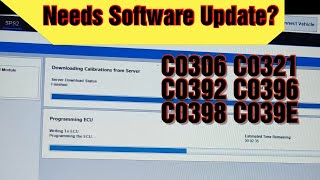
- C0306 — C0306 indicates a fault in the main motor drive wires, while C0321 is specific to the lock solenoid circuit. Both codes together strongly suggest a faulty encoder motor assembly or a shared connector problem.
- C0327 — C0327 points to the position sensor circuit. Since the sensor and lock solenoid are in the same housing, seeing both C0327 and C0321 often condemns the entire shift motor assembly.
- C0387 — C0387 is a performance code meaning the TCCM cannot complete a shift. C0321 directly causes C0387 because if the lock solenoid fails, the lock cannot release. Fixing C0321 resolves C0387.
- C0374 — C0374 indicates a general system failure where driveshaft speeds do not match. C0321 leads to C0374 by preventing proper 4WD engagement. Fixing C0321 is the first step.
Climate & Environmental Factors
- Road Salt and Humidity: In regions with winter snow, de-icing agents spray into wiring harnesses under the vehicle, accelerating corrosion and causing opens or shorts in the lock solenoid circuit.
- Water Submersion: Driving through high water forces water past weather seals on the transfer case motor connector, leading to immediate or delayed electrical failure.
How to Talk to a Mechanic About This Code
Say this: "I have a 'Service 4WD' light and a C0321 code. I'd like to book a diagnostic appointment. Please start by inspecting the wiring harness and connectors between the TCCM and the transfer case motor for any corrosion or damage, and check the grounds, before recommending any part replacements."
This signals that you know the most common cause of C0321 is a simple wiring or connection issue. It directs the technician to perform low-cost diagnostic steps first, preventing them from immediately quoting a new shift motor or control module.
Avoid saying:
- 'My 4-wheel drive is broken, can you fix it?'
- 'The 'Service 4WD' light is on, just replace whatever is needed.'
- 'I think I need a new transfer case motor.'
Questions to ask before authorizing the repair:
- Did you find a specific open, short, or high resistance in the wiring? Where was it?
- If you are recommending a shift motor, what was the Ohm reading on the lock solenoid pins?
- If you are recommending a TCCM, have you proven the wiring and shift motor are good?
- Does the quoted price include the mandatory 'relearn' procedure after the part is installed?
Where to Take It: Dealer vs Independent vs Chain
- Dealer:
Best for: Vehicles under warranty., Complex cases where a TCCM replacement and manufacturer-specific programming are confirmed necessary.
Downsides: Highest labor rates., Defaults to replacing expensive modules or the entire shift motor assembly rather than spending time on a nuanced wiring repair. (Typical cost: +50% vs. baseline) - Independent Shop:
Best fit. An experienced independent technician is well-equipped to trace the wiring and test the components, which is the correct diagnostic path for C0321. They are more likely to perform a cost-effective wire repair than a dealer.
Best for: Out-of-warranty vehicles., Diagnosing and repairing common causes like wiring, connector, or ground issues., Shift motor replacement.
Downsides: Quality varies; ensure the shop has strong electrical diagnostic skills and a modern, bi-directional scan tool., May lack the latest software for TCCM programming on very new models. (Typical cost: +0% vs. baseline) - Chain Shop:
Use with caution. Acceptable for a straightforward shift motor replacement if you have high confidence that is the problem. AVOID for initial diagnosis, as they are more likely to replace parts unnecessarily.
Best for: Simple, clear-cut part replacements if the diagnosis is already known.
Downsides: Technician skill in electrical diagnostics is inconsistent., Lacks the advanced bi-directional scan tools needed for proper diagnosis and post-repair relearn procedures. (Typical cost: -10% vs. baseline)
When to Walk Away From the Repair
If the total estimated repair cost for the C0321 fault exceeds 50% of your vehicle's current private-party value, seriously consider selling the vehicle as-is or trading it in.
- Car worth $8000, fix is $800: Fix it. This repair cost is well within a reasonable range to restore full functionality and value.
- Car worth $5000, fix is $2600: Walk away. The repair cost is over half the vehicle's value. The money is better put towards a replacement vehicle.
- Car worth $15000, fix is $750: Fix it. This is a relatively minor cost compared to the vehicle's overall value.
What Scan Tool You Need for This Code
Minimum: A scanner that reads Chassis ('C') codes. A basic engine-only code reader will NOT see code C0321.
A cheap, engine-only code reader cannot communicate with the Transfer Case Control Module (TCCM) to retrieve C0321. You need a tool that accesses chassis/drivetrain modules. For GM vehicles, seeing the two-digit suffix code (e.g., -04 for open circuit) is a massive diagnostic advantage.
Budget: BlueDriver Pro (~$100) — Reads and clears chassis codes like C0321 from the TCCM on supported vehicles. It provides freeze-frame data but lacks the bi-directional control needed to command the solenoid or perform the relearn procedure.
Mid-range: Foxwell NT510 Elite / NT710 (~$180) — The best value for DIYers. It has bi-directional control to command the lock solenoid on and off, a critical diagnostic step. It also performs the 'Transfer Case Motor Relearn' procedure after a part replacement.
Professional: Autel MaxiCOM MK808BT / Launch CRP919XBT (~$450-800) — Provides full, professional-level functionality. It offers comprehensive bi-directional control, advanced ECU coding, and performs any required relearn or programming procedure for the TCCM or shift motor.
How to Clear the Code After You Fix It
- Use an OBD-II scan tool to clear the C-code from the TCCM.
- Perform the 'Transfer Case Motor Relearn' procedure using a bi-directional scan tool.
- With the vehicle stationary and in Neutral, cycle through all 4WD modes (2HI, 4HI, 4LO) to confirm proper engagement.
Drive cycle (~10 minutes): A specific mileage-based drive cycle is not required. The system self-tests upon the next commanded shift. A short 10-minute test drive involving stop-and-go moments and cycling through 4WD modes validates the repair.
Readiness monitors affected: None
Watch out for:
- Disconnecting the battery does not clear the code from the TCCM's memory.
- Failure to perform the scan tool 'relearn' procedure after replacing a shift motor results in the system not working.
- If the code returns immediately, the root cause (e.g., a wiring short) was not fixed.
Will This Fail Emissions / State Inspection?
No — by itself this code doesn't fail OBD inspection (but it can keep readiness monitors from setting, which causes a separate fail).
- General Note: Code C0321 is a chassis code ('C'), not a powertrain code ('P'). State emissions inspections look for P-codes that turn on the Check Engine Light. A 'Service 4WD' light does not cause a failure of the OBD-II emissions test.
- California: A C0321 code will not fail the California Smog Check, as the test focuses on emissions-related faults.
- New York: New York's safety inspection checks for illuminated warning lights. While focused on ABS and Airbag lights, an inspector has discretion to fail a vehicle for any lit malfunction indicator, though uncommon for a 4WD light.
- Texas: The Texas safety inspection checks required systems. An illuminated 'Service 4WD' light is not listed as a specific failure criterion and generally does not cause a failure.
Most Commonly Affected Vehicles
- Chevrolet Silverado 1500/2500, Trailblazer (2003-2013) — Extremely common due to wiring harness routing under the driver's side, causing chafing and corrosion.
- GMC Sierra, Yukon, Envoy (2003-2013) — Shares the same platform and 4WD components as Chevrolet trucks. GM service bulletin PIP5080A highlights poor terminal tension at connectors X109 and X3.
- Chevrolet Tahoe, Suburban, Avalanche (2003-2013) — These SUVs use the same TCCM, shift motor, and wiring designs as the Silverado, making them equally prone to code C0321.
- Cadillac Escalade (2003-2013) — Uses the same underlying 4WD hardware as the Tahoe/Yukon and is susceptible to identical wiring and connector issues.
- Ford F-150 (2004-2018) — On 2004-2008 models, C0321 relates to a corroded main transmission harness connector causing multiple electrical faults.
- Dodge Ram 1500/2500 (2006-2016) — Issues frequently relate to a faulty TCCM or the shift motor itself. Vacuum line failures on the Center Axle Disconnect (CAD) system also cause related 4WD issues.
- Nissan Titan, Frontier, Armada (2004-2015) — C0321 usually points to a failure of the transfer case actuator assembly or a problem in the connecting wiring harness.
- Jeep Grand Cherokee, Wrangler (2005-2021) — A corroded connector leading to the transfer case lock actuator is a common cause. Loose fuses in the main fuse box are also a frequent culprit.
Manufacturer-Specific Notes
- General Motors (Chevrolet, GMC, Cadillac): GM uses two-digit suffix codes to specify the fault type (e.g., '01' for Short to Battery, '04' for Open Circuit). TSB #PIP5080A points to poor terminal tension at connectors X109 and X3.
- Ford: On 2004-2008 F-150s, a single large, round transmission harness connector on the passenger side develops poor connections, triggering multiple 4WD faults.
- Dodge / Ram: The 'Service 4WD' light triggers from a failure in the vacuum-operated Center Axle Disconnect (CAD) system. A simple vacuum leak disables the whole system.
- Jeep: On modern Jeeps, fuses in the under-hood fuse box unseat from vibration. Reseating all large 'J-case' fuses fixes intermittent 'Service 4WD' messages.
Real Owner Stories
2005 Chevrolet Silverado with 'Service 4WD' light
Owner experienced the 'Service 4WD' light after the truck was binding in turns, indicating it was stuck in 4WD. The 4WD selector switch lights went out, and code C0321 was present.
What they tried:
- Replaced the 4WD selector switch, with no change.
- Cleaned ground connections at the driver's side cab.
- Tested wiring for voltage, finding issues with the signal wire to the encoder motor.
- Swapped the TCCM with a used one, which also did not resolve the issue initially.
Outcome: The actual problem was a broken wire in the harness running over the top of the engine. The owner found the pinched, corroded wire, repaired it with a butt connector, and the 4WD system began working correctly.
Lesson: Do not immediately replace expensive components like the TCCM or encoder motor. A thorough inspection of the wiring harness, especially in known problem areas over the transmission or near frame brackets, reveals the true cause 80% of the time.
2003 GMC Yukon XL with C0321 after replacing parts
A plow truck had a new encoder motor, selector switch, and front axle actuator, but the C0321 code kept returning, disabling the 4WD. The system only allowed mode changes immediately at startup.
What they tried:
- A shop previously repaired a section of the orange power wire from the TREC fuse to the encoder motor, which worked for a week.
- The owner replaced the encoder motor, push-button switch, and front axle actuator.
- The owner considered replacing the TCCM next.
Outcome: The problem persisted due to an intermittent wiring issue. The initial wire repair was a clue that the harness was compromised. The fault returned because another section of the same circuit failed under the harsh conditions of plowing.
Lesson: When a fault returns after a wiring repair, suspect the rest of the same circuit. Instead of replacing more parts, perform a full continuity and load test of the entire wire from the TCCM to the encoder motor, paying close attention to the X109 connector.
2002 Trailblazer with C0321 and a failed aftermarket part
Six months after replacing the original transfer case motor with a new Dorman aftermarket unit, the 'Service 4WD' light returned with code C0321. The selector switch lights blinked on startup and then went out.
What they tried:
- Checked and reseated the #8 fuse in the fuse box.
- Suspected the 6-month-old aftermarket encoder motor failed prematurely.
Outcome: The internal lock solenoid in the aftermarket motor failed, recreating the original C0321 fault. The owner had to replace the motor assembly again.
Lesson: While aftermarket parts save money upfront, some have lower reliability. For critical components like the encoder motor, choosing a high-quality OEM brand prevents repeat repairs.
How to Prevent This Code From Triggering
- Apply Dielectric Grease to Connectors (Whenever connectors are disconnected) — Applying non-conductive dielectric grease to the rubber seals of the transfer case motor connector prevents moisture and road salt from reaching the metal pins, stopping corrosion.
- Inspect and Secure Wiring Harnesses (Every oil change) — Visually inspecting the harness ensures it is not rubbing against frame brackets or exhaust components, preventing the chafing that causes short or open circuits.
- Wash the Vehicle's Undercarriage (Monthly during winter) — Power washing the underbody removes corrosive road salt and de-icing brines before they penetrate weather seals on connectors and ground points.
- Apply an Undercoating or Rust Inhibitor Spray (Annually before winter) — Wax-based or oil-based undercoatings create a protective barrier on wiring harnesses and ground points, displacing moisture and preventing salt contact.
Frequently Asked Questions
Can I fix C0321 myself?
You can easily fix blown fuses, bad grounds, or visibly damaged wires yourself. Replacing the transfer case shift motor is manageable for experienced DIYers with a bi-directional scanner. However, replacing the control module requires professional dealer-level programming.
Will clearing the code fix the problem?
No. C0321 is a hard code indicating an active electrical fault. The code returns immediately upon the next shift attempt, and the 'Service 4WD' light remains illuminated until you repair the underlying circuit.
What is a transfer case lock solenoid?
It is a small electromagnet inside the shift motor assembly that acts as a brake to hold the transfer case firmly in the selected gear. The TCCM energizes this solenoid to release the brake just before commanding a shift.
What is the most common misdiagnosis for C0321?
The most common mistake is immediately replacing the transfer case shift motor or TCCM without testing the wiring. Owners frequently waste hundreds of dollars on parts when the actual culprit is a broken wire or a corroded connector pin.
Why did my 4WD stop working in the snow?
The system likely had a dormant electrical issue that went unnoticed while driving in 2WD. When you attempted to engage 4WD in the snow, the TCCM ran a self-test, detected the fault, and disabled the system to prevent damage.
Does the new shift motor need to be programmed?
Yes. After replacing the transfer case shift motor or the TCCM, you must perform a 'relearn' procedure using a high-end bi-directional scan tool. This teaches the TCCM the new motor's position range, and skipping it leaves the 4WD inoperable.
What does the 'Service 4WD' light mean if there are no codes?
Basic engine-only code readers cannot access the chassis modules where 4WD codes are stored. If the light is on, a code like C0321 is definitely logged in the TCCM. You must use an advanced OBD-II scanner capable of reading 'C' (Chassis) codes to retrieve it.
Key Takeaways
- Code C0321 disables your 4WD system and locks the vehicle in 2WD due to an electrical fault in the transfer case lock circuit.
- Inspect the wiring harness and under-vehicle connectors (like GM's X109) for corrosion or chafing before replacing any expensive parts.
- Test the lock solenoid resistance at the shift motor; a reading outside the 10-42 ohm range confirms the motor requires replacement.
- Replacing the shift motor or TCCM requires a bi-directional scan tool to perform a mandatory 'Transfer Case Motor Relearn' procedure.
Helpful Videos
Shop the Parts Behind C0321
Below are the parts most often responsible for code C0321, ranked by how frequently each one is the actual culprit (per the diagnosis above). Tap any to see what we have for your vehicle.



The information in this article is provided for general reference and educational purposes only. Vehicle specifications, procedures, and part compatibility can vary by production date, trim level, and region. Always consult your vehicle's factory service manual and verify part numbers before purchasing or performing repairs. Safety-critical components such as airbags, seat belts, and braking systems should be installed by a qualified professional.
- 🧭 Diagnostic Flowchart
- 🎬 Helpful Videos
- 🛍️ Shop This Part
- What Does C0321 Mean?
- Can I Drive With C0321?
- Common Causes
- Symptoms
- Common Fixes & Costs
- Used vs. New Parts: Buying Guide
- What Happens If You Wait — Timeline
- Cost of Not Fixing It
- Diagnosis Steps
- When This Code Triggers (Freeze-Frame Conditions)
- Related Codes
- Climate & Environmental Factors
- How to Talk to a Mechanic About This Code
- Where to Take It: Dealer vs Independent vs Chain
- When to Walk Away From the Repair
- What Scan Tool You Need for This Code
- How to Clear the Code After You Fix It
- Will This Fail Emissions / State Inspection?
- Most Commonly Affected Vehicles
- Manufacturer-Specific Notes
- Real Owner Stories
- 2005 Chevrolet Silverado with 'Service 4WD' light
- 2003 GMC Yukon XL with C0321 after replacing parts
- 2002 Trailblazer with C0321 and a failed aftermarket part
- How to Prevent This Code From Triggering
- Frequently Asked Questions
- Can I fix C0321 myself?
- Will clearing the code fix the problem?
- What is a transfer case lock solenoid?
- What is the most common misdiagnosis for C0321?
- Why did my 4WD stop working in the snow?
- Does the new shift motor need to be programmed?
- What does the 'Service 4WD' light mean if there are no codes?
- Key Takeaways
- 🎟️ Get 5% Off