

OBD-II Code C0371: Ultimate Guide to a Manufacturer-Specific Fault
What C0371 means for Toyota, GM, and Nissan, why it triggers, and how to fix it with pro-level detail
- C0371 has three distinct manufacturer meanings: a failed Yaw Rate Sensor on Toyota/Subaru, a broken Transfer Case Encoder Motor on GM, or a faulty Headlamp Switch on Nissan.
- Match your symptom to the fix: VSC/TRAC lights indicate a Toyota stability issue, a 'Service 4WD' message points to GM drivetrain binding, and erratic headlights signal a Nissan switch failure.
- Stop driving GM trucks stuck in 4WD on dry pavement immediately to prevent catastrophic transfer case failure costing upwards of $2,500.
- Always diagnose accompanying 'U' communication codes first, as a simple $0 wiring fix often resolves the C0371 before replacing a $600 sensor.
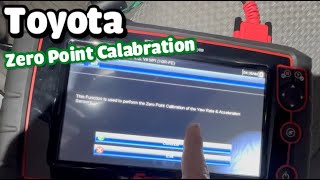
- Toyota and Subaru owners must perform a Zero Point Calibration after replacing the yaw rate sensor or getting a wheel alignment, otherwise the VSC warning lights remain permanently illuminated.
What Does C0371 Mean?
C0371 is a manufacturer-specific chassis code with three distinct meanings depending on your vehicle's brand. For Toyota, Lexus, and Subaru, it indicates a fault within the Yaw Rate and Acceleration Sensor system, which controls Vehicle Stability Control (VSC). For General Motors (GM) brands like Chevrolet and GMC, this code points to a four-wheel-drive system failure, most commonly the Transfer Case Encoder Motor. For Nissan vehicles, C0371 signals a fault with the headlamp switch's input to the Body Control Module (BCM).
Technical definition: The Society of Automotive Engineers (SAE) does not provide a universal definition for C0371. For Toyota/Lexus, it is defined as 'Yaw Rate Sensor (Test Mode DTC),' indicating a fault detected during a diagnostic self-check. For General Motors, it indicates a fault in the transfer case encoder motor circuit, often accompanied by codes C0327 or C0387. For Nissan, it is defined as 'Headlamp Switch Input Signal Mismatch,' stored in the Body Control Module (BCM).
Can I Drive With C0371?
Yes, But With Caution. Driving is mechanically possible but highly unsafe because critical safety systems are disabled. For Toyota, Lexus, and Subaru, the Vehicle Stability Control (VSC) is offline, significantly increasing rollover risk in an emergency maneuver. For GM trucks stuck in 4WD, driving on dry pavement causes severe drivetrain binding, leading to catastrophic failure of U-joints, the differential, or the transfer case—a repair costing $2,500 to $5,000. For Nissan, the fault causes unpredictable headlight behavior, creating a severe nighttime safety hazard.
Common Causes
- Defective Yaw Rate / Acceleration Sensor (Toyota/Lexus/Subaru) (Very Common) — The internal gyroscope or accelerometer within the sensor assembly fails permanently. This disables the VSC and TRAC systems.
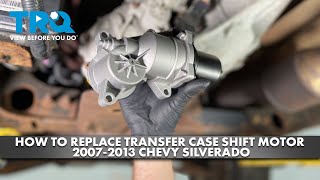
- Failed Transfer Case Encoder Motor (GM) (Very Common) — The electric motor shifting the transfer case between 2WD and 4WD modes burns out, or its internal plastic gear strips, preventing mode changes and triggering a 'Service 4WD' light.
- Internal Headlamp Switch Failure (Nissan) (Common) — The combination switch (turn signal stalk) develops worn internal contacts or cracked solder joints. 🎬 Watch: How to repair a Nissan headlight dimmer switch. The BCM receives an illogical signal, causing erratic headlight behavior.
- Improper Sensor Calibration (Toyota/Lexus/Subaru) (Common) — Skipping the mandatory 'Zero Point Calibration' after a wheel alignment, suspension repair, or sensor replacement causes the VSC system to lose the vehicle's straight-ahead position, setting a fault code.
- Wiring or Connector Corrosion/Damage (Common) — Wires leading to the yaw sensor, encoder motor, or headlamp switch fray, short, or corrode. On GM trucks, the transfer case actuator connector is notoriously prone to water intrusion (TSB 22-NA-187).
- Failed Transfer Case Control Module (TCCM) (GM) (Less Common) — The TCCM fails internally. Symptoms include dead lights on the 4WD selector switch and an inability to communicate with the module via a scan tool.
- Low Battery Voltage (Rare) — Extremely low battery voltage during startup causes communication glitches between modules, occasionally setting a C0371 or related U-series communication code as a one-time event.
Symptoms
- Vehicle Stability Control (VSC), TRAC, and ABS Lights On — On Toyota, Lexus, and Subaru vehicles, the dashboard illuminates with VSC, TRAC, and ABS warning lights simultaneously.
- Service 4WD Light On — On GM trucks and SUVs, a 'Service 4WD' message appears in the driver information center, and the 4WD selector switch lights blink or go completely dark.
- Inability to Switch 4WD Modes — The GM vehicle remains stuck in its last known drive mode (e.g., 2WD or 4WD High). Pressing selector buttons results in blinking lights that revert to the original selection.
- Headlights Malfunction (Nissan) — Nissan headlights turn on and off independently, fail to switch between high and low beams, or refuse to turn on entirely.
- VSC System Activates Incorrectly — A miscalibrated Toyota yaw rate sensor causes the VSC system to brake a single wheel during a normal turn because it incorrectly perceives a skid.
Diagnostic Flowchart
Tap your situation to follow the diagnostic path that matches what you're seeing on this code.
Common Fixes & Costs
- Perform Yaw Rate Sensor Zero Point Calibration (Toyota/Lexus/Subaru) — Parts: $0, Labor: $50 - $150, ~0.8 hr book time (Professional)
- Replace Yaw Rate Sensor (Toyota/Lexus/Subaru) — Parts: $40 - $850, Labor: $100 - $200, ~1.5 hr book time (Intermediate)
- Replace Transfer Case Encoder Motor (GM) — Parts: $150 - $250, Labor: $150 - $300, ~1.8 hr book time (Intermediate)
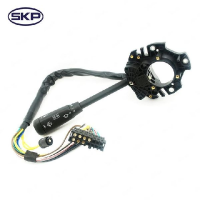
- Replace Headlamp Switch / Combination Switch (Nissan) — Parts: $70 - $260, Labor: $50 - $100, ~0.8 hr book time (Beginner)
- Replace Transfer Case Control Module (TCCM) (GM) — Parts: $150 - $400, Labor: $50 - $100, ~0.6 hr book time (Beginner)
- Repair Damaged Wiring or Clean Connectors — Parts: $10 - $50, Labor: $150 - $400, ~2.5 hr book time (Professional)
Used vs. New Parts: Buying Guide
When a used part is worth it: For a simple mechanical part like a Nissan headlamp switch, a tested used part is a budget-friendly option. For electronic modules (Yaw Rate Sensor) or high-wear items (GM Encoder Motor), buy new.
Donor-vehicle mileage cap: roughly under 60000 miles for the part to have meaningful remaining life.
Donor quality checklist:
- Verify the part number matches exactly.
- Avoid electronic modules from flood-damaged or collision-damaged vehicles.
- Demand the donor vehicle's mileage and history.
- Ensure the seller offers a minimum 30-day warranty.
Decision logic:
- If The part is a sensitive electronic module (e.g., Yaw Rate Sensor) → Buy new (OEM or quality aftermarket). A used sensor's history is unknown, and moisture exposure ruins internal gyroscopes.
- If The part is a known high-wear item (e.g., GM Encoder Motor) → Buy a new or remanufactured part with a warranty. Used motors already possess significant internal gear wear.
- If The part is a simple switch (e.g., Nissan Headlamp Switch) and the vehicle is over 150K miles → A tested, used part is a reasonable low-cost alternative, though a new aftermarket part offers longer life for a modest price increase.
Warranty tradeoff: Used parts offer a 30-90 day warranty covering the part only. New aftermarket parts carry a 1-year to limited lifetime warranty. New OEM parts carry a 1-year/12,000-mile warranty.
Worst-case if a used part fails: $250 - $600 if a used part fails after the warranty period, requiring a second labor charge and a replacement part.
What Happens If You Wait — Timeline
- Immediate: GM: 'Service 4WD' light appears, vehicle stuck in last mode. If stuck in 4WD, drivetrain binds during slow turns on pavement. Toyota/Nissan: VSC/headlight failure is immediate. (MPG impact: 0-1%% · Added cost: $0)
- 0-2 months: GM (stuck in 4WD on pavement): Drivetrain binding puts continuous stress on components. Front tires show accelerated, uneven wear. U-joints suffer high strain. (MPG impact: 2-5%% · Added cost: $150 - $400 (premature tire wear and wasted fuel).)
- 2-6 months: GM: The weakest drivetrain link fails. A U-joint breaks, causing a loud clunking noise. Continued driving damages the driveshaft or yokes. (MPG impact: 2-5%% · Added cost: $400 - $900 (tire wear plus U-joint replacement).)
- 6+ months: GM: Catastrophic failure occurs. Immense stress destroys internal transfer case gears or the differential. The driveline seizes, rendering the vehicle undrivable. (MPG impact: N/A (Vehicle undrivable)% · Added cost: $2,500 - $5,000+ (complete transfer case or differential replacement).)
Cost of Not Fixing It
- Immediate: Toyota/Subaru stability control is disabled, increasing crash risk. Nissan headlights operate erratically, posing a major nighttime safety hazard. (Added cost: Potential traffic ticket or cost of an accident.)
- 0-3 months: GM trucks stuck in 4WD on dry pavement suffer excessive tire wear and severe stress on driveshafts, U-joints, and differential gears. (Added cost: $200 - $800 (premature tire replacement and minor component strain).)
- 3+ months: Continued driving with GM drivetrain binding causes catastrophic failure of the transfer case, differentials, or axles, rendering the vehicle undrivable. (Added cost: $2,500 - $5,000+ (transfer case and/or differential replacement).)
Diagnosis Steps
- Vehicle System Identification
Confirm your vehicle's manufacturer. Toyota/Lexus/Subaru requires VSC/Yaw Rate Sensor diagnosis. GM requires 4WD/Transfer Case diagnosis. Nissan requires Headlamp Combination Switch diagnosis.
Tools: Owner's Manual (Beginner) - Scan for All Codes in All Modules
Use an OBD-II scanner capable of reading Chassis (C), Body (B), and Network (U) codes. Prioritize diagnosing any U-codes first, as communication failures cause C0371 to set erroneously. Look for related codes: Toyota (C1234, C1279), GM (C0327, B2725), or Nissan (U1000).
Tools: OBD-II Scanner (ABS/Chassis capable) (Beginner) - Visual and Connector Inspection
Toyota/Lexus: Inspect the yaw rate sensor connector (under the center console or driver's seat) for corrosion. GM: Inspect the transfer case encoder motor connector for water intrusion (TSB 22-NA-187). Nissan: Inspect the headlamp switch connector at the steering column base.
Tools: Flashlight, Trim removal tools (Intermediate) - Toyota Yaw Sensor: Power and Ground Verification
Disconnect the yaw sensor. With ignition ON, probe the power pin (IG or +B) to body ground; it must read 11-14 Volts. With ignition OFF, probe the ground pin (GND) to body ground; resistance must be less than 1 Ω. Failed tests indicate a wiring harness problem.
Tools: Multimeter, Vehicle-specific wiring diagram (Advanced) - GM Encoder Motor: Resistance and Voltage Tests
Disconnect the encoder motor. Test resistance between the two thickest motor control pins (usually red and black); it must be 0.5 to 35 ohms. Infinite or near-zero resistance indicates a failed motor. Verify the 5V or 8V reference voltage from the TCCM to the position sensor.
Tools: Multimeter, Vehicle-specific wiring diagram (Advanced) - GM Encoder Position Sensor: Live Data Voltage Check
Using a scan tool's live data, verify the 'Actual Position' voltage matches the 'Commanded Position'. Expected values: 2HI ≈ 2.0V, Auto 4WD ≈ 4.6V, 4HI ≈ 3.0V, 4LO ≈ 1.5V. If commanded value changes but actual value does not, the encoder motor failed to move.
Tools: Bi-directional Scan Tool (Advanced) - Nissan Headlamp Switch: Continuity Test
Disconnect the headlamp switch. Test continuity between the main power input pin and specific output pins (low beams, high beams) while activating the switch. Continuity (near 0 Ω) must exist only when a function is active. Fails indicate an internally faulty switch.
Tools: Multimeter, Vehicle-specific wiring diagram (Advanced) - Live Data Analysis (Scan Tool)
Toyota: Monitor 'Yaw Rate Sensor' data. Stationary on level ground, it must read 0 deg/s. An unwavering offset indicates a failed sensor. Nissan: Monitor BCM 'Headlamp Switch Status'. Status must change logically (Off, Park, On, Auto) as you operate the switch.
Tools: Bi-directional Scan Tool (Advanced) - Perform Zero Point Calibration (Toyota/Subaru)
Required after sensor replacement or alignment. Use a scan tool's 'Yaw Rate Sensor Calibration' utility. DIY method: On a level surface, short pins 4 (CG) and 12 (TS) of the OBD-II port with a paperclip, turn key ON, wait for rapid VSC light blinking, then turn off.
Tools: Advanced Scan Tool or Paperclip (Advanced) - Pro Tip: CAN Bus Signal Check (Oscilloscope)
Use an oscilloscope to check CAN High and CAN Low signals at the Toyota yaw sensor connector. A healthy CAN bus shows a mirror-image square wave. CAN High toggles between ~2.5V and ~3.5V; CAN Low toggles between ~2.5V and ~1.5V. Distorted signals indicate wiring/module failure.
Tools: Oscilloscope, Wiring diagram (Professional)
When This Code Triggers (Freeze-Frame Conditions)
- Vehicle Speed: 15-45 mph (The fault logs during a system self-test occurring during normal city or highway driving, not necessarily during an extreme maneuver.)
- Engine RPM: 1200-2500 RPM (Steady cruise or light acceleration when the control module detects the fault.)
- System Voltage: 12.5-14.5V (Normal operating voltage. A low voltage reading in the freeze frame indicates the fault stems from a weak battery or failing alternator.)
- 4WD Command Status (GM): Changing (e.g., 2-HI to 4-HI) (For GM trucks, the code sets the exact moment a shift is attempted and the transfer case fails to respond or report the correct new position.)
Related Codes
- C1234 — Specific to Toyota/Lexus, indicating a hard fault for 'Yaw Rate Sensor Malfunction'. Seeing C0371 and C1234 together confirms the sensor assembly has failed permanently.
- C1279 — A Toyota/Lexus code for the acceleration sensor. Because the yaw and acceleration sensors share the same housing, seeing C1279 with C0371 mandates replacing the entire assembly.
- U0123 / U0124 — Network communication codes indicating a lost connection to the yaw rate sensor. Diagnose wiring, connectors, and CAN bus integrity first, as a U-code points to connectivity loss, not a failed sensor.
- C0327 — A GM code for 'Encoder Circuit Malfunction'. It points specifically to the position sensor inside the encoder motor assembly, confirming the motor requires replacement.
- B2725 — A GM code for 'ATC Mode Switch Circuit Malfunction'. If present with C0371, test the 4WD selector switch on the dash before replacing the encoder motor or TCCM.
- U1000 / U1001 — General CAN communication failure codes on Nissan vehicles. Their presence alongside C0371 suggests an intermittent electrical issue or failing BCM that must be investigated before replacing the headlamp switch.
Climate & Environmental Factors
- Humidity and Water Exposure (Rust Belt): GM transfer case encoder motors and connectors are exposed to road spray. High humidity, heavy rain, or road salt causes water intrusion and corrosion, leading to failure (GM TSB 22-NA-187).
- Cold Weather: Cold and damp conditions exacerbate intermittent ground connection problems in the GM encoder motor circuit, triggering the 'Service 4WD' light on startup (GM TSB PIP5098).
How to Talk to a Mechanic About This Code
Say this: "{'toyota_subaru': 'I have a C0371 code on my [Make/Model] and the VSC light is on. Please check live data, power, and ground at the yaw rate sensor before recommending replacement. If replaced, ensure the Zero Point Calibration is performed.', 'gm': "I have a C0371 code and a 'Service 4WD' light on my [Make/Model]. Please check the TCCM, the 'ATC' fuse, and the encoder motor connector for corrosion per TSB 22-NA-187 before quoting a new encoder motor.", 'nissan': 'I have a C0371 code stored in the Body Control Module on my Nissan. Please confirm the headlamp switch has failed with a continuity test before replacing it.'}"
This language directs the technician to perform a logical diagnosis rather than replacing the most expensive part, and sets the expectation for required follow-up procedures like calibration.
Avoid saying:
- 'My VSC/4WD light is on, can you fix it?' (Invites a wide-ranging, expensive diagnosis).
- 'Just do whatever you think is best.' (Surrenders control over the repair process and cost).
- 'I read online it's the [part], just replace it.' (Makes you financially responsible if the diagnosis is wrong).
Questions to ask before authorizing the repair:
- For Toyota/Subaru: Is the cost of the Zero Point Calibration included in the labor for the sensor replacement?
- For GM: If the encoder motor connector is corroded, what is the cost to repair the connector versus replacing the motor?
- For GM: Did you test the 4WD selector switch on the dash to rule it out?
- For all: What is the warranty on the recommended part and the labor for this repair?
Where to Take It: Dealer vs Independent vs Chain
- Dealer:
Best for: Vehicles under warranty., Complex diagnoses involving multiple communication ('U') codes., Guaranteed use of OEM parts and manufacturer-specific tools (e.g., Toyota Techstream).
Downsides: Highest labor rates and part costs., Dealerships refuse to install customer-supplied or aftermarket parts. (Typical cost: +50% vs. baseline) - Independent Shop:
Best fit for most C0371 repairs. A reputable independent mechanic diagnoses and repairs all three variants effectively and affordably. Ensure they possess bi-directional scan tools for calibration.
Best for: Out-of-warranty vehicles where cost is a major factor., Common, well-documented repairs like a GM encoder motor or Nissan headlamp switch.
Downsides: Shop quality and diagnostic capability vary widely., May lack awareness of the latest manufacturer TSBs. (Typical cost: +0% vs. baseline) - Chain Shop:
Use with caution. Acceptable for a confirmed Nissan headlamp switch fix. AVOID for Toyota/Subaru yaw sensor diagnosis or GM 4WD system issues, which require specific diagnostic steps beyond their standard service model.
Best for: Simple, bolt-on parts replacement like a Nissan headlamp switch IF the diagnosis is already certain.
Downsides: Technicians lack advanced diagnostic training for complex chassis codes., High pressure to upsell services and recommend unnecessary part replacements. (Typical cost: -10% vs. baseline)
When to Walk Away From the Repair
If the estimated repair cost exceeds 50% of the vehicle's private-party market value, sell or trade it in.
- Car worth $8000, fix is $1200: Fix it. The repair cost is well below the 50% threshold and restores a critical safety or drivetrain function.
- Car worth $4000, fix is $2500: Walk away. The repair cost exceeds 60% of the car's value. This applies heavily to GM trucks where C0371 led to catastrophic transfer case failure.
- Car worth $3000, fix is $700: Borderline. While below the 50% threshold, consider the vehicle's overall condition. If it requires tires or brakes, apply the $700 toward a replacement vehicle.
What Scan Tool You Need for This Code
Minimum: A scanner capable of reading manufacturer-specific Chassis (C) and Body (B) codes.
A $20 code reader only reads generic 'P' (Powertrain) codes and cannot access the ABS, VSC, TCCM, or BCM modules. You remain completely blind to the C0371 fault.
Mid-range: Innova 5610 or Foxwell NT510 Elite (~$300) — Offers bi-directional control. CRITICAL for Toyota/Subaru DIY repairs, allowing you to command the 'Zero Point Calibration'. For GM, commands the transfer case to shift to verify motor response.
Professional: Autel MaxiCOM MK808S / MK900-series (~$400-800) — Provides dealership-level functionality. Features robust bi-directional controls for calibration, detailed live data graphing, and performs special functions like the GM TCCM relearn procedure.
Rent vs buy: Rent only if the parts store guarantees the scanner reads ABS/Chassis codes. For Toyota/Subaru variants requiring calibration, buying a mid-range tool with bi-directional control pays for itself by avoiding a single dealer visit.
How to Clear the Code After You Fix It
- Use a compatible OBD-II scan tool to erase the code from the specific module (ABS/VSC, TCCM, or BCM).
- For Toyota/Subaru, perform the mandatory 'Zero Point Calibration' for the yaw rate sensor.
- Perform a drive cycle to allow the system to self-test and confirm the fix.
Drive cycle (~20 minutes): Start the engine and idle for 2 minutes. Drive for 10-15 minutes, including stop-and-go city traffic and highway speeds over 45 mph. For Toyota, execute several 90-degree turns to allow the VSC system to verify sensor inputs. For GM, switch through all 4WD modes (2HI, 4HI, 4LO) following the owner's manual procedure. The warning lights must remain off.
Readiness monitors affected: This chassis (C) code does not directly affect emissions readiness monitors like the Catalyst or O2 sensor monitors., However, an illuminated warning light (ABS, VSC, Service 4WD) causes an automatic OBD-II safety inspection failure in most states.
Before emissions retest: drive at least 50 miles to fully set monitors.
Watch out for:
- Disconnecting the battery does not clear the code from the module's memory and fails to perform the required Zero Point Calibration on Toyota/Subaru vehicles.
- Skipping the Zero Point Calibration after replacing a yaw rate sensor guarantees the VSC light remains on post-repair.
- The code returns immediately if the underlying mechanical or electrical fault remains.
Will This Fail Emissions / State Inspection?
Yes — this code typically fails an OBD-II emissions inspection.
- California: An illuminated Malfunction Indicator Light (MIL), including ABS, VSC, or Service 4WD lights, guarantees an inspection failure. The OBD-II system check reports the active chassis fault.
- New York: NYS inspection checks for the presence and operation of required safety equipment. An illuminated ABS or stability control light causes an automatic safety inspection failure.
- Texas: The state safety inspector checks for any illuminated dashboard warning lights. An active C0371 with a corresponding warning light (ABS, VSC) results in immediate failure.
Most Commonly Affected Vehicles
- Toyota RAV4 (2006-2012) — Highly prone to yaw rate sensor failure. Part 89180-42020 fits 2006-2008 models; 89180-42030 fits 2008-2010 models.
- Chevrolet Silverado, Tahoe, Suburban (2003-2007) — Experience frequent encoder motor failure on the NVG246 transfer case (RPO code NP8). Dorman 600-910 is a popular replacement.
- GMC Sierra, Yukon (2003-2007) — Identical to Chevrolet counterparts, suffering frequent encoder motor failure on NP8 transfer cases.
- Toyota Avensis (2003-2008) — Well-documented yaw rate sensor failures causing ABS, TRC, and VSC lights. The sensor is located under the driver's seat.
- Toyota Prius (2004-2015) — Yaw rate sensor failure triggers multiple brake and stability warning lights due to integration with the regenerative braking system.
- Nissan Titan (2004-2015) — Frequently sets C0371 in the BCM due to a faulty headlamp combination switch, causing erratic headlight operation.
- Toyota Corolla (2005-2013) — Yaw rate sensor failure is common, requiring replacement of the unit located under the passenger seat or center console.
- Subaru Forester, Outback (2009-2014) — Sets C0371 for a yaw rate sensor circuit fault. Diagnosis and calibration requirements mirror Toyota models.
Manufacturer-Specific Notes
- Toyota / Lexus: C0371 is a 'Test Mode DTC' pointing to the yaw rate sensor. A 'Zero Point Calibration' is mandatory after replacement or any wheel alignment. Failure to calibrate guarantees the VSC light stays on.
- General Motors (Chevrolet, GMC, Cadillac): C0371 exclusively flags the 4WD system. TSB 22-NA-187 identifies water intrusion in the transfer case actuator connector as the primary failure cause. Dead 4WD switch lights indicate a TCCM failure, not a motor failure.
- Nissan: C0371 is a Body Control Module (BCM) code for a 'Headlamp Switch Input Signal Mismatch.' The issue is never a chassis component; it is always the multi-function steering column switch or its wiring.
- Subaru: Subaru uses C0371 identically to Toyota, pointing to a Vehicle Dynamics Control (yaw rate) sensor fault. The diagnostic and zero-point calibration procedures are exactly the same.
Real Owner Stories
2004 Chevy Silverado, ~150K miles
'Service 4WD' light came on. The 4WD selector switch lights blinked, but the system remained stuck in 2-High.
What they tried:
- Initially suspected a major failure like the transfer case motor or front axle actuator.
- Cleaned the main ground connection under the driver's door, which did not solve the issue.
- Inspected the wiring loom and found a smaller, hidden ground wire broken off its connector.
Outcome: Spliced a new connector onto the broken ground wire and re-attached it to the frame. This immediately restored all 4WD modes for a negligible cost.
Lesson: Meticulously inspect all related ground wires near the driver's side frame rail before replacing expensive GM 4WD components. A broken ground is a common, cheap root cause.
2005 Toyota Avensis
ABS, TRC, and VSC warning lights illuminated simultaneously with code C0371 stored.
What they tried:
- Dealer quoted £490 for the part plus £100/hour for labor.
- Owner replaced the sensor under the driver's seat with a £30 aftermarket part.
- Warning lights remained on after reconnecting the battery.
Outcome: The owner drove the vehicle a few feet, allowing the system to self-calibrate. All warning lights turned off immediately.
Lesson: On older Toyota models, a short drive allows the system to recognize the new yaw rate sensor and complete its self-test, turning off warning lights without a scan tool.
2021 GMC Sierra, low mileage
'Service 4WD' light appeared, and the 4WD selector switch lights went completely dead.
What they tried:
- Owner suspected the encoder motor or the selector switch.
- Learned that completely dead switch lights indicate a Transfer Case Control Module (TCCM) power issue.
Outcome: Replaced the TCCM, a plug-and-play module under the dash, which restored power to the switch and cleared the C0371 code.
Lesson: Blinking 4WD switch lights point to the encoder motor, while completely dead lights strongly suggest a failed TCCM or blown 'ATC' fuse.
How to Prevent This Code From Triggering
- Apply Dielectric Grease to At-Risk Connectors (Once, or whenever disconnected) — Seals the GM transfer case encoder motor connector against water intrusion, preventing the corrosion that causes circuit faults (TSB 22-NA-187).
- Periodically Engage 4WD System (GM) (Monthly for a short distance on dirt/gravel) — Cycling the 4WD system lubricates internal transfer case components and the encoder motor, preventing seizure from disuse.
- Ensure Zero Point Calibration After Alignments (Toyota/Subaru) (Every wheel alignment) — Prevents the VSC system from setting a C0371 code due to a mismatch between the new steering angle and the yaw rate sensor's stored center position.
- Maintain a Healthy Battery and Charging System (Ongoing) — Prevents low voltage and voltage spikes that cause communication glitches and spurious codes in sensitive electronic modules.
- Address Cabin Water Leaks Immediately (As needed) — Prevents water from windshield seals or sunroof drains from saturating and destroying expensive interior modules like the Yaw Rate Sensor or TCCM.
Frequently Asked Questions
Is it safe to drive with code C0371?
Driving is unsafe and risks severe damage. Toyota and Subaru vehicles lose stability control, increasing rollover risk. GM trucks stuck in 4WD on dry pavement will suffer catastrophic transfer case damage, while Nissan vehicles risk sudden headlight failure at night.
I replaced the yaw rate sensor on my Toyota, but the VSC light is still on. What's wrong?
You skipped the mandatory Zero Point Calibration. This procedure resets the sensor's baseline so the VSC computer knows the vehicle's straight-ahead orientation. Perform this calibration using an advanced scan tool or the OBD-II paperclip method to turn off the lights.
My mechanic says C0371 means I need a new headlamp switch on my Nissan. Is that right?
Yes, this is the correct diagnosis for Nissan models like the Titan. The Body Control Module (BCM) uses code C0371 to report a failed signal from the steering column's combination switch. Replacing the switch resolves the erratic headlight behavior.
On my Chevy Silverado, the 'Service 4WD' light is on with C0371. The 4WD buttons are dead. Is it the motor?
Dead switch lights point to a failed Transfer Case Control Module (TCCM) or a blown 'ATC' fuse, not the encoder motor. The TCCM powers the switch lights directly. Check the fuse first, then test the TCCM for power and ground.
Can a bad wheel alignment cause a C0371 code?
Yes, on Toyota, Lexus, and Subaru vehicles. An alignment changes the vehicle's straight-ahead geometry, creating a mismatch with the yaw rate sensor's stored center position. Performing a Zero Point Calibration resolves this conflict and clears the code.
Can I just clean the yaw rate sensor or encoder motor?
No, the internal electronic components or motor windings usually fail permanently and require replacement. However, you must clean the external electrical connectors during replacement. Corrosion at the connector is a primary failure point, especially on GM encoder motors.
What happens if I drive my GM truck in 4WD on dry pavement?
Driving in 4WD on dry pavement locks the driveshafts together, causing the drivetrain to bind during turns. This immense stress destroys U-joints, axles, and transfer case gears. Continued driving guarantees catastrophic component failure costing upwards of $2,500.
My C0371 code appeared after I replaced my battery. Are they related?
Yes, a sudden voltage drop during battery replacement causes temporary communication glitches between modules. Clear the code and perform a drive cycle. If the code returns, a genuine hardware fault exists independently of the battery change.
Key Takeaways
- C0371 has three distinct manufacturer meanings: a failed Yaw Rate Sensor on Toyota/Subaru, a broken Transfer Case Encoder Motor on GM, or a faulty Headlamp Switch on Nissan.
- Match your symptom to the fix: VSC/TRAC lights indicate a Toyota stability issue, a 'Service 4WD' message points to GM drivetrain binding, and erratic headlights signal a Nissan switch failure.
- Stop driving GM trucks stuck in 4WD on dry pavement immediately to prevent catastrophic transfer case failure costing upwards of $2,500.
- Always diagnose accompanying 'U' communication codes first, as a simple $0 wiring fix often resolves the C0371 before replacing a $600 sensor.
- Toyota and Subaru owners must perform a Zero Point Calibration after replacing the yaw rate sensor or getting a wheel alignment, otherwise the VSC warning lights remain permanently illuminated.
Helpful Videos
Shop the Parts Behind C0371
Below are the parts most often responsible for code C0371, ranked by how frequently each one is the actual culprit (per the diagnosis above). Tap any to see what we have for your vehicle.



The information in this article is provided for general reference and educational purposes only. Vehicle specifications, procedures, and part compatibility can vary by production date, trim level, and region. Always consult your vehicle's factory service manual and verify part numbers before purchasing or performing repairs. Safety-critical components such as airbags, seat belts, and braking systems should be installed by a qualified professional.
- 🧭 Diagnostic Flowchart
- 🎬 Helpful Videos
- 🛍️ Shop This Part
- What Does C0371 Mean?
- Can I Drive With C0371?
- Common Causes
- Symptoms
- Common Fixes & Costs
- Used vs. New Parts: Buying Guide
- What Happens If You Wait — Timeline
- Cost of Not Fixing It
- Diagnosis Steps
- When This Code Triggers (Freeze-Frame Conditions)
- Related Codes
- Climate & Environmental Factors
- How to Talk to a Mechanic About This Code
- Where to Take It: Dealer vs Independent vs Chain
- When to Walk Away From the Repair
- What Scan Tool You Need for This Code
- How to Clear the Code After You Fix It
- Will This Fail Emissions / State Inspection?
- Most Commonly Affected Vehicles
- Manufacturer-Specific Notes
- Real Owner Stories
- 2004 Chevy Silverado, ~150K miles
- 2005 Toyota Avensis
- 2021 GMC Sierra, low mileage
- How to Prevent This Code From Triggering
- Frequently Asked Questions
- Is it safe to drive with code C0371?
- I replaced the yaw rate sensor on my Toyota, but the VSC light is still on. What's wrong?
- My mechanic says C0371 means I need a new headlamp switch on my Nissan. Is that right?
- On my Chevy Silverado, the 'Service 4WD' light is on with C0371. The 4WD buttons are dead. Is it the motor?
- Can a bad wheel alignment cause a C0371 code?
- Can I just clean the yaw rate sensor or encoder motor?
- What happens if I drive my GM truck in 4WD on dry pavement?
- My C0371 code appeared after I replaced my battery. Are they related?
- Key Takeaways
- 🎟️ Get 5% Off