

OBD-II Code C0387: Unable to Complete Shift
The Ultimate Guide to Diagnosing and Fixing C0387
What Does C0387 Mean?
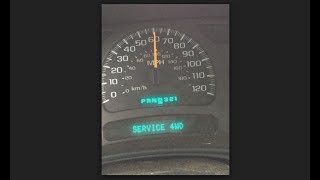
The C0387 code signifies that the Transfer Case Control Module (TCCM) attempted to shift the four-wheel drive system into a different range (e.g., 2HI to 4HI) but failed to complete the action within a pre-set 15-second window. After the timeout, the system aborts the shift, illuminates the 'Service 4WD' light, and disables all 4WD functions for the remainder of the ignition cycle to prevent damage.
Technical definition: The official SAE/ISO definition for C0387 is 'Unable to Perform Shift'. This generic code indicates the transfer case shift control module commanded a shift to a new mode or range, but the feedback from the transfer case position sensor (encoder) did not confirm that the desired position was reached within the specified timeframe.
Can I Drive With C0387?
Yes, But With Caution. Yes, you can continue to drive the vehicle. The 4WD system is disabled and the vehicle defaults to two-wheel drive (2WD). This is mechanically safe for the powertrain in the short term. However, the lack of 4WD poses a significant safety risk in adverse weather (snow, ice) or off-road conditions. There is no risk of further component damage, like to a catalytic converter, from driving with this specific code.
Common Causes
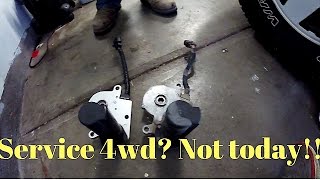
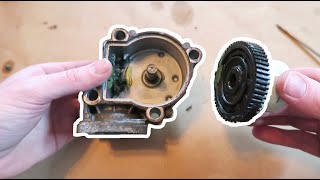
- Faulty Transfer Case Encoder Motor (Shift Motor) (Very Common) — This is the most frequent culprit. The internal electric motor burns out, or the integrated plastic gears strip. 🎬 See this step-by-step transfer case encoder motor replacement The position sensor (encoder) within the assembly also fails, leaving the TCCM blind to the transfer case's actual position.
- Outdated Transfer Case Control Module (TCCM) Software (Very Common) — Prevalent on 2007-2013 GM trucks and SUVs, the factory TCCM software is overly sensitive. It erroneously triggers a C0387 during minor voltage fluctuations caused by extreme temperatures or a slightly weak battery. A dealer-installed software update is the only fix.
- Low System Voltage (Weak Battery/Alternator) (Common) — The shift motor requires significant current to operate. A weak battery or failing alternator causes system voltage to drop below the required threshold (often ~10.5V) during a shift attempt, causing it to fail and set the code. GM TSBs specifically note this as a primary trigger.
- Corroded Wiring or Ground Connections (Common) — The wiring harness and grounds are highly exposed to road debris and moisture. A partially seated connector, a corroded frame ground near the TCCM, or a loose engine-to-chassis ground causes elusive voltage drops under load, leading to a failed shift.
- Faulty Transfer Case Control Module (TCCM) (Less Common) — The TCCM itself is less likely to fail than the parts it controls. A failed TCCM fails to send the shift command, misinterprets sensor feedback, or loses communication entirely. Eliminate all other possibilities before condemning the module.
- Faulty Front Axle Actuator/Disconnect (Less Common) — A separate actuator engages the front axle on many 4WD systems. If this actuator fails to respond, the TCCM's shift sequence is incomplete. This occasionally leads to a C0387 if the system logic interprets it as a general shift failure.
- Mechanical Binding in the Transfer Case (Rare) — Internal components like shift forks, the sector shaft, or clutch packs wear or break, physically jamming the shifting mechanism. This occurs on high-mileage vehicles or those subjected to extreme use.
Symptoms
- Service 4WD Light On — The 'Service 4WD', 'Check 4x4', or a similar warning illuminates on the instrument cluster. 🎬 Watch: Troubleshooting the Service 4WD message on GM trucks
- 4WD System Inoperative — The system is completely disabled. You cannot shift into or out of any 4WD mode.
- Flashing 4WD Selector Lights — When you attempt a shift, the indicator light for the desired mode flashes for several seconds before returning to the original mode, indicating an unsuccessful shift.
- Stuck in One 4WD Mode — The vehicle locks in its last known good position, which is most often 2HI but is sometimes 4HI if the failure occurred after a successful shift.
- Audible Clicking or Grinding from Transfer Case Area — You hear a series of clicks from the shift motor or a grinding noise as it unsuccessfully attempts to engage the transfer case gears.
Common Fixes & Costs
- Reprogram Transfer Case Control Module (TCCM) — Parts: $0, Labor: $150-$250, ~1 hr book time (Professional)
- Replace Transfer Case Encoder Motor (Shift Motor)
— Parts: $150-$350, Labor: $150-$300, ~1.5 hr book time
(Intermediate)
Chevrolet Silverado / GMC Sierra: OEM GM: 84115497, 19125571 (Alt: Dorman: 600-910; Cardone (Reman): 48-113)
Dodge / Ram 1500: OEM Mopar: 68402358AA, 5143477AA (Alt: Dorman/SKP: 600-935; Borg Warner: 4484) - Repair Wiring or Replace Connector — Parts: $20-$60, Labor: $150-$300, ~2 hr book time (Intermediate)
- Clean or Repair Frame/Engine Ground Points — Parts: $1-$10, Labor: $0-$150, ~0.5 hr book time (DIY)
- Replace TCCM with a Pre-Programmed Unit
— Parts: $150-$300, Labor: $50-$100, ~0.8 hr book time
(DIY)
Chevrolet Silverado / GMC Sierra (2007-2013): OEM GM: 24243084 (Alt: Dorman (Pre-programmed units), Cardone (Reman))
Used vs. New Parts: Buying Guide
When a used part is worth it: A used OEM encoder motor from a low-mileage, non-corroded donor vehicle is a good value, especially if new OEM parts are discontinued or prohibitively expensive. A used TCCM is also viable, but ensure the part number matches exactly.
Donor-vehicle mileage cap: roughly under 70000 miles for the part to have meaningful remaining life.
Donor quality checklist:
- Verify the part number is an exact match for both encoder motors and TCCMs.
- Avoid parts from the 'Rust Belt' or flood-damaged vehicles, as corrosion is a primary failure mode.
- Inspect the electrical connector pins on the used part for any signs of corrosion or damage before purchasing.
Decision logic:
- If The vehicle is a 2007-2013 GM truck with a known software issue (TSB #09-04-21-001) → Do not buy any parts. Spend the money on a dealer reprogram first.
- If Budget is the top priority and you are willing to accept a shorter lifespan → A used OEM or new aftermarket part is a reasonable choice. Be aware that some aftermarket motors have a high failure rate.
- If Reliability and longevity are the main goals → Buy a new OEM part. If OEM is unavailable, choose a reputable aftermarket brand known for quality, or a pre-programmed TCCM from a trusted vendor.
Warranty tradeoff: Used parts typically offer a 30-90 day warranty. Aftermarket new parts usually come with a 1-year to limited lifetime warranty. New OEM parts carry the manufacturer's standard parts warranty.
Worst-case if a used part fails: $250-$500 if a used or cheap aftermarket part fails prematurely, requiring repeat labor costs plus the price of another replacement part.
Cost of Not Fixing It
- Immediate: Complete loss of four-wheel drive capability. The vehicle locks in 2WD, which is a significant safety risk in low-traction conditions like snow, ice, or mud. (Added cost: Negligible)
- 1-6 months: No direct mechanical damage occurs from ignoring this specific code. Unlike engine codes, it does not risk harm to expensive components like the catalytic converter. The primary cost is the lack of 4WD functionality. (Added cost: $0)
- 6+ months: If the root cause is a corroded connector or water intrusion, leaving it unaddressed allows corrosion to spread further into the wiring harness or damage the TCCM, turning a simple motor replacement into an expensive wiring repair. (Added cost: $300-$800)
Diagnosis Steps
- Read Codes with a Capable Scanner
Use an OBD-II scanner that accesses Chassis (C) and TCCM modules. A basic engine code reader will not see this code. Document C0387 and any other codes like C0569 or C0324, as they provide critical diagnostic direction.
Tools: OBD-II Scanner (with TCCM/Chassis capability) 🎬 Watch a mechanic diagnose 4WD codes with a scanner (Beginner) - Check for Technical Service Bulletins (TSBs)
Search for your vehicle's year, make, model, and 'C0387 TSB'. For many GM trucks, TSB #09-04-21-001 points directly to a required software update, not a part failure.
Tools: Internet Access (Beginner) - Inspect Wiring, Connectors, and Grounds
Perform a visual inspection of the wiring harness leading to the transfer case encoder motor. Unplug the main connector and look for green/white corrosion or bent pins. Locate the main chassis ground for the TCCM (often on the frame rail) and clean any corrosion to bare metal.
Tools: Flashlight, Multimeter, Wire Brush, Dielectric Grease (Beginner) - Perform Bi-Directional Control Test
Using a professional-grade scan tool, command the encoder motor to shift between ranges (e.g., 2HI to 4HI). If the motor doesn't respond, the problem lies in the circuit or motor. If it responds but the code remains, the issue is the position sensor or internal binding.
Tools: Bi-Directional Scan Tool (Advanced) - Test Encoder Motor Resistance and Circuits
Disconnect the encoder motor harness. Using a multimeter, measure the resistance between the two motor control pins. A good motor typically reads between 0.3 and 40.0 ohms. 'OL' indicates an open circuit, while 0.0 ohms indicates a short. Both confirm a failed motor.
Tools: Multimeter, Vehicle-specific Wiring Diagram (Advanced) - TCCM Diagnostic Voltage Check (GM)
With the encoder motor disconnected and the ignition ON, check the voltage at the harness connector coming from the TCCM. On GM systems, one motor control circuit should show a diagnostic voltage between 1.0 and 2.5 volts. Absence of this voltage points to a TCCM or wiring problem.
Tools: Multimeter, Vehicle-specific Wiring Diagram (Advanced) - Test for Mechanical Binding
Remove the transfer case shift motor (typically 3-4 bolts). Use a small wrench to turn the transfer case's selector shaft. It should move between its detents with moderate force. If the shaft is frozen, the problem is a severe mechanical failure inside the transfer case.
Tools: Wrench or Pliers, Basic Hand Tools (Intermediate) - Isolate the Front Axle Actuator
Have a helper attempt to shift into 4WD while you listen for the front axle actuator to operate. If it is silent, test its wiring for power and ground when a shift is commanded. A failed front actuator halts the TCCM's shift sequence.
Tools: Helper, Test Light or Multimeter (Intermediate)
When This Code Triggers (Freeze-Frame Conditions)
- Action: Shift Attempted (The code is set at the moment the TCCM commands a shift and does not receive confirmation within a set time (~15 seconds).)
- Vehicle Speed: 0-5 mph (Most shifts into or out of 4LO require the vehicle to be stopped or rolling very slowly with the transmission in neutral.)
- System Voltage: 10.5-14.5V (A shift was commanded, but system voltage dropped below the TCCM's threshold during the high-current draw of the shift motor, causing the attempt to abort.)
- Commanded Position: 4HI, 4LO, or 2HI (The TCCM was attempting to move the transfer case to a new range selected by the driver via the dash switch.)
Related Codes
- C0569 — This 'System Configuration Error' code is a direct result of C0387 on GM vehicles. When C0387 sets, the TCCM attempts a relearn on the next startup. If the original fault prevents this relearn, the module sets C0569. The root cause is the same issue that initially caused C0387.
- C0327 — This code points to a fault in the encoder motor's position sensor circuit. Since the position sensor is integrated into the encoder motor assembly, a C0327 confirms that the encoder motor needs to be replaced.
- C0306 — This code indicates a fault in the motor control circuit itself. It suggests an open or short in the wiring to the motor or within the motor windings.
- P1867 — This is a Ford-specific code for 'Transfer Case General Contact Plate Failure.' It is functionally identical to a C0327 on a GM vehicle, pointing directly to a failure of the position sensor plate inside the transfer case shift motor assembly.
Climate & Environmental Factors
- Cold Climates / Road Salt: Regions with heavy road salt usage see a much higher incidence of C0387. Salt spray accelerates the corrosion of the transfer case wiring harness connector, the encoder motor's housing, and critical chassis ground points.
- High Humidity / Water Exposure: Water intrusion is a primary cause of encoder motor failure. Driving through high water or exposure to excessive rain allows moisture into the motor's electronics or the main electrical connector, causing shorts.
- Low Temperatures: Extremely cold temperatures cause battery voltage to drop during startup. On sensitive systems like 2007-2013 GM trucks, this temporary voltage sag during a shift attempt triggers a false C0387 code.
How to Clear the Code After You Fix It
- Use an OBD-II scan tool capable of accessing the TCCM to clear the C0387 and any related codes.
- Perform the 'Transfer Case Relearn' or 'Clutch Reset' procedure using the scan tool's special functions. This is mandatory.
- If a scan tool is unavailable, a manual relearn is sometimes achieved by cycling the ignition and shifting through all 4WD modes with the transmission in neutral, but this is not always effective.
Drive cycle (~15 minutes): A specific drive cycle is not required to clear the C0387 fault itself, but a relearn procedure is. After a successful relearn, turn the vehicle off for 1 minute, then restart and test all 4WD functions to confirm the repair. A short drive involving several stops and starts verifies the fix.
Readiness monitors affected: This is a Chassis (C) code and does not directly affect engine-related emissions readiness monitors (Catalyst, O2 Sensor, etc.).
Watch out for:
- Simply clearing the code with a scanner without performing the mandatory relearn procedure causes the code to return immediately upon the next shift attempt.
- Disconnecting the battery does not clear the fault from the TCCM's memory and does not perform a proper relearn.
Will This Fail Emissions / State Inspection?
No — by itself this code doesn't fail OBD inspection (but it can keep readiness monitors from setting, which causes a separate fail).
- California: This code does not cause a smog check failure. California's test focuses on the Check Engine Light and emissions-related (P-series) codes. A 'Service 4WD' light is ignored.
- New York: This code does not cause an emissions inspection failure. However, the 'Service 4WD' light causes a failure of the separate annual safety inspection, as it indicates a fault in a key vehicle system.
- Texas: As of 2025, most non-commercial vehicles are exempt from safety inspections. For counties that still require an emissions test, C0387 does not cause a failure as it does not illuminate the Check Engine Light.
Most Commonly Affected Vehicles
- Chevrolet Silverado, Tahoe, Suburban, Avalanche (2007-2013) — Extremely common. TSB #09-04-21-001 confirms a TCCM software issue is the primary cause. Do not replace parts before checking for this reprogram.
- GMC Sierra, Yukon, Yukon XL (2007-2013) — Identical to the Chevrolet models. The TCCM software is overly sensitive to voltage drops, setting a false C0387. A dealer reprogram is the official fix.
- Dodge / Ram 1500 (2005-2023) — Commonly caused by a failed transfer case shift motor. For 2023 models, TSB 08-237-23 warns of a harness connector not being fully seated from the factory.
- BMW X3, X5, X6 (2003-2013) — The transfer case actuator motor is a notoriously high-failure part. A small, internal plastic gear strips, preventing shifting. The fix is to replace the gear or the entire actuator motor.
- Jeep Grand Cherokee (2011-2021) — On the WK2 platform, a C0387-equivalent fault points to a failure in the Drivetrain Control Module (DTCM) or the transfer case shift motor itself.
- Ford F-150 (2004-2011) — Almost always caused by a failed transfer case shift motor. Also check the vacuum-operated Integrated Wheel Ends (IWEs); vacuum leaks cause related 4WD engagement problems.
- Cadillac Escalade (2007-2013) — As part of the GMT900 platform, these vehicles are affected by the TCCM software glitch detailed in TSB #09-04-21-001 and require a dealer reprogram as the first step.
Manufacturer-Specific Notes
- General Motors (Chevrolet, GMC, Cadillac): The TCCM software sensitivity issue (TSB #09-04-21-001) is paramount. Always check for the reprogram before replacing any parts. TSB PIP5089 explains that a persistent C0569 code after a repair means the original C0387 fault was not truly fixed.
- Ford: On F-150s and Expeditions, the diagnosis is often a failed transfer case shift motor. However, technicians must also check the separate IWE (Integrated Wheel End) vacuum system. A vacuum leak causes grinding and engagement issues confused with a transfer case problem.
- Dodge / Ram: TSB 08-237-23 for 2023 Ram 1500s highlights checking simple connections first. A safety recall (NHTSA #20V080000) was issued for some 2019 Ram 1500s for an internal transfer case defect that required a full transfer case replacement.
- BMW: The 'xDrive' system's transfer case actuator motor is a known weak point. A small plastic gear inside the actuator strips, causing a clicking noise and a failure to shift. Aftermarket companies sell durable metal replacement gears.
Helpful Videos

Shop the Parts Behind C0387
Below are the parts most often responsible for code C0387, ranked by how frequently each one is the actual culprit (per the diagnosis above). Tap any to see what we have for your vehicle.


The information in this article is provided for general reference and educational purposes only. Vehicle specifications, procedures, and part compatibility can vary by production date, trim level, and region. Always consult your vehicle's factory service manual and verify part numbers before purchasing or performing repairs. Safety-critical components such as airbags, seat belts, and braking systems should be installed by a qualified professional.
- 🎬 Helpful Videos
- 🛍️ Shop This Part
- What Does C0387 Mean?
- Can I Drive With C0387?
- Common Causes
- Symptoms
- Common Fixes & Costs
- Used vs. New Parts: Buying Guide
- Cost of Not Fixing It
- Diagnosis Steps
- When This Code Triggers (Freeze-Frame Conditions)
- Related Codes
- Climate & Environmental Factors
- How to Clear the Code After You Fix It
- Will This Fail Emissions / State Inspection?
- Most Commonly Affected Vehicles
- Manufacturer-Specific Notes
- 🎟️ Get 5% Off