

C0392 on 2014-2018 GMC Yukon: Service 4WD Message Causes and Fixes
On these Yukons, the C0392 code and 'Service 4WD' message are almost always caused by a poor electrical connection. A GM Technical Service Bulletin (PIP5304B) points to loose terminals in the Transfer Case Control Module (TCCM) connector, specifically cavity 9. This can often be fixed for $0 in parts by re-tensioning the pin. However, corroded wiring at the transfer case itself can also be the cause, so a full circuit check is wise.
- Before buying any parts, inspect the X1 connector at the Transfer Case Control Module (TCCM) under the driver's dash.
- The most probable cause is a loose female terminal in cavity 9 of that connector, a known issue documented by GM.
- The 'Service 4WD' message will appear, and your 4WD system will not work until this is fixed.
- If the connector pin is tight, the next most likely failure is the transfer case encoder motor assembly.
- Codes C0396 and C0398 often appear with C0392 and point to the same underlying electrical connection problem.
What's Unique About the 2014-2018 Gmc YUKON
General Motors is highly aware of this issue on its 2014-2018 truck and SUV platform. The problem is so common that GM issued a specific Technical Service Bulletin (TSB PIP5304B) identifying the root cause not as a failed part, but as a manufacturing issue where female terminals within the main TCCM electrical connector lose tension over time. For code C0392, this is most frequently the terminal in cavity 9. This creates a poor connection that mimics a sensor failure, making this a unique diagnostic situation where the fix is often at the control module's plug, not the sensor itself.
Diagnostic Flowchart
Tap your situation to follow the diagnostic path that matches what you're seeing on this vehicle.
Generation note: The 2014 model is the last year of the third generation (GMT900), while 2015-2018 models are the fourth generation (K2UG, a variant of the K2XX platform). GM Technical Service Bulletin PIP5304B confirms the primary cause—loose TCCM terminals—affects this entire year range, spanning the generation change from GMT900 to K2XX.
Symptoms You May Notice
- "Service 4WD" message displayed on the Driver Information Center (DIC)
- Four-wheel drive system is inoperative
- 4WD selector switch lights may be off or indicate the incorrect mode
- Vehicle may be stuck in 2WD, 4WD High, or another mode
- Inability to shift the transfer case between ranges (e.g., 2HI to 4HI)
- ABS and Traction Control lights may illuminate simultaneously.
- Replacing the entire Transfer Case Control Module (TCCM) when the actual problem is just a loose terminal pin in its connector.
- Replacing the transfer case encoder motor before verifying the wiring and TCCM connector pins are good.
Most Likely Causes
- Loose Terminal Pin in TCCM Connector 🔴 High Probability This is a well-documented issue covered by GM TSB #PIP5304B. The female terminals in the TCCM X1 connector can lose tension. For code C0392, the bulletin points to cavities 1, 2, and 9, with cavity 9 being the most frequent offender.
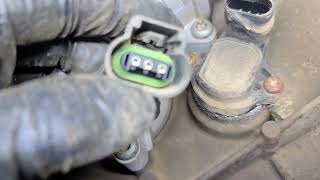
How to confirm: With the battery disconnected, unplug the X1 connector from the TCCM (located under the driver's side dash). Carefully insert the correct size terminal test probe (GM specifies J-35616-2A, a gray-handled probe) into cavity 9. The probe should have a snug fit and not fall out under its own weight. A loose fit confirms poor terminal tension. The TSB also notes a technician may be able to set or clear the code by lightly wiggling the harness at the TCCM connector. 🎬 Watch: How to diagnose code C0392 and check terminal tension.
Typical fix: The terminal needs to be either carefully re-tensioned with a special tool or, more reliably, replaced with a new terminal crimped onto the wire. The TSB provides instructions for this repair.
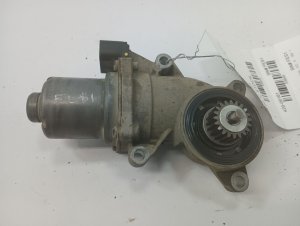
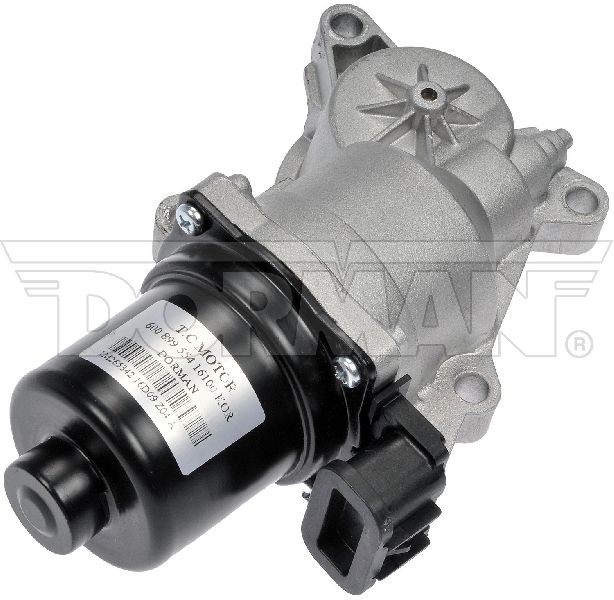
Est. part cost: $0-$20 - Failed Transfer Case Encoder Motor (with Position Sensor) 🟡 Medium Probability → Shop Transfer Case Motor The position sensor is integrated into the transfer case encoder motor (also called the shift motor). This assembly is mounted externally on the transfer case and is exposed to the elements, making it a common failure point over time. However, it is often misdiagnosed when the true fault is in the wiring.
How to confirm: If the TCCM connector and wiring are confirmed to be good, the sensor itself is the next suspect. A scan tool can monitor the sensor's output voltage; if it's stuck or doesn't change when a shift is commanded, the sensor has likely failed. This should only be done after verifying the integrity of the wiring to the sensor.
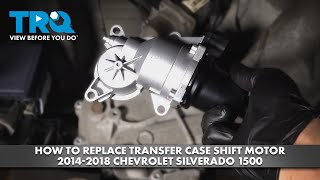
Typical fix: Replace the entire transfer case encoder motor assembly. 🎬 See this step-by-step guide for replacing the transfer case shift motor. The sensor is not typically sold separately. A relearn procedure is required after installation.
Est. part cost: $150-$400 - Failed Transfer Case Control Module (TCCM) ⚪ Low Probability → Shop Transfer Case Motor While less common than the connector issue, the control module itself can fail internally.
How to confirm: This is typically diagnosed by exclusion. If the wiring, connector tension, and encoder motor/sensor have all been tested and are known to be good, the TCCM is the likely culprit. A scan tool may also show the module is offline or not responding.
Typical fix: Replace the Transfer Case Control Module. A new module may require programming/calibration by a dealer or a properly equipped shop.
Est. part cost: $200-$450
Rare But Worth Checking
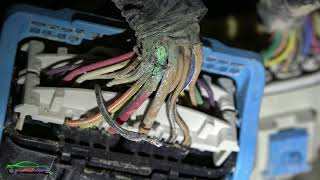
- Corroded Wiring at Transfer Case or Intermediate Connectors: → Shop Transfer Case Motor Technicians have documented cases where the C0392 code was caused by a corroded 5-volt reference wire right at the transfer case position sensor connector, not at the TCCM. In other cases, intermediate harness connectors between the TCCM and transfer case, such as connector X119 located near the battery, have been found with severe corrosion, causing an open or short in the circuit. This highlights the need to check the entire circuit, not just the TCCM connector.
- TCCM Software/Calibration Issue: For 2015 models specifically, GM released a service update (TSB #14-07-30-002A) to reprogram the TCCM for a 'Service 4WD' message that could appear on startup. If you have a 2015 model, it's worth checking if this update was ever performed.
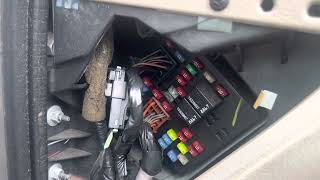
- Poor Chassis Ground: GM trucks of this era are known for having issues with the main chassis ground connection located on the frame under the driver's side door (often designated G300). Corrosion here can cause a host of strange electrical problems, including 4WD system faults. Cleaning this ground is a good preventative measure. 🎬 Watch: A quick overview of common 4WD failure points and locations.
- Missing Connector Seals: TSB PIP5491A notes that intermittent 4WD messages and codes, including C0392, can be caused by missing wire seals in the harness connectors. This allows moisture to enter and cause corrosion or short circuits over time.
Diagnosis Steps
- Read all stored DTCs from the TCCM with a capable OBD-II scanner.
- Note if C0392 is present along with C0396 or C0398.
- Locate the TCCM under the driver's side dashboard, to the left of the steering column.
- Disconnect the battery. Unplug the X1 electrical connector from the TCCM.
- Visually inspect the connector for any signs of corrosion, damage, or backed-out pins.
- Following the guidance in TSB #PIP5304B, test the tension of the female terminal in cavity 9 (and cavities 1 and 2 if needed) using a J-35616-2A test probe. The fit should be snug.
- As a quick check, you can try wiggling the TCCM harness with the system powered on to see if it causes the 'Service 4WD' message to flicker or the code to set/clear.
- If terminal tension is loose, repair or replace the terminal.
- If terminal tension is good, inspect the wiring harness and connector at the transfer case encoder motor for any signs of chafing, melting, or green corrosion.
- If wiring appears intact, use a multimeter to check for 5V reference, good ground, and signal continuity between the TCCM connector and the transfer case sensor connector.
- If all wiring and connections test good, use a scan tool to monitor the position sensor voltage while commanding a shift. If the voltage is erratic or does not change, the encoder motor/sensor assembly is the primary suspect.
- If all wiring and the sensor test good, the TCCM itself is the final possible point of failure.
Parts You'll Likely Need
- Connector Wire Terminal
(OEM #Varies (GM EPC lookup required))— This is the most likely cause per GM's own service bulletin. The TSB advises using the vehicle's VIN in the GM Electronic Parts Catalog to order the correct terminal. Sourcing a single terminal can be difficult; a connector pigtail is an alternative.
Trusted brands: ACDelco
OEM price range: $5-$20
Aftermarket price range: $1-$10 - Transfer Case Encoder Motor
(OEM #84718571)— If the wiring is not the issue, the integrated position sensor within the encoder motor is the next most likely component to have failed.
Trusted brands: ACDelco (OEM), Dorman (e.g., 600-899)
OEM price range: $250-$400
Aftermarket price range: $150-$250 - Transfer Case Control Module (TCCM) — This is the least likely cause and should only be replaced after ruling out the connector and encoder motor. A replacement may require dealer programming.
Trusted brands: ACDelco
OEM price range: $300-$450
Aftermarket price range: $200-$350
Related Codes That Often Appear With This One
- C0396 — This code is for the Incremental Position Sensor circuit and is cited in the exact same TSB (PIP5304B) as C0392. It is caused by the same issue—loose terminals in the TCCM connector, but in different pin locations (cavities 3, 5, 10, or 11).
- C0398 — TSB PIP5304B explicitly states that C0398 (Transfer Case Range Actuator Position Sensor Performance) is often a secondary code set as a direct result of C0392 or C0396. Fixing the root cause of C0392 should resolve C0398 as well.
Technical Service Bulletins (TSBs) & Recalls
- PIP5304B: The primary TSB for this issue. Details the cause as poor terminal tension in the TCCM connector (cavity 9 for C0392) and provides the diagnostic procedure for testing pin fit.
- 14-07-30-002A: A service update for 2015 models involving a TCCM reprogram to address a 'Service 4WD' message on startup.
- PIP5491A: Addresses intermittent 'Service 4WD' messages caused by missing wire seals on connectors, leading to moisture and corrosion.
Platform-Specific Known Issues
- GM Technical Service Bulletin PIP5304B is the definitive document for this issue. It confirms that on 2014-2018 Yukons and similar models, the 'Service 4WD' light with DTC C0392 is most often caused by poor terminal tension in cavity 9 of the TCCM's X1 connector.
- GM Technical Service Bulletin PIP5491A points to a related issue where missing seals on harness connectors can allow moisture intrusion, leading to various intermittent 4WD codes, including C0392.
Mechanic-Grade Diagnostic Values
- Rotational Position Sensor (RPS) 5-Volt Reference — expected: 4.8V - 5.2V with key on, engine off, measured at the sensor connector (unplugged).. Failure: Voltage is significantly lower than 4.8V (indicates a short to ground or open circuit) or higher than 5.2V (short to voltage).
- Rotational Position Sensor (RPS) Signal Voltage — expected: A constantly varying Pulse-Width Modulated (PWM) signal that appears as a square wave on an oscilloscope.. Failure: Voltage is stuck in a fixed state, either low (less than 0.25V) or high (greater than 4.75V).
- Sensor Ground and Signal Circuit Resistance — expected: Less than 5.0 ohms when measured between the TCCM connector and the sensor connector.. Failure: Resistance greater than 5.0 ohms, indicating an open or high-resistance fault in the wiring harness.
- TCCM Operating Voltage — expected: 10.5 - 18.0 Volts.. Failure: Voltage outside this range may prevent the DTC test from running correctly or may set false codes.
Hidden / Shadow Codes Worth Checking
- C0392 08: Indicates the Rotational Position Sensor Circuit signal is invalid. The TCCM sees a voltage that is not changing as expected (i.e., it is stuck). (see via A professional-grade scan tool capable of reading manufacturer-specific symptom bytes, such as the GM GDS2.)
- C0392 01: Indicates the Rotational Position Sensor Circuit is shorted to battery. The TCCM is seeing a signal voltage that is stuck high (5.0V or greater). (see via A professional-grade scan tool capable of reading manufacturer-specific symptom bytes, such as the GM GDS2.)
- C0392 02: Indicates the Rotational Position Sensor Circuit is shorted to ground. The TCCM is seeing a signal voltage that is stuck low (0.5V or less). (see via A professional-grade scan tool capable of reading manufacturer-specific symptom bytes, such as the GM GDS2.)
Scan Tool Commands That Help
- GDS2, Autel, Launch, or other professional scan tool: Transfer Case Range Actuator Learn (or similar name) — This procedure is required after replacing the Transfer Case Control Module (TCCM) or the transfer case encoder motor. It allows the module to learn the mechanical end-stops of the actuator's travel to ensure accurate shifting and clear faults.
Wiring & Ground Locations
- TCCM Connector X1 — Under the driver's side dashboard, to the left of the steering column.. This is the primary failure point. Per TSB PIP5304B, Cavity 9 (Signal), Cavity 1 (5V Reference), and Cavity 2 (Low Reference) are the specific circuits for C0392, with Cavity 9 being the most common source of loose pin tension.
- G218 — Inside the cabin, behind the driver's side kick panel, near the A-pillar.. This is a major interior body ground. A poor connection here can cause various electrical issues for modules located inside the cabin, including the TCCM.
- G300 / Main Frame Ground — On the outside of the frame rail, directly under the driver's side door.. This is a primary chassis ground point. Corrosion or looseness here can cause widespread electrical faults, including intermittent power or bad ground references for the 4WD system.
- Connector X119 — In the engine bay, near the battery on the driver's side.. This is an intermediate harness connector between the TCCM and the transfer case. It is a documented failure point where corrosion can cause an open or short in the position sensor circuits, leading to a C0392 code.
Real Owner Repair Stories
- YouTube channel 'Phillip Bailey' (2017 GM Truck) — Service 4WD, ABS, and Traction Control lights on. Code C0392-08 was stored.
❌ Tried (didn't work) The transfer case actuator (encoder motor) had already been replaced with a Dorman part, which did not fix the issue.
✅ What actually fixed it The technician found a corroded and broken 5-volt reference wire right at the transfer case position sensor connector. The break was internal to the wire's insulation and was only found by performing a voltage test directly at the connector. - YouTube channel 'ScannerDanner' (2018 Chevrolet Colorado 3.6L 4x4) — Service 4x4 message with code C0392-08 (Signal Invalid).
❌ Tried (didn't work) Initial checks at the TCCM and sensor showed no signal, indicating a break in the circuit.
✅ What actually fixed it After tracing the wiring, the technician discovered a heavily corroded intermediate harness connector (identified as X119 in diagrams) located by the battery. Cleaning the corroded pins restored circuit integrity and fixed the problem.
"I Checked Everything" — The Actual Cause
- A common scenario is that the primary TCCM connector pins check out fine, and a mechanic may have already replaced the encoder motor assembly without success. The actual cause was found to be a corroded 5-volt reference wire, broken inside the insulation, right at the transfer case position sensor connector itself. This type of failure is missed by visual inspection and requires point-to-point voltage and continuity checks of the entire circuit.
OEM Part Supersession History
19133168, 19256064, 19258696, 23319286, 23355888, 23369032, 84109212→84718571— Part has been updated and revised by the manufacturer over time.
Heads up: When purchasing a Transfer Case Encoder Motor, using the latest part number (84718571) is recommended to ensure you have the most current revision.
Model Year Variations Within This Range
- 2017: A small number of 2017 models built at the Ft. Wayne Assembly Plant between Oct 18, 2016, and Oct 21, 2016, may have body and chassis ground bolts that were not properly hardened. This can cause a poor ground connection at locations like G102 (main chassis ground) and G400, potentially leading to various electrical issues, including 4WD system faults.
Helpful Videos
Used OEM Parts in Stock
New Aftermarket Parts Available


The information in this article is provided for general reference and educational purposes only. Vehicle specifications, procedures, and part compatibility can vary by production date, trim level, and region. Always consult your vehicle's factory service manual and verify part numbers before purchasing or performing repairs. Safety-critical components such as airbags, seat belts, and braking systems should be installed by a qualified professional.
- Gmc YUKON:
- 🧭 Diagnostic Flowchart
- 🎬 Helpful Videos
- 🛍️ Shop This Part
- What's Unique About the 2014-2018 Gmc YUKON
- Symptoms You May Notice
- Most Likely Causes
- Rare But Worth Checking
- Diagnosis Steps
- Parts You'll Likely Need
- Related Codes That Often Appear With This One
- Technical Service Bulletins (TSBs) & Recalls
- Platform-Specific Known Issues
- Mechanic-Grade Diagnostic Values
- Hidden / Shadow Codes Worth Checking
- Scan Tool Commands That Help
- Wiring & Ground Locations
- Real Owner Repair Stories
- "I Checked Everything" — The Actual Cause
- OEM Part Supersession History
- Model Year Variations Within This Range
- 🎟️ Get 5% Off