

OBD-II Code C0414: Rear Axle System Fault
The Ultimate Guide to Understanding, Diagnosing, and Fixing C0414
- Code C0414 disables the electronic limited-slip differential (e-LSD), triggering a 'Service Rear Axle' warning and reverting the vehicle to unsafe open-differential handling.
- Always perform a professional battery load test first; voltage drops below 12.0V frequently trigger this code on GM and Ford performance vehicles.
- If C0414 appears immediately after a differential fluid change, the shop failed to perform the mandatory electronic hydraulic bleed procedure using a bi-directional scan tool.
- Do not authorize a $3,000+ differential replacement without verifying the pump motor current draw; GM subcode C0414-5A specifically flags a weak pump drawing less than 5 amps.
What Does C0414 Mean?
Code C0414 indicates a performance error or communication loss in the electronic rear axle control system, typically the electronic limited-slip differential (e-LSD). The system fails to respond as expected, triggering a 'Service Rear Axle' warning and disabling advanced traction features to protect the drivetrain.
Technical definition: While SAE defines C0414 as 'Reserved', General Motors defines it as 'Rear Differential Clutch Control System Performance'. The critical subtype C0414-5A indicates 'Rear Differential Clutch Pump Motor Current is Less Than 5A', pinpointing a weak pump or electrical resistance.
Can I Drive With C0414?
Yes, But With Caution. Driving is possible, but your vehicle's traction and stability control systems are disabled. The e-LSD defaults to an 'open' state, sending power to the wheel with the least grip. This causes instability in corners and unexpected oversteer. Gentle driving to a repair shop is acceptable, but aggressive driving risks a loss of control. There is no immediate risk of mechanical damage from gentle driving, but the compromised handling is a significant safety concern.
Common Causes
- Weak Battery or Faulty Charging System (Very Common) — The Rear Differential Control Module (RDCM) is highly sensitive to voltage. An aging battery failing under load, or an alternator overcharging above 15.0V, causes transient voltage conditions that shut down the module.
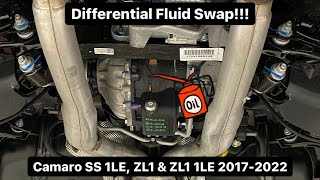
- Low or Incorrect Rear Differential Fluid (Very Common) — The e-LSD uses specific friction-modified fluid 🎬 Watch: How to correctly swap fluid in e-LSD equipped vehicles. to operate internal clutches. Low fluid, old fluid, or the wrong viscosity prevents the system from building necessary hydraulic pressure.
- Air in the e-LSD Hydraulic System After Service (Common) — If fluid was changed without performing the mandatory electronic bleed procedure using a scan tool, trapped air prevents the system from building pressure. This guarantees a C0414 code immediately after service.
- Damaged Wiring or Corroded Connectors (Common) — The RDCM connector, located in the rear bumper area, is highly susceptible to water intrusion. Corroded pins or frayed wires interrupt the signal between the control module and the rear axle.
- Failing e-LSD Clutch Pump Motor (Less Common) — The electric motor driving the hydraulic pump wears out over time. It runs but fails to draw enough current (flagged by code C0414-5A) to generate required hydraulic pressure.
- Faulty or Unplugged Wheel Speed Sensor (Less Common) — The e-LSD relies on accurate wheel speed data from the ABS module. A faulty sensor provides erratic data, forcing the differential system to shut down as a precaution.
- Faulty Rear Differential Control Module (RDCM) (Less Common) — The electronic brain controlling the rear axle fails due to internal software glitches, water damage, or circuit board degradation.
- Internal Failure of the Rear Differential (Rare) — Mechanical or hydraulic parts inside the differential, like the clutch packs, wear out or break. This is accompanied by grinding noises and metal debris in the fluid.
Symptoms
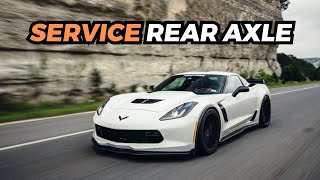
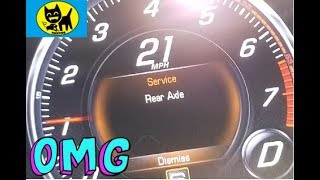
- “Service Rear Axle” or “Rear Axle System Off” Message — The most common indicator, appearing on the driver information center immediately when the fault is detected.
- Traction Control (TCS) or Stability Control (ESC) Light On — These systems rely on the rear axle to function. The lights illuminate because the systems are disabled for safety.
- Poor or Unpredictable Handling — The vehicle feels unstable, pushes through corners (understeer), or has a loose rear end (oversteer) because the differential is not actively adjusting wheel speeds.
- Performance Driving Modes Disabled — Special modes like 'Track Mode' or 'Competitive Driving Mode' become unavailable as they depend entirely on the e-LSD.
- Whining, Grinding, or 'Clunking' Noise from Rear — Mechanical noise indicates low fluid, physical damage inside the differential, or excessive clutch pack play.
Diagnostic Flowchart
Tap your situation to follow the diagnostic path that matches what you're seeing on this code.
Common Fixes & Costs
- Replace Battery and Reset BMS — Parts: $180-$400, Labor: $50-$100, ~0.8 hr book time (DIY)
- Change Rear Differential Fluid (with Bleed Procedure) — Parts: $50-$120, Labor: $150-$250, ~1.5 hr book time (Intermediate)
- Repair Wiring or Replace Connector — Parts: $20-$80, Labor: $150-$400, ~2 hr book time (Intermediate)
- Replace Rear Differential Control Module (RDCM) — Parts: $300-$700, Labor: $100-$200, ~1 hr book time (Intermediate)
- Replace Rear Differential Assembly — Parts: $2,000-$5,500, Labor: $600-$1,500, ~7 hr book time (Professional)
DIY vs Professional
- Change Rear Differential Fluid 🟢 Beginner
Tools: Jack stands, wrench set, fluid pump, and a bi-directional scan tool capable of performing the e-LSD bleed procedure. - Replace Battery and Reset BMS 🟢 Beginner
Tools: Basic hand tools (wrench set), and a scan tool for BMS reset. - Repair Wiring or Replace Connector 🟢 Beginner
Tools: Multimeter, wiring diagrams, pin-out charts, wire strippers, crimpers, heat shrink. - Replace Rear Differential Control Module (RDCM) 🟢 Beginner
Tools: Basic hand tools, trim removal tools, and a manufacturer-specific scan tool for programming.
Used vs. New Parts: Buying Guide
When a used part is worth it: For the RDCM, a used part from a reputable recycler offers significant savings. For the entire differential assembly, a used unit from a low-mileage donor is a practical alternative to a $5,000+ new part.
Donor-vehicle mileage cap: roughly under 60000 miles for the part to have meaningful remaining life.
Donor quality checklist:
- Verify the part number on the module or differential tag matches the original exactly.
- Get the VIN of the donor car to check its history for accidents or flood damage.
- Inspect used differentials for fluid leaks, cracks, or damage to connectors.
- Ensure module connector pins are clean, straight, and free of corrosion.
Decision logic:
- If The part is the RDCM and a new OEM part is under $500 → Buy new for the warranty and to avoid potential programming issues.
- If The part is the entire differential assembly (costing $3000+ new) → A used assembly from a low-mileage donor is a financially sound choice.
- If The vehicle is older (>10 years) and budget is the primary concern → A used part with a short-term warranty is an acceptable risk.
Warranty tradeoff: Used parts typically come with a 30-90 day functional warranty. New OEM parts have a 1-2 year warranty honored nationwide by dealers.
Worst-case if a used part fails: If a used differential fails after the warranty period, the cost includes repeat labor (6-8 hours) plus another replacement part, costing $1500-$2500.
What Happens If You Wait — Timeline
- 0-1 month: Intermittent 'Service Rear Axle' light, often on cold starts or due to a voltage dip. The e-LSD is disabled only when the light is on. (Added cost: $0)
- 1-6 months: The warning light is on constantly. The e-LSD is permanently disabled. If the cause is a slow fluid leak, accelerated wear begins on the internal clutch packs. (Added cost: $0 - $500)
- 6-12 months: If the cause was water intrusion, connector pins are heavily corroded. If it was a fluid leak, the differential runs dry, causing significant gear wear and grinding noises. (Added cost: $500 - $2,500)
- 12+ months: Catastrophic failure. A starved differential self-destructs, potentially locking up the rear wheels. A corroded control module short circuits, damaging other modules. (Added cost: $2,500 - $8,000+)
Cost of Not Fixing It
- 0-3 Months: Compromised vehicle handling and safety. The e-LSD is disabled, causing unpredictable traction. Performance driving modes are unavailable. (Added cost: Negligible (unless a loss-of-control accident occurs))
- 3-12 Months: If the root cause is a slow fluid leak, the differential is starved of lubrication, risking gear damage. If the cause is water intrusion, corrosion worsens, damaging the control module. (Added cost: $0 - $1000+)
- 12+ Months: A slow leak destroys the entire differential assembly. Worsening corrosion requires replacement of both the wiring harness and the control module. (Added cost: $1000 - $7000+)
Diagnosis Steps
- Scan for All Trouble Codes
Use a professional-grade OBD-II scanner to read manufacturer-specific Body (C) and Communication (U) codes. Note any subtype codes (e.g., C0414-5A) and codes related to ABS (U0415) or Steering Angle (U0428).
Tools: Professional Bi-directional Scan Tool (Beginner) - Perform a Comprehensive Battery and Charging System Test
Use an electronic tester to check the battery's health and Cold Cranking Amps (CCA) under load. Check running voltage; it must be stable between 13.7V and 14.7V. Voltages spiking above 15.0V trigger this code on GM vehicles.
Tools: Multimeter, Battery Load Tester (Intermediate) - Check Rear Differential Fluid Level and Condition
Safely raise the vehicle and remove the differential fill plug. The fluid level must be at the bottom of the hole. If the fluid is dark, smells burnt, or contains shiny metal particles, internal damage is likely.
Tools: Jack and Jack Stands, Wrench Set, Flashlight (Intermediate) - Inspect Wiring Harness and Connectors
Visually inspect the wiring harness going to the RDCM and the differential. Unplug the main RDCM connector and check for water intrusion, green/white pin corrosion, or backed-out pins.
Tools: Flashlight, Trim Removal Tools (Intermediate) - Analyze Live Data PIDs
Monitor live data from the RDCM. Watch 'eLSD Clutch Engagement Percentage', 'RDCM Voltage', and individual wheel speeds. Engagement should be 0% driving straight and increase smoothly during turns. Erratic values point to a sensor issue.
Tools: Professional Bi-directional Scan Tool (Advanced) - Test the Differential Pump Motor Current Draw
Command the differential pump to activate via the scan tool. Use a DC current clamp around the pump's power wire to measure amperage. A reading below 5 amps confirms a failing pump or high circuit resistance.
Tools: Bi-directional Scan Tool, DC Current Clamp Multimeter (Advanced) - Bleed the e-LSD Hydraulic System
If fluid was recently serviced, air is likely trapped. Command the differential's hydraulic pump to cycle through the automated bleed process using a bi-directional scan tool.
Tools: Bi-directional Scan Tool (Advanced) - Check CAN Bus Communication at the Module
If U-codes are present, probe the CAN High and CAN Low pins at the RDCM connector with an oscilloscope. CAN High should toggle between 2.5V and 3.5V, and CAN Low between 2.5V and 1.5V.
Tools: Oscilloscope or Graphing Multimeter, Pin-out Diagram (Professional) - Analyze Pump Motor Waveform
Scope the pump motor's current signature during activation. A failing motor shows an erratic pattern, low amplitude, or significant dropouts, indicating worn brushes that a simple current test misses.
Tools: Oscilloscope with Current Probe (Professional)
When This Code Triggers (Freeze-Frame Conditions)
- System Voltage: 11.5-13.0V (Indicates a voltage drop during pump activation.)
- Engine RPM: 1500-3000 RPM (Normal operation, steady cruise or gentle acceleration.)
- Vehicle Speed: 30-60 mph (City or highway driving when a command was sent to the eLSD.)
- Engine Coolant Temp: 180-210°F (Vehicle is at full operating temperature.)
Related Codes
- C0414 5A / C0414 58 — A critical GM-specific subtype meaning 'Rear Differential Clutch Pump Motor Current is Less Than 5A'. This pinpoints the problem to a weak pump, high-resistance wiring, or a faulty control module driver.
- C0413 — Indicates a 'Rear Differential Clutch System Pump Circuit Malfunction'. C0413 points to a hard electrical fault (open/short circuit), while C0414 is a performance problem. Diagnose C0413 first.
- U0428 — Indicates 'Invalid Data Received From Steering Angle Sensor Module.' If steering data is corrupt, the differential module cannot function and logs C0414 as a secondary fault. Calibrate the steering angle sensor first.
- U0415 — Means 'Invalid Data Received From Anti-Lock Brake System Control Module.' If the ABS module sends invalid wheel speed data, the differential system shuts down. Diagnose the ABS system first.
Climate & Environmental Factors
- Cold Weather: Low ambient temperatures drop a weak battery's voltage below the threshold required by the RDCM during startup. This causes the 'Service Rear Axle' message to appear on cold starts and disappear as the alternator charges the battery.
- Humidity and Water Intrusion: High-humidity environments lead to moisture intrusion into the RDCM connector located in the rear bumper area. This causes pin corrosion, increasing circuit resistance and triggering C0414.
How to Talk to a Mechanic About This Code
Say this: "I have a 'Service Rear Axle' message and a C0414 code. Please start by load-testing the battery, checking the charging system voltage, and inspecting the differential fluid level and wiring connectors before quoting major parts."
This directs the technician to perform the least expensive and most likely diagnostic steps first, preventing them from immediately quoting a costly control module or differential replacement.
Avoid saying:
- 'My 'Service Rear Axle' light is on, can you just fix it?'
- 'The car feels weird, I think the rear end is broken.'
- 'Just do whatever you think is necessary.'
Questions to ask before authorizing the repair:
- What was the result of the battery load test and the alternator's running voltage?
- Was the differential fluid level correct and was the fluid clean?
- Did you inspect the main connector at the Rear Differential Control Module for corrosion?
- If the code is C0414-5A, what was the measured current draw from the pump motor?
- If you are recommending a fluid change, does your quote include the mandatory electronic bleed procedure?
- If you are recommending a differential replacement, can you show me why the simpler fixes (battery, fluid, wiring, module) have been ruled out?
Where to Take It: Dealer vs Independent vs Chain
- Dealer:
Recommended. The need for manufacturer-specific, bi-directional scan tools to perform the hydraulic bleed procedure makes the dealer a reliable choice.
Best for: Vehicles under warranty., Repairs requiring manufacturer-specific software programming., Correcting a fluid change performed by a shop lacking the tools for the e-LSD bleed procedure.
Downsides: Highest labor rates., May default to replacing an entire assembly rather than diagnosing a smaller component. (Typical cost: +50% vs. baseline) - Independent Shop:
Viable, but requires vetting. Ask: 'Do you have a bi-directional scan tool that can perform the e-LSD bleed procedure for my vehicle?' If they say no, go elsewhere.
Best for: Out-of-warranty vehicles where cost is a primary concern., Basic C0414 causes like battery replacement or a visible wiring issue.
Downsides: Must own a professional bi-directional scan tool with specific software to perform the e-LSD bleed procedure. Many smaller shops do not. (Typical cost: +0% vs. baseline) - Chain Shop:
AVOID. Chain shops are not equipped for the diagnostic complexity of code C0414.
Best for: Battery testing and replacement (ensure they can perform a BMS reset).
Downsides: Technicians lack experience with complex driveline electronics., They do not have the required bi-directional scan tools for proper diagnosis or the mandatory bleed procedure. (Typical cost: -10% vs. baseline)
When to Walk Away From the Repair
If the estimated repair cost exceeds 40-50% of the car's current private-party value, seriously consider selling or trading in the vehicle instead of repairing it.
- Car worth $35000, fix is $5500: Fix it. A $5,500 differential replacement on a $35,000 Corvette is only 16% of the car's value.
- Car worth $18000, fix is $5500: Borderline. A $5,500 repair is ~30% of the vehicle's value. Get a second opinion and explore used parts.
- Car worth $8000, fix is $5500: Walk away. The repair cost is nearly 70% of the car's value. It is not financially sensible to perform this repair.
What Scan Tool You Need for This Code
Minimum: A scanner that reads manufacturer-specific 'C' (Chassis) and 'U' (Network) codes and displays live data.
A generic code reader shows C0414 as 'undefined' and cannot read critical sub-codes (C0414-5A) or perform the bi-directional commands needed for the mandatory e-LSD bleed procedure.
Budget: BlueDriver Pro (~$100) — Reads and clears the specific C0414 code and views live data for voltage and wheel speeds. It CANNOT perform the bi-directional e-LSD bleed procedure.
Mid-range: Foxwell NT510 Elite / Autel MaxiCOM MK808S (~$180-400) — True bi-directional tools. They read all manufacturer-specific codes and command the e-LSD pump for testing and the automated hydraulic bleed procedure.
Professional: Autel MaxiSys / Launch X431 Series (~$900-2000+) — Provides full dealership-level functionality, including advanced coding for replacement modules and access to detailed wiring diagrams.
Rent vs buy: Buying a mid-range bi-directional scanner (~$300+) is often more expensive than paying a shop for one hour of diagnostic labor. Parts store loaner tools are basic readers and CANNOT perform the necessary functions for this code.
How to Clear the Code After You Fix It
- Perform required mechanical or electrical repair.
- Use an OBD-II scan tool to clear the C0414 code from the Rear Differential Control Module.
- Perform the e-LSD bleed procedure with a scan tool if fluid was serviced.
- Perform a manufacturer-specific drive cycle to ensure all systems are functioning.
Drive cycle (~25 minutes): Begin with a cold start. Idle for 2-3 minutes with A/C and rear defroster on. Accelerate to 55 mph and hold for 3-5 minutes. Coast down to 20 mph without brakes. Accelerate to 55-60 mph and hold for 5 minutes. Perform mixed city driving for 10 minutes.
Readiness monitors affected: Catalyst, Evaporative System (EVAP), Oxygen Sensor (O2S), Oxygen Sensor Heater
Before emissions retest: drive at least 100 miles to fully set monitors.
Watch out for:
- Clearing the code without fixing the underlying issue causes the code to return quickly.
- Disconnecting the battery resets all emissions readiness monitors, causing an automatic smog test failure.
- Forgetting to perform the mandatory e-LSD bleed procedure after a fluid service immediately triggers the code again.
Will This Fail Emissions / State Inspection?
No — by itself this code doesn't fail OBD inspection (but it can keep readiness monitors from setting, which causes a separate fail).
- California: A 'Service Rear Axle' message or an illuminated Traction Control light will NOT cause a smog check failure. The test only fails for an illuminated Check Engine Light and incomplete readiness monitors.
- New York: Recent legislation aims to make ABS/Traction Control warning lights a cause for failing the safety inspection. Check with your local inspection station.
- Texas: In counties requiring it, the safety inspection fails a vehicle with an illuminated traction control (TCS) or ABS warning light.
Most Commonly Affected Vehicles
- Chevrolet Corvette (C7) (2014-2019) — Extremely common on Z51, Grand Sport, and Z06 models. Early 2014 models frequently left the factory with low differential fluid.
- Chevrolet Camaro (6th Gen) (2016-2024) — Affects SS 1LE and ZL1 models. GM issued bulletin PIP5458 for an intermittent 'Service Rear Axle' message pointing to fluid or software.
- Cadillac ATS-V / CTS-V (2016-2019) — Shares the e-LSD technology with Corvette and Camaro. GM bulletin PIP5336 addresses the 'Rear Axle Off' message on the 2016 ATS-V.
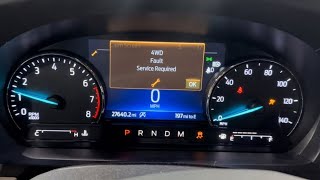
- Ford Focus RS (2016-2018) — Displays an 'AWD Malfunction' message. The twin-clutch Rear Drive Unit is highly sensitive to battery health. A BMS reset after battery replacement is critical.
- BMW M Models (F8x M3/M4, F90 M5) (2014-Present) — Uses an 'Active M Differential'. Failures are often preceded by a 'clunking' noise on tight, low-speed turns due to worn internal bearings.
- Land Rover / Range Rover Various (2014-Present) — Models with the optional 'Active Rear Locking Differential' experience faults from sensors or the control module, leading to system deactivation.
- Jeep Wrangler (JK) (2012-2018) — Often sets the related code U0414. This is frequently caused by a faulty transfer case position sensor sending invalid data, not a differential fault.
- GMC / Chevrolet Sierra / Silverado (2014-2018) — Trucks with the G80 automatic locking rear differential log this fault due to issues with the speed-sensing flyweight mechanism or electrical connectors.
Manufacturer-Specific Notes
- General Motors (Chevrolet, Cadillac): Famous for the 'Service Rear Axle' message. The subtype code C0414-5A specifically flags a low current draw from the pump motor, saving significant diagnostic time.
- Ford: On the Focus RS, the 'AWD Malfunction' is extremely sensitive to battery voltage. An aging battery is the primary suspect, even if the car starts perfectly. A BMS reset is mandatory after battery replacement.
- BMW: The 'Active M Differential' develops a characteristic 'M Clunk' noise during low-speed, tight turns. A loud or worsening clunk indicates excessive play in the internal clutch stack.
- Jeep: On JK Wranglers, the related code U0414 is often a red herring. The problem is frequently a faulty transfer case position sensor confusing the CAN bus network.
Real Owner Stories
2016 Corvette Z06 with intermittent 'Service Rear Axle' message
Owner experienced an intermittent 'Service Rear Axle' warning light. The voltmeter on the dash fluctuated, sometimes reading over 15V.
What they tried:
- Cleared the codes, but the message returned.
- Replaced the battery, but the problem persisted.
Outcome: The owner replaced the alternator. The dash voltmeter stabilized in the 13V range and the message did not return. The root cause was an overcharging alternator creating voltage spikes.
Lesson: An overcharging alternator is just as problematic for voltage-sensitive modules as a weak battery. Monitor live voltage; readings consistently above 15V are a major red flag.
2017 Ford Focus RS with 'AWD Malfunction' message
After installing a subwoofer, the car displayed 'AWD Malfunction,' 'Hill Start Not Available,' and disabled drive mode selection.
What they tried:
- Suspected the battery was drained during installation.
- Other owners in similar situations replaced wheel speed sensors.
Outcome: The issue was a weak battery. The low voltage state triggered faults in the AWD control module. Recharging the battery and performing a BMS reset resolved the errors.
Lesson: The Focus RS AWD system is extremely sensitive to battery voltage. Any 'AWD Malfunction' message requires a professional battery load test and a BMS reset.
2015 Corvette Z51 with C0413 and C0414 after service
After unrelated service, the owner received 'Service Rear Axle' messages with codes C0413 and C0414.
What they tried:
- Drained and refilled the differential fluid, but codes returned.
- A dealer recommended a full differential replacement.
Outcome: Another dealership diagnosed that the first shop used the wrong viscosity gear oil. A double flush and refill with the correct ACDelco DEXRON LS 75W-90 fluid resolved the codes.
Lesson: If C0414 appears immediately after service, suspect an error in the service itself. Verify the correct fluid was used and the mandatory electronic bleed procedure was performed.
2020 Camaro SS 1LE with intermittent 'Service Rear Axle' message
At 30,000 miles, the 'Service Rear Axle' message appeared intermittently with no noticeable change in driving behavior.
What they tried:
- Took the vehicle to the dealership for diagnosis.
Outcome: The dealership diagnosed a bad wheel speed sensor. The repair was completed under warranty and the fault message was resolved.
Lesson: The e-LSD system depends heavily on wheel speed data. A faulty wheel speed sensor causes the differential module to shut down, logging C0414 even when the differential is healthy.
How to Prevent This Code From Triggering
- Change rear differential gear oil at recommended intervals. (Every 30,000-45,000 miles for street driving. Change after every 24 hours of track time.) — Removes metallic particles and ensures the fluid's friction properties are optimal for the e-LSD clutches.
- Use a high-quality battery and a battery tender if the car is stored. (Daily/Weekly habit) — Prevents the battery from discharging during storage, avoiding the low-voltage conditions on startup that trigger C0414.
- Annually inspect the RDCM wiring connector. (Once per year) — The main connector is susceptible to water intrusion. Checking for corrosion prevents expensive electrical failures.
- Perform a BMS reset after every battery replacement. (Every battery change) — Failing to reset the Battery Management System leads to chronic under- or over-charging, causing voltage instability.
- For BMW M-models, perform the 'Running-In Service'. (At 1,200 miles) — BMW mandates a 1,200-mile service that includes changing the rear axle differential oil to remove initial break-in metals.
Frequently Asked Questions
Can I just clear the C0414 code and keep driving?
You can clear the code, but it returns within 20-30 miles if the underlying voltage or fluid issue remains. The 'Service Rear Axle' message persists until the root cause is fixed.
What does the code C0414-5A or C0414-58 mean?
This GM-specific subcode means the differential's hydraulic pump is drawing less than 5 amps. It pinpoints the failure to a weak pump motor, corroded wiring, or a faulty control module driver.
Why did the 'Service Rear Axle' light appear right after a differential fluid change?
This almost always means the mechanic failed to perform the mandatory 'e-LSD bleed' procedure with a scan tool. Trapped air prevents the system from building hydraulic pressure, immediately triggering a performance fault.
Can a bad battery cause a 'Service Rear Axle' message?
Yes, an aging battery failing under load causes transient low-voltage conditions that shut down the sensitive rear differential control module. Always load-test the battery before starting expensive driveline repairs.
My mechanic wants to replace the whole rear differential for over $5,000. Is this necessary?
A full replacement is the absolute last resort. Demand the shop rule out a weak battery, low fluid, corroded wiring, and a failing pump motor (via a current draw test) before authorizing a $5,000+ repair.
Is the e-LSD hydraulic fluid the same as the rear differential gear oil?
No, the e-LSD is a sealed hydraulic unit inside the differential housing. The fluid changed during standard service is the gear oil lubricating the main gears, not the internal e-LSD hydraulic fluid.
What is an e-LSD?
An electronic limited-slip differential (e-LSD) uses a computer, hydraulic pump, and clutch packs to control power distribution to the rear wheels. It locks and unlocks in milliseconds to maximize traction and cornering grip.
Key Takeaways
- Code C0414 disables the electronic limited-slip differential (e-LSD), triggering a 'Service Rear Axle' warning and reverting the vehicle to unsafe open-differential handling.
- Always perform a professional battery load test first; voltage drops below 12.0V frequently trigger this code on GM and Ford performance vehicles.
- If C0414 appears immediately after a differential fluid change, the shop failed to perform the mandatory electronic hydraulic bleed procedure using a bi-directional scan tool.
- Do not authorize a $3,000+ differential replacement without verifying the pump motor current draw; GM subcode C0414-5A specifically flags a weak pump drawing less than 5 amps.
Helpful Videos
Shop the Parts Behind C0414
Below are the parts most often responsible for code C0414, ranked by how frequently each one is the actual culprit (per the diagnosis above). Tap any to see what we have for your vehicle.



The information in this article is provided for general reference and educational purposes only. Vehicle specifications, procedures, and part compatibility can vary by production date, trim level, and region. Always consult your vehicle's factory service manual and verify part numbers before purchasing or performing repairs. Safety-critical components such as airbags, seat belts, and braking systems should be installed by a qualified professional.
- 🧭 Diagnostic Flowchart
- 🎬 Helpful Videos
- 🛍️ Shop This Part
- What Does C0414 Mean?
- Can I Drive With C0414?
- Common Causes
- Symptoms
- Common Fixes & Costs
- DIY vs Professional
- Used vs. New Parts: Buying Guide
- What Happens If You Wait — Timeline
- Cost of Not Fixing It
- Diagnosis Steps
- When This Code Triggers (Freeze-Frame Conditions)
- Related Codes
- Climate & Environmental Factors
- How to Talk to a Mechanic About This Code
- Where to Take It: Dealer vs Independent vs Chain
- When to Walk Away From the Repair
- What Scan Tool You Need for This Code
- How to Clear the Code After You Fix It
- Will This Fail Emissions / State Inspection?
- Most Commonly Affected Vehicles
- Manufacturer-Specific Notes
- Real Owner Stories
- 2016 Corvette Z06 with intermittent 'Service Rear Axle' message
- 2017 Ford Focus RS with 'AWD Malfunction' message
- 2015 Corvette Z51 with C0413 and C0414 after service
- 2020 Camaro SS 1LE with intermittent 'Service Rear Axle' message
- How to Prevent This Code From Triggering
- Frequently Asked Questions
- Can I just clear the C0414 code and keep driving?
- What does the code C0414-5A or C0414-58 mean?
- Why did the 'Service Rear Axle' light appear right after a differential fluid change?
- Can a bad battery cause a 'Service Rear Axle' message?
- My mechanic wants to replace the whole rear differential for over $5,000. Is this necessary?
- Is the e-LSD hydraulic fluid the same as the rear differential gear oil?
- What is an e-LSD?
- Key Takeaways
- 🎟️ Get 5% Off