

OBD-II Code C0455: Steering Angle Sensor Circuit Malfunction
The Ultimate Guide to Diagnosing and Fixing C0455
- Code C0455 instantly disables your vehicle's stability and traction control systems, increasing the risk of a loss-of-control accident by over 50%.
- For 2007-2014 GM trucks and SUVs, a loose electrical connector causes 80% of C0455 codes, as documented in GM TSB PI0639D.
- Inspect, clean, and secure the sensor connector with a zip-tie and dielectric grease for under $25 before buying a replacement sensor.
- Mandatory post-repair calibration requires a bidirectional scan tool; skipping this step after an alignment or sensor replacement guarantees the C0455 code will return.
What Does C0455 Mean?
Code C0455 means the Electronic Brake Control Module (EBCM) detects an intermittent, irrational, or missing signal from the Steering Angle Sensor. This sensor reports the precise direction and turning speed of your steering wheel. Without this trusted input, the EBCM disables StabiliTrak, traction control, and ABS as a failsafe.
Technical definition: The official definition for code C0455 is 'Steering Angle Sensor Circuit Malfunction.' The EBCM relies on a combination of digital signals (Phase A, Phase B, Index Pulse) and an analog voltage signal to determine steering wheel position and velocity. A discrepancy between these signals, or a total loss of signal, triggers the code.
Can I Drive With C0455?
Yes, But With Caution. Yes, but drive only to a repair shop. Code C0455 disables Electronic Stability Control (ESC) and Traction Control, making the vehicle unstable in slippery conditions or emergency swerves. In rare instances, this fault causes unexpected ABS activation or a jerky steering feel. Ignoring the code compromises a critical safety system and increases the risk of losing control.
Common Causes
- Poor Connection at Steering Angle Sensor Connector (Very Common) — On GM trucks and SUVs, the plastic sensor connector has excessive clearance, allowing vibration. This micro-movement causes fretting corrosion on the electrical pins, increasing resistance and interrupting the signal. GM issued TSB PI0639D advising this is the primary cause.
- Improper Steering Wheel Alignment or Installation (Common) — If the steering wheel is removed and re-installed off-center, or if a wheel alignment is performed without a corresponding sensor calibration, the EBCM sees a turning angle while driving straight. This data mismatch instantly sets the code.
- Failed Steering Angle Sensor (Common) — The sensor fails internally from wear and tear, sending erratic data, incorrect voltage, or no signal. Replace the sensor only after ruling out the connector and confirming faulty output via live scan tool data.
- Low or Unstable Battery Voltage (Less Common) — Control modules are highly sensitive to voltage drops. A weak battery causes voltage dips during startup, leading the EBCM to fail its self-test and erroneously set a C0455 code.
- Use of Low-Quality Aftermarket Sensors (Less Common) — Cheap aftermarket sensors often lack the precision of OEM parts or fail prematurely, causing the C0455 code to return shortly after replacement. Stick with OEM (ACDelco) or premium equivalents.
- Damaged Wiring Harness (Rare) — Wires running from the steering angle sensor to the EBCM become chafed, pinched, or broken, causing a short to ground, short to power, or an open circuit.
- Faulty Electronic Brake Control Module (EBCM) (Very Rare) — EBCM failure is extremely rare. Exhaustively rule out the connector, sensor, wiring, alignment, and battery voltage before replacing this expensive module.
Symptoms
- StabiliTrak/Traction Control Warning Lights and Disabled System — A 'Service StabiliTrak' message appears, the ESC/TCS warning lights illuminate, and the system stops intervening to prevent wheel spin or skids.
- Unexpected ABS Activation or Steering Jerk — Faulty sensor data causes the ABS to activate inappropriately at low speeds or creates a sudden jerky feeling in the steering wheel.
- Steering Feels Heavy or Stiff — On vehicles where steering angle data feeds the electric power steering system, the steering reverts to a heavy, non-assisted default mode.
Diagnostic Flowchart
Tap your situation to follow the diagnostic path that matches what you're seeing on this code.
Common Fixes & Costs
- Secure and Clean Sensor Connector (TSB Fix) — Parts: $10-$25, Labor: $100-$175, ~1.2 hr book time (DIY)
- Steering Angle Sensor Calibration/Reset — Parts: $0, Labor: $75-$150, ~0.7 hr book time (Professional)
- Replace Steering Angle Sensor — Parts: $80-$250, Labor: $150-$300, ~2.0 hr book time (Intermediate)
- Repair or Replace Wiring Harness Pigtail — Parts: $25-$75, Labor: $250-$600, ~2.5 hr book time (Professional)
- Replace and Reprogram EBCM — Parts: $400-$1200, Labor: $150-$300, ~1.5 hr book time (Professional)
Used vs. New Parts: Buying Guide
When a used part is worth it: A used OEM steering angle sensor from a reputable recycler is cost-effective only if it comes from a low-mileage donor vehicle without front-end collision or electrical damage.
Donor-vehicle mileage cap: roughly under 70000 miles for the part to have meaningful remaining life.
Donor quality checklist:
- Verify the part number matches your original sensor exactly.
- Ask for the donor VIN to check history and mileage.
- Inspect electrical connector pins for fretting corrosion or damage.
- Require a minimum 90-day warranty.
Decision logic:
- If The recommended fix is cleaning the connector (TSB PI0639D) → Do not buy any sensor; perform the $25 connector repair first.
- If A new OEM sensor is available and affordable → Buy the new OEM sensor for maximum reliability and to avoid repeat labor costs.
- If Vehicle has over 150K miles and budget is tight → A used OEM or a new high-quality aftermarket sensor (e.g., Dorman, Standard Motor Products) is an acceptable risk.
Warranty tradeoff: Used parts carry a 30-90 day warranty. New aftermarket parts offer 1-year to limited lifetime warranties. New OEM parts carry a 1-2 year warranty.
Worst-case if a used part fails: $250-$500 if a cheap aftermarket part fails prematurely, requiring repeat labor for diagnosis, replacement, and calibration.
What Happens If You Wait — Timeline
- 0-2 weeks: Code C0455 sets, 'Service StabiliTrak' light appears intermittently. Stability and traction control are disabled only when the light is on. (MPG impact: 0%% · Added cost: $0)
- 2 weeks - 3 months: The warning light becomes permanently illuminated. Stability and traction control are permanently disabled, significantly increasing the risk of a loss-of-control accident. (MPG impact: 0%% · Added cost: $50-$150 for a failed state safety inspection.)
- 3-6 months: Continued operation with a major safety system disabled. Erratic sensor data causes dangerous, unexpected ABS activation. (MPG impact: 0%% · Added cost: Unquantifiable. The cost of an accident far exceeds the repair cost.)
- 6+ months: No further mechanical damage occurs. The risk remains entirely safety-related. (MPG impact: 0%% · Added cost: Unquantifiable. The financial and personal cost of a preventable accident.)
Cost of Not Fixing It
- Immediate: Electronic Stability Control (ESC) and Traction Control are disabled. This significantly increases the risk of losing control in an emergency swerve or on slippery surfaces. (Added cost: N/A (Safety Risk))
- 0-3 months: Continued risk of a loss-of-control accident. Faulty data causes unexpected and dangerous ABS activation at low speeds. The vehicle automatically fails state safety inspections. (Added cost: Cost of a potential accident or failed inspection ($50-$150).)
- 3+ months: The primary cost remains the elevated safety risk. Studies show ESC reduces single-vehicle accidents by nearly 50%. (Added cost: Unquantifiable cost of an accident.)
Diagnosis Steps
- Read the Trouble Codes
Use an OBD-II scanner capable of reading 'C' (Chassis) codes from the EBCM to confirm C0455. Note if code C0710 is also present, as they share the exact same root cause.
Tools: OBD-II Scanner (Chassis code capable) (Beginner) - Inspect the Sensor Connector (TSB Check)
Locate the steering angle sensor on the steering column under the dash. Wiggle the electrical connector. If it moves up and down, it is too loose, confirming the primary known issue on GM vehicles.
Tools: Flashlight (Beginner) - Check for Connector Fretting Corrosion
Disconnect the negative battery terminal and the sensor's electrical connector. Use a magnifying glass to inspect the metal pins for dark, smudgy residue (fretting corrosion), indicating a poor connection.
Tools: Flashlight, Magnifying Glass (Intermediate) - Verify Steering Wheel Physical Center
If work was recently done on the steering or suspension, confirm the steering wheel is physically centered when driving straight. A crooked wheel means the sensor's calibration is off, requiring an alignment and reset.
Tools: None (visual check while driving) (Beginner) - Check Live Sensor Data (Analog & Digital)
Using an advanced scanner, monitor 'Steering Wheel Angle'. With wheels straight, it must read 0 degrees (+/- 5 degrees). Turn the wheel lock-to-lock; the value must change smoothly from -500 to +500 degrees. Erratic jumps or a fixed 360-degree reading indicate a faulty sensor or lost calibration.
Tools: Advanced OBD-II Scanner (Intermediate) - Test Sensor Voltage Output
Back-probe the sensor's analog signal wire at the connector. With the ignition on and steering wheel centered, voltage must be approximately 2.5V. As you turn the wheel, voltage must sweep smoothly from 0.25V to 4.75V. Stuck or absent voltage confirms internal sensor failure.
Tools: Multimeter, Vehicle Wiring Diagram, Back-probe pins (Advanced) - Test the Wiring Harness for Integrity
Disconnect the harness from the sensor and EBCM. Check for continuity on each wire end-to-end. Circuit resistance must be less than 0.5 ohms. Check for shorts to ground and power on each wire.
Tools: Multimeter, Vehicle Wiring Diagram (Advanced) - Pro Tip: Analyze Digital Signals with a Scope
Use an oscilloscope to view the sensor's digital outputs (Phase A, Phase B, Index Pulse). Phase A and B must show opposing square waves as the wheel turns. A missing waveform points definitively to a failed sensor.
Tools: Oscilloscope, Wiring Diagram, Back-probe pins (Advanced) - Advanced: Check Sensor Resistance
With the sensor disconnected, test resistance between specific pins outlined in the service manual. As the wheel turns, the value must sweep smoothly and stay below the maximum threshold (e.g., 12,000 ohms). An open circuit (OL) means the internal resistive track is destroyed.
Tools: Ohmmeter, Vehicle Service Manual (Advanced)
When This Code Triggers (Freeze-Frame Conditions)
- Vehicle Speed: 15-65 mph (Occurs during normal driving, often when turning or hitting a bump.)
- Steering Wheel Angle: > 30 degrees change (Sets when the EBCM sees a significant change in wheel angle that contradicts the sensor's digital or analog signals.)
- System Voltage: 12.5-14.5V (Typically occurs under normal voltage; however, low voltage on startup erroneously triggers this code.)
- Ignition Status: Engine ON (Detected during the EBCM's continuous self-tests while the engine runs.)
Related Codes
- C0710 — The most common companion to C0455. GM service bulletins list them together as being caused by the exact same loose connector issue. Treat C0710 and C0455 as the same fault.
- C0472 / C0473 — Body Control Module (BCM) codes related to the sensor's analog signal. If present with C0455, it strongly suggests a hard electrical failure rather than a calibration issue.
- U-codes (e.g., U0126) — Indicates a loss of communication between modules. A 'U' code alongside C0455 suggests a broader network problem, like a bad ground or shorted data bus wire.
- C1277 / C1963 (Ford) — Ford's equivalent codes for a steering angle sensor circuit malfunction. They trigger the 'AdvanceTrac' warning light and disable stability control.
Climate & Environmental Factors
- High Humidity: High humidity significantly accelerates fretting corrosion. Moisture reacts with microscopic metal particles worn away by vibration, creating an insulating oxide layer on the connector pins.
- Vibration & Rough Roads: The root cause of fretting corrosion is micro-motion between electrical contacts. Vehicles operated on rough roads experience more vibration, accelerating the onset of the C0455 code.
- Cold Weather: Low temperatures reduce battery efficiency, causing voltage drops during startup that trigger erroneous fault codes, including C0455.
How to Talk to a Mechanic About This Code
Say this: "I have a C0455 code and a 'Service StabiliTrak' message on my GM vehicle. I'd like to schedule a diagnostic appointment to specifically have you inspect the connector for fretting corrosion and secure it per TSB PI0639D before quoting a full sensor replacement."
This directs the shop to the most common, lowest-cost repair first, preventing them from immediately quoting an unnecessary sensor replacement. It establishes a clear diagnostic path.
Avoid saying:
- 'My StabiliTrak light is on, can you fix it?'
- 'Just replace the steering angle sensor.'
- 'Do whatever you think is best.'
Questions to ask before authorizing the repair:
- Did you perform the TSB PI0639D procedure to inspect and secure the connector first?
- If recommending a sensor replacement, can you show me the live scan tool data proving the sensor's signal is erratic?
- Does your estimate for replacing the sensor include the mandatory steering angle sensor calibration?
- What is the warranty on the parts and labor for this repair?
Where to Take It: Dealer vs Independent vs Chain
- Dealer:
A good option to guarantee it is fixed correctly, but the most expensive. They are highly familiar with the TSB.
Best for: Vehicles still under warranty., Complex electrical issues where other shops have failed., Ensuring access to manufacturer-specific tools and the latest TSBs.
Downsides: Highest labor rates and part costs., Less willing to perform the simple TSB 'connector-only' fix without a full diagnostic fee. (Typical cost: +50% vs. baseline) - Independent Shop:
Best fit. An experienced independent mechanic is familiar with the GM TSB and performs the repair and calibration much more affordably than a dealer.
Best for: Out-of-warranty vehicles where cost is a factor., Shops specializing in electrical/chassis diagnostics.
Downsides: You must verify they have a scan tool capable of reading ABS codes and performing a steering angle sensor calibration. (Typical cost: +0% vs. baseline) - Chain Shop:
Use with caution. Acceptable for a wheel alignment and subsequent calibration, but risky for initial diagnosis of the C0455 code.
Best for: Performing a wheel alignment that caused the code (if they can also do the calibration).
Downsides: Technician skill varies dramatically., High pressure to upsell parts; they recommend sensor replacement without trying the TSB fix., Often lack the advanced scan tools needed for calibration. (Typical cost: -10% vs. baseline)
When to Walk Away From the Repair
If the total estimated repair cost exceeds 40-50% of your vehicle's value, consider selling it. However, since this is a critical safety issue, 'ignoring it' is not a safe option.
- Car worth $8000, fix is $450: Fix it. The repair cost is well under the threshold and restores a critical safety system.
- Car worth $3000, fix is $1500: Walk away. The repair cost is 50% of the car's value due to a rare EBCM failure.
- Car worth $15000, fix is $150: Fix it immediately. This is the low-cost TSB connector fix, a bargain to restore a key safety feature.
What Scan Tool You Need for This Code
Minimum: A scanner that reads and clears ABS/Chassis ('C') codes. A basic $20 engine-only code reader will NOT see the C0455 code.
C0455 is stored in the Electronic Brake Control Module (EBCM). Proper diagnosis requires a scanner that displays live data for the steering angle sensor.
Budget: BlueDriver Pro / ANCEL BD310 (~$99) — Reads and clears ABS codes and displays live steering angle data to see if the angle is stuck or jumping. It cannot perform the calibration/reset procedure.
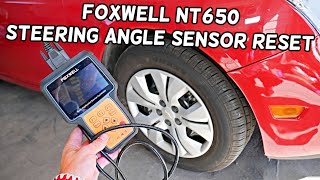
Mid-range: Foxwell NT510 Elite / Autel MaxiCOM MK808 (~$150) — Performs the 'Steering Angle Sensor Calibration/Reset'. This is required after sensor replacement or alignment, making this tool a necessity for a complete DIY job.
Professional: Autel MaxiSys MS906Pro / Launch X431 Series (~$1200-1600) — Provides full bidirectional control, OEM-level diagnostics, and performs programming if an EBCM replacement is needed.
How to Clear the Code After You Fix It
- Reconnect the battery if disconnected for repair.
- Use a compatible OBD-II scan tool to clear codes from the Electronic Brake Control Module (EBCM).
- Perform the Steering Angle Sensor Calibration/Reset procedure using a bidirectional scan tool.
- Perform a test drive including several full-lock turns to confirm warning lights remain off.
Drive cycle (~20 minutes): No specific drive cycle is required for the C0455 code. The system self-tests immediately upon startup and steering movement. If codes were cleared, a standard 20-minute drive cycle is required to reset emissions readiness monitors for state inspections.
Readiness monitors affected: Evaporative System, Oxygen Sensor, Catalyst
Before emissions retest: drive at least 50 miles to fully set monitors.
Watch out for:
- Clearing the code with a scanner fails to fix the problem; warning lights return immediately upon turning the wheel.
- Skipping the mandatory steering angle sensor calibration after replacing the sensor guarantees the code returns.
- Disconnecting the battery resets emissions monitors but fails to clear the hard fault from the EBCM's memory.
Will This Fail Emissions / State Inspection?
Yes — this code typically fails an OBD-II emissions inspection.
- California: An illuminated Malfunction Indicator Lamp (MIL) for a safety system like ABS/ESC causes an automatic failure of the safety inspection.
- New York: NY state inspection checks for illuminated dashboard warning lights. The 'Service StabiliTrak' or ABS light associated with C0455 is an automatic failure.
- Texas: In the 17 Texas counties requiring emissions testing, the ABS/ESC light being on is grounds for immediate failure.
Most Commonly Affected Vehicles
- Chevrolet Silverado, Suburban, Tahoe, Avalanche (2007-2014) — These GMT900 platform vehicles are the most common sufferers of the loose steering angle sensor connector documented in GM TSB PI0639D.
- GMC Sierra, Yukon, Yukon XL (2007-2014) — Identical to their Chevrolet counterparts, these trucks are highly susceptible to the fretting corrosion issue causing C0455 and C0710.
- Cadillac Escalade, Escalade ESV, Escalade EXT (2007-2014) — Explicitly named in GM's service bulletins for the C0455 code. The diagnostic and repair procedure is identical to Chevy/GMC.
- Chevrolet / GMC Colorado / Canyon (2007-2012) — Listed in TSB PI0639D as being affected by the fretting corrosion issue at the steering angle sensor connector.
- Ford F-150, Explorer, Fusion (2009-2018) — Ford vehicles experience identical symptoms but set codes C1963 or C1277. Diagnosis and the need for calibration after replacement are the same.
- Hyundai / Kia Sonata, Elantra, Optima, Sorento (2011-2020) — Faulty steering angle sensors trigger code C1261. Often, a calibration procedure alone fixes the issue without parts replacement.
- Subaru Outback, Forester, Impreza, Crosstrek (2010-2019) — Subaru's Vehicle Dynamics Control (VDC) system requires a scan tool calibration after sensor replacement, battery disconnect, or wheel alignment.
Manufacturer-Specific Notes
- General Motors (Chevrolet, GMC, Cadillac): The primary cause is a loose connector, not a failed sensor. GM TSB PI0639D explicitly states NOT to replace the sensor initially. The fix is adding a shim and dielectric grease to the connector.
- Hyundai / Kia: These vehicles often set code C1261. The issue is frequently resolved simply by performing the 'Steering Angle Sensor Calibration' procedure with a scan tool, without replacing parts.
- Ford: The sensor is often integrated with the clock spring assembly, meaning both parts must be replaced together, increasing repair costs.
- Subaru: Subaru's VDC system loses steering angle calibration after a simple battery disconnection. Recalibration is standard procedure after any alignment or battery replacement.
Real Owner Stories
2008 GMC Yukon at 120K miles - The Easy Fix
'Service StabiliTrak' message appeared intermittently after hitting bumps. Codes C0455 and C0710 were present.
What they tried:
- Ignored the issue until the light became persistent.
- Researched forums and found GM TSB PI0639D.
Outcome: Owner located the sensor connector under the dash, noted it was loose, and secured it tightly with a zip-tie and dielectric grease. Total cost was under $5. The codes cleared and never returned.
Lesson: On GM trucks and SUVs, always try the TSB fix (securing the connector with a zip-tie and dielectric grease) before replacing any parts.
2007 Chevy Tahoe - Misdiagnosis and Wasted Money
'Service StabiliTrak' light came on after a DIY replacement of the intermediate steering shaft.
What they tried:
- Assumed the sensor was damaged during repair and replaced the steering angle sensor.
- Code C0455 came back immediately after replacement.
Outcome: The owner took the vehicle to an alignment shop. The technician found the steering angle was off by nearly 360 degrees because the sensor was spun during the shaft replacement. A $49 electronic calibration permanently fixed the issue.
Lesson: If C0455 appears immediately after steering or suspension work, the cause is a calibration issue, not a failed part. Get a professional calibration first.
2007 Chevy Suburban - A Rare and Dangerous Symptom
Vehicle displayed 'StabiliTrak Off' with code C0455, and experienced severe, unexpected ABS activation at low speeds.
What they tried:
- Replaced the steering angle sensor, but the problem persisted.
Outcome: The owner towed the vehicle to a dealership due to the severe safety risk. The erratic sensor data was causing the EBCM to falsely trigger the ABS.
Lesson: A faulty steering angle sensor signal causes dangerous, unintended braking. If you experience unexpected ABS activation, stop driving immediately and seek professional diagnosis.
How to Prevent This Code From Triggering
- Proactively Apply Dielectric Grease and Secure Connector (Once, especially on a new-to-you GM truck/SUV (2007-2014)) — Applying dielectric grease and adding a zip-tie prevents micro-vibrations and seals out moisture, stopping fretting corrosion before it starts.
- Ensure Proper Battery Health and Clean Terminals (Annually before winter) — A weak battery causes voltage drops that lead to erroneous 'ghost' codes like C0455 during startup self-tests.
- Insist on Sensor Calibration After Alignment (Every time a wheel alignment is performed) — Changing alignment without resetting the steering angle sensor creates a data mismatch that triggers code C0455.
- Avoid 'Washing' Under-dash Electronics (During interior cleaning) — Liquid cleaners dripping into the lower dash introduce moisture into sensitive electrical connectors, accelerating corrosion.
Frequently Asked Questions
Can I fix C0455 myself?
Yes, the most common fix on GM vehicles is highly DIY-friendly. Securing the loose connector under the dash with a zip-tie and applying dielectric grease solves the problem for under $25. However, replacing the sensor itself requires an advanced scan tool for calibration.
I replaced the sensor, but the C0455 code came back. What went wrong?
This happens for three main reasons. First, the original problem was the connector, not the sensor. Second, you skipped the mandatory steering angle sensor calibration. Third, you installed a defective aftermarket sensor.
Could a weak battery cause code C0455?
Absolutely. The EBCM performs a self-test at every startup. If battery voltage drops too low, this self-test fails, triggering erroneous 'ghost' codes like C0455. Test your battery and charging system first if you experience slow cranking.
What happens if I ignore code C0455?
Your vehicle remains drivable, but electronic stability control and traction control are permanently disabled. Ignoring this significantly increases your risk of an accident in bad weather or emergency maneuvers.
Why did the C0455 code appear right after a wheel alignment?
The alignment technician corrected your wheel angles but failed to reset the steering angle sensor. The sensor now tells the computer the car is turning when it goes straight, creating a data conflict. Return to the shop and request a 'steering angle sensor calibration'.
Will clearing the code with a scanner fix the problem?
No. Clearing the code only turns the warning light off temporarily. The EBCM detects the circuit fault again as soon as you turn the wheel, immediately returning the code and warning lights.
Is the Steering Angle Sensor the same as the Clock Spring?
No, but they are located together in the steering column. The clock spring is a rotary electrical connector for the airbag and steering wheel buttons, while the steering angle sensor measures wheel position. On some vehicles, like many Fords, they are integrated into a single replacement unit.
Key Takeaways
- Code C0455 instantly disables your vehicle's stability and traction control systems, increasing the risk of a loss-of-control accident by over 50%.
- For 2007-2014 GM trucks and SUVs, a loose electrical connector causes 80% of C0455 codes, as documented in GM TSB PI0639D.
- Inspect, clean, and secure the sensor connector with a zip-tie and dielectric grease for under $25 before buying a replacement sensor.
- Mandatory post-repair calibration requires a bidirectional scan tool; skipping this step after an alignment or sensor replacement guarantees the C0455 code will return.
Helpful Videos


Shop the Parts Behind C0455
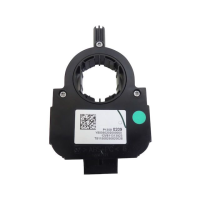
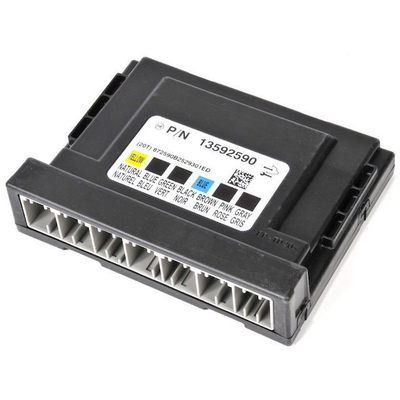
Below are the parts most often responsible for code C0455, ranked by how frequently each one is the actual culprit (per the diagnosis above). Tap any to see what we have for your vehicle.





The information in this article is provided for general reference and educational purposes only. Vehicle specifications, procedures, and part compatibility can vary by production date, trim level, and region. Always consult your vehicle's factory service manual and verify part numbers before purchasing or performing repairs. Safety-critical components such as airbags, seat belts, and braking systems should be installed by a qualified professional.
- 🧭 Diagnostic Flowchart
- 🎬 Helpful Videos
- 🛍️ Shop This Part
- What Does C0455 Mean?
- Can I Drive With C0455?
- Common Causes
- Symptoms
- Common Fixes & Costs
- Used vs. New Parts: Buying Guide
- What Happens If You Wait — Timeline
- Cost of Not Fixing It
- Diagnosis Steps
- When This Code Triggers (Freeze-Frame Conditions)
- Related Codes
- Climate & Environmental Factors
- How to Talk to a Mechanic About This Code
- Where to Take It: Dealer vs Independent vs Chain
- When to Walk Away From the Repair
- What Scan Tool You Need for This Code
- How to Clear the Code After You Fix It
- Will This Fail Emissions / State Inspection?
- Most Commonly Affected Vehicles
- Manufacturer-Specific Notes
- Real Owner Stories
- 2008 GMC Yukon at 120K miles - The Easy Fix
- 2007 Chevy Tahoe - Misdiagnosis and Wasted Money
- 2007 Chevy Suburban - A Rare and Dangerous Symptom
- How to Prevent This Code From Triggering
- Frequently Asked Questions
- Can I fix C0455 myself?
- I replaced the sensor, but the C0455 code came back. What went wrong?
- Could a weak battery cause code C0455?
- What happens if I ignore code C0455?
- Why did the C0455 code appear right after a wheel alignment?
- Will clearing the code with a scanner fix the problem?
- Is the Steering Angle Sensor the same as the Clock Spring?
- Key Takeaways
- 🎟️ Get 5% Off