

C0455 on 2007-2013 Chevrolet Avalanche: Steering Sensor Fixes for Service StabiliTrak Light
This code usually means there's a problem with the steering angle sensor circuit, often just a loose connector. Before replacing the sensor, check for a poor connection as outlined in GM TSB #PI0639D. The official fix involves applying dielectric grease and adding a special adhesive shim to tighten the connection. The sensor itself costs about $80-$120 for an aftermarket part.
- C0455 means the StabiliTrak system has lost its signal from the steering angle sensor.
- Before replacing any parts, inspect the sensor's electrical connector. A loose fit is a very common cause on this vehicle; applying dielectric grease is a crucial first step.
- If the code appeared right after a steering-related repair, the steering wheel is likely misaligned and needs to be re-indexed.
- Driving is possible, but with reduced safety as the StabiliTrak system will not function.
- This is a safety-related repair involving the airbag system, and professional service is strongly recommended.
What's Unique About the 2007-2013 Chevrolet AVALANCHE
On this generation of GM trucks (GMT900 platform), code C0455 is very frequently caused by a poor electrical connection at the steering angle sensor itself, not necessarily a failed sensor. GM issued a Technical Service Bulletin (PI0639C, later superseded by PI0639D) detailing how fretting corrosion and excessive clearance in the connector can interrupt the signal. The official fix often involves simply adding a special adhesive shim stock (Kent Automotive P40100) and dielectric grease to the connector to ensure a tight, corrosion-free fit, rather than replacing the entire sensor. The TSB explicitly states, "DO NOT replace the steering position sensor for this condition.& 🎬 Watch: How to apply the TSB shim and grease fixquot;
Diagnostic Flowchart
Tap your situation to follow the diagnostic path that matches what you're seeing on this vehicle.
Symptoms You May Notice
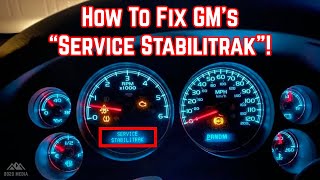
- "Service StabiliTrak" message on the Driver Information Center (DIC)
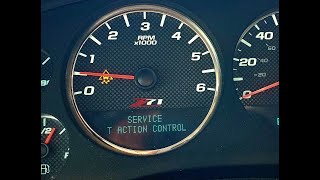
- "Service Traction Control" message on the DIC
- StabiliTrak/Traction Control indicator light is illuminated
- StabiliTrak system is disabled
- In rare cases, unwanted ABS activation, making the vehicle difficult to drive.
- Replacing the steering angle sensor when the actual problem is the loose connector. Always perform the TSB #PI0639D procedure (shim and dielectric grease) before buying a new sensor. One forum user on GMTNation replaced the sensor twice (once with Dorman, once with OEM) to no effect, highlighting the importance of diagnosing the connector first.
Most Likely Causes
- Poor Connection at Steering Angle Sensor Connector 🔴 High Probability → Shop Steering Angle Sensor A known design issue with connector clearance causing fretting corrosion and signal loss, as documented in GM Technical Service Bulletin #PI0639D.
How to confirm: With the key off, disconnect the steering column covers to access the sensor connector. Disconnect and inspect the terminals for dark, smudgy residue (fretting corrosion). Wiggling the connector while monitoring live data from a scan tool may show the signal dropping out. The TSB notes that in less severe cases, the corrosion may only be visible with a magnifying glass.
Typical fix: Apply dielectric grease (GM P/N 12377900) to the connector terminals and add an adhesive shim stock (Kent Automotive P/N P40100) to the male side of the connector to create a tighter fit, per TSB #PI0639D.
Est. part cost: $10-$30 for shim stock and dielectric grease. - Failed Steering Angle Sensor 🟡 Medium Probability → Shop Steering Angle Sensor The sensor is an electronic component that can fail over time, though it is often misdiagnosed when the connector is the real issue. Some owners report replacing the sensor multiple times, suggesting aftermarket quality can be inconsistent.
How to confirm: Use a bi-directional scan tool to monitor the Steering Angle Sensor data. The angle should read 0 degrees when the wheel is centered and change smoothly as you turn the wheel. If the data is erratic, stuck, absent, or jumps, and the connector/wiring are confirmed good, the sensor has failed.
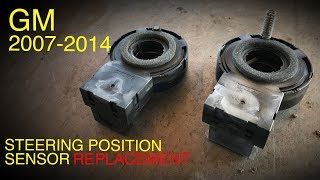
Typical fix: Replace the steering angle sensor. This requires removing the airbag and steering wheel. A recalibration may be needed afterward.
Est. part cost: $80-$250 - Improperly Installed Steering Wheel / Intermediate Shaft ⚪ Low Probability This typically occurs after a separate repair, like replacing the steering intermediate shaft, where the steering wheel was not kept centered. If the wheel is rotated 360 degrees off from its correct position, the sensor will give an illogical reading, triggering the code.
How to confirm: If the code appeared immediately after a steering column or shaft repair, this is a likely cause. A forum user on Tahoe Yukon Forum described this exact scenario: after replacing the intermediate shaft, his assistant let the wheel spin 360 degrees, causing code C0455. The fix required a visit to an alignment shop to have the sensor position reset electronically.
Typical fix: The steering wheel and steering shaft must be disconnected and re-indexed correctly. A steering angle sensor recalibration is almost always required with a scan tool afterward. This is addressed in TSB #PIT4225F.
Est. part cost: $0 if re-indexing manually, or ~$50-$100 for an alignment shop to perform a sensor reset.
Rare But Worth Checking
- Damaged Wiring Harness: The wiring between the sensor and the EBCM can become chafed or broken, especially in the tilting steering column. If the TSB fix doesn't work and a new sensor doesn't solve the issue, check for continuity and shorts. TSB PI0639D suggests that if the code still resets after the shim/grease fix, the harness-side connector pigtail should be replaced.
- Faulty Electronic Brake Control Module (EBCM): This is very rare. The EBCM is the computer that receives the sensor's signal. It should only be considered after all other possibilities (sensor, connector, wiring) have been exhaustively ruled out. In some cases, an EBCM software reflash has been noted to solve similar issues on other GM vehicles, but the primary fix for C0455 on this platform is mechanical.
Diagnosis Steps
- Read all codes from the Electronic Brake Control Module (EBCM). Note if C0710 is present with C0455, as they share common causes.
- Turn the ignition off. Remove the steering column shrouds to access the steering angle sensor and its electrical connector at the base of the column.
- Disconnect the sensor connector. Inspect the male and female terminals for any signs of dark dust or smudges, which indicates fretting corrosion.
- Perform TSB #PI0639D: Apply a small amount of dielectric lubricant (GM P/N 12377900) to the connector terminals. Cut a piece of adhesive shim stock (Kent Automotive P/N P40100) to fit the flat surface of the male connector and apply it to tighten the connection. Reconnect it firmly.
- Clear the codes and test drive to see if the fault returns. For many vehicles, this is the complete repair.
- If the code returns, use a scan tool capable of reading live data to view the 'Steering Wheel Angle' parameter.
- With the engine on and wheels pointed straight, the sensor should read at or very near 0 degrees.
- Turn the steering wheel slowly lock-to-lock. The angle reading should change smoothly and consistently. If it jumps, freezes, or shows no reading, the sensor is likely faulty (assuming the connection is now secure).
- If the code appeared after a recent repair, verify the steering wheel is mechanically centered. A shop with an alignment rack may be needed to electronically reset the sensor's center position, as described by a user on Tahoe Yukon Forum.
- If the sensor and connection are good, perform a continuity and resistance check on the wiring between the sensor connector and the EBCM connector. 🎬 Watch: Pro tips and tricks for replacing the sensor safely If a fault is found, consider replacing the harness-side connector pigtail.
- If all wiring and the sensor check out, the EBCM may be at fault, but this is highly unlikely and should be the last resort.
Parts You'll Likely Need
- Steering Angle Sensor
(OEM #25849366, 13590209)— If the connector fix does not work, the sensor itself is the next most likely component to have failed. OEM is recommended as some users report issues with aftermarket longevity.
Trusted brands: ACDelco (Genuine GM), Dorman (e.g., 601-175, 601-011)
OEM price range: $150-$250
Aftermarket price range: $80-$120 - Dielectric Grease
(OEM #12377900)— Required to prevent moisture and fretting corrosion in the sensor's electrical connector, as recommended by GM TSB #PI0639D.
Trusted brands: Permatex, ACDelco
OEM price range: $15-$25
Aftermarket price range: $5-$10 - Adhesive Back Shim Stock
(OEM #P40100 (Kent Automotive))— Specifically called for in TSB #PI0639D to add physical tightness to the loose connector, preventing movement and signal loss.
Trusted brands: Kent Automotive
OEM price range: $15-$25
Aftermarket price range: N/A
Related Codes That Often Appear With This One
- C0710 — This code is also related to the steering angle sensor. Both TSBs, PIT4225F and PI0639D, mention that C0455 and C0710 often appear together for the same root causes (connector fretting or improper wheel installation) on this platform.
Technical Service Bulletins (TSBs) & Recalls
- PI0639D: (Supersedes PI0639C) Addresses a 'Service Stabilitrak' message with DTC C0455 or C0710 caused by a poor connection at the steering angle sensor connector. Explicitly states not to replace the sensor for this condition and details the shim/grease repair.
- PIT4225F: Notes that C0455 can be set if the steering wheel is not installed properly on the steering shaft, often after a related repair.
Platform-Specific Known Issues
- A known issue exists where the plastic connector for the steering angle sensor has excessive clearance, leading to a poor connection and intermittent C0455/C0710 codes. This is documented in GM TSB #PI0639D, which advises adding a shim and dielectric grease instead of replacing the sensor.
Mechanic-Grade Diagnostic Values
- Steering Angle Sensor Analog Signal Voltage — expected: Approximately 2.5V with steering wheel centered. Ranges from 0.25V (full left turn) to 4.75V (full right turn).. Failure: Voltage that is stuck, erratic, or does not correspond to the 0.25V-4.75V range during wheel rotation.
- Steering Angle Sensor 'Marker Pulse' Digital Signal — expected: Scan tool should display HIGH when the steering wheel is between +10 and -10 degrees of center.. Failure: Scan tool displays LOW when the wheel is centered, or HIGH when the wheel is turned more than 10 degrees from center.
- Steering Angle Sensor 12V Reference Circuit — expected: 11.8-12.2 volts between terminal 1 of the sensor connector and ground with ignition ON.. Failure: Voltage significantly lower or higher than the specified range indicates a wiring or EBCM issue.
- Steering Angle Sensor Low Reference Circuit Resistance — expected: Less than 1.0 ohm between terminal 2 of the sensor connector and a known good ground.. Failure: Resistance higher than 1.0 ohm indicates a poor ground connection.
Scan Tool Commands That Help
- Tech2 / GDS2 / Professional Scan Tool: Steering Angle Sensor Calibration / Reset — This function is required after replacing the steering angle sensor, or after any repair where the steering wheel's relationship to the steering gear may have changed (e.g., intermediate shaft replacement, alignment). It electronically resets the sensor's 'zero' or center position.
- GM TIS (Technical Information System): EBCM Reprogramming — On some older GM platforms, an EBCM software update was required to correct sensitivity issues that could trigger this code. While less common for the 2007-2013 models than the connector fix, it's a dealer-level option if all mechanical and wiring checks pass.
Wiring & Ground Locations
- Electronic Brake Control Module (EBCM) — Mounted to the frame rail under the vehicle, on the driver's side.. The EBCM receives and interprets all signals from the steering angle sensor. All sensor wiring terminates at this module.
- Steering Angle Sensor (SAS) Connector — At the base of the steering column, accessible after removing the lower dash/knee bolster panels.. This is the most common failure point due to the loose connection documented in TSB PI0639C. Key pins to test are Pin 1 (12V ref), Pin 2 (Low ref), and Pin 6 (Signal).
- Frame Ground — On the driver's side frame rail, near the front tire. The main battery ground and EBCM grounds connect here.. A corroded or loose frame ground can cause a floating reference voltage for the entire chassis electronics system, leading to erratic sensor readings and codes like C0455.
Real Owner Repair Stories
- Tahoe Yukon Forum user 'Sparky75013' (2005 GMC Yukon (same GMT800/900 platform principles apply)) — Service Stability message with code C0455 appeared immediately after replacing the steering intermediate shaft.
❌ Tried (didn't work) Taking it to a dealership, who claimed the sensor could not be reset and quoted $542.34 to replace it.
✅ What actually fixed it Took the vehicle to an alignment shop. They used their computerized Hunter alignment equipment to electronically reset the steering angle sensor's center position for $49. The technician noted the sensor was off by 360 degrees from the steering wheel being spun during the prior repair.
OEM Part Supersession History
25849366→13590209 (for this platform)— Part number consolidation and application updates.
Heads up: Part number 25849366 is a valid GM steering angle sensor, but is commonly listed for cars like the Camaro, Volt, and LaCrosse. The correct part for the Avalanche and other GMT900 trucks is 13590209. Using the wrong part may result in fitment or communication errors. The correct part requires programming or a special calibration procedure after installation.
Helpful Videos

We Have This Part in Stock


The information in this article is provided for general reference and educational purposes only. Vehicle specifications, procedures, and part compatibility can vary by production date, trim level, and region. Always consult your vehicle's factory service manual and verify part numbers before purchasing or performing repairs. Safety-critical components such as airbags, seat belts, and braking systems should be installed by a qualified professional.
- Chevrolet AVALANCHE:
- 🧭 Diagnostic Flowchart
- 🎬 Helpful Videos
- 🛍️ Shop This Part
- What's Unique About the 2007-2013 Chevrolet AVALANCHE
- Symptoms You May Notice
- Most Likely Causes
- Rare But Worth Checking
- Diagnosis Steps
- Parts You'll Likely Need
- Related Codes That Often Appear With This One
- Technical Service Bulletins (TSBs) & Recalls
- Platform-Specific Known Issues
- Mechanic-Grade Diagnostic Values
- Scan Tool Commands That Help
- Wiring & Ground Locations
- Real Owner Repair Stories
- OEM Part Supersession History
- 🎟️ Get 5% Off