

C0455 on 2013-2016 Chevrolet Express: Steering Angle Sensor Circuit Fixes
On a 2013-2016 Express, code C0455 almost always indicates a poor connection at the steering angle sensor, triggering a 'Service StabiliTrak' message. The fix, outlined in GM TSB #PI0639C and its successor #PI0639D, involves securing the connector with a specific adhesive shim (Kent Automotive P40100) and applying dielectric grease. This is a very low-cost repair. Do not replace the sensor until this TSB procedure has been performed, as the bulletin explicitly warns against it.
- C0455 on a 2013-2016 Express means there's a problem in the steering angle sensor circuit, which will disable your StabiliTrak and Traction Control systems.
- Before buying an expensive new sensor, you MUST perform the fix in GM TSB #PI0639D. This involves cleaning the sensor's electrical connector, applying dielectric grease, and adding a special adhesive shim to make the connection tight.
- The TSB fix is very cheap (under $30 in materials) and resolves the code in the vast majority of cases.
- Driving is possible, but your vehicle's stability in emergency maneuvers or on slippery surfaces is significantly reduced. This should be repaired promptly.
What's Unique About the 2013-2016 Chevrolet EXPRESS
For this generation of Chevrolet Express and its platform mate, the GMC Savana, the C0455 code is overwhelmingly caused by a known design issue rather than a failed sensor. GM issued Technical Service Bulletin (TSB) #PI0639C, which was later updated and superseded by #PI0639D to include model years up to 2017. These bulletins acknowledge that fretting corrosion and excessive vertical clearance in the steering angle sensor's electrical connector are the root cause. The TSB explicitly warns technicians *not* to replace the sensor for this condition, but to instead perform a specific connector repair using a shim and dielectric grease.
Diagnostic Flowchart
Tap your situation to follow the diagnostic path that matches what you're seeing on this vehicle.
Symptoms You May Notice
- "Service StabiliTrak" message displayed on the Driver Information Center (DIC)
- "Service Traction Control" message on the DIC
- StabiliTrak/Traction Control indicator light illuminated
- ABS light may be illuminated
- Intermittent steering jerk or resistance (rare)
- In very rare instances, unintended ABS activation at low speeds
- Replacing the steering angle sensor before addressing the connector issue. TSB #PI0639D explicitly warns against this, as the problem is most often the connection, not the sensor itself. Forum users frequently report replacing the sensor only to have the problem persist until the connector is properly secured.
Most Likely Causes
- Poor Connection at Steering Angle Sensor Connector 🔴 High Probability → Shop Steering Angle Sensor A known issue documented in GM TSB #PI0639D. Fretting corrosion (dark smudges on terminals) and excessive vertical play in the connector cause an intermittent loss of signal from road vibrations.
How to confirm: Visually inspect the sensor's electrical connector, located on the steering column after removing the knee bolster. Check for dark smudges on the terminals (fretting corrosion) and wiggle the connector to check for up-and-down movement. The corrosion can be subtle and may require a magnifying glass to see.
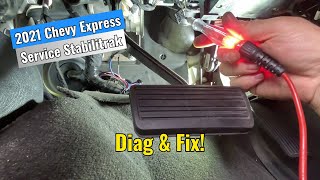
Typical fix: Perform the procedure in TSB #PI0639D: add adhesive shim stock (Kent Automotive P/N P40100, 5/8" x 1/8") to the male side of the connector, clean terminals with a dedicated nylon brush, and apply a small amount of dielectric lubricant (GM P/N 12377900) before reconnecting. Some owners have reported success using a simple zip tie to secure 🎬 Watch: This video shows how to perform the connector repair. the connector tightly as a temporary or alternative fix.
Est. part cost: $5-$25 - Failed Steering Angle Sensor 🟡 Medium Probability → Shop Steering Angle Sensor While less common than the connector issue, the sensor itself can fail internally. This should only be considered after the TSB for the connector has been performed and ruled out. Some owners in forums have replaced the sensor multiple times only to have the code return, pointing back to the connection or wiring.
How to confirm: After confirming the connector is secure and clean per the TSB, use a scan tool to monitor the steering angle sensor's live data. The degree reading should be smooth, consistent, and near 0° when the wheels are straight. If it is erratic, jumps, has dead spots, or does not change when the wheel is turned, the sensor has failed.
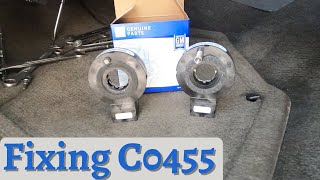
Typical fix: Replace the steering angle sensor. This requires removing lower dash panels and potentially lowering the steering column 🎬 Watch: Step-by-step guide for replacing the steering wheel sensor. for access. A steering angle sensor calibration with a capable scan tool 🎬 See a professional diagnostic and repair on a Chevy Express. is required after replacement.
Est. part cost: $60-$180
Rare But Worth Checking
- Wiring Harness Issue: The circuit between the steering angle sensor and the EBCM could have an open or short. TSB #PI0639D suggests that if the code still resets after the shim fix, the harness-side connector pigtail should be replaced. TSB #PIT5288A on related platforms points to potential for a chafed harness on the left side of the instrument panel.
- Improper Steering Wheel Installation: If the steering wheel was recently removed and not reinstalled correctly centered, it can trigger this code. TSB PIT4225F mentions this possibility, requiring verification that alignment marks on the wheel and shaft line up.
- Poor Ground Connection: On other GM trucks, TSB #PIT5405C notes that a poor BCM ground at G218, sometimes caused by trapped dash insulation, can cause a wide range of electrical issues, including C0710 (often seen with C0455). Checking major grounds is a valid diagnostic step if other fixes fail.
Diagnosis Steps
- Read the trouble codes from the EBCM using a scan tool capable of reading chassis ('C') codes. A basic OBD-II reader may not see this code.
- Confirm C0455 and/or C0710 is present (current or history).
- Gain access to the steering angle sensor connector on the steering column by removing the lower dash/knee bolster panels.
- Disconnect the connector. Visually inspect the connector terminals for fretting corrosion (dark smudges). Wiggle the connector housing to check for excessive up-and-down play.
- Perform the TSB #PI0639D repair: Cut a piece of adhesive shim stock (Kent Automotive P/N P40100) to the width of the connector and apply it to the flat surface of the male connector side to eliminate movement.
- Clean the terminals on both the sensor and harness side with a clean, dedicated nylon brush.
- Apply a small amount of dielectric lubricant (GM P/N 12377900) to both sides of the connector. Do not over-apply, as this can cause a hydrolock condition.
- Reconnect the connector, clear the codes, and test drive the vehicle. Turn the steering wheel lock-to-lock to see if the code returns.
- If the code returns, use a scan tool to monitor the steering angle sensor live data. The value should read close to 0° with the wheel centered and change smoothly as you turn the wheel.
- If the live data is faulty (erratic, stuck, or no reading), replace the steering angle sensor.
- If live data appears normal but the code persists, inspect the wiring harness between the sensor and the EBCM for opens or shorts. Consider replacing the harness-side pigtail connector as a next step.
- After any sensor replacement, perform the steering angle sensor calibration procedure with a capable scan tool.
Parts You'll Likely Need
- Steering Angle Sensor Connector Repair Kit (Shim & Grease)
(OEM #Shim: Kent Automotive P40100; Grease: GM 12377900)— This is the most common and official fix as per GM TSB #PI0639D to address the poor connection that causes the code.
Trusted brands: Kent Automotive (shim stock), ACDelco or Permatex (dielectric grease)
OEM price range: $15-$30
Aftermarket price range: $5-$20 - Steering Angle Sensor
(OEM #ACDelco 13589113 (part number may vary, confirm with VIN))— This part is replaced if the connector repair fails and the sensor is confirmed to be faulty via scan tool data.
Trusted brands: ACDelco (GM Genuine), Dorman
OEM price range: $120-$180
Aftermarket price range: $60-$100
Related Codes That Often Appear With This One
- C0710 — This code for 'Steering Position Signal Plausibility Failure' is often triggered by the same root cause. TSB PI0639D lists both C0455 and C0710 as being caused by the faulty connector.
Technical Service Bulletins (TSBs) & Recalls
- PI0639D: Service StabiliTrak Message Displayed in DIC, StabiliTrak Indicator Light On, DTC C0455 and/or C0710 Set. This is the primary document for this issue, advising a connector repair instead of sensor replacement. It supersedes PI0639C and extends the model year coverage to 2017 for the Express/Savana.
- PI0639C: The earlier version of the TSB, covering up to 2016 models. The procedure is nearly identical to PI0639D.
Platform-Specific Known Issues
- A widespread issue across many GM truck and van platforms from this era, including the Express, is a poor connection at the steering angle sensor due to fretting corrosion and excessive connector clearance, as documented in TSB PI0639D. Owners on forums frequently confirm that performing the TSB shim-and-grease fix resolves the C0455 code after they had previously, and unsuccessfully, replaced the sensor itself.
Mechanic-Grade Diagnostic Values
- 5V Reference Voltage at Sensor Connector — expected: 4.8-5.2V between the 5V reference pin and the low reference (ground) pin.. Failure: Voltage is significantly lower or absent, indicating a wiring or EBCM/BCM issue.
- Analog Signal Voltage (Live Scan Tool Data) — expected: Approximately 2.5V with the steering wheel centered. Should sweep smoothly from ~0.25V (full left) to ~4.75V (full right).. Failure: Voltage is stuck, erratic, has dropouts, or does not change smoothly with wheel rotation.
- Low Reference Circuit Resistance — expected: Less than 20 ohms between the low reference pin at the sensor connector and a known good chassis ground.. Failure: High resistance indicates a bad ground connection.
Hidden / Shadow Codes Worth Checking
- C0472 / C0473: These are Body Control Module (BCM) codes related to the analog steering wheel position signal. If C0455 sets immediately at startup without the steering wheel being turned, it may be because the BCM has detected a fault and set one of these codes, which in turn causes the EBCM to set C0455. (see via A scan tool capable of reading Body Control Module (BCM) fault codes.)
Scan Tool Commands That Help
- Tech2 / GDS2 / Professional Scan Tool: Steering Angle Sensor Calibration / Reset — This function is required after replacing the steering angle sensor or after any repair where the steering wheel's centered position may have changed, such as an alignment or steering column work. It zeros the sensor's position.
- Tech2 / GDS2 / Professional Scan Tool: Live Data - Steering Wheel Position — Used to monitor the sensor's output in real-time. Watching the angle degrees or voltage sweep while turning the wheel helps determine if the sensor is functioning correctly or has dead spots.
Wiring & Ground Locations
- G218 — Under the driver's side dash, behind the kick panel, near the speaker.. A poor ground at G218, often caused by trapped dash insulation, can cause a wide range of electrical issues on GM trucks, including setting StabiliTrak-related codes like C0710. While not the primary cause for C0455, it's a known source of intermittent electrical faults that can mimic sensor issues.
- Steering Angle Sensor Connector — On the lower part of the steering column, accessible after removing the knee bolster/lower dash panel.. This is the primary point of failure. The TSB PI0639D fix is performed directly on this connector. Testing for voltage, ground, and signal integrity is done here.
- EBCM (Electronic Brake Control Module) — Typically mounted on the driver's side frame rail, below the driver's door area.. This module receives the signals from the steering angle sensor and is what actually sets the C0455 trouble code. The wiring harness between the sensor and the EBCM can be tested for continuity and shorts.
Real Owner Repair Stories
- YouTube user 'i g' (2013 Chevrolet Express Van) — Van would stall and die, illuminating the StabiliTrak and security system lights.
❌ Tried (didn't work) Diagnosing based on the StabiliTrak code., Pulling the ABS fuse.
✅ What actually fixed it The owner found a wire for an aftermarket booster fuel pump had chafed against the frame, causing an electrical short. The short was causing an ignition fault, which the vehicle's computer incorrectly reported as a StabiliTrak error. Fixing the chafed wire resolved all symptoms. - Tahoe Yukon Forum user (GM Truck (similar platform)) — C0455 code appeared immediately after replacing the steering intermediate shaft.
❌ Tried (didn't work) Clearing the code with a basic scanner.
✅ What actually fixed it The steering wheel was likely rotated 360 degrees while the shaft was disconnected. The fix was to take it to an alignment shop with a computerized scanner (like a Hunter machine) to perform a steering angle sensor reset/calibration, which corrected the offset and cleared the code.
OEM Part Supersession History
PI0639C→PI0639D— Updated to add the 2017 Model Year for the Express and Savana models.ACDelco PT265→— This is a common part number for the steering angle sensor connector pigtail, should the harness side of the connector need replacement.
Heads up: Verify connector shape and pin count before ordering. Other pigtails like PT1798 or PT420 may also be applicable depending on the specific vehicle configuration.
Helpful Videos


We Have This Part in Stock


The information in this article is provided for general reference and educational purposes only. Vehicle specifications, procedures, and part compatibility can vary by production date, trim level, and region. Always consult your vehicle's factory service manual and verify part numbers before purchasing or performing repairs. Safety-critical components such as airbags, seat belts, and braking systems should be installed by a qualified professional.
- Chevrolet EXPRESS:
- 🧭 Diagnostic Flowchart
- 🎬 Helpful Videos
- 🛍️ Shop This Part
- What's Unique About the 2013-2016 Chevrolet EXPRESS
- Symptoms You May Notice
- Most Likely Causes
- Rare But Worth Checking
- Diagnosis Steps
- Parts You'll Likely Need
- Related Codes That Often Appear With This One
- Technical Service Bulletins (TSBs) & Recalls
- Platform-Specific Known Issues
- Mechanic-Grade Diagnostic Values
- Hidden / Shadow Codes Worth Checking
- Scan Tool Commands That Help
- Wiring & Ground Locations
- Real Owner Repair Stories
- OEM Part Supersession History
- 🎟️ Get 5% Off