

C0455 on 2007-2011 GMC Yukon Denali: Steering Angle Sensor Circuit Malfunction Fixes
On a 2007-2011 GMC Yukon Denali, code C0455 almost always indicates a poor electrical connection at the Steering Angle Sensor, triggering a 'Service StabiliTrak' message. The most common and cheapest fix is to secure and clean the connector, a solution outlined in a GM Technical Service Bulletin. Replacing the sensor itself is a last resort.
- Code C0455 will disable your StabiliTrak and Traction Control systems, indicated by a warning message on your dash.
- Before buying any parts, the first step is to inspect the steering angle sensor's electrical connector for looseness. This is the most common cause and has a low-cost fix.
- If you've had recent steering or alignment work done, the steering wheel may be off-center, which can trigger this code.
- Replacing the sensor is the final step after the connector and alignment have been confirmed to be good. This repair involves safety systems and should be done carefully or by a professional.
- This code is almost always seen with C0710; they point to the same problem.
What's Unique About the 2007-2011 Gmc YUKON DENALI
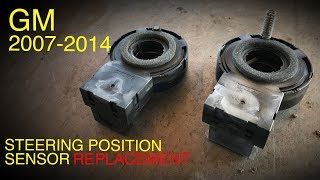
The GMT900 platform, which includes the 2007-2011 Yukon Denali, is well-known for this specific issue. The problem is so common that General Motors issued Technical Service Bulletins (like PI0639C) detailing the cause: excessive clearance and fretting corrosion in the steering angle sensor's electrical connector. Fretting corrosion appears as small, dark smudges on the terminals where electrical contact is made. This means that, more often than not, the sensor itself is fine, and the problem is simply a loose or dirty connection, making for a much simpler and cheaper repair than full sensor replacement. 🎬 Watch: Step-by-step steering angle sensor replacement for Yukon and Denali models. The TSB explicitly states, "DO NOT replace the steering position sensor for this condition."
Diagnostic Flowchart
Tap your situation to follow the diagnostic path that matches what you're seeing on this vehicle.
Symptoms You May Notice
- "Service StabiliTrak" message on the Driver Information Center (DIC)
- "Service Traction Control" message on the DIC
- StabiliTrak/Traction Control indicator light illuminated
- StabiliTrak and Traction Control systems are disabled
- In rare cases, incorrect ABS activation or a steering 'jerk'
- Replacing the Steering Angle Sensor without first checking the connector. The TSBs specifically advise against this, as the connector is the most frequent point of failure.
- Replacing the sensor and not performing the required steering angle sensor calibration with a scan tool, which will cause the code to return.
Most Likely Causes
- Loose or Corroded Steering Angle Sensor Connector 🔴 High Probability → Shop Steering Angle Sensor This is a well-documented issue on the GMT900 platform. The connector design allows for excessive movement, leading to fretting corrosion (small dark smudges on the terminals) and a poor signal. The TSB notes this corrosion may be difficult to see without a magnifying glass.
How to confirm: Visually inspect the sensor connector at the base of the steering column. Check for any up-and-down play or visible corrosion on the terminals. Unplugging the connector, cleaning it, and plugging it back in may temporarily resolve the issue, confirming the connection is the problem.
Typical fix: Disconnect the connector, clean the terminals with a dedicated electrical contact cleaner and a nylon brush, apply a small amount of dielectric grease (GM P/N 12377900), and add an adhesive shim (Kent Automotive P40100) to the connector body to eliminate movement, as described in TSB #PI0639C. Some owners use a zip tie to secure the connection as a field expedient.
Est. part cost: $5-$25 - Improperly Installed or Centered Steering Wheel 🟡 Medium Probability If the steering wheel has been removed for a previous repair (like replacing the intermediate shaft) and not re-centered correctly, the sensor's reading will be incorrect. Being off by even one spline or a full 360-degree rotation can trigger the code. TSB #PIT4225F directly addresses this, noting alignment marks on the wheel and shaft must line up.
How to confirm: Drive on a straight, level road. If the steering wheel is visibly crooked, this is a likely cause. A scan tool can also confirm if the sensor reads a non-zero angle when driving straight. A user on a Yukon forum noted their sensor was off by 2.5 degrees after an alignment and needed to be reset.
Typical fix: The steering wheel must be removed and reinstalled in the correct position, aligning the marks on the wheel and shaft. This should be followed by a four-wheel alignment and a steering angle sensor calibration using a capable scan tool.
Est. part cost: $0 - Faulty Steering Angle Sensor ⚪ Low Probability → Shop Steering Angle Sensor While less common than the connector issue, the sensor itself can fail internally. The internal components can wear out, causing erratic or no signal. Aftermarket sensors, in particular, have been reported to fail prematurely or be faulty out of the box.
How to confirm: If the connector is tight and clean and the steering wheel is centered, use a scan tool to monitor the sensor's live data while turning the wheel. Dropouts, jumps, or a signal that is stuck at one value indicate a failed sensor.
Typical fix: Replace the steering angle sensor. This requires careful removal of the steering wheel and airbag assembly, followed by calibration of the new sensor. It is highly recommended to use an OEM GM or ACDelco part.
Est. part cost: $70-$150
Rare But Worth Checking
- Damaged Wiring Harness: The wiring between the sensor and the Electronic Brake Control Module (EBCM) can become chafed or broken, especially in the steering column area. This should be checked if a new sensor and connector fix do not resolve the issue. A user on GMTNation was advised to check wiring and grounds after two replacement sensors failed to fix the code.
- Faulty Electronic Brake Control Module (EBCM): In very rare cases, the EBCM itself may be the source of the problem, failing to correctly interpret a good signal from the sensor. This is typically diagnosed only after all other possibilities have been eliminated by testing the circuits directly.
Diagnosis Steps
- Scan the EBCM for codes and confirm C0455 is present. Note if C0710 is also stored.
- Gain access to the steering angle sensor connector, located on the steering column under the dash.
- Inspect the connector for looseness. Wiggle it to see if there is excessive play.
- Disconnect the connector and inspect the male and female terminals for fretting corrosion (dark smudges). A magnifying glass may be needed.
- If loose or corroded, perform the fix outlined in TSB #PI0639C: add an adhesive shim, clean the terminals with contact cleaner and a nylon brush, and apply dielectric grease. Reconnect and clear codes.
- If the code returns, verify the steering wheel is centered when driving straight. If it's off, an alignment and steering wheel re-centering is needed, per TSB #PIT4225F.
- Using a capable scan tool (like a GM Tech 2), monitor the live data from the steering angle sensor. Turn the wheel lock-to-lock. The angle reading should be smooth and consistent. If it jumps, freezes, or has dropouts, the sensor itself is likely faulty.
- If the sensor is replaced, perform the steering angle sensor calibration procedure using the scan tool.
Parts You'll Likely Need
- Steering Angle Sensor
(OEM #19418403)— This part is needed if the sensor itself has failed internally, which is the second most likely cause after the connector issue. Using a genuine GM or ACDelco part is strongly recommended.
Trusted brands: ACDelco, GM Genuine Parts, Duralast, Standard Motor Products
OEM price range: $125-$175
Aftermarket price range: $70-$125 - Dielectric Grease
(OEM #12377900)— Required for the TSB-recommended fix to protect the electrical connector terminals from moisture and corrosion after cleaning.
Trusted brands: Permatex, ACDelco
OEM price range: $15-$25
Aftermarket price range: $5-$10 - Adhesive Back Shim Stock
(OEM #P40100 (Kent Automotive))— Specifically called for in TSB #PI0639C to add to the connector body to eliminate excessive clearance and prevent future fretting corrosion.
Trusted brands: Kent Automotive
OEM price range: $10-$20
Aftermarket price range: $5-$15
Related Codes That Often Appear With This One
- C0710 — This code for the Steering Wheel Position Sensor signal is often set alongside C0455 because they both relate to the same sensor and are triggered by the same common faults, like the loose connector. TSB PI0639C explicitly lists both codes together.
Technical Service Bulletins (TSBs) & Recalls
- PI0639C: Service Stabilitrak message displayed in DIC and DTC C0455 or C0710
- PIT4225F: Service Brakes, Electric with DTC C0710 and/or C0455
Platform-Specific Known Issues
- TSB #PI0639C / PI0639D: GM issued this bulletin to address C0455 and C0710 caused by fretting corrosion and excessive clearance in the steering angle sensor connector. The official fix is to add adhesive shim stock and dielectric grease, NOT to replace the sensor initially. The bulletin explicitly warns that the corrosion may be hard to see without a magnifying glass.
- TSB #PIT4225F: This bulletin notes that C0455 can be set if the steering wheel is improperly installed on the steering shaft, reinforcing the importance of proper centering after any steering column service. It shows alignment arrows on the steering wheel and shaft that must be lined up.
Mechanic-Grade Diagnostic Values
- Analog Signal Voltage (Scan Tool) — expected: Approx. 2.5V with steering wheel centered. Should sweep smoothly from ~0.25V (full left) to ~4.75V (full right).. Failure: Voltage is stuck, jumps erratically, or does not change smoothly while turning the wheel.
- 5V Reference Voltage at Sensor Connector — expected: 4.8-5.2V between terminal 1 (5V ref) and ground.. Failure: Voltage is significantly lower or absent, indicating a problem with the EBCM/BCM or wiring.
- 12V Reference Circuit (early models, ~2007-2009) — expected: 11.8-12.2V between terminal 1 (12V reference) and ground.. Failure: Voltage is significantly lower or absent.
- Low Reference (Ground) Circuit Resistance — expected: Less than 20 ohms between terminal 2 (low ref) and a known good chassis ground.. Failure: High resistance indicates a poor ground connection for the sensor.
Hidden / Shadow Codes Worth Checking
- C0472 / C0473: These are Body Control Module (BCM) codes related to the analog steering wheel position signal. The BCM can detect a fault with the sensor's analog signal and set one of these codes, which in turn causes the EBCM to set C0455. (see via A scan tool capable of reading BCM fault codes, such as a GM Tech 2 or equivalent.)
Scan Tool Commands That Help
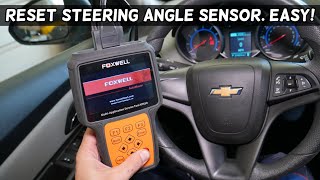
- GM Tech 2 / GDS2 or equivalent: Steering Angle Sensor Calibration/Reset — This function must be used after replacing the steering angle sensor or after re-centering the steering wheel to ensure the EBCM knows the new straight-ahead position. Failure to calibrate will cause the C0455 code to return.
- GM Tech 2 / GDS2 or equivalent: Live Data Monitoring (EBCM & BCM) — Monitor the 'Steering Wheel Angle' and 'Steering Wheel Angle Sensor Analog Voltage' parameters while turning the wheel lock-to-lock. This is the primary method to confirm if the sensor is sending a smooth, continuous signal or if it's faulty (jumping, freezing, or no signal).
Wiring & Ground Locations
- EBCM Ground — On the frame, under the driver's door area.. This is the primary ground for the Electronic Brake Control Module. A corroded or loose ground here can cause a host of ABS/StabiliTrak issues, including communication faults that could potentially manifest as sensor circuit codes like C0455.
- G201 — Inside the cabin, in the upper left corner of the instrument panel near the driver's side A-pillar.. This is a major instrument panel ground. Since the steering angle sensor and BCM are located in this area, a poor connection at G201 could cause erratic behavior or faulty readings from the sensor circuit.
- G300 — Under the vehicle at the driver door on a body mount.. This is a body mount ground that can affect various interior electronics. While not a direct cause, poor grounding in this area can contribute to electrical noise and intermittent module communication issues.
- Steering Angle Sensor Connector — On the steering column, under the driver's side dashboard, often near the air duct.. This is the most common failure point for code C0455 due to the fretting corrosion issue identified in TSB #PI0639C.
Real Owner Repair Stories
- GMTNation forum user 'jmonica' (GMC Envoy (similar GMT360 platform with same issue)) — "Service Stabilitrac" message, code C0455.
❌ Tried (didn't work) Replaced the Steering Wheel Position Sensor (SWPS) with a Dorman part., Replaced the SWPS again with an OEM sensor.
✅ What actually fixed it The user was advised that since two sensor replacements did not fix the issue, the next step was to meticulously check the wiring harness between the sensor and the EBCM for damage and to clean all related ground connections. The final resolution was not posted, but the story highlights that repeated part failure often points to a wiring or ground problem. - Tahoe Yukon Forum user 'Sparky75013' (2005 GMC Yukon) — "Service Stability" message with code C0455 immediately after replacing the intermediate steering shaft.
❌ Tried (didn't work) Taking it to a dealership that quoted $542 to replace the sensor without attempting to reset it.
✅ What actually fixed it The user was advised by another forum member that the steering wheel was likely rotated 360 degrees during the repair. The fix was to take it to an alignment shop with a computerized Hunter alignment system. The shop was able to reset the steering angle sensor for about $49, which resolved the code.
OEM Part Supersession History
20910871→19418403— Part number consolidation and potential minor revision by the manufacturer.
Heads up: The new part number (19418403) is the correct and current replacement for the original. No incompatibility is noted; it is a direct replacement.
Model Year Variations Within This Range
- 2007-2009 vs 2010-2011: Early models (~2007-2009) may use a 12-volt reference for the steering angle sensor, while later models (~2010+) use a 5-volt reference. This is critical to know when performing electrical tests at the connector, as the expected voltage at terminal 1 will be different.
Helpful Videos


We Have This Part in Stock


The information in this article is provided for general reference and educational purposes only. Vehicle specifications, procedures, and part compatibility can vary by production date, trim level, and region. Always consult your vehicle's factory service manual and verify part numbers before purchasing or performing repairs. Safety-critical components such as airbags, seat belts, and braking systems should be installed by a qualified professional.
- Gmc YUKON DENALI:
- 🧭 Diagnostic Flowchart
- 🎬 Helpful Videos
- 🛍️ Shop This Part
- What's Unique About the 2007-2011 Gmc YUKON DENALI
- Symptoms You May Notice
- Most Likely Causes
- Rare But Worth Checking
- Diagnosis Steps
- Parts You'll Likely Need
- Related Codes That Often Appear With This One
- Technical Service Bulletins (TSBs) & Recalls
- Platform-Specific Known Issues
- Mechanic-Grade Diagnostic Values
- Hidden / Shadow Codes Worth Checking
- Scan Tool Commands That Help
- Wiring & Ground Locations
- Real Owner Repair Stories
- OEM Part Supersession History
- Model Year Variations Within This Range
- 🎟️ Get 5% Off