

OBD-II Code C0460: Steering Angle Sensor Circuit Malfunction
The Ultimate 2026 Guide to What C0460 Means, Why It Triggers, and How to Fix It
- Code C0460 disables Electronic Stability Control and Traction Control, increasing fatal rollover risk by up to 75% in SUVs.
- Attempt a scan tool recalibration before replacing parts; this $100-$200 service fixes the code 80% of the time after an alignment or battery swap.
- Test your 12V battery if code C0895 appears alongside C0460, as voltage drops below 9.5V during cranking erase the sensor's calibration.
- Search your VIN for NHTSA recalls before paying for diagnostics; 2010-2012 Ford Fusions and many GM models have free software updates that permanently resolve this code.
- Expect to pay $100-$200 for a simple recalibration, or $350-$950 if the physical steering angle sensor requires replacement.
What Does C0460 Mean?
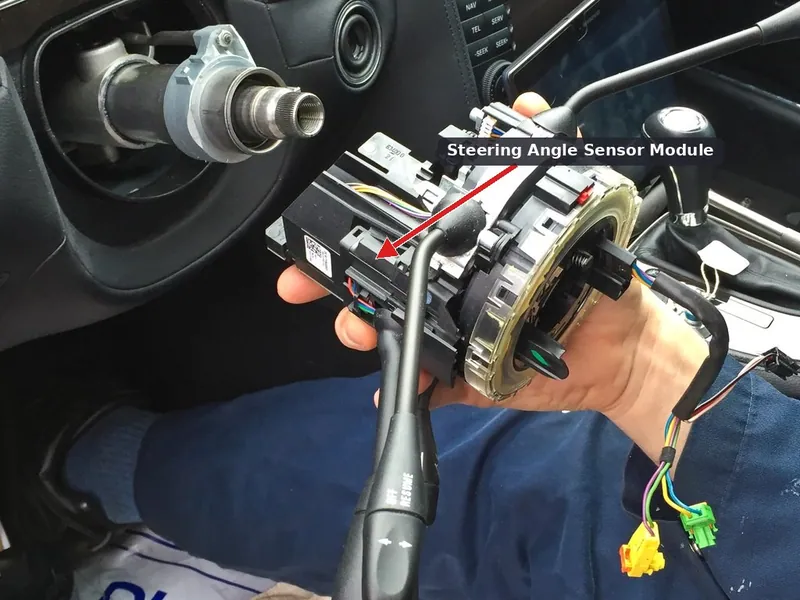
Code C0460 means the Electronic Brake Control Module (EBCM) detects an invalid or missing signal from the steering angle sensor (SAS). The SAS reports the steering wheel's exact angle and direction. Without this data, the computer cannot operate stability control, traction control, or electric power steering, forcing it to disable these systems and trigger dashboard warning lights.
Technical definition: The OBD-II code C0460 is formally defined as Steering Angle Sensor Circuit Malfunction. It indicates that the Electronic Brake Control Module (EBCM) or Power Steering Control Module (PSCM) has detected that the data from the steering angle sensor is invalid, implausible, missing, or uncalibrated. This sensor is a critical input for the Vehicle Stability Enhancement System (VSES) and chassis control systems.
Can I Drive With C0460?
Yes, But With Caution. Yes, but with extreme caution. Code C0460 disables Electronic Stability Control (ESC) and Traction Control (TC). IIHS data shows ESC reduces fatal single-vehicle SUV rollovers by 75%. Driving without it drastically increases your risk of losing control during emergency maneuvers or in poor weather. Repair the vehicle immediately.
Common Causes

- Needs Steering Angle Sensor Calibration (Very Common) — The sensor requires recalibration after a wheel alignment, battery replacement, or suspension repair. If uncalibrated, it sends data conflicting with the vehicle's actual travel direction, triggering the code.
- Failed Steering Angle Sensor (SAS) (Very Common) — Internal electronic components, such as dual-analog signal generators or processors, wear out and break, stopping the signal entirely.
- Faulty Power Steering Control Module (PSCM) Software (Common) — Corrupted or outdated PSCM software triggers false C0460 codes. Manufacturers like Ford and GM have issued TSBs and recalls to fix this with a simple software flash.
- Damaged Wiring or Poor Connections (Common) — Wiring harnesses in the steering column chafe or pinch, breaking the circuit. On GM vehicles, loose connectors cause terminal fretting and signal loss.
- Clock Spring Failure (Common) — The SAS mounts to the clock spring behind the steering wheel. A broken internal ribbon cable in the clock spring disrupts the SAS signal.
- Weak 12V Battery (Less Common) — Voltage drops below 9.5V during cranking starve the PSCM and EBCM of power, erasing the sensor's calibration. This often triggers alongside code C0895.
- Faulty Control Module (EBCM/PSCM) (Rare) — The module reading the sensor data fails internally. Consider this only after exhaustively ruling out wiring, software, and the sensor itself.
Symptoms

- Traction Control (TC) or Stability Control (ESC) Warning Light On — The system disables itself because it cannot determine the driver's intended direction.
- Service Stability Control / Service ESC Message on DIC — The Driver Information Center (DIC) displays a specific text message indicating a stability system fault.
- Service Power Steering / Heavy Steering — On vehicles with electric power steering, the assist disables, making the steering wheel very hard to turn at low speeds.
- ABS Warning Light On — The Anti-lock Braking System works in conjunction with the stability system and disables as a precaution.
- Steering Feels Different or Off-Center (also visible on scanner) — The steering feels easier to turn in one direction than the other, pointing directly to a calibration issue.
Diagnostic Flowchart
Tap your situation to follow the diagnostic path that matches what you're seeing on this code.
Common Fixes & Costs
- Steering Angle Sensor Calibration — Parts: $0, Labor: $100-$200, ~1.0 hr book time (Professional)
- PSCM Software Update/Reprogramming — Parts: $0, Labor: $150-$250, ~1.0 hr book time (Professional)
- Replace Steering Angle Sensor — Parts: $150-$450, Labor: $200-$500, ~2.5 hr book time (Advanced)
- Repair Damaged Wiring/Connector — Parts: $10-$50, Labor: $100-$250, ~1.5 hr book time (Intermediate)
- Replace Steering Column or Rack — Parts: $500-$1500, Labor: $300-$700, ~5.0 hr book time (Professional)
Used vs. New Parts: Buying Guide
When a used part is worth it: A used steering angle sensor is rarely recommended due to high labor costs and critical safety functions. It makes sense only on older, low-value vehicles where a new OEM part is prohibitive.
Donor-vehicle mileage cap: roughly under 60000 miles for the part to have meaningful remaining life.
Donor quality checklist:
- Verify exact part numbers; superseded OEM numbers often fail to communicate with older modules.
- Ensure the seller offers at least a 90-day warranty.
- Avoid parts from vehicles with front-end collision or flood damage.
- A used sensor is an electronic gamble; its internal condition cannot be visually inspected.
Decision logic:
- If The fix is calibration or a software update → Buy zero parts; perform the service.
- If The part is electronic and critical to safety (like an SAS) → Strongly favor a new OEM or reputable aftermarket part to avoid repeat labor costs.
- If Vehicle is > 10 years old AND new part cost exceeds 25% of vehicle's value → A used part from a low-mileage donor with a warranty is a reasonable budget option.
Warranty tradeoff: Used parts typically come with a 30-90 day functional warranty; labor is not covered. New aftermarket parts often have a 1-year to limited lifetime warranty. New OEM parts carry a 12-month/12,000-mile warranty if installed by a dealer.
Worst-case if a used part fails: $300-$650
What Happens If You Wait — Timeline
- 0-2 weeks: ESC and Traction Control disable immediately. No mechanical damage, but safety is compromised. (MPG impact: 0%% · Added cost: $0)
- 2 weeks - 3 months: Intermittent heavy steering occurs if the SAS informs the electric power steering module. (MPG impact: 0-1%% · Added cost: $0)
- 3-6 months: Uncalibrated sensors fighting the physical alignment accelerate uneven front tire wear. (MPG impact: 1-3%% · Added cost: $200-$800)
- 6+ months: Statistical risk of a fatal rollover crash peaks due to prolonged driving without stability control. (MPG impact: 1-3%% · Added cost: Variable)
Cost of Not Fixing It
- Immediate: ESC and Traction Control are disabled, drastically increasing loss-of-control risk. Power steering assist may fail. (Added cost: $0)
- 1-6 months: Driving with a miscalibrated sensor causes the vehicle to fight its own alignment, accelerating uneven front tire wear. (Added cost: $200-$800)
- 6+ months: The mechanical damage plateaus, but the statistical risk of a fatal rollover or loss-of-control accident remains critically high. (Added cost: Variable)
Diagnosis Steps
- Read Codes and Review Live Data
Use an advanced OBD-II scanner to read Chassis ('C') codes and view live data. Observe the 'Steering Angle Sensor' parameter. It must read 0.0° when wheels are straight, change smoothly when turning, and reach +/- 550° to 720° lock-to-lock.
Tools: Advanced OBD-II Scan Tool (Beginner) - Attempt Sensor Recalibration
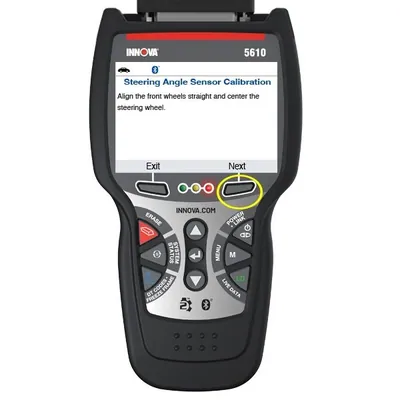
Access the EBCM or PSCM special functions on your scan tool and run the 'Steering Angle Sensor Calibration'. Follow the prompts to center the wheel. If this clears the code, a previous alignment or battery drop caused the fault.
Tools: Advanced OBD-II Scan Tool (Intermediate) - Check for Technical Service Bulletins (TSBs)
Search your VIN for TSBs and recalls. Ford Recall 15V-340 fixes this with a free PSCM software update on Fusions. GM TSB 17-NA-284 addresses it with a module reprogram.
Tools: Google Search, ALLDATA/Mitchell1 Subscription (Beginner) - Inspect Wiring and Connectors
Remove steering column trim and inspect the SAS harness. Look for chafed wires, pinched lines, or corroded connector pins. Disconnect and reconnect to ensure a tight fit.
Tools: Flashlight, Trim Removal Tools (Intermediate) - [Pro Tip] Analyze Dual-Signal Sensor Data
View individual signal voltages (Signal 1 and 2) on your scanner. As you turn the wheel, the 0-5V signals must change in opposite directions. If one is stuck or they fail to mirror each other, the sensor is internally broken.
Tools: Advanced OBD-II Scan Tool (Intermediate) - Test Sensor Power and Ground Circuits
Use a multimeter to test the sensor connector. Verify 4.8-5.2V on the 5V reference circuit and less than 5 ohms of resistance on the ground circuit. Missing power or ground prevents operation.
Tools: Multimeter, Vehicle-Specific Wiring Diagram (Advanced) - [Advanced] Test Sensor Signal Voltage Manually
Apply 5V and ground to the unplugged sensor using fused jumper wires. Measure the signal pins with a multimeter while turning the wheel. An abrupt drop to 0V confirms a dead sensor.
Tools: Multimeter, Fused Jumper Wires, Wiring Diagram (Advanced) - Replace the Steering Angle Sensor
Remove the airbag and steering wheel to replace the faulty sensor. Disconnect the battery first to prevent airbag deployment. You must calibrate the new sensor with a scan tool after installation.
Tools: Socket Set, Torque Wrench, Trim Removal Tools, Scan Tool (Advanced)
When This Code Triggers (Freeze-Frame Conditions)
- Vehicle Speed: 15-45 mph (During a turn, or when driving straight while the uncalibrated sensor reports a false turning angle.)
- Steering Angle: Implausible value (Reports a value conflicting with yaw rate (e.g., 20° turn while moving straight).)
- System Voltage: > 9.5V (Usually sets at normal voltage, but a prior drop below 9.5V during startup triggers the calibration loss.)
- Engine State: Running (The diagnostic monitor runs continuously while the engine operates.)
Related Codes
- C0710 — Steering Position Signal Malfunction. Appears with C0460 on GM vehicles. Points directly to a calibration loss or dead sensor.
- C0895 — Device Voltage Malfunction. Indicates a weak 12V battery caused the PSCM to drop the sensor calibration. Test the battery first.
- C056E — Electronic Control Unit Software. Appears if a new PSCM/EBCM lacks the correct vehicle calibration file.
- C0035-C0050 — Wheel Speed Sensor Codes. A dead wheel speed sensor creates conflicting data, tricking the EBCM into flagging the steering angle sensor. Fix wheel speed codes first.
Climate & Environmental Factors
- Low Temperatures: Extreme cold lowers 12V battery output, causing voltage drops during startup that erase the sensor's calibration.
- High Humidity / Water Intrusion: Moisture accelerates corrosion on EBCM and PSCM connector pins, increasing resistance and blocking the sensor signal.
How to Talk to a Mechanic About This Code
Say this: "I have a C0460 code. Please check if it requires a simple scan tool calibration or software update before quoting a sensor replacement."
Shows you understand common causes and prevents shops from defaulting to expensive hardware swaps.
Avoid saying:
- 'My traction control light is on, can you fix it?'
- 'Just replace the steering angle sensor.'
- 'I have a C0460, just do whatever it takes to fix it.'
Questions to ask before authorizing the repair:
- Did you successfully complete a scan tool calibration?
- Did live data show an erratic or dead signal?
- Did you check for power, ground, and signal voltage at the sensor's connector?
- Is there a technical service bulletin or software update for this issue on my specific vehicle?
Where to Take It: Dealer vs Independent vs Chain
- Dealer:
Recommended if a known software update or recall exists, or if the repair is complex and requires manufacturer-specific tools and procedures.
Best for: Vehicles under warranty, Vehicles with a known recall or TSB for code C0460 (e.g., Ford Fusion), Complex repairs where the sensor is integrated into the steering column or rack
Downsides: Higher labor rates, typically 1.5-2x more than independent shops., May recommend replacing an entire assembly when only a sensor or software update is needed. (Typical cost: +50% vs. baseline) - Independent Shop:
Best fit for most C0460 scenarios, provided the shop is well-reviewed and equipped with modern diagnostic tools. Ask specifically if they can perform a steering angle sensor calibration.
Best for: Out-of-warranty vehicles, Straightforward sensor replacement and calibration jobs, Cost-conscious owners
Downsides: Shop quality and diagnostic capabilities vary greatly. Ensure they have a bidirectional scan tool capable of SAS calibration., May not have access to the latest manufacturer software updates. (Typical cost: +0% vs. baseline) - Chain Shop:
AVOID for diagnosing and fixing C0460. While they perform alignments that cause the code, they lack the tools to fix the resulting electronic issue.
Best for: Wheel alignments, which can be a cause of the code if done improperly.
Downsides: Technician skill varies widely., Often lack the advanced diagnostic tools needed for calibration or in-depth electrical testing., May not be equipped to handle airbag or steering column disassembly. (Typical cost: -10% vs. baseline)
When to Walk Away From the Repair
If the estimated repair cost for the C0460 fault exceeds 50% of your car's private-party value (check Kelley Blue Book), it's time to seriously consider selling or trading it in.
- Car worth $5000, fix is $800: Fix it. This repair is well below the 50% threshold and restores a critical safety feature.
- Car worth $4000, fix is $2200: Walk away. The repair cost is over 50% of the car's value. This is especially true if the sensor is integrated into the steering column or rack.
- Car worth $10000, fix is $1500: Fix it. The cost is significant but falls comfortably below the threshold for a vehicle of this value.
What Scan Tool You Need for This Code
Minimum: A scanner that can read Chassis (C-prefix) codes and perform a Steering Angle Sensor (SAS) calibration/reset.
A basic $20 code reader will not see Chassis codes like C0460 at all. Furthermore, even if you replace the sensor yourself, the job is incomplete and the light will stay on without performing the electronic calibration, which requires a bidirectional scan tool.
Budget: BlueDriver Pro (~$100) — Reads C-codes and live data, but cannot perform the mandatory SAS calibration.
Mid-range: Foxwell NT510 Elite / NT630 (~$150) — Reads codes, views live data, and performs the required Steering Angle Sensor Calibration.
Professional: Autel MaxiCOM MK808 / MK906BT (~$500-1200) — Full bidirectional control, OEM diagnostics, and guided SAS calibration functions.
Rent vs buy: Auto parts stores like AutoZone may rent scanners for free, but these typically cannot perform the required SAS calibration. For C0460, you either need to buy a capable mid-range tool or pay a shop for the calibration service.
How to Clear the Code After You Fix It
- Perform required calibration procedure for the new/repaired part using a scan tool.
- Clear the C0460 code from the EBCM or PSCM.
- Start the engine, turn the steering wheel full lock left, full lock right, then center.
- Test drive for 15 minutes, including straight-line driving and multiple turns, to verify the fix.
Drive cycle (~20 minutes): A specific drive cycle is not required for the C0460 self-test, which runs continuously. A 15-20 minute test drive including varied speeds and multiple turns verifies the fix.
Readiness monitors affected: This is a Chassis ('C') code and does not directly affect emissions readiness monitors like the Catalyst or O2 sensor monitors.
Before emissions retest: drive at least 50 miles to fully set monitors.
Watch out for:
- Clearing the code without performing the necessary steering angle sensor calibration causes the code to return immediately.
- Forgetting to perform the lock-to-lock steering wheel turn after clearing the code prevents the system from re-initializing properly.
- If the repair involved disconnecting the battery, emissions readiness monitors reset, requiring a separate drive cycle before a smog check.
Will This Fail Emissions / State Inspection?
No — by itself this code doesn't fail OBD inspection (but it can keep readiness monitors from setting, which causes a separate fail).
- California: Will not fail the OBD-II emissions check, but an illuminated ESC/ABS light causes an automatic safety inspection failure.
- New York: Illuminated traction or stability control lights result in an immediate safety inspection failure.
- Texas: Exempt from safety inspections in 2025. Since C0460 does not trigger the Check Engine Light, it passes the OBD-II emissions test.
Most Commonly Affected Vehicles
- Chevrolet Equinox (2007-2017) — TSB #07-02-32-009 updates the EBCM/PSCM. Common replacement part is AC Delco #25849366.
- GMC Yukon / Yukon Hybrid (2007-2014) — Prone to C0460 alongside C0895, triggered by a weak 12V battery. The OEM sensor is GM part 19418403.
- Ford Fusion (2010-2012) — NHTSA recall 15V-340 (Ford #15S18) fixes EPAS failure via PSCM software update. Check this first.
- Nissan Titan (2004-2015) — The steering angle sensor is a known failure point, leading to 'VDC OFF' and 'SLIP' warning lights.
- Saturn Vue (2008-2010) — Shares a platform with the Chevrolet Equinox. Frequent complaints require sensor replacement and calibration.
- Chevrolet Malibu (2008-2016) — TSB 16-NA-151 suggests a lock-to-lock steering reset resolves low-voltage triggers. Common sensor is GM 13589991.
- Subaru Outback / Legacy (2010-2014) — Appears after battery replacement or alignment. Recalibration prevents VDC system deactivation.
- Vauxhall/Opel Corsa (2006-2014) — The sensor is integrated into the EPS column. You must replace or refurbish the entire column assembly.
Manufacturer-Specific Notes
- General Motors (Chevrolet, GMC, Cadillac): Symptom bytes dictate the fix. '4B' or '42' means Calibration Not Learned. '5A' means Not Plausible (often fixed by TSB 17-NA-284 software update).
- Ford: 2010-2013 models suffer from PSCM software bugs covered under NHTSA recall 15V-340. Always check for recalls before replacing hardware.
- Vauxhall / Opel: The sensor is integrated into the EPS column. You must replace or refurbish the entire column assembly.
- SAAB (GM Platform): C0460 pairs with C0710. Diagnosis requires verifying the 12V reference (>11V) and ground (<5 ohms) between the EBCM and SAS.
Real Owner Stories
2016 Chevrolet Malibu at 75K miles - The 'Easy Fix'
The 'Service Stabilitrak' light came on the day after the battery was replaced. The car drove normally, but the traction control light was on constantly.
What they tried:
- Initially ignored it, hoping it would go away.
- Took it to an auto parts store, which pulled code C0460 but couldn't offer a solution beyond selling a new sensor.
Outcome: GM TSB 16-NA-151 advised a lock-to-lock steering reset after a battery swap. The owner started the car, turned the steering wheel full left, full right, and back to center. The light cleared instantly. Cost: $0.
Lesson: If C0460 appears on a GM vehicle after a battery change or jump-start, always try the simple lock-to-lock steering wheel reset before assuming a part has failed.
2011 Ford Fusion at 105K miles - The Misdiagnosis
Lost power steering intermittently while driving at low speeds, with 'Service Power Steering Assist' and 'Service AdvanceTrac' warnings. Code C0460 was present.
What they tried:
- A local mechanic diagnosed a failed steering angle sensor and replaced it for $750.
- The problem returned two days later.
Outcome: The dealer applied NHTSA Recall 15V-340 for a free PSCM software update, permanently fixing it. The problem was faulty software, not the sensor.
Lesson: For specific makes/models like the Ford Fusion, always check for recalls and TSBs first. A known software issue perfectly mimics a hardware failure, and the fix is free at a dealership.
2010 Chevy HHR at 120K miles - The Unusual Cause
Traction control light was on, and the car felt slightly unstable. A scan revealed two codes: C0460 (Steering Angle Sensor) and C0035 (Left Front Wheel Speed Sensor Circuit).
What they tried:
- The owner focused on C0460, assuming the steering angle sensor was the primary issue.
- They considered replacing the expensive steering angle sensor but were hesitant due to the cost.
Outcome: C0460 appeared alongside C0035 (Wheel Speed). Fixing the broken wheel speed wire for $150 restored plausible data and cleared both codes.
Lesson: When multiple codes are present, diagnose them in the correct order. Faults in foundational sensors (like wheel speed) cause the main computer to distrust data from related sensors (like steering angle), leading to misleading secondary codes.
How to Prevent This Code From Triggering
- Demand SAS calibration after alignments (Every time an alignment is performed) — Adjusting toe changes the steering center. Uncalibrated sensors report false turns, triggering C0460.
- Test battery annually (Annually) — Prevents voltage drops during cranking that erase the EBCM's sensor calibration.
- Apply dielectric grease to connectors (When connectors are accessible during service) — Seals out moisture and road salt, preventing pin corrosion and signal loss.
- Fix suspension wear promptly (As needed) — Worn tie rods force the driver to hold an off-center steering angle, triggering plausibility faults.
Frequently Asked Questions
Can a bad wheel alignment cause code C0460?
Yes. If the steering wheel isn't perfectly straight after an alignment, the sensor reports a constant turn while driving straight. This conflicts with wheel speed data and triggers the code, making a post-alignment sensor calibration mandatory.
How much does it cost to fix code C0460?
Costs range from $100-$200 for a simple recalibration to $350-$950 for a sensor replacement. If the sensor is integrated into the steering rack or column, expect bills exceeding $1,500. Software updates typically cost $150-$250 at a dealership.
What does the symptom code 'C0460 5A' mean?
The '5A' suffix on GM vehicles means 'Signal Plausibility Failure'. The module receives a signal, but it conflicts with vehicle speed or yaw rate data. For example, the sensor reports a 20-degree turn while the car travels straight.
Can I replace the steering angle sensor myself?
This is an advanced DIY job requiring steering wheel and airbag removal. You must disconnect the battery to prevent accidental airbag deployment and avoid damaging the clock spring. Furthermore, the new sensor requires a professional scan tool for mandatory post-installation calibration.
What is the most common misdiagnosis for C0460?
The most common mistake is replacing the sensor without attempting a scan tool recalibration first. The code frequently triggers after a routine alignment or battery replacement. Recalibration is the cheapest and most likely fix.
Can a weak battery cause code C0460?
Yes. Voltage drops below 9.5V during cranking cause steering modules to malfunction and drop their calibration data. If code C0895 is also present, test your battery and alternator before replacing any sensors.
Will clearing the code fix the problem?
No. Clearing the code is a temporary band-aid. If the sensor remains uncalibrated or broken, the code returns immediately during the system's self-test upon startup.
Can code C0460 cause the car to go into 'limp mode'?
No. C0460 does not affect engine performance or trigger a reduced power limp mode. It disables stability and traction control, and occasionally disables power steering assist, making the wheel heavy to turn.
Key Takeaways
- Code C0460 disables Electronic Stability Control and Traction Control, increasing fatal rollover risk by up to 75% in SUVs.
- Attempt a scan tool recalibration before replacing parts; this $100-$200 service fixes the code 80% of the time after an alignment or battery swap.
- Test your 12V battery if code C0895 appears alongside C0460, as voltage drops below 9.5V during cranking erase the sensor's calibration.
- Search your VIN for NHTSA recalls before paying for diagnostics; 2010-2012 Ford Fusions and many GM models have free software updates that permanently resolve this code.
- Expect to pay $100-$200 for a simple recalibration, or $350-$950 if the physical steering angle sensor requires replacement.
Shop the Parts Behind C0460
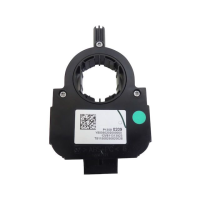
Below are the parts most often responsible for code C0460, ranked by how frequently each one is the actual culprit (per the diagnosis above). Tap any to see what we have for your vehicle.




The information in this article is provided for general reference and educational purposes only. Vehicle specifications, procedures, and part compatibility can vary by production date, trim level, and region. Always consult your vehicle's factory service manual and verify part numbers before purchasing or performing repairs. Safety-critical components such as airbags, seat belts, and braking systems should be installed by a qualified professional.
- 🧭 Diagnostic Flowchart
- 🛍️ Shop This Part
- What Does C0460 Mean?
- Can I Drive With C0460?
- Common Causes
- Symptoms
- Common Fixes & Costs
- Used vs. New Parts: Buying Guide
- What Happens If You Wait — Timeline
- Cost of Not Fixing It
- Diagnosis Steps
- When This Code Triggers (Freeze-Frame Conditions)
- Related Codes
- Climate & Environmental Factors
- How to Talk to a Mechanic About This Code
- Where to Take It: Dealer vs Independent vs Chain
- When to Walk Away From the Repair
- What Scan Tool You Need for This Code
- How to Clear the Code After You Fix It
- Will This Fail Emissions / State Inspection?
- Most Commonly Affected Vehicles
- Manufacturer-Specific Notes
- Real Owner Stories
- 2016 Chevrolet Malibu at 75K miles - The 'Easy Fix'
- 2011 Ford Fusion at 105K miles - The Misdiagnosis
- 2010 Chevy HHR at 120K miles - The Unusual Cause
- How to Prevent This Code From Triggering
- Frequently Asked Questions
- Can a bad wheel alignment cause code C0460?
- How much does it cost to fix code C0460?
- What does the symptom code 'C0460 5A' mean?
- Can I replace the steering angle sensor myself?
- What is the most common misdiagnosis for C0460?
- Can a weak battery cause code C0460?
- Will clearing the code fix the problem?
- Can code C0460 cause the car to go into 'limp mode'?
- Key Takeaways
- 🎟️ Get 5% Off