

C0500 on 2022-2023 Jeep Compass: Brake System Hydraulic Leak Causes and Fixes
For a 2022-2023 Jeep Compass, code C0500-00 specifically indicates a 'Brake System Hydraulic Leak' according to a manufacturer TSB. The issue often points to a fault within the ABS module (BSCM) itself, which may require a software update or replacement. This is a critical safety issue; do not drive the vehicle.
- Code C0500 on a 2022-2023 Compass is a serious 'Brake System Hydraulic Leak' warning, not a wheel speed sensor issue.
- Driving is not recommended. A firm brake pedal is a unique, documented symptom for this fault and indicates a severe problem.
- The most likely cause is a fault within the ABS module (BSCM), which may be fixed with a software update or require replacement.
- Aftermarket scan tools require a special bypass cable for the Security Gateway Module (SGW) to perform necessary programming and bleeding procedures.
- Replacement of the ABS module is not plug-and-play; a 'Proxy Configuration Alignment' is mandatory.
What's Unique About the 2022-2023 Jeep COMPASS
Unlike the generic definition for C0500 found on many websites (which often points to a left front wheel speed sensor circuit fault), on this specific Jeep platform, the code is officially tied to a hydraulic leak per TSB #0824123A. A key, counter-intuitive symptom noted in the TSB is a 'firm brake pedal.' This is unusual for a typical leak and suggests the ABS module may be actively closing off the leaking circuit as a safety measure, resulting in a hard pedal feel rather than a soft, spongy one.
Diagnostic Flowchart
Tap your situation to follow the diagnostic path that matches what you're seeing on this vehicle.
Symptoms You May Notice
- Brake warning lamp is illuminated on the instrument cluster
- A firm or hard-to-press brake pedal
- Malfunction Indicator Lamp (MIL) may be illuminated
- ABS and Traction Control warning lights may also be on
- Flashing odometer (if the ABS module has a communication failure)
- Replacing a wheel speed sensor. Many generic code databases incorrectly list C0500 as a wheel speed sensor fault. While a bad sensor will cause ABS/Traction lights, for the 2022-2023 Compass, C0500-00 is specifically defined by Jeep as a hydraulic leak. Starting diagnosis by replacing a sensor will not fix this specific code and will waste time and money.
Most Likely Causes
- Faulty ABS / Brake System Control Module (BSCM) 🔴 High Probability → Shop ABS Control Module TSB #0824123A specifically addresses the BSCM for this issue, suggesting either a software glitch causing a false code or an internal failure of the module's hydraulic unit (HCU). Internal HCU seals can fail, causing a leak within the unit that the system detects. This is the most common cause when no external fluid leaks are visible.
How to confirm: After confirming no external leaks are present, a technician will use a dealer-level scan tool to check for BSCM-specific software updates per TSB #0824123A. If a software flash doesn't resolve the issue, the module is diagnosed as faulty.
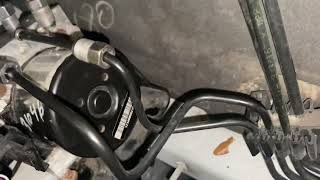
Typical fix: First, attempt to reprogram the BSCM with the latest software. If the problem persists, the entire ABS module/HCU assembly must be replaced 🎬 Watch this step-by-step Jeep Compass ABS module replacement guide. and programmed to the vehicle using a 'Proxy Configuration Alignment'.
Est. part cost: $220-$520 - Leaking Brake Line or Hose 🟡 Medium Probability Flexible rubber hoses that connect to the brake calipers are exposed to the elements and constant suspension movement, making them susceptible to cracking and deterioration over time. Steel lines can also corrode, though this is less common on newer vehicles.
How to confirm: Perform a thorough visual inspection of all brake lines and hoses from the master cylinder to each wheel, looking for wetness, drips, or stains from brake fluid. The leak is often found near fittings or where the line flexes.
Typical fix: Replace the damaged section of brake line or the entire flexible hose. The brake system must then be bled to remove all air, which may require a scan tool to cycle the ABS pump.
Est. part cost: $30-$100 - Leaking Brake Caliper ⚪ Low Probability → Shop Disc Brake Caliper Caliper piston seals or bleeder valves can fail and leak brake fluid. While less common on a new vehicle, manufacturing defects or damage from road debris can cause this.
How to confirm: Inspect the area around the brake calipers and the inside of the wheels for signs of brake fluid. A leak will appear as a wet, oily residue that attracts dirt and grime.
Typical fix: Replace the faulty brake caliper and bleed the brake system. Mopar OEM calipers for this model cost approximately $175-$195 each.
Est. part cost: $150-$350
Rare But Worth Checking
- Leaking Master Cylinder: A leak from the master cylinder is possible, either from its seals or the reservoir. It's less common than other causes but should be checked during a visual inspection.
Diagnosis Steps
- Verify the code with a scan tool capable of reading manufacturer-specific chassis codes. Confirm the code is C0500-00, defined as 'Brake System Hydraulic Leak'.
- Check the brake fluid level in the reservoir. A low level confirms a leak, but a full level doesn't rule out a problem, as the fault could be intermittent or an internal module issue.
- With the vehicle on a lift, perform a comprehensive visual inspection of the entire brake system. Check all four calipers, the flexible rubber brake hoses, and all hard lines for any sign of fluid leakage.
- Inspect the master cylinder and the area on the firewall behind it for leaks.
- If no external leaks are found, the fault is highly likely to be with the ABS/BSCM module itself.
- Connect a dealer-level scan tool and check for applicable TSBs, specifically TSB #0824123A, which recommends a software update for the BSCM.
- If a software update is available, flash the module. If no update is available or the update does not resolve the code, the ABS/BSCM assembly is the likely point of failure and requires replacement.
- After replacement, perform the 'Proxy Configuration Alignment' procedure to register the new module with the vehicle.
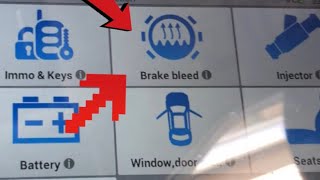
- Finally, bleed the entire brake system using the scan tool to activate the ABS pump and purge any trapped air. 🎬 Watch: How to perform a professional brake bleed using a scan tool.
Parts You'll Likely Need
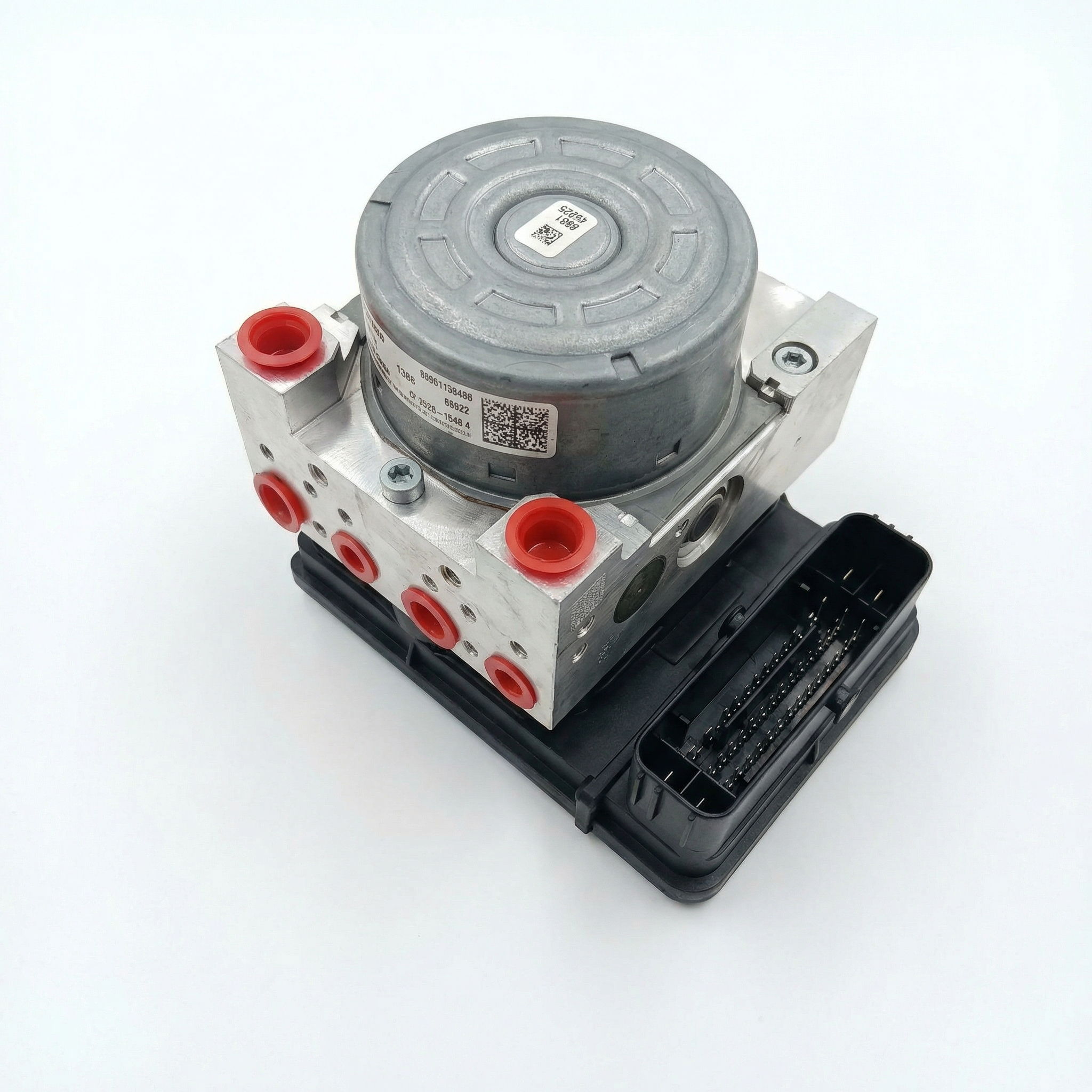
- ABS Control Module / Hydraulic Control Unit (HCU)
(OEM #68536639AD, 68536638AE, 68357599AA (Note: Part number is VIN-specific, verify with dealer))— This is the most likely cause if no external leaks are found, as indicated by TSB #0824123A. The failure can be an internal hydraulic leak or a software error falsely reporting a leak. Replacement requires programming.
Trusted brands: Mopar
OEM price range: $220-$400
Aftermarket price range: $700-$1200 - Flexible Brake Hose — These are a common external leak point due to their flexibility and exposure to the elements.
Trusted brands: Mopar, ACDelco, Dorman
OEM price range: $50-$90
Aftermarket price range: $20-$50
Technical Service Bulletins (TSBs) & Recalls
- 0824123A - Flash: Brake System Control Module (BSCM) Updates. This TSB confirms a known issue with the module that can cause MIL illumination and code C0500-00 on these vehicles. It notes a 'firm brake pedal' as a key symptom.
Platform-Specific Known Issues
- TSB #0824123A was issued for the 2022-2023 Jeep Compass, indicating a known issue with the Brake System Control Module (BSCM) that can cause a Malfunction Indicator Lamp and set trouble codes like C0500. The fix may involve a software update.
- Owners of older Compass models have reported significant backorders and difficulty obtaining replacement ABS modules, sometimes waiting months for the part. While not confirmed for the 2022-2023 models, it highlights a potential supply chain issue for this component.
Hidden / Shadow Codes Worth Checking
- C2116: ABS Pump Motor Low Voltage. This code can be logged due to an internal ABS module failure even when the voltage supply to the module is correct, indicating a component breakdown inside the unit. (see via A professional scan tool capable of reading manufacturer-specific Chassis (C) codes from the ABS module.)
Scan Tool Commands That Help
- wiTECH, Autel, Launch, Appcar DiagFCA: Proxy Configuration Alignment (or Proxi Alignment) — This is a mandatory procedure after replacing the ABS module. It synchronizes the new module with the vehicle's other computers (ECU, BCM, etc.). Failure to perform this will result in a flashing odometer and multiple communication faults.
- wiTECH or advanced bidirectional scanner: ABS Bleed / Service Bleed / ABS Pump Motor Actuation — This function must be used after replacing the ABS module or any hydraulic brake component. It cycles the internal ABS pump and valves to purge any trapped air from the hydraulic control unit (HCU), which cannot be removed by manual bleeding alone.
Wiring & Ground Locations
- Main Body Ground — Typically a large cable from the negative battery terminal to the vehicle's chassis/frame in the engine bay.. A loose main body ground can cause erratic voltage fluctuations (e.g., swinging between 11.5V and 16V) across the entire vehicle. This instability can cause sensitive modules like the ABS controller to malfunction and set false fault codes.
- G304 (Example) — On similar year Jeeps, a key ground point (G304) for chassis electronics is located under the driver's seat.. While not directly for the ABS module, a poor ground at a related chassis sensor (like the dynamics/yaw sensor) can cause communication errors on the CAN bus, potentially leading to ABS system faults.
Real Owner Repair Stories
- MHH Auto forum user (2012 Jeep Compass (older generation, but illustrates a critical principle)) — After replacing a faulty ABS module with a used one, the vehicle had 'VIN mismatched' and 'config error' fault codes.
❌ Tried (didn't work) Attempting to change the VIN or initialize the used module with various aftermarket tools (CDA6, Launch, Autel).
✅ What actually fixed it The forum confirmed that ABS modules on these vehicles are often one-time programmable. The VIN is permanently written and cannot be changed. The only solutions are to buy a brand new OEM module and program it, or attempt a high-risk EEPROM chip swap from the old module to the used one.
OEM Part Supersession History
68536638AB, 68536638AC, 68536638AD→68536638AE— Standard part revision and improvement by the manufacturer.
Model Year Variations Within This Range
- 2018-2023: These models are equipped with a Security Gateway Module (SGW). Aftermarket scan tools cannot perform bidirectional controls (like Proxy Alignment or ABS Bleed) without a physical SGW bypass cable or an authenticated, subscription-based diagnostic tool.
- 2022-2023: Different ABS module part numbers are used for vehicles with standard cruise control versus those equipped with Adaptive Cruise Control (ACC). The modules are not interchangeable. The vehicle's specific equipment must be verified before ordering a replacement part.
Helpful Videos

We Have This Part in Stock

The information in this article is provided for general reference and educational purposes only. Vehicle specifications, procedures, and part compatibility can vary by production date, trim level, and region. Always consult your vehicle's factory service manual and verify part numbers before purchasing or performing repairs. Safety-critical components such as airbags, seat belts, and braking systems should be installed by a qualified professional.
- Jeep COMPASS:
- 🧭 Diagnostic Flowchart
- 🎬 Helpful Videos
- 🛍️ Shop This Part
- What's Unique About the 2022-2023 Jeep COMPASS
- Symptoms You May Notice
- Most Likely Causes
- Rare But Worth Checking
- Diagnosis Steps
- Parts You'll Likely Need
- Technical Service Bulletins (TSBs) & Recalls
- Platform-Specific Known Issues
- Hidden / Shadow Codes Worth Checking
- Scan Tool Commands That Help
- Wiring & Ground Locations
- Real Owner Repair Stories
- OEM Part Supersession History
- Model Year Variations Within This Range
- 🎟️ Get 5% Off