

OBD-II Code C0513: Right Rear Wheel Speed Sensor Problem
The Ultimate 2026 Guide: What C0513 means, why it triggers, and how to fix it for good.
- Code C0513 instantly disables your ABS and Electronic Stability Control, increasing your stopping distance by up to 20% on wet roads.
- On 2015-2018 Stellantis vehicles (Jeep, Ram, Fiat), a hyper-sensitive software glitch causes 80% of C0513 codes, requiring a $150-$250 dealer reflash rather than new parts.
- If software isn't the issue, a failed $40-$100 right rear wheel speed sensor or a chafed wiring harness is the most likely hardware culprit.
- Always inspect the magnetic tone ring inside the wheel hub for rust buildup or missing teeth before replacing the sensor, as a dirty ring blocks the signal entirely.
What Does C0513 Mean?
C0513 means your car's Anti-Lock Brake System (ABS) control module detected an illogical signal from the right rear wheel speed sensor. The computer constantly compares the speed of all four wheels. When the right rear wheel's reported speed is nonsensical compared to the others (e.g., three wheels report 30 MPH while the right rear reports 0 MPH), it flags the data as unreliable and sets the code. As a failsafe, it deactivates the ABS, ESC, and TCS systems that depend on this data.
Technical definition: The official SAE/OBD-II definition is "Right Rear Wheel Speed Sensor A Range/Performance" or "Wheel Speed Signal Right Rear Rationality". This indicates the sensor's signal is erratic or outside its expected operational range compared to the other wheel speed sensors. It is a 'rationality' fault: the sensor is sending a signal, but the data contradicts the vehicle's actual movement.
Can I Drive With C0513?
Yes, But With Caution. Yes, but drive with extreme caution. Your primary hydraulic brakes function normally, but Anti-Lock Braking (ABS), Electronic Stability Control (ESC), and Traction Control (TCS) are disabled. In a panic stop on wet or loose surfaces, your wheels will lock up, increasing stopping distances and causing loss of steering control. Without ESC, the risk of a spin-out during emergency maneuvers is substantially higher. Service the vehicle immediately to restore these critical safety features.
Common Causes
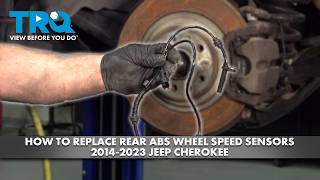
- Faulty Right Rear Wheel Speed Sensor (Very Common) — The sensor itself failed due to age, heat cycles, or internal electronic degradation. This is the most frequent hardware failure for this code. 🎬 Watch: How to replace the rear wheel speed sensor.
- ABS Control Module Software Glitch (Very Common) — The vehicle's software has overly sensitive logic that incorrectly flags a perfectly good sensor. This is a documented issue on 2015-2018 Jeep, Ram, and Fiat vehicles, requiring a dealer software update.
- Damaged Wiring or Connector (Common) — The wire running to the sensor or the connector itself is broken, corroded, or loose. This wiring is exposed to the elements and is frequently damaged by road debris, moisture intrusion, or improper routing causing chafing (especially on GM trucks).
- Damaged, Dirty, or Corroded Tone Ring (Common) — The sensor reads a notched or magnetic ring (the tone ring or reluctor) on the wheel hub or axle. If this ring is cracked, missing teeth, or covered in thick rust or metallic debris, the sensor cannot get a clean reading.
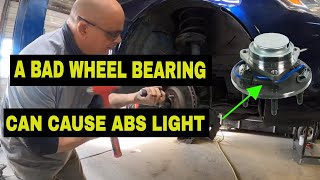
- Failing Wheel Hub / Bearing Assembly (Less Common) — The tone ring is integrated into the wheel hub assembly. A worn-out wheel bearing causes excessive wobble (runout), creating an inconsistent air gap between the sensor and the ring, leading to an erratic signal.
- Mismatched Tire Sizes (Uncommon) — If one tire is a significantly different diameter from the others (due to being new, a different brand, or the wrong size), it rotates at a different speed. The ABS module interprets this consistent difference as a sensor rationality fault.
- Weak or Failing 12V Battery (Uncommon) — A failing 12-volt battery causes severe voltage drops during cranking, triggering random fault codes in sensitive electronic modules, including the ABS controller.
- Faulty ABS Control Module or Corrupted Memory (Rare) — The main computer for the ABS system has an internal hardware failure or corrupted flash memory. Consider this only after thoroughly ruling out wiring, sensors, software TSBs, and hubs.
- Aftermarket Electrical Interference (Very Rare) — Improperly installed aftermarket accessories, particularly high-power LED or HID lighting kits, create electromagnetic interference that disrupts sensitive wheel speed sensor signals.
Symptoms
- ABS and Traction/Stability Control Lights On — The 'ABS' light and the traction/stability control light (car with squiggly lines) illuminate simultaneously. These systems are completely disabled.
- Cruise Control and Hill Assist Disabled — Because the vehicle cannot reliably verify its speed, the cruise control and hill-start assist systems deactivate as a safety measure.
- Unnecessary ABS/Traction Control Activation — Before the system deactivates completely, a faulty sensor signal causes the ABS to pulse the brakes or the traction control to cut engine power at low speeds when it is not needed.
- Brake Pulsation or Grinding Noise — If the root cause is a physically damaged tone ring or a failing wheel bearing, you will hear a humming or grinding noise from the right rear that changes pitch with vehicle speed.
- Erratic Right Rear Wheel Speed Data (scan-tool only — no driver-felt sign) — When viewing live data on an ABS-capable scan tool, the speed reading for the right rear wheel reads zero, jumps erratically, or lags behind the other three wheels.
Diagnostic Flowchart
Tap your situation to follow the diagnostic path that matches what you're seeing on this code.
Common Fixes & Costs
- ABS Module Software Update — Parts: $0, Labor: $150-$250, ~1.0 hr book time (Professional)
- Replace Right Rear Wheel Speed Sensor — Parts: $30-$120, Labor: $100-$150, ~1.0 hr book time (DIY)
- Repair Damaged Wiring or Clean Connector — Parts: $10-$40, Labor: $75-$250, ~1.5 hr book time (Intermediate)
- Clean Debris from Tone Ring — Parts: $0, Labor: $50-$100, ~0.8 hr book time (DIY)
- Replace Wheel Hub Assembly — Parts: $100-$350, Labor: $150-$300, ~2.0 hr book time (Intermediate)
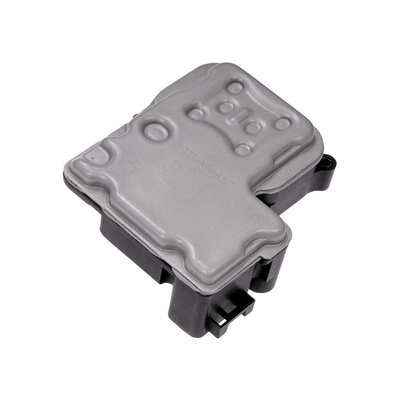
- Replace ABS Control Module — Parts: $500-$1,500, Labor: $150-$300, ~2.5 hr book time (Professional)
DIY vs Professional
- Replace Right Rear Wheel Speed Sensor — Beginner: Yes. This is a common and relatively simple DIY task.
Tools: Jack and jack stands, socket set, torque wrench, wheel chocks. - Replace Wheel Hub Assembly — Beginner: No. Requires significant force to remove the old hub, especially in rust-prone areas.
Tools: Jack stands, large breaker bar, torque wrench, socket set, slide hammer or hub puller, sledgehammer. - Repair Damaged Wiring — Beginner: Maybe. Requires patience and an understanding of proper wiring repair techniques to ensure a durable, weather-sealed connection.
Tools: Multimeter, wire strippers, soldering iron or quality butt connectors, heat shrink tubing. - ABS Module Software Update — Beginner: No. This requires dealership or well-equipped independent shop software.
Tools: OEM-level diagnostic scan tool with subscription (e.g., wiTECH for Stellantis). - Replace ABS Control Module — Beginner: No. Mandatory VIN programming and system calibration (Proxy Alignment) requires specialized equipment.
Tools: Socket set, OEM-level scan tool for post-installation programming.
Used vs. New Parts: Buying Guide
When a used part is worth it: For a simple bolt-on wheel speed sensor, buying used is not recommended as savings are minimal. For a complete wheel hub assembly, a low-mileage used OEM part is a cost-effective alternative to a new aftermarket part. A used ABS module is viable if it is from a reputable rebuilder or if you have the tools to reprogram the VIN.
Donor-vehicle mileage cap: roughly under 50000 miles for the part to have meaningful remaining life.
Donor quality checklist:
- For hub assemblies, verify the donor vehicle's mileage and avoid parts from rust-belt regions.
- Never install a used part showing impact damage or corrosion.
- Match part numbers exactly; visually identical parts have different internal programming.
Decision logic:
- If The part is a simple bolt-on sensor → Buy new. The low cost of a new part outweighs the risk of a used one failing.
- If The part is a complete wheel hub assembly and budget is the primary concern → A used OEM assembly with verified low mileage (<50k) is a reasonable choice over a budget aftermarket brand.
- If The part is an ABS Control Module → A professionally rebuilt original module is the best choice, avoiding VIN programming issues.
Warranty tradeoff: Used parts from a salvage yard typically have a 30-90 day warranty. New aftermarket sensors and hubs come with a 1-year to limited lifetime warranty. A new OEM part installed by a dealer carries the manufacturer's parts and labor warranty.
Worst-case if a used part fails: $200-500 if a used hub or sensor fails shortly after installation, requiring repeat labor costs.
What Happens If You Wait — Timeline
- Immediate: ABS, Traction Control, and Stability Control warning lights illuminate. These safety systems are disabled. Cruise control deactivates. (MPG impact: 0%% · Added cost: $0. The primary cost is a significant reduction in vehicle safety in emergency maneuvers or slippery conditions.)
- 1 week - 3 months (if cause is sensor/wiring): No further mechanical damage occurs. The vehicle continues to operate without safety systems. The risk of an accident due to loss of control remains the only cost. (MPG impact: 0%% · Added cost: $0)
- 1 week - 3 months (if cause is wheel bearing): If the root cause is a failing wheel bearing, it wears rapidly. A subtle humming noise starts. The added friction causes a minor drop in fuel economy. (MPG impact: 1-5%% · Added cost: $250-$600 (The cost of the eventual wheel hub replacement, which is now unavoidable).)
- 3+ months (if cause is wheel bearing): The noisy wheel bearing degrades significantly, turning from a hum to a loud grinding. Excessive play damages brake pads and rotors. In a worst-case scenario, the bearing seizes or fails completely, causing the wheel to lock up or separate from the vehicle. (MPG impact: 5-15%% · Added cost: $1,000-$2,000+. A catastrophic failure destroys the hub, steering knuckle, and axle.)
Cost of Not Fixing It
- Immediate: Loss of ABS, traction control, and stability control. Increased risk of wheel lock-up and loss of control in panic stops or on slippery surfaces. Cruise control and hill-start assist are disabled. (Added cost: Negligible)
- 1-6 months: No direct mechanical damage is caused by ignoring the code itself. The increased risk of an accident due to non-functional safety systems is the primary cost. If the underlying cause is a failing wheel bearing, continued driving leads to catastrophic hub failure. (Added cost: $0 (unless an accident occurs))
- 6+ months: Continued driving on a bad wheel bearing destroys the hub and potentially the steering knuckle or axle, turning a $300 repair into a $1000+ repair. If the issue is only the sensor, the safety risk remains high. (Added cost: $700+)
Diagnosis Steps
- Check for Technical Service Bulletins (TSBs)
Before any physical inspection, check for known software issues. For Stellantis (Jeep, Ram) vehicles, a TSB like #18-063-17 REV. A is the primary fix. A dealer or online database confirms if a TSB exists for your VIN.
Tools: ['Smartphone or Computer'] - Read Codes and Live Data with an ABS-Capable Scanner
Use an OBD-II scanner that reads ABS codes to confirm C0513. Access the live data stream to view the speed reported by all four wheels as you drive slowly. If the right rear sensor reads 0 MPH, is erratic, or consistently differs from the others, the problem is confirmed.
Tools: ['ABS-Capable OBD-II Scanner'] - Visually Inspect the Sensor, Wiring, and Connector
Safely raise and support the vehicle. Locate the right rear wheel speed sensor. Look for obvious damage to the sensor body, connector, and wiring harness. Check for corrosion in the connector, frayed wires, and signs of chafing against suspension components.
Tools: ['Jack', 'Jack Stands', 'Flashlight'] - Inspect the Wheel Hub and Tone Ring
With the sensor removed, use a light to look inside the mounting hole at the tone ring on the axle or hub. Check for rust buildup, metallic debris, or missing teeth. Grab the wheel at the top and bottom and rock it to check for excessive play, indicating a bad wheel bearing.
Tools: ['Jack', 'Jack Stands', 'Flashlight', 'Socket Set'] - Test the Sensor with a Multimeter (Basic)
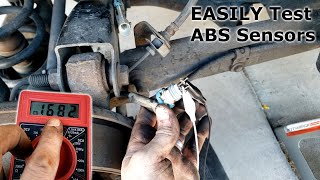
Identify if the sensor is passive or active. For a passive (2-wire, AC signal) sensor, disconnect it and set your multimeter to resistance (Ω). A good sensor reads between 800-2000 Ohms; an open circuit (OL) indicates failure. For an active (2 or 3-wire, digital signal) sensor, reconnect it, turn the ignition on, and back-probe the signal and ground wires to verify reference voltage (usually 5V or 12V).
Tools: ['Digital Multimeter', 'Back-probe Pins'] - Test the Wiring Harness for Continuity
If the sensor tests good, check the harness. Using a multimeter and a wiring diagram, check for continuity on the signal and power/ground wires from the sensor's connector to the ABS control module connector. Resistance must be less than 1 ohm. Check for a short to ground or short to power on the signal wire.
Tools: ['Digital Multimeter', 'Wiring Diagram'] - Check ABS Module Power and Grounds
Before condemning the ABS module, locate the main power and ground pins at its connector. Verify it receives full battery voltage and has a solid connection to ground (less than 0.1 ohms of resistance). A corroded ground causes strange module behavior.
Tools: ['Digital Multimeter', 'Wiring Diagram'] - Test the Sensor Signal with an Oscilloscope (Advanced)
This is the definitive test. Back-probe the sensor's signal wire. For a passive sensor, spinning the wheel produces a clean AC sine wave. For an active sensor, you see a clean digital square wave switching between high and low voltage. Dropouts or noise point to a bad sensor or tone ring.
Tools: ['Oscilloscope', 'Back-probe Pins'] (Advanced)
When This Code Triggers (Freeze-Frame Conditions)
- Vehicle Speed: 25-55 mph (Steady state driving or gentle acceleration/deceleration.)
- Engine RPM: 1200-2500 (Normal cruise or light throttle application.)
- Brake Pedal Status: Not Applied (The fault is often detected during normal driving, not necessarily during a braking event.)
- System Voltage: 13.0-14.5V (Normal operating voltage; the fault is logged when the charging system is stable.)
Related Codes
- C050D — This is the same rationality fault but for the Left Rear wheel. If C0513 and C050D appear together, it points to a systemic issue like mismatched rear tires, a software glitch, or a failing ABS module.
- C0507 — This is the same rationality fault but for the Right Front wheel. Seeing multiple, non-axle-related wheel speed codes strongly suggests a central problem like a failing 12V battery or a faulty main ABS control module.
- C0501 — This is the same rationality fault but for the Left Front wheel. When multiple wheel speed codes are present, check for software updates (TSBs) and verify 12V battery health before testing individual components.
- U0415 — Means 'Invalid Data Received From ABS Control Module'. Appearing alongside C0513, it strongly suggests the problem is a software glitch or internal module fault, not the sensor itself.
Climate & Environmental Factors
- Cold Weather / Snow & Ice: Ice and snow pack into the wheel hub area, physically obstructing the sensor's line of sight to the tone ring, causing a temporary signal loss. This resolves itself after the vehicle thaws.
- Moisture & Humidity (Rust Belt): High humidity and road salt cause corrosion. Moisture intrusion corrodes the sensor's internal electronics and connector pins. Rust causes the tone ring to swell or delaminate, creating an inconsistent signal.
- Freeze-Thaw Cycles: Temperature swings allow moisture to seep into wiring connectors or cracks in the sensor housing. When this moisture refreezes, it expands and breaks electrical connections, leading to intermittent cold-weather faults.
How to Talk to a Mechanic About This Code
Say this: "I have an ABS light on and my scanner shows a C0513 code for the right rear wheel speed sensor. I know on my vehicle this is often a software issue, a bad sensor, wiring, or the hub. Can I book a diagnostic appointment to confirm the cause? Please check for any TSBs related to the ABS module before replacing parts."
This signals you are an informed consumer. It directs the technician to perform a proper diagnosis rather than just replacing the most likely part, and specifically calls out the common software issue, preventing unnecessary hardware replacement.
Avoid saying:
- 'My ABS light is on, can you fix it?'
- 'Just replace the right rear wheel speed sensor.'
- 'Do whatever you think is right.'
Questions to ask before authorizing the repair:
- Did you check for software updates or TSBs for the ABS module first?
- If you are recommending a sensor replacement, what were the results of the wiring continuity test and the live data from the old sensor?
- If you are recommending a wheel hub replacement, can you show me the excessive play in the bearing or the damage to the tone ring?
- Can you show me the old part after it's been replaced?
Where to Take It: Dealer vs Independent vs Chain
- Dealer:
The best first choice for Stellantis (Jeep, Ram) vehicles due to common software issues that only a dealer can fix. For other makes, consider an independent shop first.
Best for: Vehicles known for software-related C0513 codes (Jeep, Ram, Fiat)., Vehicles still under warranty., Complex diagnostics involving module programming.
Downsides: Highest labor rates., Less flexible on repair options (e.g., only replacing a full assembly). (Typical cost: +50% vs. baseline) - Independent Shop:
Excellent choice for most vehicles, provided you checked for software TSBs first. A good independent shop easily handles sensor, wiring, and hub replacements.
Best for: Out-of-warranty vehicles where the cause is likely hardware (sensor, wiring, hub)., Owners seeking a better cost-to-repair ratio., Building a long-term relationship with a trusted mechanic.
Downsides: May lack expensive tools for software flashing or module programming., Diagnostic ability varies greatly between shops. (Typical cost: +0% vs. baseline) - Chain Shop:
High risk for misdiagnosis. AVOID for initial diagnosis of C0513. If you are 100% certain only a new sensor is needed, they can perform the replacement, but an independent shop is safer.
Best for: Simple, clear-cut part replacements when you are certain of the failed component.
Downsides: Technician skill and diagnostic equipment are inconsistent., Business model incentivizes quick parts replacement over accurate diagnosis., Unable to handle software-related issues. (Typical cost: -10% vs. baseline)
When to Walk Away From the Repair
If the estimated repair cost exceeds 50% of the car's private-party value, seriously consider selling or trading it in instead of repairing it. For older, high-mileage cars, this threshold is around 40%.
- Car worth $10000, fix is $600: Fix it. This repair (e.g., a wheel hub replacement) is well below the threshold and restores a critical safety system.
- Car worth $4000, fix is $1800: Borderline. This repair cost (e.g., a faulty ABS module) is approaching 50% of the car's value. Get a second opinion and consider the car's overall condition before proceeding.
- Car worth $2500, fix is $1800: Walk away. The repair cost is over 70% of the vehicle's value. It is not economically sensible to proceed with this repair.
What Scan Tool You Need for This Code
Minimum: An OBD-II scanner that reads and clears ABS/Chassis 'C' codes and displays live data for all four wheel speed sensors.
A basic $20 code reader only pulls 'P' (Powertrain) codes and cannot access the ABS module. Without live data from the wheel speed sensors, you cannot diagnose if the sensor is dead, erratic, or reading differently from the others.
Budget: Innova 3040RS (or similar with ABS) (~$90) — Reads and clears ABS codes and displays live data streams, the minimum requirement to see what the right rear sensor is doing compared to the others.
Mid-range: BlueDriver Pro or OBDLink MX+ (~$120) — These Bluetooth dongles connect to a smartphone app, providing excellent live data graphing. Graphing the four wheel speeds at once makes it easy to spot dropouts. They also offer access to manufacturer-specific codes.
Professional: Autel MaxiCOM MK808 / Foxwell NT809 (~$450-600) — Professional-grade tablets offering bi-directional controls. You can command the ABS module to perform self-tests, providing comprehensive diagnostic capabilities essential for a professional or serious DIYer.
Rent vs buy: AutoZone's in-store use scanner reads and clears ABS codes but lacks live data. For C0513, live data is critical, so renting a basic reader is insufficient. Buying a budget pick like the Innova or BlueDriver is a worthwhile investment.
How to Clear the Code After You Fix It
- Use an ABS-capable OBD-II scan tool to clear the fault codes.
- Perform the ABS system initialization or calibration routine if a new module was installed.
- Perform a short test drive that includes speeds above 15-20 MPH to allow the system to verify the repair.
Drive cycle (~20 minutes): A specific ABS drive cycle is not required. A normal test drive of 10-15 minutes that includes stop-and-go driving and reaching speeds over 40 MPH is sufficient for the ABS module to self-test and confirm the sensor signal is rational. The ABS light extinguishes within the first few minutes of driving if the repair was successful.
Readiness monitors affected: This is a 'C' (Chassis) code and does not affect emissions-related readiness monitors.
Watch out for:
- Using a basic code reader that cannot access or clear ABS-specific 'C' codes.
- Not test driving the vehicle after the repair; the light remains on until the vehicle is driven and the module verifies the signal.
- Forgetting to perform a 'Proxy Alignment' or calibration after replacing an ABS module, causing the code to persist.
Will This Fail Emissions / State Inspection?
No — by itself this code doesn't fail OBD inspection (but it can keep readiness monitors from setting, which causes a separate fail).
- California: An illuminated ABS light does NOT cause a failure of the emissions-only smog check. The check engine light is the only warning lamp resulting in an automatic failure.
- New York: An illuminated ABS warning light IS grounds for failing the annual safety inspection.
- Texas: An illuminated ABS light does NOT cause a failure of the state safety inspection.
Most Commonly Affected Vehicles
- Ram ProMaster City (2015-2017) — Highly prone to a software glitch. TSB #18-063-17 REV. A corrects overly sensitive fault logic. Checking for this software update is the mandatory first step.
- Jeep Compass / Cherokee (2016-2018) — Subject to multiple TSBs for software issues causing wheel speed rationality codes. A software update is the first recommended step before replacing hardware.
- Chevrolet Silverado EV (2024) — Bulletin PIT6136 addresses the ABS warning light illuminating due to the ABS wiring harness chafing on the rear drive unit above the right rear axle.
- Chevrolet Silverado 1500 (2019-2021) — Known for engine wiring harness chafing issues against brackets and frame components, causing wheel speed sensor codes. See TSB 21-NA-149 for common chafe points.
- Ford Fusion (2013-2016) — Highly sensitive to tire diameter changes. Replacing a single tire can trigger C0513, requiring a system recalibration.
- Honda HR-V (2016-2019) — Owner forums frequently report this code due to a failed sensor, with simple replacement being the common resolution.
- Volkswagen Golf (Mk6) (2010-2014) — A faulty wheel speed sensor causes erratic shifting in DSG automatic transmissions and disables hill-start assist, as these systems depend on accurate speed data.
- Fiat 500X (2016-2018) — Shares a platform with the Jeep Renegade. TSB 08-010-16 REV. D involves a software update for the BCM, PCM, and TCM that resolves this code.
Manufacturer-Specific Notes
- Ram / Jeep / Fiat (Stellantis): The ABS module's software is too sensitive and sets a C0513 code even when no hardware is broken. The official fix is a software update (reflash) performed by a dealer, outlined in multiple TSBs.
- Chevrolet / GMC (GM): Wiring harness integrity is a major concern. Harnesses are routed in ways that lead to chafing against frame brackets, control arms, or engine components, causing shorts that trigger C0513.
- Ford: The ABS module is extremely sensitive to changes in rolling diameter. Replacing only one tire, or using different brands with slightly different dimensions, triggers a rationality fault requiring a system recalibration.
- Volkswagen / Audi: On vehicles equipped with a DSG automatic transmission, a faulty wheel speed sensor signal (C0513) causes severe secondary performance issues, such as harsh shifting and disabling of hill-start assist.
Real Owner Stories
2017 Chevy Volt at 75K miles - Misdiagnosis leads to correct fix
While driving, the dash lit up with warnings for Stabilitrac, Steering Assist, and the ABS light. The car lost some regenerative braking capability.
What they tried:
- Initial thoughts from online forums suggested it was a common 12V battery issue on Volts.
- Another owner suggested it was a broken "anti-click washer" in the front hub chewing up the sensor, based on TSB 19-NA-103.
Outcome: The actual problem was a faulty magnetic reluctor ring integrated into the right rear hub, preventing the sensor from getting a signal. The owner replaced both the rear hub assembly and the wheel speed sensor to fix the issue permanently.
Lesson: A code for a specific sensor (C0513 - Right Rear) is often caused by a failure of a related part (the hub/reluctor ring). Do not assume the sensor itself is the only possible point of failure.
2016 Ram ProMaster City - The common software bug
ABS and ESC warning lights appeared on the dash with code C0513. No other symptoms were present.
What they tried:
- Given the vehicle's reputation, the owner researched Technical Service Bulletins (TSBs) before buying parts.
Outcome: The owner confirmed TSB #18-063-17 REV. A directly addressed C0513 being set due to overly sensitive software logic. A trip to the dealership for a $200 software reflash permanently fixed the problem without any hardware replacement.
Lesson: For Stellantis vehicles (Jeep, Ram, Fiat), always check for TSBs first. A software issue is the most common cause for this code on these platforms, and replacing hardware wastes money and time.
2016 Jeep Cherokee - Sensor replaced, but code returned
C0513 code appeared, turning on the ABS light. The owner, a DIYer, decided to tackle the most common cause.
What they tried:
- Replaced the right rear wheel speed sensor with a new aftermarket part ($40). The code cleared but returned within a day.
Outcome: The owner took the vehicle to an independent shop. The shop found no issues with the new sensor, wiring, or hub. They checked for TSBs and found one (#18-032-17) linking C0513 to poor idle performance, recommending a PCM software update. The dealer performed the software update, resolving the code.
Lesson: If a new part doesn't fix the code, the problem is upstream (wiring) or downstream (module/software). This underscores the importance of checking for software TSBs, even after a seemingly logical part replacement fails.
How to Prevent This Code From Triggering
- Periodic Brake Fluid Flush (Every 2-3 years or as per manufacturer's recommendation.) — Brake fluid absorbs moisture. Old, water-contaminated fluid corrodes the sensitive solenoid valves and internal passages of the ABS hydraulic control unit, leading to expensive module failure.
- Inspect and Clean Sensor Area During Brake Jobs (Whenever wheels are off for brake service or tire rotation.) — Visually inspect the sensor's wiring for chafing. Clean accumulated brake dust or debris from the sensor head and the visible part of the tone ring to ensure a clean signal.
- Apply Dielectric Grease to Connectors (When a sensor is replaced or if the connector is ever unplugged.) — Applying dielectric grease to the connector's weather seal blocks moisture and prevents corrosion of the electrical pins, a common failure point in wet or rust-belt climates.
- Address Failing Wheel Bearings Promptly (As soon as a humming/grinding noise is detected.) — A failing wheel bearing creates excessive wobble, damaging the integrated tone ring and causing the sensor to send an erratic signal. Replacing a noisy bearing early prevents secondary ABS faults.
- Install Protective Guards (for Off-Road/Harsh Conditions) (One-time installation.) — For trucks and SUVs used off-road or in heavy snow, aftermarket guards physically shield the exposed sensor and wiring from rocks, debris, or packed ice.
Frequently Asked Questions
I replaced the sensor, but the code came back. What now?
If a new sensor didn't fix it, the issue is upstream or downstream. The most common hidden culprits are a software glitch requiring a dealer update, a chafed wiring harness, or a rusted tone ring on the wheel hub. Always check for Technical Service Bulletins (TSBs) before replacing more parts.
What are the most common misdiagnosis mistakes for C0513?
The biggest mistake is immediately replacing the wheel speed sensor without checking for software-related TSBs, especially on Jeep and Ram vehicles. Another common error is failing to inspect the tone ring for rust or debris, which blocks the sensor's signal. Finally, condemning the expensive ABS control module before testing the wiring harness wastes money.
Is C0513 the same as P0513?
No, they are completely different codes. C0513 is a Chassis code indicating a wheel speed sensor rationality fault. P0513 is a Powertrain code for an 'Incorrect Immobilizer Key,' which usually prevents the engine from starting.
Can a bad 12V battery cause a C0513 code?
Yes. A weak 12-volt battery causes severe voltage drops during cranking, triggering random fault codes in sensitive modules like the ABS controller. If you have C0513 alongside multiple unrelated codes, test and replace the battery first.
What tools are needed to diagnose C0513?
You need a jack, jack stands, and an OBD-II scanner capable of reading ABS codes and displaying live wheel speed data. For electrical testing, a digital multimeter is essential to check wiring continuity. Professional diagnosis requires an oscilloscope to view the live sensor signal waveform.
Will a C0513 code make my car fail an inspection?
Yes. In almost all states with safety inspections (like New York or Virginia), an illuminated ABS warning light results in an automatic failure. It does not, however, fail an emissions-only test.
Why did my traction control light come on with the ABS light?
Traction and stability control systems rely entirely on the wheel speed sensors to detect slip. When the ABS module flags the right rear sensor data as unreliable, it shuts down all dependent safety systems as a precaution.
Can a bad alignment cause a C0513 code?
No, a standard wheel alignment issue will not trigger a C0513 code. However, severely worn suspension components or a failing wheel bearing can create enough hub wobble to disrupt the sensor's signal.
Key Takeaways
- Code C0513 instantly disables your ABS and Electronic Stability Control, increasing your stopping distance by up to 20% on wet roads.
- On 2015-2018 Stellantis vehicles (Jeep, Ram, Fiat), a hyper-sensitive software glitch causes 80% of C0513 codes, requiring a $150-$250 dealer reflash rather than new parts.
- If software isn't the issue, a failed $40-$100 right rear wheel speed sensor or a chafed wiring harness is the most likely hardware culprit.
- Always inspect the magnetic tone ring inside the wheel hub for rust buildup or missing teeth before replacing the sensor, as a dirty ring blocks the signal entirely.
Helpful Videos

Shop the Parts Behind C0513
Below are the parts most often responsible for code C0513, ranked by how frequently each one is the actual culprit (per the diagnosis above). Tap any to see what we have for your vehicle.



The information in this article is provided for general reference and educational purposes only. Vehicle specifications, procedures, and part compatibility can vary by production date, trim level, and region. Always consult your vehicle's factory service manual and verify part numbers before purchasing or performing repairs. Safety-critical components such as airbags, seat belts, and braking systems should be installed by a qualified professional.
- 🧭 Diagnostic Flowchart
- 🎬 Helpful Videos
- 🛍️ Shop This Part
- What Does C0513 Mean?
- Can I Drive With C0513?
- Common Causes
- Symptoms
- Common Fixes & Costs
- DIY vs Professional
- Used vs. New Parts: Buying Guide
- What Happens If You Wait — Timeline
- Cost of Not Fixing It
- Diagnosis Steps
- When This Code Triggers (Freeze-Frame Conditions)
- Related Codes
- Climate & Environmental Factors
- How to Talk to a Mechanic About This Code
- Where to Take It: Dealer vs Independent vs Chain
- When to Walk Away From the Repair
- What Scan Tool You Need for This Code
- How to Clear the Code After You Fix It
- Will This Fail Emissions / State Inspection?
- Most Commonly Affected Vehicles
- Manufacturer-Specific Notes
- Real Owner Stories
- 2017 Chevy Volt at 75K miles - Misdiagnosis leads to correct fix
- 2016 Ram ProMaster City - The common software bug
- 2016 Jeep Cherokee - Sensor replaced, but code returned
- How to Prevent This Code From Triggering
- Frequently Asked Questions
- I replaced the sensor, but the code came back. What now?
- What are the most common misdiagnosis mistakes for C0513?
- Is C0513 the same as P0513?
- Can a bad 12V battery cause a C0513 code?
- What tools are needed to diagnose C0513?
- Will a C0513 code make my car fail an inspection?
- Why did my traction control light come on with the ABS light?
- Can a bad alignment cause a C0513 code?
- Key Takeaways
- 🎟️ Get 5% Off