

OBD-II Code C0515: Right Rear Wheel Speed Sensor Circuit High
What C0515 means, why it triggers, and how to fix it
- Code C0515 indicates excessively high voltage in the right rear wheel speed sensor circuit, instantly disabling your ABS, traction, and stability control.
- Damaged wiring or a corroded connector causes 40-50% of C0515 faults. Always test the harness for a short-to-power (12V) before replacing the sensor.
- You can drive with a C0515 code, but stopping distances increase by up to 20% on wet roads due to disabled anti-lock brakes.
- Begin diagnosis by viewing live wheel speed data on an ABS-capable scanner; a fixed high speed reading (e.g., 150 mph) confirms a short-to-voltage in the wiring.
What Does C0515 Mean?
Trouble code C0515 means the ABS control module detects a voltage signal from the right rear wheel speed sensor that exceeds the normal operational range. This sensor reports the wheel's rotational speed. When signal voltage spikes too high, the computer flags the data as unreliable and disables the ABS and related safety systems to prevent erratic braking.
Technical definition: The official SAE/OBD-II definition for code C0515 is "Right Rear Wheel Speed Sensor A Circuit High". This indicates that the voltage on the signal circuit for the right rear wheel speed sensor is above the manufacturer's specified threshold, most commonly due to a short circuit to a power source.
Can I Drive With C0515?
Yes, But With Caution. Yes, but drive with extreme caution. The C0515 code disables your Anti-lock Braking System (ABS), Traction Control (TCS), and Electronic Stability Control (ESC). Your wheels will lock up during hard braking, increasing stopping distances and skidding risk in wet or icy conditions. While driving won't cause further mechanical damage, the loss of active safety systems poses a severe accident risk.
Common Causes
- Damaged or Corroded Wiring Harness (Very Common) — Exposed wiring frays, pinches, or chafes, causing the signal wire to short to a 12V power wire. This creates a constant high-voltage signal and is the root cause in 40-50% of C0515 faults.
- Faulty Right Rear Wheel Speed Sensor (Common) — The sensor fails internally, creating a short circuit that sends a continuous high-voltage signal instead of a fluctuating speed signal. Failure rates spike after 80,000 miles.
- Contaminated or Damaged Tone Ring (Common) — The toothed or magnetic tone ring spins with the wheel hub. Cracked teeth or heavy metallic debris buildup 🎬 Watch: How to properly clean a dirty ABS tone ring. causes erratic signals that the module misinterprets as a high-voltage fault.
- Loose or Corroded Electrical Connector (Less Common) — Water intrusion at the sensor plug alters the circuit's voltage. A poor pin connection directly triggers the code.
- Faulty Wheel Bearing / Hub Assembly (Less Common) — A failing wheel bearing introduces excessive wobble, altering the critical air gap between the sensor and tone ring or physically damaging the components.
- Poor Ground Connection (Rare) — A rusty or broken chassis ground creates a floating voltage, forcing the module to read an incorrectly high signal. Ground resistance must remain under 5 ohms.
- Failing ABS Control Module (Rare) — An internal module fault misreads a normal sensor signal as excessively high. This requires professional diagnosis to confirm.
- ABS Module Software/Calibration Issues (Rare) — Outdated firmware misinterprets sensor voltage ranges, especially after battery replacements. Requires a dealer software update.
Symptoms
- ABS Warning Light On — The ABS warning light illuminates immediately and remains solid.
- Traction/Stability Control Light On — The TCS or ESC light (often a car with squiggly lines) illuminates alongside the ABS light.
- ABS and Traction Control Inactive — Wheels lock up and skid during hard braking. Traction control fails to prevent wheel spin on slippery surfaces, and stopping distances increase.
- Pulsating Brake Pedal at Low Speeds — The brake pedal pulses, vibrates, or chatters during low-speed braking as the ABS module incorrectly modulates brake pressure based on faulty data. You may also hear a grinding noise.
- Erratic Cruise Control — Cruise control disengages unexpectedly because it relies on accurate rear wheel speed data to maintain pace.
Diagnostic Flowchart
Tap your situation to follow the diagnostic path that matches what you're seeing on this code.
Common Fixes & Costs
- Repairing Damaged Wiring or Connector — Parts: $10-$50, Labor: $150-$300, ~1.5 hr book time (Intermediate)
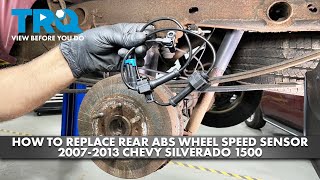
- Replacing the Right Rear Wheel Speed Sensor — Parts: $20-$250, Labor: $100-$200, ~1.0 hr book time (DIY)
- Cleaning the Tone Ring and Sensor Tip — Parts: $0-$15, Labor: $80-$150, ~0.8 hr book time (DIY)
- Replacing the Wheel Hub Assembly — Parts: $150-$500, Labor: $200-$400, ~2.0 hr book time (Intermediate)
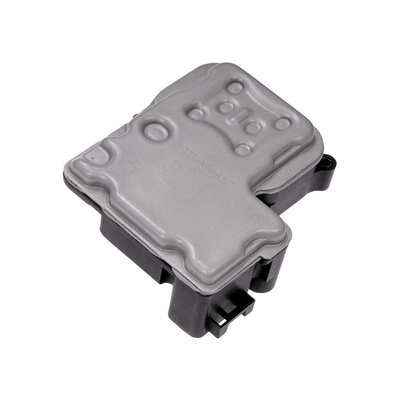
- Replacing or Repairing the ABS Control Module — Parts: $200-$2500, Labor: $150-$350, ~2.5 hr book time (Professional)
Used vs. New Parts: Buying Guide
When a used part is worth it: Buy new aftermarket wheel speed sensors and wiring pigtails; the cost savings of used parts aren't worth the failure risk. Used wheel hub assemblies are acceptable if sourced from a low-mileage donor.
Donor-vehicle mileage cap: roughly under 60000 miles for the part to have meaningful remaining life.
Donor quality checklist:
- Verify the donor vehicle was not scrapped due to a collision involving the wheel/suspension.
- Avoid parts from regions with heavy road salt use to minimize risk of corrosion.
- Match the part number exactly. Integrated hub assemblies can have minor differences year-to-year that affect compatibility.
Decision logic:
- If The part is a bolt-on electronic sensor → Buy new. The cost savings for a used sensor are minimal and not worth the risk of premature failure.
- If The part is a complete wheel hub assembly and the vehicle is over 100K miles → A used assembly from a donor with under 60K miles is a reasonable choice if on a tight budget.
- If The part is a wiring pigtail/connector → Always buy new to ensure clean contacts and flexible, uncompromised wiring.
Warranty tradeoff: Used parts typically come with a 30-90 day warranty. New aftermarket parts often carry a 1-year to limited lifetime warranty. OEM parts have a 1-2 year warranty.
Worst-case if a used part fails: $200-$400 if a used hub assembly fails prematurely, requiring repeat labor costs plus the price of another replacement part.
What Happens If You Wait — Timeline
- 0-1 month: ABS and Traction Control systems disable immediately. The brake pedal feels normal during dry, routine driving. (MPG impact: 0%% · Added cost: $0)
- 1-4 months: Vehicles relying on wheel speed data for secondary systems experience erratic cruise control or harsh transmission shifts. (MPG impact: 0-2%% · Added cost: $20-$80 (in wasted fuel))
- 4-12 months: An emergency braking event on a slippery surface results in a loss of steering control and a potential collision. (MPG impact: 0-2%% · Added cost: $500+ (Potential insurance deductible after an avoidable accident))
- 12+ months: Moisture entering a damaged wiring harness wicks into adjacent circuits, causing compounding electrical failures. (MPG impact: 0-2%% · Added cost: $1000+ (Cost of an accident or compounding electrical repairs))
Cost of Not Fixing It
- Immediate: Total loss of ABS, traction, and stability control. Wheel lock-up risk increases dramatically during emergency braking. (Added cost: N/A (Safety Risk))
- 0-6 months: On some vehicles, a faulty wheel speed sensor sends incorrect data to the Transmission Control Module (TCM), causing erratic shifting, delayed torque converter lockup, and a 1-5% drop in fuel economy. (Added cost: $50-$200 (in wasted fuel over time))
- 6+ months: Continued driving without ABS functionality increases the statistical risk of an accident. The safety system's absence is the primary long-term cost. (Added cost: $500+ (Insurance deductible in case of an accident))
Diagnosis Steps
- Read the Trouble Codes
Use an ABS-capable OBD-II scanner to confirm C0515. Document communication codes like U0121, which indicate broader module failures.
Tools: OBD-II Scanner (ABS compatible) (Beginner) - Analyze Live Data
View the live data stream for all four wheel speed sensors while driving slowly. If the right rear sensor reads a fixed high speed (e.g., 150 mph) or 0 mph while moving, the circuit fault is confirmed.
Tools: OBD-II Scanner (with live data) (Intermediate) - Visually Inspect the Sensor and Wiring
Raise the vehicle and trace the wiring harness from the right rear sensor to the main body. Look for chafing, melted insulation, pinched wires, or green corrosion on connector pins.
Tools: Jack, Jack Stands, Flashlight (Beginner) - Perform 'Wiggle Test' on Wiring
With the scanner's live data screen active, gently manipulate the right rear wiring harness. If the speed reading jumps wildly, you have located an intermittent connection or broken wire.
Tools: OBD-II Scanner (with live data) (Intermediate) - Test for Short to Voltage
Disconnect the sensor and turn the ignition ON. Using a multimeter set to DC Volts, probe the signal wire pin on the harness side and a chassis ground. A reading of 5V or 12V confirms a short to power in the harness.
Tools: Multimeter, Vehicle-specific Wiring Diagram (Advanced) - Perform a 'Swap Test'
Swap the left and right rear sensors. Clear codes and drive. If the code changes to C0505 (Left Rear), the sensor is faulty. If C0515 returns, the wiring or module is the issue.
Tools: Basic Hand Tools, OBD-II Scanner (Intermediate) - Inspect the Tone Ring
Remove the sensor and inspect the tone ring inside the hub. Look for heavy rust, caked debris, or missing teeth that disrupt the magnetic field.
Tools: Flashlight, Wire Brush, Jack, Jack Stands, Basic Hand Tools (Beginner) - Test Sensor Resistance (for 2-wire VR sensors)
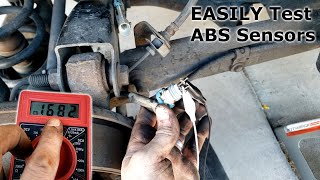
Measure resistance across the two sensor pins. Normal readings are 800-2,000 Ohms. Infinity (O.L.) means an open circuit; near zero means a shorted sensor.
Tools: Multimeter (Advanced) - Test Sensor AC Voltage Output (for 2-wire VR sensors)
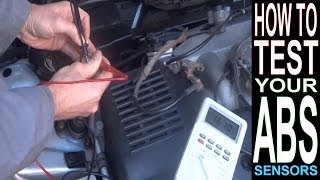
Back-probe the connected sensor wires with a multimeter set to AC Volts. Spin the wheel by hand. Voltage should start around 100-200mV AC and rise with speed.
Tools: Multimeter (Advanced) - Test Sensor Signal (for 3-wire Hall-Effect sensors)
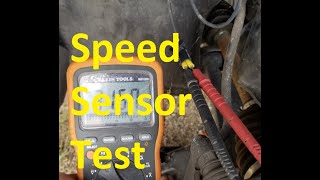
Back-probe the signal wire. With ignition ON, slowly rotate the wheel. Voltage must switch between a low state (near 0V) and a high state (5V or 12V). A stuck voltage means a dead sensor.
Tools: Multimeter (Advanced)
When This Code Triggers (Freeze-Frame Conditions)
- Vehicle Speed: 35-55 mph (Triggers during steady-state cruising when the ABS module expects a stable, consistent signal from all sensors.)
- Engine RPM: 1500-2500 RPM (Corresponds with steady highway speeds where signal inconsistencies become obvious to the control module.)
- Engine Load: 30-60% (Typical load during light acceleration or maintaining speed on a level road.)
- System Voltage: 13.5-14.5V (Occurs when the charging system operates normally, proving the 'Circuit High' reading stems from a localized short, not a vehicle-wide over-voltage.)
Related Codes
- C0035 — Generic code for Right Front Wheel Speed Sensor Circuit. C0515 is specific to a 'Circuit High' condition on the Right Rear.
- C0514 — Right Rear Wheel Speed Sensor Circuit Low. Caused by an open circuit (broken wire) or short to ground, whereas C0515 is a short to voltage.
- C0516 — Right Rear Wheel Speed Sensor Intermittent. Indicates a loose connector or chafed wire making intermittent contact. Perform a wiggle test.
- U0121 — Lost Communication With ABS Control Module. Indicates the entire module is offline. Diagnose module power and ground before testing individual sensors.
Climate & Environmental Factors
- Road Salt / High Humidity: Saltwater acts as a powerful electrolyte, accelerating corrosion on wiring connectors and pins. This creates electrical shorts that trigger the C0515 code. Applying dielectric grease to connectors prevents this.
- Corrosion Buildup: Rust buildup on the hub mounting surface physically pushes the sensor away from the tone ring. This increased air gap causes erratic signals that the ABS module interprets as a circuit fault.
- Extreme Cold: Sub-zero temperatures make wire insulation brittle and prone to cracking. These cracks allow moisture to enter the harness, causing the shorts that trigger a Circuit High code.
How to Talk to a Mechanic About This Code
Say this: "I have an active C0515 code, 'Right Rear Wheel Speed Sensor Circuit High'. I'd like to schedule a diagnostic. Please start by inspecting the wiring harness and connector for damage or a short-to-power, and check the live data from all four sensors before recommending a sensor replacement."
This proves you understand 'Circuit High' is an electrical fault. It forces the technician to check the wiring (the most common and cheapest fix) before upselling a sensor.
Avoid saying:
- 'My ABS light is on, can you fix it?'
- 'Just replace the right rear ABS sensor.'
- 'Do whatever you think is best.'
Questions to ask before authorizing the repair:
- What did the live data show for the right rear sensor compared to the others?
- Did you test the harness-side connector for a short to voltage? What was the reading?
- Was the wiring harness inspected for chafing or damage all the way to the ABS module?
- If you are recommending a sensor replacement, what were the resistance (Ohms) or AC voltage readings from the old sensor that prove it failed?
Where to Take It: Dealer vs Independent vs Chain
- Dealer:
Recommended only if other shops fail to diagnose the issue or if the ABS module requires OEM programming.
Best for: Vehicles still under warranty., Complex electrical issues where a faulty ABS module is confirmed and requires OEM programming.
Downsides: Highest labor rates., May be quicker to replace a whole component (like a hub assembly) rather than repair wiring. (Typical cost: +50% vs. baseline) - Independent Shop:
Best fit. Reputable independent shops cost-effectively handle electrical testing and mechanical replacements for C0515.
Best for: Out-of-warranty vehicles., Diagnosing and repairing common ABS faults, including wiring, sensors, and hub assemblies.
Downsides: Quality and diagnostic capabilities vary greatly. Vet the shop by checking for ASE certifications and online reviews. (Typical cost: +0% vs. baseline) - Chain Shop:
Acceptable only for pre-diagnosed sensor replacements. Avoid for initial diagnosis, as they frequently skip electrical testing and default to parts replacement.
Best for: A straightforward, pre-diagnosed wheel speed sensor replacement.
Downsides: Technician skill varies. May lack the advanced diagnostic skills for tracing intermittent wiring shorts. High pressure to upsell unnecessary services. (Typical cost: -10% vs. baseline)
When to Walk Away From the Repair
If the estimated repair cost for the C0515 fault exceeds 40-50% of your car's private-party market value, you should pause and consider your options.
- Car worth $4000, fix is $350: Fix it. This is a relatively low-cost repair that resolves a major safety issue and is well below the threshold.
- Car worth $5000, fix is $2200: Walk away. A $2,200 repair indicates a failed ABS module. Put that money toward a replacement vehicle.
- Car worth $15000, fix is $800: Fix it. This likely represents a wheel hub assembly replacement, which is a reasonable cost to restore critical safety systems on a more valuable vehicle.
What Scan Tool You Need for This Code
Minimum: A scanner that can read and clear codes from the Anti-lock Braking System (ABS) module and display a live data stream of all four wheel speed sensors.
A basic, sub-$50 engine code reader cannot communicate with the ABS module. It will not see the C0515 code or show live wheel speed data. You will be guessing blindly.
Budget: BlueDriver Bluetooth Pro (~$100) — Reads ABS codes and graphs live wheel speeds on your phone. Excellent value with no subscription fees.
Mid-range: Foxwell NT630 Plus / Innova 5610 (~$150-250) — Dedicated handheld units that read ABS codes, show live data, and perform automated ABS brake bleeding.
Professional: Autel MaxiCOM MK808S (~$450-550) — Professional tablet scanner with full system diagnostics and bidirectional controls to test components directly.
Rent vs buy: Borrow an ABS-capable scanner for free from AutoZone or O'Reilly Auto Parts to confirm the code before buying parts.
How to Clear the Code After You Fix It
- Use an ABS-capable OBD-II scan tool to clear the C0515 trouble code.
- Perform a short test drive that includes speeds above 15-20 mph to allow the ABS module to verify the sensor is providing a valid signal.
- If the light does not return, the repair is successful.
Drive cycle (~15 minutes): After clearing the code, start the vehicle and let it idle for 1-2 minutes. Drive the vehicle, making several stops and accelerations, and reach a steady speed of over 40 mph for at least 5 minutes. The ABS system self-tests immediately upon reaching 15 mph.
Readiness monitors affected: No direct emissions readiness monitors are affected by an ABS fault.
Watch out for:
- Disconnecting the battery does not clear ABS codes on modern vehicles. You must use an ABS-capable scan tool.
- If the ABS light returns immediately, it indicates the root cause (likely a wiring short or faulty module) was not corrected.
- Failure to clean the hub mounting surface before installing a new sensor can cause the code to return.
Will This Fail Emissions / State Inspection?
No — by itself this code doesn't fail OBD inspection (but it can keep readiness monitors from setting, which causes a separate fail).
- California: An ABS light does not fail a California emissions Smog Check, but fails safety inspections.
- New York: Fails the mandatory annual safety inspection.
- Virginia: Fails the annual safety inspection.
- Texas: Fails the annual safety inspection.
Most Commonly Affected Vehicles
- Chevrolet / GMC Malibu, Acadia, Sierra, Silverado (2009-2016) — Prone to wiring harness issues near the wheel hub where the harness flexes. TSB 04-05-25-003A addresses tightly routed wiring causing internal breaks.
- Ford F-150 (2015-2020) — Pigtail connectors frequently fail due to water intrusion. Aftermarket pigtails (e.g., Dorman 645-140) offer a permanent splice-in fix.
- Chrysler / Dodge 300, Charger, Grand Caravan (2011-2020) — Sensor replacements often require removing the brake rotor and dust shield for access.
- Toyota / Lexus Various Models (2005-2015) — Failures trace to damaged wiring harnesses or corroded connectors rather than the sensor itself.
- Hyundai / Kia Sorento, Santa Fe, Sonata (2015-2020) — High incidence of faulty sensors and corroded wiring connectors.
- Subaru Outback, Forester (2015-2019) — Electronic brake system errors frequently stem from faulty wiring connectors.
- BMW 3-Series, 5-Series (E90, E60) (2006-2013) — Sensor failure triggers the 'trifecta' of ABS, traction (DSC), and brake warning lights.
- Land Rover Range Rover (2002-2012) — Extensive wiring vulnerabilities require detailed circuit testing per the official workshop manual.
Manufacturer-Specific Notes
- General Motors (GM): TSB 04-05-25-003A notes factory wiring routed too tightly leads to internal wire breaks, causing intermittent C0515 codes even if the insulation looks perfect.
- Ford: The pigtail connector at the sensor fails frequently from water intrusion. Ford and aftermarket brands sell replacement pigtails to avoid replacing the entire harness.
- Chrysler/Dodge/Jeep: Rear wheel speed sensor harnesses route near the exhaust. Heat bakes the wiring, causing brittle insulation, cracking, and eventual shorts.
- PACCAR: NHTSA bulletin 34-085 details a widespread issue with incorrectly installed wheel speed sensor connector seals, leading to corrosion. It outlines specific labor times for inspection and replacement.
Real Owner Stories
2009 Dodge Ram 1500 with ABS light
Owner was getting a C1020 code (Rear Left Wheel Sensor Circuit) and ABS light was on. No signal from the left rear sensor.
What they tried:
- Replaced the sensor.
- Inspected and tested wiring for shorts and continuity all the way to the ABS module.
- Cleaned oxidized contacts on the ABS module connector.
- Swapped the left and right rear sensors; the problem remained on the left side.
Outcome: The owner discovered that a previous owner had worked on the harness and the wires for the sensor were reversed. By rotating the sensor in its connector to reverse the polarity, the sensor started working correctly and the code was resolved.
Lesson: If standard diagnostics fail on a used vehicle, inspect for incorrect previous repairs like reversed wiring polarity.
2015 Mini Cooper with intermittent ABS/Chassis Stabilization warning
ABS and 'Chassis Stabilization' warning lights would appear at highway speeds (above 43 mph), sometimes with a quiet metal clicking sound. Diagnostics pointed to a rear/right wheel speed sensor issue.
What they tried:
- Visually inspected the sensor and wiring, which appeared fine.
- Tested the sensor's voltage and resistance, which read as normal.
- Replaced the right rear wheel speed sensor.
Outcome: The error message returned even after replacing the sensor. The problem was intermittent and speed-dependent, which suggests a more complex issue possibly related to the wheel bearing, tone ring, or a wiring problem that only manifests during vibration at speed.
Lesson: Stationary sensor tests miss vibration-dependent faults; always analyze live data while driving at the speed the code triggers.
2009 Buick Lucerne with right rear ABS codes
The car had active ABS codes and the owner found that the wiring to the right rear sensor was broken right at the connector, likely from damage from driving on gravel roads.
What they tried:
- The owner decided to repair the connector rather than replace it.
- They released the pin from the connector housing, soldered a new piece of wire to the broken pin, and reinserted it into the connector.
- The repaired wire was protected with waterproof shrink tube.
Outcome: The wiring repair was successful, and the ABS codes were cleared. The owner also relocated the wiring and added a protective sleeve made from a piece of heater hose to prevent future damage.
Lesson: De-pinning and soldering a broken connector wire saves the cost of a new harness, provided you properly weatherproof the repair.
How to Prevent This Code From Triggering
- Apply Dielectric Grease to Connectors (During any brake job or tire rotation) — Apply dielectric grease inside the sensor connector seal to block moisture and prevent corrosion-induced shorts.
- Inspect and Secure Wiring Harness (Annually or whenever the wheels are off) — Zip-tie loose ABS wiring away from moving suspension parts to prevent chafing and insulation wear.
- Clean Hub Mounting Surface Before Sensor Installation (Every time a sensor is replaced) — Scrub the hub mounting surface with a wire brush to ensure the new sensor sits flush and maintains the correct air gap.
- Install Protective Guards (for Off-Road/Winter Use) (Once, as a modification) — Install aftermarket aluminum guards on off-road vehicles to shield sensors and wiring from rock and ice impacts.
Frequently Asked Questions
What is the most common misdiagnosis for code C0515?
The most common mistake is replacing the sensor without testing the wiring. Frayed wires, corroded pins, or dirty tone rings cause most faults. A visual inspection and circuit test prevents wasting money on unneeded parts.
Can a bad wheel bearing cause a C0515 code?
Yes. Modern cars integrate the tone ring into the wheel bearing assembly. A worn bearing wobbles, physically damaging the sensor or tone ring and triggering the electrical fault.
Can I fix code C0515 myself?
Replacing a sensor or cleaning a tone ring is a straightforward DIY task. However, tracing a wiring short or diagnosing a faulty ABS module requires advanced electrical testing tools.
What happens if I ignore code C0515?
Ignoring the code leaves you without anti-lock brakes, traction control, and stability control. This drastically increases your risk of skidding and losing control during emergency stops or in bad weather.
What's the difference between an ABS sensor and a wheel speed sensor?
They are the exact same component. 'Wheel speed sensor' is the technical term, as its data feeds the ABS, Traction Control, and Stability Control systems.
How do I know which wheel sensor is bad?
Code C0515 specifically identifies the Right Rear wheel speed sensor circuit. An ABS-capable scan tool confirms this by showing live speed data from all four wheels.
Can I just clean the wheel speed sensor to fix it?
Yes, if the sensor tip or tone ring is caked in metallic debris, cleaning it restores the signal. However, cleaning won't fix an internally shorted sensor or a broken wire.
Will uneven tire wear or a bad alignment cause C0515?
No. C0515 is strictly an electrical circuit fault. Bad alignment or uneven tires cause the traction control to activate frequently, but will not trigger a 'Circuit High' electrical code.
Key Takeaways
- Code C0515 indicates excessively high voltage in the right rear wheel speed sensor circuit, instantly disabling your ABS, traction, and stability control.
- Damaged wiring or a corroded connector causes 40-50% of C0515 faults. Always test the harness for a short-to-power (12V) before replacing the sensor.
- You can drive with a C0515 code, but stopping distances increase by up to 20% on wet roads due to disabled anti-lock brakes.
- Begin diagnosis by viewing live wheel speed data on an ABS-capable scanner; a fixed high speed reading (e.g., 150 mph) confirms a short-to-voltage in the wiring.
Helpful Videos
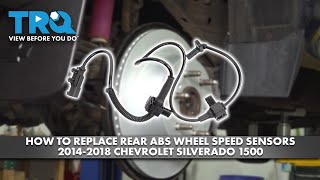
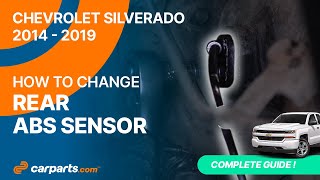
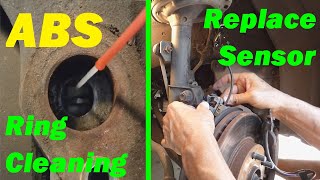
Shop the Parts Behind C0515
Below are the parts most often responsible for code C0515, ranked by how frequently each one is the actual culprit (per the diagnosis above). Tap any to see what we have for your vehicle.



The information in this article is provided for general reference and educational purposes only. Vehicle specifications, procedures, and part compatibility can vary by production date, trim level, and region. Always consult your vehicle's factory service manual and verify part numbers before purchasing or performing repairs. Safety-critical components such as airbags, seat belts, and braking systems should be installed by a qualified professional.
- 🧭 Diagnostic Flowchart
- 🎬 Helpful Videos
- 🛍️ Shop This Part
- What Does C0515 Mean?
- Can I Drive With C0515?
- Common Causes
- Symptoms
- Common Fixes & Costs
- Used vs. New Parts: Buying Guide
- What Happens If You Wait — Timeline
- Cost of Not Fixing It
- Diagnosis Steps
- When This Code Triggers (Freeze-Frame Conditions)
- Related Codes
- Climate & Environmental Factors
- How to Talk to a Mechanic About This Code
- Where to Take It: Dealer vs Independent vs Chain
- When to Walk Away From the Repair
- What Scan Tool You Need for This Code
- How to Clear the Code After You Fix It
- Will This Fail Emissions / State Inspection?
- Most Commonly Affected Vehicles
- Manufacturer-Specific Notes
- Real Owner Stories
- 2009 Dodge Ram 1500 with ABS light
- 2015 Mini Cooper with intermittent ABS/Chassis Stabilization warning
- 2009 Buick Lucerne with right rear ABS codes
- How to Prevent This Code From Triggering
- Frequently Asked Questions
- What is the most common misdiagnosis for code C0515?
- Can a bad wheel bearing cause a C0515 code?
- Can I fix code C0515 myself?
- What happens if I ignore code C0515?
- What's the difference between an ABS sensor and a wheel speed sensor?
- How do I know which wheel sensor is bad?
- Can I just clean the wheel speed sensor to fix it?
- Will uneven tire wear or a bad alignment cause C0515?
- Key Takeaways
- 🎟️ Get 5% Off