

OBD-II Code C0516: Right Rear Wheel Speed Sensor Signal Problem
What C0516 means, why it triggers, and how to fix it
- Code C0516 disables your ABS and traction control because the computer detects an erratic signal from the right rear wheel speed sensor.
- Inspect the wiring harness for chafing and the hub mounting surface for rust buildup before replacing the sensor, as these cause over 50% of C0516 faults.
- Diagnose the exact failure point by watching live wheel speed data on a scanner while performing a physical 'wiggle test' on the right rear wiring harness.
- On GM trucks and SUVs from 2007-2014, this code triggers a 'Service StabiliTrak' message and is most often caused by a broken wire near the frame.
What Does C0516 Mean?
Code C0516 means your car's main computer detects an unsteady, flickering, or erratic signal from the right rear wheel speed sensor. Because the signal drops out or is inconsistent with the other wheels, the computer deactivates safety systems like ABS and traction control as a precautionary measure.
Technical definition: The official SAE/OBD-II definition for code C0516 is "Right Rear Wheel Speed Sensor A Intermittent/Erratic". This indicates the signal from the sensor is unstable or dropping out entirely, a condition exacerbated by hitting bumps, turning, or driving in wet conditions.
Can I Drive With C0516?
Yes, But With Caution. Yes, but your Anti-lock Braking System (ABS), Traction Control, and Stability Control are disabled. This significantly increases stopping distances on slippery surfaces and raises the risk of skidding during sudden maneuvers. Address this safety-related fault promptly to restore predictable brake behavior.
Common Causes
- Damaged or Corroded Wiring/Connector (Very Common) — The wiring harness leading to the sensor is constantly exposed to water and debris. Wires chafe against suspension parts or break internally. Connector pins corrode, causing a poor connection and an intermittent signal.
- Incorrect Air Gap or 'Rust Jacking' (Common) — The sensor must sit a precise distance from the tone ring. Rust buildup on the hub's mounting surface physically pushes the sensor away, increasing this gap and weakening the signal to the point of failure.
- Failing Wheel Speed Sensor (Common) — The sensor fails from internal electronic breakdown due to age, heat cycles, and moisture intrusion. If the internal magnetic components degrade, the signal becomes weak or stops working randomly.
- Contaminated or Damaged Tone Ring (Common) — The sensor reads a toothed or magnetic ring that spins with the wheel. If this ring is covered in thick rust or metallic brake dust, or if a tooth is cracked, the sensor cannot get a clean reading.
- Failing Wheel Hub Bearing Assembly (Less Common) — In modern vehicles, the tone ring is integrated into the wheel hub bearing. If the bearing fails and develops excessive play, the distance between the tone ring and the sensor constantly changes, creating an erratic signal.
- Failing ABS Control Module (Rare) — The ABS control module interprets the sensor's signal. An internal problem like a bad solder joint or faulty input circuit causes the module to misread a perfectly good signal.
Symptoms
- ABS Warning Light On — The 'ABS' light on your dashboard illuminates, indicating the anti-lock braking system is disabled.
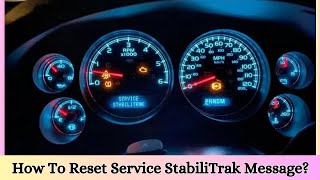
- Traction or Stability Control Light On — A light showing a car with squiggly lines turns on. On GM vehicles, this is accompanied by a "Service StabiliTrak" message. 🎬 Watch: How to fix common Service StabiliTrak warning light causes.
- Loss of ABS, Traction, and Stability Control — During hard braking on wet surfaces, your wheels lock up and skid. When accelerating on a slippery surface, the drive wheels spin freely.
- Erratic Brake Pedal Pulsation — A faulty signal tricks the ABS system into activating at low speeds, causing the brake pedal to pulse unexpectedly.
- Juddering or Misfire Sensation at Low Speeds — On BMW models, a faulty rear sensor causes the traction control system to activate incorrectly, feeling like a misfire or stuttering as the system cuts engine power.
Diagnostic Flowchart
Tap your situation to follow the diagnostic path that matches what you're seeing on this code.
Common Fixes & Costs
- Repair Damaged Wiring or Replace Connector Pigtail — Parts: $15-$80, Labor: $100-$250, ~1.5 hr book time (Intermediate)
- Replace Right Rear Wheel Speed Sensor — Parts: $50-$250, Labor: $100-$200, ~1.2 hr book time (DIY)
- Clean Tone Ring and Sensor Mount — Parts: $5, Labor: $80-$150, ~0.8 hr book time (DIY)
- Replace Right Rear Wheel Hub Bearing Assembly — Parts: $150-$450, Labor: $200-$400, ~2.5 hr book time (Intermediate)
- Replace ABS Control Module — Parts: $600-$1900, Labor: $200-$400, ~2.0 hr book time (Professional)
DIY vs Professional
- Repair Damaged Wiring or Replace Connector Pigtail — Beginner: No
Tools: Soldering iron, heat shrink tubing, wire strippers, multimeter. - Replace Right Rear Wheel Speed Sensor — Beginner: Yes
Tools: Jack, jack stands, lug wrench, socket set, torque wrench. - Clean Tone Ring and Sensor Mount — Beginner: Yes
Tools: Jack, jack stands, lug wrench, wire brush, brake cleaner. - Replace Right Rear Wheel Hub Bearing Assembly — Beginner: No
Tools: Full socket set, torque wrench, breaker bar, slide hammer, axle nut socket. - Replace ABS Control Module — Beginner: No
Tools: Socket set, advanced OBD-II scanner with programming capabilities.
Used vs. New Parts: Buying Guide
When a used part is worth it: A used OEM sensor from a low-mileage, non-corroded donor vehicle is a cost-effective alternative to a cheap aftermarket part. Never buy a used wheel hub bearing assembly.
Donor-vehicle mileage cap: roughly under 60000 miles for the part to have meaningful remaining life.
Donor quality checklist:
- Verify the part number matches exactly.
- Avoid parts from vehicles in the Rust Belt.
- Ensure the electrical connector and wiring pigtail are free of damage.
Decision logic:
- If The fix is a complete wheel hub bearing assembly → Buy new. The bearing is a wear item and a used part has unknown remaining life.
- If The fix is a bolt-on sensor and a new OEM part is prohibitively expensive → A used OEM sensor is better than a cheap aftermarket sensor due to better materials and guaranteed compatibility.
- If The vehicle is older and budget is the primary concern → A new aftermarket sensor from a reputable brand (Bosch, ATE) offers a good balance of cost and reliability.
Warranty tradeoff: Used parts have a 30-90 day warranty. New aftermarket parts range from 1-year to lifetime warranties. New OEM parts carry a 12-month manufacturer's warranty.
Worst-case if a used part fails: $150-$300 if a cheap aftermarket sensor fails prematurely, requiring repeat labor costs.
What Happens If You Wait — Timeline
- 0-4 weeks: ABS and Traction Control lights illuminate, disabling these safety systems. The vehicle's base brakes function normally, but the risk of skidding in emergency situations increases. (MPG impact: 0%% · Added cost: $0)
- 1-6 months: If the cause is a chafing wire, continued vibration causes the wire to short to ground. This damages the input driver circuit inside the ABS control module, turning a simple wiring repair into a module replacement. (MPG impact: 0%% · Added cost: $800-$2500 (If the ABS module requires replacement))
- 3-12 months (if cause is bearing): If the root cause is a failing wheel bearing, a constant humming noise develops. The bearing play worsens, causing uneven tire wear and poor handling. (MPG impact: 0-2% (due to increased drag)% · Added cost: $50-$150 (for premature tire wear) + hub replacement cost)
- 12+ months (if cause is bearing): Catastrophic failure of the ignored wheel bearing. The bearing seizes or separates, causing the wheel to detach from the vehicle at speed, leading to a complete loss of control. (MPG impact: N/A% · Added cost: $2000-$5000+ (for repairs to the axle, suspension, and bodywork))
Cost of Not Fixing It
- Immediate: ABS, traction control, and stability control are disabled. Increased risk of skidding and loss of control in emergency braking. (Added cost: Potential cost of an accident.)
- 1-6 months: Continued driving causes a frayed wire to short against another circuit, permanently damaging the ABS control module. (Added cost: $600-$2500+ if the ABS module is damaged.)
- 6+ months: A failing wheel bearing eventually seizes or separates, leading to a catastrophic failure where the wheel detaches from the vehicle. (Added cost: $2000+ for repairs to suspension, axle, and bodywork.)
Diagnosis Steps
- Read Codes and Verify Live Data PIDs
Use an OBD-II scanner to confirm C0516. Access the live data stream and monitor the specific PIDs for all four wheel speed sensors while driving straight. The right rear value will drop to zero, jump erratically, or fail to match the other three wheels, confirming the fault location.
Tools: Advanced OBD-II Scanner with Live Data (Beginner) - Perform a 'Wiggle Test'
With the scanner displaying live data for the right rear wheel, have an assistant vigorously wiggle the sensor's wiring harness. Start at the connector and work along the harness. If the speed reading drops out while wiggling a specific section, you have pinpointed the broken wire.
Tools: OBD-II Scanner, Assistant (Intermediate) - Perform a Thorough Visual Inspection
Safely raise the right rear of the vehicle and remove the wheel. Meticulously inspect the sensor's wiring harness for chafing, stretching, or physical damage. Check the connector for corrosion or backed-out pins.
Tools: Jack, Jack Stands, Lug Wrench, Flashlight (Beginner) - Inspect the Tone Ring and Air Gap
Examine the tone ring for debris, heavy rust, or missing teeth. Clean the sensor's mounting surface with a wire brush to remove any rust buildup ('rust jacking') that increases the air gap.
Tools: Brake Cleaner, Wire Brush (Intermediate) - Test the Sensor Circuit with a Multimeter
Identify if you have a passive (AC) or active (DC) sensor. For a passive sensor, set the multimeter to AC Volts, backprobe the wires, and spin the wheel; voltage should increase with speed. For an active sensor, set to DC Volts and check for a 5V or 12V reference voltage and ground at the connector.
Tools: Multimeter, Backprobe Pins, Repair Manual (Advanced) - Check Sensor Resistance (Passive Sensors Only)
For passive (2-wire) sensors, disconnect the sensor and measure resistance across the two pins. It should read between 800-2000 Ohms. A reading of 'OL' means the internal coil is broken. Do NOT perform this test on an active sensor, as it destroys the component.
Tools: Multimeter (Intermediate) - Analyze the Signal with an Oscilloscope
Backprobe the signal wire and spin the wheel. An active sensor shows a clean digital square wave. A passive sensor shows a clean AC sine wave. Dropouts or noise indicate a bad sensor or tone ring. If the signal is perfect but the code persists, take the vehicle to a shop to diagnose the ABS module.
Tools: Oscilloscope, Backprobe Pins (Advanced) - Inspect the ABS Module Connector
If all tests point to a good sensor and wiring, disconnect the battery and unplug the main ABS control module connector. Check for green corrosion or bent pins preventing a solid connection for the right rear circuit.
Tools: Basic Hand Tools (Advanced)
When This Code Triggers (Freeze-Frame Conditions)
- Vehicle Speed: 25-55 mph (The fault logs when the computer sees an illogical dropout from one wheel while the others report a consistent speed during steady cruising.)
- Steering Angle: Varies (The wiring harness flexes most during turns, exposing intermittent breaks in a wire and causing the signal to drop out.)
- Brake Pedal Status: Not Applied (The code sets during normal driving. An erratic signal falsely triggers ABS activation at low speeds without the pedal being pressed.)
- System Voltage: 13.5-14.5V (Normal operating voltage rules out a system-wide low voltage condition as the primary cause.)
Related Codes
- C0513 — C0513 means the signal is present but illogical (e.g., reading 5 mph when others read 50 mph). C0516 means the signal is dropping out entirely. C0513 points more toward a mechanical issue like a bad wheel bearing or damaged tone ring.
- C0045 — The generic code for the Left Rear Wheel Speed Sensor. If you have codes for multiple sensors simultaneously, the problem is a shared component like the ABS control module or a shared ground, not multiple failed sensors.
- C0506 — The equivalent code for the Right Front Wheel Speed Sensor. Seeing codes for the same side of the vehicle points to a wiring harness routing issue or an internal ABS module fault for that side.
- U0121 — Means 'Lost Communication With ABS Control Module'. If seen alongside C0516, the ABS module has lost power, ground, or failed entirely. The C0516 is a secondary code triggered by the module's failure.
Climate & Environmental Factors
- Road Salt and Brine (Rust Belt Regions): Accelerates corrosion of the sensor's wiring harness and mounting surface. This causes 'rust jacking', which widens the sensor's air gap and weakens the signal.
- High Humidity and Moisture: Promotes moisture intrusion into compromised connectors, leading to short circuits and erratic signals after heavy rain.
- Extreme Cold: Wiring insulation becomes brittle. Suspension movement cracks the stiff wires, creating an open circuit that appears when cold and disappears as the vehicle warms up.
How to Talk to a Mechanic About This Code
Say this: "I have an ABS light on and my scanner shows a C0516 code for the right rear wheel speed sensor. I'd like to schedule a diagnostic that specifically includes a visual inspection of the wiring harness for chafing and an inspection of the sensor's mounting surface for rust buildup before replacing any parts."
This signals that you understand the common causes go beyond a bad sensor. It encourages the shop to perform a thorough diagnosis to find the true root cause, saving you money on unnecessary parts.
Avoid saying:
- 'My ABS light is on, can you just fix it?'
- 'I think I need a new wheel speed sensor, can you give me a price?'
- 'Just do whatever you think is best.'
Questions to ask before authorizing the repair:
- Did you find a specific fault, like a broken wire, corrosion, or a bad bearing, or are you recommending replacing the sensor based on the code alone?
- Were you able to see the sensor's signal drop out on the live data feed? Did you perform a 'wiggle test' on the harness?
- If you are recommending a wheel bearing replacement, did you confirm it has excessive play or is making noise?
- What is the warranty on the parts and labor for this specific repair?
Where to Take It: Dealer vs Independent vs Chain
- Dealer:
Recommended only if the vehicle is under warranty or if other shops failed to diagnose a complex electrical issue. For a straightforward C0516, a dealer is not the most cost-effective choice.
Best for: Vehicles still under warranty, Complex electrical issues where an ABS control module failure is suspected, Specific manufacturer quirks, like the juddering issue on BMWs.
Downsides: Significantly higher labor rates and parts costs compared to independent shops., Slower for common repairs due to high volume. (Typical cost: +50% vs. baseline) - Independent Shop:
Best fit. A reputable independent shop is perfectly equipped to handle a C0516 diagnosis and repair. They are more likely to perform targeted, cost-effective repairs.
Best for: Most out-of-warranty vehicles., Diagnosing and repairing common issues like wiring faults, bad bearings, or straightforward sensor replacements., Building a long-term relationship with a trusted mechanic.
Downsides: Shop quality and diagnostic capabilities vary widely. Vet shops based on reviews and ASE certifications. (Typical cost: +0% vs. baseline) - Chain Shop:
Use with caution. Acceptable if you have already diagnosed a bad sensor. AVOID for initial diagnosis of an intermittent problem.
Best for: Simple, clear-cut parts replacement when you are certain the sensor itself has failed.
Downsides: Technicians lack the advanced diagnostic skills to trace intermittent wiring or mechanical faults., Pressure to upsell leads to unnecessary parts replacement. (Typical cost: -10% vs. baseline)
When to Walk Away From the Repair
If the estimated repair cost exceeds 50% of the car's private-party value, seriously consider selling the car as-is or trading it in.
- Car worth $4000, fix is $2500: Walk away. The repair cost is over 60% of the vehicle's value. It is not a sound financial decision.
- Car worth $12000, fix is $450: Fix it. The repair is well under the 50% threshold and addresses a critical safety system.
- Car worth $2500, fix is $800: Borderline. The cost is 32% of the car's value. Get a second opinion and consider the car's overall reliability before proceeding.
What Scan Tool You Need for This Code
Minimum: A scanner that reads ABS/Chassis (C-prefix) trouble codes and displays live data for all four wheel speed sensors.
A basic $20 code reader only shows engine codes and will not see the C0516 code. Without live ABS data, you cannot watch the sensor's signal for dropouts, which is critical for diagnosing the root cause.
Budget: BlueDriver Pro OBDII Scan Tool (~$100) — Connects to a smartphone app, reads ABS codes, and displays live data streams for all wheel speed sensors.
Mid-range: Foxwell NT630 Plus / Autel AL619 (~$150) — Dedicated handheld units providing robust ABS code reading and live data graphing. The Foxwell offers bi-directional controls like ABS auto-bleed functions.
Professional: Autel MaxiCOM MK808S (~$500) — Offers full-system diagnostics, advanced live data graphing, and bi-directional controls to test components directly. Provides dealership-level diagnostic capabilities.
Rent vs buy: For a one-time fix, AutoZone reads ABS codes for free. You can also use their loaner tool program. Buy a scanner only if you plan to perform diagnostics regularly.
How to Clear the Code After You Fix It
- Use an OBD-II scan tool capable of accessing the ABS module to clear the C0516 code.
- Perform a short test drive above 20 mph, including turns in both directions, to allow the ABS module to verify the sensor signal is stable.
- Re-scan the ABS module to confirm the code has not returned.
Drive cycle (~10 minutes): Drive the vehicle for 10 minutes, including stop-and-go traffic and steady cruising above 25 mph. The ABS system self-tests upon startup and continuously monitors the sensors. The warning light extinguishes on its own if the fault is resolved.
Readiness monitors affected: This is a chassis code and does not affect emissions readiness monitors.
Watch out for:
- Disconnecting the battery does not clear an ABS code from the module's memory; a proper scan tool is required.
- If the frayed wire or corroded connector is not fully repaired, the code returns immediately once the vehicle moves.
Will This Fail Emissions / State Inspection?
No — by itself this code doesn't fail OBD inspection (but it can keep readiness monitors from setting, which causes a separate fail).
- California: An illuminated ABS light is not an automatic failure for the smog check, but indicates a safety system failure.
- New York: An illuminated ABS warning light is grounds for failure of the annual safety inspection.
- Texas: The annual safety inspection requires that the ABS warning light is not illuminated. An active light results in a failed inspection.
Most Commonly Affected Vehicles
- Chevrolet Silverado, Tahoe, Suburban (2007-2014) — Triggers a 'Service StabiliTrak' message. Often caused by a chafed wiring harness near the frame or suspension components.
- GMC Sierra, Yukon, Acadia (2007-2014) — Prone to C0516 from wiring faults and 'rust jacking' on the hub. A faulty steering wheel position sensor also triggers the StabiliTrak warning on these platforms.
- BMW 3-Series (F30), 5-Series (F10), X3 (F25) (2011-2019) — Causes a distinct juddering or hesitation during low-speed acceleration as the DSC system incorrectly intervenes. Replacement sensor cost is typically $241-$381 at a shop.
- Ford Fusion, Escape (2013-2018) — Intermittent ABS lights due to wiring harness issues where the harness flexes with suspension travel.
- Chevrolet Volt (2016-2017) — GM issued service bulletin #17-NA-047 for multiple WSS codes related to signal issues that are not hard part failures.
- Subaru Forester, Outback, Crosstrek (2015-2020) — Commonly triggered by a failing wheel bearing. The magnetic encoder is built into the bearing's seal, causing an erratic signal when the bearing wears out.
- Toyota Prius Prime (2017-2022) — Appears intermittently in wet conditions, pointing towards wiring or connector sealing issues rather than outright sensor failure.
- Buick Enclave, LaCrosse, Regal (2008-2017) — Displays a 'Service StabiliTrak' warning. Causes are identical to Chevrolet and GMC models of the same era.
Manufacturer-Specific Notes
- General Motors (Chevrolet, GMC, Buick, Cadillac): A C0516 code almost always causes a 'Service StabiliTrak' message on the dashboard, as the stability system relies on accurate data from all four wheel speed sensors.
- General Motors (Chevrolet, GMC, Buick, Cadillac): On older GM vehicles, C0516 has an alternate definition of 'Steering position & rate of change sensor output circuit #2 malfunction'. If the wheel speed circuit tests perfectly, check the steering angle sensor.
- Fiat Chrysler Automobiles (FCA - Fiat, Jeep, Chrysler, Dodge): FCA frequently releases Technical Service Bulletins (TSBs) to fix brake system codes with a software update. Check for TSBs before replacing hardware.
- BMW: A failing rear wheel speed sensor causes the Dynamic Stability Control (DSC) system to malfunction, creating a noticeable juddering during gentle acceleration that mimics a transmission problem.
Real Owner Stories
2011 Chevrolet Silverado 1500 at 125K miles
The 'Service StabiliTrak' and ABS lights came on intermittently, especially after driving on bumpy roads or making sharp turns in a parking lot.
What they tried:
- Cleared the code with a cheap scanner, but it returned within a day.
- Replaced the right rear wheel speed sensor, but the problem persisted.
- Performed a 'wiggle test' on the wiring harness while watching live data on a scanner.
Outcome: The 'wiggle test' revealed a spot near the frame where the wiring harness had rubbed through its insulation. The owner repaired the broken wire with a solder joint and heat-shrink tubing, secured the harness away from the sharp edge, and cleared the code. The problem did not return.
Lesson: Do not blindly replace the sensor. The wiring harness is a frequent failure point on trucks. Testing it by wiggling the wires while watching live data pinpoints the exact location of the break.
2015 BMW 328i (F30) at 80K miles
Experienced a violent juddering feeling from the rear of the car during gentle acceleration, mimicking a transmission misfire. The DSC/traction control light flashed during the event, and eventually, the ABS and DSC lights stayed on.
What they tried:
- A general repair shop suggested it was a failing transmission.
- Took the car to a BMW specialist who immediately suspected a wheel speed sensor based on the juddering symptom.
Outcome: The specialist shop diagnosed a failed right rear wheel speed sensor and replaced it with an OEM part for $350. The juddering and warning lights were completely resolved.
Lesson: On many BMW models, a failed rear wheel speed sensor causes a unique juddering symptom at low speeds. This is frequently misdiagnosed as a drivetrain problem.
2016 Subaru Outback at 110K miles
ABS, traction control, and 'EyeSight' warning lights illuminated simultaneously. The owner noticed a faint humming noise from the right rear of the car that increased with speed.
What they tried:
- A code reader confirmed C0516 for the right rear wheel speed sensor.
- Replaced the wheel speed sensor, but the lights and noise remained.
Outcome: A mechanic diagnosed a failed right rear wheel bearing. On this vehicle, the magnetic tone ring is integrated into the wheel bearing assembly. As the bearing wore out and developed play, the tone ring's signal became erratic. Replacing the entire wheel hub bearing assembly solved both the noise and the warning lights.
Lesson: If a wheel speed sensor code is accompanied by a humming or grinding noise, suspect a failing wheel bearing. The sensor is simply reporting bad data from the mechanically failing part.
2008 GMC Acadia in a 'Rust Belt' state
'Service StabiliTrak' light was on. A local shop read the C0516 code and replaced the sensor, but the light returned within a week.
What they tried:
- The shop replaced the sensor a second time under warranty, but the code returned.
- Took the vehicle to a different technician for a second opinion.
Outcome: The second technician found a thick layer of rust on the hub's mounting surface under the sensor. This 'rust jacking' pushed the sensor away from the tone ring, creating an air gap too large for a reliable signal. The technician cleaned the surface to bare metal, applied grease to prevent corrosion, and reinstalled the original sensor. The code never returned.
Lesson: Before condemning a sensor, inspect and clean the mounting surface. A simple wire-brush cleaning fixes the problem without new parts in rust-prone regions.
How to Prevent This Code From Triggering
- Apply Dielectric Grease to Connectors (During any brake job, tire rotation, or sensor replacement.) — Dielectric grease seals electrical connectors from moisture and salt, preventing the pin corrosion that causes intermittent signals.
- Perform Regular Underbody Washes (Monthly, especially during winter in 'Rust Belt' regions.) — Washing the undercarriage removes road salt and grime that accelerate the corrosion of wiring harnesses and hub surfaces, preventing 'rust jacking'.
- Inspect and Secure Wiring Harnesses (During every oil change or tire rotation.) — Visually inspect the path of the wheel speed sensor wiring. Ensure all plastic clips are intact and the harness is not rubbing against suspension components. Add a zip tie if necessary.
- Clean Sensor Mounting Surface During Brake Service (Whenever brake pads or rotors are replaced.) — Unbolt the wheel speed sensor, clean its mounting surface on the hub with a wire brush, and apply a thin layer of anti-seize. This prevents rust buildup that weakens the signal.
Frequently Asked Questions
What is a common misdiagnosis for code C0516?
The most common mistake is immediately replacing the sensor without testing. The actual fault is usually in the wiring harness, connector, or rust buildup ('rust jacking') under the sensor. A thorough visual and electrical test prevents wasting money on unneeded parts.
Can I just clear the C0516 code and keep driving?
You can clear the code, but it will return as soon as the intermittent fault occurs again. Clearing the code does not fix the physical problem. Your ABS and stability control systems remain disabled until repaired.
Why did the C0516 code appear after hitting a pothole?
Hitting a pothole sends a sharp jolt through the suspension, which often breaks a frayed wire or loosens a corroded connector. In severe cases, the impact damages the wheel bearing, altering the tone ring's alignment with the sensor.
Is it expensive to diagnose code C0516?
A professional diagnostic check typically costs between $100 and $250. This covers reading codes, analyzing live data, and a visual inspection. Complex intermittent electrical faults requiring an oscilloscope increase the diagnostic time and cost.
Can I replace a wheel speed sensor myself?
Replacing a wheel speed sensor is a manageable DIY job requiring basic hand tools to remove the wheel and unbolt the sensor. However, sensors in rust-prone areas often seize in the hub and break during removal. If the sensor breaks off, extracting it requires drilling and increases the repair difficulty significantly.
Does this code mean I need a software update?
Code C0516 almost always points to a hardware or wiring issue. However, manufacturers like FCA and GM occasionally issue Technical Service Bulletins (TSBs) specifying a software update to fix overly sensitive sensor logic. Always check for TSBs related to your VIN before replacing parts.
What is the difference between an active and a passive wheel speed sensor?
A passive sensor is a 2-wire design generating an AC voltage signal that increases with wheel speed. An active sensor is a 2- or 3-wire digital sensor requiring a 5V or 12V power supply to generate a precise square wave signal. You must identify your sensor type before testing, as applying resistance tests to an active sensor destroys it.
Will a bad wheel speed sensor affect my speedometer?
Yes, a faulty wheel speed sensor causes an inaccurate or erratic speedometer reading on many modern vehicles. While older cars use a dedicated transmission speed sensor, newer models calculate vehicle speed directly from the ABS wheel speed sensors.
Key Takeaways
- Code C0516 disables your ABS and traction control because the computer detects an erratic signal from the right rear wheel speed sensor.
- Inspect the wiring harness for chafing and the hub mounting surface for rust buildup before replacing the sensor, as these cause over 50% of C0516 faults.
- Diagnose the exact failure point by watching live wheel speed data on a scanner while performing a physical 'wiggle test' on the right rear wiring harness.
- On GM trucks and SUVs from 2007-2014, this code triggers a 'Service StabiliTrak' message and is most often caused by a broken wire near the frame.
Helpful Videos
Shop the Parts Behind C0516
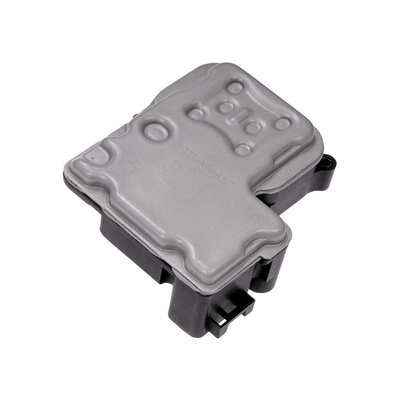
Below are the parts most often responsible for code C0516, ranked by how frequently each one is the actual culprit (per the diagnosis above). Tap any to see what we have for your vehicle.




The information in this article is provided for general reference and educational purposes only. Vehicle specifications, procedures, and part compatibility can vary by production date, trim level, and region. Always consult your vehicle's factory service manual and verify part numbers before purchasing or performing repairs. Safety-critical components such as airbags, seat belts, and braking systems should be installed by a qualified professional.
- 🧭 Diagnostic Flowchart
- 🎬 Helpful Videos
- 🛍️ Shop This Part
- What Does C0516 Mean?
- Can I Drive With C0516?
- Common Causes
- Symptoms
- Common Fixes & Costs
- DIY vs Professional
- Used vs. New Parts: Buying Guide
- What Happens If You Wait — Timeline
- Cost of Not Fixing It
- Diagnosis Steps
- When This Code Triggers (Freeze-Frame Conditions)
- Related Codes
- Climate & Environmental Factors
- How to Talk to a Mechanic About This Code
- Where to Take It: Dealer vs Independent vs Chain
- When to Walk Away From the Repair
- What Scan Tool You Need for This Code
- How to Clear the Code After You Fix It
- Will This Fail Emissions / State Inspection?
- Most Commonly Affected Vehicles
- Manufacturer-Specific Notes
- Real Owner Stories
- 2011 Chevrolet Silverado 1500 at 125K miles
- 2015 BMW 328i (F30) at 80K miles
- 2016 Subaru Outback at 110K miles
- 2008 GMC Acadia in a 'Rust Belt' state
- How to Prevent This Code From Triggering
- Frequently Asked Questions
- What is a common misdiagnosis for code C0516?
- Can I just clear the C0516 code and keep driving?
- Why did the C0516 code appear after hitting a pothole?
- Is it expensive to diagnose code C0516?
- Can I replace a wheel speed sensor myself?
- Does this code mean I need a software update?
- What is the difference between an active and a passive wheel speed sensor?
- Will a bad wheel speed sensor affect my speedometer?
- Key Takeaways
- 🎟️ Get 5% Off