

OBD-II Code C0529: Steering Angle Sensor Module Missing Calibration
What C0529 means, why it triggers, and how to fix it
- Code C0529 disables your vehicle's Electronic Stability Control (ESC), increasing the risk of a fatal single-vehicle rollover crash by over 70%.
- The most common fix is a simple recalibration costing $100-$200, not a $500+ sensor replacement.
- Before buying parts, attempt a manual reset by starting the engine, turning the steering wheel fully left, fully right, and back to center.
- Never replace the steering angle sensor without first checking live data from all four ABS wheel speed sensors, as a single faulty $50 ABS sensor blocks calibration.
- Disconnecting the battery will not clear code C0529; it actually causes the code by erasing the sensor's memory.
What Does C0529 Mean?
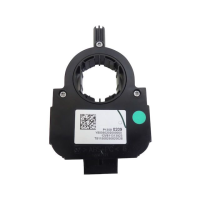
Code C0529 means the safety system control module lost the calibration data for the Steering Angle Sensor (SAS). This sensor reports the precise angle and direction of the steering wheel to the vehicle's computer. Without this data, crucial safety systems that rely on steering input, like stability and traction control, shut down as a precaution.
Technical definition: The official SAE/OBD-II definition is "Steering Angle Sensor Module Missing Calibration". This indicates the sensor module cannot confirm its stored reference position for the steering wheel's center point, or the calibration data was erased or corrupted.
Can I Drive With C0529?
Yes, But With Caution. The vehicle is drivable, but its most critical accident-avoidance systems—Electronic Stability Control (ESC) and Traction Control (TC)—are disabled. This increases the risk of losing control during an emergency maneuver or on slippery surfaces. Studies by the Insurance Institute for Highway Safety (IIHS) show that ESC reduces the risk of fatal single-vehicle rollover crashes by over 70%. Driving without this protection is dangerous, and you must repair the issue promptly.
Common Causes
- Lost Calibration Data (Very Common) — The sensor's memory erases after a battery replacement, a dead battery, or a wheel alignment if the technician skips the final recalibration step.
- Faulty Steering Angle Sensor (SAS) (Common) — The sensor fails internally due to age, cracked solder joints, or corrupted memory cells, preventing it from storing calibration data or sending a correct signal.
- Corroded or Loose Wiring/Connectors (Common) — Moisture, road salt, or vibrations damage the wiring or connector pins in the steering column, causing a loss of communication or an intermittent signal.
- Faulty ABS/Wheel Speed Sensor (Less Common) — An erratic signal from a failing ABS wheel speed sensor tricks the system into thinking the vehicle is moving, which blocks the SAS recalibration procedure from completing.
- Vehicle Software/Firmware Issue (Less Common) — A software glitch in the Electric Power Steering (EPS) or Body Control Module (BCM) triggers this code, requiring a dealer firmware update via a Technical Service Bulletin (TSB).
- Damaged Clock Spring (Less Common) — The clock spring is a rotary electrical connector in the steering column. If damaged during aftermarket steering wheel installation or due to wear, it interrupts the integrated sensor's signal.
- Failing Electric Power Steering (EPS) Rack (Uncommon) — In vehicles with advanced EPS systems where the steering angle sensor is integrated into the steering rack, a mechanical or electronic failure within the rack assembly sets this code.
Symptoms
- Stability Control (ESC/VSC) and Traction Control (TC) Warning Lights — A dashboard light showing a skidding car or reading "ESC OFF" illuminates because the system is disabled.
- Steering Warning Light or Message — A warning light shaped like a steering wheel with an exclamation mark, or a "Service Power Steering" message appears.
- ABS Warning Light — The Anti-lock Braking System (ABS) light turns on because it relies on the ESC system to function properly.
- Cascade of Other Warning Lights — Advanced Driver Assistance Systems (ADAS) like lane-keeping assist and adaptive cruise control shut down and trigger their own warning lights.
- Heavier or Less Responsive Steering — Electric power steering systems enter a fail-safe mode, making the steering wheel noticeably heavier and harder to turn.
- Squealing Tires During Cornering — If the sensor provides incorrect data, the stability control system mistakenly intervenes at low speeds, causing the tires to squeal as brakes apply unnecessarily.
Diagnostic Flowchart
Tap your situation to follow the diagnostic path that matches what you're seeing on this code.
Common Fixes & Costs
- Recalibrate Steering Angle Sensor — Parts: $0, Labor: $100-$200, ~0.5 hr book time (Professional)
- Replace Steering Angle Sensor — Parts: $150-$500, Labor: $150-$400, ~1.5 hr book time (Intermediate)
- Repair Damaged Wiring or Connectors — Parts: $10-$50, Labor: $100-$300, ~1.5 hr book time (Intermediate)
- Update Vehicle Software — Parts: $0, Labor: $100-$200, ~0.5 hr book time (Professional)
- Replace Clock Spring Assembly — Parts: $150-$600, Labor: $150-$400, ~1.8 hr book time (Professional)
DIY vs Professional
- Recalibrate Steering Angle Sensor — Beginner:
- Replace Steering Angle Sensor / Clock Spring — Beginner:
- Repair Damaged Wiring or Connectors — Beginner:
- Update Vehicle Software — Beginner:
Used vs. New Parts: Buying Guide
When a used part is worth it: Buying a used Steering Angle Sensor is not recommended. These sensitive electronic components are often integrated with the clock spring. A used part carries hidden damage, limited lifespan, and calibration risks. Only consider used if the OEM part exceeds $800 and the donor part includes a 90-day warranty.
Donor-vehicle mileage cap: roughly under 50000 miles for the part to have meaningful remaining life.
Donor quality checklist:
- Verify the donor vehicle's VIN ensures exact compatibility.
- Inspect connectors for corrosion or bent pins.
- Ensure the clock spring portion was not spun freely, which breaks the internal ribbon cable.
- Favor sellers offering a functional warranty of at least 90 days.
Decision logic:
- If The part is integrated with the clock spring and airbag wiring → Buy new OEM. The risk of a used part failing and disabling the airbag is too high.
- If The vehicle is a luxury model where the OEM part is over $800 → A reputable new aftermarket part is the best compromise. A used part is a high-risk gamble.
- If A new aftermarket part is available for under $200 → Buy the new aftermarket part. The savings from buying used do not justify the lack of warranty.
Warranty tradeoff: Used parts typically offer a 30-90 day warranty that excludes labor. New aftermarket parts provide 1-year to limited lifetime warranties. New OEM parts offer the best quality and warranty at the highest price.
Worst-case if a used part fails: $300-$600 if a used part fails after installation, requiring repeat labor and the purchase of a new part.
What Happens If You Wait — Timeline
- Immediate (Key-On): Code C0529 sets. ESC, Traction Control, and related ADAS warning lights illuminate. These safety systems are completely disabled. (MPG impact: 0%% · Added cost: $0 (Immediate and significant safety risk is the primary cost))
- 1-4 Weeks: Vehicle fails mandatory state safety inspections. Steering feels heavy, leading to driver fatigue. The risk of a loss-of-control accident remains high. (MPG impact: 0-1%% · Added cost: $50-$150 (Cost of failed inspection and re-test))
- 1-6 Months: If the fault causes heavy steering, the driver subconsciously compensates, potentially leading to minor uneven tire wear over thousands of miles. (MPG impact: 0-1%% · Added cost: $50-$250 (Potential contribution to premature tire replacement))
- Ongoing: No direct mechanical damage occurs. The cost is the unbounded financial and personal risk of a preventable accident. (MPG impact: 0%% · Added cost: $500 to $25,000+ (Insurance deductible up to the full value of the car in a preventable crash))
Cost of Not Fixing It
- Immediate: Electronic Stability Control (ESC) and Traction Control (TC) are disabled. This significantly increases the risk of losing control in an emergency maneuver. ADAS features also shut down. (Added cost: N/A (Safety risk))
- Days to Weeks: The vehicle fails mandatory state safety inspections. Continued driving causes driver fatigue if the power steering system defaults to a heavy fail-safe mode. (Added cost: $50-$150 (Cost of failed inspection and re-test))
- Long-Term: No direct mechanical damage occurs. The primary cost is the massively increased risk of a crash that functional ESC prevents. The cost of a single preventable accident far exceeds the repair cost. (Added cost: $500 to $25,000+ (Insurance deductible up to total vehicle loss))
Diagnosis Steps
- Check Battery Voltage
Ensure the vehicle's battery voltage is stable between 12.0 and 14.5 volts. Low voltage during startup (below 12.0V) erases the SAS memory and prevents successful recalibration.
Tools: Multimeter (Beginner) - Check for Other Codes
Scan for Chassis (C-codes) and Network (U-codes). Diagnose communication codes (U-codes) first, as they prevent the SAS from communicating. Ignore cascade codes (ADAS, ABS) until the steering calibration is complete.
Tools: Advanced OBD-II Scanner (Beginner) - Attempt Manual and Scan Tool Recalibration
Try a manual reset: start the engine, turn the steering wheel fully left, fully right, then center. If that fails, use a scan tool's 'SAS Reset' function and follow the on-screen prompts precisely.
Tools: Advanced OBD-II Scanner (Intermediate) - Analyze Live Sensor Data
View the live data stream for the steering angle and all four wheel speed sensors. The angle must read 0 degrees (+/- 2.5) when centered and sweep smoothly as you turn the wheel. Wheel speed sensors must read 0 km/h when stationary.
Tools: Advanced OBD-II Scanner (Intermediate) - Inspect and Wiggle Wiring
Visually inspect the steering column wiring harness for corrosion or loose pins. While watching live scan tool data, gently wiggle the connectors. If the angle reading drops out, repair the wiring.
Tools: Flashlight, Trim Removal Tools, Advanced OBD-II Scanner (Intermediate) - Test Sensor Power, Ground, and Signal (PRO-LEVEL)
Back-probe the sensor connector. Verify a 5-volt reference signal and a solid ground (under 0.1V). The signal wire must show a sweeping voltage (0.5V to 4.5V) or a clean digital square wave (via oscilloscope) as the wheel turns.
Tools: Multimeter, Oscilloscope, Back-probe Kit, Wiring Diagram (Advanced) - Test the Clock Spring
If the sensor is integrated into the clock spring and lacks a signal despite good power/ground, test the clock spring circuits for continuity. Stop DIY and hire a professional if you lack experience safely removing airbags.
Tools: Multimeter, Socket Set, Trim Removal Tools (Advanced)
When This Code Triggers (Freeze-Frame Conditions)
- Vehicle Speed: 0 mph (The code sets immediately at key-on, before the vehicle moves.)
- Engine State: Key-On, Engine-Off or Engine Running (The fault is detected during the module's initial self-test at startup.)
- Battery Voltage: 9V-16V (Triggers if voltage recently dropped below 12V (e.g., during engine cranking) or after power was restored following a disconnect.)
- Steering Angle: N/A or Implausible Value (Shows a default or error value for the steering angle PID, as the module cannot determine the correct position.)
Related Codes
- U-codes (e.g., U0126) — U0126 ('Lost Communication With Steering Angle Sensor Module') indicates a network failure. Diagnose this first by checking wiring and power/ground. C0529 means the module is online but uncalibrated.
- C0710 — C0710 is a 'Steering Position Signal' fault. C0529 means 'I don't know where center is,' while C0710 means 'The data I'm sending is illogical.' If you only have C0529, calibration is the fix. If you have C0710, the sensor is failing.
- C0063 — This code is for the Yaw Rate Sensor. If C0529 is present, the computer sets C0063 because the steering and yaw inputs conflict. View live data for both sensors to find the culprit.
- C052A — C052A stands for 'Steering Angle Sensor Module Correlation'. The SAS module is getting conflicting readings from its internal redundant sensors. This points to an internal failure requiring sensor replacement.
Climate & Environmental Factors
- High Humidity and Road Salt: Regions using road salt see higher C0529 incidence. Moisture and salt penetrate connectors for the SAS or ABS modules, causing corrosion, intermittent signals, and communication faults.
- Extreme Cold Weather: Cold temperatures lower battery voltage. A weak battery dropping below 12V during engine cranking erases volatile memory in the SAS, triggering C0529 on startup even if no parts are broken.
How to Talk to a Mechanic About This Code
Say this: "I have a C0529 code and my stability control light is on. I believe it needs a steering angle sensor recalibration, possibly from a recent wheel alignment or battery change. Can you quote me for just the SAS recalibration procedure?"
This signals you've done your research and steers the shop toward the most likely and cost-effective fix. It frames the job as a specific, known procedure rather than an open-ended diagnostic.
Avoid saying:
- 'My traction control light is on, can you just fix it?'
- 'I think I need a new steering sensor.'
- 'Just do whatever you think is necessary.'
Questions to ask before authorizing the repair:
- If you recommend a sensor replacement, can you confirm that the recalibration procedure failed and why?
- Did you check the live data from all four ABS wheel speed sensors to ensure they aren't causing the calibration to fail?
- Is there a Technical Service Bulletin (TSB) or software update for this issue on my vehicle that should be performed first?
- What is the warranty on the parts and labor for this repair?
Where to Take It: Dealer vs Independent vs Chain
- Dealer:
Necessary for specific software issues or SGW-equipped cars, but the most expensive option for a simple recalibration.
Best for: Vehicles under warranty, Vehicles with known software-related TSBs (e.g., Dodge Hornet), Cars with a Secure Gateway (SGW) requiring proprietary tools to unlock for calibration, High-end luxury vehicles with complex, integrated systems
Downsides: Highest labor rates, often 1.5-2x more than independent shops, Defaults to expensive part replacement over simple recalibration (Typical cost: +50% vs. baseline) - Independent Shop:
Best fit for most C0529 repairs. A good independent shop with modern tools performs the recalibration or sensor replacement for a much lower cost than a dealer.
Best for: Out-of-warranty vehicles where cost is a factor, Most common C0529 scenarios, like post-alignment or post-battery change recalibration
Downsides: Shop quality and diagnostic equipment vary; ensure they have a modern bi-directional scan tool, Lacks access to the latest proprietary software updates (Typical cost: +0% vs. baseline) - Chain Shop:
High risk. Only consider if you confirm beforehand that the specific location has the equipment to perform a SAS recalibration. Avoid for diagnosis.
Best for: Wheel alignments (but you MUST insist they complete the SAS recalibration)
Downsides: Technician skill and tool availability are highly inconsistent, High pressure to upsell; lacks diagnostic depth and recommends unnecessary part replacement (Typical cost: -10% vs. baseline)
When to Walk Away From the Repair
If the estimated repair cost for a full sensor replacement exceeds 40-50% of the car's private-party value, and a simple recalibration has already failed, weigh your options.
- Car worth $3000, fix is $1000: Borderline. The repair is a significant percentage of the car's value. Get a second opinion to confirm the sensor is truly faulty before proceeding.
- Car worth $15000, fix is $800: Fix it. The repair cost is well below the threshold, and it restores critical safety features, preserving the vehicle's value and safety.
- Car worth $2000, fix is $1200: Walk away. The repair cost is too high relative to the vehicle's value. Put the money toward a replacement vehicle.
What Scan Tool You Need for This Code
Minimum: Bi-directional control with 'Steering Angle Sensor (SAS) Calibration/Reset' function.
A basic $20 code reader only tells you the C0529 code exists. It cannot perform the recalibration procedure, which is the most common fix. You waste money guessing at parts without the ability to perform the reset.
Budget: KINGBOLEN Ediag Elite / MUCAR BT200 (~$70) — These are the cheapest tools with bi-directional capabilities. They are Bluetooth dongles that work with a smartphone app and offer SAS reset functions, though vehicle coverage is limited.
Mid-range: Foxwell NT614 Elite / NT510 Elite (~$180) — A dedicated handheld unit well-regarded by DIYers for its reliability in performing SAS calibrations across a wide range of vehicles. It reads live data and performs the recalibration without a subscription.
Professional: Autel MaxiCOM MK808BT / Autel MaxiSys MS906 (~$450-900) — Provides full bi-directional control, comprehensive live data graphing, and access to manufacturer-specific functions. These tools handle newer vehicles with Secure Gateway Modules (SGW).
Rent vs buy: Buy. Major auto parts stores loan out basic code readers for free, but they do not have bi-directional scanners with SAS reset functions in their loaner programs. You must purchase your own tool to DIY the calibration.
How to Clear the Code After You Fix It
- Perform the required repair (e.g., recalibration, sensor replacement).
- Use a bi-directional scan tool to execute the 'Steering Angle Sensor Calibration' function.
- Clear all Diagnostic Trouble Codes (DTCs) from all modules.
- Turn the ignition off, wait 10 seconds, then start the vehicle and check for warning lights.
Drive cycle (~15 minutes): Perform a short test drive including several left and right turns at speeds above 15 mph. This allows the stability control module to verify plausible data from the newly calibrated sensor.
Readiness monitors affected: This is a chassis code (C-code) and does not affect emissions-related readiness monitors.
Watch out for:
- Clearing the code with a basic scanner fails; the code returns immediately because the 'missing calibration' state remains unresolved.
- Forgetting to perform the scan tool calibration after replacing the sensor.
- On vehicles with a Secure Gateway Module (SGW), the gateway must be unlocked with an authorized scan tool before calibration is possible.
Will This Fail Emissions / State Inspection?
Yes — this code typically fails an OBD-II emissions inspection.
- California: While C0529 is a chassis code, active warning lights related to primary safety systems (ABS/ESC) lead to a failure at the inspector's discretion. If it triggers the Check Engine Light, it is an automatic failure.
- New York: An illuminated ABS or stability control warning light is an automatic failure during the annual safety inspection. C0529 always triggers these lights.
- Texas: Any active DTC that commands the Malfunction Indicator Lamp (MIL) to turn on causes an automatic failure during the emissions test.
Most Commonly Affected Vehicles
- Dodge Hornet (2023-2024) — A known software glitch causes the SAS to lose calibration after a battery disconnect. TSB 08-148-23 REV. B updates the EPS module software. A manual lock-to-lock reset sometimes works.
- Alfa Romeo Tonale (2024) — Shares electronics with the Dodge Hornet and suffers the same software issue. Accessing the calibration function with a scan tool requires unlocking the Secure Gateway Module (SGW).
- Chevrolet / GMC Equinox, Terrain, Cruze, Silverado (2010-2017) — Commonly shows this code after battery replacement or alignment work. A simple recalibration with a scan tool is the usual fix. Some models respond to the manual lock-to-lock reset.
- Ford F-150, Focus, Fusion, Escape (2015-2020) — Requires SAS recalibration after front-end work or battery replacement. Real-world repair costs for an F-150 sensor replacement average $400-$600 at an independent shop.
- Toyota Corolla, Camry, RAV4 (2018-2022) — Owners report high replacement costs, sometimes exceeding $1,000 at a dealership. The sensor is sensitive and fails even after minor accidents.
- BMW 3 Series, 5 Series, X3, X5 (2012-2020) — Dealer replacement costs exceed $1,000, while independent specialists charge $700-$900 for parts and labor.
- Volkswagen / Audi Golf, Jetta, A3, A4 (2006-2018) — This code is frequently triggered by a faulty ABS wheel speed sensor preventing the SAS calibration from running. Check ABS live data before replacing the steering angle sensor.
- Subaru Forester, Impreza, Outback (2014-2022) — Appears after steering column work or battery changes. Usually fixed with a simple recalibration, but aftermarket steering wheel installations often break the clock spring.
Manufacturer-Specific Notes
- Stellantis (Dodge, Alfa Romeo, Chrysler, Jeep): On 2023+ models, TSB 08-148-23 REV. B fixes a software bug causing calibration loss. Newer models feature a Secure Gateway Module (SGW) requiring an authorized scan tool to unlock before calibration.
- General Motors (Chevrolet, GMC): This code is expected after a wheel alignment or battery change. It rarely indicates a failed part and clears by performing the SAS recalibration procedure or a manual lock-to-lock reset.
- Volkswagen / Audi: Always check live data from all four ABS wheel speed sensors before replacing the steering angle sensor. A faulty ABS sensor sends an erratic speed signal that blocks the steering calibration procedure.
- Mercedes-Benz / Chrysler (Older Models): Many models feature a built-in manual self-adjust procedure. After a battery disconnect, starting the engine and turning the steering wheel full left, full right, and back to center recalibrates the sensor without tools.
Real Owner Stories
2024 Alfa Romeo Tonale with low mileage
After the battery died and was replaced, the dashboard lit up with multiple warnings for power steering, hill start assist, and lane keeping assist.
Outcome: The manual reset failed. A technician used a professional scan tool to unlock the Secure Gateway (SGW) and perform the 'Steering Angle Sensor Calibration'. This cleared C0529 and all related warning lights immediately.
Lesson: On modern Stellantis vehicles, a dead battery is a primary trigger for C0529. While the manual reset is worth trying, be prepared that a scan tool with SGW access is required to perform the recalibration.
2015 Chevy Cruze after suspension work
The 'Service StabiliTrak' and traction control lights appeared immediately after replacing front-end mechanical parts.
Outcome: The scan tool successfully completed the recalibration procedure in under a minute. The warning lights turned off, and the fix was confirmed.
Lesson: For many GM vehicles, C0529 is an expected outcome of front-end work. It is a required final step in the repair process, not a broken part. A capable scan tool makes this a quick DIY fix.
2014 Volkswagen Tiguan with intermittent faults
The owner experienced sporadic ABS, traction control, and tire pressure warning lights. At times, the traction control kicked in unnecessarily on straight roads.
Outcome: The issue was a wiring problem between the ABS sensor and the control module. Swapping the sensor wires at the ABS module confirmed the issue was in the wiring, not the steering angle sensor.
Lesson: Don't automatically replace the Steering Angle Sensor for code C0529 on VW/Audi vehicles. An erratic signal from a faulty ABS wheel speed sensor (or its wiring) prevents the SAS from calibrating. Always check live data from all four wheel speed sensors first.
How to Prevent This Code From Triggering
- Insist on SAS calibration after every wheel alignment (After any alignment or steering/suspension work) — Adjusting toe changes the steering's center point. Failing to recalibrate the SAS to this new center is a primary cause of C0529.
- Maintain battery health and connections (Annually (before winter)) — Low voltage during startup erases calibration data. Test your battery annually and keep terminals clean to ensure stable voltage.
- Apply dielectric grease to critical connectors (During any related service or inspection) — In areas with road salt, applying dielectric grease to the steering angle sensor and ABS module connectors seals out moisture, preventing corrosion.
- Keep vehicle software updated (Check for TSBs during regular service intervals) — Manufacturers release software updates to fix bugs causing calibration loss, preventing unnecessary hardware replacement.
Frequently Asked Questions
What does 'Steering Angle Sensor Calibration Required' mean?
It means the car's main computer lost the memory of the steering wheel's straight-ahead position. Until recalibrated, safety systems like stability control remain disabled.
Is it safe to drive with code C0529?
You can drive the vehicle, but it is significantly less safe. Electronic stability and traction control systems are disabled, making it easier to lose control in an emergency maneuver or on slippery roads.
Can I fix C0529 by disconnecting the battery?
No. Disconnecting the battery is a primary cause of this code because it erases the sensor's memory. The problem returns immediately upon startup until a proper recalibration is performed.
How much does it cost to fix code C0529?
A simple recalibration costs $100-$200 for labor. If the sensor requires replacement, expect to pay $300 to $900 total for parts, labor, and the final calibration. Luxury vehicles often exceed $1,000.
Can I fix C0529 myself without a special tool?
On many GM and Stellantis vehicles, you can perform a manual reset by starting the engine, turning the wheel fully left, fully right, then back to center. If this fails, you must use an advanced bi-directional scan tool to perform the electronic calibration.
What are common misdiagnoses for code C0529?
A major mistake is replacing the steering angle sensor when a faulty ABS wheel speed sensor is the actual culprit blocking the recalibration. Another is wasting time diagnosing cascade warning lights (ADAS, ABS) that automatically clear once the steering sensor is calibrated.
Why did my dashboard light up like a Christmas tree with code C0529?
Modern safety systems like ABS, lane-keeping assist, and adaptive cruise control rely entirely on steering angle data. When the sensor loses calibration (C0529), these dependent systems shut down as a precaution and trigger their own warning lights. Fixing the steering sensor resolves all related warnings.
Can a bad wheel alignment cause code C0529?
A bad alignment won't set the code, but the alignment process will. Adjusting the tie rods changes the steering wheel's center position. If the technician skips the steering angle sensor recalibration as the final step, the car sets code C0529 on the next drive.
Key Takeaways
- Code C0529 disables your vehicle's Electronic Stability Control (ESC), increasing the risk of a fatal single-vehicle rollover crash by over 70%.
- The most common fix is a simple recalibration costing $100-$200, not a $500+ sensor replacement.
- Before buying parts, attempt a manual reset by starting the engine, turning the steering wheel fully left, fully right, and back to center.
- Never replace the steering angle sensor without first checking live data from all four ABS wheel speed sensors, as a single faulty $50 ABS sensor blocks calibration.
- Disconnecting the battery will not clear code C0529; it actually causes the code by erasing the sensor's memory.
Helpful Videos

Shop the Parts Behind C0529
Below are the parts most often responsible for code C0529, ranked by how frequently each one is the actual culprit (per the diagnosis above). Tap any to see what we have for your vehicle.


The information in this article is provided for general reference and educational purposes only. Vehicle specifications, procedures, and part compatibility can vary by production date, trim level, and region. Always consult your vehicle's factory service manual and verify part numbers before purchasing or performing repairs. Safety-critical components such as airbags, seat belts, and braking systems should be installed by a qualified professional.
- 🧭 Diagnostic Flowchart
- 🎬 Helpful Videos
- 🛍️ Shop This Part
- What Does C0529 Mean?
- Can I Drive With C0529?
- Common Causes
- Symptoms
- Common Fixes & Costs
- DIY vs Professional
- Used vs. New Parts: Buying Guide
- What Happens If You Wait — Timeline
- Cost of Not Fixing It
- Diagnosis Steps
- When This Code Triggers (Freeze-Frame Conditions)
- Related Codes
- Climate & Environmental Factors
- How to Talk to a Mechanic About This Code
- Where to Take It: Dealer vs Independent vs Chain
- When to Walk Away From the Repair
- What Scan Tool You Need for This Code
- How to Clear the Code After You Fix It
- Will This Fail Emissions / State Inspection?
- Most Commonly Affected Vehicles
- Manufacturer-Specific Notes
- Real Owner Stories
- 2024 Alfa Romeo Tonale with low mileage
- 2015 Chevy Cruze after suspension work
- 2014 Volkswagen Tiguan with intermittent faults
- How to Prevent This Code From Triggering
- Frequently Asked Questions
- What does 'Steering Angle Sensor Calibration Required' mean?
- Is it safe to drive with code C0529?
- Can I fix C0529 by disconnecting the battery?
- How much does it cost to fix code C0529?
- Can I fix C0529 myself without a special tool?
- What are common misdiagnoses for code C0529?
- Why did my dashboard light up like a Christmas tree with code C0529?
- Can a bad wheel alignment cause code C0529?
- Key Takeaways
- 🎟️ Get 5% Off