

Ultimate Guide to OBD-II Code C0543: Steering and Braking System Fault
The Most Comprehensive Guide to Understanding, Diagnosing, and Fixing C0543
- Code C0543 indicates a brake pressure sensor voltage exceeding 4.5V, instantly disabling your ABS and Electronic Stability Control (ESC) systems.
- Replacing the ABS control module is the most common fix, costing between $1,050 and $2,300 for parts, labor, and mandatory VIN programming.
- Never replace the ABS module without first using a multimeter to verify the sensor's signal wire reads 0V when disconnected, ruling out a short-to-power.
- On 2002-2005 GM trucks with the Quadrasteer option, C0543 points exclusively to a rear steering actuator jam exceeding a 3-degree deviation, not a brake fault.
What Does C0543 Mean?
Code C0543 indicates the brake pressure sensor circuit 'B' is sending a voltage signal that is too high (typically near 5V), tricking the computer into thinking the brakes are applied. On 2002-2005 General Motors (GM) trucks with Quadrasteer, this code points to a rear wheel steering system fault.
Technical definition: The SAE definition for C0543 is "Brake Pressure Sensor B Circuit High," meaning sensor voltage exceeds the normal 0.5V - 4.5V range. A reading stuck near 5V or battery voltage confirms a circuit high fault. On GM Quadrasteer vehicles, it is defined as "Rear Steering Motor Position Error," triggered when actual rear wheel position deviates from the commanded position by more than 3 degrees.
Can I Drive With C0543?
Yes, But With Caution. You can drive the vehicle short distances to a repair shop, but critical safety systems like the Anti-lock Brakes (ABS) and Electronic Stability Control (ESC) are disabled. This significantly increases stopping distances in wet conditions and eliminates automatic skid correction. Driving for extended periods is unsafe.
Common Causes
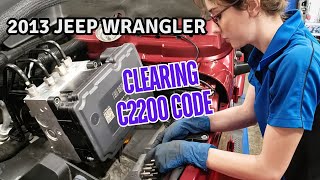
- Internal failure of the ABS/ESC control module (Very Common) — On many modern vehicles (especially Jeep, Chrysler, and Ford 🎬 See this Jeep Wrangler ABS module replacement walkthrough), the brake pressure sensor is integrated directly into the ABS module. An internal failure of this non-serviceable sensor or the module's processing circuit requires replacing the entire module.
- Damaged wiring, corroded connectors, or fluid intrusion (Common) — Wires leading to the sensor can chafe and short to a power source, sending a continuously high voltage signal. Additionally, brake fluid leaks or water intrusion at the ABS module connector causes corrosion and short circuits between pins.
- Faulty Brake Light Switch (Common) — A malfunctioning or improperly adjusted brake light switch sends erroneous signals to the ABS module, tricking it into reading system pressure when the pedal is released.
- Failed external brake pressure sensor (Less Common) — If the sensor is a separate, serviceable part, internal failure causes it to send a continuously high voltage reading regardless of actual hydraulic pressure.
- Low Battery Voltage or Poor Ground Connection (Less Common) — An unstable power supply from a weak battery or a corroded ground connection for the ABS module causes unpredictable behavior in sensitive electronics, resulting in false high voltage readings.
- Control Module Software Glitch (Rare) — Corrupted firmware within the ABS control module causes it to misinterpret normal sensor voltage. A dealer software update resolves this without replacing hardware.
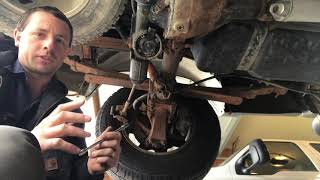
- Mechanical binding in rear-wheel steering system 🎬 Watch: How to repair the GMC Quadrasteer system (Rare) — On GM vehicles with Quadrasteer, an obstruction or damage to the rear steering gear prevents the wheels from moving as commanded, triggering the code.
Symptoms
- ABS warning light is on — The Anti-lock Brake System (ABS) light illuminates and stays on.
- Electronic Stability Control (ESC) or Traction Control light is on — The stability or traction control system light illuminates, indicating the system is disabled.
- Brake pedal feels different or requires more effort — The brake pedal feels soft, spongy, or harder to press. Stopping distances increase because hydraulic brake-assist features are disabled.
- "Service 4 Wheel Steer" message appears — On vehicles equipped with four-wheel steering, a specific warning message appears, and the system defaults to two-wheel steering.
- Brake lights stay on — If the fault relates to a stuck brake light switch, the brake lights remain illuminated even when the pedal is released.
Diagnostic Flowchart
Tap your situation to follow the diagnostic path that matches what you're seeing on this code.
Common Fixes & Costs
- Replace ABS/ESC Control Module Assembly
— Parts: $800-$1800, Labor: $250-$500, ~2.5 hr book time
(Professional)
Jeep Grand Cherokee (2018-2021): OEM ['Mopar 68442477AB', 'Mopar 68262200AA'] (Alt: Cardone (Remanufactured), Module Mechanics (Rebuild Service)) - Repair Damaged Wiring or Connector — Parts: $20-$100, Labor: $200-$400, ~2 hr book time (Intermediate)
- Replace External Brake Pressure Sensor
— Parts: $150-$300, Labor: $100-$300, ~1.5 hr book time
(DIY)
Ford F-150 (2015-2020): OEM ['Motorcraft FL3Z-2C444-B (Sensor on booster)'] (Alt: Standard Motor Products, Dorman) - Update Control Module Software — Parts: $0, Labor: $150-$250, ~1 hr book time (Professional)
- Replace Rear Steering Actuator (Quadrasteer)
— Parts: $1500-$2500, Labor: $300-$600, ~3.5 hr book time
(Professional)
GMC Sierra / Chevy Silverado (2002-2005): OEM ['GM 26087437 (Motor Actuator)'] (Alt: None widely available)
DIY vs Professional
- Replace ABS/ESC Control Module Assembly 🟢 Beginner
Tools: Professional scan tool (for ABS brake bleeding and module programming), socket set, flare nut wrenches, brake fluid. - Repair Damaged Wiring or Connector 🟢 Beginner
Tools: Multimeter, wiring diagrams, soldering iron, heat shrink tubing, wire strippers. - Replace External Brake Pressure Sensor 🟢 Beginner
Tools: Socket set, wrenches, brake fluid, catch bottle, possibly a vacuum bleeder. - Update Control Module Software 🟢 Beginner
Tools: Dealer-level diagnostic tool with an active subscription to the manufacturer's software service.
Used vs. New Parts: Buying Guide
When a used part is worth it: A used ABS module is a budget-friendly option for older, high-mileage vehicles where a new OEM part ($1000+) is prohibitive. It is also the only option for discontinued parts like GM's Quadrasteer system.
Donor-vehicle mileage cap: roughly under 100000 miles for the part to have meaningful remaining life.
Donor quality checklist:
- Verify the part number matches exactly; modules are specific to trim and options.
- Purchase from a reputable recycler offering at least a 90-day warranty.
- Avoid modules from vehicles with flood or fire damage.
- Ensure the seller provides the VIN of the donor car, as it is needed for programming.
Decision logic:
- If The fix is a rebuild service for your original module → This is the best choice, as it is cost-effective and requires no VIN programming.
- If Vehicle is less than 10 years old and a new part is available → Buy a new OEM or high-quality remanufactured part for maximum reliability and warranty.
- If Vehicle is older, budget is tight, or part is discontinued → A used module is a viable option, but factor in the cost of professional programming.
Warranty tradeoff: Used parts typically have a 30-90 day warranty. Remanufactured parts come with a 1-year to lifetime warranty. New OEM parts carry a 1-2 year warranty.
Worst-case if a used part fails: $300-$600 if a used module is dead on arrival or fails after the warranty period, covering repeat labor and programming costs.
What Happens If You Wait — Timeline
- Immediate (First Drive): ABS and ESC/Traction Control warning lights illuminate. The vehicle's computer disables these safety systems. Basic hydraulic braking remains functional. (MPG impact: 0%% · Added cost: $0)
- 0-1 Month: The primary risk is an accident due to the lack of ABS/ESC in an emergency maneuver or on slippery surfaces. Stopping distances are increased. (MPG impact: 0%% · Added cost: Potential cost of an accident, from a fender bender to a total loss.)
- 1-6 Months: Continued driving without ABS leads to tire flat-spotting if the wheels lock up during a hard stop. A constantly faulting module causes intermittent communication issues on the CAN bus network. (MPG impact: 0%% · Added cost: $200-$1000 (Cost of new tires or diagnosing secondary electrical gremlins).)
- 6+ Months: The root cause (e.g., water intrusion, corrosion) worsens. On certain models, an internal short in the ABS module from a fluid leak poses a persistent fire risk, even when parked. (MPG impact: 0%% · Added cost: $2500+ (Potential cost of fire damage or cascading electronic failures).)
Cost of Not Fixing It
- Immediate: ABS and Electronic Stability Control (ESC) are disabled. Increased risk of skidding and loss of control during emergency braking or on slippery surfaces. (Added cost: Potential cost of an accident.)
- 0-3 months: Continued driving without ABS leads to uneven tire wear or flat-spotting if wheels lock up during hard braking. (Added cost: $200-$800 for tire replacement.)
- 3+ months: A persistently faulting ABS module causes communication network issues, triggering other warning lights. In rare cases involving internal fluid leaks, it poses a fire risk. (Added cost: $500-$2500+ for additional electronic module diagnosis and replacement.)
Diagnosis Steps
- Read Trouble Codes & Freeze Frame Data
Use an OBD-II scanner capable of reading Chassis (C-series) codes to confirm C0543 is active. Record the freeze-frame data to see the vehicle's state when the fault occurred. Note any U-codes (communication codes), as they must be diagnosed first.
Tools: OBD-II Scanner (with ABS/Chassis capability) (Beginner) - Analyze Live Sensor Data
Using an advanced scan tool, view the live data for 'Brake Pressure Sensor B'. With the brake pedal released, voltage should be around 0.5V. When fully depressed, it should rise smoothly to about 4.5V. A reading stuck near 5V or 12V confirms a circuit high fault.
Tools: Advanced OBD-II Scanner (Intermediate) - Perform a Thorough Visual Inspection
Inspect the wiring harness and connectors going to the ABS module and any visible brake pressure sensors. Look for chafing, melting, corrosion, or fluid contamination. On GM trucks with Quadrasteer, check for debris restricting the rear steering rack.
Tools: Flashlight, Mirror (Beginner) - Check Battery Voltage and System Grounds
Ensure the battery is fully charged (12.4V+ with engine off). Use a multimeter to check the main ground connection for the ABS module for corrosion or high resistance (should be < 0.5 ohms to chassis ground).
Tools: Multimeter (Intermediate) - [PRO TIP] Test the Sensor's 5V Reference and Ground
If the sensor is external, disconnect its connector. With the ignition on, use a multimeter to probe the harness-side connector. You should find a pin with a steady 5-volt reference from the module and another pin with a good ground (near 0V).
Tools: Multimeter, Wiring Diagram (Advanced) - [PRO TIP] Check for a Short to Power
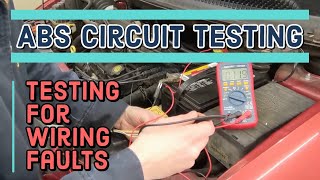
With the sensor disconnected and ignition on, measure the voltage on the signal wire pin in the harness-side connector. It should read 0V. If you see 5V or 12V, there is a short to power in the wiring harness. Repair this before replacing any modules.
Tools: Multimeter (Advanced) - [ADVANCED] Test Wiring Harness Resistance
With the sensor and ABS module disconnected, check the resistance of the signal wire from end to end (should be < 2 ohms). Check resistance between the signal wire and the power/ground wires; it should be infinite (OL), indicating no short circuit.
Tools: Multimeter, Wiring Diagram (Advanced) - Test the Control Module
If the wiring, reference voltage, and ground test good, and the sensor is internal to the ABS module, the fault is within the module itself. Check for software updates first; if none exist, replace the module.
Tools: Professional Diagnostic Scan Tool (Advanced) - Analyze with an Oscilloscope (Advanced)
For intermittent issues, connect an oscilloscope to the sensor's signal wire. A faulty sensor or wiring issue shows as a sudden spike to 5V, dropouts, or excessive electrical noise on the signal.
Tools: Oscilloscope, Back-probe connectors (Professional)
When This Code Triggers (Freeze-Frame Conditions)
- Vehicle Speed: Above 3 mph (5 km/h) (The ABS module must see vehicle movement to run certain self-tests. For Quadrasteer models, the fault is often set when moving.)
- Brake Pedal Status: Not Applied (The code triggers when the module sees high pressure voltage when the brakes are not being used.)
- System Voltage: 12.0 - 14.8V (The fault sets during normal operating voltage, ruling out a low battery as the immediate trigger.)
- Ignition Status: ON / RUN (The code is set when the ignition is on and the ABS module is actively monitoring its circuits.)
Related Codes
- C0542 — This code is for 'Brake Pressure Sensor B Circuit Low'. Seeing a 'Circuit High' (C0543) and 'Circuit Low' (C0542) code for the same sensor points to an intermittent wiring problem or a failing sensor fluctuating wildly.
- C0131 — A generic pressure sensor fault code used by some manufacturers (like GM). If it appears with C0543, it reinforces that the primary issue is with the brake pressure sensing system.
- C0541 — A similar code indicating a voltage abnormality. If C0541 appears with C0543 on a Quadrasteer vehicle, the fault is in the rear steering system. On a standard vehicle, seeing both points to a widespread electrical issue.
- U-series codes (e.g., U0121, U0415) — U-codes indicate a communication problem. If you see a U-code with C0543, the root cause is a network or power/ground issue with the ABS module itself. Diagnose the U-code first.
Climate & Environmental Factors
- Road Salt / Cold Climates: Salt and brine cause aggressive corrosion, damaging the ABS module's electrical connector and wiring harness insulation. Brake fluid contaminated with moisture degrades internal O-rings, leading to fluid leaks onto the module's circuit board.
- High Humidity: Moisture collects in unsealed connectors or enters control modules through aging seals. This short-circuits pins or causes corrosion on the circuit board, leading to erratic behavior and fault codes.
How to Talk to a Mechanic About This Code
Say this: "I have a C0543 code and my ABS/ESC lights are on. I'd like to book a diagnostic appointment. Before replacing the ABS module, please perform a full circuit test, including checking the sensor signal wire for a short to power and verifying the module has proper power and ground."
This signals you understand the common misdiagnosis. It directs the technician to rule out a cheaper wiring fault before quoting an expensive ABS module replacement, saving you from paying for unnecessary parts.
Avoid saying:
- 'My ABS light is on, can you fix it?'
- 'I think I need a new ABS module.'
- 'Just do whatever it takes to get the light off.'
Questions to ask before authorizing the repair:
- What was the voltage on the brake pressure sensor signal wire when you tested it?
- Did you find a short to power or an open in the wiring harness?
- If the module needs to be replaced, does the price include programming and the ABS hydraulic bleed procedure?
- What is the warranty on the new module and your labor?
Where to Take It: Dealer vs Independent vs Chain
- Dealer:
A safe but expensive choice. They have the correct diagnostic tools and programming capabilities for an ABS module replacement.
Best for: Vehicles under warranty., Complex manufacturer-specific issues (e.g., GM Quadrasteer)., When you want a guaranteed fix with OEM parts, regardless of cost.
Downsides: Highest labor rates and part costs., May be less willing to diagnose and program used parts. (Typical cost: +50% vs. baseline) - Independent Shop:
Best fit, with a major caveat. A well-equipped independent shop is the most cost-effective solution. Ask specifically if they can program and bleed a new ABS module for your make and model.
Best for: Out-of-warranty vehicles where cost is a major factor., Shops specializing in diagnostics or your vehicle's brand.
Downsides: Shop capabilities vary widely; you must verify they have advanced, bidirectional scan tools for ABS programming and bleeding. (Typical cost: +0% vs. baseline) - Chain Shop:
AVOID for this repair. They are generally not equipped to accurately diagnose the circuit or perform the necessary programming and bleeding for an ABS module replacement.
Best for: Reading the initial code for free (at some stores)., Simple mechanical jobs like brake pads or oil changes.
Downsides: Technicians often lack the specialized tools and training for module-level diagnostics and programming., High potential for misdiagnosis, leading to unnecessary part replacement. (Typical cost: -10% vs. baseline)
When to Walk Away From the Repair
If the total estimated repair cost for the C0543 fault exceeds 40-50% of your car's private-party market value, pause and consider selling the car as-is or trading it in.
- Car worth $4000, fix is $2200: Walk away. The repair cost is over 50% of the car's value. It's not a sound financial decision.
- Car worth $15000, fix is $2200: Fix it. The repair cost is well below the 40% threshold and restores a critical safety feature.
- Car worth $6000, fix is $2200: Borderline. The cost is approaching the 40% threshold. Get a second opinion, and consider if the car has other upcoming maintenance needs before proceeding.
What Scan Tool You Need for This Code
Minimum: A scanner that can read and clear Chassis (ABS/SRS) trouble codes and view live sensor data.
A standard $20 engine-only code reader cannot access the ABS module. It will not see or clear 'C' codes like C0543. You need a tool that specifically queries the ABS system to confirm the code and view the brake pressure sensor's live voltage reading.
Budget: BlueDriver Pro (~$100) — Reads and clears ABS codes, displays freeze-frame data, and graphs live sensor data (like brake pressure voltage) on your smartphone. Sufficient for diagnosing the fault's origin.
Mid-range: Foxwell NT630 Plus / Autel MaxiCheck Pro (~$150) — Includes all diagnostic features of the budget pick, but adds crucial bidirectional control for the ABS 'Automated Bleed' function. Required after replacing any hydraulic component.
Professional: Autel MaxiCOM MK808BT / Launch X431 Series (~$500-1200) — Offers full bidirectional control, ABS bleeding, and the ability to perform module programming/initialization required for a new ABS module to work with the car's VIN.
Rent vs buy: For a one-time diagnosis, auto parts stores like AutoZone loan scanners capable of reading ABS codes for free with a deposit. However, to perform the actual repair (ABS bleed), you must buy at least a mid-range tool.
How to Clear the Code After You Fix It
- Reconnect battery if disconnected for repair.
- Use an ABS-capable OBD-II scan tool to clear the C0543 and any related fault codes.
- Perform the automated ABS brake bleed procedure with the scan tool if any hydraulic components were replaced.
- Perform VIN programming or module initialization if the ABS module was replaced.
Drive cycle (~20 minutes): After clearing the code, start the engine and idle for 2 minutes. Drive in a mix of city and highway conditions, ensuring speed exceeds 30 mph. Perform several normal stops. The ABS light remains off if the repair was successful.
Readiness monitors affected: This is a chassis code and does not directly affect emissions readiness monitors like the Catalyst or O2 sensor monitors.
Before emissions retest: drive at least 50 miles to fully set monitors.
Watch out for:
- Using a basic code reader that cannot access or clear Chassis (C-prefix) codes.
- Failing to program a new or used ABS module to the vehicle's VIN, causing the code to return immediately.
- Not performing the scan tool-activated ABS bleed procedure, leaving trapped air in the hydraulic unit and resulting in a spongy brake pedal.
Will This Fail Emissions / State Inspection?
No — by itself this code doesn't fail OBD inspection (but it can keep readiness monitors from setting, which causes a separate fail).
- California: An illuminated ABS light will NOT cause a failure of the emissions-only Smog Check. It is a safety system, not an emissions component.
- New York: Current NYS DMV regulations state that an illuminated ABS warning light is NOT a cause for inspection failure; it is an advisory item. Proposed legislation seeks to change this.
- Texas: An illuminated ABS light will NOT cause a failure during a Texas state safety inspection. The check engine light is a failing item, but the ABS light is not.
Most Commonly Affected Vehicles
- Jeep Cherokee, Grand Cherokee (2018-2024) — Extremely common for this code to be caused by an internal failure of the ABS module. The sensor is integrated and not sold separately. Repair requires module replacement and a 'PROXI Alignment' procedure.
- GMC Sierra, Yukon XL (2002-2005) — On models with the Quadrasteer option, this code relates to a failure in the rear steering actuator system, not the brakes. Parts are difficult to source.
- Chevrolet Silverado, Suburban (2002-2005) — Models with the optional Quadrasteer system set this code due to a mechanical or sensor issue in the rear steering system. The system was discontinued after 2005.
- Cadillac SRX (2010-2016) — Prone to issues with the ABS module and associated wiring that trigger this code. Water intrusion into the module connector is a frequent cause.
- Buick LaCrosse, Enclave (2010-2017) — Frequently experiences faults within the ABS/ESC module that lead to C0543. Check for related communication codes (U-codes).
- Ford F-150, Explorer (2015-2020) — Often related to a failing ABS module or wiring harness issues near the module. An internal diode short in the ABS module was the subject of recall 04S22 for older models.
- BMW X3, X5, 3-Series (2011-2018) — Triggered by a fault in the DSC (Dynamic Stability Control) module. Water intrusion into control modules located in the plenum area is a known issue. Often uses the ATE MK60 ABS system prone to internal pressure sensor faults.
- Hyundai Santa Fe, Sonata (2013-2018) — Caused by an internal short in the ABS/ESC module or a faulty brake light switch. This is a known issue subject to massive safety recalls for fire risk.
Manufacturer-Specific Notes
- Jeep/Chrysler/Dodge (Stellantis): The brake pressure sensor is integrated into the ABS Hydraulic Control Unit (HCU) and is not replaceable separately. The entire module must be replaced, followed by a 'PROXI Alignment' with a dealer-level scan tool.
- General Motors (GM): On early 2000s trucks and SUVs with the 'Quadrasteer' option, code C0543 indicates the rear steering system has detected a mechanical jam or the rear wheels are off by >3 degrees. Diagnosis must focus entirely on the rear steering axle.
- Toyota/Lexus: C0543 is sometimes triggered by a miscalibrated camera or radar sensor from the Pre-Collision System (TSS), especially after a windshield replacement. The system relies on brake pressure data, and a fault in one triggers codes in the other.
- Volkswagen/Audi: These brands use the ATE MK60 ABS system, known for internal brake pressure sensor failures. The fault code is often '01435 - Brake Pressure Sensor 1 (G201)', but the root cause and repair (module replacement) are identical to C0543.
- Hyundai/Kia: These manufacturers have issued massive safety recalls for ABS modules that short circuit and cause fires due to internal brake fluid leaks. The interim recall fix is often just a new fuse to reduce fire risk, not a module replacement.
Real Owner Stories
2019 Jeep Cherokee with C0543
ABS and ESC warning lights appeared on the dashboard. The owner reported no unusual driving symptoms, but the lights stayed on consistently.
Outcome: The cause was an internal failure of the integrated brake pressure sensor within the ABS Hydraulic Control Unit (HCU). The entire ABS module assembly was replaced and a 'PROXI Alignment' was performed. This was the correct fix as the sensor is not sold separately.
Lesson: On modern Jeep, Chrysler, and Dodge vehicles, this code points directly to a non-serviceable sensor inside the ABS module, making module replacement the only viable repair.
Misdiagnosis on a 2015 Freightliner Cascadia
ABS light was on, and a diagnostic tool showed no communication with the ABS module.
Outcome: The initial diagnosis was incorrect. The actual problem was a wiring network issue preventing communication. The owner spent money on a new module unnecessarily.
Lesson: A 'no communication' error requires a thorough wiring and network diagnosis before condemning an expensive control module. Load testing power, ground, and communication wires is critical.
2004 GMC Sierra with Quadrasteer and C0543
The 'Service 4 Wheel Steer' message appeared, and the C0543 code was stored. The rear wheels were visibly stuck at a slight angle.
Outcome: The owner sourced a used rear steering actuator assembly from a specialty salvage yard. Replacing the actuator and clearing the code resolved the issue.
Lesson: Always verify the specific meaning of a code for your vehicle's make and options. On GM vehicles with Quadrasteer, C0543 is a steering fault, and diagnosing the brake system is a waste of time.
How to Prevent This Code From Triggering
- Flush brake fluid every 2-3 years or 30,000 miles (Every 2-3 years) — Brake fluid absorbs moisture over time, causing internal corrosion of the delicate solenoid valves and electronic components within the ABS module, leading to electrical failure.
- Periodically clean and protect electrical connectors (Every 2-4 years or during other maintenance) — Disconnecting the main ABS module connector, cleaning it with electrical contact cleaner, and applying dielectric grease prevents moisture intrusion and corrosion.
- Inspect and secure wiring harnesses (Annually) — Visually check that the wiring harness for the ABS system is properly secured and not rubbing against sharp edges or hot components. Vibration and heat cause wire chafing.
- Maintain a healthy battery and charging system (Ongoing) — A weak battery or failing alternator provides unstable voltage to sensitive electronics like the ABS module, causing unpredictable behavior and setting false codes.
- Keep engine bay and undercarriage drains clear (Annually, especially in leafy or dusty areas) — Blocked plenum or cowl drains cause water to overflow into areas where control modules are located, leading to water damage and corrosion.
Frequently Asked Questions
Is it safe to drive my car with a C0543 code?
While basic hydraulic brakes function, driving is unsafe. ABS and stability control are disabled, significantly increasing collision risk during emergency stops or on slippery roads.
Can I fix code C0543 myself?
A skilled DIYer can test wiring or replace an external sensor. However, replacing the ABS module requires a bidirectional scan tool to bleed the brakes and program the VIN. Take the vehicle to a professional shop for module replacement.
Will clearing the code make it go away?
Clearing the code with a scan tool is temporary. If the underlying electrical or mechanical fault remains, the code returns immediately when the control module runs its self-test at startup.
Why is the repair for C0543 so expensive?
The most common cause is a failed ABS control module, which costs over $1,000 for the part alone. The repair also requires specialized labor to install, bleed the hydraulic system, and program the module to the vehicle's VIN.
What's the difference between Brake Pressure Sensor A and B?
Modern stability control systems use two brake pressure sensors for redundancy and cross-checking. A fault in Sensor 'B' triggers C0543, while a fault in Sensor 'A' triggers a different code.
What are common misdiagnosis mistakes for C0543?
The biggest mistake is replacing the ABS module without testing the wiring for a short to power, which instantly ruins the new module. Another pitfall is ignoring the Quadrasteer rear-steering definition on 2002-2005 GM trucks.
Can a bad wheel speed sensor cause C0543?
No, a bad wheel speed sensor does not directly cause a C0543 code. Wheel speed sensors trigger their own specific codes (e.g., C0035-C0050) and do not report brake pressure circuit faults.
I got this code after changing my battery. Are they related?
A voltage spike or drop during a battery change sometimes sets temporary, erroneous codes in sensitive modules. Clear the code and perform a drive cycle; if it returns, the battery change exposed a pre-existing weakness in the ABS module.
Key Takeaways
- Code C0543 indicates a brake pressure sensor voltage exceeding 4.5V, instantly disabling your ABS and Electronic Stability Control (ESC) systems.
- Replacing the ABS control module is the most common fix, costing between $1,050 and $2,300 for parts, labor, and mandatory VIN programming.
- Never replace the ABS module without first using a multimeter to verify the sensor's signal wire reads 0V when disconnected, ruling out a short-to-power.
- On 2002-2005 GM trucks with the Quadrasteer option, C0543 points exclusively to a rear steering actuator jam exceeding a 3-degree deviation, not a brake fault.
Helpful Videos
Shop the Parts Behind C0543
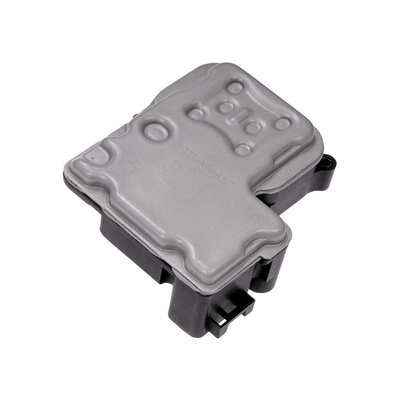
Below are the parts most often responsible for code C0543, ranked by how frequently each one is the actual culprit (per the diagnosis above). Tap any to see what we have for your vehicle.


The information in this article is provided for general reference and educational purposes only. Vehicle specifications, procedures, and part compatibility can vary by production date, trim level, and region. Always consult your vehicle's factory service manual and verify part numbers before purchasing or performing repairs. Safety-critical components such as airbags, seat belts, and braking systems should be installed by a qualified professional.
- 🧭 Diagnostic Flowchart
- 🎬 Helpful Videos
- 🛍️ Shop This Part
- What Does C0543 Mean?
- Can I Drive With C0543?
- Common Causes
- Symptoms
- Common Fixes & Costs
- DIY vs Professional
- Used vs. New Parts: Buying Guide
- What Happens If You Wait — Timeline
- Cost of Not Fixing It
- Diagnosis Steps
- When This Code Triggers (Freeze-Frame Conditions)
- Related Codes
- Climate & Environmental Factors
- How to Talk to a Mechanic About This Code
- Where to Take It: Dealer vs Independent vs Chain
- When to Walk Away From the Repair
- What Scan Tool You Need for This Code
- How to Clear the Code After You Fix It
- Will This Fail Emissions / State Inspection?
- Most Commonly Affected Vehicles
- Manufacturer-Specific Notes
- Real Owner Stories
- 2019 Jeep Cherokee with C0543
- Misdiagnosis on a 2015 Freightliner Cascadia
- 2004 GMC Sierra with Quadrasteer and C0543
- How to Prevent This Code From Triggering
- Frequently Asked Questions
- Is it safe to drive my car with a C0543 code?
- Can I fix code C0543 myself?
- Will clearing the code make it go away?
- Why is the repair for C0543 so expensive?
- What's the difference between Brake Pressure Sensor A and B?
- What are common misdiagnosis mistakes for C0543?
- Can a bad wheel speed sensor cause C0543?
- I got this code after changing my battery. Are they related?
- Key Takeaways
- 🎟️ Get 5% Off