

C0544 on 2015-2019 GMC Sierra Denali: Steering Sensor Fault Causes and Fixes
This code indicates a problem with the Steering Angle Sensor circuit. On the 2015-2019 Sierra, this is very often caused by a poor Body Control Module (BCM) ground at location G218 (under the driver's side dash) or a chafed wiring harness near the parking brake pedal, not a failed sensor. Check these known issues before replacing parts.
- Before buying any parts for a C0544 code, thoroughly inspect and clean the BCM ground G218 under the driver's dash.
- Carefully check the wiring harness near the steering column and left side of the dash for any signs of chafing against metal brackets.
- The actual steering angle sensor is less likely to be the root cause than the two primary electrical issues (ground G218 and chafed harness).
- This issue is shared across the GM K2XX platform, including the Chevrolet Silverado, Tahoe, Suburban, and Cadillac Escalade.
What's Unique About the 2015-2019 Gmc SIERRA DENALI
On this generation of GMC Sierra (and its platform mates like the Chevy Silverado), code C0544 is frequently a 'symptom' code rather than a direct indicator of a failed sensor. General Motors has issued Technical Service Bulletins (TSBs) pointing to two common culprits that can trigger this code: a poor ground connection for the Body Control Module (G218) and a wiring harness that can chafe against a metal bracket near the instrument panel and parking brake pedal. Owners and technicians often mistakenly replace the steering angle sensor when the true root cause is one of these known electrical issues, which disrupt communication between modules and cause a host of seemingly unrelated electrical problems.
Diagnostic Flowchart
Tap your situation to follow the diagnostic path that matches what you're seeing on this vehicle.
Symptoms You May Notice
- "Service StabiliTrak" message on the instrument cluster
- "Steering Assist is Reduced Drive With Care" message on the DIC
- Loss of power steering assist, or assist that works intermittently
- Traction control light is on
- Steering may feel heavy or kick back during turns
- In some cases, the vehicle may feel like it is pulling to one side at speed
- Backup camera guidelines may disappear
- Headlights and dash lights may flicker, especially when turning or braking
- Replacing the Steering Angle Sensor without first checking the G218 ground and instrument panel wiring harness. The TSBs indicate these electrical issues are a more frequent root cause.
- Replacing the Power Steering Control Module (PSCM) or the entire power steering rack when the issue is a simple ground or chafed wire.
Most Likely Causes
- Poor Body Control Module (BCM) Ground (G218) 🔴 High Probability → Shop Body Control Module This is a well-documented issue covered by GM TSB #PIT5405A. The ground location under the driver's side dash is known to have paint or sound-deadening material underneath the terminal from the factory, leading to a poor connection that can loosen or corrode over time, causing widespread communication errors.
How to confirm: Inspect the G218 ground location, found under the driver's side dash, often near the A-pillar speaker. Access requires removing the A-pillar trim and side dash panel. Look for a nut securing a ground wire where foam insulation may be interfering with the connection.
Typical fix: Remove the 10mm nut, pull back the foam insulation, and thoroughly clean the wire terminal and the chassis surface to bare metal using a wire brush or sandpaper. Re-secure the ground tightly. Many owners report this permanently solves the issue. 🎬 Watch: Step-by-step guide to fixing the G218 ground connection.
Est. part cost: $0-$5 - Chafed or Damaged Instrument Panel Wire Harness 🔴 High Probability → Shop Dashboard Wiring Harness As documented in GM TSB #PIT5288H, the main wire harness behind the left side of the instrument panel can rub against a sharp metal dash mounting bracket, located near the parking brake pedal. Over time, this chafing wears through wire insulation, causing shorts to ground.
How to confirm: Visually inspect the wiring harness that runs along the left side of the dash and steering column area from underneath. The TSB specifically shows the harness getting pinched between the I/P mounting bracket and the body. Look for any signs of abrasion, exposed copper wires, or damage. The damage may be subtle and require moving the harness to see.
Typical fix: Repair the damaged wires using appropriate connectors or solder and heat shrink. Protect the harness from future damage by re-routing it slightly or applying anti-abrasion tape (such as Tesa tape) and securing it with zip ties away from the sharp bracket.
Est. part cost: $5-$25 - Faulty Steering Angle Sensor (SAS) 🟡 Medium Probability → Shop Steering Angle Sensor
How to confirm: Use a diagnostic scan tool to monitor the live data from the steering angle sensor. As you turn the wheel, the angle reading should change smoothly and accurately. Jumps, freezes, or invalid data after confirming good wiring and grounds indicate a failed sensor.
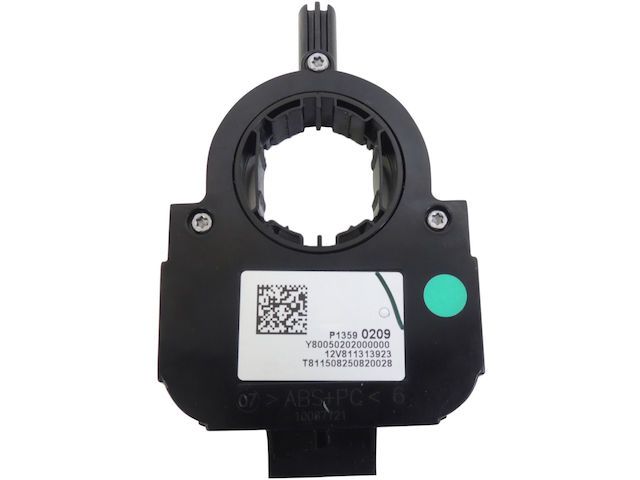
Typical fix: Replace the steering angle sensor, which is located on the steering column behind the steering wheel. 🎬 See this walkthrough on how to replace the sensor. The new sensor must be calibrated using a compatible scan tool to learn the center position and end stops.
Est. part cost: $70-$250 - Software/Calibration Issue ⚪ Low Probability An incorrect wheel alignment, battery disconnection, or even a dead battery can sometimes cause the sensor to lose its calibration or set a persistent fault code that won't clear with a standard tool.
How to confirm: This is a diagnosis of exclusion. If all hardware and wiring checks out, attempting a recalibration is the next step. TSB PI0800D notes that an incorrect alignment procedure can set a C0544 that cannot be cleared without reprogramming.
Typical fix: Recalibrate the steering angle sensor using a bi-directional scan tool. In some cases, as per TSB PI0800D, the Power Steering Control Module (PSCM) may need to be reprogrammed by a dealer or qualified shop to clear the fault.
Est. part cost: $0-$150
Rare But Worth Checking
- Failing Battery or Alternator: → Shop Vehicle Battery
Diagnosis Steps
- Read all codes from all vehicle modules with a professional-grade scan tool. Note all C-codes and U-codes, especially companions to C0544.
- Crucial First Step: Inspect the BCM ground G218 as per TSB #PIT5405A. Remove the driver's side A-pillar and dash side panel. Locate the ground stud (usually a 10mm nut), pull back any interfering foam, disassemble, clean all contact surfaces to bare metal, and reassemble securely.
- Inspect the instrument panel wiring harness for chafing, especially on the left side near the parking brake pedal and I/P mounting bracket, as described in TSB #PIT5288H. Repair any damaged wires with solder/heat shrink and protect the harness with anti-abrasion tape.
- After addressing grounds and wiring, clear all codes and test drive the vehicle. If C0544 returns, proceed to the next step.
- Use the scan tool to view the live data stream for the Steering Angle Sensor. Turn the steering wheel lock-to-lock. The degree reading should be smooth, consistent, and read 0 when the wheel is centered. If it is erratic, frozen, or incorrect, the sensor is likely faulty.
- If the sensor is replaced, perform the Steering Angle Sensor calibration procedure using the scan tool. This typically involves a 'reset' function followed by a 'learn' or 'centering' procedure where you turn the wheel lock-to-lock. 🎬 Watch: How to perform the steering angle sensor calibration.
Parts You'll Likely Need
- Steering Angle Sensor
(OEM #ACDelco 13590209, 23480981, 13579487 (Verify by VIN))— If the sensor itself has failed internally, it must be replaced. This is only done after verifying wiring and grounds are intact.
Trusted brands: ACDelco (GM Genuine), Dorman
OEM price range: $150-$250
Aftermarket price range: $70-$150 - Anti-Abrasion Harness Tape — Required to protect the repaired wiring harness from future chafing against the dash bracket, as per the fix for TSB PIT5288H.
Trusted brands: Tesa, 3M
OEM price range: $10-$20
Aftermarket price range: $5-$15
Related Codes That Often Appear With This One
- U0415 — This code means 'Invalid Data Received From ABS Control Module'. It often appears with C0544 because the stability system (ABS module) relies on accurate data from the steering angle sensor. TSBs confirm they are often set together.
- U0428 — This code means 'Invalid Data Received From Steering Angle Sensor Module'. It is a direct companion code to C0544, indicating other modules on the network are not trusting the data from the SAS.
- U0126 — This code indicates 'Lost Communication With Steering Angle Sensor Module'. It can be triggered by the same wiring and ground issues (per TSBs #PIT5288H and #PIT5405A) that cause C0544.
- C0710 — This code relates to a steering position sensor signal fault and is frequently listed alongside C0544 in TSB #PIT5288H as being caused by the same harness chafing issue.
Technical Service Bulletins (TSBs) & Recalls
- PIT5405A: Points to checking the body control module ground at the G218 location as a fix for C0544 and other communication codes. The ground is located under the driver's side dash near the A-pillar.
- PIT5288H: Recommends inspecting the left instrument panel wire harness for chafing against a metal bracket when C0544 and other electrical fault codes are present.
- PI0800D: Describes a condition where C0544 can get 'stuck' after an improper alignment or other procedure and requires a PSCM reprogram to clear, not just a standard code clear.
Platform-Specific Known Issues
- TSB #PIT5405A documents that a poor ground at location G218 is a known cause for a multitude of communication codes, including C0544. The fix involves cleaning the ground point to bare metal.
- TSB #PIT5288H identifies a specific issue where the instrument panel wire harness can chafe against a metal bracket near the parking brake pedal, leading to electrical shorts and communication faults that trigger C0544 among other codes.
- Owner forums are filled with reports of C0544 being resolved by cleaning the G218 ground, confirming it as the most common and first-to-check item.
Mechanic-Grade Diagnostic Values
- Power Steering Control Module (K43) ground circuit resistance — expected: Less than 10 ohms. Failure: A reading of 10 ohms or greater indicates high resistance in the ground circuit.
- Power Steering Control Module (K43) B+ circuit short to ground — expected: Infinite resistance. Failure: Any reading less than infinite resistance indicates a short to ground in the power supply circuit.
Hidden / Shadow Codes Worth Checking
- C0544-5A: Steering Wheel Angle Sensor Signal Plausibility Fault. This specific symptom byte indicates a fault that is 'latched' in the PSCM memory, often due to an incorrect wheel alignment or sensor calibration procedure. It will not clear with a standard code clearing tool. (see via A professional scan tool like the GM GDS2 or equivalent that can read manufacturer-specific symptom bytes.)
- U0415-75: Invalid Data Received From Electronic Brake Control Module - In-Plant Detected. This often sets alongside C0544-5A and points to the same root cause of an incorrect alignment/calibration procedure causing a persistent, non-clearing fault. (see via A professional scan tool like the GM GDS2 or equivalent.)
Scan Tool Commands That Help
- GDS2 / Professional Scan Tool (e.g., Autel): Steering Wheel Angle Sensor Reset — This is the first step in the two-part calibration process. It clears the old calibration values from the module's memory. Performing this step is necessary before learning the new position.
- GDS2 / Professional Scan Tool (e.g., Autel): Steering Wheel Angle Sensor Learn (or Centering) — This is the second step, performed immediately after the 'Reset'. It commands the module to learn the new center position and end-stops of the steering. This is required after replacing the sensor, the PSCM, or performing a wheel alignment.
- GDS2 / SPS (Service Programming System): PSCM Reprogramming (Replace and Reprogram) — This is a dealer-level function required to clear a latched C0544-5A code. If the code will not clear after repairs and successful recalibration, the PSCM itself must be reflashed to erase the persistent fault memory as per TSB PI0800D.
Wiring & Ground Locations
- G218 — Under the driver's side of the dashboard, near the A-pillar and speaker. It is a ground stud with a 10mm nut.. This is the primary ground for the Body Control Module (BCM). A poor connection here due to factory-installed insulation getting trapped under the terminal causes widespread communication errors that can trigger C0544.
- K43 Power Steering Control Module - Connector X2 — On the power steering rack itself.. This 2-pin connector provides the main power and ground to the power steering motor and module. Pin 2 is the ground circuit that should be tested for high resistance.
- K43 Power Steering Control Module - Connector X1 — On the power steering rack itself.. This 12-pin connector handles communication. It contains the GMLAN serial data wires (Pins 4, 6, 11) and the Serial Data Communication Enable wire (Pin 2). A fault here can cause communication codes.
- Main Power Steering Fuse — In a hidden fuse box located on top of the positive battery terminal under the hood.. This is the main high-amperage fuse for the entire electric power steering system. While a failure is less common than ground issues, it can cause a complete loss of power to the PSCM.
Real Owner Repair Stories
- YouTube user 'Dustin T' (2014 Silverado (same platform)) — Flickering lights, intermittent loss of power steering when turning at low speeds, dash warnings for Park Assist and Power Steering disabled, truck completely shutting off.
❌ Tried (didn't work) Initial online research.
✅ What actually fixed it Located the G218 ground under the driver's side dash, found sound deadening material trapped under the ground terminal, cleaned the contact surfaces, and re-secured the nut. The creator reported this permanently fixed all electrical issues. - YouTube channel 'Global Commerce CA' (2014 Chevy Malibu (demonstrates a common principle)) — C0544, C0710, C0800, U0415 after replacing power steering rack with a used unit.
❌ Tried (didn't work) Checking power and grounds to the module.
✅ What actually fixed it The technician observed that with the steering angle sensor reading 0 degrees on the scan tool, the road wheels were visibly turned. The root cause was that the steering was not physically centered during the previous rack installation. The fix was to perform a proper wheel alignment to center the steering rack relative to the wheels, and then perform the steering angle sensor calibration.
"I Checked Everything" — The Actual Cause
- A common scenario for this code is when all wiring and grounds test perfectly, and the sensor data appears normal, but a C0544-5A code will not clear. This is not a physical fault that can be found with a multimeter or visual inspection. The actual cause is a 'latched' fault within the Power Steering Control Module (PSCM) memory, typically set by a previous incorrect wheel alignment or calibration attempt. The only resolution is to reflash the PSCM with a dealer-level tool using the 'Replace and Reprogram' function to force-clear the memory.
OEM Part Supersession History
23412215, 84059834, 84073904, 84228166, 84346954→84446361— Standard part evolution, likely includes updated hardware or firmware to address known issues.
Heads up: These are part numbers for the Power Steering Control Module, which is often integrated with the rack. Always verify the correct part number by VIN before ordering.22834071, 23206789, 23434174→23231301— Part revision for the Power Steering Control Module Wiring Harness.
Heads up: This harness is often included with the steering gear assembly. Verify by VIN.
Model Year Variations Within This Range
- 2016-2019: For the 2016 model year, GMC introduced an 'Active Steering Assist System' on some double and crew cab models. This system added electronic controls to enhance stability and improve steering feel. While the primary causes of C0544 (grounds, wiring) appear to span the full year range, software and calibration procedures may have subtle differences on these later models.
Helpful Videos

We Have This Part in Stock

The information in this article is provided for general reference and educational purposes only. Vehicle specifications, procedures, and part compatibility can vary by production date, trim level, and region. Always consult your vehicle's factory service manual and verify part numbers before purchasing or performing repairs. Safety-critical components such as airbags, seat belts, and braking systems should be installed by a qualified professional.
- Gmc SIERRA DENALI:
- 🧭 Diagnostic Flowchart
- 🎬 Helpful Videos
- 🛍️ Shop This Part
- What's Unique About the 2015-2019 Gmc SIERRA DENALI
- Symptoms You May Notice
- Most Likely Causes
- Rare But Worth Checking
- Diagnosis Steps
- Parts You'll Likely Need
- Related Codes That Often Appear With This One
- Technical Service Bulletins (TSBs) & Recalls
- Platform-Specific Known Issues
- Mechanic-Grade Diagnostic Values
- Hidden / Shadow Codes Worth Checking
- Scan Tool Commands That Help
- Wiring & Ground Locations
- Real Owner Repair Stories
- "I Checked Everything" — The Actual Cause
- OEM Part Supersession History
- Model Year Variations Within This Range
- 🎟️ Get 5% Off