

OBD-II Code C0558: Calibration Data Not Programmed
What C0558 means, why it triggers, and how to fix it
- Code C0558 triggers when the Electronic Brake Control Module (EBCM) lacks VIN-specific programming or detects a hardware mismatch.
- Expect this code immediately after replacing the EBCM or installing larger tires without recalibrating the brake module.
- Rule out a weak 12V battery, a broken Ford EPB wire harness, or an incompatible aftermarket wheel speed sensor before buying a $500+ replacement EBCM.
- Fixing C0558 typically requires a professional shop equipped with a manufacturer-specific scan tool (like a GM MDI) to perform a $150-$350 software calibration.
What Does C0558 Mean?
Code C0558 indicates a critical control module—usually the Electronic Brake Control Module (EBCM)—lacks correct programming or detects a fundamental data mismatch. This happens in two main scenarios: 1) A newly installed, 'blank' module lacks vehicle-specific data (VIN, tire size, options). 2) Existing software detects a hardware conflict, such as an incompatible wheel speed sensor, invalidating its calibration. Without this data, the module disables ABS and stability control.
Technical definition: The SAE/ISO definition for C0558 is "Calibration Data Not Programmed". This indicates the Electronic Brake Control Module (EBCM) or a related module (like the Electric Parking Brake) lacks vehicle-specific software, detects an internal calibration fault, or identifies an installed component as incorrect for the vehicle's configuration.
Can I Drive With C0558?
Yes, But With Caution. Yes, but your Anti-lock Braking System (ABS), Traction Control, and Stability Control are disabled. The vehicle reverts to basic braking, meaning wheels lock during hard stops, increasing skid risk. Drive cautiously, avoid hard braking, and increase following distance. Fix this promptly; the root cause (like a faulty wheel speed sensor) also disables cruise control and AWD.
Common Causes
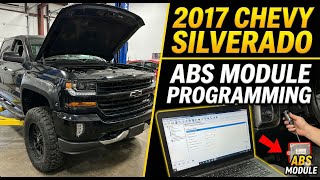
- EBCM replaced but not programmed (Very Common) — A new EBCM requires VIN-specific software programming after installation. 🎬 Watch: Step-by-step guide to programming a new Chevy ABS module. This is the most frequent cause of C0558.
- Changing tire size or axle ratios without recalibration (Common) — The EBCM is calibrated for a specific tire size. Installing significantly larger or smaller tires, or changing the axle gear ratio and only updating the main computer (PCM), creates a mismatch the EBCM flags as a calibration error.
- Incorrect type of wheel speed sensor installed (Common) — The EBCM expects a sensor with specific electrical characteristics (active vs. passive). Installing an incompatible aftermarket sensor causes the module to identify it as the 'incorrect component' and set a C0558 code.
- Wiring harness connector not fully seated or damaged (Common) — Worn plastic clips allow the EBCM connector to vibrate loose (common on Subaru Outbacks). On Ford Expeditions, wires in the rear harness break near sharp bends, causing an open circuit and communication loss.
- Software corruption or failed update on the EBCM (Common) — A failed software update or a random voltage glitch corrupts the existing calibration data within the brake module, triggering the code.
- Low battery voltage during startup (Less Common) — Control modules are highly sensitive to voltage. A weak battery dropping below 10 volts during engine cranking causes communication and programming errors.
- Damaged or fouled wheel bearing reluctor ring (Less Common) — The wheel speed sensor reads a toothed or magnetic ring (reluctor) on the wheel hub. A cracked, corroded, or debris-covered ring produces an erratic signal the EBCM misinterprets as a calibration fault.
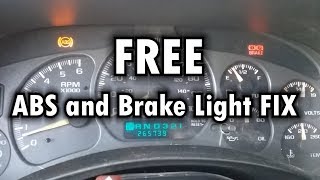
- Poor ground connection for the brake control module (Rare) — A loose or corroded ground connection prevents the EBCM from functioning correctly. A GM service bulletin (PIC5751) specifically points to a bad ground 🎬 See how to clean grounds to fix ABS and brake lights. (G401) on some models as a cause.
- Internal failure of the Electric Parking Brake (EPB) actuator (Rare) — On vehicles like the BMW X5, plastic gears inside the EPB actuator motor wear out and fail. This mechanical failure manifests as a calibration code when the module fails its self-test.
Symptoms
- ABS warning light is on — The dashboard light for the Anti-lock Braking System illuminates immediately.
- Traction Control/Stability Control light is on — The light indicating your traction or stability control system (like StabiliTrak or ESC) is disabled.
- "Service Stability System" or "Service Park Brake" message — The driver information center displays a text warning related to the stability, brake, or suspension system.
- ABS and Traction Control do not work — Safety features are disabled. Brakes function normally, but wheels lock up during a hard stop.
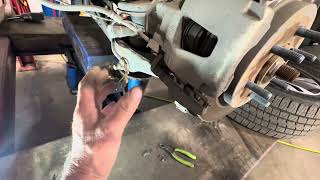
- Electric Parking Brake (EPB) is inoperative 🎬 Watch this fix for Ford and Lincoln parking brake messages. or erratic — The electronic parking brake refuses to apply or release, accompanied by a flashing brake light.
- Loss of other related features — This fault disables Hill Start Assist, Automatic Level Control, or Adaptive Cruise Control on equipped vehicles.
Common Fixes & Costs
- Reprogramming the Electronic Brake Control Module (EBCM) — Parts: $50-$100 (software license), Labor: $150-$350, ~1.5 hr book time (Professional)
- Repairing a Broken Wire or Replacing a Harness Pigtail — Parts: $30-$80, Labor: $150-$300, ~1.5 hr book time (DIY)
- Replacing an Incorrect Wheel Speed Sensor — Parts: $50-$190, Labor: $80-$130, ~1 hr book time (DIY)
- Cleaning or Repairing the EBCM Ground Connection — Parts: $1-$5, Labor: $50-$150, ~0.8 hr book time (DIY)
- Replacing and Programming a Faulty EBCM — Parts: $450-$1200, Labor: $200-$400, ~3 hr book time (Professional)
- Replacing a Damaged Wheel Bearing Hub Assembly — Parts: $80-$250, Labor: $200-$400, ~1.8 hr book time (DIY)
DIY vs Professional
- Reprogramming the EBCM — Beginner:
- Replacing the EBCM — Beginner:
- Wiring/Ground Repair — Beginner:
- Replacing a Wheel Speed Sensor — Beginner:
- Replacing a Wheel Bearing Hub Assembly — Beginner:
Used vs. New Parts: Buying Guide
When a used part is worth it: A used Electronic Brake Control Module (EBCM) is a cost-effective option for older vehicles (10+ years) where a new OEM part is prohibitively expensive. It makes sense only if you have access to a qualified shop that can reprogram the used module for your VIN.
Donor-vehicle mileage cap: roughly under 100000 miles for the part to have meaningful remaining life.
Donor quality checklist:
- Verify the part number matches exactly; superseded numbers may not be compatible.
- Obtain the VIN of the donor car to check for relevant recalls or service bulletins.
- Avoid modules from flood-damaged or heavy-collision vehicles.
- Purchase from a reputable salvage yard offering at least a 90-day warranty.
Decision logic:
- If Vehicle is under warranty or less than 5 years old → Buy new OEM to ensure compatibility and warranty coverage.
- If The cost of a new module is less than $500 → Buy new, as the savings from a used part are minimal compared to the risk of repeat labor.
- If Vehicle is over 10 years old and budget is the primary concern → A used module is a reasonable choice, but budget for professional programming and accept the risk of a shorter lifespan.
Warranty tradeoff: Used parts typically come with a 30-90 day part-only warranty, meaning you pay for labor again if it fails. New aftermarket parts often have a 1-year to limited lifetime warranty. New OEM parts carry a 1-2 year warranty, often including labor if installed by a dealer.
Worst-case if a used part fails: $350-$600 if a used EBCM is faulty or fails after the warranty period, covering repeat labor for installation and programming.
Cost of Not Fixing It
- Immediate: ABS, Traction Control, and Stability Control are disabled. Increased risk of skidding and loss of control in emergency braking or on slippery surfaces. (Added cost: Negligible (in parts), but significantly increases the risk of an accident.)
- 1-6 months: Continued operation without safety systems normalizes unsafe driving habits. The underlying issue (e.g., a bad wheel bearing causing a sensor fault) worsens, leading to extensive mechanical failure. (Added cost: $250-$600 (if a failing wheel bearing fails completely and requires replacement).)
- 6+ months: The risk of an accident remains high. Other related features like Hill Start Assist or AWD may be permanently disabled. Potential for failure during a state safety inspection. (Added cost: Potential for insurance premium increases or total loss of vehicle in case of an accident.)
Diagnosis Steps
- Review Recent Repairs and Modifications
Think about recent work. Was the EBCM, a wheel bearing, or a wheel speed sensor replaced? Were new tires or different axle gears installed? This context is the fastest way to solve this specific code.
Tools: None (Beginner) - Read the Codes and Suffixes
Use an advanced OBD-II scanner to confirm C0558. Note any two-digit suffix codes (e.g., C0558 46, C0558 5A). These suffixes indicate whether you have a general programming issue, mechanical fault, or configuration error.
Tools: Advanced OBD-II Scanner (Beginner) - Check Battery Voltage and System Health
Check battery voltage with a multimeter. A healthy battery reads above 12.4 volts with the engine off and 13.7-14.7 volts running. Voltage below 10V during cranking causes module communication errors.
Tools: Multimeter (Beginner) - Inspect EBCM Wiring, Connectors, and Ground
Visually inspect the wiring harness and connectors at the EBCM for damage, corrosion, or looseness. Ensure connectors are fully seated. Check the main ground point for a secure, clean connection (resistance under 0.5 ohms).
Tools: Flashlight, basic hand tools, multimeter (Intermediate) - Verify Wheel Speed Sensor Part Numbers
If a wheel speed sensor was recently replaced, verify the part number against the OEM specification for your VIN. An incompatible sensor (passive vs. active) is a common trigger.
Tools: Basic hand tools (Intermediate) - Pro Tip: Analyze Live Wheel Speed Data
Using an advanced scan tool, view live data for all four wheel speed sensors simultaneously. Drive slowly in a straight line. All four sensors must display identical speeds. An erratic sensor indicates a problem at that wheel.
Tools: Advanced OBD-II Scanner (Advanced) - Pro Tip: Inspect Wheel Bearing Reluctor Rings
Visually inspect the toothed or magnetic ring the wheel speed sensor reads. Look for cracks, heavy rust, or metallic debris, which corrupts the sensor's signal and mimics a calibration fault.
Tools: Flashlight, brake cleaner, hand tools (Advanced) - Advanced: Test Wheel Speed Sensor Voltage (Active Sensors)
For modern 2 or 3-wire active sensors: With the key on, back-probe the connector for a reference voltage (5V or 12V). Monitor the signal wire with a multimeter (DC volts) or oscilloscope while spinning the wheel. You should see a clean square wave or toggling voltage.
Tools: Multimeter, Oscilloscope, back-probe pins (Advanced) - Advanced: Test Wheel Speed Sensor Resistance (Passive Sensors)
For older 2-wire passive sensors: Disconnect the sensor and measure resistance across the two pins. A good reading is typically 800-2,500 Ohms. An open circuit (OL) or zero resistance indicates a failed sensor.
Tools: Multimeter, back-probe pins (Advanced) - Attempt EBCM Reprogramming/Calibration
If no physical faults exist, the module requires software calibration. This requires a specialized scan tool with pass-through capabilities (GM Tech2/MDI, Ford IDS) and an OEM software subscription to download the correct VIN file.
Tools: Manufacturer-specific scan tool, computer, software subscription (Professional)
When This Code Triggers (Freeze-Frame Conditions)
- Module State: Self-Test / Initialization (The code sets immediately after the ignition is turned ON.)
- Battery Voltage: 12.5V+ (The self-test runs at startup; low system voltage interrupts programming and causes this code.)
- Vehicle Speed: 0 mph (As a configuration code, it is flagged during the key-on, engine-off self-check before the vehicle moves.)
- Component Status: Not Programmed / Mismatch Detected (The EBCM detects it is 'blank' or that a connected component (like a wheel sensor) does not match its stored configuration.)
Related Codes
- C0559 — Means "EEPROM Checksum Error." C0558 means the module lacks software; C0559 means the software is corrupted or internal memory failed, strongly suggesting the module needs replacement.
- C0558 5A / C0558 55 — Manufacturer-specific suffix codes (GM/SAAB). '5A' points to a mechanical problem (stuck parking brake actuator). '55' points directly to a calibration or internal programming error.
- C0558 46 — A GM-specific suffix meaning "Vehicle Configuration Not Programmed." The module is blank or has the wrong configuration data for the vehicle.
- U-series codes (e.g., U0121) — Communication codes like U0121 ("Lost Communication With ABS Control Module") accompanying C0558 indicate the problem is in the wiring, connectors, ground, or a dead module.
Climate & Environmental Factors
- Cold Climates / Road Salt: Road salt accelerates the rusting of wheel bearing reluctor rings. A rusted ring swells, cracks, or delaminates, producing an erratic signal the EBCM misinterprets.
- Humidity / Moisture Intrusion: High humidity causes corrosion inside wiring harness connectors, leading to poor connections. It also builds up within the wheel speed sensor bore, pushing the sensor out of alignment and changing the critical air gap.
How to Clear the Code After You Fix It
- Perform required programming or calibration procedure
- Use an OBD-II scan tool to clear the code from the EBCM
- Turn ignition off for 30 seconds, then restart vehicle to confirm warning lights are off
- Perform a short test drive including turns to verify full system function
Drive cycle (~30 minutes): C0558 is a 'hard fault' and does not clear with a drive cycle; it must be cleared with a scan tool after a successful repair/programming. If the battery was disconnected, a general OBD-II drive cycle is needed to reset emissions monitors. This involves a cold start, 2-3 minutes of idling, 10-15 minutes of mixed city/highway driving, followed by a cool-down.
Readiness monitors affected: This code does not affect emissions readiness monitors directly, If the battery was disconnected during repair, monitors like Catalyst, EVAP, and O2 Sensor will be reset
Before emissions retest: drive at least 100 miles to fully set monitors.
Watch out for:
- Attempting to clear the code without first programming the module results in the code returning immediately.
- Confusing an ABS/brake system drive cycle (a test drive) with an emissions readiness drive cycle.
- Taking the vehicle for an emissions test too soon after a battery disconnect, before readiness monitors complete.
Will This Fail Emissions / State Inspection?
No — by itself this code doesn't fail OBD inspection (but it can keep readiness monitors from setting, which causes a separate fail).
- California: Will NOT fail a smog check. California's test fails for an illuminated Check Engine Light, but an ABS light is ignored for emissions purposes.
- New York: Will NOT fail the safety inspection. According to NYS DMV regulations, an illuminated ABS warning light is noted as an advisory but is not a cause for rejection.
- Texas: MAY fail the safety inspection. In the 17 counties requiring it, the inspection includes checking all warning lamps. An illuminated ABS light indicates a safety system fault and is grounds for failure at the inspector's discretion.
Most Commonly Affected Vehicles
- Chevrolet Silverado, Suburban, Tahoe (2005-2018) — Extremely common after EBCM replacement or if the PCM is reprogrammed for larger tires/new gears without recalibrating the EBCM.
- GMC Sierra, Yukon (2005-2018) — Shares the same platform and EBCM as Chevrolet trucks. A new module requires programming with a GM-specific tool like a Tech2.
- Cadillac Escalade (2005-2018) — On some models, this code is triggered by the Electronic Suspension Control Module (ESCM), disabling the auto-leveling suspension.
- Ford Expedition, Lincoln Navigator, F-150 (2018-2023) — A known issue is a broken wire in the rear electronic parking brake (EPB) pigtail harness where it bends near the control arm.
- Ford Explorer (2012-2019) — Appears after routine service if a necessary software update for the brake control module was missed. Mail-in repair services are a cost-effective option.
- Chevrolet Malibu (2013-2015) — TSB PIC5751A addresses C0558 with suffixes 5A or 55, often caused by a poor ground at G401 in the left rear wheel house.
- SAAB 9-5 (2010-2011) — Applies to the 2nd Gen. The code relates to the Electric Parking Brake module. C0558 55 indicates a calibration malfunction; C0558 5A points to a pinched cable.
- Subaru Outback (2015-2019) — The wiring harness connector for the electronic brake module becomes loose due to a worn plastic clip. Securing it with a zip tie is an effective field repair.
- BMW X5 (F15 Chassis), 3-Series (E90/E91) (2006-2018) — On the X5, the EPB actuator fails due to broken internal plastic gears. On E90/E91 models, corrosion of rear wheel speed sensor reluctor rings is a common cause.
Manufacturer-Specific Notes
- General Motors (Chevrolet, GMC, Cadillac): Extremely common after replacing the EBCM and failing to program it, or reprogramming the PCM for larger tires without recalibrating the EBCM. Suffix codes 46, 55, and 5A provide specific diagnostic direction.
- SAAB: For the 2nd Gen 9-5, C0558 points to the Electric Parking Brake (EPB) module. Suffix C0558 55 indicates a calibration issue; C0558 5A points to a mechanical problem like a pinched cable.
- Ford: On the Expedition, Navigator, and F-150, a broken wire in the EPB harness is a common cause. This prompted NHTSA Recall 23V509 for 2021-2023 F-150s. Mail-in module repair is popular for 2012+ models.
- BMW: While C0558 is not a primary BMW code, underlying causes are identical. On E90-chassis vehicles, heavy corrosion of rear wheel speed sensor reluctor rings produces erratic signals misdiagnosed as module failure.
Frequently Asked Questions
Can I fix code C0558 myself?
Partially. You can test the battery, inspect wiring, or replace a wheel speed sensor. However, the most common fix—reprogramming the brake module—requires specialized tools and software subscriptions. Leave programming to a professional shop or dealer.
What is the most common misdiagnosis for C0558?
The most common mistake is immediately replacing the expensive Electronic Brake Control Module (EBCM). The actual cause is often a simpler issue like a bad ground, a broken wire, a loose connector, an incorrect wheel speed sensor, or a dead battery.
How much does it cost to fix C0558?
Reprogramming the module costs $150-$350. If the EBCM has failed, a replacement part runs $450-$1,200 plus labor and programming. Simpler fixes like wiring repairs cost $150-$300.
Will clearing the code make it go away?
No. C0558 is a 'hard' fault indicating a module lacks programming or cannot verify its calibration. The code returns immediately or on the next startup cycle until the underlying issue is resolved.
I just put bigger tires on my truck and now I have this code. Why?
Your brake control module (EBCM) and main computer (PCM) are out of sync. You likely updated the PCM for the new tire size, but the EBCM still has the old calibration. The EBCM requires recalibration for the new tire size to resolve the data mismatch.
What does the suffix C0558 5A mean on my Chevy/SAAB?
The '5A' suffix indicates the control module detects a mechanical fault with a controlled system, such as the Electric Parking Brake. This points to an issue with an actuator, cable, or brake mechanism rather than a software programming problem.
Can a bad wheel speed sensor cause C0558?
Yes. Installing the wrong type of sensor (e.g., an aftermarket part with different electrical properties) causes the EBCM to flag it as an 'incorrect component.' The module then invalidates its own calibration data, triggering C0558.
What happens if I ignore code C0558?
Your vehicle is less safe to drive. Critical ABS and traction/stability control systems remain disabled, increasing the risk of losing control during emergency braking or on slippery roads. Ignoring the root cause also leads to other system malfunctions over time.
Key Takeaways
- Code C0558 triggers when the Electronic Brake Control Module (EBCM) lacks VIN-specific programming or detects a hardware mismatch.
- Expect this code immediately after replacing the EBCM or installing larger tires without recalibrating the brake module.
- Rule out a weak 12V battery, a broken Ford EPB wire harness, or an incompatible aftermarket wheel speed sensor before buying a $500+ replacement EBCM.
- Fixing C0558 typically requires a professional shop equipped with a manufacturer-specific scan tool (like a GM MDI) to perform a $150-$350 software calibration.
Helpful Videos
Shop the Parts Behind C0558
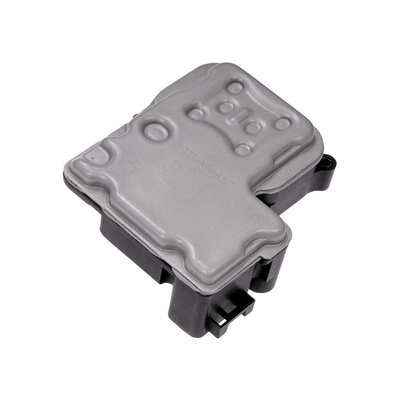
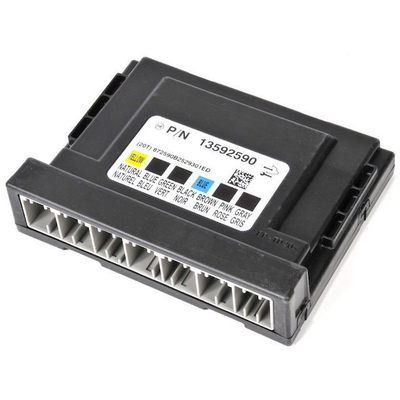
Below are the parts most often responsible for code C0558, ranked by how frequently each one is the actual culprit (per the diagnosis above). Tap any to see what we have for your vehicle.


The information in this article is provided for general reference and educational purposes only. Vehicle specifications, procedures, and part compatibility can vary by production date, trim level, and region. Always consult your vehicle's factory service manual and verify part numbers before purchasing or performing repairs. Safety-critical components such as airbags, seat belts, and braking systems should be installed by a qualified professional.
- 🎬 Helpful Videos
- 🛍️ Shop This Part
- What Does C0558 Mean?
- Can I Drive With C0558?
- Common Causes
- Symptoms
- Common Fixes & Costs
- DIY vs Professional
- Used vs. New Parts: Buying Guide
- Cost of Not Fixing It
- Diagnosis Steps
- When This Code Triggers (Freeze-Frame Conditions)
- Related Codes
- Climate & Environmental Factors
- How to Clear the Code After You Fix It
- Will This Fail Emissions / State Inspection?
- Most Commonly Affected Vehicles
- Manufacturer-Specific Notes
- Frequently Asked Questions
- Can I fix code C0558 myself?
- What is the most common misdiagnosis for C0558?
- How much does it cost to fix C0558?
- Will clearing the code make it go away?
- I just put bigger tires on my truck and now I have this code. Why?
- What does the suffix C0558 5A mean on my Chevy/SAAB?
- Can a bad wheel speed sensor cause C0558?
- What happens if I ignore code C0558?
- Key Takeaways
- 🎟️ Get 5% Off