

OBD-II Code C0569: System Configuration Error
The Ultimate Guide to Diagnosing and Fixing C0569
- Code C0569 disables 4WD, ABS, and Traction Control because the Transfer Case Control Module (TCCM) failed its startup self-check.
- Do not replace the TCCM first; test the encoder motor's position sensor resistance, as a failed sensor (reading 'OL' or open circuit) is the root cause in over 50% of cases.
- Installing a new encoder motor requires a mandatory 10-minute 'ATC Motor Relearn' procedure using a bi-directional scan tool, or the C0569 code returns immediately.
- Inspect underbody connectors X109 and X3 for green corrosion, a known GM issue documented in TSB PIP5080B that disrupts the 5-volt reference signal.
What Does C0569 Mean?
C0569 means the Transfer Case Control Module (TCCM) lost its calibration and shut down the 4WD system for safety. During startup, the TCCM performs a self-check to verify the physical position of the shifting components. This code triggers when that self-check fails, indicating the system's configuration is unknown.
Technical definition: The SAE/ISO definition is 'System Configuration Error - Calibration Not Learned'. The Transfer Case Control Module (TCCM) sets this code when it fails to complete its startup self-test or learn the position of transfer case components. Because the TCCM cannot pinpoint the exact circuit at fault during startup, it defaults to this general configuration error.
Can I Drive With C0569?
Yes, But With Caution. You can drive your vehicle, but critical safety systems including four-wheel drive (4WD), anti-lock brakes (ABS), and traction/stability control (StabiliTrak) are disabled. Without ABS, braking distances on slick surfaces increase, and you lose steering control during a panic stop. Disabled traction control increases the risk of fishtailing under acceleration. While short-term driving on dry pavement is possible, a failed shift occasionally leaves the transfer case stuck in neutral, rendering the vehicle completely immobile.
Common Causes
- Faulty Transfer Case Encoder Motor / Position Sensor (Very Common) — The encoder motor physically shifts the transfer case and contains an integrated position sensor. When this sensor fails, the TCCM cannot determine the transfer case's gear and sets the code after a failed startup check.
- Skipped 'Relearn' Procedure After Part Replacement (Very Common) — Replacing the encoder motor, transfer case, or TCCM requires a mandatory 'ATC Motor Learn' calibration using a bi-directional scan tool. Skipping this step causes C0569 to appear immediately because the module rejects the uncalibrated part.
- Corroded Wiring, Connectors, or Grounds (Common) — The wiring harness is exposed to the elements. GM TSB PIP5080B highlights connectors X109 (under the hood fuse block) and X3 (at the TCCM) as highly prone to corrosion. A corroded main frame ground also disrupts communication, triggering the code.
- Low Battery Voltage at Startup (Common) — A weak battery causes a severe voltage drop during engine cranking. This prevents the TCCM from initializing correctly, leading to a failed self-test. GM TSB 09-04-21-001 notes this causes intermittent issues in extreme temperatures.
- Outdated TCCM Software (Less Common) — Software glitches within the TCCM cause false calibration errors. TSB 09-04-21-001 suggests reprogramming the TCCM with the latest GM calibration resolves intermittent C0569 codes when no hardware fault exists.
- Internal Transfer Case Mechanical Failure (Rare) — A broken internal shift rail, fork, or clutch pack prevents the motor from shifting. This mechanical jam stops the startup calibration from completing, triggering the code.
- Low Transfer Case Fluid / Pinhole Leak (Rare) — Magnesium housings develop porous leaks from chemical reactions with internal steel components. Operating with low fluid causes internal components to bind, preventing a shift and failing the C0569 calibration.
Symptoms
- "Service 4WD" or "Service StabiliTrak" Message — A warning message appears on the driver information center (DIC), indicating the system requires immediate attention.
- 4WD System Is Inoperative — The vehicle refuses to shift into 4WD High or 4WD Low, remaining locked in its last known good position (usually 2WD).
- ABS and Traction Control Lights Are On — The Anti-lock Brake System and Traction Control/StabiliTrak warning lights illuminate because these systems rely on active data from the 4WD system.
- 4WD Selector Switch Lights Go Out or Flash — The indicator lights on the 4WD selector knob light up briefly during startup and then turn off, confirming the system disabled itself.
- Vehicle Stuck in Neutral — If the fault occurs mid-shift, the transfer case gets stuck in neutral. The engine cannot transmit power to the wheels, and the vehicle will not move.
Diagnostic Flowchart
Tap your situation to follow the diagnostic path that matches what you're seeing on this code.
Common Fixes & Costs
- Replace Transfer Case Encoder Motor Assembly
— Parts: $150-$450, Labor: $150-$250, ~1.5 hr book time
(Intermediate)
Chevrolet Silverado / GMC Sierra (2007-2014, RPO NQF): OEM GM 84115497 (Alt: Dorman 600-910, ACDelco 19125571)
Chevrolet Tahoe / Suburban, GMC Yukon (2007-2014): OEM GM 84660077 (Alt: Dorman 600-910, Cardone 48-125) - Perform 'ATC Motor Relearn' Procedure — Parts: $0, Labor: $100-$150, ~0.5 hr book time (Professional)
- Repair Wiring/Connectors at X109 or X3 — Parts: $10-$50, Labor: $150-$300, ~2 hr book time (Intermediate)
- Reprogram TCCM with Updated Software — Parts: $0, Labor: $100-$200, ~1 hr book time (Professional)
- Replace Transfer Case Assembly — Parts: $2,000-$4,000, Labor: $600-$1,000, ~4 hr book time (Professional)
DIY vs Professional
- Replace Transfer Case Encoder Motor Assembly 🟢 Beginner
Tools: Socket set, wrenches, torque wrench, vehicle ramps or jack stands, bi-directional scan tool (for mandatory relearn). - Perform 'ATC Motor Relearn' Procedure 🟢 Beginner
Tools: Professional bi-directional scan tool (e.g., GM Tech 2, high-end Autel/Snap-on). - Repair Wiring/Connectors at X109 or X3 🟢 Beginner
Tools: Multimeter, trim removal tools, terminal pin tools, wire strippers, crimpers, heat shrink, contact cleaner, dielectric grease.
Used vs. New Parts: Buying Guide
When a used part is worth it: A used OEM encoder motor from a low-mileage donor vehicle is a cost-effective alternative to a new aftermarket part. Do not buy a used transfer case unless it is professionally remanufactured.
Donor-vehicle mileage cap: roughly under 75000 miles for the part to have meaningful remaining life.
Donor quality checklist:
- Verify the donor vehicle was not scrapped for a 4WD system failure.
- Avoid parts from the 'Rust Belt' as the encoder motor housing and connectors are prone to corrosion.
- Match the part number and RPO code (e.g., NQF) exactly to ensure compatibility.
Decision logic:
- If The price of a new OEM part is only marginally higher than aftermarket or used → buy new OEM for the best reliability and warranty.
- If The vehicle is high-mileage and budget is the primary concern → a new aftermarket part (like Dorman) offers a warranty and is more reliable than a used part of unknown history.
- If You are choosing an aftermarket part → apply extra sealant to the housing seams before installation, as they are known to be poorly sealed compared to OEM.
Warranty tradeoff: Used salvage parts carry a 30-90 day warranty. New aftermarket parts offer 1-year to limited lifetime warranties. New OEM parts installed by a dealer provide the most comprehensive coverage.
Worst-case if a used part fails: $200-$400 if a cheap aftermarket encoder motor fails shortly after installation, requiring repeat labor and a new part.
What Happens If You Wait — Timeline
- Immediate: Code C0569 sets. 'Service 4WD' message appears. 4WD, ABS, and Traction/Stability Control systems disable. Vehicle locks in 2WD. (MPG impact: 0%% · Added cost: $0)
- 1-6 months (if root cause is electrical/sensor): The primary consequence is the ongoing safety risk of driving without ABS and stability control. Intermittent faults cause the system to attempt and fail shifts repeatedly, wearing out the encoder motor gears. (MPG impact: 0%% · Added cost: $0)
- 1-6 months (if root cause is mechanical binding or driving stuck in 4WD): Driving on dry pavement while stuck in 4WD causes severe drivetrain binding. This destroys the transfer case chain, gears, driveshafts, and differentials. (MPG impact: 5-10%% · Added cost: $500 - $4500+)
- 6+ months (if root cause is a fluid leak): The transfer case loses all fluid. Complete lack of lubrication destroys all internal clutches, bearings, and gears, requiring a full replacement. (MPG impact: N/A (vehicle becomes immobile)% · Added cost: $2500 - $8000+)
Cost of Not Fixing It
- Immediate: Loss of 4WD, ABS, and Traction/Stability Control creates a significant safety hazard in adverse weather or emergency maneuvers. (Added cost: $0)
- 0-6 Months: If stuck in 4WD mode, driving on dry pavement causes severe drivetrain binding, destroying the transfer case chain, driveshafts, or differentials. (Added cost: $500 - $4500+)
- 6+ Months: If caused by a fluid leak, continued operation destroys all internal transfer case components from lack of lubrication, requiring a complete replacement. (Added cost: $2500 - $8000+)
Diagnosis Steps
- Scan for All Trouble Codes (Current and History)
Use a bi-directional scan tool to read TCCM codes. C0569 masks the original fault. Look for history codes like C0387, C0396, or C0327, which point to the root cause and must be diagnosed first. If only C0569 is present, the original code was cleared without fixing the problem.
Tools: Bi-directional OBD-II Scan Tool (Intermediate) - Attempt a 'Relearn' Procedure
Using the scan tool's 'Special Functions' menu, perform the 'ATC Motor Relearn'. If the procedure fails or the code returns instantly, a hard hardware fault is actively preventing calibration.
Tools: Bi-directional OBD-II Scan Tool (Intermediate) - Test the Encoder Motor Position Sensor Resistance
With the encoder motor unplugged, use a multimeter set to Mega-ohms to measure between the two position sensor pins. A good sensor shows ~2.11 MΩ. A failed sensor shows an open circuit (infinite resistance or 'OL').
Tools: Multimeter, vehicle-specific wiring diagram (Advanced) - Inspect Wiring, Connectors, and Grounds (Per TSBs)
Following GM TSB PIP5080B, inspect connectors X109 (under the driver's side fuse box) and X3 (at the TCCM). Disconnect them and check for green/white corrosion or loose wires. Clean the main frame ground connection behind the driver's side front wheel well.
Tools: Socket set, trim removal tools, contact cleaner, dielectric grease (Intermediate) - Verify 5V Reference and Ground at Encoder Motor
Turn the ignition on (engine off). Unplug the encoder motor and test the 5-volt reference wire (usually purple or light green) with a multimeter. You must see ~5.0 volts. A 0V reading indicates an open/short in the harness or a dead TCCM.
Tools: Multimeter, vehicle-specific wiring diagram (Advanced) - Test Encoder Motor Winding Resistance
Measure the resistance between the two motor control circuit pins (often red and black) on the encoder connector. A healthy motor winding reads between 0.5 and 35 ohms. Infinite resistance or a short to ground confirms a failed motor.
Tools: Multimeter (Advanced) - Analyze Scan Tool Live Data PIDs
Monitor 'Transfer Case Encoder Position' and 'Commanded Transfer Case State' live data. Command a shift. If the commanded state changes but the position does not, the shift is physically failing due to a bad motor, wiring, or mechanical jam.
Tools: Bi-directional OBD-II Scan Tool (Advanced) - Verify Mechanical Transfer Case Operation
Remove the encoder motor (held by three bolts). Attempt to shift the transfer case manually by turning the exposed input shaft with pliers. If it spins freely without engaging gears, the transfer case has a catastrophic internal failure.
Tools: Socket set, pliers/wrench (Professional) - Check for TCCM Software Updates
If wiring and components test perfectly, the TCCM requires a software update per TSB 09-04-21-001. A dealer or shop with a GM programming subscription must install the update before condemning the module.
Tools: Dealer-level scan tool with programming subscription (Professional)
When This Code Triggers (Freeze-Frame Conditions)
- Module Voltage: 11.5 - 12.5V (Recorded during key-on, before engine start. Voltage below 11V causes initialization failure.)
- TCCM State: Startup Relearn (The code sets precisely when the TCCM attempts its power-on self-test to locate the transfer case position.)
- Commanded Position: N/A (During the self-test, the TCCM commands the motor to find its limits; this code confirms the command failed.)
- Calibration Status: Not Learned (This is the direct trigger for the code; the freeze frame proves the TCCM's calibration failed.)
Related Codes
- C0387 — Unable to Complete Shift. This is often the original fault. The TCCM tries to shift, fails, and sets C0387. On the next startup, it fails the self-test and sets C0569, masking the root cause.
- C0396 — Encoder Circuit Malfunction. Points directly to a failed position sensor inside the encoder motor. C0569 masks this code on the next startup.
- C0327 — Indicates an electrical fault in the encoder motor's position sensor circuit. It reinforces that the problem lies within the encoder motor or its wiring.
- C0306 — Motor A/B Circuit Malfunction. Indicates an electrical problem with the motor windings. This prevents the motor from moving, failing the startup calibration and setting C0569.
Climate & Environmental Factors
- High Humidity & Road Salt: Accelerates corrosion at exposed electrical connectors (X109 and X3), disrupting TCCM communication and causing calibration failures. Highly prevalent in the 'Rust Belt'.
- Extreme Cold/Hot Temperatures: Exacerbates low battery voltage issues during engine startup. A weak battery fails to provide sufficient voltage for the TCCM to initialize, triggering intermittent C0569 codes per GM TSB 09-04-21-001.
How to Talk to a Mechanic About This Code
Say this: "I have a 'Service 4WD' light and a C0569 code on my [Make/Model]. I understand this code means the system failed a self-test and requires a 'relearn' procedure. Please check for related TSBs, inspect the encoder motor wiring, and pull history codes like C0387 or C0396 before recommending parts."
This signals you are an informed customer. It directs the shop to perform a proper diagnosis instead of replacing the most expensive part (the TCCM). Mentioning the 'relearn' and related codes shows you understand the specific requirements, reducing the chance of being oversold.
Avoid saying:
- 'My 4-wheel drive is broken, fix it.'
- 'The internet says I need a new transfer case motor.'
- 'Just clear the code and see if it comes back.'
Questions to ask before authorizing the repair:
- Did you find any other codes in the TCCM history besides C0569?
- Did you inspect the wiring and connectors mentioned in GM TSB PIP5080B?
- If you are recommending an encoder motor replacement, does your quote include the mandatory 'ATC Motor Relearn' procedure?
- If the relearn procedure fails, what is your diagnostic plan for finding the underlying hard fault?
- What is the warranty on the parts and labor for this repair?
Where to Take It: Dealer vs Independent vs Chain
- Dealer:
A safe, but expensive, option. They are best equipped for software flashes but overkill for a simple encoder motor swap.
Best for: Vehicles under warranty., When a TCCM software update is the likely fix (per TSB 09-04-21-001)., If you prefer guaranteed access to OEM parts and dealer-level tools (GM MDI 2).
Downsides: Highest labor rates., May default to replacing expensive assemblies rather than repairing wiring. (Typical cost: +50% vs. baseline) - Independent Shop:
Best fit. A good independent shop with a professional bi-directional scan tool offers the best balance of expertise and value. Ask directly if they can perform a GM transfer case relearn.
Best for: Out-of-warranty vehicles where cost is a factor., Diagnosing common causes like the encoder motor or wiring issues.
Downsides: You MUST verify they own a professional bi-directional scan tool capable of performing the GM-specific 'ATC Motor Relearn' procedure. (Typical cost: +0% vs. baseline) - Chain Shop:
AVOID. This code requires diagnostic expertise and specific tools that are not the focus of chain shops. There is a high risk of misdiagnosis and incomplete repair.
Best for: Simple, unrelated maintenance like oil changes or tires.
Downsides: Technician skill varies widely., Unlikely to have the specific bi-directional scan tools required for the mandatory relearn procedure., High pressure to upsell parts; frequently misdiagnoses the issue as a bad switch or TCCM. (Typical cost: -10% vs. baseline)
When to Walk Away From the Repair
If the total estimated repair cost exceeds 40% of your vehicle's current private-party value, consider selling or trading it in.
- Car worth $12000, fix is $650: Fix it. A new encoder motor and relearn is a common repair and well below the threshold.
- Car worth $8000, fix is $3800: Walk away. A quote for a full transfer case replacement is 47.5% of the vehicle's value. The risk of other age-related failures is high.
- Car worth $4000, fix is $2200: Walk away. The repair cost is 55% of the vehicle's value. This money is better put towards a replacement vehicle.
What Scan Tool You Need for This Code
Minimum: Bi-directional control to perform the 'ATC Motor Relearn' or 'Transfer Case High/Low Clutch Reset' special function for GM vehicles.
A basic $20 code reader only reads and clears engine codes. It cannot communicate with the Transfer Case Control Module (TCCM) to command the mandatory calibration procedure. Without this function, the C0569 code returns instantly.
Budget: Kingbolen Soloscan (GM-specific) (~$90) — A Bluetooth dongle that pairs with your smartphone. It offers bi-directional controls, including the necessary relearn functions for many GM vehicles.
Mid-range: Foxwell NT510 Elite for GM (~$150) — A powerful handheld scanner providing OE-level diagnostics for GM vehicles. It has confirmed bi-directional capability to access the TCCM and perform the 'ATC Motor Relearn' procedure.
Professional: Autel MaxiCOM MK808 (~$500) — A professional-grade tool offering full bi-directional control for all vehicle modules and access to special functions across all makes and models.
Rent vs buy: Buy if you are a serious DIYer who works on modern cars frequently. For a one-time C0569 fix, it is more economical to pay a shop the $100-$150 labor fee to perform the 10-minute relearn procedure.
How to Clear the Code After You Fix It
- Fix the underlying mechanical or electrical fault.
- Use a bi-directional scan tool to perform the 'ATC Motor Relearn' or 'Transfer Case High/Low Clutch Reset' function.
- Once the relearn is successful, use the scan tool to clear the C0569 code.
Drive cycle (~15 minutes): Start the vehicle and idle for 2 minutes. Drive and shift through all available 4WD modes (2HI, 4HI, 4LO) according to the owner's manual, confirming each engagement. Drive for 10 minutes to ensure the 'Service 4WD' light remains off.
Readiness monitors affected: This is a Chassis ('C') code and does not affect emissions readiness monitors.
Watch out for:
- Attempting to clear the code without performing the mandatory 'relearn' procedure fails instantly; the code returns on the next key cycle.
- Disconnecting the battery does not clear this code or reset the module's learned state.
- If the relearn procedure fails, the original hardware or wiring fault remains unfixed.
Will This Fail Emissions / State Inspection?
No — by itself this code doesn't fail OBD inspection (but it can keep readiness monitors from setting, which causes a separate fail).
- California: The code itself passes emissions, but the illuminated ABS warning light fails the overall vehicle safety inspection.
- New York: NYS inspection explicitly fails a vehicle if the ABS warning light is illuminated on the dashboard.
- Texas: In counties requiring a vehicle safety inspection, an illuminated ABS light is cause for immediate rejection.
Most Commonly Affected Vehicles
- Chevrolet Silverado 1500/2500/3500 HD (2007-2014) — Extremely common. Failures stem from the encoder motor, wiring corrosion at connector X109, or internal failure of the Magna (RPO NQF) transfer case.
- GMC Sierra 1500/2500/3500 HD (2007-2014) — Mechanically identical to the Silverado, suffering from the exact same TCCM, encoder motor, and wiring vulnerabilities outlined in GM TSBs PIP5080B and PIP5089A.
- Chevrolet Tahoe / Suburban (2007-2014) — These SUVs use the GMT900 platform and are explicitly named in GM's service bulletins for C0569, particularly regarding wiring and software issues.
- GMC Yukon / Yukon XL (2007-2014) — Sharing the Tahoe platform, Yukon models are highly susceptible to the same encoder motor, wiring, and software issues.
- Cadillac Escalade (2007-2014) — The luxury version of the GMT900 platform is also named in GM service bulletins for this 'System Configuration Error' code.
- Ford F-150 / Expedition (2004-2015) — Known for transfer case shift motor failures producing identical symptoms. Ford uses different DTCs (P1867), but diagnostic principles remain the same.
- Dodge Ram 1500 / 2500 (2006-2018) — Rams frequently experience electronic transfer case shift motor failures. They use different codes (C1405), but the root cause and diagnostic process are identical.
- Jeep Grand Cherokee (WK/WK2) (2005-2021) — Notorious for transfer case control module and shift motor issues setting codes like C140A. The failure prevents the system from knowing its state, conceptually identical to C0569.
Manufacturer-Specific Notes
- General Motors (Chevrolet, GMC, Cadillac): This code masks the real problem. A specific fault (like C0387) sets on one key cycle. On the next startup, the system fails its self-test and sets C0569, hiding the original clue. Technicians must pull history codes.
- Ford: On F-150s, the 'Service 4x4' light is common but associated with Ford-specific codes like P1867. The root cause is identical: a failed shift motor assembly.
- Dodge / Ram / Jeep: These brands suffer from frequent transfer case motor failures presenting with a 'Service 4WD' message. They use specific codes (C1405, C140A), but diagnostic principles focus on the motor, sensor, and wiring.
- Cadillac (CTS, etc.): On Cadillac sedans, C0569 relates to the Tire Pressure Monitoring System (TPMS), indicating tire data is not programmed. Differentiate this from the 4WD meaning on truck/SUV platforms.
Real Owner Stories
2009 Chevy Silverado with C0396 & C0569
The 'Service 4WD' light was on, and the truck refused to engage any 4WD mode. The selector switch lights would not stay illuminated.
What they tried:
- A scan revealed codes C0396 (Encoder Circuit Malfunction) and C0569.
- The owner inspected the wiring harness for corrosion and found it intact.
- The encoder motor was removed to test the internal position sensor's resistance.
Outcome: The old motor's sensor showed no resistance (an open circuit), while a new Dorman motor showed 2.11 MΩ. The owner replaced the encoder motor assembly. After installation, a scan tool was used to perform the 'ATC Motor Relearn' procedure, successfully clearing the codes and restoring 4WD.
Lesson: C0569 often masks a more specific code like C0396. Testing the resistance of the encoder motor's position sensor definitively confirms the most common failure before spending money on parts.
2008 Chevy Silverado 2500HD with persistent C0569
The vehicle had no 4WD. The owner replaced the transfer case motor and the dash selector switch, but the C0569 code returned immediately.
What they tried:
- A technician reprogrammed the TCCM with the latest software, which failed to fix the issue.
- The technician removed the encoder motor to manually shift the transfer case with a tool.
- He discovered the input shaft on the transfer case spun freely, indicating a catastrophic internal mechanical failure.
Outcome: The entire transfer case was replaced with a remanufactured unit. After installation, the relearn procedure was performed successfully, restoring the 4WD system.
Lesson: If a new encoder motor and a software update fail, suspect a serious mechanical failure inside the transfer case. Manually shifting the transfer case with the motor removed confirms this before condemning wiring or modules.
2008 Chevy Silverado 2500 with C0569:4b
The 'Service 4x4' message was active, and the 4WD selector switch lights turned off after startup. The owner replaced the selector switch and encoder motor with no success.
What they tried:
- A scan tool showed the TCCM was not reading the selector switch position correctly.
- The owner tested the 5V reference wire (purple wire) at the actuator and found 0V.
- He verified continuity between the TCCM and the actuator, confirming the wiring was intact.
Outcome: Based on the 0V reading on the reference circuit originating from the TCCM, the owner replaced the Transfer Case Control Module. This restored the 5V reference, and the selector knob position registered correctly.
Lesson: While the TCCM rarely fails, it happens. Confirm the failure by testing for key voltages. A lack of the 5V reference signal coming out of the TCCM—when wiring is confirmed good—proves the module is faulty.
How to Prevent This Code From Triggering
- Change transfer case fluid (Every 30,000-50,000 miles) — Old fluid increases friction and heat, accelerating wear on clutches and gears. Fresh DEXRON VI ATF maintains lubrication, preventing the internal binding that causes shift failures.
- Inspect and clean underbody electrical connectors (Every 2-3 years (annually in the Rust Belt)) — Connectors for the TCCM (X3) and main harness (X109) are vulnerable to water and road salt. Cleaning them with contact cleaner and applying dielectric grease prevents the corrosion that triggers C0569.
- Exercise the 4WD system (Monthly) — Shifting through all 4WD modes for a short distance keeps the encoder motor, shift forks, and clutch packs lubricated. Lack of use causes parts to seize, triggering an 'Unable to Complete Shift' fault (C0387) followed by C0569.
- Address transfer case fluid leaks immediately (At first sign of red/brown fluid drips) — The magnesium rear case half develops porous 'pinhole' leaks from pump vibration. This slow leak empties the fluid, leading to catastrophic internal failure. Fixing the leak prevents total destruction of the unit.
Frequently Asked Questions
What is the difference between C0569 and C0569-4B?
The '4B' is a GM-specific symptom byte meaning 'Calibration Not Learned'. Seeing C0569-4B confirms the problem is a failure of the startup self-test procedure. It strongly points to a fault with the encoder motor, wiring, or the relearn procedure itself.
Can I just clear the C0569 code?
You can try, but it returns immediately on the next startup. This code indicates a 'hard fault,' meaning the computer detects the problem is actively present. It will not stay cleared until the physical issue is fixed and a successful relearn is completed.
Why did C0569 appear right after I replaced the transfer case motor?
This happens because the mandatory 'relearn' procedure was skipped. The Transfer Case Control Module (TCCM) requires a bi-directional scan tool calibration to recognize the new motor's physical positions. Without this 10-minute procedure, the system remains locked out and sets C0569.
Can a weak battery cause code C0569?
Yes. According to GM Technical Service Bulletin 09-04-21-001, low battery voltage during startup causes intermittent C0569 and C0387 codes. Always ensure your battery and charging system are healthy before starting expensive repairs.
Could the 4WD selector switch on the dash be the problem?
It is highly unlikely. The selector switch is a common misdiagnosis that sets its own specific trouble codes. C0569 points directly to a failure in the calibration process between the TCCM and the encoder motor.
Is it safe to drive in the snow with code C0569?
No. With this code active, your four-wheel drive, ABS, and traction control are completely disabled. Driving without these critical safety systems in snowy or icy conditions poses a severe safety risk.
Should I replace the Transfer Case Control Module (TCCM) to fix C0569?
No, do not replace the TCCM as a first step. The TCCM is usually just reporting the problem, not causing it. The actual fault is almost always the encoder motor, wiring, software, or a mechanical issue in the transfer case.
Can I perform the 'relearn' procedure myself without a scan tool?
Officially, no. The factory-specified procedure requires a bi-directional scan tool to command the TCCM to perform the relearn. Manual workarounds found online are unreliable and do not substitute for the proper diagnostic tool.
What does RPO NQF mean and why is it mentioned with C0569?
RPO stands for Regular Production Option, GM's code for a specific vehicle feature. NQF is the code for the electronic-shift Magna transfer case used in affected GM trucks. It is frequently mentioned because it is the specific hardware involved when C0569 sets.
Key Takeaways
- Code C0569 disables 4WD, ABS, and Traction Control because the Transfer Case Control Module (TCCM) failed its startup self-check.
- Do not replace the TCCM first; test the encoder motor's position sensor resistance, as a failed sensor (reading 'OL' or open circuit) is the root cause in over 50% of cases.
- Installing a new encoder motor requires a mandatory 10-minute 'ATC Motor Relearn' procedure using a bi-directional scan tool, or the C0569 code returns immediately.
- Inspect underbody connectors X109 and X3 for green corrosion, a known GM issue documented in TSB PIP5080B that disrupts the 5-volt reference signal.
Helpful Videos

Shop the Parts Behind C0569
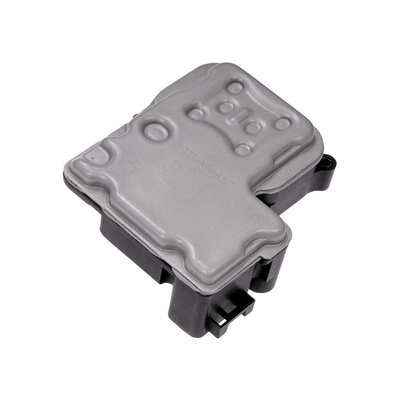
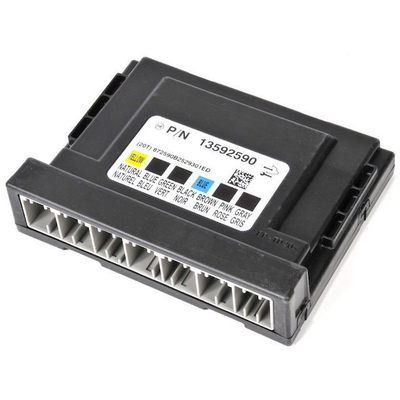
Below are the parts most often responsible for code C0569, ranked by how frequently each one is the actual culprit (per the diagnosis above). Tap any to see what we have for your vehicle.




The information in this article is provided for general reference and educational purposes only. Vehicle specifications, procedures, and part compatibility can vary by production date, trim level, and region. Always consult your vehicle's factory service manual and verify part numbers before purchasing or performing repairs. Safety-critical components such as airbags, seat belts, and braking systems should be installed by a qualified professional.
- 🧭 Diagnostic Flowchart
- 🎬 Helpful Videos
- 🛍️ Shop This Part
- What Does C0569 Mean?
- Can I Drive With C0569?
- Common Causes
- Symptoms
- Common Fixes & Costs
- DIY vs Professional
- Used vs. New Parts: Buying Guide
- What Happens If You Wait — Timeline
- Cost of Not Fixing It
- Diagnosis Steps
- When This Code Triggers (Freeze-Frame Conditions)
- Related Codes
- Climate & Environmental Factors
- How to Talk to a Mechanic About This Code
- Where to Take It: Dealer vs Independent vs Chain
- When to Walk Away From the Repair
- What Scan Tool You Need for This Code
- How to Clear the Code After You Fix It
- Will This Fail Emissions / State Inspection?
- Most Commonly Affected Vehicles
- Manufacturer-Specific Notes
- Real Owner Stories
- 2009 Chevy Silverado with C0396 & C0569
- 2008 Chevy Silverado 2500HD with persistent C0569
- 2008 Chevy Silverado 2500 with C0569:4b
- How to Prevent This Code From Triggering
- Frequently Asked Questions
- What is the difference between C0569 and C0569-4B?
- Can I just clear the C0569 code?
- Why did C0569 appear right after I replaced the transfer case motor?
- Can a weak battery cause code C0569?
- Could the 4WD selector switch on the dash be the problem?
- Is it safe to drive in the snow with code C0569?
- Should I replace the Transfer Case Control Module (TCCM) to fix C0569?
- Can I perform the 'relearn' procedure myself without a scan tool?
- What does RPO NQF mean and why is it mentioned with C0569?
- Key Takeaways
- 🎟️ Get 5% Off