

OBD-II Code C0582: Brake Booster Motor Circuit Performance
What C0582 means, why it triggers, and how to fix it
- Code C0582 indicates a critical failure in the electronic brake booster system that requires an immediate tow to a repair facility.
- Internal failure of the electro-hydraulic brake booster is the primary cause, requiring a $1,100 to $2,700 full unit replacement on most affected vehicles.
- General Motors vehicles showing C0582 as a 'History' code often only need a Brake System Control Module (BSCM) software update, covered under an 8-year/80,000-mile warranty.
- Ram 1500 trucks frequently trigger a false C0582 code due to low voltage, making a $200 battery replacement the first diagnostic step after a jump-start.
- Replacing the brake booster requires a professional bidirectional scan tool to perform a mandatory electronic ABS bleed, making this strictly a professional-level repair.
What Does C0582 Mean?
C0582 means the Brake System Control Module (BSCM) detects a serious electrical performance problem with the motor inside the electronic brake booster. This booster uses an electric motor to provide power-assisted braking. When this code appears, the computer disables the assist because it cannot guarantee safe operation.
Technical definition: The SAE/OBD-II definition is "Brake Booster Motor 'A' Phase U-V-W Circuit Range/Performance". The 'U-V-W' refers to the three electrical phases of the internal brushless motor powering the brake assist system. The module sets this code when the electrical resistance or performance of these phases falls outside the programmed operational range.
Can I Drive With C0582?
No — Do Not Drive. This code indicates a critical failure in the power brake assist system. The vehicle is unsafe to drive and requires an immediate tow to a repair facility. A failing booster causes a very hard brake pedal, significantly increased stopping distances, or a sudden and complete loss of braking ability.
Common Causes
- Internal failure of the electro-hydraulic brake booster unit. (Very Common) — The electric motor, internal electronics, or position sensor fails within the sealed booster assembly. This includes internal motor winding shorts, open circuits, or moisture contamination, requiring complete unit replacement. Manufacturer Technical Service Bulletins (TSBs) for GM and Jeep point directly to this root cause.
- Brake System Control Module (BSCM) software anomaly. (Common) — A software glitch falsely triggers the C0582 code, particularly on General Motors vehicles. GM TSB 22-NA-100 confirms that a 'History' code requires a BSCM software update rather than part replacement.
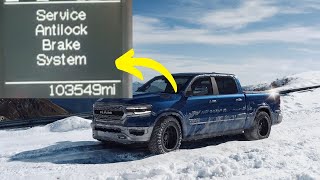
- Low vehicle voltage or failing battery. (Common) — The BSCM requires stable voltage. A weak battery or failing alternator causes voltage drops during startup, triggering a cascade of electronic fault codes including C0582, especially on Ram 1500 platforms. 🎬 Watch: Troubleshooting the service antilock brake warning on Ram trucks.
- Poor ground connection for the BSCM. (Less Common) — The electro-hydraulic brake booster draws high current. A loose or corroded ground connection causes a voltage drop and communication faults, triggering performance codes even if the booster functions perfectly.
- Damaged wiring harness or poor electrical connection. (Less Common) — Heat, vibration, or rodents damage the wiring harness connecting to the brake booster. Corrosion or pushed-out pins in the connector interrupt electrical signals.
- Sudden physical shock or impact. (Rare) — Severe impacts from potholes or road debris damage the sensitive internal electronics or motor components within the booster assembly, triggering an immediate failure.
Symptoms
- Brake, ABS, and Traction Control warning lights illuminate. — Multiple brake-related warning lights turn on simultaneously, indicating a total system fault.
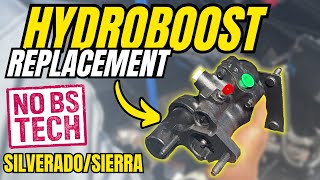
- Hard or stiff brake pedal. — The loss of power assist requires extreme leg strength to press the brake pedal 🎬 See this step-by-step guide for testing a faulty brake booster. and slow the vehicle.
- Significantly increased stopping distance. — Without brake assist, the vehicle takes much longer to stop, creating a severe safety hazard.
- Vehicle enters 'limp mode' with reduced speed. — GM and Ram trucks limit engine power and speed, displaying a 'Max Speed' warning on the dash.
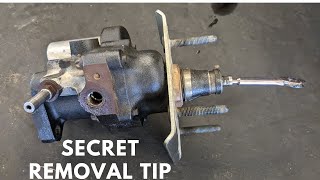
- Unusual noises from the booster area. — A grinding, clicking, or buzzing motor noise emits from the brake booster under the hood during startup or braking. 🎬 Watch: How a brake booster works and how to perform a pedal check.
- Complete loss of braking ability. — The failure occurs suddenly, causing the brake pedal to go to the floor with zero effect, leading to a crash.
Diagnostic Flowchart
Tap your situation to follow the diagnostic path that matches what you're seeing on this code.
Common Fixes & Costs
- Replace Electro-Hydraulic Brake Booster Assembly
— Parts: $600-$1500, Labor: $500-$1200, ~3.5 hr book time
(Professional)
Jeep Wagoneer/Grand Wagoneer (V8 Models): OEM Mopar 68550912AF (Alt: N/A)
Jeep Wagoneer/Grand Wagoneer (I-6 Models): OEM Mopar 68612316AC (Alt: N/A) - Reprogram Brake System Control Module (BSCM)
— Parts: $0, Labor: $100-$250, ~1.5 hr book time
(Professional)
Chevrolet Silverado / GMC Sierra 1500 (2019): OEM Software Part Numbers: 84600206, 84678461, 84701709, 84710979, 84683883 (Alt: N/A) - Replace Vehicle Battery — Parts: $150-$300, Labor: $50-$100, ~0.5 hr book time (DIY)
- Clean or Repair Main Module Ground — Parts: $5, Labor: $50-$150, ~0.8 hr book time (DIY)
- Repair Wiring Harness or Connector — Parts: $20-$100, Labor: $150-$500, ~2 hr book time (Intermediate)
Used vs. New Parts: Buying Guide
When a used part is worth it: Buying a used electro-hydraulic booster is highly discouraged due to safety risks. It only makes sense as a last resort on an older vehicle where a new part exceeds the car's value. A used part must be a low-mileage OEM unit from a non-flood, non-fire accident vehicle.
Donor-vehicle mileage cap: roughly under 50000 miles for the part to have meaningful remaining life.
Donor quality checklist:
- Verify the exact OEM part number matches; these parts are VIN-specific.
- Check the donor VIN for flood damage.
- Avoid parts from regions with heavy road salt usage.
- Inspect the electrical connector for corrosion or pushed-out pins.
Decision logic:
- If The vehicle is a modern platform (less than 10 years old) with known issues (e.g., Jeep Wagoneer). → Buy a new OEM part. The failure rate is high, and a used part carries the exact same risk.
- If A quality remanufactured part from a reputable supplier is available. → This is a good compromise, offering a better warranty than a salvage part.
- If Budget is the absolute primary concern and you accept the safety risk. → A used part from a low-mileage, documented donor vehicle is the only acceptable option.
Warranty tradeoff: Salvage yard parts offer a 30-90 day warranty covering only the part, not the $500+ labor to install it. New OEM parts include a 1-year or longer warranty.
Worst-case if a used part fails: $1000-$2800 if a used part fails, requiring repeat labor and another replacement part.
What Happens If You Wait — Timeline
- 0-1 day: Code C0582 sets, and Brake/ABS/ESC warning lights illuminate. The brake pedal becomes intermittently hard. The vehicle is unsafe. (MPG impact: 0%% · Added cost: $0)
- 1-7 days of continued driving: The brake pedal becomes consistently hard, requiring extreme leg effort. Stopping distances increase dramatically. The vehicle enters 'limp mode'. (MPG impact: 0%% · Added cost: $250+ (Cost of a tow that should have been done at Stage 1))
- Any moment: The internal failure cascades, leading to a sudden and complete loss of brake assist. The pedal goes to the floor with no braking effect. (MPG impact: 0%% · Added cost: $5,000 - $50,000+ (Cost of collision, insurance deductible, and vehicle damage))
- Post-Failure: Catastrophic failure occurs. The vehicle is disabled and likely involved in an accident due to brake failure. (MPG impact: N/A% · Added cost: Potentially limitless, including vehicle replacement and liability costs.)
Cost of Not Fixing It
- Immediate: Brake pedal becomes extremely hard to press and stopping distances increase significantly. The vehicle is unsafe to operate. (Added cost: N/A)
- Any Moment: Sudden and complete loss of braking assist, leading to a collision. (Added cost: Cost of vehicle repairs, insurance deductible, potential injury or fatality.)
- Continued Use (If Possible): Places excessive stress on other braking components due to hard and uneven pedal application. (Added cost: $500 - $2000+)
Diagnosis Steps
- Scan for DTCs and Check Code Status
Use an advanced OBD-II scanner to confirm C0582 is present. Determine if the code is 'Current' or in 'History'. For GM vehicles, a 'History' code requires a software update, not a part replacement.
Tools: Advanced OBD-II Scanner - Check for Technical Service Bulletins (TSBs)
Search for TSBs related to C0582 for your specific VIN. Jeep (TSB 9100565Rev3) and GM (TSB 22-NA-100) provide specific diagnostic paths and warranty extensions for this exact code.
Tools: Internet access / TSB database - Inspect Battery and Charging System
Test the battery and charging system to verify stable voltage above 12.5V. Low voltage, especially after a jump start, causes false module codes on modern trucks.
Tools: Multimeter, Battery Tester - Inspect the Brake Booster Wiring and Connector
Visually inspect the wiring harness leading to the electro-hydraulic brake booster for chafing, melting, or rodent damage. Unplug the connector and check for corrosion or pushed-out pins.
Tools: Flashlight - Verify Power and Ground at the Booster Connector
Using a multimeter and wiring diagram, check for proper battery voltage and ground at the brake booster connector. Perform a 'wiggle test' on the harness while monitoring voltage to find intermittent connections.
Tools: Multimeter, Wiring Diagram - Advanced: Check Module Ground Connection Resistance
Locate the main chassis ground for the BSCM. Remove the ground, clean the terminal and chassis to bare metal, and re-secure. Measure resistance between the ground terminal and a clean chassis point.
Tools: Multimeter, socket set, wire brush (Advanced) - Advanced: Test Motor Winding Phase-to-Phase Resistance
Disconnect the booster connector. Measure the resistance between the three motor phase pins (U-V, V-W, and U-W). Readings must be very low and identical. An open circuit (OL) indicates a failed internal motor winding.
Tools: Multimeter (Advanced) - Advanced: Test Motor Winding for Short-to-Ground
Test for a short circuit between each of the three motor phase pins (U, V, and W) and the vehicle's chassis ground. Any continuity confirms a short to ground within the booster motor.
Tools: Multimeter or Megohmmeter (Advanced)
When This Code Triggers (Freeze-Frame Conditions)
- Vehicle Speed: 0 mph (During power-on self-test immediately after engine start.)
- Brake Pedal Status: Applied (During a braking event, especially a panic stop where maximum assist is requested.)
- System Voltage: 10.5-12.0V (During engine cranking or with a weak battery, where low voltage triggers module faults.)
- Module State: Active/Monitoring (Sets at any time the Brake System Control Module monitors the motor circuit's performance.)
Related Codes
- C058A — Indicates 'Brake Booster Motor 'A' Position Sensor Circuit'. Appears alongside C0582 to confirm a catastrophic internal failure of the integrated booster assembly requiring full replacement.
- C058E — Indicates a general 'Electronic Brake Booster Fault'. When paired with C0582, it reinforces the diagnosis that the sealed booster unit has failed completely.
- U0415 — Indicates 'Invalid Data Received From Anti-Lock Brake System Control Module'. A secondary code set when the failing brake module stops communicating valid data over the CAN bus.
- C05B0 — Indicates 'Brake Booster Pressure Sensor Circuit'. Falsely sets on GM vehicles if caliper pistons are reseated improperly during brake service.
Climate & Environmental Factors
- Cold Weather / Freezing Temperatures: Moisture intrusion into the booster or connectors freezes, causing physical damage or electrical connection issues that trigger performance codes.
- High Humidity / Water Ingress: High humidity and direct water exposure corrode electrical connectors and module circuit boards, creating unwanted resistance that triggers C0582.
How to Talk to a Mechanic About This Code
Say this: "I have a C0582 code and a 'Service Brake Assist' light on my [Vehicle Make/Model]. I'd like to schedule a diagnostic. Please check for any relevant TSBs, like the one for GM history codes, and verify the battery and module ground before quoting a full booster replacement."
This directs the shop to perform cost-effective diagnostic steps (checking software, grounds, battery) instead of defaulting to a $2,000 booster replacement. It shows you understand the common failure patterns.
Avoid saying:
- 'My brake light is on, can you just fix it?'
- 'The car feels weird when I brake.'
- 'Just do whatever you think is necessary.'
Questions to ask before authorizing the repair:
- Was the code 'Current' or in 'History'?
- Did you find any Technical Service Bulletins for this code on my VIN?
- What were the results of the battery load test and the ground resistance check?
- If you recommend a booster replacement, what were the motor winding resistance readings?
- Does the estimate include the mandatory electronic ABS bleed procedure?
- What is the warranty on the replacement part and the labor?
Where to Take It: Dealer vs Independent vs Chain
- Dealer:
Highly Recommended. The dealer is the best choice due to the safety-critical nature of the repair, the prevalence of TSBs, and the need for specialized ABS bleed tools.
Best for: Vehicles under warranty or covered by a special policy (like GM's TSB 22-NA-100)., Complex manufacturer-specific issues, like the known Jeep Wagoneer booster failures., Repairs requiring proprietary software for programming new modules.
Downsides: Significantly higher labor rates and parts costs., Quicker to replace an entire assembly rather than perform component-level diagnosis. (Typical cost: +40% vs. baseline) - Independent Shop:
Acceptable with Caution. Only use a top-tier independent shop equipped with advanced diagnostic equipment. Confirm they can perform an 'ABS automated bleed' before committing.
Best for: Out-of-warranty vehicles where cost is a major factor., Shops you have a trusted, long-term relationship with.
Downsides: Must have access to TSB databases and a professional bidirectional scan tool capable of performing an ABS bleed., Lacks the ability to perform manufacturer-specific software updates (e.g., for GM history codes). (Typical cost: +0% vs. baseline) - Chain Shop:
Not Recommended. This is a complex, safety-critical repair far outside the scope of a typical chain repair shop.
Best for: Simple, routine maintenance like oil changes and basic brake pad swaps.
Downsides: Technicians lack specialized training for complex electronic diagnostics., Lacks the required scan tools for module programming or ABS bleeding. (Typical cost: -10% vs. baseline)
When to Walk Away From the Repair
If the estimated repair cost for C0582 (typically $1,500-$3,000) exceeds 50% of your car's private-party market value, consider selling the vehicle as-is.
- Car worth $25000, fix is $2500: Fix it. The repair cost is well under the 50% threshold and restores a critical safety function.
- Car worth $6000, fix is $3000: Borderline. This is exactly at the 50% threshold. If the car is otherwise in excellent condition, fixing it is worthwhile. Get a second opinion.
- Car worth $4000, fix is $3000: Walk away. The repair cost is 75% of the car's value. Sell the car as a 'mechanic special' with full disclosure.
What Scan Tool You Need for This Code
Minimum: A scanner that reads Chassis (C) / ABS fault codes and distinguishes between 'Current' and 'History' status. Basic engine-only code readers will NOT see this code.
A cheap $20 scanner only reads Powertrain (P) codes. You must access the ABS module. Knowing if the code is 'Current' or 'History' is critical for GM diagnosis.
Rent vs buy: Rent a scanner for initial diagnosis to confirm the code. If you replace the booster yourself, you MUST buy a mid-range scanner with the ABS bleed capability.
How to Clear the Code After You Fix It
- Perform required mechanical repairs (e.g., replace booster).
- Perform mandatory electronic ABS bleed procedure using a professional bidirectional scan tool.
- Use an OBD-II scan tool to clear the chassis fault codes.
- Perform a drive cycle to confirm the fix and allow the system to self-test.
Drive cycle (~20 minutes): Perform a short test drive including several complete stops from 25-30 mph to verify normal brake feel. Drive for 20 minutes in stop-and-go traffic to allow the system to run internal diagnostics.
Readiness monitors affected: This is a Chassis (C) code and does not affect emissions-related readiness monitors.
Watch out for:
- The code reappears instantly if the underlying electrical or mechanical fault remains.
- Skipping the mandatory electronic ABS bleed procedure results in a spongy or non-functional brake pedal.
- Clearing the code without diagnosis is extremely dangerous and does not fix the problem.
Will This Fail Emissions / State Inspection?
No — by itself this code doesn't fail OBD inspection (but it can keep readiness monitors from setting, which causes a separate fail).
- California: An illuminated ABS/Brake light does not fail the emissions (smog) test. However, shops refuse to inspect vehicles with obvious safety defects.
- New York: New York performs an annual safety inspection. An illuminated ABS/Brake warning light results in an automatic failure.
- Texas: Texas requires an annual safety inspection. An illuminated warning light for the ABS or base brake system results in a failure.
Most Commonly Affected Vehicles
- Jeep Grand Wagoneer / Wagoneer (2022-2025) — Highly prone to internal failure of the electro-hydraulic brake booster, subject to TSB 9100565Rev3 and a class-action investigation for sudden brake failure.
- Chevrolet Silverado 1500 (2019-2023) — Known for Electronic Brake Control Module (EBCM) issues. Recall 19V889000 addresses software errors causing brake system warnings.
- Cadillac XT5, XT6 (2022) — Affected by a BSCM software anomaly. GM TSB 22-NA-100 recommends a reprogram for 'History' codes and replacement for 'Current' codes.
- Chevrolet Blazer (2022) — Covered under GM TSB 22-NA-100 for a BSCM software issue fixed via reprogramming if the code is in history.
- GMC Acadia (2022) — Included in GM TSB 22-NA-100 for the BSCM software anomaly causing C0582.
- Ram 1500 (2019-2024) — Highly sensitive to low battery voltage, triggering C0582 and limp mode immediately after a battery dies or is jump-started.
- Ford F-150, Expedition, Bronco, Ranger (2025) — Recall 25V823000 addresses an Electronic Brake Booster (EBB) module malfunction causing a loss of power brake assist.
- Volkswagen ID.4 (2021-2024) — Uses the ZF eBooster system, which experiences internal electro-mechanical failures triggering C0582.
Manufacturer-Specific Notes
- General Motors (Chevrolet, GMC, Cadillac): GM TSB 22-NA-100 dictates that a 'History' C0582 code requires a BSCM reprogram, while a 'Current' code requires full booster replacement. Reprogramming is covered under an 8-year/80,000-mile warranty.
- Stellantis (Jeep): On 2022-2025 Wagoneer models, C0582 indicates a critical internal booster failure. TSB 9100565Rev3 confirms this widespread issue, which sparked a class-action investigation for sudden brake failure.
- Stellantis (Ram): On 2019-2024 Ram 1500 trucks, a dead battery triggers a flood of brake fault codes and limp mode. Replacing the battery and clearing codes resolves the issue without replacing brake components.
- Ford: Recall 25V823000 for 2025 models addresses an Electronic Brake Booster (EBB) module malfunction presenting the exact symptoms associated with code C0582.
- General Motors (Chevrolet/GMC): Recall 19V889000 addresses a software error on 2019 Silverado/Sierra trucks that disables ABS and ESC without warning. The fix is an EBCM reprogram.
Real Owner Stories
2022 Jeep Grand Wagoneer with ~15,000 miles
While driving normally, multiple brake warning lights illuminated, the pedal became extremely hard to press, and stopping ability vanished.
What they tried:
- The owner immediately pulled over and towed the vehicle to the dealership.
Outcome: The dealership diagnosed a failed electro-hydraulic brake booster via code C0582. They replaced the entire unit under warranty per Jeep TSB 9100565Rev3, resolving the issue.
Lesson: This is the textbook failure for C0582 on the Wagoneer platform. Do not attempt to drive the vehicle; tow it for professional repair.
2022 Chevrolet Blazer with C0582 in 'History'
The 'Service Brake Assist' lights illuminated briefly and disappeared. Code C0582 stored in the computer's 'History' memory.
What they tried:
- A shop quoted a $2,000 replacement of the brake booster assembly based on the code.
Outcome: The owner referenced GM TSB 22-NA-100, which dictates a BSCM software update for 'History' codes. The dealership performed the update under the 8-year/80,000-mile warranty, solving the problem with zero parts replaced.
Lesson: Always verify if a code is 'Current' or 'History'. A history code for C0582 on GM vehicles points to a software glitch, saving thousands in unnecessary repairs.
2019 Ram 1500 after a dead battery
After jump-starting a dead battery, the dashboard displayed 'Service Brake System' warnings, the truck entered limp mode, and code C0582 appeared.
What they tried:
- The owner assumed the expensive eBooster failed.
Outcome: The owner replaced the aging battery with a fully charged unit and cleared the fault codes. All warnings disappeared permanently. The brake booster was perfectly fine.
Lesson: On voltage-sensitive vehicles like the Ram 1500, always replace a weak battery before condemning the brake booster.
How to Prevent This Code From Triggering
- Perform regular brake fluid flushes. (Every 2 years or 30,000 miles.) — Brake fluid absorbs moisture over time, corroding the sensitive internal electronics of the electro-hydraulic booster and causing premature failure.
- Maintain a healthy battery and charging system. (Test battery annually after 3 years of service.) — A weak battery causes voltage drops during startup, triggering false C0582 codes and stressing the control module electronics.
- Inspect and clean main electrical grounds. (During major services or if electrical issues arise.) — A corroded chassis ground increases electrical resistance, causing voltage drops and control module errors.
- Avoid driving through high water. (Daily habit.) — Submerging the brake booster forces water into connectors, leading to corrosion and electrical shorts that trigger circuit performance codes.
Frequently Asked Questions
Can I just clear the C0582 code and keep driving?
No. This is a critical safety code indicating a compromised brake system. Even if the warning light turns off temporarily, you risk a sudden loss of braking power. The vehicle requires immediate professional diagnosis.
What are common misdiagnosis mistakes for C0582?
The most common mistake is replacing the brake booster on GM vehicles when the code is stored in 'History', which only requires a software update. Another error is failing to test the battery and module ground, as low voltage mimics a failed booster.
Why is the repair for C0582 so expensive?
The electro-hydraulic brake booster is a complex, sealed unit containing an electric motor, hydraulic components, and control electronics. The part costs between $600 and $1500, and installation requires labor-intensive mechanical work plus a mandatory electronic ABS bleed.
Is this a DIY repair?
No. Replacing the booster requires a professional bidirectional scan tool to perform a mandatory electronic ABS bleed procedure. Skipping this step results in a spongy pedal or complete brake failure.
My brake pedal feels fine, but the light is on. Is it still serious?
Yes. The failure often starts intermittently before progressing to a total loss of assist. The warning light means the computer detects a fault that causes sudden brake failure at any time.
Can hitting a pothole cause code C0582?
Yes. Severe physical shocks damage the sensitive internal motor or electronics of the booster assembly, triggering the fault.
Could a bad fuse cause code C0582?
A blown fuse causes a complete loss of power, whereas C0582 specifically points to a performance or circuit range issue within the motor itself. While rare, checking related fuses remains a necessary first diagnostic step.
Can a dead battery or jump-start cause C0582?
Yes, particularly on Ram 1500 trucks. Low voltage during startup causes communication errors between modules, triggering false fault codes like C0582.
Key Takeaways
- Code C0582 indicates a critical failure in the electronic brake booster system that requires an immediate tow to a repair facility.
- Internal failure of the electro-hydraulic brake booster is the primary cause, requiring a $1,100 to $2,700 full unit replacement on most affected vehicles.
- General Motors vehicles showing C0582 as a 'History' code often only need a Brake System Control Module (BSCM) software update, covered under an 8-year/80,000-mile warranty.
- Ram 1500 trucks frequently trigger a false C0582 code due to low voltage, making a $200 battery replacement the first diagnostic step after a jump-start.
- Replacing the brake booster requires a professional bidirectional scan tool to perform a mandatory electronic ABS bleed, making this strictly a professional-level repair.
Helpful Videos

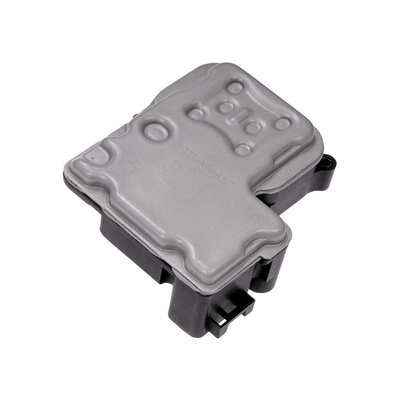
Shop the Parts Behind C0582
Below are the parts most often responsible for code C0582, ranked by how frequently each one is the actual culprit (per the diagnosis above). Tap any to see what we have for your vehicle.



The information in this article is provided for general reference and educational purposes only. Vehicle specifications, procedures, and part compatibility can vary by production date, trim level, and region. Always consult your vehicle's factory service manual and verify part numbers before purchasing or performing repairs. Safety-critical components such as airbags, seat belts, and braking systems should be installed by a qualified professional.
- 🧭 Diagnostic Flowchart
- 🎬 Helpful Videos
- 🛍️ Shop This Part
- What Does C0582 Mean?
- Can I Drive With C0582?
- Common Causes
- Symptoms
- Common Fixes & Costs
- Used vs. New Parts: Buying Guide
- What Happens If You Wait — Timeline
- Cost of Not Fixing It
- Diagnosis Steps
- When This Code Triggers (Freeze-Frame Conditions)
- Related Codes
- Climate & Environmental Factors
- How to Talk to a Mechanic About This Code
- Where to Take It: Dealer vs Independent vs Chain
- When to Walk Away From the Repair
- What Scan Tool You Need for This Code
- How to Clear the Code After You Fix It
- Will This Fail Emissions / State Inspection?
- Most Commonly Affected Vehicles
- Manufacturer-Specific Notes
- Real Owner Stories
- 2022 Jeep Grand Wagoneer with ~15,000 miles
- 2022 Chevrolet Blazer with C0582 in 'History'
- 2019 Ram 1500 after a dead battery
- How to Prevent This Code From Triggering
- Frequently Asked Questions
- Can I just clear the C0582 code and keep driving?
- What are common misdiagnosis mistakes for C0582?
- Why is the repair for C0582 so expensive?
- Is this a DIY repair?
- My brake pedal feels fine, but the light is on. Is it still serious?
- Can hitting a pothole cause code C0582?
- Could a bad fuse cause code C0582?
- Can a dead battery or jump-start cause C0582?
- Key Takeaways
- 🎟️ Get 5% Off