

OBD-II Code C0594: Brake Booster Motor or Suspension Actuator Fault
The Ultimate Guide to C0594: What it means, why it triggers, and how to fix it for good
What Does C0594 Mean?
Code C0594 is a chassis code with two distinct meanings. On Toyota, Ford, and VW vehicles, it indicates a performance failure of the electric motor in the power brake booster. On GM vehicles with active suspension, it points to an electrical circuit fault in the right rear shock absorber actuator.
Technical definition: The SAE definition is "Brake Booster Motor 'A' Performance". The responsible control module detects the electric motor generating hydraulic brake pressure is failing. On Toyota systems, this triggers when the motor runs continuously for over 178 seconds attempting to build pressure against an internal leak.
Can I Drive With C0594?
No — Do Not Drive. Driving is strongly discouraged. If the fault is brake-related, your stopping power is severely compromised, and stopping distances increase by 50% or more. If suspension-related, vehicle stability is unpredictable during emergency maneuvers. Tow the vehicle to a repair facility immediately.
Common Causes
- Failing Electronic Brake Booster / Actuator Assembly (Very Common) — The most frequent cause on Toyota hybrids and RAV4s. The assembly develops an internal hydraulic leak, forcing the motor to run constantly to compensate for pressure loss until it triggers the code.
- Faulty Right Rear Shock Absorber Solenoid (Very Common) — On GM vehicles with Magnetic Ride Control (F55), the solenoid integrated into the right rear shock absorber fails electrically, developing an open or short circuit.
- Damaged Wiring or Poor Electrical Connection (Common) — The wiring harness to the component becomes frayed, corroded, or melted. On 2021-2023 Ford F-150s, the rear axle wiring harness chafes against the axle housing, causing a short.
- Failed Brake Booster Pressure Sensor (G294) (Common) — On VW and Audi models, the sensor measuring brake booster pressure fails and sends incorrect data, causing the pump motor to run excessively and triggering a hard pedal.
- Weak or Failing 12V Battery (Less Common) — Electronic brake boosters require stable voltage. A weak battery causes a severe voltage drop during engine start-up, forcing the brake control module to fault and log performance codes.
- Leaking Vacuum Hoses or Check Valve (Less Common) — On systems using a traditional vacuum booster assisted by an electric pump, a cracked vacuum hose or failed one-way check valve causes a loss of assist.
- Contaminated Brake Fluid (Less Common) — Old, moisture-contaminated brake fluid degrades internal seals in the ABS/actuator assembly over time, directly causing the internal leaks that trigger this code.
- Faulty Control Module (Rare) — The ABS or suspension control module fails internally. Consider this only after thoroughly ruling out wiring, battery voltage, and the component itself.
Symptoms
- Brake, ABS, and Traction Control Warning Lights — The dashboard illuminates with multiple warnings related to braking and stability systems, indicating a critical safety fault.
- Hard or Spongy Brake Pedal — Power assist is lost. The pedal feels extremely hard to press, and stopping distances increase dramatically.
- "Service Suspension System" Message — GM vehicles display a "Service Ride Control" message and limit top speed to 80 MPH as a safety precaution.
- Brake Booster Pump Runs Constantly — A distinct buzzing or humming sound emits from the engine bay that does not stop, indicating the electric motor is failing to reach target pressure.
- Brake Pedal Kicks Back on Startup — A momentary kick or pulse in the brake pedal during engine start indicates the system is resetting due to a low voltage condition.
Common Fixes & Costs
- Replace Brake Booster / Actuator Assembly 🎬 Watch: This walkthrough shows the easiest way to replace the actuator. — Parts: $1000-$1800, Labor: $500-$800, ~4.5 hr book time (Professional)
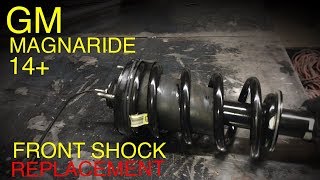
- Replace Right Rear Active Suspension Shock Absorber 🎬 Watch: A step-by-step guide to replacing GM Magnetic Ride shocks. — Parts: $350-$600, Labor: $150-$300, ~1.5 hr book time (Intermediate)
- Repair Damaged Wiring Harness — Parts: $20-$50, Labor: $150-$300, ~1.5 hr book time (Intermediate)
- Replace Brake Booster Pressure Sensor (G294) — Parts: $40-$120, Labor: $100-$200, ~1.0 hr book time (Beginner)
- Convert Active Suspension to Standard Shocks — Parts: $300-$800, Labor: $200-$400, ~2.5 hr book time (Intermediate)
Used vs. New Parts: Buying Guide
When a used part is worth it: A used GM active suspension shock is cost-effective for older cars. Buying a used Toyota brake actuator is strongly discouraged due to high failure rates and expensive labor.
Donor-vehicle mileage cap: roughly under 60000 miles for the part to have meaningful remaining life.
Donor quality checklist:
- Verify the part number matches exactly.
- Check shocks for fluid leakage.
- Avoid donors from flood-damaged or rust-belt vehicles.
Decision logic:
- If The failed part is a Toyota/Lexus brake actuator assembly. → Buy a new OEM part. The risk of a used part failing and requiring repeat labor is too high.
- If The failed part is a GM active shock and the vehicle is over 10 years old. → A tested, used part with a warranty is reasonable. Alternatively, convert to standard shocks.
- If The part is safety-critical and labor is expensive. → Favor new OEM or high-quality aftermarket parts.
Warranty tradeoff: Used parts offer 30-90 day warranties. New aftermarket parts offer 1-year to lifetime warranties. New OEM parts carry 12-month/12,000-mile warranties.
Worst-case if a used part fails: $600-$1200 (Cost of repeat labor plus another replacement part).
What Happens If You Wait — Timeline
- 0-2 months: For a Toyota brake fault, the internal leak begins. The brake booster pump runs every few minutes to maintain pressure. No warning lights illuminate yet. (MPG impact: 0%% · Added cost: $0)
- 2-6 months: The leak worsens. The pump runs every 30-60 seconds. Motor runtime exceeds 178 seconds, triggering C0594 and illuminating ABS/Brake lights. Brake feel remains normal. (MPG impact: 0%% · Added cost: $150 (Diagnostic fee))
- 6-9 months: The constantly running pump motor begins to overheat. The system cannot reliably maintain pressure, causing a spongy pedal and increased stopping distances. (MPG impact: 0%% · Added cost: $1500-$2500 (Actuator replacement is now mandatory))
- 9+ months: Complete failure. The pump motor burns out. All power brake assist is lost, the pedal becomes rock hard, and the vehicle is entirely unsafe to drive. (MPG impact: 0%% · Added cost: Cost of an accident due to brake failure.)
Cost of Not Fixing It
- Immediate: Severe risk of an accident due to a hard brake pedal and dramatically increased stopping distance, or loss of control during an emergency maneuver. (Added cost: Cost of an accident.)
- Days to Weeks: A constantly running brake booster motor overheats and burns out completely, guaranteeing a total loss of power assist. (Added cost: $0 (The component has already failed).)
- 1+ Month: Driving with a failed suspension shock accelerates wear on tires and other suspension components. (Added cost: $200-$800 (Tire replacement, secondary suspension wear).)
Diagnosis Steps
- Identify the Affected System via Vehicle Make
Determine if the code refers to brakes or suspension. Toyota, Ford, Lexus, or VW/Audi indicate a brake booster fault. GM vehicles with 'Magnetic Ride Control' indicate a right rear shock actuator fault.
Tools: Owner's Manual (Beginner) - Check for Related Recalls and TSBs
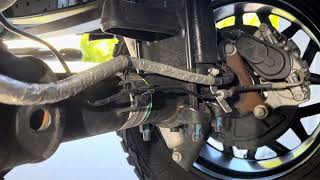
Search your VIN for open recalls. Ford issued recall 23S35 🎬 See this video for details on the Ford F-150 wiring recall. for the F-150 wiring harness, and Toyota issued warranty extension ZJB for failing Prius brake actuators. This often provides a free, definitive fix.
Tools: Internet Access, VIN (Beginner) - Scan for All Codes and Monitor Live Data
Use a bi-directional scan tool to read codes from all modules. Look for C1391 (Accumulator Leak) on Toyotas or low voltage codes. Monitor the brake booster pressure sensor or suspension solenoid status.
Tools: Bi-Directional Scan Tool (Intermediate) - Visual Inspection of Components and Wiring
Inspect the brake booster and fluid reservoir for leaks. For GM, inspect the right rear shock absorber's electrical connector. Trace the wiring harness for chafing, melting, or corrosion, especially on the Ford F-150 rear axle.
Tools: Flashlight, Jack, Jack Stands (Beginner) - Perform a Basic Brake Booster Functional Test
With the engine off, pump the brake pedal 5-6 times until hard. Hold firm pressure and start the engine. The pedal should drop slightly (about an inch). If it pushes back or does not move, the booster is failing.
Tools: None (Beginner) - [PRO TIP] Test the Toyota Accumulator Pressure Sensor
For Toyota/Lexus hybrids, monitor the live data PID 'ACC PRESS SENS 1'. With the car in Ready mode and no brake applied, voltage should be 3.2V-4.0V. If voltage drops steadily below 3.2V within 60 seconds of the pump stopping, the actuator has an internal leak.
Tools: Bi-Directional Scan Tool (Advanced) - [PRO TIP] Test the GM Shock Actuator Circuit
Disconnect the right rear shock connector. Measure resistance between the two pins on the shock actuator. A healthy actuator reads 5-15 ohms. 'OL' (open) or near zero (short) confirms a failed shock.
Tools: Multimeter (Advanced) - Perform Scan Tool Active Tests
Command the booster motor to run and watch pressure sensor data build. For GM, command the specific shock solenoid to activate and listen for a click. This confirms component response.
Tools: Bi-Directional Scan Tool (Advanced) - Measure Brake Booster Motor Current Draw
Clamp an ammeter around the main power wire for the brake booster motor. A healthy motor draws 20-40A peak. Unusually high draw indicates a seized motor; zero draw indicates an open circuit.
Tools: Clamp-On Ammeter, Bi-Directional Scan Tool (Advanced)
When This Code Triggers (Freeze-Frame Conditions)
- Vehicle Speed: 0-25 MPH (Brake booster faults often trigger at low speeds or when stationary, as the pump runs to compensate for pressure loss during repeated braking.)
- System Voltage: 11.5-14.5V (Values near the low end (especially during startup) indicate a weak battery contributing to module voltage drops and false codes.)
- Brake Pedal Status: Applied or Released (The code sets while the pedal is applied if the motor cannot meet demand, or after release if the pump runs continuously due to a leak.)
- Engine RPM: 0 (EV mode) or 650-800 (Idle) (The control module monitors motor runtime constantly, allowing the code to set even with the engine off in 'Ready' mode.)
Related Codes
- C1391 — On Toyota/Lexus, C1391 ('Abnormal Leak in Accumulator') is the root cause of C0594. C1391 identifies the leak, while C0594 reports the pump running too long to compensate.
- C1252 / C1253 / C1256 — Toyota codes that accompany C1391 and C0594. They indicate Pump Motor Fault, Relay Fault, and Low Accumulator Pressure, all pointing to actuator assembly failure.
- P1479 / P050F — On VW/Audi, P1479 appears with the G294 sensor issue. On Fords, P050F logs for similar booster performance issues.
- C006C — A generic 'Stability System' fault. Triggered because a primary fault in the brakes (C0594) disables stability control for safety. Fix C0594 to clear this.
Climate & Environmental Factors
- High Humidity: Brake fluid absorbs moisture rapidly in humid climates. Water contamination lowers the boiling point and degrades corrosion inhibitors, destroying the delicate internal seals of the brake actuator assembly.
- Cold Climates / Road Salt: Road salt accelerates galvanic corrosion on undercarriage wiring harnesses and connectors. This is the primary catalyst for the Ford F-150 rear axle harness failure.
- Extreme Cold: Cold temperatures severely reduce battery cranking power. The resulting voltage drop during startup causes the brake control module to glitch, logging false codes and causing pedal kickback.
How to Clear the Code After You Fix It
- Use a bi-directional scan tool to perform required calibration or bleeding procedures (e.g., Toyota brake bleed).
- Use a scan tool to clear the fault codes from the ABS/Chassis control module.
- Perform a complete drive cycle to allow vehicle systems to self-test.
Drive cycle (~20 minutes): Idle for 2-3 minutes. Drive in mixed city/highway conditions, including acceleration, deceleration, and steady cruising above 40 MPH. Perform several normal stops. For suspension faults, drive over varied road surfaces.
Readiness monitors affected: Chassis codes do not directly affect emissions readiness monitors.
Watch out for:
- Failing to perform the scan-tool-guided brake bleed on Toyota/Lexus systems results in a spongy pedal and immediate return of fault codes.
- Clearing the code without fixing the mechanical fault causes the code to return immediately.
- Disconnecting the battery will not reliably clear ABS codes.
Will This Fail Emissions / State Inspection?
No — by itself this code doesn't fail OBD inspection (but it can keep readiness monitors from setting, which causes a separate fail).
- California: C0594 will not fail a smog inspection, but it will fail a 'Brake and Lamp' or vehicle safety inspection required for revived salvage vehicles.
- New York: An illuminated ABS or Brake warning light is an automatic failure for the safety portion of the NYS inspection.
- Texas: An inspector will fail the safety portion of the inspection if the service brake system has a visible warning light on.
Most Commonly Affected Vehicles
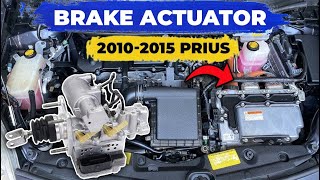
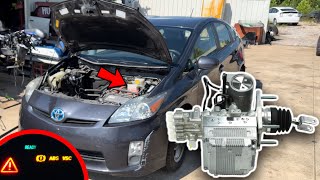
- Toyota Prius (2010-2015) — Extremely common failure of the brake actuator assembly, triggering C0594 and C1391. Toyota issued warranty enhancement program ZJB for this issue.
- Ford F-150 (2021-2023) — Susceptible to a chafing rear axle wiring harness. Recall 23S35 addresses this issue, which causes the electric parking brake to engage unexpectedly.
- Chevrolet Corvette (C5) (2003-2004) — On models with F55 Magnetic Selective Ride Control, C0594 exclusively indicates a fault in the right rear shock absorber actuator circuit.
- Toyota RAV4 / RAV4 Hybrid (2019-2025) — Prone to brake booster pump failures where the motor runs over 178 seconds, setting the C0594 code.
- Ford Bronco (2021-2025) — Shares the electronic brake booster system with the F-150 and is subject to recalls for sudden loss of power brake assist.
- Volkswagen Touareg (2004-2010) — Commonly experiences faults with the brake booster pressure sensor (G294) located in the plenum chamber.
- Audi Q7 (2007-2010) — Often suffers from a failed brake booster pressure sensor (G294), leading to a hard brake pedal and multiple warning lights.
- Honda CR-V (2017-2022) — Electronic brake boosters are highly sensitive to low battery voltage, causing pedal kickback on startup and logging related low-voltage codes.
Manufacturer-Specific Notes
- General Motors: GM uses C0594 exclusively for the active suspension system (Magnetic Ride Control), pointing to the right rear shock actuator circuit, not the brakes.
- Toyota: The Skid Control ECU sets C0594 if the brake booster pump motor runs continuously for more than 178 seconds. This specific threshold is hardcoded into the software.
- Ford: On 2021-2023 F-150s, the rear axle wiring harness rubs against the axle housing, causing a short that triggers chassis codes. Covered under recall 23S35.
- Volkswagen / Audi: A hard brake pedal with ABS/ESP lights is frequently caused by the failure of a single, inexpensive part: the G294 brake booster pressure sensor.
Real Owner Stories
2010 Toyota Prius at 150K miles
The owner noticed the brake pump running every 30 seconds with the car in 'Ready' mode. Eventually, the ABS, Brake, and VSC lights illuminated with code C1256.
Outcome: The owner replaced the actuator with a new OEM part. The issue was resolved permanently.
Lesson: A constantly cycling brake pump is the definitive early warning sign of Prius actuator failure. Always use a new OEM actuator to avoid paying high labor costs twice.
2022 Ford F-150 with low mileage
The truck's electric parking brake engaged unexpectedly while backing up, violently stopping the vehicle.
Outcome: The dealer found the rear axle wiring harness had chafed against the housing. The harness was repaired and wrapped with protective tape at no cost.
Lesson: Always check your VIN for recalls before paying for diagnostics. A known wiring issue causes unexpected braking events and triggers chassis codes on newer F-150s.
2005 Chevrolet Corvette C6 with F55 Suspension
The owner received a 'Service Ride Control' message and was quoted over $4,000 to replace leaking OEM F55 shocks.
Outcome: The owner replaced the failed F55 shocks with high-performance Bilstein passive shocks and had the Body Control Module reprogrammed to delete the F55 option, saving thousands.
Lesson: A 'Service Ride Control' message does not mandate a multi-thousand dollar OEM repair. Converting to passive shocks is a safe, cost-effective, and popular solution.
2008 Toyota Prius with 208K miles
A 'barking' sound developed when pressing the brake pedal, without any warning lights on the dash.
Outcome: The owner replaced the actuator assembly and performed a scan-tool-guided brake bleed, preventing sudden brake failure.
Lesson: Unusual barking or groaning noises from the brake system are early signs of actuator failure. Investigate immediately before total loss of braking power occurs.
How to Prevent This Code From Triggering
- Perform a brake fluid flush every 2 years or 30,000 miles. (Every 24 months) — Brake fluid absorbs moisture, which corrodes the delicate internal seals of the brake actuator assembly and causes the internal leaks that trigger C0594.
- Apply dielectric grease to vulnerable electrical connectors. (During any related service) — Seals out moisture on under-vehicle connectors (like GM shocks or Ford axles) and prevents the pin corrosion that leads to short circuits.
- Inspect and clean underbody wiring harnesses. (Annually) — Catches chafing or corrosion before it causes a short. Cleaning away road salt reduces the risk of galvanic corrosion.
- Ensure the 12V battery is healthy and terminals are clean. (Annually) — Electronic brake boosters require stable voltage. A weak battery causes control module glitches during startup, logging erroneous fault codes.
Frequently Asked Questions
Can I still drive my car with a C0594 code?
No, it is not safe. A brake-related fault severely increases stopping distance, while a suspension fault makes the vehicle unstable during sudden maneuvers. Tow the vehicle to a repair facility immediately.
Why does the code say 'Brake Booster Motor' if the problem is my suspension?
The official SAE J2012 definition for C0594 is for the brake booster motor. However, manufacturers can assign this chassis code to specific systems. GM uses C0594 exclusively for the right rear shock solenoid circuit on active suspension vehicles.
What is the difference between C0594 and C1391 on my Toyota Prius?
They point to the exact same problem. C1391 identifies an 'Abnormal Leak in Accumulator,' which is the root cause. C0594 triggers when the brake booster motor runs too long trying to overcome that leak.
What are the most common misdiagnosis mistakes for C0594?
The biggest mistake is replacing an expensive ABS module or brake actuator without ruling out simpler causes. Always test the 12V battery and thoroughly inspect wiring harnesses for damage. Check your VIN for related TSBs or recalls, like the Ford F-150 rear axle harness issue.
My brake pedal kicks back when I start the car, is this related to C0594?
This is a known symptom on vehicles with electronic brake boosters, like certain Hondas. A weak battery causes a voltage drop during startup, forcing the brake booster control unit to reset and physically kick the pedal. Test your battery and charging system before suspecting a booster failure.
Can I just replace the motor on my Toyota brake actuator?
No, the motor, pump, and accumulator are integrated into a single, non-serviceable assembly. The failure is almost always an internal leak within the accumulator or valving, not just the motor itself. You must replace the entire brake actuator assembly as a unit.
What is Ford Recall 23S35 and is it related to C0594?
Ford recall 23S35 covers 2021-2023 F-150s where the rear axle wiring harness rubs against the axle housing and shorts out. This causes the electric parking brake to engage unexpectedly and triggers various chassis codes, including C0594. A dealer will inspect, protect, and replace the harness for free.
Helpful Videos

Shop the Parts Behind C0594
Below are the parts most often responsible for code C0594, ranked by how frequently each one is the actual culprit (per the diagnosis above). Tap any to see what we have for your vehicle.


The information in this article is provided for general reference and educational purposes only. Vehicle specifications, procedures, and part compatibility can vary by production date, trim level, and region. Always consult your vehicle's factory service manual and verify part numbers before purchasing or performing repairs. Safety-critical components such as airbags, seat belts, and braking systems should be installed by a qualified professional.
- 🎬 Helpful Videos
- 🛍️ Shop This Part
- What Does C0594 Mean?
- Can I Drive With C0594?
- Common Causes
- Symptoms
- Common Fixes & Costs
- Used vs. New Parts: Buying Guide
- What Happens If You Wait — Timeline
- Cost of Not Fixing It
- Diagnosis Steps
- When This Code Triggers (Freeze-Frame Conditions)
- Related Codes
- Climate & Environmental Factors
- How to Clear the Code After You Fix It
- Will This Fail Emissions / State Inspection?
- Most Commonly Affected Vehicles
- Manufacturer-Specific Notes
- Real Owner Stories
- 2010 Toyota Prius at 150K miles
- 2022 Ford F-150 with low mileage
- 2005 Chevrolet Corvette C6 with F55 Suspension
- 2008 Toyota Prius with 208K miles
- How to Prevent This Code From Triggering
- Frequently Asked Questions
- Can I still drive my car with a C0594 code?
- Why does the code say 'Brake Booster Motor' if the problem is my suspension?
- What is the difference between C0594 and C1391 on my Toyota Prius?
- What are the most common misdiagnosis mistakes for C0594?
- My brake pedal kicks back when I start the car, is this related to C0594?
- Can I just replace the motor on my Toyota brake actuator?
- What is Ford Recall 23S35 and is it related to C0594?
- 🎟️ Get 5% Off