

OBD-II Code C0595: Brake Booster Performance Fault
The Ultimate Guide: What C0595 means, why it triggers, and how to fix it
What Does C0595 Mean?
Code C0595 means the Brake System Control Module (BSCM) detected a performance failure in the electronic brake booster's internal power circuit. This circuit provides power assist for braking. When triggered, power assist disables, resulting in a very hard brake pedal.
Technical definition: The SAE/ISO definition is "Brake Booster Internal Power Driver Range/Performance". The control module detected the voltage, current, or performance of the electronic brake booster's internal driver circuit operating outside its expected range.
Can I Drive With C0595?
Yes, But With Caution. Yes, but only for a short trip to a repair facility. The brake system enters a 'Push-Thru' failsafe mode, disabling power assist. You must apply 30-50% more force to the brake pedal, and stopping distances increase significantly, creating a serious safety hazard.
Common Causes
- Software or Calibration Error (GM Vehicles) (Very Common) — On 2019+ GM vehicles, a Brake System Control Module (BSCM) software anomaly incorrectly calculates solenoid temperatures, falsely triggering the code. A dealer software update is the only fix.
- Poor Power Supply or Ground Connection (Common) — The e-booster requires high current. A weak battery, failing alternator, or corroded ground drops voltage below the 9.5V threshold during operation, triggering the code.
- Intermittent Brake Light Switch (Common) — A faulty brake light switch sends erratic signals to the control module, falsely indicating a booster performance issue. This is a heavily documented failure on Subaru and Nissan models.
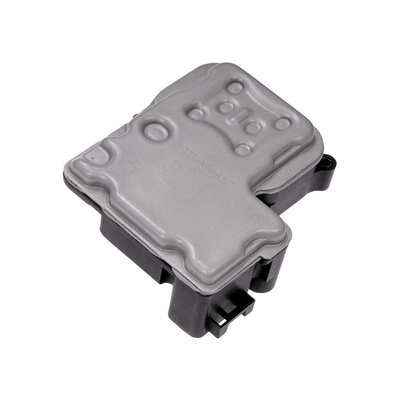
- Faulty Brake System Control Module (BSCM) (Common) — The internal electronic driver controlling the booster is integrated into the ABS or BSCM. Internal failures from thermal stress or failed MOSFETs require module replacement.
- Blown Fuse or Faulty Relay (Less Common) — A blown fuse or failing relay cuts power to the booster or control module, directly causing this fault.
- Damaged Wiring Harness (Less Common) — Wiring between the control module and booster suffers from moisture and road salt corrosion, creating high resistance or short circuits.
- Failed Electric Brake Booster Assembly (Rare) — The electric motor or actuator inside the booster assembly fails mechanically or shorts internally, often accompanied by a whining noise.
Symptoms
- Hard Brake Pedal — The brake pedal becomes extremely difficult to press, requiring 30-50% more physical effort.
- Increased Stopping Distance — Without power assist, the vehicle takes significantly longer to stop.
- Warning Lights Illuminated — The ABS, Brake, and Electronic Stability Control (ESC) lights turn on.
- Loss of Cruise Control — The vehicle disables cruise control as a safety precaution.
- Whining or Grinding Noises — A failing electric booster motor produces audible grinding or whining during brake application.
- DIC Warning Messages — Messages like "Service Brake System" or "Brake System Failure" display on the dashboard.
Common Fixes & Costs
- Reprogram Brake System Control Module (BSCM) — Parts: $0, Labor: $125-$250, ~1.0 hr book time (Professional)
- Replace 12V Battery — Parts: $150-$250, Labor: $0-$50, ~0.5 hr book time (Beginner)
- Replace Brake Light Switch
— Parts: $20-$60, Labor: $50-$150, ~0.8 hr book time
(Beginner)
Subaru Outback/Forester (Varies by year): OEM Subaru 83311AL00A, 83311AN00B (Alt: Duralast SW9225, Standard Motor Products SLS555) - Replace ABS/Brake System Control Module
— Parts: $550-$900, Labor: $150-$290, ~2.0 hr book time
(Professional)
Chevrolet Silverado 1500 (2019-2020): OEM ACDelco 84733309 (Varies by VIN) (Alt: Remanufacturing services only) - Repair Damaged Wiring or Connectors — Parts: $10-$50, Labor: $100-$300, ~2.0 hr book time (Intermediate)
- Replace Brake Booster Assembly
— Parts: $300-$2800, Labor: $200-$700, ~3.5 hr book time
(Professional)
Toyota RAV4 Hybrid (2019+): OEM Toyota 47070-42050 (Alt: OEM only)
Used vs. New Parts: Buying Guide
When a used part is worth it: Used mechanical vacuum boosters are cost-effective for older vehicles. Used electronic ABS/Brake Control Modules are only advisable if you have professional programming tools.
Donor-vehicle mileage cap: roughly under 60000 miles for the part to have meaningful remaining life.
Donor quality checklist:
- Verify the donor vehicle was not scrapped due to a front-end collision.
- Match the part number exactly to ensure electronic compatibility.
- Demand a minimum 90-day warranty for used electronic modules.
Decision logic:
- If The fix is a software update (Common on GM vehicles) → Pay for the dealer reprogramming service; no parts required.
- If The part is an ABS/Brake Control Module requiring programming → Buy new OEM. Used modules require complex 'Replace and Reprogram' procedures that many independent shops cannot perform.
- If The part is a mechanical booster and the vehicle is over 100k miles → A used part from a low-mileage donor is a reasonable choice to save money.
Warranty tradeoff: Used salvage parts offer 30-90 day warranties. New OEM parts offer 1-2 year warranties and ensure the longest service life.
Worst-case if a used part fails: $500-$1000 if a used electronic module fails or cannot be programmed, requiring repeat labor and a new module purchase.
Cost of Not Fixing It
- Immediate: Loss of power brake assist increases stopping distances by 30-50%, dramatically raising collision risk. (Added cost: Potential for a major accident with costs ranging from thousands to unquantifiable in case of injury.)
- 0-3 months: Guaranteed failure of state safety inspections due to illuminated brake warning lights. (Added cost: $50-$200 in fines and re-inspection fees.)
- 3+ months: Ongoing severe safety hazard. Secondary mechanical damage is unlikely, but the accident risk remains constant. (Added cost: Negligible mechanical costs compared to the immediate safety risk.)
Diagnosis Steps
- Read Codes & Check TSBs
Use an OBD-II scanner to confirm C0595. Search for Technical Service Bulletins (TSBs). GM bulletin 20-NA-073 indicates a software update is the definitive fix for many 2019+ models, preventing unnecessary parts replacement.
Tools: OBD-II Scan Tool, Internet Access (Beginner) - Inspect Battery and Charging System
Check battery voltage with a multimeter. A healthy battery shows ~12.6V off and ~13.7-14.7V running. A weak electrical system dropping below 9.5V under load is a primary root cause.
Tools: Multimeter (Beginner) - Test the Brake Light Switch
A faulty brake light switch causes this code on vehicles like Subarus. Test the switch for proper continuity as the pedal is pressed and released. Ensure proper adjustment.
Tools: Multimeter (Intermediate) - Inspect Fuses and Relays
Locate fuses and relays related to the ABS, ESC, and brake booster. Visually inspect and test for continuity. A blown fuse causes the entire system to fail.
Tools: Fuse puller, Multimeter (Beginner) - Visually Inspect Wiring and Connectors
Inspect the wiring harness and connectors at the ABS/BSCM and brake booster. Look for corrosion, damage, or moisture intrusion. Apply dielectric grease to clean connectors.
Tools: Flashlight, Dielectric Grease (Intermediate) - [ADVANCED] Verify Power Supply Under Load
Back-probe the power supply pin at the BSCM connector. With ignition on, have an assistant press the brake pedal. Voltage must remain between 9.5V and 13.5V. Drops below 9.0V indicate a power delivery problem requiring repair before condemning the module.
Tools: Multimeter, Vehicle-specific wiring diagram (Advanced) - [ADVANCED] Perform Ground Circuit Voltage Drop Test
Place the positive multimeter lead on the module's ground pin and the negative lead on a clean chassis ground. Under load (brake pedal pressed), the reading must be under 0.2V (200mV). Higher readings indicate excessive ground resistance.
Tools: Multimeter, Vehicle-specific wiring diagram (Advanced) - [PRO TIP] Analyze Brake Booster Current Draw
Use a professional scan tool to monitor the booster motor's current draw (Amperage). High current spikes indicate a mechanical bind or internal short, while low current points to high-resistance wiring.
Tools: Advanced Scan Tool with Live Data (Advanced)
When This Code Triggers (Freeze-Frame Conditions)
- System Voltage: 9.0V - 11.5V (Sets when system voltage drops under load, such as during initial brake pedal application.)
- Brake Pedal Status: Applied (Triggers during pedal actuation when the control module commands the booster motor and detects a performance discrepancy.)
- Vehicle Speed: Any, including 0 mph (Occurs at startup or during driving, including extreme braking events from high speeds.)
- Engine RPM: 650-3000 RPM (Relates to the electronic brake circuit's performance, independent of engine speed.)
How to Clear the Code After You Fix It
- Reconnect the battery if disconnected.
- For GM eBoost systems, perform a system relearn: Turn ignition ON (engine OFF), press and hold the brake pedal firmly for up to 5 minutes until the BRAKE light flashes once.
- Use a professional OBD-II scan tool to navigate to the ABS/Brake System Control Module.
- Select 'Clear Codes' or 'Erase DTCs'.
- Turn the ignition off, wait 30 seconds, then start the vehicle to confirm warning lights remain off.
Drive cycle (~20 minutes): Perform a cold start, 5 minutes of city driving with several stops, followed by 5-10 minutes of highway driving above 45 mph to allow the system to run self-tests.
Readiness monitors affected: This chassis code does not affect emissions readiness monitors.
Watch out for:
- Clearing the code without fixing the issue fails; the fault is a 'hard code' and reappears immediately upon the next self-test.
- Basic code readers cannot access or clear codes from the ABS or Brake System Control Module.
- Forgetting the GM eBoost relearn procedure after a brake job causes codes to persist despite healthy hardware.
Will This Fail Emissions / State Inspection?
Yes — this code typically fails an OBD-II emissions inspection.
- California: Any illuminated brake-related warning light triggers an automatic failure of the safety inspection.
- New York: State law explicitly dictates that an illuminated ABS warning light results in a safety inspection failure.
- Texas: Vehicles are rejected if the main 'Brake' warning lamp is on. C0595 illuminates this lamp, leading to failure.
Shop the Parts Behind C0595
Below are the parts most often responsible for code C0595, ranked by how frequently each one is the actual culprit (per the diagnosis above). Tap any to see what we have for your vehicle.



The information in this article is provided for general reference and educational purposes only. Vehicle specifications, procedures, and part compatibility can vary by production date, trim level, and region. Always consult your vehicle's factory service manual and verify part numbers before purchasing or performing repairs. Safety-critical components such as airbags, seat belts, and braking systems should be installed by a qualified professional.
- 🛍️ Shop This Part
- What Does C0595 Mean?
- Can I Drive With C0595?
- Common Causes
- Symptoms
- Common Fixes & Costs
- Used vs. New Parts: Buying Guide
- Cost of Not Fixing It
- Diagnosis Steps
- When This Code Triggers (Freeze-Frame Conditions)
- How to Clear the Code After You Fix It
- Will This Fail Emissions / State Inspection?
- 🎟️ Get 5% Off