

OBD-II Code C0610: Electronic Parking Brake Actuator Circuit Problem
What C0610 means, why it triggers, and how to fix it
- Code C0610 indicates an open circuit in the right-side electronic parking brake, with 80% of cases tracing back to a broken wire or corroded connector near the rear wheel.
- The primary hydraulic brakes remain fully functional, but the disabled parking brake creates a severe rollaway risk on inclines.
- Before buying a $200 replacement actuator, spend 15 minutes inspecting the right rear wiring harness and testing the EPB fuses.
- If this code appears immediately after a rear brake job, the technician likely destroyed the actuator gears by manually compressing the caliper without engaging 'Brake Service Mode'.
What Does C0610 Mean?

Code C0610 means the Electronic Brake Control Module (EBCM) detects a broken electrical connection to the right-side electronic parking brake actuator. This actuator is a small electric motor bolted to your rear brake caliper that engages the parking brake. The code specifically flags an 'open circuit,' meaning a wire is cut, a connector is unplugged or corroded, or the motor itself has burned out, preventing electricity from flowing.
Technical definition: The SAE/ISO definition for C0610 is 'Right Park Brake Actuator Control Circuit/Open'. The EBCM monitors the current draw of the actuator circuit. If the module commands the actuator on but detects zero current flow, or detects infinite resistance during a self-test, it sets this code to indicate a loss of continuity.
Can I Drive With C0610?
Yes, But With Caution. You can drive, but the electronic parking brake is disabled. This creates a severe rollaway risk when parking on an incline. A rollaway vehicle causes extensive property damage and severe liability. The primary hydraulic braking system remains fully functional.
Common Causes

- Damaged or Corroded Wiring Harness (Very Common) — Wiring routed to the right rear wheel endures constant suspension movement, water, and road debris. Wires frequently break internally inside the insulation, or chafe against the chassis until they sever.
- Corroded or Loose Electrical Connector (Common) — Water intrusion at the actuator connector causes the metal pins to oxidize into a green or white powder. This corrosion creates infinite resistance, which the computer reads as an open circuit.
- Improper Brake Service Procedure (Common) — Replacing rear brake pads without using a scan tool to engage 'Service Mode' 🎬 Watch: How to put your Ford into EPB service mode. forces the technician to manually compress the caliper piston. This physically crushes the actuator's internal gears and motor.
- Failed Electronic Parking Brake Actuator (Common) — The electric motor inside the actuator burns out from age, or its internal circuit board fails, creating a hard open circuit that requires complete replacement.
- Blown Fuse or Faulty Relay (Less Common) — A blown 30-amp EPB fuse cuts all power to the circuit. This is the easiest fix, but fuses usually blow because of a short circuit or a seized motor drawing too much amperage.
- Seized Caliper or Sticking Brake Pads (Less Common) — A rusted caliper piston or jammed brake pads force the actuator motor to stall. The EBCM detects the massive current spike and shuts down the circuit, logging a fault.
- Faulty Electronic Brake Control Module (EBCM) (Rare) — The internal driver circuit inside the main brake computer burns out, making it incapable of sending power to the right wheel. This requires replacing and reprogramming the entire ABS module.
Symptoms

- Parking Brake Warning Light On — A red or amber 'P' symbol flashes on the dashboard, accompanied by a 'Service Parking Brake' message.
- Parking Brake Won't Engage or Release — The right-side parking brake ignores button inputs, leaving the vehicle vulnerable to rolling or stuck in place.
- No Sound from Right Rear Wheel — Activating the parking brake normally produces a whirring sound from both rear wheels. Silence from the right side confirms the actuator is dead or unpowered.
- Dragging Right Rear Wheel — If the actuator fails while engaged, the right rear brake drags constantly, causing a burning smell, poor acceleration, and extreme heat radiating from the wheel.
- ABS or Traction Control Light On — Because the EPB is integrated into the main anti-lock brake system, a hard fault disables traction control and illuminates the ABS light.
Diagnostic Flowchart

Tap your situation to follow the diagnostic path that matches what you're seeing on this code.
Common Fixes & Costs
- Repairing Damaged Wiring or Connector — Parts: $10-$85, Labor: $150-$300, ~1.5 hr book time (Intermediate)
- Replacing the Electronic Parking Brake Actuator — Parts: $80-$450, Labor: $150-$250, ~1.5 hr book time (Intermediate)
- Cleaning and Securing Connector — Parts: $5, Labor: $0-$75, ~0.5 hr book time (DIY)
- Replacing a Blown Fuse — Parts: $1-$5, Labor: $0, ~0.1 hr book time (DIY)
- Replacing the EBCM/ABS Module — Parts: $600-$1500, Labor: $200-$400, ~2.5 hr book time (Professional)
Used vs. New Parts: Buying Guide
When a used part is worth it: Purchasing a used EPB actuator is highly risky. It only makes sense if the vehicle has over 150,000 miles, the budget is extremely tight, and you accept the risk of premature failure.
Donor-vehicle mileage cap: roughly under 80000 miles for the part to have meaningful remaining life.
Donor quality checklist:
- Source from a vehicle with the lowest possible mileage.
- Reject parts from rust-belt donors; the actuator housing and connector must be corrosion-free.
- Ensure the salvage yard offers at least a 30-day functional warranty.
Decision logic:
- If A new aftermarket actuator costs less than $150 → Buy new. The minimal savings from a used part do not justify the risk of doing the labor twice.
- If The vehicle is over 150,000 miles and budget is the primary concern → A used part from a reputable salvage yard is a viable, albeit risky, option.
- If The part controls a critical safety system → Always favor new OEM or high-quality aftermarket parts with a warranty.
Warranty tradeoff: Used parts offer a 30-90 day warranty. New aftermarket parts provide a 1-year to lifetime warranty. New OEM parts carry a 1-2 year warranty.
Worst-case if a used part fails: $300-$500 if the used part fails quickly, requiring you to pay for labor a second time plus the cost of a new part.
What Happens If You Wait — Timeline
- Immediate: Code C0610 sets, illuminating the 'Service Parking Brake' light. The right-side parking brake refuses to engage or release. The vehicle becomes a rollaway risk, but sustains no mechanical damage. (MPG impact: 0%% · Added cost: $0)
- 0-1 month (if brake is stuck ON): The right rear brake drags constantly, emitting a persistent burning smell. The brake pad and rotor suffer accelerated wear from continuous friction, and fuel economy drops noticeably. (MPG impact: 5-15%% · Added cost: $50-$150 in wasted fuel and premature pad wear.)
- 1-3 months (if brake is stuck ON): The right rear brake pad wears down to the metal backing plate, causing loud grinding. The rotor becomes heavily scored and turns blue/purple from extreme heat. (MPG impact: 10-20%% · Added cost: $250-$600 for a new rotor, pads, and potentially a replacement caliper.)
- 3+ months (if brake is stuck ON): Extreme, sustained heat boils the brake fluid, melts the caliper's internal seals, and destroys the wheel bearing assembly. A failed wheel bearing causes a loud roaring noise and risks wheel detachment. (MPG impact: 15-25%+% · Added cost: $800-$1500+ for a rotor, pads, caliper, wheel bearing hub, and labor.)
Cost of Not Fixing It
- Immediate: The parking brake is entirely untrustworthy, creating a severe rollaway risk that can cause catastrophic property damage or injury. (Added cost: $1,000 - $50,000+)
- 0-1 month (if brake is stuck on): A dragging brake destroys the right rear brake pads and rotor, while noticeably reducing fuel economy. (Added cost: $250 - $600)
- 1-3 months (if brake is stuck on): Continuous overheating melts the brake caliper seals and destroys the wheel bearing hub assembly. (Added cost: $800 - $1500)
Diagnosis Steps
- Scan Codes and Review Live Data
Use an advanced OBD-II scanner to confirm C0610 and check for related codes. Navigate to the EPB live data and monitor 'Right EPB Motor Current'. A reading of 0 amps when commanded confirms an open circuit, while >20 amps indicates a seized motor.
Tools: Advanced Bi-Directional Scan Tool (Intermediate) - Check EPB Fuses
Locate the fuse box and pull all fuses labeled 'EPB', 'ABS', or 'EBCM' (typically 30-amp). Verify continuity across the fuse blades with a multimeter. Replace any blown fuses, but note that a blown fuse indicates a short or seized motor.
Tools: Owner's Manual, Fuse Puller, Multimeter (Beginner) - Inspect Wiring and Connector
Safely raise the rear of the vehicle. Unplug the connector at the right rear actuator. Inspect the pins for green corrosion or water. Trace the wiring harness back to the chassis, looking for chafed insulation, sharp bends, or melted spots.
Tools: Jack and Jack Stands, Flashlight (Beginner) - Test Power and Ground at Actuator
With the connector unplugged, set a multimeter to DC Volts. Ground the black lead to the chassis and probe the power pin while a helper toggles the EPB switch. You must see 12V. Switch to Ohms and probe the ground pin to the chassis; it must read under 1 ohm.
Tools: Multimeter, Vehicle-Specific Wiring Diagram, Helper (Intermediate) - Test Actuator Motor Resistance
Probe the two power pins directly on the unplugged actuator motor with a multimeter set to Ohms. A reading of 'OL' means the internal motor winding is broken. A reading above 0.6 ohms (on GM vehicles) or generally above 5 ohms indicates a failing motor that requires replacement.
Tools: Multimeter, Service Manual with Specifications (Intermediate) - Check Wiring Continuity
Disconnect the battery. Unplug the harness at both the actuator and the EBCM. Measure resistance from end-to-end on both the power and ground wires. Readings above 2 ohms indicate a broken wire inside the harness that must be spliced or replaced.
Tools: Multimeter, Vehicle-Specific Wiring Diagram (Advanced) - Perform Voltage Drop Test
Reconnect the actuator. Backprobe the power wire at the actuator and the positive battery terminal. Command the EPB on. A reading above 0.5V proves excessive resistance in the power circuit. Repeat for the ground side (max 0.2V drop allowed).
Tools: Multimeter with Backprobes, Wiring Diagram, Bi-Directional Scan Tool (Advanced) - Command Actuator via Scan Tool
If wiring continuity and actuator resistance are perfect, use a bi-directional scanner to command the right EPB on. If the EBCM fails to output 12V during this test, the internal module driver is dead, and the EBCM requires replacement.
Tools: Advanced Bi-Directional Scan Tool (Advanced)
When This Code Triggers (Freeze-Frame Conditions)
- DTC that triggered the freeze frame: C0610 (The primary code stored in the ABS module.)
- System Voltage: 11.5-12.5V (Fault logs during the ignition-on self-test before the alternator engages.)
- Vehicle Speed: 0 mph (Detected when the parking brake is commanded on or off while stationary.)
- EPB Switch Status: Commanded On or Commanded Off (Sets the moment the module attempts to operate the actuator and detects infinite resistance.)
Related Codes
- C060B — This is the identical code for the left side parking brake actuator. If both C0610 and C060B appear, suspect a shared blown fuse, a bad ground, or a failed EBCM.
- C0612 — Indicates 'Right Park Brake Actuator Control Circuit High'. It points to a short to voltage, where the control wire touches a live power wire.
- C056D or C056E — These indicate internal EBCM hardware failures. If C0610 appears alongside C056D, the EBCM is the root cause and requires replacement.
- U0415 — Means 'Invalid Data Received From Electronic Brake Control Module.' This confirms the EBCM is malfunctioning internally, causing both the circuit fault and the communication crash.
Climate & Environmental Factors
- Road Salt and Humidity: Vehicles in the Rust Belt or coastal areas experience this code frequently. Saltwater aggressively corrodes the exposed wiring harness and actuator connector pins, creating high resistance.
- Cold Weather: Sub-zero temperatures make plastic wiring insulation brittle. Suspension movement cracks the brittle insulation, exposing the copper wire to moisture and causing short circuits.
- Water and Debris: The actuator's location inside the rear wheel well subjects it to constant bombardment from water, mud, and gravel, which physically damages wires and forces moisture into connectors.
How to Talk to a Mechanic About This Code
Say this: "I have a 'Service Parking Brake' light and a C0610 code, indicating an open circuit on the right rear actuator. I'd like to book a diagnostic appointment. Please perform a continuity and voltage drop test on the wiring harness and connector before quoting a replacement actuator, as I know wiring is the most common failure point."
This directs the technician to perform a proper electrical diagnosis rather than immediately firing the parts cannon. It establishes you as an informed customer who requires proof of a failed component before authorizing a $400+ replacement.
Avoid saying:
- My parking brake is acting weird.
- My 'Service Brake' light is on, can you just fix it?
- I think I need a new parking brake motor.
Questions to ask before authorizing the repair:
- Did you find the specific open circuit? Can you show me the damaged wire or corroded connector?
- What was the voltage reading at the actuator connector when you commanded it on?
- What was the exact resistance measurement across the old actuator's motor pins?
- If you are recommending an EBCM module, did the wiring harness pass a voltage drop test?
Where to Take It: Dealer vs Independent vs Chain
- Dealer:
A safe but expensive choice. Use them for warranty work or if the EBCM requires replacement and programming.
Best for: Vehicles still under factory warranty., Diagnosing complex EBCM failures requiring manufacturer-specific software., When an independent shop fails to resolve the issue.
Downsides: Highest labor rates, typically $180-$250 per hour., Service advisors often default to replacing entire caliper assemblies instead of splicing a $10 wire. (Typical cost: +50% vs. baseline) - Independent Shop:
The best fit. A reputable independent shop will perform a $200 wiring repair instead of a $600 parts replacement.
Best for: Out-of-warranty vehicles., Cost-effective electrical diagnostics and wiring harness repairs., Replacing the actuator motor without upselling a full caliper.
Downsides: Diagnostic skill varies; you must vet the shop for strong electrical troubleshooting experience., May lack the OEM software required to program a new EBCM. (Typical cost: +0% vs. baseline) - Chain Shop:
Avoid. They frequently misdiagnose electrical faults, leading to unnecessary and expensive actuator replacements.
Best for: Routine maintenance like oil changes and standard brake pad replacements.
Downsides: Technicians are heavily incentivized to replace parts quickly rather than spend an hour tracing a broken wire., Often lack the advanced bi-directional scanners required for chassis codes. (Typical cost: -10% vs. baseline)
When to Walk Away From the Repair
If the estimated repair cost exceeds 40-50% of the vehicle's current private-party value, strongly consider selling or trading in the vehicle.
- Car worth $3000, fix is $1600: Walk away. The repair cost exceeds 50% of the car's value. Sell it as a 'mechanic special'.
- Car worth $12000, fix is $700: Fix it. The repair is well under the threshold and restores a critical safety feature.
- Car worth $6000, fix is $2500: Borderline. Get a second opinion to verify the EBCM is actually dead. If the diagnosis holds, trade the vehicle in.
What Scan Tool You Need for This Code
Minimum: A scanner capable of reading and clearing Anti-Lock Brake System (ABS) / Chassis codes.
A standard $20 code reader only accesses Powertrain (P) codes. Code C0610 is a Chassis (C) code stored in the ABS module. A basic reader displays 'No Codes Found' even while the brake warning light flashes.
Budget: Foxwell NT630 Plus / Autel AutoLink AL619 (~$99) — Reads and clears codes from the ABS module, confirming C0610. It displays live data from wheel speed sensors but lacks bi-directional control.
Mid-range: Autel MaxiCOM MK808 / Innova 5610 (~$350) — Provides bi-directional control. This allows you to command the EPB into 'Service Mode' for repairs and manually activate the actuator motor to test its function, saving hours of diagnostic time.
Professional: Autel MaxiSys MS906Pro / Launch X431 Series (~$600-1200) — Offers dealership-level functionality, including the advanced coding and programming required to configure a new EBCM/ABS module.
Rent vs buy: Auto parts stores loan out scanners for free, but you must verify their loaner reads ABS codes. For a complex chassis code like C0610, buying a $350 bi-directional scanner pays for itself by preventing one misdiagnosed part.
How to Clear the Code After You Fix It
- Complete the physical repair (splice wiring, replace actuator, or clean connector).
- Use an OBD-II scan tool to access the ABS/EBCM module and clear the C0610 code.
- Cycle the ignition off, then back on.
- Engage and release the electronic parking brake switch three times, listening for motor activation on both wheels to verify the fix.
Drive cycle (~15 minutes): Chassis codes do not require an emissions drive cycle. A 15-minute test drive with multiple stops, applying and releasing the parking brake at each stop, verifies the repair.
Readiness monitors affected: None. Chassis codes do not impact emissions readiness monitors.
Watch out for:
- Clearing the code without fixing the physical open circuit causes the code to return instantly.
- Failing to perform a scan tool 'Zero Point Calibration' after replacing the actuator on Toyota/Lexus models prevents the system from working.
Will This Fail Emissions / State Inspection?
No — by itself this code doesn't fail OBD inspection (but it can keep readiness monitors from setting, which causes a separate fail).
- California: An illuminated ABS or brake warning light does not cause a failure of the standard biennial smog check. However, a non-functional parking brake fails a 'Brake and Lamp Inspection' required for salvaged vehicles.
- New York: The NYS safety inspection requires a functional parking brake. An illuminated brake warning light guarantees an immediate failure.
- Texas: Texas eliminated the safety inspection for non-commercial vehicles in 2025. An illuminated ABS light will not fail the emissions inspection. Commercial vehicles still require safety inspections and will fail.
Most Commonly Affected Vehicles
- Ford Edge, Fusion, Escape, F-150 (2015-2023) — Notorious for wiring harness failures near the rear caliper. NHTSA recall 23V-509 covers 2021-2023 F-150s for rear axle wiring harnesses chafing and causing unintended park brake application.
- Chevrolet / GMC Silverado / Sierra 1500/2500/3500 (2019-2023) — GM Service Bulletin PIC6407 warns technicians that actuator circuit resistance exceeding 0.6 ohms triggers C0610, requiring precise multimeter testing.
- Lexus / Toyota RX Series, RAV4, Corolla, Camry, Tundra (2016-2023) — Actuator failures are common and expensive, with OEM parts exceeding $700. NHTSA recall 22V-661 covers 2022 Tundras for a software glitch preventing EPB engagement.
- Honda Civic, CR-V, Pilot, Odyssey (2016-2024) — Presents with a generic 'Brake System Problem' message. While actuator motors fail frequently, technicians must rule out wiring damage first.
- Chrysler / Dodge / Jeep / Ram Pacifica, Ram 1500, Grand Cherokee, Cherokee (2014-2023) — TSB S2308000141 instructs technicians to check for spread connector terminals. TSB 08-060-16 covers 2014-2016 Jeep Cherokees for water intrusion destroying the EPB module.
- Hyundai / Kia Santa Fe, Tucson, Sorento, Telluride (2017-2022) — Prone to actuator motor burnouts and wiring harness chafing in the rear wheel wells.
- Volkswagen / Audi Tiguan, Passat, Atlas, Q5 (2018-2023) — Failures frequently stem from improper DIY brake jobs where the owner failed to use a scan tool to retract the brakes.
- Subaru Outback, Forester, Ascent (2018-2023) — Owners report frequent EPB warning lights traced to faulty actuators or corroded wiring harnesses.
Manufacturer-Specific Notes
- General Motors (GM): GM Service Bulletin PIC6407 dictates that any resistance above 0.6 ohms in the actuator circuit triggers this code. This extremely low tolerance means even microscopic corrosion causes a failure.
- Ford: A weak 12V battery causes a cascade of false electrical codes, including C0610. Always verify the battery rests above 12.4V before diagnosing chassis codes on modern Fords.
- Toyota / Lexus: Replacing the actuator requires a 'Zero Point Calibration' using a diagnostic scan tool. Skipping this mandatory software relearn prevents the new part from functioning.
- Stellantis (Chrysler/Dodge/Jeep): TSB S2308000141 requires technicians to use a 'push-pull-push' method to identify loose or spread pins at the actuator connector, a widespread manufacturing defect.
Real Owner Stories
2018 Ford Edge with intermittent 'Park Brake Limited Function' message.
The 'Park Brake Limited Function' warning appeared randomly. The parking brake functioned normally during tests, but the inconsistency worried the owner.
What they tried:
- Ignored the intermittent warnings initially.
- A mechanic scanned the codes, found C0610, and quoted a $400 actuator replacement.
Outcome: The owner researched the issue and inspected the wiring harness running to the right rear caliper. While the exterior looked pristine, cutting open the protective loom revealed an internally broken wire. Splicing the wire with a butt connector and heat shrink tubing permanently fixed the problem for under $10. The original actuator was perfectly fine.
Lesson: On Ford models (Edge, Fusion, F-150), internal wire breaks near the caliper are the primary cause of C0610. Always test the wiring harness for continuity before replacing the expensive actuator motor.
2019 Chevy Silverado with C0610 and C060B after DIY rear brake replacement.
Immediately after replacing the rear brake pads, the dashboard displayed 'Service Brake System' and limited the truck to 45 MPH. A scan revealed codes C0610 and C060B (left and right actuators).
What they tried:
- Re-checked all physical connections and looked for fluid leaks.
- Posted on a forum, fearing they destroyed the Brake System Control Module (BSCM).
Outcome: The owner failed to put the EPB system into 'Service Mode' before compressing the caliper pistons, triggering a plausibility fault. The fix required zero parts: they disconnected the battery, pumped the brake pedal to reseat the pistons, and cleared the codes with a bi-directional scan tool. Normal function returned immediately.
Lesson: Failing to use 'Service Mode' for modern brake jobs triggers catastrophic-looking fault codes and limp mode. A system reset and code clear often resolves it if the internal gears weren't physically crushed.
2016 Jeep Cherokee with 'Service Parking Brake' light and a stuck brake.
The parking brake refused to release one morning, immobilizing the vehicle with a 'Service Parking Brake' message on the dash.
What they tried:
- Cycled the ignition and disconnected the battery, but the brake remained locked.
- Towed the vehicle to an independent shop.
Outcome: The shop found the EPB module in the rear cargo area sitting in a puddle of water. The electrical connector was heavily corroded with green powder (a known issue covered by FCA TSB 08-060-16). The shop replaced the module and connector pigtail, and resealed a leaking taillight.
Lesson: On 2014-2020 Jeep Cherokees, the control module sits in a water-prone location. Check the rear cargo area for moisture before assuming the wheel actuator is faulty.
How to Prevent This Code From Triggering
- Apply Dielectric Grease to Connectors (During any brake service or tire rotation) — The wheel-mounted actuator connector faces extreme exposure. Packing the connector with non-conductive dielectric grease seals out saltwater and oxygen, preventing the green pin corrosion that causes open circuit faults.
- Always Use 'Brake Service Mode' (Whenever replacing rear brake pads) — Using a scan tool to electronically retract the EPB motors prevents catastrophic physical damage to the actuator's internal plastic gears.
- Inspect and Secure Wiring Harnesses (During oil changes or tire rotations) — Ensuring the caliper wiring harness is secured in its factory clips prevents it from rubbing against the suspension or exhaust, eliminating chafing and short circuits.
- Regular Undercarriage Washing (Monthly during winter in the Rust Belt) — Road salt and de-icing brines aggressively eat through wiring insulation. Flushing the wheel wells removes these corrosive agents before they penetrate the connectors.
Frequently Asked Questions
Can I just clear the C0610 code and see if it comes back?
You can try, but it returns immediately upon cycling the ignition. This code indicates a hard electrical fault the module checks constantly. Clearing the code does not fix the underlying physical open circuit.
Is the electronic parking brake actuator the same as the brake caliper?
No. The actuator is a separate electric motor bolted onto the rear brake caliper. You can replace just the actuator without replacing the entire caliper assembly, though you must inspect the caliper for seizing.
Why did this happen right after I had my rear brakes replaced?
The repair shop likely failed to put the system into 'Brake Service Mode' using a scan tool. Manually forcing the caliper piston back destroys the actuator's internal gearbox. It is also possible the wiring connector was damaged during the repair.
Can a weak car battery cause code C0610?
Yes, particularly on Ford vehicles. Low system voltage during startup (below 12.4V) causes control modules to malfunction and set false communication and chassis codes. Test your battery and alternator before starting complex electrical diagnostics.
I replaced the actuator and the code is still there. What now?
This proves the actuator was not the root cause. The fault lies upstream in the wiring harness or the Electronic Brake Control Module (EBCM). You must perform rigorous continuity and voltage drop tests on the harness to locate the broken wire.
What is 'Brake Service Mode' and why is it so important?
'Brake Service Mode' is a scan tool function that electronically retracts the EPB motors. This creates the necessary space to remove old pads and safely push the caliper piston back. Skipping this step and forcing the piston manually breaks the actuator gears.
Do I need to reprogram anything after fixing this code?
Repairing wiring or replacing the actuator rarely requires reprogramming, though Toyota and Lexus models require a 'Zero Point Calibration' via scan tool. Replacing the entire EBCM requires professional programming to match your vehicle's VIN and configuration.
What does the number after the code mean, like C0610-13?
The two digits after the main code are a failure type identifier used by manufacturers like Ford and Lexus. For example, '-13' means 'Circuit Open'. This confirms the module detects a physical break in the circuit.
Key Takeaways
- Code C0610 indicates an open circuit in the right-side electronic parking brake, with 80% of cases tracing back to a broken wire or corroded connector near the rear wheel.
- The primary hydraulic brakes remain fully functional, but the disabled parking brake creates a severe rollaway risk on inclines.
- Before buying a $200 replacement actuator, spend 15 minutes inspecting the right rear wiring harness and testing the EPB fuses.
- If this code appears immediately after a rear brake job, the technician likely destroyed the actuator gears by manually compressing the caliper without engaging 'Brake Service Mode'.
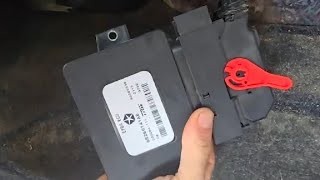
Helpful Videos
Shop the Parts Behind C0610
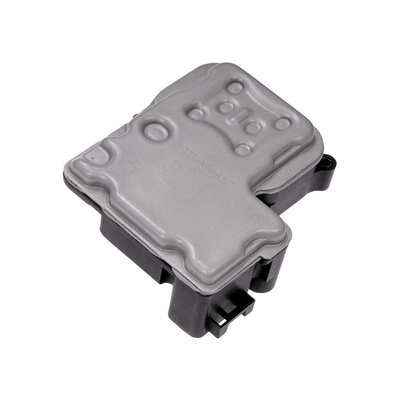
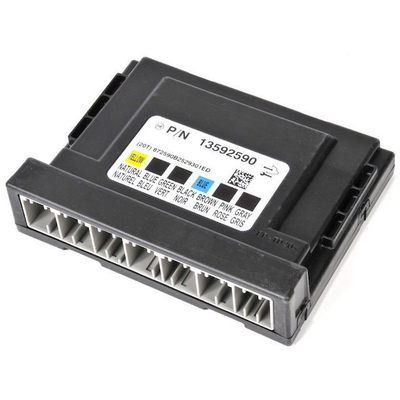
Below are the parts most often responsible for code C0610, ranked by how frequently each one is the actual culprit (per the diagnosis above). Tap any to see what we have for your vehicle.



The information in this article is provided for general reference and educational purposes only. Vehicle specifications, procedures, and part compatibility can vary by production date, trim level, and region. Always consult your vehicle's factory service manual and verify part numbers before purchasing or performing repairs. Safety-critical components such as airbags, seat belts, and braking systems should be installed by a qualified professional.
- 🧭 Diagnostic Flowchart
- 🎬 Helpful Videos
- 🛍️ Shop This Part
- What Does C0610 Mean?
- Can I Drive With C0610?
- Common Causes
- Symptoms
- Common Fixes & Costs
- Used vs. New Parts: Buying Guide
- What Happens If You Wait — Timeline
- Cost of Not Fixing It
- Diagnosis Steps
- When This Code Triggers (Freeze-Frame Conditions)
- Related Codes
- Climate & Environmental Factors
- How to Talk to a Mechanic About This Code
- Where to Take It: Dealer vs Independent vs Chain
- When to Walk Away From the Repair
- What Scan Tool You Need for This Code
- How to Clear the Code After You Fix It
- Will This Fail Emissions / State Inspection?
- Most Commonly Affected Vehicles
- Manufacturer-Specific Notes
- Real Owner Stories
- 2018 Ford Edge with intermittent 'Park Brake Limited Function' message.
- 2019 Chevy Silverado with C0610 and C060B after DIY rear brake replacement.
- 2016 Jeep Cherokee with 'Service Parking Brake' light and a stuck brake.
- How to Prevent This Code From Triggering
- Frequently Asked Questions
- Can I just clear the C0610 code and see if it comes back?
- Is the electronic parking brake actuator the same as the brake caliper?
- Why did this happen right after I had my rear brakes replaced?
- Can a weak car battery cause code C0610?
- I replaced the actuator and the code is still there. What now?
- What is 'Brake Service Mode' and why is it so important?
- Do I need to reprogram anything after fixing this code?
- What does the number after the code mean, like C0610-13?
- Key Takeaways
- 🎟️ Get 5% Off