

OBD-II Code C0633: Front Half Shaft Speed Sensor Fault
What C0633 means, why it triggers, and how to fix it
- Code C0633 disables your ABS, traction control, and AWD by flagging a signal failure in the front half-shaft speed sensor.
- Over 80% of C0633 codes stem from a dead sensor, severed wiring, or a cracked magnetic tone ring.
- Driving without ABS increases emergency stopping distances significantly on wet or slick roads, making immediate repair critical.
- Verify the failure using a scan tool's live data stream before spending $130 to $425 on a replacement sensor.
What Does C0633 Mean?
Code C0633 means the AWD or ABS module detects a problem with the front half-shaft speed sensor. This sensor measures front axle rotational speed, sending data to control anti-lock brakes, traction control, and AWD power distribution. When the computer loses this signal, it triggers dashboard warning lights and disables these safety features.
Technical definition: Front Half Shaft Speed Sensor Circuit Fault. This indicates the Powertrain Control Module (PCM), ABS module, or AWD module detects a missing, intermittent, or out-of-range signal from the front half-shaft speed sensor circuit.
Can I Drive With C0633?
Yes, But With Caution. You can drive, but critical safety systems are disabled. Your Anti-lock Braking System (ABS), Traction Control (TCS), and Electronic Stability Control (ESC) are offline. Wheels will lock up during hard braking, increasing stopping distances and causing steering loss. Drive with extreme caution and schedule a repair immediately.
Common Causes
- Failed Speed Sensor (Very Common) — The sensor's internal magnetic coil degrades from heat and age, or road debris damages the housing, causing complete signal loss.
- Damaged Tone Ring (Common) — The sensor reads a toothed or magnetic reluctor ring on the axle. Cracked rings, broken teeth, or heavy rust block the sensor from getting an accurate reading.
- Wiring Harness or Connector Damage (Common) — Exposed wires and connectors fray, chafe, or corrode from the elements and suspension movement, creating an open or shorted circuit.
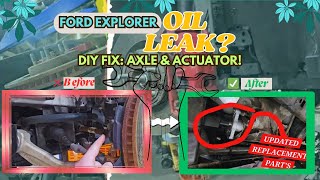
- Leaking Axle Seal (Common) — On specific vehicles (notably 2020+ Ford Explorers), 🎬 See how to fix the front axle leak causing this code. a leaking front axle seal coats the sensor in differential fluid. This oil disrupts the magnetic field, invalidating the signal.
- Low Battery Voltage (Rare) — A weak battery causes low system voltage, triggering spurious communication errors and fault codes like C0633 even when the sensor circuit is intact.
- Faulty Control Module (Very Rare) — Internal circuit failure or corrupted firmware prevents the ABS/AWD module from processing the sensor's signal.
Symptoms
- Dashboard Warning Lights Illuminated — The ABS, Traction Control (TCS), and 'Service 4WD/AWD' lights turn on and stay on.
- Disabled Safety and AWD Systems — Anti-lock brakes will not engage during hard braking, traction control fails to prevent wheel spin, and the AWD system defaults to two-wheel drive.
- Erratic Braking Feel — The vehicle exhibits an uneven or grabbing braking sensation at low speeds as the ABS attempts to function with an intermittent signal.
Diagnostic Flowchart
Tap your situation to follow the diagnostic path that matches what you're seeing on this code.
Common Fixes & Costs
- Replace Front Half-Shaft Speed Sensor — Parts: $30-$150, Labor: $100-$275, ~1.2 hr book time (DIY)
- Repair Damaged Wiring or Connector — Parts: $10-$50, Labor: $125-$250, ~1.5 hr book time (Intermediate)
- Replace Tone Ring or Hub Assembly — Parts: $50-$250, Labor: $200-$400, ~2.5 hr book time (Intermediate)
- Replace Leaking Axle Seal and Sensor — Parts: $80-$200, Labor: $300-$550, ~3.5 hr book time (Professional)
Used vs. New Parts: Buying Guide
When a used part is worth it: Buying a used speed sensor is not recommended due to the low cost of new aftermarket parts and the unknown history of the used component.
Donor-vehicle mileage cap: roughly under 50000 miles for the part to have meaningful remaining life.
Donor quality checklist:
- Verify the part number matches exactly.
- Inspect the connector and wiring pigtail for corrosion, brittleness, or damage.
- Avoid parts from vehicles in rust-belt regions.
Decision logic:
- If A quality new aftermarket sensor is available for under $75 → buy new. The small savings aren't worth the risk of premature failure.
- If The part is a complex ABS control module → a professionally rebuilt unit with a warranty is a better choice than a used junkyard part.
Warranty tradeoff: Used parts typically have a 30-90 day warranty. New aftermarket sensors come with a 1-year to limited lifetime warranty.
Worst-case if a used part fails: $150-$300 if a used sensor fails after installation, requiring repeat labor costs.
What Happens If You Wait — Timeline
- 0-2 weeks: ABS, Traction Control, and Stability Control warning lights are on. The systems are disabled. The vehicle's base braking system remains functional. (MPG impact: 0%% · Added cost: $0. The primary risk is safety-related, with significantly increased stopping distances.)
- 1-3 months: Continued driving without ABS leads to poor braking habits. Minor erratic shifting or delayed torque converter lockup occurs in vehicles where transmission modules use speed data. (MPG impact: 0-2%% · Added cost: $0-$50 in potential wasted fuel and minor, premature tire wear.)
- 3-12 months: The vehicle automatically fails safety inspections in states that check for an illuminated ABS light. Prolonged unusual shifting patterns contribute to increased transmission wear. (MPG impact: 1-3%% · Added cost: $50-$150 for failed inspection fees, plus potential for increased transmission wear.)
- 12+ months: The root cause (e.g., a leaking axle seal) worsens, causing significant damage to the differential. The most critical cost remains the potential for an accident. (MPG impact: 1-3%% · Added cost: Potential for thousands in accident-related damages or a significant reduction in vehicle resale value.)
Cost of Not Fixing It
- Immediate: ABS, Traction Control, and Stability Control systems are disabled, significantly increasing the risk of losing control during emergency braking. (Added cost: Potential cost of an accident.)
- 0-6 months: Continued driving without ABS leads to uneven tire wear. Faulty speed sensor signals cause incorrect shifting behavior in the automatic transmission, increasing wear. (Added cost: $50-$300 (Tire wear), Potential transmission wear.)
- 6+ months: The vehicle fails mandatory state safety inspections. The primary risk remains the disabled safety systems. (Added cost: Cost of failed inspection and potential accident-related damages.)
Diagnosis Steps
- Read Codes and Freeze Frame Data
Scan the ABS and AWD modules for C0633 and related codes (C0035, C00A6, U0415). Note freeze frame data to see vehicle conditions when the fault occurred.
Tools: Advanced OBD-II Scanner (Beginner) - Check Technical Service Bulletins (TSBs)
Search for TSBs related to C0633 for your specific year, make, and model. Manufacturers frequently release bulletins for known issues, like Ford's oil contamination problem.
Tools: Internet Access (Beginner) - Analyze Live Data
View the live data stream for the front half-shaft speed sensor while driving or spinning the wheel. A reading stuck at zero or fluctuating wildly confirms a circuit fault.
Tools: Advanced OBD-II Scanner (Advanced) - Perform Visual Inspection
Raise the vehicle and inspect the sensor, connector, and wiring harness for chafing, melting, or corrosion. Check the tone ring for cracked teeth or heavy rust.
Tools: Jack, Jack Stands, Flashlight (Beginner) - Test Sensor with a Multimeter
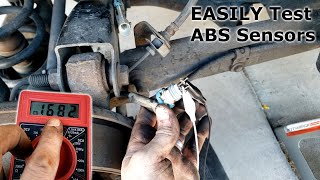
Disconnect a 2-wire sensor and measure resistance (typically 900-2000 Ω). Reconnect, set to AC Volts, and spin the wheel to verify it generates >100mV AC. For 3-wire sensors, verify a pulsing 0V to 5V/12V DC signal.
Tools: Multimeter, Back-probe kit (Advanced) - Verify Signal with an Oscilloscope
View the sensor's output waveform. A healthy passive sensor produces a clean AC sine wave, while an active sensor produces a DC square wave. Dropouts indicate a bad sensor or tone ring.
Tools: Oscilloscope, Back-probe kit (Professional)
When This Code Triggers (Freeze-Frame Conditions)
- Vehicle Speed: 15-55 mph (During acceleration or steady cruise)
- Engine RPM: 1200-2500 RPM (Normal driving conditions)
- System Voltage: 13.0-14.5V (Normal charging system operation)
- ABS/TCS Status: Active/Enabled (The fault is typically detected when the system expects a valid signal, just before it disables.)
Related Codes
- C0035 — Front Left Wheel Speed Sensor Circuit Fault. Points specifically to the sensor at the wheel hub, whereas C0633 points to the differential axle shaft sensor.
- C0040 — Front Right Wheel Speed Sensor Circuit Fault. The right-side equivalent of C0035.
- C00A6 — Vehicle Speed Signal data validity fault. On Ford vehicles, C00A6 appearing with C0633 strongly points to the TSB 21-2270 oil contamination issue.
- U0415 — Invalid Data Received From ABS Control Module. Suggests other network modules are receiving nonsensical data due to the faulty sensor or a failing ABS module.
Climate & Environmental Factors
- Road Salt / De-icing Agents: Moisture and salt penetrate connectors, causing high resistance or short circuits. Salt accelerates rust buildup on tone rings, causing them to swell, crack, or send a distorted signal.
- Cold Weather: Extreme cold makes wiring insulation brittle and susceptible to cracking. Moisture inside connectors freezes, expands, and pushes electrical contacts apart.
- Snow and Ice Buildup: Packed snow and ice build up around the sensor and tone ring, physically obstructing the magnetic signal.
How to Talk to a Mechanic About This Code
Say this: "I have an ABS light on and my scanner shows code C0633. I'd like to book a diagnostic appointment. I need you to check the live data from the front half shaft speed sensor, visually inspect the wiring harness and tone ring for damage, and check for any relevant TSBs before recommending a repair."
This directs the mechanic to perform a thorough diagnosis to find the root cause (sensor, wiring, tone ring, or oil leak) rather than just replacing the most common part, saving you from a misdiagnosis.
Avoid saying:
- 'My ABS light is on, can you fix it?' (Too vague, invites a simple part swap without diagnosis)
- 'Just replace the front speed sensor.' (Prevents the mechanic from finding the true cause if it's something else)
- 'Do whatever you think is best.' (Gives up all control over the diagnostic process and cost)
Questions to ask before authorizing the repair:
- What was the result of the live data test? Was the signal missing, erratic, or just different from the other wheels?
- Did you find any damage to the wiring harness or corrosion in the connector?
- What did the tone ring look like? Was it cracked, rusty, or contaminated?
- If you're recommending a sensor replacement, what makes you confident it's not the wiring or tone ring?
Where to Take It: Dealer vs Independent vs Chain
- Dealer:
Recommended if you suspect a TSB applies or if the vehicle is under warranty. Also the best choice for a failed control module that needs programming.
Best for: Vehicles under powertrain warranty, especially 2020-2021 Ford Explorer/Aviator models where the repair is covered by TSB 21-2270., Complex diagnoses involving potential control module failure and programming.
Downsides: Highest labor rates., Less willing to perform a simple wiring repair and more likely to replace a whole harness. (Typical cost: +50% vs. baseline) - Independent Shop:
Best overall fit for most common C0633 scenarios on out-of-warranty vehicles, offering a good balance of expertise and cost.
Best for: Out-of-warranty vehicles where the cause is likely a standard sensor, wiring, or tone ring failure., Getting a second opinion on a dealer's diagnosis.
Downsides: Quality and diagnostic capabilities vary greatly. Ensure they have advanced scanners for ABS/Chassis codes., May lack access to the latest manufacturer-specific programming tools. (Typical cost: +0% vs. baseline) - Chain Shop:
Use with caution. Acceptable if you are certain it's a bad sensor and just need it replaced, but AVOID for initial diagnosis of an intermittent C0633 fault.
Best for: If the diagnosis is already confirmed to be a simple sensor replacement.
Downsides: Technician skill varies widely; lacks the experience for in-depth electrical diagnosis., High pressure to replace parts rather than diagnose complex wiring issues. (Typical cost: -10% vs. baseline)
When to Walk Away From the Repair
If the estimated repair cost exceeds 40-50% of the car's private-party value, it's time to seriously consider selling or trading in the vehicle.
- Car worth $5000, fix is $400: Fix it. This is a relatively minor repair cost compared to the vehicle's value.
- Car worth $4000, fix is $1800: Walk away. The repair cost approaches 50% of the car's value and involves a complex ABS module replacement. Put the money toward a replacement vehicle.
- Car worth $15000, fix is $700: Fix it. The repair is well below the threshold and restores a critical safety system.
What Scan Tool You Need for This Code
Minimum: A scanner that reads and clears Chassis (C) codes, specifically for the ABS module. A basic engine-only code reader will not see or clear C0633.
A standard $20 scanner only reads Powertrain (P) codes from the engine computer. You need a tool that communicates with the ABS module to see the C0633 code and view the live sensor data essential for diagnosis.
Budget: BlueDriver Pro (~$100) — Connects to a smartphone app and reads/clears enhanced codes, including ABS codes like C0633. It displays live data from the speed sensors.
Mid-range: Foxwell NT510 Elite (~$180) — A handheld unit providing OE-level diagnostics for specific brands. It reads and clears ABS codes, graphs live sensor data, and performs bi-directional tests on the ABS module.
Professional: Autel MaxiCOM MK808BT (~$500) — A professional-level tablet scanner offering comprehensive diagnostics. It provides robust live data graphing, bi-directional control to test ABS components, and access to special functions like ABS bleed.
How to Clear the Code After You Fix It
- Use an advanced OBD-II scan tool to clear the Chassis (C) fault codes.
- Perform the ABS system functional test with the scan tool if available.
- Perform a drive cycle to allow the control module to verify the repair.
Drive cycle (~20 minutes): Start the engine and idle for 2 minutes. Drive at a mix of city and highway speeds (20-60 mph) for 15 minutes, including several moderate stops to engage the brake system. The ABS light remains off if the repair is successful.
Readiness monitors affected: This is a Chassis (C) code and does not affect emissions readiness monitors.
Watch out for:
- Using a basic $20 code reader that only clears Powertrain (P) codes will not clear C0633.
- The light returns immediately if the underlying mechanical or electrical fault remains.
- Forgetting to clear the code after the repair leaves the light on until manually cleared.
Will This Fail Emissions / State Inspection?
No — by itself this code doesn't fail OBD inspection (but it can keep readiness monitors from setting, which causes a separate fail).
- California: An illuminated ABS light does NOT cause a smog test failure. The smog check only concerns the Check Engine Light.
- New York: An illuminated ABS warning light is a defect and causes the vehicle to fail the annual safety inspection.
- Texas: As of 2025, non-commercial vehicles are no longer subject to a safety inspection. An ABS light will not cause an emissions failure, but law enforcement can cite it as an unsafe equipment violation.
Most Commonly Affected Vehicles
- Ford Explorer (2020-2021) — Subject to TSB 21-2270. The front half-shaft speed sensor becomes contaminated by leaking axle fluid, setting C0633 with C00A6. Requires replacing the sensor and axle seal.
- Ford Aviator (2020-2021) — Shares the Explorer platform and is covered by TSB 21-2270 for the oil-contaminated sensor.
- GMC Terrain (2010-2018) — Commonly experiences failures of the wheel speed sensors and wiring harnesses, triggering C0633 in AWD models.
- Cadillac SRX (2010-2016) — Prone to failures of the magnetic reluctor ring, which separates from the axle or rusts, causing speed sensor codes.
- Chevrolet Colorado (2015-2019) — Rust and debris accumulate on the magnetic tone ring integrated into the front wheel hub assembly, requiring hub replacement.
- Dodge Charger AWD (2012-2020) — Wiring harnesses route near high-heat exhaust and moving suspension parts, leading to chafing and corrosion.
- Subaru Outback (2010-2019) — The Symmetrical AWD system is highly sensitive to speed discrepancies; a single faulty sensor immediately disables AWD.
Manufacturer-Specific Notes
- Ford: On 2020-2021 Explorer and Aviator models, C0633 is caused by a leaking front axle seal contaminating the sensor with differential fluid (TSB 21-2270).
- General Motors (GM): Speed sensor codes frequently stem from a failed or corroded magnetic reluctor ring on the wheel bearing/hub assembly, not the sensor itself.
- Stellantis (Dodge/Chrysler/Jeep): Wiring harnesses on AWD platforms route near exhaust or suspension components, leading to melted insulation or chafed wires.
- Subaru: The AWD computer is highly intolerant of inconsistent speed signals, instantly disabling the AWD system upon detecting a single sensor fault.
Real Owner Stories
2020 Ford Explorer at 42,000 miles with multiple warnings
Owner experienced '4WD Fault Service Required' and 'Service Advance Trac' warnings. The ABS and AWD lights were on.
Outcome: The dealer confirmed the issue was covered by TSB 21-2270. The repair involved replacing the front half-shaft speed sensor and the leaking axle seal that contaminated it, covered under the powertrain warranty.
Lesson: On 2020-2021 Ford Explorers/Aviators, C0633 accompanied by C00A6 is almost certainly the oil leak issue described in TSB 21-2270. Check powertrain warranty coverage before paying.
2012 Cadillac SRX with recurring ABS light after sensor replacement
The ABS and Stabilitrak lights came on. The owner replaced the wheel speed sensor, but the lights remained on.
Outcome: The magnetic reluctor ring on the back of the wheel hub assembly was cracked and falling apart due to rust. Replacing the entire wheel hub assembly resolved the issue.
Lesson: On GM vehicles, the cause is often the magnetic tone ring, not the sensor. Visually inspect the tone ring for rust or cracks before assuming the sensor is bad.
GMC Acadia with intermittent ABS/Traction Control lights
The ABS and Traction Control lights came on intermittently during turns or on bumpy roads.
Outcome: Visual inspection revealed the wiring harness was rubbing against a suspension component, wearing through the insulation and shorting to ground. Repairing and rerouting the wire resolved the issue.
Lesson: Intermittent electrical codes are often caused by wiring issues. Perform a 'wiggle test' on the harness and inspect for chafing near moving parts.
How to Prevent This Code From Triggering
- Apply Dielectric Grease to Connectors (Whenever a sensor connector is disconnected for service.) — Dielectric grease seals out moisture, road salt, and dirt from electrical connections, preventing corrosion that causes high resistance and signal loss.
- Perform Regular Undercarriage Washes (Monthly, especially in winter or coastal regions.) — Washing the undercarriage removes corrosive road salt and grime, protecting tone rings from accelerated rust and keeping debris away from the sensor.
- Inspect and Secure Wiring Harnesses (During tire rotations or brake service.) — Visually check that sensor wiring is securely fastened and not rubbing against suspension components. Loose wires chafe over time, leading to shorts.
- Use High-Temperature Wire Loom/Tape for Repairs (When repairing any under-hood or chassis wiring.) — Use automotive-grade, high-temperature cloth tape or split-loom tubing to protect wire repairs from abrasion, heat, and moisture.
Frequently Asked Questions
What is a front half shaft speed sensor?
It is a sensor mounted on the front differential that measures the rotational speed of a vehicle's front axle shaft. This data is essential for the Anti-lock Braking System (ABS), traction control, and All-Wheel Drive (AWD) systems.
What's the difference between a half-shaft sensor and a wheel speed sensor?
A wheel speed sensor is located at the wheel hub (codes C0035/C0040), while a half-shaft speed sensor (code C0633) is on the differential reading the axle speed directly. Some AWD vehicles utilize both types.
Is it safe to drive with code C0633?
No. Your ABS and stability/traction control are disabled, increasing stopping distances and the risk of skidding in an emergency.
Can I fix code C0633 myself?
A knowledgeable DIYer can replace the sensor or repair a damaged wire. Stop DIY and go to a professional shop for tasks like replacing an axle seal, pressing a new tone ring, or programming a control module.
How much does it cost to fix code C0633?
A simple sensor replacement costs $130-$425. Repairing a leaking axle seal that caused the failure runs $380-$750. A worst-case scenario involving a failed ABS control module exceeds $1,200.
Will clearing the code fix the problem?
No. Clearing the code only temporarily turns off the warning lights. The computer detects the fault again within minutes of driving, returning the code and lights.
What are the most common misdiagnoses for C0633?
The most common mistake is replacing the sensor without checking the tone ring for damage, the wiring for faults, or the sensor bore for oil contamination. Condemning the expensive control module before ruling out wiring is another frequent error.
Can a weak battery cause a C0633 code?
Yes. Control modules are highly sensitive to voltage drops. A failing battery causes low voltage conditions that lead to electronic glitches and false trouble codes.
Is a C0633 repair covered under a powertrain warranty?
If the failure stems from an internal differential part (like the Ford TSB axle seal leak), it is usually covered by the powertrain warranty. Standalone sensor or wiring failures are typically only covered by the shorter bumper-to-bumper warranty.
Key Takeaways
- Code C0633 disables your ABS, traction control, and AWD by flagging a signal failure in the front half-shaft speed sensor.
- Over 80% of C0633 codes stem from a dead sensor, severed wiring, or a cracked magnetic tone ring.
- Driving without ABS increases emergency stopping distances significantly on wet or slick roads, making immediate repair critical.
- Verify the failure using a scan tool's live data stream before spending $130 to $425 on a replacement sensor.
Helpful Videos

Shop the Parts Behind C0633
Below are the parts most often responsible for code C0633, ranked by how frequently each one is the actual culprit (per the diagnosis above). Tap any to see what we have for your vehicle.



The information in this article is provided for general reference and educational purposes only. Vehicle specifications, procedures, and part compatibility can vary by production date, trim level, and region. Always consult your vehicle's factory service manual and verify part numbers before purchasing or performing repairs. Safety-critical components such as airbags, seat belts, and braking systems should be installed by a qualified professional.
- 🧭 Diagnostic Flowchart
- 🎬 Helpful Videos
- 🛍️ Shop This Part
- What Does C0633 Mean?
- Can I Drive With C0633?
- Common Causes
- Symptoms
- Common Fixes & Costs
- Used vs. New Parts: Buying Guide
- What Happens If You Wait — Timeline
- Cost of Not Fixing It
- Diagnosis Steps
- When This Code Triggers (Freeze-Frame Conditions)
- Related Codes
- Climate & Environmental Factors
- How to Talk to a Mechanic About This Code
- Where to Take It: Dealer vs Independent vs Chain
- When to Walk Away From the Repair
- What Scan Tool You Need for This Code
- How to Clear the Code After You Fix It
- Will This Fail Emissions / State Inspection?
- Most Commonly Affected Vehicles
- Manufacturer-Specific Notes
- Real Owner Stories
- 2020 Ford Explorer at 42,000 miles with multiple warnings
- 2012 Cadillac SRX with recurring ABS light after sensor replacement
- GMC Acadia with intermittent ABS/Traction Control lights
- How to Prevent This Code From Triggering
- Frequently Asked Questions
- What is a front half shaft speed sensor?
- What's the difference between a half-shaft sensor and a wheel speed sensor?
- Is it safe to drive with code C0633?
- Can I fix code C0633 myself?
- How much does it cost to fix code C0633?
- Will clearing the code fix the problem?
- What are the most common misdiagnoses for C0633?
- Can a weak battery cause a C0633 code?
- Is a C0633 repair covered under a powertrain warranty?
- Key Takeaways
- 🎟️ Get 5% Off