

OBD-II Code C0661: Left Rear Wheel Speed Sensor Circuit Low Voltage
The Ultimate 2026 Guide to Meaning, Diagnosis, and Repair
- Code C0661 indicates the Electronic Brake Control Module (EBCM) detects a low voltage signal from the left rear wheel speed sensor, instantly disabling your ABS and traction control.
- Damaged wiring or a corroded pigtail connector causes over 60% of C0661 codes, making visual inspection critical before buying a replacement sensor.
- Repair costs range from $15 for DIY wire splicing to $350 for a shop to replace the sensor, while ignoring the code increases emergency stopping distances by up to 20%.
- Diagnosis requires an OBD-II scanner with ABS live data capabilities to verify if the left rear sensor reads 0 mph while driving.
What Does C0661 Mean?
Trouble code C0661 means your vehicle's Electronic Brake Control Module (EBCM) detects a voltage signal from the left rear wheel speed sensor that falls below the minimum required threshold. This sensor reports the rotational speed of the left rear wheel. When the signal is too low, erratic, or missing, the computer cannot trust the data. It immediately disables the ABS and traction/stability control systems and illuminates their warning lights.
Technical definition: The SAE/ISO definition for C0661 is "Left Rear Wheel Speed Sensor Circuit Low Voltage". The Electronic Brake Control Module (EBCM) detects that the voltage on the left rear wheel speed sensor's signal circuit is below the manufacturer-specified threshold. This indicates an open circuit, a short to ground, excessive resistance, or a hard fault in the sensor or its wiring.
Can I Drive With C0661?
Yes, But With Caution. Yes, but your Anti-lock Braking System (ABS) and Traction/Stability Control are completely disabled. Your wheels will lock up during hard braking, increasing stopping distances by over 20% on loose or wet surfaces, and you will lose steering control in a skid. Your standard hydraulic brakes still function, but you must double your following distance and drive with extreme care. Continued driving does not cause further component damage, but the safety risk is severe.
Common Causes
- Damaged Wiring Harness or Pigtail Connector (Very Common) — The wiring harness and plastic pigtail connector are exposed to water, salt, and debris. Wires break internally from suspension flex, chafe against the frame, or suffer pin corrosion. This creates high resistance or an open circuit, causing the low voltage signal.
- Failed ABS Wheel Speed Sensor (Common) — The sensor fails internally from age, heat cycles, or physical impact. An internal short or open circuit within the sensor's magnetic coil or electronics prevents it from generating the correct voltage.
- Debris or Rust on Sensor or Tone Ring (Less Common) — The sensor reads a toothed tone ring on the axle. Metallic debris, thick grease, or rust physically blocks the magnetic signal, leading to a weak or non-existent voltage reading.
- Failing Wheel Hub/Bearing Assembly (Less Common) — Excessive play or 'wobble' in a worn wheel bearing increases the critical air gap between the sensor tip and the tone ring. This weak magnetic coupling causes the signal to drop below the EBCM's threshold.
- Low Vehicle Battery Voltage or Bad Ground (Uncommon) — A failing battery, alternator, or corroded main chassis ground strap causes low voltage across multiple modules, tricking the EBCM into flagging a sensor circuit low voltage code.
- Software or Calibration Glitch (Uncommon) — The EBCM's firmware misinterprets a valid sensor signal. Manufacturers issue Technical Service Bulletins (TSBs) with software re-flashes to correct this logic error.
- Faulty Electronic Brake Control Module (EBCM) (Rare) — An internal fault in the module's input driver circuit for the left rear channel renders it unable to read a perfectly good signal from the sensor and wiring.
Symptoms
- ABS and Traction/Stability Warning Lights Illuminated — The amber ABS, Traction Control, and Stability Control (e.g., Stabilitrak, AdvanceTrac) lights illuminate and remain on. The systems are completely disabled.
- Wheels Lock Up During Hard Braking — Without ABS intervention, the wheels skid during emergency braking. Traction control fails to prevent wheel spin during acceleration on slippery surfaces.
- Brake Pedal Pulsation or Spongy Feel — The ABS activates incorrectly at low speeds just before the system disables itself, causing an unexpected pulsing or soft feeling in the brake pedal.
- Cruise Control Inoperative — The cruise control system relies on wheel speed data. It disables itself as a precaution and refuses to engage.
Diagnostic Flowchart
Tap your situation to follow the diagnostic path that matches what you're seeing on this code.
Common Fixes & Costs
- Repair Damaged ABS Wiring Harness or Pigtail
— Parts: $15-$60, Labor: $125-$250, ~1.5 hr book time
(Intermediate)
2014-2018 Chevrolet Silverado 1500: OEM ACDelco PT2160 (Alt: Standard Motor Products S-824, Dorman 645-140)
2015-2020 Ford F-150: OEM Motorcraft WPT-984 (Alt: Standard Motor Products S2342) - Replace ABS Wheel Speed Sensor
— Parts: $50-$150, Labor: $100-$200, ~1 hr book time
(DIY)
2014-2018 Chevrolet Silverado 1500 (Rear): OEM GM 23299335 (Alt: ACDelco 23299335, Walker 241-1158)
2015-2020 Ford F-150 (Rear): OEM Motorcraft BRAB532 (Alt: Duralast SU17008) - Clean Sensor Tip and Tone Ring — Parts: $5-$15, Labor: $50-$100, ~0.5 hr book time (DIY)
- Replace Wheel Hub and Bearing Assembly
— Parts: $150-$400, Labor: $150-$350, ~1.8 hr book time
(Intermediate)
2007-2018 Chevrolet Silverado 1500 (Rear, 6-Lug): OEM GM 20938121 (Alt: ACDelco FW303, Timken HA590242) - Repair or Replace Electronic Brake Control Module (EBCM) — Parts: $250-$800, Labor: $150-$300, ~2 hr book time (Professional)
DIY vs Professional
- Repair Damaged ABS Wiring Harness or Pigtail — Beginner: Yes, with patience.
Tools: Wire strippers, solder/heat shrink or weatherproof butt connectors, multimeter. - Replace ABS Wheel Speed Sensor — Beginner: Yes.
Tools: Socket set, jack and jack stands, penetrating oil, torque wrench. - Clean Sensor Tip and Tone Ring — Beginner: Yes.
Tools: Socket set, brake cleaner, rags, non-metallic brush. - Replace Wheel Hub and Bearing Assembly — Beginner: No.
Tools: Large axle nut socket, breaker bar, high-range torque wrench, press or slide hammer. - Repair or Replace Electronic Brake Control Module (EBCM) — Beginner: No.
Tools: Advanced scan tool for VIN programming, specialized brake bleeding equipment.
Used vs. New Parts: Buying Guide
When a used part is worth it: A used OEM ABS sensor from a low-mileage donor is a viable budget alternative to cheap aftermarket sensors. Never buy a used wheel hub assembly or wiring pigtail.
Donor-vehicle mileage cap: roughly under 60000 miles for the part to have meaningful remaining life.
Donor quality checklist:
- Verify the donor vehicle was not scrapped for a rear-end collision or brake issue.
- Match the part number exactly to OEM suppliers like Bosch, Siemens/VDO, or Denso.
Decision logic:
- If The part is a complete wheel hub and bearing assembly → Always buy new from a reputable brand (Timken, MOOG, SKF, OEM). A used hub's lifespan is unknown.
- If The part is the ABS sensor → Buy a new OEM sensor or a used OEM sensor from a low-mileage donor. Avoid bottom-tier aftermarket options.
- If The part is a wiring pigtail → Always buy new. Used pigtails suffer from the same heat and flex fatigue as your broken one.
Warranty tradeoff: Used parts offer 30-90 day warranties. Quality new aftermarket parts offer 1-year to lifetime warranties. New OEM parts carry a 12-month warranty.
Worst-case if a used part fails: $150-$300 for repeat labor if a cheap aftermarket sensor fails prematurely.
What Happens If You Wait — Timeline
- 0-4 weeks: ABS and Traction Control lights remain on. Systems are fully disabled. Standard hydraulic brakes function normally. (MPG impact: 0%% · Added cost: $0)
- 1-6 months: Vehicle fails mandatory state safety inspections. Corrosion sets in on exposed connectors or seizes the sensor in the hub. (MPG impact: 0%% · Added cost: $50-$150 (Failed inspection fees, worsening corrosion).)
- 6-12 months: Moisture travels up damaged wiring, potentially damaging EBCM pins. Seized sensors break during removal. (MPG impact: 0%% · Added cost: $100-$200 (Increased labor for seized parts, pigtail replacement).)
- 12+ months: Ongoing severe safety risk of driving without ABS. High probability of an accident during emergency braking. (MPG impact: 0%% · Added cost: Potentially infinite (Cost of an at-fault accident).)
Cost of Not Fixing It
- Immediate: ABS and Stability/Traction Control are disabled. High risk of skidding and longer stopping distances. (Added cost: Potentially infinite (cost of an accident).)
- 1-6 months: Failing a mandatory state safety inspection. Corrosion worsens on exposed wiring. (Added cost: $50-$100 (failed inspection fee and re-test).)
- 6+ months: A seized sensor becomes impossible to remove without breaking, guaranteeing replacement. (Added cost: $100-$200 (increased labor for seized parts).)
Diagnosis Steps
- Read Codes and Live Data
Use an OBD-II scanner with ABS capabilities to confirm C0661. Watch live data from all four wheel speed sensors while driving. The left rear sensor will read 0 mph or display an erratic signal compared to the others.
Tools: OBD-II Scanner (with ABS/Chassis capability) (Beginner) - Visually Inspect Wiring and Connector
Safely raise the vehicle. Trace the left rear sensor wiring harness. Look for chafing against suspension parts, melted plastic, stretched wires, or green corrosion inside the connector. Wiggle the harness while watching live scanner data to spot intermittent connections.
Tools: Jack, Jack Stands, Flashlight (Beginner) - Inspect Sensor and Tone Ring
Remove the ABS sensor bolt and pull the sensor from the hub. Check the magnetic tip for metal shavings or heavy rust. Shine a light into the hole to inspect the tone ring for damage, caked-on debris, or missing teeth. Clean with brake cleaner.
Tools: Socket Set, Brake Cleaner, Rag, Flashlight (Intermediate) - Check for Worn Wheel Bearing
With the wheel off the ground, grasp it at the 12 and 6 o'clock positions and attempt to rock it. Repeat at 3 and 9 o'clock. Significant play, clunking, or roughness indicates a worn bearing, which creates an excessive air gap for the sensor.
Tools: Jack, Jack Stands (Intermediate) - Test Sensor Resistance and Output
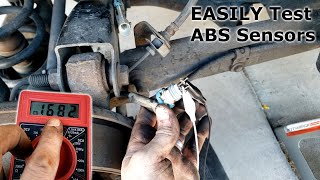
For passive sensors: Disconnect the sensor. Measure resistance across its two pins (expect 800-2,500 Ohms). Switch to AC Volts, spin the wheel by hand, and look for at least 100-500mV. For active sensors: Back-probe the signal wire with an oscilloscope to verify a clean square wave while spinning the wheel.
Tools: Multimeter, Oscilloscope (for active sensors), Back-probe Kit (Advanced) - Test Harness for Voltage, Ground, and Resistance
Disconnect the sensor and turn the key ON. Test the vehicle-side connector for reference voltage (typically 5V or 12V) and a solid ground (less than 1 ohm to chassis). Perform a voltage drop test on both wires back to the EBCM to uncover hidden resistance in the harness.
Tools: Multimeter, Vehicle Service Manual, Back-probe Kit (Professional)
When This Code Triggers (Freeze-Frame Conditions)
- Vehicle Speed: 0 mph (Sets immediately at key-on. The EBCM performs a circuit integrity test with a bias voltage before the vehicle moves.)
- Vehicle Speed: 15-45 mph (Triggers during driving when a wiring issue manifests as the suspension flexes or vibrates.)
- System Voltage: 12.0-14.5V (Normal operating voltage. The code isolates the sensor circuit, though a dead battery causes multiple module errors.)
Related Codes
- C0660 — Indicates 'Level Control Exhaust Valve Circuit Malfunction' on GM vehicles. Often appears with C0661 due to shared wiring. Fixing the wheel speed sensor circuit usually clears both.
- C0561 — Indicates 'Invalid Serial Data Received'. C0661 is the root cause (bad data from the wheel), while C0561 is the symptom (the EBCM is confused). Fixing C0661 resolves C0561.
- U0121 — Indicates 'Lost Communication With ABS Control Module'. If present with C0661, the entire EBCM is offline due to a major power, ground, or data bus failure, not just a single sensor.
- C0659 — The partner code to C0661, indicating 'Left Rear Wheel Speed Sensor Circuit High Voltage'. Points to a short to power rather than a short to ground or open circuit.
Climate & Environmental Factors
- Road Salt / Saline Environments: Saltwater accelerates corrosion of wiring harness connectors and pins, causing high resistance. It also rusts the tone ring and seizes the sensor body in the wheel hub.
- High Humidity: Moisture creeps into compromised wire insulation or non-weatherproofed connectors, leading to intermittent signal loss as temperatures fluctuate.
- Extreme Cold: Wiring insulation becomes brittle and cracks as the suspension flexes. Frozen water inside connectors pushes contacts apart.
- Rough Roads / Off-Road Use: Harsh suspension movement fatigues the sensor's wiring harness, causing internal wire breaks. Debris strikes cause direct physical damage.
How to Talk to a Mechanic About This Code
Say this: "I have an ABS light on and my scanner shows code C0661 for the left rear wheel speed sensor circuit. Please start with a visual inspection of the harness and connector, and test the circuit's continuity and voltage before recommending a new sensor."
Directs the technician to perform proper electrical diagnosis rather than blindly replacing the sensor, saving you money on unnecessary parts.
Avoid saying:
- 'My ABS light is on, just fix it.'
- 'I think I need a new wheel speed sensor.'
- 'Just do whatever you think is best.'
Questions to ask before authorizing the repair:
- Did you find the specific point of failure in the wiring, connector, or sensor?
- If it's the wiring, can it be repaired, or does the harness need replacement?
- Did you test the sensor's output and check for a worn wheel bearing?
- Can you show me the damaged part or the bad reading on your meter?
Where to Take It: Dealer vs Independent vs Chain
- Dealer:
Recommended only if your vehicle has a related recall or if independent diagnosis fails.
Best for: Vehicles under warranty., Repairs related to a known recall or TSB involving software updates.
Downsides: Highest labor rates and parts costs., Inclined to replace entire harnesses rather than perform simple wire repairs. (Typical cost: +50% vs. baseline) - Independent Shop:
Best fit. A competent independent shop easily diagnoses and repairs common C0661 causes at a reasonable price.
Best for: Out-of-warranty vehicles., Common failures like wiring damage or sensor replacement.
Downsides: Quality varies; look for ASE-certified technicians., May lack manufacturer-specific scan tools for complex EBCM programming. (Typical cost: +0% vs. baseline) - Chain Shop:
Avoid for initial diagnosis. Acceptable only if you know you just need a sensor swapped.
Best for: Simple parts replacement if you have already diagnosed the exact problem.
Downsides: Incentivized to sell parts rather than perform detailed diagnostics., Less experienced in tracing complex wiring faults. (Typical cost: -10% vs. baseline)
When to Walk Away From the Repair
If the estimated repair cost exceeds 40-50% of the car's current market value, evaluate your options. A disabled safety system like ABS significantly lowers the 'fix it' threshold.
- Car worth $4000, fix is $350: Fix it. This inexpensive repair restores a critical safety feature.
- Car worth $4000, fix is $1800: Walk away. The repair cost approaches half the car's value for a failed ABS module.
- Car worth $15000, fix is $750: Fix it. Replacing the wheel hub assembly is well below the threshold and restores full safety.
What Scan Tool You Need for This Code
Minimum: An OBD-II scanner that reads/clears ABS codes and supports live data viewing for wheel speed sensors.
A standard $20 engine code reader cannot communicate with the ABS module. It will not see C0661 or stream the live wheel speed data required for diagnosis.
Rent vs buy: Auto parts stores offer free scanning services that read ABS codes. If you DIY, buying a budget scanner with ABS live data is a worthwhile investment.
How to Clear the Code After You Fix It
- Fix the underlying mechanical or electrical fault.
- Use an OBD-II scan tool with ABS/Chassis capabilities to erase the fault from the EBCM.
- Perform a test drive exceeding 15 mph with at least one left and right turn so the EBCM verifies sensor operation.
Drive cycle (~10 minutes): Start the vehicle and drive for 5-10 minutes above 15 mph. The ABS light remains off if the fault is properly corrected.
Readiness monitors affected: None
Watch out for:
- Using a basic engine code reader that cannot communicate with the ABS module.
- Failing to test drive the vehicle after repair to confirm the fix.
- Clearing the code without fixing the wiring; the light returns instantly.
Will This Fail Emissions / State Inspection?
No — by itself this code doesn't fail OBD inspection (but it can keep readiness monitors from setting, which causes a separate fail).
- California: Passes standard smog check. Fails the stringent 'Brake and Lamp' inspection required for salvage vehicles.
- New York: Fails the annual safety inspection automatically due to the illuminated ABS warning light.
- Texas: Passes the state safety inspection. Texas rules explicitly state an ABS light is not a cause for rejection.
Most Commonly Affected Vehicles
- Chevrolet Silverado 1500 (2007-2018) — Wires frequently chafe on the frame or suspension components. 2014-2018 models have a recall (NHTSA 19V889000) for unintended EBCM activation related to wheel speed sensor failures, requiring a software reprogram.
- GMC Sierra 1500 (2007-2018) — Shares the Silverado's wiring vulnerabilities and the NHTSA 19V889000 EBCM software recall.
- Ford F-150 (2015-2023) — The rear ABS sensor harness routes poorly. Recall 23S35 covers 2021-2023 models where the rear axle wiring harness chafes against the axle housing, causing signal loss.
- Honda Odyssey (2018-2022) — A single faulty wheel speed sensor causes a 'Christmas tree' effect, illuminating warning lights for ACC, brake system, and lane departure due to CAN bus communication errors.
- Volkswagen Passat, Golf, Jetta (2012-2016) — A faulty rear wheel speed sensor triggers simultaneous warnings for ABS, ESC, electronic parking brake, and power steering. The sensor is integrated into the wheel bearing assembly.
Manufacturer-Specific Notes
- General Motors (Chevrolet, GMC, Cadillac): A 'Service Stabilitrak' message is the first sign. The root cause is almost always a chafed wiring harness along the left frame rail, not the sensor itself. Check TSB 08-05-25-004.
- Ford: On F-150s, a damaged rear harness causes faults in the electronic locking differential. A single wire break manifests as both an ABS light and a 'Check 4x4' message.
- Chrysler/Dodge/Jeep: A failing ABS module (CAB) is highly common. If the sensor and wiring test perfectly, the module itself is the likely culprit. Look for water intrusion around the module.
- Honda/Acura: Systems are extremely sensitive. A C0661 fault triggers a cascade of warning lights for unrelated systems like Adaptive Cruise Control (ACC) and Lane Keeping Assist (LKAS).
Real Owner Stories
2015 Chevy Silverado 1500 at 110K miles
ABS and Stabilitrak lights stayed on. Code C0661 present.
What they tried:
- Replaced the left rear wheel speed sensor ($70 part), but the code returned immediately.
Outcome: Traced the wiring harness along the frame rail. Found a spot near a body mount where the harness rubbed through, exposing wires. Repaired the broken wire with a solder sleeve and wrapped it in protective loom. Total cost was under $10. Lights stayed off.
Lesson: Always inspect the wiring harness on GM trucks before replacing the sensor. Chafing is the primary failure point.
2016 Ford F-150 at 85K miles
ABS light on, code C0661. Intermittent 'Check 4x4' message.
What they tried:
- Shop quoted $450 to replace the sensor and harness pigtail.
- Owner inspected the rear axle wiring harness.
Outcome: Discovered the harness rubbing against the axle housing, matching Ford's recall 23S35. The dealer performed the repair (installing a new harness with a shield) free of charge.
Lesson: Check for recalls or TSBs before paying for repairs. Presenting evidence of a known problem leads to goodwill repairs.
2012 Honda Odyssey at 130K miles
ABS, VSA, and traction control lights on. Code C0661.
What they tried:
- Replaced the sensor. Light returned.
- Tested wiring continuity; it passed.
Outcome: Checked the left rear wheel for play and found significant wobble. The failing wheel bearing increased the air gap between the sensor and tone ring, causing the low voltage signal. Replacing the wheel hub assembly ($250 part + 3 hours labor) fixed the issue.
Lesson: If the sensor and wiring are good, check for mechanical issues. A worn wheel bearing causes ABS codes before grinding noises start.
How to Prevent This Code From Triggering
- Apply dielectric grease to the ABS sensor connector. (Whenever the connector is disconnected.) — Seals electrical connectors from moisture and salt, preventing pin corrosion that causes high resistance and low voltage signals.
- Perform seasonal undercarriage washes. (Twice during winter and once at season's end in the 'Salt Belt'.) — Removes corrosive road salt and de-icing brines before they penetrate wire insulation or connector seals.
- Inspect wiring harness routing during tire rotations. (Every 5,000-7,500 miles.) — Ensures the wire is securely clipped and not rubbing against suspension components or the frame.
- Apply a light coat of bearing grease to the sensor body before installation. (Only when installing a new sensor.) — Prevents rust from locking the sensor into the wheel hub, saving labor costs on future removals.
Frequently Asked Questions
Can I just replace the sensor to fix code C0661?
You can, but it's often a waste of money. Damaged wiring is the most common cause for this specific 'low voltage' code. Always perform a thorough visual inspection and test the wiring for continuity, shorts, and proper voltage/ground at the connector before replacing the sensor.
What is the most common misdiagnosis for C0661?
The most common mistake is immediately replacing the wheel speed sensor without testing the wiring. The second most common is replacing the expensive EBCM/ABS module before exhaustively checking for a simple break or short in the harness between the sensor and the module.
How much does it cost to fix code C0661 in 2026?
A simple wiring repair costs $140-$310, while replacing a wheel speed sensor typically runs $150 to $350. Replacing the entire wheel hub costs $300-$750. A rare ABS control module failure is the most expensive fix, costing $400-$1,100.
Will clearing the code make the light go away?
Clearing the code with a scanner turns the light off momentarily, but it returns within seconds of driving. The EBCM runs a self-test at startup and immediately detects the low voltage fault again. You must repair the underlying physical fault to keep the light off.
Why does my dashboard say 'Service Stabilitrak' for a wheel sensor code?
Stabilitrak requires precise speed data from all four wheels to function. Code C0661 means the computer lost the reliable speed signal from the left rear wheel, making stability calculations impossible. The computer disables the entire system and displays the service message as a safety precaution.
Can a bad alignment cause code C0661?
No, a bad alignment itself does not cause a C0661 code. However, a severe impact that knocks out the alignment (like hitting a large pothole) often damages the wheel speed sensor or its wiring harness simultaneously. A visual inspection of the sensor and harness is critical after an impact.
Does C0661 affect the transmission?
This specific chassis code does not directly affect transmission shifting on most vehicles. However, on models that use wheel speed data for shift logic, you will notice altered or harsh shift patterns. It is uncommon for this specific sensor fault to cause major transmission failure.
What does 'Circuit Low Voltage' actually mean?
'Circuit Low Voltage' means the EBCM sees a voltage from the sensor below its expected minimum threshold. This is caused by an open circuit (broken wire), a short to ground (wire rubbing on the frame), or high resistance (corrosion). These faults consume the voltage before it reaches the module.
Key Takeaways
- Code C0661 indicates the Electronic Brake Control Module (EBCM) detects a low voltage signal from the left rear wheel speed sensor, instantly disabling your ABS and traction control.
- Damaged wiring or a corroded pigtail connector causes over 60% of C0661 codes, making visual inspection critical before buying a replacement sensor.
- Repair costs range from $15 for DIY wire splicing to $350 for a shop to replace the sensor, while ignoring the code increases emergency stopping distances by up to 20%.
- Diagnosis requires an OBD-II scanner with ABS live data capabilities to verify if the left rear sensor reads 0 mph while driving.
Helpful Videos
Shop the Parts Behind C0661
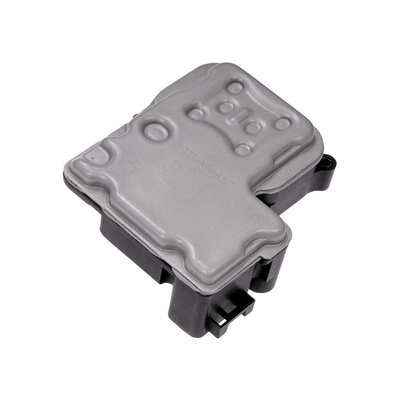
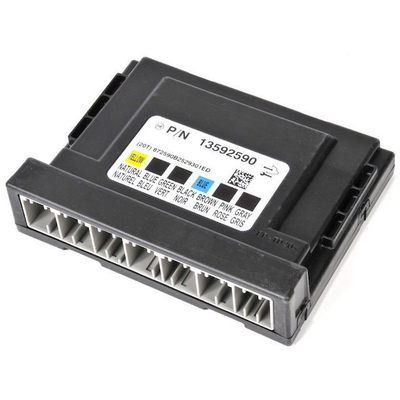
Below are the parts most often responsible for code C0661, ranked by how frequently each one is the actual culprit (per the diagnosis above). Tap any to see what we have for your vehicle.



The information in this article is provided for general reference and educational purposes only. Vehicle specifications, procedures, and part compatibility can vary by production date, trim level, and region. Always consult your vehicle's factory service manual and verify part numbers before purchasing or performing repairs. Safety-critical components such as airbags, seat belts, and braking systems should be installed by a qualified professional.
- 🧭 Diagnostic Flowchart
- 🎬 Helpful Videos
- 🛍️ Shop This Part
- What Does C0661 Mean?
- Can I Drive With C0661?
- Common Causes
- Symptoms
- Common Fixes & Costs
- DIY vs Professional
- Used vs. New Parts: Buying Guide
- What Happens If You Wait — Timeline
- Cost of Not Fixing It
- Diagnosis Steps
- When This Code Triggers (Freeze-Frame Conditions)
- Related Codes
- Climate & Environmental Factors
- How to Talk to a Mechanic About This Code
- Where to Take It: Dealer vs Independent vs Chain
- When to Walk Away From the Repair
- What Scan Tool You Need for This Code
- How to Clear the Code After You Fix It
- Will This Fail Emissions / State Inspection?
- Most Commonly Affected Vehicles
- Manufacturer-Specific Notes
- Real Owner Stories
- 2015 Chevy Silverado 1500 at 110K miles
- 2016 Ford F-150 at 85K miles
- 2012 Honda Odyssey at 130K miles
- How to Prevent This Code From Triggering
- Frequently Asked Questions
- Can I just replace the sensor to fix code C0661?
- What is the most common misdiagnosis for C0661?
- How much does it cost to fix code C0661 in 2026?
- Will clearing the code make the light go away?
- Why does my dashboard say 'Service Stabilitrak' for a wheel sensor code?
- Can a bad alignment cause code C0661?
- Does C0661 affect the transmission?
- What does 'Circuit Low Voltage' actually mean?
- Key Takeaways
- 🎟️ Get 5% Off