

OBD-II Code C0696: Suspension Position Sensor Circuit Fault
What C0696 means, why it triggers, and how to fix it on GM vehicles
- Code C0696 on GM vehicles indicates a critical electrical short in the air suspension's 5-volt reference circuit, which must read between 4.75V and 5.25V.
- Inspect the air compressor wiring harness where it rubs against the vehicle frame before buying parts, as chafed wires cause over 80% of C0696 codes.
- GM Technical Service Bulletin PIT4954D explicitly warns technicians to repair the pinched compressor wiring harness rather than unnecessarily replacing the $500 compressor assembly.
- Driving with a disabled auto-leveling system accelerates wear on rear shocks and tires, potentially adding $400 to $1,000 in secondary repair costs within 3 to 12 months.
What Does C0696 Mean?
Code C0696 means the Electronic Suspension Control (ESC) module detected a critical electrical short in the automatic leveling suspension system. The voltage in the 5-volt sensor reference circuit—which powers the suspension position sensors and the compressor's pressure sensor—is either too high or too low, triggering the 'Service Suspension System' dashboard message.
Technical definition: The SAE/ISO definition for C0696 is "Position Sensor Overcurrent." The ESC module sensed the supply voltage for the suspension position sensor or Automatic Level Control (ALC) sensor is outside the 4.75V to 5.25V range for at least one second over four consecutive ignition cycles. A short to ground in the sensor's wiring harness is the primary trigger.
Can I Drive With C0696?
Yes, But With Caution. You can drive the vehicle, but the automatic leveling system is disabled, leading to a harsh, bouncy ride and a sagging rear end. This affects handling, braking stability, and headlight aim, creating unsafe conditions at highway speeds or when towing. Ignoring the issue causes the air compressor to burn out from running constantly (if an air leak is present) or leads to accelerated wear on shocks and tires, increasing future repair costs. Some owners report a speed limitation of 85 mph when the 'Service Suspension System' message is active.
Common Causes
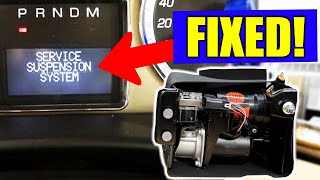
- Damaged Air Compressor Wiring Harness (Very Common) — The air suspension compressor wiring harness notoriously rubs against the vehicle's frame or bracket, causing wires to chafe and short out. This is the most frequent cause, explicitly documented in GM Technical Service Bulletin (TSB) PIT4954D. 🎬 Watch: How to find and fix common GM suspension wiring faults.
- Internal Wire Break in Harness (Common) — The 5V reference wire (often gray or dark green) breaks internally inside its insulation due to stress and vibration. The harness looks perfectly fine visually, but a continuity 'tug' test reveals the hidden break.
- Failed Air Suspension Compressor Assembly (Common) — The compressor unit fails from age or overwork caused by leaking air shocks. The internal pressure sensor also fails from moisture intrusion after the dryer desiccant saturates, causing an internal short.
- Leaking Rear Air Shocks or Springs (Common) — Leaking air shocks force the compressor to run constantly. This overworks and burns out the compressor, triggering C0696 as a secondary electrical failure.
- Blown Fuse or Faulty Relay (Less Common) — A short circuit or seized compressor motor draws excessive power, blowing the suspension system fuse (labeled 'ALC', 'RTD', or 'ECAS'). The relay sending power to the compressor also fails under high current.
- Melted Compressor Electrical Connector (Less Common) — A failing compressor motor draws excessive current, overheating and melting the main power pin within the electrical connector. This creates an open circuit or poor connection.
- Failed Suspension Position Sensor (Rare) — One of the individual ride height sensors on the suspension control arms shorts out internally. This brings down the entire shared 5-volt reference circuit.
- Failed Electronic Suspension Control (ESC) Module (Rare) — The control module fails and shorts the 5-volt reference circuit internally, sometimes causing a parasitic battery drain. Consider this only after exhaustively ruling out wiring and compressor faults.
- Corroded or Loose Ground Wires (Rare) — The ESC module relies on clean frame grounds (G304/G305). A loose or corroded ground connection causes erratic voltage readings.
Symptoms
- 'Service Suspension System' Message — This warning light appears on the dashboard's driver information center (DIC).
- Rear of Vehicle Sagging — The rear suspension fails to hold air or inflate, causing the back of the vehicle to sit lower than normal, especially when loaded.
- Rough, Bouncy Ride — Without the air suspension working, the ride becomes harsh, and the vehicle rides solely on its coil springs. 🎬 See this walkthrough on troubleshooting and repairing the AutoRide system.
- Air Compressor Does Not Run — The air compressor never turns on, even during its normal startup self-test, because the ESC module disabled it due to the fault.
- Audible Air Leak — A hissing sound from the rear of the vehicle indicates a leak in the air shocks or lines, which frequently causes compressor burnout.
- Parasitic Battery Drain — A shorted ESC module or a constantly running exhaust solenoid creates a parasitic draw that drains the battery when the vehicle is off.
Diagnostic Flowchart
Tap your situation to follow the diagnostic path that matches what you're seeing on this code.
Common Fixes & Costs
- Repair Damaged Air Compressor Wiring Harness — Parts: $15-$75, Labor: $200-$500, ~2 hr book time (Intermediate)
- Replace Air Suspension Compressor Assembly — Parts: $200-$600, Labor: $150-$300, ~1.5 hr book time (Intermediate)
- Replace Leaking Rear Air Shocks — Parts: $200-$600, Labor: $150-$400, ~1.8 hr book time (Intermediate)
- Replace Blown Fuse and/or Relay — Parts: $5-$30, Labor: $0-$75, ~0.2 hr book time (DIY)
- Replace Failed Electronic Suspension Control (ESC) Module — Parts: $150-$400, Labor: $100-$200, ~2 hr book time (Professional)
Used vs. New Parts: Buying Guide
When a used part is worth it: A used OEM air compressor assembly from a low-mileage, accident-damaged vehicle is a cost-effective option for a tight budget, especially on an older, high-mileage vehicle. Verify the donor vehicle's mileage and ensure it wasn't scrapped due to suspension or electrical issues.
Donor-vehicle mileage cap: roughly under 70000 miles for the part to have meaningful remaining life.
Donor quality checklist:
- Visually inspect the used compressor for heavy corrosion or physical damage.
- Ask the seller for the VIN of the donor vehicle to verify mileage and ensure it's from a compatible model year and platform (e.g., GMT900).
- Avoid parts from regions with heavy road salt usage, as corrosion is a major failure point for the wiring and compressor housing.
Decision logic:
- If The fault is confirmed to be the compressor and not wiring. → Consider a new aftermarket unit (e.g., Dorman, Arnott) which comes with a 1-year to lifetime warranty and incorporates design improvements over the original.
- If Vehicle is over 150K miles and you plan to sell it soon. → A tested, low-mileage used compressor is a reasonable gamble to restore functionality at the lowest cost.
- If You plan to keep the vehicle long-term. → Buy a new OEM or high-quality aftermarket compressor. The reliability and warranty are worth the extra cost over a used part with unknown remaining life.
Warranty tradeoff: Used parts from salvage yards typically offer a 30-90 day warranty, covering only the part itself, not labor. New aftermarket parts carry a 1-year to limited lifetime warranty. New OEM parts have a 1-2 year warranty.
Worst-case if a used part fails: $300-$600 if a used compressor fails shortly after installation, as you pay for the replacement part and the labor to install it a second time.
What Happens If You Wait — Timeline
- First Occurrence: 'Service Suspension System' light appears. The ESC module detects the voltage fault and disables the auto-leveling system. The rear of the vehicle sags to its baseline height. Ride becomes noticeably harsher. (Added cost: $0)
- 1-3 Months: Continued driving on a disabled system. The vehicle constantly rides on its bump stops or the un-aired shocks. This causes accelerated wear on the shock absorbers themselves and the tires due to poor suspension geometry. (Added cost: $400-$1000 (Cost to replace a pair of prematurely worn rear air shocks and/or two rear tires with uneven wear).)
- 3-12 Months: If the C0696 code was triggered secondary to an air leak, the compressor was running constantly before the ESC shut it down. If the fault is intermittent, the compressor continues to overwork itself during periods when the code is not active, leading to complete burnout. (Added cost: $500-$1500 (Cost to replace a burnt-out air compressor assembly that might have been salvageable if the leak was fixed earlier).)
- 12+ Months: Catastrophic component failure. The uncontrolled movement and bottoming-out of the rear suspension places extreme stress on other components like control arm bushings, shock mounts, and ball joints, causing them to fail prematurely. A wiring short potentially damages the ESC module itself. (Added cost: $1500-$3000+ (Cost of replacing the original failed part plus the compressor, shocks, and other damaged suspension components like bushings or mounts).)
Cost of Not Fixing It
- 0-3 months: Disabled auto-leveling results in a harsh, bouncy ride and a sagging rear end. This causes poor handling, incorrect headlight aim, and increased braking distances, posing a safety risk. (Added cost: Negligible)
- 3-12 months: Driving on deflated or non-functional air shocks causes them to wear out prematurely. The constant bottoming-out of the suspension leads to accelerated wear on tires due to poor alignment geometry. (Added cost: $400-$1000 (Cost to replace a pair of worn rear air shocks and/or two rear tires).)
- 12+ months: If the root cause was an air leak that triggered the electrical fault, a constantly running compressor burns itself out. Continued stress on all rear suspension components (bushings, mounts) from uncontrolled movement leads to additional failures. (Added cost: $500-$1500+ (Cost to replace a burnt-out air compressor assembly plus other worn suspension components).)
Diagnosis Steps
- Read the Trouble Codes
Use an OBD-II scanner capable of reading Chassis (C) codes to confirm C0696 is present. Note any other codes; C0711 often appears alongside it and points to the exact same root cause. A code that returns instantly after being cleared indicates a hard fault, like a short circuit.
Tools: OBD-II Scan Tool (with Chassis code capability) (Beginner) - Visually Inspect the Air Compressor Wiring
Raise and safely support the rear of the vehicle. Locate the air compressor on the driver's side frame rail. Unbolt the compressor from its bracket to get a full view of the harness where it passes between the compressor and the frame. Look for pinched wires, chafing, breaks, green corrosion, or melted plastic on the main connector.
Tools: Jack, Jack Stands, Flashlight, Basic Hand Tools (Intermediate) - Check Fuses and Relays
Inspect the suspension system fuses in the underhood fuse block, labeled 'ALC', 'ECAS', 'RTD', or 'EC/SUSP' (e.g., #2 30A, #54 10A, #58 40A). Swap the compressor relay with an identical one from a non-essential system (like the horn) to test relay function.
Tools: Owner's Manual, Fuse Puller or Pliers (Beginner) - Test the 5-Volt Reference Circuit
Disconnect the main electrical connector at the air compressor. With the ignition ON, set a multimeter to DC volts. Probe the 5-volt reference wire (typically gray or dark green) and a known good ground. A normal reading is 4.75-5.25 volts. A reading near 0V indicates a short to ground. A reading near battery voltage indicates a short to power.
Tools: Multimeter, Wiring Diagram (Advanced) - Perform a Wire Continuity 'Wiggle' Test
If visual inspection reveals no damage, test for an internal wire break. Set your multimeter to the continuity (beep) setting. Probe both ends of the suspect 5V reference wire. While watching the meter, wiggle and pull on the harness along its entire length. A loss of continuity reveals the location of the internal break.
Tools: Multimeter, Wiring Diagram (Advanced) - Isolate the Shorted Component
If the 5V reference is missing with everything connected, perform an isolation test. With the ignition OFF, disconnect the harness at the compressor AND all four suspension position sensors. Turn the ignition ON and re-test the 5V reference. If the 5V returns, plug each component back in one-by-one until the voltage drops. The component causing the drop has the internal short.
Tools: Multimeter, Basic Hand Tools (Advanced) - Inspect for Air Leaks
If the compressor runs excessively, check the air shocks and lines for leaks. With the system inflated, spray soapy water on the air bladders and connections. Bubbles indicate a leak. Leaks overwork and burn out the compressor, leading to electrical failure.
Tools: Soapy Water in a Spray Bottle (Beginner) - Monitor Live Data and Command Compressor
Using a bi-directional scan tool, monitor live data. Position sensor voltage must sweep smoothly from ~0.35V to 4.75V when the suspension is bounced. Command the compressor ON. If it doesn't run, check for 12V power and ground at the connector. An amp clamp showing a draw over 30A indicates a seized motor.
Tools: Bi-directional Scan Tool, Multimeter, Amp Clamp (optional) (Professional) - Test Sensor and Ground Circuit Resistance
With the ignition OFF and components disconnected, use a multimeter on the Ohms (Ω) setting. Test resistance between the 5V reference and low reference terminals on a disconnected position sensor; a good sensor reads 2.5–3.0 kΩ. Test the low reference (ground) circuit terminal in the harness connector to a clean chassis ground; a good ground path is less than 2.0 ohms.
Tools: Multimeter, Wiring Diagram (Advanced)
When This Code Triggers (Freeze-Frame Conditions)
- Battery Voltage: 12.5-14.5V (Normal operating voltage; fault is detected with ignition on.)
- Ignition Status: ON (The fault is checked during 4 consecutive ignition cycles.)
- Vehicle Speed: 0-65 mph (Fault is detected at key-on (0 mph) or while driving.)
- Suspension 5V Reference: < 4.75V or > 5.25V (This is the direct trigger; the voltage is out of the acceptable range.)
Related Codes
- C0711 — This code for the 'Automatic Level Control (ALC) Air Pressure Sensor Circuit' frequently appears with C0696. They are caused by the exact same wiring harness issue. TSB PIT4954D groups them together.
- C0660 — This code points to the 'Level Control Exhaust Valve Circuit'. Since the valve is part of the compressor assembly, a short in the main harness, a faulty compressor, or a bad ESCM affects both circuits and triggers both codes.
- C0569 — This code for 'System Configuration Error' appears if the ESC module is replaced and not programmed correctly, or if it loses communication due to a power or ground issue causing C0696.
- C0800 — This code indicates 'Device Power #1 Circuit Malfunction' and sets in the ESC module if there is a problem with the main power supply. A significant short circuit causing C0696 disrupts the module's overall power.
Climate & Environmental Factors
- Road Salt and Humidity: Vehicles operated in the 'Salt Belt' or humid coastal climates are significantly more prone to C0696. Salt and moisture accelerate the corrosion of the wiring harness, especially where it is already chafed. This corrosion creates a low-resistance path to the steel frame, causing a short to ground.
- Cold Weather: In very cold temperatures, the plastic insulation on wires becomes brittle and less flexible. This causes the insulation to crack at stress points, such as where the harness bends or vibrates against the frame, exposing the copper wire.
- Rough Roads and Vibration: Constant vibration from driving on poorly maintained roads contributes directly to the chafing of the compressor wiring harness against the frame. This mechanical wear exposes the wire, allowing environmental factors to cause the electrical short.
How to Talk to a Mechanic About This Code
Say this: "I have a 'Service Suspension System' light and a C0696 code on my GM vehicle. I'd like to schedule a diagnostic appointment. Based on my research, I know this is often caused by a chafed wiring harness near the air compressor, as noted in GM's TSB PIT4954D. Please start by inspecting that specific harness before recommending a new compressor."
This immediately signals to the service advisor that you are informed about the common failure mode for this specific code. It directs the technician to the most likely and cheapest fix first, preventing a common misdiagnosis where an expensive compressor is replaced unnecessarily.
Avoid saying:
- 'My suspension light is on, can you fix it?' (This is too vague and invites a parts-first diagnostic approach).
- 'I think I need a new air compressor.' (This leads a shop to simply replace the part you suggested without proper diagnosis, which won't fix a wiring issue).
- 'Just do whatever it takes to fix it.'
Questions to ask before authorizing the repair:
- Did you physically unbolt the compressor to inspect the wiring harness between it and the frame?
- If the wiring is bad, can you show me the damaged section?
- If you are recommending a compressor, what tests did you perform to confirm the wiring and the 5-volt reference circuit are good?
- Does your estimate include replacing the compressor relay as a best practice?
Where to Take It: Dealer vs Independent vs Chain
- Dealer:
Recommended only if the issue is complex (potential module failure) or if you prefer OEM parts and dealer service, but be prepared for higher costs.
Best for: Vehicles still under warranty., Complex cases where the ESC module requires replacement and programming.
Downsides: Highest labor rates., More inclined to replace the entire compressor assembly rather than perform a time-consuming wiring repair. (Typical cost: +50% vs. baseline) - Independent Shop:
Best fit. This is a very common, well-documented problem. An experienced independent mechanic who works on GM vehicles will have seen this exact issue before and knows to check the wiring first.
Best for: Out-of-warranty vehicles where cost is a factor., Shops with good reviews and experience with GM trucks and SUVs.
Downsides: Quality and experience vary greatly., Ensure they have a scan tool capable of reading chassis (C) codes and performing bidirectional controls for the suspension system. (Typical cost: +0% vs. baseline) - Chain Shop:
AVOID. This code requires specific diagnostic steps that are often missed, leading to expensive misdiagnosis. A chain shop is not the ideal environment for this type of electrical troubleshooting.
Best for: Simple, unrelated maintenance like oil changes or tires.
Downsides: Technicians lack the specific experience with this GM TSB., Higher likelihood of upselling an unnecessary compressor replacement due to pressure to sell parts., Lack the advanced diagnostic tools to properly test the system. (Typical cost: -10% vs. baseline)
When to Walk Away From the Repair
If the estimated repair cost for the suspension system exceeds 50% of your vehicle's current private-party value (e.g., from Kelley Blue Book), it's time to seriously consider selling or trading it in.
- Car worth $8000, fix is $1200: Fix it. The repair cost is well under the threshold and restores significant value and safety to the vehicle.
- Car worth $5000, fix is $2500: Borderline. This is a major repair relative to the car's value. Consider if the vehicle has other pending issues. A cheaper alternative is a coil spring conversion kit.
- Car worth $3500, fix is $2800: Walk away. The repair cost is not economically viable. The money is better put towards a replacement vehicle.
What Scan Tool You Need for This Code
Minimum: A scanner that reads and clears Chassis (C) codes. A basic engine code reader will not see code C0696.
A standard $20-$50 OBD-II reader only communicates with the Powertrain Control Module (engine and transmission). Code C0696 is stored in the Electronic Suspension Control (ESC) module, which requires a more advanced scanner to access.
Budget: BlueDriver Pro (~$99) — Reads and clears enhanced codes, including Chassis (C) codes for GM vehicles. Allows you to see freeze-frame data to know the conditions when the code was set.
Mid-range: FOXWELL NT510 Elite for GM (~$180) — Offers full system diagnostics for GM vehicles. Crucially, it provides bi-directional control, allowing you to command the air compressor and exhaust solenoid to turn on/off, which is essential for confirming if the compressor motor is functional after checking the wiring.
Professional: Autel MaxiCOM MK808 / Launch X431 Series (~$500-1200) — Provides full OE-level diagnostics, including bi-directional control, live data graphing for sensor voltages, and access to special functions. These are professional-grade tools that diagnose any module on the vehicle.
How to Clear the Code After You Fix It
- Perform the wiring or component replacement with the battery disconnected.
- Reconnect the battery.
- Use an OBD-II scan tool capable of reading Chassis codes to clear the fault from the Electronic Suspension Control (ESC) module.
- Perform a key-on, key-off cycle and re-read codes to ensure the hard fault does not immediately return.
- If the battery was disconnected, perform a complete GM drive cycle to allow emissions readiness monitors to reset.
Drive cycle (~20 minutes): From a cold start (engine temp below 122°F), idle for 2-3 minutes with electrical loads on (A/C, rear defrost). Accelerate to 55 mph and hold a steady speed for 3-5 minutes. Coast down to 20 mph without braking. Accelerate again to 55-60 mph and hold for 5 minutes. Coast down again.
Readiness monitors affected: Catalyst Monitor, Evaporative System Monitor, Oxygen Sensor Monitor, Oxygen Sensor Heater Monitor
Before emissions retest: drive at least 50 miles to fully set monitors.
Watch out for:
- Using a basic code reader that only clears Powertrain (P) codes will not clear a Chassis (C) code from the suspension module.
- The code returns instantly if the underlying electrical short or open circuit is not properly repaired.
- Simply disconnecting the battery does not clear the fault code from the module's memory, though it resets emissions monitors.
Will This Fail Emissions / State Inspection?
No — by itself this code doesn't fail OBD inspection (but it can keep readiness monitors from setting, which causes a separate fail).
- California: A C-code does not fail the OBD-II portion of the smog check, which looks for powertrain codes and monitor readiness. However, if the battery was disconnected for the repair, you must complete a drive cycle to set the readiness monitors before the test.
- New York: NYS vehicle safety inspections check for a functional suspension. A 'Service Suspension System' light and a visibly sagging rear end are grounds for a safety inspection failure, separate from the emissions test.
- Texas: In counties requiring it, the safety inspection includes checking the suspension. An illuminated suspension warning light and improper ride height result in a failure.
Most Commonly Affected Vehicles
- Cadillac Escalade, Escalade ESV, Escalade EXT (2001-2014) — Extremely common issue due to the Autoride (Z55) suspension. The wiring harness for the air compressor is highly prone to chafing against the frame. TSB PIT4954D directly addresses this.
- GMC Yukon, Yukon XL, Yukon Denali (2001-2014) — Shares the same GMT platform and Autoride suspension system as the Escalade, with the identical wiring harness vulnerability near the compressor.
- Chevrolet Tahoe, Suburban (2001-2014) — These models with the Autoride (Z55) option have the exact same failure point where the compressor wiring gets pinched or corrodes. The dark green or gray 5V reference wire is the usual culprit.
- Chevrolet Avalanche (2002-2013) — Equipped with the Z55 Autoride suspension, the Avalanche is highly susceptible to the well-documented air compressor wiring failure.
- Hummer H2 (2003-2009) — Built on a modified GM truck platform, the H2's rear air suspension system shares components and failure modes with the Tahoe and Yukon.
- Buick Rainier (2004-2007) — This mid-size SUV offered an air suspension system that experiences similar sensor circuit faults, though less common than on full-size SUVs.
- GMC Envoy (2002-2009) — Like its platform-mate the Buick Rainier, the Envoy with rear air suspension suffers from sensor circuit issues.
- Chevrolet Trailblazer (2002-2009) — The Trailblazer EXT models equipped with optional rear air suspension are susceptible to this code, typically due to sensor or wiring failures in the rear wheel wells.
Manufacturer-Specific Notes
- General Motors (Cadillac, Chevrolet, GMC): GM issued Technical Service Bulletin (TSB) PIT4954D addressing codes C0696 and C0711. It explicitly identifies the primary cause as the wiring to the air compressor being pinched against the frame and warns technicians NOT to replace the entire compressor assembly if only the wiring is at fault.
- General Motors (and other makes): The C0696 code is overwhelmingly specific to General Motors vehicles with Autoride (Z55) or similar electronic suspension systems. Other manufacturers have unique chassis codes for similar faults.
- General Motors: The Electronic Suspension Control (ESC) module disables the compressor when C0696 is set as a fail-safe. A non-running compressor is a symptom of this code, not proof that the compressor itself failed mechanically.
- General Motors: On GMT900 platforms (2007-2014), a faulty ESC module causes the exhaust solenoid to be constantly grounded, leading to a parasitic battery drain of around 0.5 amps.
- General Motors: There are no active safety recalls or special warranty coverage programs for code C0696. The issue is addressed by a Technical Service Bulletin (TSB), which is a repair advisory for dealers, not a recall.
Real Owner Stories
2007 Chevy Tahoe LTZ at ~120K miles - The Classic Wiring Fix
Owner reported the 'Service Suspension System' message appeared on the dash and the rear of the vehicle was sagging. The air compressor was not turning on at startup.
What they tried:
- Initial thought was a failed air compressor since it wasn't running.
- Checked the 'ECAS' fuse in the underhood fuse block; it was okay.
- Based on forum advice, decided to inspect the compressor wiring before buying parts.
Outcome: After removing the driver's side rear wheel and unbolting the compressor, the owner found several wires in the harness chafed through where they passed over the frame. The wires were repaired with solder and heat shrink, then wrapped in protective loom and zip-tied away from the frame edge. The code cleared and the system returned to normal operation. Total cost was under $10 in materials.
Lesson: Always inspect the compressor wiring harness for damage before replacing any expensive components. This is the most common cause of C0696, as documented in GM's TSB PIT4954D.
2009 Cadillac Escalade at 150K miles - The Misdiagnosis Story
'Service Suspension System' light on, rear sagging. A local shop immediately diagnosed a failed air compressor and replaced it for $900.
What they tried:
- Shop replaced the entire air compressor assembly with a new aftermarket unit.
- The C0696 code and 'Service Suspension' message returned as soon as the owner drove away.
Outcome: The owner returned to the shop, which then found the original problem: a shorted wire in the harness leading to the compressor. The shop repaired the original wiring harness connected to the new compressor. The new compressor was not actually needed.
Lesson: Replacing the compressor without fixing the underlying wiring fault will not solve the problem. The code is electrical, so the electrical cause must be found and fixed, even if the compressor is also being replaced.
2007 GMC Yukon Denali - The Unusual Root Cause
An intermittent 'Service Suspension' message with code C0696 appeared, sometimes at startup, sometimes while driving. The system worked fine for days, then failed. Eventually, it became a hard fault and the suspension was inoperative.
What they tried:
- Replaced rear air shocks with Arnott units and installed a new air compressor the previous year.
- Checked fuses and found the 30A suspension fuse was blown. Replaced it, and the pump worked, but the C0696 code remained.
- A scan tool showed no response from the ride height sensors.
- A shop spent time diagnosing, unable to find a wiring fault.
Outcome: The final cause was a faulty Electronic Suspension Control (ESC) Module. The module itself was failing intermittently and eventually shorted internally. A used ESC module was sourced for $150 and installed, resolving all issues.
Lesson: If the wiring and compressor have been exhaustively checked and ruled out, the ESC module itself is the culprit, though rare. Intermittent problems that eventually become permanent sometimes point toward a failing electronic module.
How to Prevent This Code From Triggering
- Inspect and Secure Compressor Wiring Harness (Once, or at every tire rotation) — The primary failure is wiring chafing on the frame. Proactively inspect the harness, ensure it's not pinched, and secure it with a zip tie or protective loom to create clearance from sharp metal edges. This directly prevents the most common cause of C0696.
- Periodically Check for Air Leaks (Every 6-12 months) — Use soapy water to spray air shocks and lines. Finding and fixing small leaks prevents the air compressor from overworking, which leads to premature burnout and potential electrical failure that triggers C0696.
- Clean Debris from Suspension Area (During car washes or oil changes) — Mud, rocks, and road debris pack around the compressor, air lines, and ride height sensors. This traps moisture, accelerates corrosion, and physically damages components or wiring. Keeping the area clean reduces these risks.
- Drain Air Tank (If Equipped with Drain Plug) (Every 2-4 weeks in humid climates) — Moisture and condensation build up in the air system's tank/dryer. This moisture freezes in cold climates or overwhelms the desiccant and gets into electrical sensors, causing corrosion and failure. Draining the tank removes this water.
- Replace Compressor Relay with New Compressor (At time of compressor replacement) — A failing compressor motor damages the contacts inside the power relay. Installing a new relay (a cheap part) when replacing the compressor ensures the new unit gets clean power and prevents a faulty old relay from causing issues.
Frequently Asked Questions
What is the first thing I should check for a C0696 code?
Perform a detailed visual inspection of the air suspension compressor wiring harness, located on the driver's side rear frame rail. You must unbolt the compressor to see the back side where it pinches the wires against the frame. This chafing is the most common cause, documented in GM TSB PIT4954D.
My mechanic replaced the compressor, but the C0696 code returned. What's next?
This is a classic misdiagnosis where the root cause—a shorted wiring harness—was never repaired. The new compressor connects to the same shorted wire, causing the code to return instantly. The harness must be inspected and repaired as per TSB PIT4954D.
The wiring looks fine on a visual inspection, but the code persists. What could be missed?
A wire often breaks internally from stress with no visible damage to the outer insulation, requiring a continuity 'wiggle' test to locate. Alternatively, the fault is an internal short in the Electronic Suspension Control (ESC) module itself. Test the 5V reference circuit with a multimeter to isolate the short.
Can I just clear the C0696 code?
You can clear the code with a scan tool, but it returns immediately or within a few ignition cycles. Because C0696 is a 'hard fault' caused by a persistent electrical short, clearing it will not fix the underlying problem.
Is it expensive to fix code C0696?
Repairing a damaged wire costs $200 to $500 for labor and materials. If the entire air compressor assembly requires replacement, total parts and labor range from $400 to $1,000.
My mechanic wants to replace the air shocks. Will this fix the C0696 code?
No, replacing the shocks alone will not fix this specific electrical code. While bad air shocks overwork and destroy the compressor, the electrical fault in the wiring, compressor, or module must be repaired first.
What is the 'Autoride' or 'Z55' system?
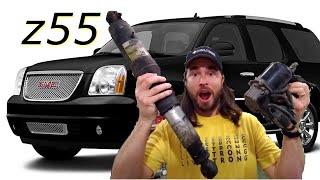
Autoride (RPO code Z55) is GM's automatic load-leveling and real-time damping air suspension system. It was standard on Cadillac Escalades and GMC Denalis, and optional on Chevrolet Tahoes, Suburbans, and Avalanches.
Why does my battery die with a suspension fault?
A faulty Electronic Suspension Control (ESC) module fails to go to 'sleep' or keeps a solenoid energized, creating a parasitic battery draw. If you have a C0696 code and a dead battery, the ESC module or its wiring is the likely cause.
Key Takeaways
- Code C0696 on GM vehicles indicates a critical electrical short in the air suspension's 5-volt reference circuit, which must read between 4.75V and 5.25V.
- Inspect the air compressor wiring harness where it rubs against the vehicle frame before buying parts, as chafed wires cause over 80% of C0696 codes.
- GM Technical Service Bulletin PIT4954D explicitly warns technicians to repair the pinched compressor wiring harness rather than unnecessarily replacing the $500 compressor assembly.
- Driving with a disabled auto-leveling system accelerates wear on rear shocks and tires, potentially adding $400 to $1,000 in secondary repair costs within 3 to 12 months.
Helpful Videos
Shop the Parts Behind C0696
Below are the parts most often responsible for code C0696, ranked by how frequently each one is the actual culprit (per the diagnosis above). Tap any to see what we have for your vehicle.



The information in this article is provided for general reference and educational purposes only. Vehicle specifications, procedures, and part compatibility can vary by production date, trim level, and region. Always consult your vehicle's factory service manual and verify part numbers before purchasing or performing repairs. Safety-critical components such as airbags, seat belts, and braking systems should be installed by a qualified professional.
- 🧭 Diagnostic Flowchart
- 🎬 Helpful Videos
- 🛍️ Shop This Part
- What Does C0696 Mean?
- Can I Drive With C0696?
- Common Causes
- Symptoms
- Common Fixes & Costs
- Used vs. New Parts: Buying Guide
- What Happens If You Wait — Timeline
- Cost of Not Fixing It
- Diagnosis Steps
- When This Code Triggers (Freeze-Frame Conditions)
- Related Codes
- Climate & Environmental Factors
- How to Talk to a Mechanic About This Code
- Where to Take It: Dealer vs Independent vs Chain
- When to Walk Away From the Repair
- What Scan Tool You Need for This Code
- How to Clear the Code After You Fix It
- Will This Fail Emissions / State Inspection?
- Most Commonly Affected Vehicles
- Manufacturer-Specific Notes
- Real Owner Stories
- 2007 Chevy Tahoe LTZ at ~120K miles - The Classic Wiring Fix
- 2009 Cadillac Escalade at 150K miles - The Misdiagnosis Story
- 2007 GMC Yukon Denali - The Unusual Root Cause
- How to Prevent This Code From Triggering
- Frequently Asked Questions
- What is the first thing I should check for a C0696 code?
- My mechanic replaced the compressor, but the C0696 code returned. What's next?
- The wiring looks fine on a visual inspection, but the code persists. What could be missed?
- Can I just clear the C0696 code?
- Is it expensive to fix code C0696?
- My mechanic wants to replace the air shocks. Will this fix the C0696 code?
- What is the 'Autoride' or 'Z55' system?
- Why does my battery die with a suspension fault?
- Key Takeaways
- 🎟️ Get 5% Off