

C0710 on 2007-2013 Chevrolet Avalanche: StabiliTrak Faults and Fixes
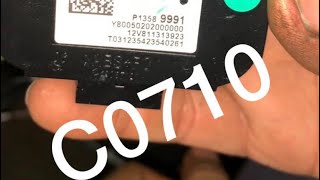
Code C0710 on a 2007-2013 Avalanche indicates a problem with the Steering Angle Sensor signal, which disables the StabiliTrak system. The most common causes are vehicle modifications like lift kits, a faulty sensor, or a poor electrical connection at the sensor due to fretting corrosion.
- Code C0710 on a 2007-2013 Avalanche means your StabiliTrak system is disabled due to a bad signal from the Steering Angle Sensor.
- Before any other diagnosis, check if the truck has a lift kit, leveling kit, or oversized tires, as this is a very common cause noted in a GM service bulletin.
- Another common, and cheaper, fix is to clean the sensor's electrical connector and apply dielectric grease to fix a poor connection.
- If the sensor itself is bad, it must be replaced and a recalibration must be performed with a scan tool.
- Do not drive aggressively or in hazardous conditions, as the vehicle's stability control safety system is offline.
What's Unique About the 2007-2013 Chevrolet AVALANCHE
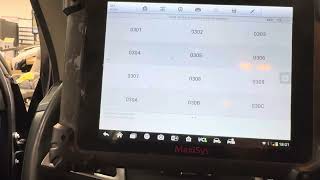
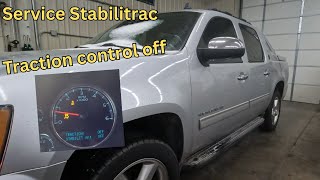
The GMT900 platform, which the 2007-2013 Avalanche is built on, has a StabiliTrak system that is particularly sensitive to changes in suspension geometry. General Motors issued Technical Service Bulletin #PIT4322P specifically advising technicians to inspect for vehicle modifications like lift kits, lowering kits, or non-stock wheels and tires before performing in-depth diagnostics for a C0710 code. This makes modified trucks uniquely prone to this issue. 🎬 Watch: Real-world diagnosis of C0710 and C0253 on an Avalanche. Furthermore, TSB #PI0639C and its successors specifically address fretting corrosion at the SAS connector, a common failure point on these trucks.
Diagnostic Flowchart
Tap your situation to follow the diagnostic path that matches what you're seeing on this vehicle.
Symptoms You May Notice
- "Service StabiliTrak" message on the Driver Information Center (DIC)
- "Service Traction Control" message on the DIC
- StabiliTrak/Traction Control indicator light is on
- Unwanted stability activation (brief, unexpected braking on one or more wheels during turns).
- Steering feels heavy or unusual if the vehicle is also equipped with variable-effort steering.
- Replacing the Electronic Brake Control Module (EBCM) without first diagnosing the sensor and wiring. The EBCM is rarely the cause of this specific code.
- Replacing the Steering Angle Sensor without first checking the connector for fretting corrosion as per TSB PI0639C. The TSB explicitly warns against this.
Most Likely Causes
- Vehicle Modifications 🔴 High Probability As noted in TSB #PIT4322P, the GMT900 platform's stability control is sensitive to changes in ride height and steering geometry from lift kits, leveling kits, or oversized tires. These changes can make the steering angle readings seem implausible to the EBCM.
How to confirm: Visually inspect the vehicle for any aftermarket suspension components, non-standard tire sizes, or signs of torsion bar adjustment.
Typical fix: Returning the vehicle to stock specifications is the official recommendation. For modified vehicles, a professional alignment and steering angle sensor recalibration may resolve the issue, but it is not guaranteed. The first diagnostic step on a modified truck should always be to check for these components.
Est. part cost: $0 - Poor Connection at the SAS Connector 🔴 High Probability GM issued TSB #PI0639C which identifies fretting corrosion (small dark smudges on the terminals) and excessive clearance in the sensor's electrical connector as a very common cause for this code. Movement in the steering column can cause the connection to become intermittent. The TSB explicitly states NOT to replace the sensor for this condition initially.
How to confirm: Disconnect the steering angle sensor connector (located at the base of the steering column) and inspect the terminals for dark smudges or signs of looseness. A magnifying glass may be needed.
Typical fix: Clean the connector terminals and apply a small amount of dielectric grease (GM Part #12377900). TSB #PI0639C also recommends adding a piece of adhesive-backed shim stock to the connector body to prevent movement. In some cases, replacing the connector pigtail is necessary if the terminals are too damaged.
Est. part cost: $5-$30 - Faulty Steering Angle Sensor (SAS) 🟡 Medium Probability → Shop Steering Angle Sensor The sensor itself can fail internally, causing it to send erratic or no signal. The sensor contains multiple signals (analog voltage and digital phases) that must all be plausible; an internal failure can corrupt one of these signals.
How to confirm: Use a diagnostic scan tool (like a Tech II) with live data capability to monitor the steering angle sensor's output from the EBCM. Watch the 'Steering Wheel Position Signal' voltage and 'Phase A/B' digital signals while turning the steering wheel. The voltage should sweep smoothly from ~0.4V to ~4.6V, and the digital signals should toggle. Jumps, drops, or a frozen value (e.g., stuck at 2.5V) indicate a bad sensor or a wiring issue between the sensor and the EBCM.
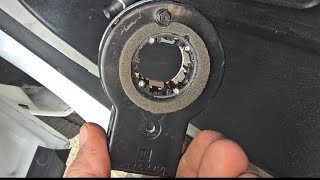
Typical fix: Replace the steering angle sensor, which is located at the base of the steering column. A recalibration procedure using a compatible scan tool is required after replacement.
Est. part cost: $60-$150 - Incorrect Wheel Alignment ⚪ Low Probability If the steering wheel is not centered when the vehicle is driving straight, the SAS will report a turning angle when the vehicle is not turning, causing a plausibility fault. This can happen after hitting a curb, replacing steering components, or even from a mismatched tire.
How to confirm: Observe if the steering wheel is off-center while driving on a straight, level road. A professional alignment check can confirm.
Typical fix: Perform a four-wheel alignment and ensure the steering wheel is centered. Afterward, the steering angle sensor must be recalibrated.
Est. part cost: $0 (part of alignment service)
Rare But Worth Checking
- Faulty Electronic Brake Control Module (EBCM)
- Damaged wiring between the SAS and the EBCM
- Low system voltage from a failing battery or alternator
Diagnosis Steps
- Read the trouble codes from the Electronic Brake Control Module (EBCM) using a capable OBD-II scanner. A basic engine code reader will not see chassis codes.
- Thoroughly inspect the vehicle for any suspension modifications (lift kits, leveling kits), aftermarket wheels, or oversized tires, as per TSB #PIT4322P. This is the #1 check on a modified truck.
- If the vehicle is stock, check if the steering wheel is centered while driving straight. If not, a wheel alignment is needed first.
- Using a scan tool, access the EBCM live data. Monitor the 'Steering Wheel Position Signal' and 'Steering Wheel Position Phase A/B' PIDs.
- With the engine on and wheels straight, the voltage should be around 2.5V. Turn the wheel lock-to-lock. The voltage should change smoothly and consistently between approximately 0.4V and 4.6V. The Phase A/B signals should toggle high/low.
- If the data is erratic, jumpy, or frozen, locate the sensor's electrical connector at the base of the steering column. Disconnect it and inspect for fretting corrosion (dark smudges) or damage.
- If corrosion is found, clean the terminals, apply dielectric grease (GM #12377900), and consider adding a shim to tighten the connector as per TSB #PI0639C. Reconnect and re-test.
- If the connector is clean and the signal is still bad, test the wiring between the SAS connector and the EBCM for continuity and shorts. If wiring is good, the Steering Angle Sensor is likely faulty and requires replacement.
- After any repair (sensor replacement, alignment, or connector cleaning), perform the Steering Angle Sensor recalibration procedure using a compatible scan tool.
Parts You'll Likely Need
- Steering Angle Sensor
(OEM #19418403)— This sensor is the primary component that fails internally, leading to the invalid signal that triggers the C0710 code. This is the updated OEM part number.
Trusted brands: ACDelco, Dorman
OEM price range: $100-$180
Aftermarket price range: $60-$120 - Dielectric Grease
(OEM #12377900)— Recommended by GM in TSB PI0639C to prevent fretting corrosion at the sensor's electrical connector, which is a very common cause of the fault.
Trusted brands: Permatex, ACDelco
OEM price range: $15-$25
Aftermarket price range: $5-$10 - Steering Angle Sensor Connector Pigtail
(OEM #Varies, check dealer with VIN)— If the fretting corrosion on the harness-side connector is too severe, or if the terminals have lost their tension, the connector itself must be replaced.
Trusted brands: ACDelco, Dorman
OEM price range: $25-$50
Aftermarket price range: $15-$30
Related Codes That Often Appear With This One
- C0455 — This code for 'Steering Assist Control Actuator Circuit' often appears with C0710 because both relate to the steering system and can be triggered by the same root causes, like connector corrosion mentioned in TSB #PI0639C.
- C0292 — This code for the 'Multi-axis Acceleration Sensor' can be set because the EBCM sees a conflict between the vehicle's actual movement (from the MAS) and the driver's intended path (from the SAS).
Technical Service Bulletins (TSBs) & Recalls
- PIT4322P: Unwanted Stability Activation and/or a Service Stability message with DTC C0710. Advises inspecting for vehicle modifications first.
- PI0639C / SB-10043887-2153: Addresses C0710 and C0455 caused by fretting corrosion in the steering angle sensor connector, providing a repair procedure using dielectric lubricant and a shim. It specifically instructs technicians NOT to replace the sensor for this condition.
Platform-Specific Known Issues
- TSB #PIT4322P: Explicitly warns that C0710 can be caused by suspension modifications like lift/lowering kits or non-stock wheels and tires. This should be the first check on any modified truck.
- TSB #PI0639A: Points to fretting corrosion and looseness in the steering angle sensor's electrical connector as a frequent problem, recommending cleaning, applying dielectric grease, and shimming the connector rather than replacing the sensor itself.
Mechanic-Grade Diagnostic Values
- Steering Angle Sensor 5V Reference Circuit — expected: 4.8-5.2 V between the 5V reference circuit and ground at the EBCM connector.. Failure: Voltage outside this range indicates a wiring issue or a faulty EBCM.
- Steering Angle Sensor Analog Signal Voltage (at sensor) — expected: Sweeps smoothly from approximately 0.4V to 4.6V when turning the wheel lock-to-lock.. Failure: A value less than 0.4V or greater than 4.6V, or a signal that is jumpy or frozen, indicates a faulty sensor or wiring.
- Low Reference Circuit Resistance — expected: Less than 2 Ω between the SAS connector low reference pin and the EBCM connector low reference pin.. Failure: Resistance of 2 Ω or greater indicates an open or high resistance in the ground circuit.
Hidden / Shadow Codes Worth Checking
- C0710 5A: This is a common symptom byte meaning 'Steering Position Signal Not Plausible'. It indicates the EBCM has determined the steering angle reported by the sensor does not match the data from other vehicle dynamics sensors (like the yaw rate sensor). (see via A professional scan tool like a GM Tech 2 or equivalent that can read chassis system symptom bytes.)
- C0710 71: This symptom byte means 'Invalid Serial Data Received'. It suggests a communication breakdown between the steering angle sensor and the EBCM, often pointing to a wiring or connector issue. (see via A professional scan tool like a GM Tech 2 or equivalent that can read chassis system symptom bytes.)
- C0710 00: This is a general or non-specific failure symptom byte. If seen, further diagnosis of the sensor's live data is required to pinpoint the fault type. (see via A professional scan tool like a GM Tech 2 or equivalent that can read chassis system symptom bytes.)
Scan Tool Commands That Help
- GM Tech 2 / GDS2 / Professional Aftermarket Scanner: Steering Wheel Angle Sensor Learn / Calibration — This function is required after replacing the steering angle sensor, performing a wheel alignment, or replacing the EBCM. It sets the sensor's zero-point when the wheels are straight ahead. Failure to perform this procedure will cause the C0710 code to persist.
Wiring & Ground Locations
- G103 / G104 — On the engine block or nearby on the frame rail, typically under the driver's side door area. It serves as a primary ground for the EBCM.. A poor connection at this ground point can cause a variety of EBCM-related codes, including C0710, due to unstable voltage or reference signals. Cleaning this ground is a key diagnostic step if wiring appears intact.
- G218 — Instrument panel ground, typically located under the driver's side of the dashboard near the A-pillar kick panel.. This ground is used by multiple interior modules. While not a direct ground for the SAS, a poor connection here can introduce electrical noise that may affect modules communicating on the CAN bus, including the SAS and BCM.
- SAS Connector — At the base of the steering column, accessible after removing the lower dash knee bolster.. This is the primary connection point for the sensor. It is the location where fretting corrosion occurs as identified in TSB PI0639A. The 5 wires are typically: 5V Reference, Low Reference (Ground), Analog Signal, Phase A Signal, and Phase B Signal.
Real Owner Repair Stories
- PerformanceTrucks.net Forums (2010 Chevrolet Avalanche) — StabiliTrak light activating and setting a code for the steering angle sensor.
❌ Tried (didn't work) Initial diagnosis pointed to a bad sensor.
✅ What actually fixed it The owner unplugged the sensor connector to read the part number, then plugged it back in. The act of re-seating the connector temporarily resolved the poor connection, and the code did not return for some time. This points to the intermittent connection/fretting corrosion issue described in TSB PI0639A. - Tahoe Yukon Forum (2012 GMC Yukon (GMT900 platform)) — Service StabiliTrak message with code C0710.
❌ Tried (didn't work) Multiple visits to the dealership could not identify the cause.
✅ What actually fixed it The vehicle had oversized wheels/tires causing a constant pull to one side. The driver had to hold the steering wheel slightly turned to drive straight. Replacing the wheels and tires with stock size (265/70R17) eliminated the pull, and the C0710 code did not return after being cleared. The EBCM was seeing a constant steering angle input while the vehicle was moving straight, which it flagged as an implausible signal.
OEM Part Supersession History
20910871→19418403— Updated design or manufacturer change to improve reliability.
Heads up: Part number 19418403 is the correct replacement for the original 20910871 for most applications in this year range. Always verify with VIN.
Helpful Videos


We Have This Part in Stock


The information in this article is provided for general reference and educational purposes only. Vehicle specifications, procedures, and part compatibility can vary by production date, trim level, and region. Always consult your vehicle's factory service manual and verify part numbers before purchasing or performing repairs. Safety-critical components such as airbags, seat belts, and braking systems should be installed by a qualified professional.
- Chevrolet AVALANCHE:
- 🧭 Diagnostic Flowchart
- 🎬 Helpful Videos
- 🛍️ Shop This Part
- What's Unique About the 2007-2013 Chevrolet AVALANCHE
- Symptoms You May Notice
- Most Likely Causes
- Rare But Worth Checking
- Diagnosis Steps
- Parts You'll Likely Need
- Related Codes That Often Appear With This One
- Technical Service Bulletins (TSBs) & Recalls
- Platform-Specific Known Issues
- Mechanic-Grade Diagnostic Values
- Hidden / Shadow Codes Worth Checking
- Scan Tool Commands That Help
- Wiring & Ground Locations
- Real Owner Repair Stories
- OEM Part Supersession History
- 🎟️ Get 5% Off