

C0710 on 2007-2011 Chevrolet Silverado: StabiliTrak Light and Steering Sensor Fixes
On a 2007-2011 Silverado, code C0710 almost always means there is a poor electrical connection at the Steering Angle Sensor. The most common fix is to clean the connector, apply dielectric grease, and add a shim to ensure a tight fit, a repair documented in GM Technical Service Bulletins. Replacing the sensor is rarely the first step.
- C0710 on a 2007-2011 Silverado points to a problem with the Steering Angle Sensor circuit, disabling the StabiliTrak system.
- Before replacing any parts, inspect and service the sensor's electrical connector. A loose connection is the most common cause, per GM service bulletins.
- The official fix for a loose connector is to clean the terminals, apply dielectric grease, and add a shim to prevent movement.
- If the sensor itself requires replacement, a calibration procedure with a professional scan tool is mandatory.
- Driving is possible, but the lack of stability control increases risk in emergency situations.
What's Unique About the 2007-2011 Chevrolet SILVERADO

On this generation of Silverado (GMT900), the C0710 code is a notoriously common issue. General Motors has released multiple Technical Service Bulletins (TSBs) acknowledging the primary cause is not a failed sensor, but a poor electrical connection at the sensor itself. The connector terminals can develop fretting corrosion, and the connector body can have excessive clearance, causing intermittent signal loss. Because of this well-documented issue, the official GM recommendation in TSB PI0639C explicitly states: "DO NOT replace 🎬 Watch: This video explains why the connector often causes the code. the steering position sensor for this condition" until the connector has been serviced.
Diagnostic Flowchart

Tap your situation to follow the diagnostic path that matches what you're seeing on this vehicle.
Symptoms You May Notice

- "Service StabiliTrak" message in the Driver Information Center.
- "Service Stability" message. [Bulletin #PIT4225F]
- Illuminated Antilock Braking System (ABS) lamp. [Bulletin #PIT4225F]
- Illuminated Traction Control System (TCS) light.
- Traction control and stability control systems are disabled.
- In rare cases, unwanted stability system activation (uncommanded braking).
- Replacing the Steering Angle Sensor without first servicing the connector. GM TSBs specifically advise against replacing the sensor as the first step, as the loose, corroded connector is the most frequent culprit.
- Replacing the clock spring. The Steering Angle Sensor is a separate component from the clock spring on this platform, although they are located near each other in the steering column.
Most Likely Causes

- Poor Connection at Steering Angle Sensor Connector 🔴 High Probability → Shop Steering Angle Sensor GM TSBs #PI0639C and #PIT4225F directly address this issue. The connector can develop fretting corrosion (dark smudges on terminals) and have excessive clearance, leading to intermittent signal loss. The movement from using a telescoping steering column can exacerbate this wear.
How to confirm: Visually inspect the sensor's connector terminals for dark smudges, which may require a magnifying glass. Wiggle the connector to see if it feels loose. Monitor live data from the sensor with a scan tool to check for signal dropouts when the connector is wiggled.
Typical fix: Disconnect the sensor, clean the terminals with electrical contact cleaner and a nylon brush, apply dielectric lubricant (GM P/N 12377900 or equivalent like Nyogel 760G), and add an adhesive-backed shim (Kent Automotive P40100) to the connector body to eliminate movement, as recommended by GM TSB #PI0639C. Some owners use a small zip-tie to secure the connector tightly as an alternative to the shim.
Est. part cost: $5-$25 - Faulty Steering Angle Sensor 🟡 Medium Probability → Shop Steering Angle Sensor While less common than the connector issue, the sensor itself can fail internally. It is a common replacement part stocked by dealerships and parts stores.
How to confirm: After confirming the connector is clean and tight, use a scan tool to monitor the steering angle sensor's live data. The angle should change smoothly from approximately -500 to +500 degrees without jumps or dropouts as you turn the wheel lock-to-lock. If the signal is erratic, stuck, or absent, the sensor is likely bad.
Typical fix: Replace the steering angle sensor located at the base of the steering column. The new sensor comes with a locking pin that must not be removed until it is installed with the wheels straight. The new sensor must be calibrated using a compatible scan tool.
Est. part cost: $60-$180 - Steering Angle Sensor Needs Calibration ⚪ Low Probability → Shop Steering Angle Sensor This can occur after a wheel alignment, battery replacement, suspension work, or steering component replacement. The sensor's 'zero' position no longer matches the vehicle's straight-ahead direction, causing the EBCM to see a conflict.
How to confirm: If the code appeared immediately after alignment or other front-end service, this is a likely cause. A professional scan tool is needed to check the current calibration status and sensor reading with the wheels straight; it should be 0.0 degrees.
Typical fix: Recalibrate the steering angle sensor using a GM-compatible diagnostic scan tool (like a Tech II or Autel). The procedure is often called 'Steering Wheel Angle Sensor Learn' in the EBCM special functions menu.
Est. part cost: $0
Rare But Worth Checking
- Wiring Harness Damage: The wiring between the Steering Angle Sensor and the Electronic Brake Control Module (EBCM) can become chafed, shorted to ground, or develop high resistance in the circuit. TSB #PIT5288H notes that a chafed harness at the left instrument panel can be a cause. If the TSB connector fix fails, testing the harness end-to-end is the next step before replacing the sensor.
- Suspension or Tire Modifications: Lift kits, leveling kits, or significantly oversized/mismatched tires can alter the vehicle's steering geometry to a point where the steering angle sensor's readings are considered implausible by the EBCM, triggering the code. A user on a forum fixed their C0710 code simply by replacing mismatched tires and getting an alignment.
- Incorrect Steering Gear or Column Installed: TSB #PIT4322G notes that installing the wrong steering gear can trigger a C0710. A forum user reported a persistent C0710 after a rack and pinion replacement because the steering shaft was installed one full turn off, which was corrected by repositioning the shaft.
Diagnosis Steps
- Scan the Electronic Brake Control Module (EBCM) for codes using a scanner that can read 'C' (Chassis) codes. Confirm C0710 is present, and check for C0455 or U-codes.
- Access the steering angle sensor connector at the base of the steering column under the dash. Disconnect it and inspect the male and female terminals for fretting corrosion (dark smudges on the pins).
- If the connector is loose or corroded, perform the TSB repair: clean the terminals with contact cleaner, apply dielectric grease (GM P/N 12377900), and add an adhesive shim (Kent P40100) or zip-tie to tighten the fit.
- Clear the codes and test drive the vehicle, making several turns. If the code does not return, the repair is complete. The EBCM may self-clear a history code after 40 good drive cycles.
- If the code returns, use a scan tool to monitor the steering angle sensor's live data. With wheels straight, the angle should be 0 degrees. While turning the steering wheel lock-to-lock, the signal should be smooth and responsive without jumps.
- If the live data signal is erratic, jumpy, or absent despite a good connection, the steering angle sensor has likely failed.
- Replace the steering angle sensor. This requires removing the knee bolster and lowering the steering column. The new sensor has a locking pin that must be kept in place until installation is complete.
- After replacement, perform the 'Steering Wheel Angle Sensor Learn' procedure using a compatible scan tool to calibrate the new sensor.
Parts You'll Likely Need
- Steering Angle Sensor
(OEM #25849366)— This sensor fails if the connector repair does not solve the issue. It provides the critical steering wheel position data to the StabiliTrak system. Note: Other part numbers like 19418403 may also be used.
Trusted brands: ACDelco, GM Genuine Parts
OEM price range: $80-$150
Aftermarket price range: $60-$120 - Dielectric Grease
(OEM #GM P/N 12377900 (or 10953529 in Canada))— Required to protect the electrical connector terminals from moisture and fretting corrosion, which is the root cause of the issue according to GM TSBs.
Trusted brands: Permatex, CRC, Nyogel 760G
OEM price range: $10-$20
Aftermarket price range: $5-$10 - Adhesive Back Shim Stock
(OEM #Kent Automotive P40100)— Specifically called for in TSB PI0639C to add to the connector body, eliminating excessive clearance and preventing movement that causes fretting corrosion.
Related Codes That Often Appear With This One
- C0455 — This code, for 'Steering Position Sensor Circuit', is often set alongside C0710 as they both relate to the same sensor and circuit. TSBs #PIT4225F and #PI0639C mention both codes appearing together as a result of the same connector issue.
- U2143 — This code for 'Lost Communication with Steering Angle Sensor' can appear with C0710, indicating the EBCM is not receiving the serial data from the sensor module, often due to the same wiring or connector issues.
Technical Service Bulletins (TSBs) & Recalls
- PIT4225F: Notes that C0710 appears with an ABS lamp and Service Stability message, and may be accompanied by C0455.
- PI0639C: Identifies the root cause as a poor connection (fretting corrosion and looseness) at the steering angle sensor and provides the specific fix of cleaning, applying dielectric grease (P/N 12377900), and adding an adhesive shim (Kent P40100).
- PIT4322G: Warns that C0710 can be caused by vehicle modifications like lift kits, lowering kits, or non-stock wheels and tires.
Platform-Specific Known Issues
- A loose electrical connector at the steering angle sensor is a well-documented problem, addressed by GM TSB #PI0639C, which recommends adding an adhesive shim to the connector to prevent movement.
- Fretting corrosion on the connector terminals is a common point of failure, causing high resistance and intermittent signal loss. This looks like small, dark smudges on the pins and may require magnification to see.
- The TSB explicitly states "DO NOT replace the steering position sensor for this condition" as the initial step, highlighting how common the connector issue is compared to outright sensor failure.
Mechanic-Grade Diagnostic Values
- Steering Angle Sensor 5V Reference Circuit — expected: 4.8 - 5.2V between the 5V reference circuit terminal and ground.. Failure: Voltage outside this range points to a wiring issue or a fault in the EBCM.
- Steering Angle Sensor Analog Signal Voltage — expected: Varies smoothly between approx. 0.4V and 4.6V when turning the wheel lock-to-lock. Should be ~2.5V with wheels centered.. Failure: Voltage is stuck, jumps erratically, or goes outside the 0.4-4.6V range, indicating a faulty sensor.
- Steering Angle Sensor Low Reference Circuit Resistance — expected: Less than 2 Ω between the sensor harness connector and the EBCM connector.. Failure: Resistance of 2 Ω or greater indicates an open or high resistance in the ground circuit, which must be repaired.
- EBCM Live Data Plausibility Check — expected: Live data for the steering angle sensor in the Power Steering Control Module (PSCM) should match the data seen in the Electronic Brake Control Module (EBCM).. Failure: A known failure pattern is when the PSCM shows correct, changing data, but the EBCM data is frozen (e.g., Signal 1 at 2.5V, Signal 2 at 0V). This indicates a communication issue between the modules, not a bad sensor.
Hidden / Shadow Codes Worth Checking
- C0710 5A: Steering Position Signal Plausibility Failure. This indicates the sensor's reported angle is illogical compared to other vehicle sensors (like yaw rate or wheel speed sensors). (see via Visible on professional scan tools like a GM Tech II or high-end Autel/Snap-on scanners when reading EBCM fault data.)
- C0710 42: Steering Position Signal Calibration Not Programmed. This sub-code sets specifically when the sensor has not been calibrated after replacement or after certain service procedures. (see via Visible on professional scan tools when accessing EBCM fault codes.)
- C0710 71: Invalid Serial Data Received. This points to a communication breakdown on the data bus between the sensor and the EBCM, often caused by wiring or connector issues. (see via A GM-specific scan tool can pull these detailed fault descriptors from the EBCM.)
Scan Tool Commands That Help
- GM Tech II / GDS2 / Professional Scan Tool: Steering Wheel Angle Sensor Learn / Centering — This procedure is mandatory after replacing the steering angle sensor, performing a wheel alignment, or replacing steering/suspension components. It establishes the sensor's 'zero' position when the wheels are straight ahead.
- GM Tech II / GDS2 / Professional Scan Tool: EBCM Live Data Monitoring — Used during initial diagnosis to observe the steering angle sensor's reported angle in degrees and its raw voltage signal. Watching this data while turning the wheel helps identify signal dropouts, jumps, or a complete lack of signal, which confirms a sensor or connection fault.
Wiring & Ground Locations
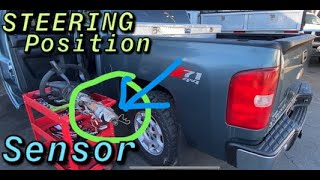
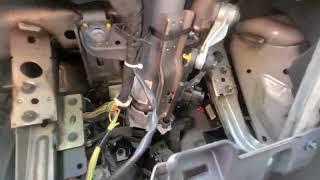
- Steering Angle Sensor Connector — Located at the base of the steering column, under the driver's side dash, where the column passes through the floor.. This is the primary point of failure for code C0710 due to fretting corrosion and a loose fit, as documented in multiple GM TSBs.
- G201 — On the driver's side, under the dash, typically on the metal support structure behind the kick panel near the A-pillar.. This is a primary interior ground point for many instrument panel components. A poor connection here can cause various electrical issues, including problems with modules that communicate with the EBCM.
- G302 — Under the driver's side of the vehicle, on the body mount or frame rail, often near the driver's door area.. This is a major chassis ground. While less likely to be the direct cause, poor grounding here can create electrical noise and voltage stability issues that can affect sensitive modules like the EBCM.
Real Owner Repair Stories
- Tahoe Yukon Forum user (2011 Chevrolet Tahoe Z71) — Service Stabilitrack/Traction Control light was on, code C0710 present.
❌ Tried (didn't work) Replacing the wheel hub assembly (based on a previous, likely related code)., Performing the TSB fix (cleaning, dielectric grease, wedging the connector).
✅ What actually fixed it The owner had to replace the entire steering angle sensor. The repair took about 1.5 hours and required pulling the steering column. - PerformanceTrucks.net Forums user (2011 GMC Yukon (GMT900 Platform)) — Persistent C0710 code and 'Service StabiliTrak' message.
❌ Tried (didn't work) Multiple dealership visits could not diagnose the cause.
✅ What actually fixed it The problem started after a rack and pinion replacement. A technician discovered the steering shaft had been installed one full turn off-center. The fix was to disconnect the steering shaft under the hood, rotate it to the correct 'zero' position, and reconnect it. The cause was mechanical misalignment, not an electrical fault. - Reddit user in r/MechanicAdvice (2011 Chevrolet Silverado 2500 6.6 Duramax) — 'Service Stabilitrac' message appeared after turning the steering wheel a quarter turn. DTC C0710-5A (Plausibility Failure) was present.
❌ Tried (didn't work) Replacing the steering wheel position sensor.
✅ What actually fixed it The user was advised to check chassis grounds, specifically in the rear of the vehicle, as another user had fixed a similar issue by cleaning and repairing broken ground connections to the frame. Poor grounds can cause modules to report incorrect data even if the sensor itself is good.
OEM Part Supersession History
Unknown→25849366— Standard part evolution and consolidation for multiple GM models.
Heads up: This part requires programming/calibration after installation. While it fits a wide range of GM vehicles (Equinox, LaCrosse, etc.), its use in the Silverado is specific to the GMT900 platform's steering column design.25849366→19418403— Later service replacement part number.
Heads up: Functionally identical for this application. When ordering, either part number may be supplied by GM/ACDelco depending on stock.
Model Year Variations Within This Range
- 2007-2013: Two-wheel drive (2WD) trucks in this generation use a hydraulic rack-and-pinion steering system, while four-wheel drive (4WD) trucks use a recirculating-ball steering gear. While the steering angle sensor and its common failure mode are the same for both, the underlying steering mechanics are different, which can be relevant if diagnosing a mechanical misalignment issue.
Helpful Videos

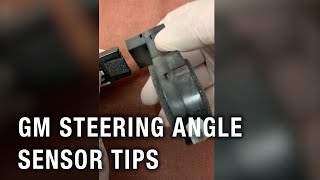
We Have This Part in Stock


The information in this article is provided for general reference and educational purposes only. Vehicle specifications, procedures, and part compatibility can vary by production date, trim level, and region. Always consult your vehicle's factory service manual and verify part numbers before purchasing or performing repairs. Safety-critical components such as airbags, seat belts, and braking systems should be installed by a qualified professional.
- Chevrolet SILVERADO:
- 🧭 Diagnostic Flowchart
- 🎬 Helpful Videos
- 🛍️ Shop This Part
- What's Unique About the 2007-2011 Chevrolet SILVERADO
- Symptoms You May Notice
- Most Likely Causes
- Rare But Worth Checking
- Diagnosis Steps
- Parts You'll Likely Need
- Related Codes That Often Appear With This One
- Technical Service Bulletins (TSBs) & Recalls
- Platform-Specific Known Issues
- Mechanic-Grade Diagnostic Values
- Hidden / Shadow Codes Worth Checking
- Scan Tool Commands That Help
- Wiring & Ground Locations
- Real Owner Repair Stories
- OEM Part Supersession History
- Model Year Variations Within This Range
- 🎟️ Get 5% Off