

C0710 on 2007-2011 GMC Sierra: StabiliTrak Fault and Steering Sensor Fixes
Code C0710 on a 2007-2011 GMC Sierra almost always points to a poor connection at the Steering Angle Sensor, triggering a 'Service StabiliTrak' message. The most common fix, outlined in GM TSBs, is to clean the connector, apply dielectric grease, and add a shim or zip-tie to secure it—a very low-cost parts fix. Only if that fails should the sensor itself be replaced.
- C0710 on your Sierra almost always means a 'Service StabiliTrak' light is on due to a Steering Angle Sensor signal fault.
- DO NOT replace the sensor first. The most common cause is a poor connection at the sensor, which is a known issue addressed by GM.
- The first and most effective step is to inspect, clean, and secure the sensor's electrical connector with dielectric grease and a shim as per TSB #PI0639C.
- This is a safety-critical system. If you are not comfortable working around the steering column and airbags, professional service is strongly recommended.
- If the sensor does need replacement, it will require calibration with a professional-grade scan tool to restore function.
What's Unique About the 2007-2011 Gmc SIERRA
This generation of GMC Sierra (part of the GMT900 platform) is well-known for having a specific design issue with the Steering Angle Sensor's electrical connector. GM issued multiple Technical Service Bulletins (TSBs), such as #PI0639C and #SB-10043887-2153, acknowledging that fretting corrosion and excessive clearance in the connector cause signal dropouts. This issue is often made worse by the use of the telescoping steering column. Unlike many other vehicles where the sensor itself is the immediate suspect, on these trucks, the problem is most often the connector. The official repair procedure explicitly states *not* to replace the sensor until the connector has been addressed first.
🎬 Watch: Pro tip for inspecting the steering sensor connectorDiagnostic Flowchart
Tap your situation to follow the diagnostic path that matches what you're seeing on this vehicle.
Symptoms You May Notice
- "Service Stability" or "Service StabiliTrak" message on the Driver Information Center (DIC)
- ABS warning light illuminated
- Traction Control (TC) warning light illuminated
- Stability control and traction control are disabled
- "Steering Assist is Reduced Drive with Care" message on DIC
- Replacing the Steering Angle Sensor without first addressing the known connector issue. TSB #PI0639C and its successors explicitly warn technicians NOT to replace the sensor for this condition until the connector fix has been attempted.
- Replacing the clock spring. The clock spring and steering angle sensor are located near each other in the steering column, but they are separate parts. C0710 specifically points to the steering angle sensor circuit.
Most Likely Causes
- Poor Connection at Steering Angle Sensor 🔴 High Probability → Shop Steering Angle Sensor As documented in GM TSB #PI0639C, the connector is prone to fretting corrosion (dark smudges on terminals) and excessive clearance, leading to high resistance and intermittent signal loss. Movement from using a telescoping steering column can accelerate this wear.
How to confirm: Visually inspect the sensor connector on the steering column (under the dash, above the pedals) for looseness or dark smudges on the terminals. Wiggling the connector while observing live data on a scan tool may cause the steering angle reading to become erratic or drop out, confirming the bad connection.
Typical fix: Disconnect the connector, clean terminals with contact cleaner and a small nylon brush, apply dielectric lubricant (GM Part #12377900), and add an adhesive shim to the connector body to prevent movement. Many owners on forums report successfully using a small zip-tie to hold the connector tightly together as an effective alternative to the shim.
Est. part cost: $5-$25 - Faulty Steering Angle Sensor (SAS/SWPS) 🟡 Medium Probability → Shop Steering Angle Sensor While less common than the connector issue, the sensor can fail internally over time. This is the next logical step if the connector service does not resolve the code.
How to confirm: If the connector service does not resolve the code, and a scan tool shows no signal or a completely irrational signal from the sensor that doesn't change when the wheel is turned, the sensor itself is likely faulty. A diagnostic check might show the signal is good at the Power Steering Control Module but absent at the EBCM.
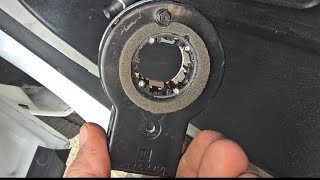
Typical fix: Replace the Steering Angle Sensor. This requires partial disassembly of the steering column. The new sensor must be calibrated using a compatible scan tool after installation.
Est. part cost: $90-$200 - Improper Alignment or Vehicle Modifications ⚪ Low Probability As noted in TSB #PIT4322G, changes to the vehicle's ride height (lift kits, leveling kits) or using non-stock wheels/tires can affect steering geometry and cause the sensor's readings to be implausible to the EBCM.
How to confirm: Check if the code appeared after installing a lift kit, leveling kit, or significantly different-sized tires. A scan tool may show a non-zero steering angle when driving straight. A real-world forum post noted that after a rack and pinion replacement, the steering shaft was installed one full turn off, causing the C0710 code.
Typical fix: Perform a four-wheel alignment and then perform a Steering Angle Sensor calibration with a compatible scan tool. If steering components were replaced, ensure they are mechanically centered.
Est. part cost: $0 (if only calibration is needed) - $150 (for alignment)
Rare But Worth Checking
- Chafed Wiring Harness: TSB #PIT5288H notes a possibility of the instrument panel harness chafing near its mounting bracket, which could affect the SAS circuit among others. This is worth checking if you have multiple, seemingly unrelated electrical codes.
- Faulty Electronic Brake Control Module (EBCM): This is very rare. The EBCM is the module that reads the sensor's data. It should only be considered as the cause after all sensor, connector, and wiring issues have been definitively ruled out. One owner replaced the EBCM only to find the issue was in the wiring between modules.
Diagnosis Steps
- Read the fault codes from the Electronic Brake Control Module (EBCM) with a scan tool capable of reading Chassis (C) codes.
- Confirm the presence of C0710 and note any other codes like C0455 or U0126.
- Access live data on the scan tool and monitor the 'Steering Angle Sensor' value. Observe if the value is stuck, erratic, or doesn't track smoothly as you turn the steering wheel lock-to-lock. A centered wheel should read at or very near 0 degrees.
- Gain access to the Steering Angle Sensor connector on the steering column under the driver's side dash, typically above the pedals.
- Disconnect the connector. Carefully inspect the male and female terminals for any signs of fretting corrosion (dark smudges) or damage.
- Perform the fix outlined in TSB #PI0639C: Clean the terminals with a dedicated electronics cleaner and nylon brush, apply a small amount of dielectric lubricant, and add a shim (or a zip-tie) to tighten the connection. Reconnect the plug firmly.
- Clear the codes and test drive the vehicle. Turn the steering wheel multiple times to see if the code returns.
- If the code returns, the sensor itself is the next likely suspect. Test the sensor's output signal and reference voltages according to the service manual.
- If the sensor and connector are confirmed good, inspect the wiring harness between the sensor and the EBCM for any signs of chafing or damage, paying attention to the area mentioned in TSB #PIT5288H.
Parts You'll Likely Need
- Dielectric Lubricant
(OEM #12377900)— Recommended by GM in TSB #PI0639C to protect the cleaned electrical connector from moisture and future corrosion.
Trusted brands: ACDelco, Permatex, CRC
OEM price range: $15-$25
Aftermarket price range: $5-$10 - Steering Angle Sensor
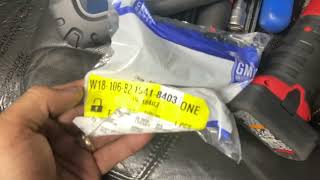
(OEM #19418403)— This is the part to replace if the connector cleaning/shimming procedure does not fix the code. Part number 19418403 is an updated number that supersedes older versions like 20910871.
Trusted brands: ACDelco (GM Genuine), Dorman (P/N 601-175), Wells (P/N 5S13870)
OEM price range: $60-$150
Aftermarket price range: $40-$90 - Adhesive Back Shim Stock
(OEM #P40100 (Kent Automotive))— Recommended in TSB #PI0639C to add tension to the sensor connector, preventing movement that causes fretting corrosion. A small zip-tie is a common DIY alternative.
Trusted brands: Kent Automotive
OEM price range: $1-$5
Aftermarket price range: $1-$5
Related Codes That Often Appear With This One
- C0455 — This code for 'Steering Assist Control Solenoid/Motor Circuit' is mentioned in the same TSBs (like #PI0639C) as C0710 and is often caused by the exact same fretting corrosion issue in the steering column wiring.
- U0126 — This code means 'Lost Communication With Steering Angle Sensor Module'. It can appear with C0710 if the connector issue is severe enough to cause a complete loss of signal rather than just an intermittent or implausible one.
- U2143 — This code for 'Lost Communication With Steering Angle Sensor (SAS)' can appear alongside C0710, indicating the EBCM is not receiving the serial data from the power steering control module, often due to a wiring fault between the two modules.
Technical Service Bulletins (TSBs) & Recalls
- PIT4225F: ABS lamp followed by Service Stability message, DTC C0710 set in EBCM.
- PI0639C: Service Stabilitrak message with DTC C0455 or C0710; recommends adding adhesive shim stock to the steering angle sensor connector.
Platform-Specific Known Issues
- TSB #PI0639C / #SB-10043887-2153: This is the primary issue for this code. It details the condition of fretting corrosion on the steering angle sensor connector terminals causing high resistance. The fix is to add an adhesive shim an
Mechanic-Grade Diagnostic Values
- SWPS Analog Signal Voltage (wheel centered) — expected: ~2.5V. Failure: Voltage is stuck, does not change when turning the wheel, or is outside the sweep range.
- SWPS Analog Signal Voltage (sweep) — expected: ~0.25V (full left) to ~4.75V (full right). Failure: Voltage does not sweep smoothly across this range lock-to-lock.
- 5V Reference Circuit Voltage (at SAS connector) — expected: 4.8-5.2 V (between 5V ref pin and ground). Failure: Voltage outside this range points to a wiring fault or a bad EBCM.
- Low Reference Circuit Resistance (at SAS connector) — expected: Less than 1.0 Ω (between low ref pin and ground). Failure: Resistance higher than 1.0 Ω indicates an open or high resistance in the ground circuit.
Hidden / Shadow Codes Worth Checking
- C0710 5A: Steering Position Signal Not Plausible. This indicates the EBCM is receiving a signal, but the data is illogical compared to other vehicle sensors (like wheel speed or yaw rate). (see via Requires a GM-specific scan tool (Tech 2, GDS2) or high-end aftermarket scanner that can read manufacturer symptom bytes.)
- C0710 0F or C0710 17: Steering Position Signal Erratic / Shape/Waveform Failure. These point to an inconsistent or malformed signal, often caused by the connector fretting corrosion or an internal sensor failure. (see via Requires a GM-specific scan tool that can pull detailed fault descriptors.)
Scan Tool Commands That Help
- GDS2 / Tech2 / High-End Aftermarket: Steering Angle Sensor Calibration / Learn — This procedure is mandatory after replacing the steering angle sensor, EBCM, or after performing a wheel alignment to ensure the system knows the straight-ahead position.
- Autel / High-End Aftermarket: Steering Wheel Angle Sensor Reset — Used to clear old calibration values from the control module before performing a new 'Learn' procedure. This can be a critical first step if a new calibration isn't being accepted.
Wiring & Ground Locations
- G201 — Upper left corner of the dash.. This is a key ground point for multiple instrument panel and brake system components. A poor connection at G201 can cause various electrical issues, including faults in the SAS circuit.
- Steering Angle Sensor Connector — On the steering column, under the driver's side dash, typically above the pedals.. This is the primary point of failure for code C0710 on this platform due to fretting corrosion, as documented in multiple TSBs.
Real Owner Repair Stories
- Tahoe Yukon Forum (2012 GM Truck (platform-relevant)) — Service StabiliTrak and traction control lights with code C0710.
❌ Tried (didn't work) Multiple dealership visits could not diagnose the cause.
✅ What actually fixed it A technician discovered that after a recent rack and pinion replacement, the steering shaft had been installed one full turn off-center. Correcting the mechanical alignment of the steering shaft to zero with the wheels straight resolved the code. - Tahoe Yukon Forum (2012 GM Truck) — Service Stabilitrak light, C0710 code, truck pulling to one side.
❌ Tried (didn't work) Dealership visits could not find the reason for the code.
✅ What actually fixed it The owner replaced worn tires and had a four-wheel alignment performed. Correcting the vehicle's alignment and eliminating the pull caused the C0710 code to disappear, indicating the fault was a 'plausibility' issue due to the mechanical setup.
When the Usual Fixes Don't Work
- While the overwhelming majority of C0710 codes are fixed by addressing the connector, a notable number of owners report that the TSB fix (cleaning, dielectric grease, shim/zip-tie) did not resolve their issue. In these cases, the final solution was to replace the steering angle sensor itself. This indicates that while the connector should always be the first step, actual sensor failure is still a significant possibility and should not be dismissed if the connector service fails.
OEM Part Supersession History
20910871→19418403— Updated part from GM. Often a revision to improve reliability or correct a known issue.
Heads up: The new part number (19418403) is the correct replacement for the original and is fully compatible.
Model Year Variations Within This Range
- 2007-2013: The GMT900 platform had two distinct dashboard designs: a 'pure truck' version and a luxury-inspired version for LTZ/SLT/Denali trims. While the underlying steering column and sensor are the same, the disassembly procedure for the lower dash panels to access the sensor can vary slightly between these two interior styles.
Helpful Videos



We Have This Part in Stock


The information in this article is provided for general reference and educational purposes only. Vehicle specifications, procedures, and part compatibility can vary by production date, trim level, and region. Always consult your vehicle's factory service manual and verify part numbers before purchasing or performing repairs. Safety-critical components such as airbags, seat belts, and braking systems should be installed by a qualified professional.
- Gmc SIERRA:
- 🧭 Diagnostic Flowchart
- 🎬 Helpful Videos
- 🛍️ Shop This Part
- What's Unique About the 2007-2011 Gmc SIERRA
- Symptoms You May Notice
- Most Likely Causes
- Rare But Worth Checking
- Diagnosis Steps
- Parts You'll Likely Need
- Related Codes That Often Appear With This One
- Technical Service Bulletins (TSBs) & Recalls
- Platform-Specific Known Issues
- Mechanic-Grade Diagnostic Values
- Hidden / Shadow Codes Worth Checking
- Scan Tool Commands That Help
- Wiring & Ground Locations
- Real Owner Repair Stories
- When the Usual Fixes Don't Work
- OEM Part Supersession History
- Model Year Variations Within This Range
- 🎟️ Get 5% Off