

C0710 on 2007-2011 GMC Sierra Denali: Service StabiliTrak & Steering Angle Sensor Fixes
On a 2007-2011 GMC Sierra Denali, code C0710 almost always points to a problem with the Steering Angle Sensor (SAS), often due to a poor electrical connection. The most common fix is securing the sensor's connector and applying dielectric grease, a very low-cost repair detailed in GM TSB #PI0639D. If the sensor itself has failed, expect to pay $60-$150 for the part and require a scan tool for calibration.
- C0710 on your Sierra Denali means the StabiliTrak system has lost its signal from the Steering Angle Sensor.
- Before buying any parts, inspect the sensor's electrical connector at the base of the steering column. The most common fix is simply cleaning the contacts, applying dielectric grease, and ensuring a tight fit.
- This code disables your StabiliTrak and traction control, so drive with increased caution until it is repaired.
- If the connector fix does not work, the Steering Angle Sensor itself will likely need to be replaced.
- Always check for related codes, especially C0455, as they appear together and confirm the diagnosis.
What's Unique About the 2007-2011 Gmc SIERRA DENALI
The GMT900 platform, which includes the 2007-2011 Sierra, is known for a specific issue that causes code C0710. The electrical connector for the Steering Angle Sensor, located at the base of the steering column, can develop a poor connection over time. This is often caused by microscopic vibrations and movement leading to 'fretting corrosion' on the connector terminals. This corrosion increases resistance and causes the signal to drop out. GM issued multiple Technical Service Bulletins (TSBs) acknowledging this exact problem and providing a specific, low-cost fix that often does not require replacing the sensor itself.
Diagnostic Flowchart
Tap your situation to follow the diagnostic path that matches what you're seeing on this vehicle.
Symptoms You May Notice
- "Service StabiliTrak" message on the Driver Information Center (DIC).
- "Service Traction Control" message on the DIC
- StabiliTrak/ESC indicator light is on.
- ABS indicator light may be on
- Unwanted stability control activation (rare).
- Steering feels normal, but safety systems are offline.
- Replacing the Electronic Brake Control Module (EBCM) unnecessarily. While the EBCM reports the code, it is rarely the cause of the failure. The problem is almost always the signal it's receiving from the steering angle sensor.
Most Likely Causes
- Poor Connection at Steering Angle Sensor Connector 🔴 High Probability → Shop Steering Angle Sensor The design of the connector at the base of the steering column allows for micro-movements, which leads to fretting corrosion on the terminals, increasing resistance and causing signal loss. This is a well-documented issue covered by GM TSBs #PI0639C and #PI0639D.
How to confirm: Inspect the connector at the base of the steering column. Wiggle the connector while observing live data from the sensor with a scan tool. If the signal cuts out, the connection is the fault. Fretting corrosion may appear as small dark smudges on the connector pins, but may not be visible without magnification.
Typical fix: Disconnect the connector, clean the terminals with a dedicated nylon brush, apply a small amount of dielectric grease (GM Part #12377900), and add an adhesive shim (Kent Automotive P40100) to the connector body to prevent future movement, as outlined in TSB #PI0639D. The TSB explicitly states NOT to replace the sensor for this condition.
Est. part cost: $10-$30 for dielectric grease and shim stock. - Faulty Steering Angle Sensor (SAS) 🟡 Medium Probability → Shop Steering Angle Sensor While the connector is the most common issue, the sensor itself can fail internally over time. This is a common replacement part for these trucks after the connector fix has been ruled out.
How to confirm: After confirming the connector and wiring are good, use a scan tool to monitor the SAS live data while turning the steering wheel. The angle readings should be smooth and linear, typically from -500 to +500 degrees lock-to-lock. If the values jump, freeze, or drop out, the sensor is bad.
Typical fix: Replace the Steering Angle Sensor. This requires partial disassembly of the steering column. The new sensor comes with a locking pin to ensure it is centered upon installation. The new sensor must be calibrated using a compatible scan tool.
Est. part cost: $60-$150 - Wiring Harness Damage ⚪ Low Probability
How to confirm: Visually inspect the wiring harness running to the Steering Angle Sensor for any signs of chafing, breaks, or damage, particularly where it moves with the tilt/telescoping column. Perform a continuity and resistance test on the signal, power, and ground wires between the sensor and the EBCM.
Typical fix: Repair the damaged section of the wiring harness. In some cases, a connector pigtail replacement may be necessary if the terminals are damaged beyond cleaning.
Est. part cost: $10-$50
Rare But Worth Checking
- Vehicle Modifications: As per TSB #PIT4322G, modifications like suspension lifts, lowering kits, or significantly oversized tires can alter the vehicle's geometry and cause the StabiliTrak system to receive data it considers implausible, potentially setting a C0710. Always check for modifications before extensive diagnosis.
- Improper Steering System Repair/Alignment: If a rack and pinion or other steering component was recently replaced, the steering wheel may have been installed off-center relative to the SAS. One owner reported the steering was off by a full 360-degree turn after a rack replacement, causing the code. A proper wheel alignment and SAS calibration are required after such repairs.
Diagnosis Steps
- Read all DTCs from the EBCM with a capable scan tool. Note if C0710 is present with C0455.
- Inspect the vehicle for any modifications (lift kits, large tires, aftermarket electronics) as noted in TSB #PIT4322G.
- Gain access to the Steering Angle Sensor connector at the base of the steering column inside the cabin. This may require removing the lower dash knee bolster.
- Disconnect the connector. Inspect the male and female terminals for dark smudges (fretting corrosion) or bent pins.
- As the primary and most likely fix, apply dielectric grease (GM Part #12377900) to the connector terminals and reconnect securely. Consider adding an adhesive shim to the connector body per TSB #PI0639D to prevent movement.
- Clear the codes and test drive the vehicle. If the code does not return, the repair is complete.
- If the code returns, use a scan tool to monitor the live data for the 'Steering Wheel Angle' parameter.
- With the engine on, turn the steering wheel slowly from lock to lock. The angle reading should change smoothly and consistently through its range (approx. -500 to +500 degrees). If you see sudden jumps, freezing, or dropouts, the sensor itself is faulty.
- If sensor data is erratic, replace the Steering Angle Sensor. Ensure the new sensor is installed with its centering pin in place and that the pin is removed only after installation.
- After sensor replacement, perform a 'Steering Angle Sensor Relearn' or 'Calibration' procedure with a compatible scan tool.
- If a new sensor does not resolve the issue, perform a continuity and resistance check on the wires between the SAS connector and the EBCM connector to rule out a wiring break.
Parts You'll Likely Need
- Steering Angle Sensor
(OEM #20910871, 19418403)— This sensor is the source of the signal fault. If the connector fix doesn't work, the sensor itself has likely failed internally. Part number 20910871 is a common replacement, sometimes superseded by 19418403.
Trusted brands: ACDelco (GM Original Equipment), Dorman (601-175)
OEM price range: $100-$150
Aftermarket price range: $60-$100 - Dielectric Silicone Grease
(OEM #12377900)— Required to protect the electrical connector terminals from moisture and corrosion, and to fix the high-resistance condition caused by fretting, as specified in TSB PI0639D.
Trusted brands: ACDelco (10-4071), Permatex
OEM price range: $15-$25
Aftermarket price range: $5-$10
Related Codes That Often Appear With This One
- C0455 — C0455 specifically refers to the 'Steering Angle Sensor Circuit'. It is very common to see C0455 and C0710 together, as they both point to a fault in the same system. Multiple TSBs from GM group these two codes together for the same diagnostic procedure.
Technical Service Bulletins (TSBs) & Recalls
- PI0639D: The most critical TSB. Details the primary cause as a poor connection at the SAS connector due to fretting corrosion and provides the fix using an adhesive shim and dielectric grease. It explicitly advises NOT to replace the sensor for this specific condition.
- PIT4322G: Warns that vehicle modifications (lifts, wheels, tires) can cause implausible signals and trigger a C0710, advising this be checked before diagnostics.
- PIT5207: Notes the code can appear after sequential programming, pointing to a potential software or calibration issue.
- PIT4225F: Links C0710 to the ABS lamp and Service Stability message, confirming it's set in the Electronic Brake Control Module.
Platform-Specific Known Issues
- A known issue of fretting corrosion on the Steering Angle Sensor connector terminals is the most common cause for C0710 on this platform, as documented in GM TSBs #PI0639C, #PI0639D, and others.
- The telescoping motion of the steering column can contribute to the movement of the connector, accelerating the wear on the terminals and causing the fault.
Mechanic-Grade Diagnostic Values
- Steering Wheel Position Sensor Signal Voltage — expected: Approximately 2.5V with the steering wheel straight. Should sweep down to ~1.0V when turned fully left and up to ~4.1V when turned fully right.. Failure: Voltage that is stuck, jumps erratically, or does not change when the wheel is turned.
- Steering Wheel Position Phase A and Phase B Signals — expected: These are digital signals that should toggle between high and low status as the steering wheel is turned.. Failure: Signals that do not change or are absent while turning the wheel.
Hidden / Shadow Codes Worth Checking
- C0710 5A: The '5A' is a two-character symptom byte that specifies 'Steering Position Signal Plausibility Failure'. This means the signal from the sensor is present, but it doesn't make sense to the EBCM when compared to other vehicle data (like wheel speed). This is the most common variant of C0710 for this issue. (see via A professional-grade scan tool like a GM Tech2, Autel, or Snap-on scanner that can read manufacturer-specific codes and their symptom bytes.)
- C0710 42: The '42' symptom byte indicates 'Steering Wheel Angle Signal Calibration Not Programmed'. This variant points directly to a need for a calibration or 'relearn' procedure. (see via A professional-grade scan tool capable of reading GM-specific symptom bytes.)
Scan Tool Commands That Help
- GM Tech2 / GDS2 / Professional Scan Tool: Steering Wheel Angle Sensor Learn (or Calibration/Reset) — This function is required after replacing the steering angle sensor, after performing a wheel alignment, or if C0710 42 is present. The procedure centers the sensor's value when the wheels are straight ahead.
Wiring & Ground Locations
- EBCM Ground — On the frame rail directly under the driver's side door. It is a common point of failure due to corrosion.. The Electronic Brake Control Module (EBCM) is what sets code C0710. A poor ground connection for this module can cause a host of erratic electrical issues and false codes, including communication and sensor plausibility faults. Cleaning this ground is a common first step for many ABS-related issues.
- Steering Angle Sensor Connector — At the base of the steering column, inside the cabin, above the pedals. It requires removing the lower dash knee bolster panel for access.. This is the most common point of failure for this code. The connector itself develops high resistance from fretting corrosion, causing the signal to become erratic or lost.
Real Owner Repair Stories
- Tahoe Yukon Forum user (2007-2014 GM SUV/Truck) — Service Stabilitrak and Traction Control warning lights with code C0710.
❌ Tried (didn't work) Multiple dealership visits could not diagnose the cause.
✅ What actually fixed it The problem was discovered after a rack and pinion replacement and alignment. The steering wheel was off by one full 360-degree turn. The final fix was to disconnect the steering shaft under the hood and rotate it to the correct '0' position, which resolved the C0710 code. - YouTube video by 'Ford Boss Me' (2013 GM Truck) — Service Stabilitrak light came on intermittently, sometimes triggered by shaking the steering wheel. Code C0710 was present.
❌ Tried (didn't work) Initial diagnosis was difficult as the light was not always on.
✅ What actually fixed it The steering angle sensor itself was faulty. The creator replaced the sensor (Part #19418403) which required lowering the steering column for access. After replacement and clearing the codes, the problem was fixed. - YouTube video by 'jv auto tech' (2011 GMC Truck) — Codes C0455 and C0710 with Stabilitrak warnings.
✅ What actually fixed it Replaced the steering angle sensor. The video provides a detailed guide on lowering the steering column (held by four 15mm nuts) to access and replace the sensor located at the base of the column.
OEM Part Supersession History
20910871→19418403— Standard part number update by GM. The new part is a direct replacement.
Heads up: No incompatibility issues are known; 19418403 is the correct service replacement for 20910871.
Helpful Videos

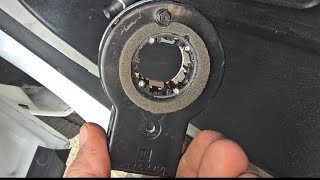



We Have This Part in Stock


The information in this article is provided for general reference and educational purposes only. Vehicle specifications, procedures, and part compatibility can vary by production date, trim level, and region. Always consult your vehicle's factory service manual and verify part numbers before purchasing or performing repairs. Safety-critical components such as airbags, seat belts, and braking systems should be installed by a qualified professional.
- Gmc SIERRA DENALI:
- 🧭 Diagnostic Flowchart
- 🎬 Helpful Videos
- 🛍️ Shop This Part
- What's Unique About the 2007-2011 Gmc SIERRA DENALI
- Symptoms You May Notice
- Most Likely Causes
- Rare But Worth Checking
- Diagnosis Steps
- Parts You'll Likely Need
- Related Codes That Often Appear With This One
- Technical Service Bulletins (TSBs) & Recalls
- Platform-Specific Known Issues
- Mechanic-Grade Diagnostic Values
- Hidden / Shadow Codes Worth Checking
- Scan Tool Commands That Help
- Wiring & Ground Locations
- Real Owner Repair Stories
- OEM Part Supersession History
- 🎟️ Get 5% Off