

C0710 on 2008-2012 GMC Yukon Hybrid: Stabilitrak Fault Causes and Fixes
This code indicates a fault with the Steering Angle Sensor (SAS) signal, which disables the Stabilitrak system. The most common cause is not a failed sensor, but fretting corrosion on the sensor's electrical connector. Servicing the connector by cleaning it, applying dielectric grease, and adding a shim as per GM TSB SB-10043887-2153 is the first and most likely fix. If the sensor has failed, expect to pay $50-$150 for the part.
- Do NOT immediately replace the Steering Angle Sensor. The most common cause of C0710 on this vehicle is a poor connection at the sensor.
- The first step in any diagnosis should be to inspect, clean, and apply dielectric grease to the Steering Angle Sensor's electrical connector.
- This code disables critical safety systems (Stabilitrak/Traction Control) and should be addressed promptly.
- If the sensor is replaced or a wheel alignment is performed, the sensor MUST be recalibrated with a professional-grade scan tool.
- Check for vehicle modifications like lift kits or oversized tires, as these are known to cause this code per TSB #PIT4322F.
What's Unique About the 2008-2012 Gmc YUKON HYBRID
On this GMT900 platform, which includes the Yukon Hybrid, code C0710 is notoriously caused by a poor electrical connection at the Steering Angle Sensor rather than sensor failure. General Motors has issued multiple Technical Service Bulletins (TSBs), specifically SB-10043887-2153, about fretting corrosion on the connector terminals due to micro-vibrations and excessive clearance in the connector housing. The TSBs strongly advise against replacing the sensor as a first step, instead recommending a specific procedure to clean, lubricate, and add a shim to the existing connector to tighten the fit.
Diagnostic Flowchart
Tap your situation to follow the diagnostic path that matches what you're seeing on this vehicle.
Symptoms You May Notice
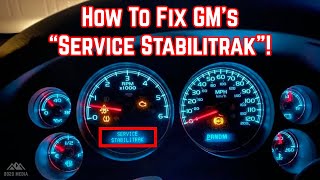
- "Service Stabilitrak" message on the Driver Information Center (DIC)
- "Stabilitrak Off" message
- Traction control light is on
- ABS light may be on
- In rare cases, unwanted brake activation or a feeling of pulling to one side (unwanted stability activation).
- Replacing the Steering Angle Sensor when the actual problem is the electrical connector. GM TSBs specifically warn against this, recommending the connector service as the first step.
Most Likely Causes
- Poor Connection or Corrosion at Steering Angle Sensor Connector 🔴 High Probability → Shop Steering Angle Sensor GM TSB SB-10043887-2153 identifies fretting corrosion and excessive clearance in the connector as the primary cause of C0710 on the entire GMT900 platform. The telescoping motion of the steering column can exacerbate this issue, causing micro-movements that create high resistance.
How to confirm: Visually inspect the sensor connector under the steering column. Disconnect it and look for dark smudges or black dust ('fretting corrosion') on the terminals, which may require magnification to see clearly. Wiggle the connector before disassembly to check for looseness.
Typical fix: Disconnect the connector, clean the terminals, apply dielectric lubricant (GM P/N 12377900), and secure the connector. TSB SB-10043887-2153 recommends adding a small piece of adhesive shim stock to the flat surface of the male connector to tighten the fit and prevent future movement. Some owners also add a zip tie for extra security. 🎬 Watch: This DIY guide shows how to clean and secure the connector.
Est. part cost: $5-$20 for dielectric grease and supplies. - Faulty Steering Angle Sensor (SAS) 🟡 Medium Probability → Shop Steering Angle Sensor While less common than the connector issue, the sensor itself can fail internally over time. The plastic components can wear, or the internal electronics can fail.
How to confirm: Use a scan tool to monitor the live data from the Steering Angle Sensor. The angle should read near 0° when driving straight and change smoothly and continuously as the wheel is turned through its full range (approx. -550 to +550 degrees). If the signal is stuck, erratic, has large dead spots, or is absent, the sensor has failed. A key indicator is if a calibration/relearn procedure fails repeatedly; this often means the sensor is not sending a valid signal to begin with.
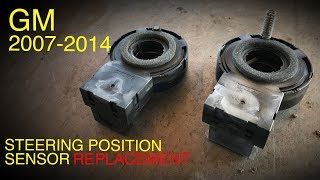
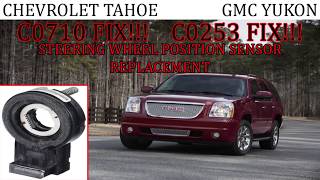
Typical fix: Replace the steering angle sensor. This requires removing lower dash panels, the steering column shroud, and sometimes the steering wheel and airbag. 🎬 See this walkthrough for replacing the sensor on GM trucks. The new sensor must be calibrated.
Est. part cost: $50-$150 - Incorrect Steering Angle Sensor Calibration ⚪ Low Probability → Shop Steering Angle Sensor This can occur after a wheel alignment, steering component replacement (like a rack and pinion), or if the battery was disconnected during service. It will often set a specific symptom byte, C0710-42 ('Calibration Not Programmed').
How to confirm: With the wheels pointing straight ahead, use a scan tool to check the steering angle reading. If it shows a significant value other than zero (e.g., more than +/- 5 degrees), it needs calibration.
Typical fix: Perform a steering angle sensor calibration/relearn procedure using a compatible professional scan tool 🎬 Watch: How to calibrate the steering angle sensor with a scan tool. (such as a GM Tech 2, Autel, or Xtool).
Est. part cost: $0
Rare But Worth Checking
- Vehicle Modifications: As noted in TSB #PIT4322F, modifications like suspension lifts, oversized tires, or mismatched tires can alter the vehicle's geometry and trigger a C0710 code because the sensor data no longer matches what the EBCM expects. The most common symptom byte in this case is C0710-5A ('Plausibility Failure').
- Software/Programming Issue: TSB #PIT5207 mentions that C0710 can appear after sequential programming events, indicating a potential software-related glitch that may require a dealer-level reflash or specific diagnostic procedure.
- Poor BCM Ground at G218: TSB #PIT5405C identifies a poor ground at location G218 (driver's side A-pillar) as a cause for C0710 and many other electrical issues. Factory sound insulation can get trapped under the ground terminal, causing high resistance and leading to implausible signals.
Diagnosis Steps
- Scan the EBCM for codes with a tool capable of reading Chassis (C-codes) and symptom bytes (e.g., C0710-5A or C0710-42). Note any other codes present.
- Inspect the vehicle for modifications (lift kit, non-stock wheels/tires) that could affect steering geometry.
- Gain access to the steering column under the driver's side dash.
- Locate the Steering Angle Sensor connector. Disconnect it and inspect the male and female terminals for fretting corrosion (dark smudges).
- Perform the TSB fix: Even if no corrosion is visible, apply a small amount of dielectric lubricant (GM P/N 12377900) to the terminals, add a shim to the male connector, and reconnect, ensuring a snug fit.
- Clear the codes and test drive the vehicle. If the code returns, proceed with further diagnosis.
- Use a scan tool to view live data from the Steering Angle Sensor. Verify the angle reads near 0° when straight and changes smoothly through its full range (approx. -550 to +550 degrees) when turning the wheel.
- If live data is erratic, frozen, or absent, the sensor is likely faulty and needs replacement.
- If the sensor has been replaced or an alignment was performed, perform a Steering Angle Sensor calibration with a compatible scan tool.
Parts You'll Likely Need
- Steering Angle Sensor
(OEM #15886733, 20910871)— This sensor is the component that provides the steering wheel position data. It is replaced if cleaning the connector and calibration do not resolve the code.
Trusted brands: ACDelco, Dorman
OEM price range: $90-$150
Aftermarket price range: $50-$100 - Dielectric Grease
(OEM #12377900)— This is required to service the electrical connector, which is the most common point of failure for this code on this vehicle, as per TSB SB-10043887-2153.
Trusted brands: Permatex, ACDelco
OEM price range: $15-$25
Aftermarket price range: $5-$10
Related Codes That Often Appear With This One
- C0455 — This code for 'Steering Position Sensor Circuit Malfunction' is often set alongside C0710 as they both relate to the same sensor and circuit. TSB SB-10043887-2153 frequently lists them together as being caused by the same connector issue.
- U2143 — This indicates a 'Lost Communication With Steering Angle Sensor Module.' It points to a more severe communication breakdown, often due to a completely failed connector, cut wire, or dead sensor, rather than just an implausible signal.
- C0253 — This code for 'Steering Sensor Centering Error' can appear with C0710 if the sensor's center position is lost or implausible, often pointing to a need for recalibration after a repair.
Technical Service Bulletins (TSBs) & Recalls
- SB-10043887-2153 (Supersedes PI0639 / 06-02-35-002A): The definitive TSB for addressing fretting corrosion in the SWPS connector as the cause for C0455/C0710.
- PIT5207: Service Stabilitrak Message With DTC C0455 and/or C0710 SYM5A After A Sequential Programming
- PIT4322F: Unwanted Stability Activation And/Or C0710
- PIT5405C: Steering Jerks Or Kicks Back / Reduced Power Steering Assist... Various DTCs
Platform-Specific Known Issues
- TSB #PIT4322F documents cases of 'Unwanted Stability Activation' with code C0710, which can be a safety hazard.
- TSB #PIT5207 notes that C0710 can be set after a 'Sequential Programming' event, suggesting a potential software or module communication issue under specific service conditions.
- TSB #SB-10043887-2153 (superseding PI0639) is the key document, pointing to fretting corrosion on the SAS connector as the primary cause and advising technicians to service the connector with a shim and dielectric grease rather than replace the sensor.
Mechanic-Grade Diagnostic Values
- Steering Angle Sensor Live Data Range — expected: Smoothly varies from approx. -550 to +550 degrees when turning lock-to-lock.. Failure: Data is frozen, jumps erratically, is absent, or does not read near 0 degrees when wheels are straight.
- Sensor 5V Reference Circuit Voltage — expected: 4.8-5.2 V (measured between the 5V reference circuit terminal and ground).. Failure: A reading outside this range points to a fault in the EBCM or wiring.
- Sensor Low Reference Circuit Resistance — expected: Less than 2 Ω.. Failure: Higher resistance indicates an open or poor ground connection.
- Analog Signal Voltage at EBCM (Steering Centered) — expected: 2.5 V.. Failure: Voltage significantly different from 2.5V when the wheel is centered.
- Live Signal Voltage at Steering Module (during turning) — expected: Signal 1 and Signal 2 should vary between ~0.1V and ~5V.. Failure: Voltage is stuck (e.g., at 2.5V) or reads 0V and does not change with steering input.
Hidden / Shadow Codes Worth Checking
- C0710 5A: Steering Wheel Angle Signal - Plausibility Failure. This indicates the sensor's reading is illogical compared to other vehicle data (like yaw rate or wheel speed). Often caused by vehicle modifications or severe mechanical misalignment. (see via Professional scan tool (like GM Tech 2 or equivalent) capable of reading symptom bytes.)
- C0710 42: Steering Wheel Angle Signal - Calibration Not Programmed. This means the sensor's center position has not been learned by the EBCM. It requires a calibration procedure. (see via Professional scan tool (like GM Tech 2 or equivalent) capable of reading symptom bytes.)
- C0710 4B: Steering Wheel Angle Signal - Calibration Data Not Learned. Similar to symptom 42, this indicates a failure in the learning process, potentially due to a faulty sensor or incorrect procedure. (see via Professional scan tool (like HP Tuners MPVI3, Xtool D8S) capable of reading symptom bytes.)
Scan Tool Commands That Help
- GM Tech 2, Autel, Launch, etc.: Steering Wheel Angle Sensor Learn / Calibration / Reset — This function, found in the Electronic Brake Control Module (EBCM) special functions menu, is required after replacing the sensor, performing a wheel alignment, or replacing steering components. It learns the sensor's center (0 degree) position. The procedure typically requires centering the wheel and following on-screen prompts, which may include turning the wheel lock-to-lock.
Wiring & Ground Locations
- Steering Angle Sensor Connector — On the steering angle sensor, located on the steering column under the driver's side dash, accessible after removing the lower knee bolster panel.. This is the most common failure point due to fretting corrosion from micro-vibrations, as identified in multiple GM TSBs. A poor connection here is the primary cause of C0710.
- G218 — Driver's side A-pillar, behind the side dash panel and below the speaker. It is a stud with a 10mm nut.. This is a primary ground for the Body Control Module (BCM). TSB PIT5405C notes that a poor connection here, often from trapped dash insulation, can cause C0710 and numerous other electrical faults by disrupting module communication.
- EBCM (Electronic Brake Control Module) — Typically located on the left side frame rail, below the driver's door area.. This module receives the signal from the steering angle sensor, interprets it, and sets code C0710. The wiring from the sensor terminates here, and the module's own ground connection on the frame rail is also a potential point of failure due to corrosion.
Real Owner Repair Stories
- Tahoe Yukon Forum user (2007-2011 era GM SUV) — Service Stabilitrak message with code C0710.
❌ Tried (didn't work) Initial diagnostics did not find the cause.
✅ What actually fixed it A previous rack and pinion replacement had left the steering shaft installed one full turn off-center. Correcting the mechanical alignment of the steering shaft to its zero position and performing an alignment resolved the code. - Tahoe Yukon Forum user (2015 GM SUV) — Service Stabilitrak and steering error messages with codes C0710 and C0544.
❌ Tried (didn't work) Attempting to perform the Steering Angle Sensor (SAS) relearn procedure with multiple scan tools (Xtool, Autel). The procedure would not complete.
✅ What actually fixed it The user confirmed with a scan tool that the installed sensor was not producing any live data. After replacing the faulty sensor with a new one (PN 13590209), live data was present, and the SAS relearn procedure completed successfully, clearing the codes. - Tahoe Yukon Forum user (GM SUV) — Service Stabilitrak and traction control lights with code C0710, vehicle pulling to one side.
❌ Tried (didn't work) Multiple dealership visits could not diagnose the cause.
✅ What actually fixed it The issue started after getting a nail in a tire and replacing it with a used, possibly mismatched tire, which caused a constant pull. The driver had to hold the steering wheel off-center to drive straight, creating a plausibility fault (C0710). Replacing all tires with a new matching set and getting an alignment resolved the pull and the code did not return.
"I Checked Everything" — The Actual Cause
- A common scenario is where the sensor and its connector check out fine, but the code persists. In one documented case, the root cause was a mechanical misalignment from a previous rack and pinion repair where the steering shaft was installed a full 360 degrees off-center. The sensor was reporting a valid, but highly implausible angle, which standard electrical checks would miss. The fix was to mechanically re-index the steering shaft.
When the Usual Fixes Don't Work
- While the most common fix is servicing the sensor's electrical connector, there are many confirmed cases where this does not solve the problem. One well-documented scenario is when the sensor fails internally and stops producing a live data signal altogether. In this situation, no amount of connector cleaning will work, and scan tools will fail to perform a calibration procedure. The only fix is to replace the sensor itself before calibration can be successfully completed.
- Another counter-example is a purely mechanical issue triggering the code. Following a rack and pinion replacement, a vehicle's steering shaft was re-installed 360 degrees out of phase. The sensor and connector were functioning perfectly, but the EBCM correctly flagged the signal as implausible because the driver was holding the wheel straight while the sensor reported a full turn. The fix was mechanical re-alignment of the steering shaft, not electrical repair.
OEM Part Supersession History
15886733→N/A— This is the sensor assembly listed for early models in the range, such as the 2008 Yukon. It supersedes older numbers 15112675 and 25833069.
Heads up: This part is likely for the earlier models in the specified vehicle range.20910871→19418403— Part update/revision by GM.
Heads up: This part is listed for the later models in the range (2010-2012). Using the wrong sensor for the model year may result in failure to calibrate or function.
Model Year Variations Within This Range
- 2008-2009 (approx.): These earlier models likely use steering angle sensor P/N 15886733.
- 2010-2012 (approx.): These later models use steering angle sensor P/N 20910871, which has been superseded by P/N 19418403.
- Late Production 2012: May use the wiring schematic of the 2013 model year, where the steering angle signal is sent via CAN bus from the Power Steering Control Module to the EBCM, rather than through dedicated analog signal wires. This changes the diagnostic procedure significantly.
Helpful Videos
We Have This Part in Stock


The information in this article is provided for general reference and educational purposes only. Vehicle specifications, procedures, and part compatibility can vary by production date, trim level, and region. Always consult your vehicle's factory service manual and verify part numbers before purchasing or performing repairs. Safety-critical components such as airbags, seat belts, and braking systems should be installed by a qualified professional.
- Gmc YUKON HYBRID:
- 🧭 Diagnostic Flowchart
- 🎬 Helpful Videos
- 🛍️ Shop This Part
- What's Unique About the 2008-2012 Gmc YUKON HYBRID
- Symptoms You May Notice
- Most Likely Causes
- Rare But Worth Checking
- Diagnosis Steps
- Parts You'll Likely Need
- Related Codes That Often Appear With This One
- Technical Service Bulletins (TSBs) & Recalls
- Platform-Specific Known Issues
- Mechanic-Grade Diagnostic Values
- Hidden / Shadow Codes Worth Checking
- Scan Tool Commands That Help
- Wiring & Ground Locations
- Real Owner Repair Stories
- "I Checked Everything" — The Actual Cause
- When the Usual Fixes Don't Work
- OEM Part Supersession History
- Model Year Variations Within This Range
- 🎟️ Get 5% Off