

C0750 on 2012-2017 Buick Verano: TPMS Fault Causes and Fixes
On a 2012-2017 Buick Verano, code C0750, often with other TPMS codes, usually points to a failed Remote Control Door Lock Receiver (RCDLR), not the tire sensor. This known issue, documented in TSB 16-NA-396, also causes key fobs to stop working. Replacing the RCDLR module and having it programmed by a dealer or a properly-equipped independent shop is the most common fix.
- C0750 on a 2012-2017 Verano refers to a problem with the Left Front TPMS sensor signal.
- Before buying a new tire sensor, check your key fob. If it doesn't work, the problem is almost certainly the Remote Control Door Lock Receiver (RCDLR), a known issue covered by TSB 16-NA-396.
- If only the C0750 code is present and the key fob works, the sensor in the left front tire is the more likely culprit, probably due to a dead battery.
- Fixing this code requires specialized tools to program the new RCDLR module or register the new TPMS sensor, making it a difficult DIY repair.
What's Unique About the 2012-2017 Buick VERANO
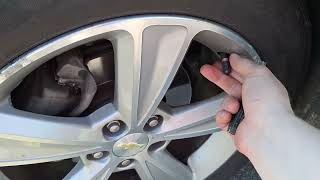
What makes this code unique on the Verano and related GM Delta II platforms like the Chevy Cruze 🎬 See how to reset the TPMS on a Chevy Cruze is the high probability that the fault lies with the Remote Control Door Lock Receiver (RCDLR) module itself, rather than the individual tire sensor. A specific TSB (16-NA-396) documents that an internal failure in the RCDLR can cause it to lose communication with all TPMS sensors simultaneously and also disable all key fob functions. Owners often mistakenly replace the TPMS sensor first, only to find the problem persists because the shared receiver module is the actual point of failure. This is a well-documented pattern on owner forums.
Diagnostic Flowchart
Tap your situation to follow the diagnostic path that matches what you're seeing on this vehicle.
Symptoms You May Notice
- Tire pressure monitor (TPMS) warning light is on or flashing.
- "Service Tire Monitor System" message on the Driver Information Center (DIC).
- Key fob functions are inoperative (lock, unlock, remote start, panic).
- "No Remote Detected" message on the DIC when trying to start the car. 🎬 Watch: Where to find the transmitter pocket for key detection
- Intermittent no-crank or no-start condition. [TSB PIC5650M]
- Security light illuminated on the dash. [TSB PIC5650M]
- All four tire pressure readings on the DIC show dashes (--) instead of pressures.
- Replacing the left front TPMS sensor when the actual fault is the RCDLR. If all TPMS sensors and the key fobs fail at once, the RCDLR is the much more likely culprit. This is a frequent topic in owner forums where a user replaces a sensor only to have the problem remain.
Most Likely Causes
- Faulty Remote Control Door Lock Receiver (RCDLR) 🔴 High Probability → Shop Keyless Entry Receiver This is a documented weak point on this GM platform, as cited in TSB 16-NA-396. The module handles signals for both the TPMS and key fobs, and internal failure is common across many GM models of this era.
How to confirm: Check for simultaneous failure of all TPMS sensors (codes C0750, C0755, C0760, C0765) and verify that key fob functions are also dead. If both systems fail together, the RCDLR is the prime suspect. A battery disconnect and reconnect may temporarily restore function, further pointing to a failing module.
Typical fix: Replace the RCDLR module and have it programmed to the vehicle using GM's Service Programming System (SPS). This is typically a dealer or specialized independent shop repair. The module is often located behind the rear seat or upper trim panels near the headliner.
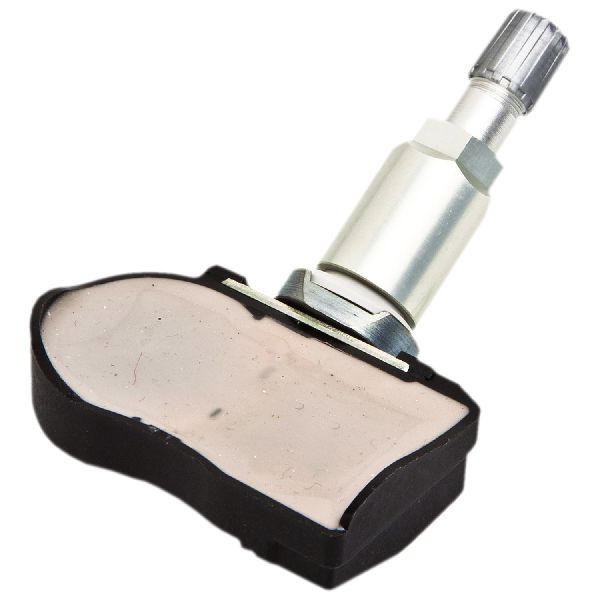
Est. part cost: $60-$120 - Failed Left Front TPMS Sensor 🟡 Medium Probability → Shop Tire Pressure Monitoring System (TPMS) Sensor TPMS sensors have a finite battery life, typically 7-10 years. As the 2012-2017 Verano fleet ages, battery failure is becoming increasingly common. Physical damage from tire changes or road hazards can also cause failure.
How to confirm: Use a dedicated TPMS tool to attempt to read the sensor's data (pressure, temperature, battery status) directly at the wheel. If the tool cannot get a reading, and other sensors respond, the single sensor is likely dead. If no sensors respond, suspect the RCDLR.
Typical fix: Replace the sensor in the left front wheel. The tire must be dismounted, the new sensor installed, and the tire remounted and balanced. The new sensor must then be registered to the vehicle via a relearn procedure, which can sometimes be done without a tool by letting air out of the tires in sequence. 🎬 Watch: How to reset the TPMS light on your Verano
Est. part cost: $25-$70 - Low Vehicle Battery Voltage ⚪ Low Probability Low system voltage can cause communication errors between various electronic modules, including the RCDLR and BCM. This can lead to a variety of spurious codes, including TPMS faults.
How to confirm: Test the vehicle's 12V battery with a multimeter or battery tester. A resting voltage below 12.4V indicates a weak battery that may need charging or replacement.
Typical fix: Charge or replace the 12V vehicle battery.
Est. part cost: $150-$250
Rare But Worth Checking
- Body Control Module (BCM) Fault: Mentioned in TSB PIC5650M in relation to no-start conditions along with TPMS codes. A BCM fault is rare but possible if widespread, seemingly unrelated electrical issues are present. A U0422 code (Invalid Data Received From BCM) may be stored along with the C-codes.
- Wiring Harness Damage: Damage to the wiring or coax antenna cable leading to the RCDLR (often located in the trunk or near the rear of the headliner) can interrupt communication and trigger this code. TSB PIT5446A discusses how a disconnected antenna can cause these exact symptoms.
Diagnosis Steps
- Scan all vehicle modules for codes. Note if C0750 is present alone or with C0755, C0760, and C0765. The presence of all four codes strongly suggests a central module issue.
- Test all key fob functions (lock, unlock, remote start). If they are inoperative, suspect the RCDLR per TSB 16-NA-396.
- Use a TPMS diagnostic tool to try and activate and read the left front sensor directly. If it responds with good battery life, the sensor is likely OK.
- If the sensor does not respond to the tool, its internal battery is likely dead, and the sensor needs replacement.
- If no sensors respond to the TPMS tool, or if they respond but the codes persist along with key fob issues, the RCDLR is the primary suspect.
- Inspect the RCDLR's wiring and antenna connections for damage or corrosion. The module is typically in the rear of the car, behind trim panels. A disconnected coax antenna cable can cause identical symptoms.
- If wiring is intact, the RCDLR is the most probable cause and should be replaced.
- After replacing the RCDLR, it MUST be programmed using GM's Service Programming System (SPS). After replacing a TPMS sensor, perform the TPMS relearn procedure as specified for the vehicle.
Parts You'll Likely Need
- Remote Control Door Lock Receiver (RCDLR)
(OEM #13506627)— This module is the most common point of failure for this code on the Verano, especially when key fob functions also fail, as documented in TSB 16-NA-396. Note that TSB 16-NA-396 lists several part numbers and supersessions; for example, it may specify replacing an original P/N 13509518 with 13595511. Always verify the correct part for the specific vehicle.
Trusted brands: ACDelco (Genuine GM)
OEM price range: $60-$120
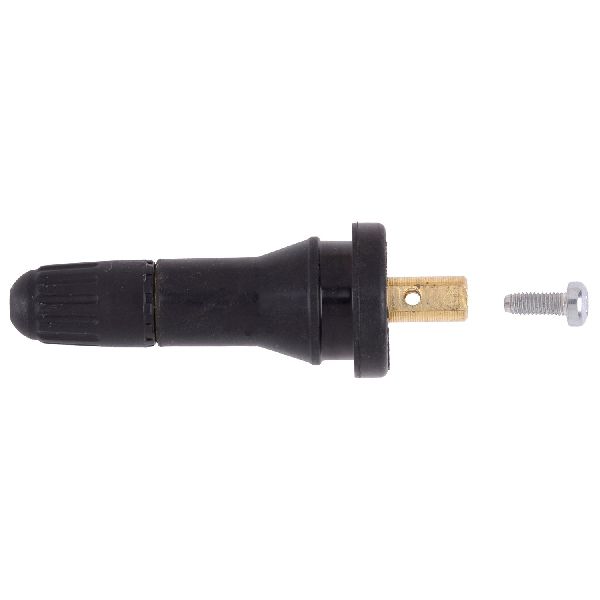
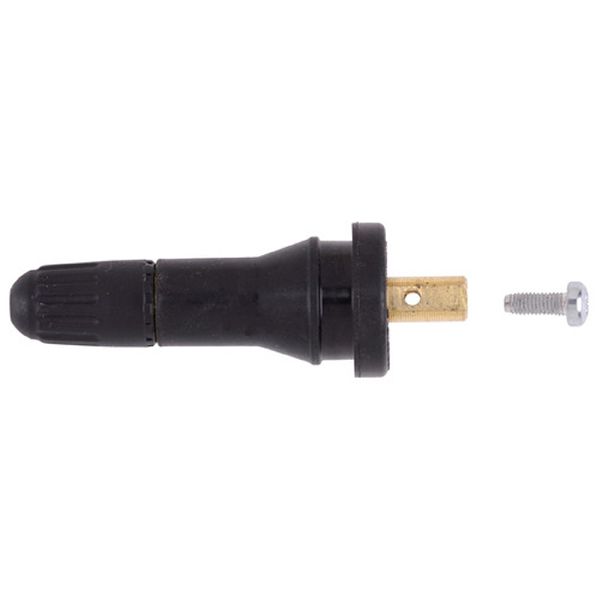
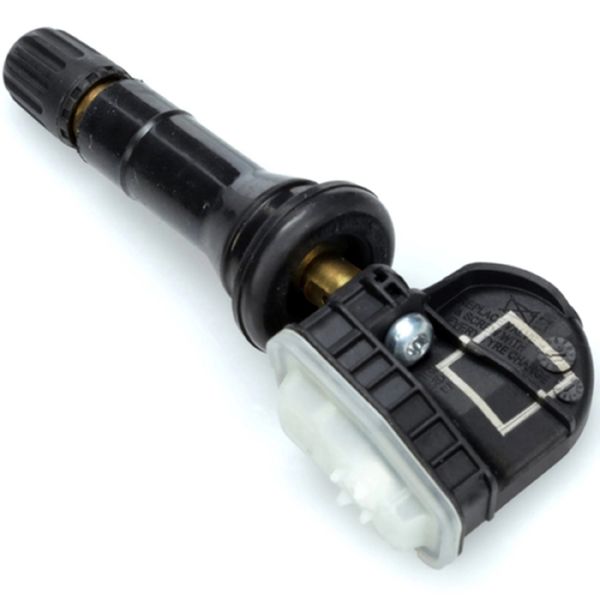
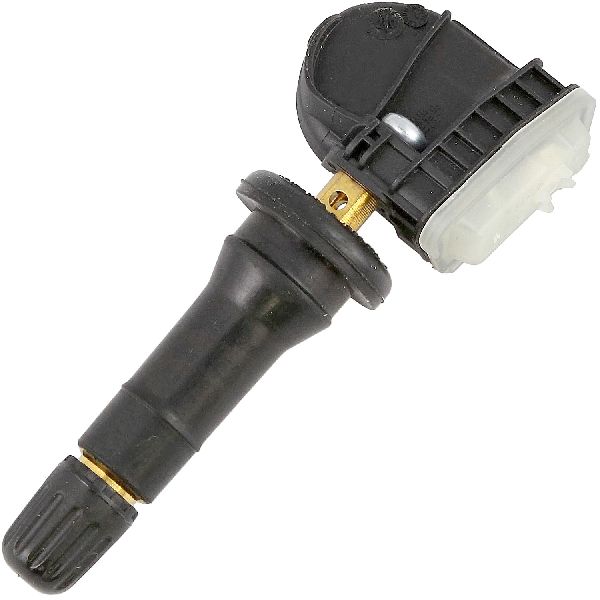
Aftermarket price range: $50-$90 - Tire Pressure Monitoring System (TPMS) Sensor
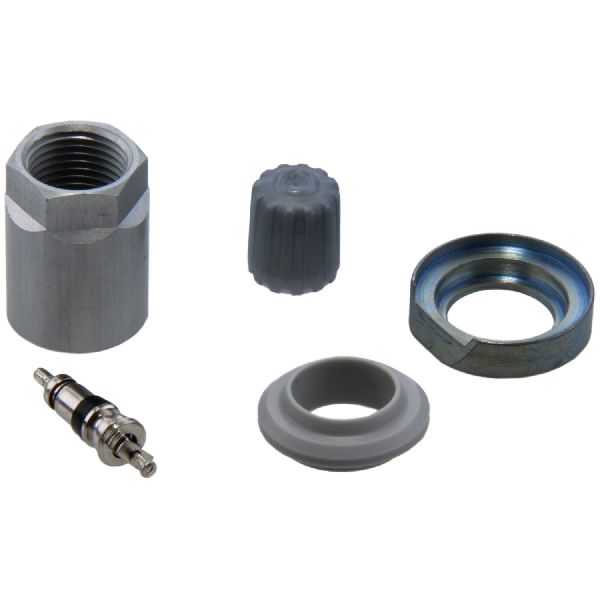
(OEM #13598771)— If the RCDLR is working correctly, the sensor itself may have failed due to a dead battery (7-10 year lifespan) or physical damage. This part number has been superseded by 13540600.
Trusted brands: ACDelco, Schrader, Huf, Dorman
OEM price range: $40-$70
Aftermarket price range: $25-$50
Related Codes That Often Appear With This One
- C0755 — For the Right Front TPMS sensor. A failing RCDLR often loses communication with all sensors at once.
- C0760 — For the Left Rear TPMS sensor. A failing RCDLR often loses communication with all sensors at once.
- C0765 — For the Right Rear TPMS sensor. A failing RCDLR often loses communication with all sensors at once.
- B3101 — A key fob-related code that can appear when the RCDLR fails to communicate with the fobs, as noted in TSB PIC6227.
- B3055 — A key-related security code that can appear alongside TPMS codes when there is a broader electrical or module communication issue, as noted in TSB PIC5650M.
Technical Service Bulletins (TSBs) & Recalls
- 16-NA-396: Intermittent Operation of Key Fobs, Door Unlock Inoperative “No Remote Detected” Message with Possible TPM MIL. Points to a faulty RCDLR as the cause.
- PIC5650M: Intermittent no crank, no start, or start stall concern with the security light coming on. Lists C0750 as a possible related DTC.
Platform-Specific Known Issues
- A known issue, documented in GM Technical Service Bulletin 16-NA-396, points to internal failures of the Remote Control Door Lock Receiver (RCDLR) causing code C0750 along with the other three TPMS codes (C0755, C0760, C0765) and a complete loss of key fob functions.
- TSB PIC5650M also links C0750 and other TPMS codes to intermittent no-start conditions with the security light on, suggesting a potential link to the immobilizer or Body Control Module in some instances.
- The RCDLR module is typically located in the rear of the vehicle, mounted vertically behind an upper trim panel near the C-pillar or rear of the headliner, making access moderately difficult.
Mechanic-Grade Diagnostic Values
- RCDLR Coaxial Antenna Integrity — expected: Using a multimeter on the resistance setting, there should be continuity (near 0 ohms) from the center pin on one end of the disconnected antenna cable to the center pin on the other end. There should also be continuity between the outer barrels. There should be infinite resistance (open circuit) between the center pin and the outer barrel.. Failure: High resistance on the center pin or outer barrel tests indicates a break in the cable. Any continuity between the center and outer conductors indicates a short circuit.
- Radio Frequency Interference (RFI) Scan — expected: With the vehicle running and all accessories off, a dedicated RF meter (like the EL-52545) should show minimal ambient RF noise on the 315 MHz and 433 MHz frequencies used by the TPMS and key fobs.. Failure: A strong, persistent signal on these frequencies, especially when an aftermarket device (like a phone charger, LED light, or dash cam) is turned on, indicates RFI is 'jamming' the RCDLR.
Hidden / Shadow Codes Worth Checking
- C0750, C0755, C0760, C0765 with Symptom :29: The symptom code (or symptom byte) ':29' translates to 'Too Few Pulses'. This specifically indicates the RCDLR is not receiving the expected number of data packets from the TPMS sensors, which is a hallmark of the internal RCDLR failure described in TSB 16-NA-396. (see via GM's GDS2 (Global Diagnostic System 2) or a high-end professional scan tool capable of reading manufacturer-specific symptom codes.)
Scan Tool Commands That Help
- GDS2: Module Diagnostics > Remote Control Door Lock Receiver > Configuration/Reset Functions > Add/Replace Key Fobs — This function is required after installing a new RCDLR to program the existing key fobs to the new module. The tool places the new module into a 'learn mode' to accept the fob signals.
- GDS2: Module Diagnostics > Remote Control Door Lock Receiver > Configuration/Reset Functions > Erase All Key Fobs — This is used if you need to clear all previously learned fobs from the module's memory before programming a new set, or if you run out of available programming slots.
- GDS2 or TPMS Tool: TPMS Learn Mode — After replacing a TPMS sensor or the RCDLR, the vehicle must perform a relearn procedure to associate each sensor ID with its position on the car. This can be initiated via the DIC menu, and then each sensor is activated with a TPMS tool.
Wiring & Ground Locations
- G103 — Located on the cowl in the left rear of the engine compartment, above the brake booster.. This is a primary ground point for the Body Control Module (BCM) and the Remote Control Door Lock Receiver (RCDLR). A poor connection here can cause a wide range of communication issues, including the symptoms associated with C0750.
- RCDLR Connector (X1/X2/X3) — The RCDLR module itself is typically located behind the upper C-pillar trim on the passenger side or near the rear of the headliner. It has several multi-pin connectors.. Technicians need to access these connectors to test for power, ground, and antenna signal integrity before condemning the module. A wiring diagram is essential to identify the specific pins for Battery Positive Voltage, Ground, and the Coaxial Antenna.
- Instrument Panel Fuse Block — Located in the passenger cabin, accessible by opening a small storage compartment below and to the left of the steering wheel.. This fuse block contains the fuses that supply power to the RCDLR and BCM. Verifying these fuses are good is a preliminary step in any electrical diagnosis.
Real Owner Repair Stories
- CruzeTalk Forum User (2012 Chevy Cruze (platform-mate to Verano)) — TPMS light on with codes C0750, C0755, C0760, C0765. Key fobs (both of them) stopped working completely at the same time. Car would only start if the fob was placed in the center console pocket.
❌ Tried (didn't work) Replacing the batteries in both key fobs., Attempting the TPMS relearn procedure (failed to initiate)., Disconnecting the car battery for 30 minutes (function returned for a few minutes then failed again).
✅ What actually fixed it Replacing the Remote Control Door Lock Receiver (RCDLR) module. The user purchased a new ACDelco module online and had an independent shop with a GDS2 subscription program it to the vehicle. This resolved both the TPMS codes and the key fob issues simultaneously.
OEM Part Supersession History
13509518→13595511, 13523281, 13540045— Internal design revision by the manufacturer to improve reliability and address the failure pattern described in TSB 16-NA-396.
Heads up: While multiple part numbers may have been used, TSB 16-NA-396 specifically calls out replacing 13509518 with 13595511. Always verify the correct, most current part number for the vehicle's specific VIN through a dealer parts catalog before ordering.
Model Year Variations Within This Range
- 2012: Early 2012 models were subject to a specific PI (PIC5604B) for poor RKE range and dashes for rear tire pressures, which also pointed to RCDLR replacement using P/N 13503205. Later TSBs superseded this guidance.
- 2012-2017: The TPMS relearn procedure can vary slightly. On models with a traditional key, the relearn mode may be entered by turning the key to ON and holding the lock/unlock buttons on the fob. On push-button start models, the mode is entered through the Driver Information Center (DIC) menu.
Helpful Videos
We Have This Part in Stock

The information in this article is provided for general reference and educational purposes only. Vehicle specifications, procedures, and part compatibility can vary by production date, trim level, and region. Always consult your vehicle's factory service manual and verify part numbers before purchasing or performing repairs. Safety-critical components such as airbags, seat belts, and braking systems should be installed by a qualified professional.
- Buick VERANO:
- 🧭 Diagnostic Flowchart
- 🎬 Helpful Videos
- 🛍️ Shop This Part
- What's Unique About the 2012-2017 Buick VERANO
- Symptoms You May Notice
- Most Likely Causes
- Rare But Worth Checking
- Diagnosis Steps
- Parts You'll Likely Need
- Related Codes That Often Appear With This One
- Technical Service Bulletins (TSBs) & Recalls
- Platform-Specific Known Issues
- Mechanic-Grade Diagnostic Values
- Hidden / Shadow Codes Worth Checking
- Scan Tool Commands That Help
- Wiring & Ground Locations
- Real Owner Repair Stories
- OEM Part Supersession History
- Model Year Variations Within This Range
- 🎟️ Get 5% Off