

C0750 on 2013-2019 Cadillac XTS: TPMS Fault, Causes, and Fixes
On a 2013-2019 Cadillac XTS, code C0750 points to the left front tire pressure sensor, but it's very often caused by a failing Remote Control Door Lock Receiver (RCDLR). If your key fob also stopped working and you see codes for all tires, the RCDLR is the most likely culprit. This module is located behind the rear passenger-side interior trim and requires professional replacement and programming, including a security relearn procedure.
- Code C0750 on your XTS is for the left front TPMS sensor, but the problem might not be the sensor itself.
- Before buying any parts, check your key fob. If it's dead along with the TPMS light being on, the Remote Control Door Lock Receiver (RCDLR) is the most likely problem.
- If only the TPMS light is on for the single tire and your fob works, a dead battery in the tire sensor is the probable cause.
- Replacing the RCDLR is not a DIY-friendly job as it requires programming by a professional with the correct scan tool.
- Always ask your mechanic to check the RCDLR antenna connections (per TSB 16-NA-061) before paying to replace the entire module.
What's Unique About the 2013-2019 Cadillac XTS
What's unique about the Cadillac XTS and similar GM platforms of this era is the high probability that the fault lies with the Remote Control Door Lock Receiver (RCDLR) module, not the tire sensor itself. This single module processes signals from both the TPMS sensors and the key fobs. A documented internal failure within the RCDLR can cause it to lose communication with the TPMS sensors and, at the same time, cause the key fobs to stop working, a condition outlined in GM Technical Service Bulletin 16-NA-396.
Diagnostic Flowchart
Tap your situation to follow the diagnostic path that matches what you're seeing on this vehicle.
Symptoms You May Notice
- Tire pressure monitor (TPMS) warning light is flashing or on solid.
- Driver Information Center (DIC) shows dashes (--) for the left front tire pressure, or for all tires, and may display "Service Tire Monitor System".
- Key fob is inoperative (cannot lock, unlock, or use remote start).
- "No Remote Detected" message on the DIC, even with the key in the car.
- Intermittent no-crank or no-start condition.
- Security light may be illuminated on the dash, especially after RCDLR replacement.
- Replacing the TPMS sensor when the actual fault is the RCDLR. If the key fob is also dead, replacing the sensor will not fix the problem.
Most Likely Causes
- Faulty Remote Control Door Lock Receiver (RCDLR) 🔴 High Probability → Shop Keyless Entry Receiver This is a well-documented failure point on many GM vehicles from this period, as cited in TSB 16-NA-396. The module's internal electronics fail, causing it to lose communication with both TPMS sensors and key fobs.
How to confirm: Check for a combination of symptoms: TPMS light is on (often with codes C0750, C0755, C0760, and C0765 all present) AND the key fob functions are dead. If both systems fail together, the RCDLR is the prime suspect. The module is typically located behind the rear passenger side C-pillar trim panel.
Typical fix: Replace the RCDLR module and have it programmed by a dealer or qualified independent shop. A security relearn procedure is often required after replacement to prevent a no-start condition.
Est. part cost: $80-$200 - Failed Left Front TPMS Sensor 🟡 Medium Probability → Shop Tire Pressure Monitoring System (TPMS) Sensor The non-replaceable battery inside the sensor has a finite lifespan of 5-10 years. As these vehicles age, sensor failure becomes increasingly common.
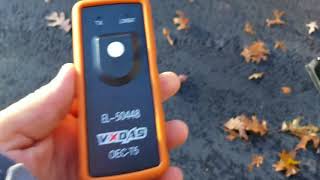
How to confirm: This is the likely cause if C0750 is the ONLY code present and your key fob works perfectly. A tire shop can use a TPMS tool (like an EL-50448) to test the sensor's signal output directly. If the tool cannot get a reading, the sensor is dead.
Typical fix: Replace the TPMS sensor inside the left front tire. The new sensor must be registered to the vehicle using a TPMS relearn tool. 🎬 Watch: How to use a TPMS reset tool on your Cadillac.
Est. part cost: $40-$90 - RCDLR Antenna Connection Issue ⚪ Low Probability GM TSB 16-NA-061 notes that the coax cable connecting the antenna to the RCDLR can become disconnected, leading to poor signal reception.
How to confirm: Before replacing the module, inspect the coax cable connections at the RCDLR module (located in the rear of the vehicle, likely behind trim) and the antenna amplifier module. If a connection is loose, this is the likely fault.
Typical fix: Securely reconnect the coax cable. This requires accessing the vehicle's interior trim panels to reach the module and antenna.
Est. part cost: $0
Diagnosis Steps
- Scan for all DTCs in the Body Control Module (BCM) and RCDLR. Note if C0750 is alone or present with C0755, C0760, and C0765.
- Test all functions of the key fob: lock, unlock, trunk release, and remote start. Note if they are completely inoperative.
- If all TPMS codes are present and the key fob is dead, the RCDLR is the most likely cause.
- Before replacing the module, access it by removing the rear passenger-side interior trim (C-pillar area) and inspect the antenna coax cable connections for looseness per TSB 16-NA-061.
- If only code C0750 is present and the key fob works, use a TPMS diagnostic tool to attempt to activate and read the left front sensor. If it fails to respond, the sensor is faulty.
- If the sensor responds to the tool but the code persists, suspect an intermittent wiring issue or a more complex RCDLR fault.
- After replacing the RCDLR, program the new module and all key fobs. If the car has power but will not start (security light on), perform the 30-minute theft deterrent system relearn: Turn the ignition to 'ON' (without starting) for 10 minutes, then OFF for 5 seconds. Repeat this for a total of three 10-minute cycles.
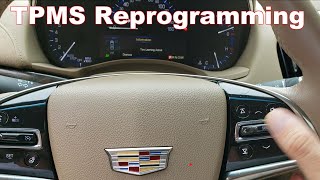
- After any repair, clear the DTCs and perform the TPMS sensor learn procedure to ensure the system is working correctly. 🎬 See this video for a step-by-step TPMS sensor relearn procedure.
Parts You'll Likely Need
- Remote Control Door Lock Receiver (RCDLR)
(OEM #13595511, 13586852, 13597910)— This module is the most common point of failure when C0750 is accompanied by other TPMS codes and a dead key fob, as documented in TSB 16-NA-396.
Trusted brands: ACDelco, GM Genuine
OEM price range: $100-$220
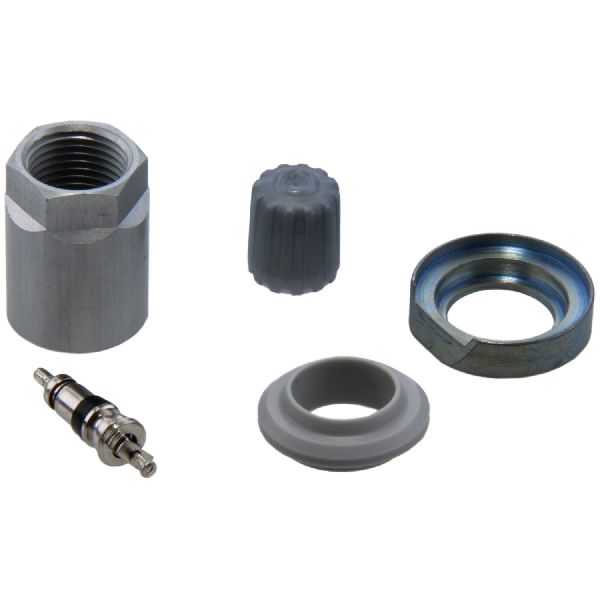
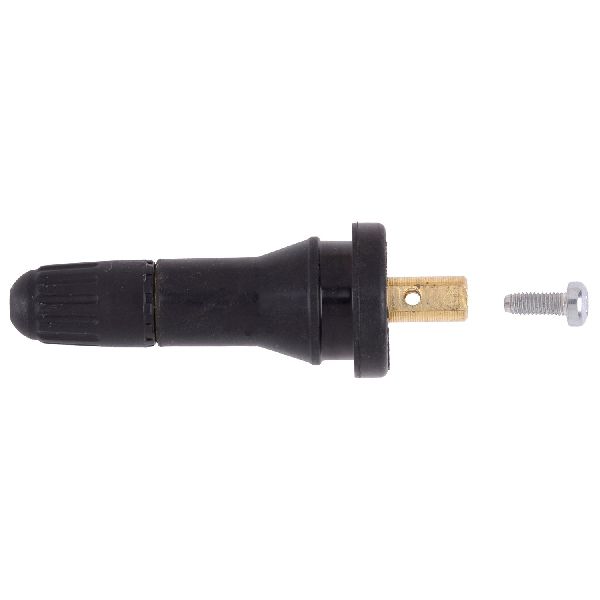
Aftermarket price range: $70-$160 - Tire Pressure Monitoring System (TPMS) Sensor
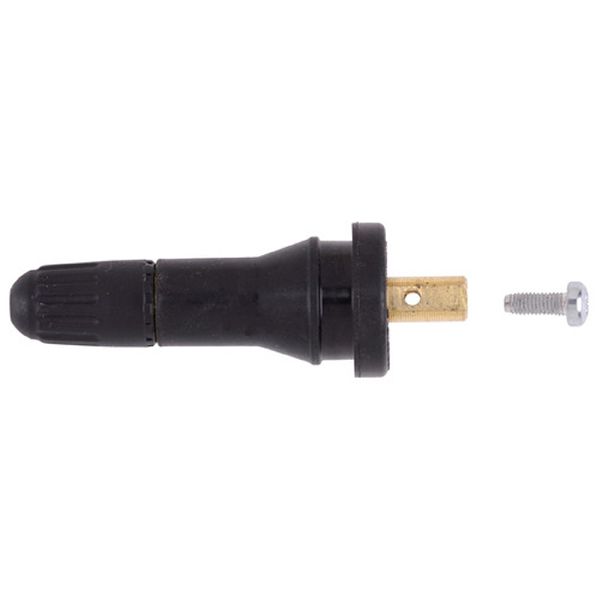
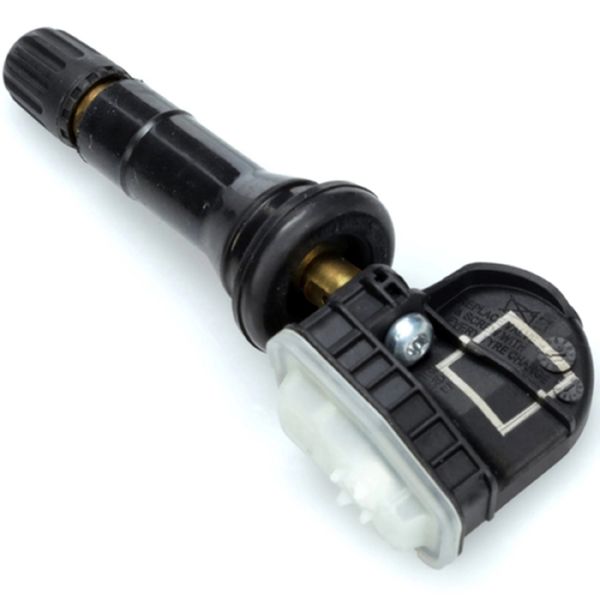
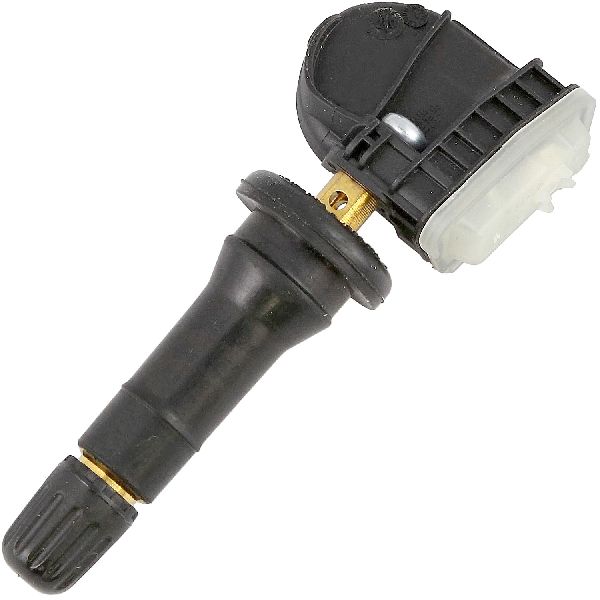
(OEM #23445327)— This is the part to replace if only C0750 is stored and the key fob works correctly. The sensor's internal battery dies over time.
Trusted brands: ACDelco, Schrader, Continental, HUF
OEM price range: $60-$90
Aftermarket price range: $40-$70
Related Codes That Often Appear With This One
- C0755 — Right Front TPMS sensor fault. Often appears with C0750 when the RCDLR module fails.
- C0760 — Left Rear TPMS sensor fault. Often appears with C0750 when the RCDLR module fails.
- C0765 — Right Rear TPMS sensor fault. Often appears with C0750 when the RCDLR module fails.
- B3055 — Key Not Present. This code is related to the immobilizer system and can be set when the RCDLR fails to detect the key fob.
Technical Service Bulletins (TSBs) & Recalls
- 16-NA-396: Intermittent Operation of Key Fobs, Door Unlock Inoperative “No Remote Detected” Message with Possible TPM MIL. Points to internal RCDLR failure.
- PIC5650M: Intermittent no crank, no start, or start stall concern with the security light coming on, potentially with TPMS codes set.
- 16-NA-061: Service Tire Monitor System/ Tire Pressures Display Dashes/ RKE Short Range/ No Fob Detected Message. Points to a disconnected RCDLR antenna or coax cable.
Platform-Specific Known Issues
- TSB 16-NA-396 directly addresses an internal failure in the RCDLR causing simultaneous failure of the TPMS and keyless entry systems, setting codes C0750, C0755, C0760, and C0765 with symptom code :29 - Too Few Pulses.
- TSB PIC5650M links these TPMS codes to intermittent no-crank, no-start, or stalling conditions related to the vehicle's security system.
- TSB 16-NA-061 points to the possibility of a disconnected RCDLR antenna cable causing these same TPMS codes and key fob range issues.
Hidden / Shadow Codes Worth Checking
- C0750 with Symptom :29: This GM-specific symptom code, or 'symptom byte', means 'Too Few Pulses'. It indicates the Remote Control Door Lock Receiver (RCDLR) is not receiving the expected number of data packets from the TPMS sensor. It's a strong indicator of a signal reception problem, which could be the sensor, antenna, or the receiver module itself. (see via A professional GM-level scan tool like the GDS2 (Global Diagnostic System 2) is required to view symptom bytes.)
Scan Tool Commands That Help
- GDS2 / Techline Connect (SPS): RCDLR Module Reprogramming — This is required after installing a new RCDLR module. The module must be programmed to the vehicle using the Service Programming System (SPS) to function correctly and communicate with other modules.
- GDS2: Tire Pressure Learn — This function must be performed after replacing a TPMS sensor or the RCDLR module to make the vehicle recognize the unique IDs of the sensors in their specific locations.
- GDS2: Module Diagnostics / Data Display — Used to view live data from the RCDLR and BCM, including the status of TPMS sensors and key fob inputs, to help determine if the fault is with a sensor or the receiver module.
Wiring & Ground Locations
- G203 / G305 — Both are located at the base of the left (driver's side) kick panel.. These are primary ground points for multiple interior modules, including potentially the Body Control Module (BCM) which works in conjunction with the RCDLR. A poor ground here can cause a wide range of difficult-to-diagnose electronic issues, including communication errors that could mimic a module failure.
- RCDLR Antenna System — The system consists of the RCDLR module (behind rear passenger C-pillar trim), a coax cable, an Antenna Amplifier Module, and the antenna itself, which is integrated into the right rear glass.. TSB 16-NA-061 specifically calls out disconnects at three points in this system as a cause for C0750 and other TPMS codes. A visual inspection of the connections between these components is a critical diagnostic step before replacing the RCDLR module itself.
OEM Part Supersession History
13595511→13540045— OEM part numbers are often superseded to reflect a manufacturing revision, a change in supplier, or an update to fix a known issue. The new part is the correct current service replacement.
Heads up: When ordering a replacement RCDLR, it is critical to use the latest superseded part number for the vehicle's VIN to ensure compatibility and to get the most recent hardware/software revision.
Model Year Variations Within This Range
- 2013-2019: The Cadillac XTS received a mid-cycle refresh for the 2018 model year. While this changed the exterior and interior styling, the underlying electronic architecture related to the RCDLR and TPMS remained largely the same. Key TSBs like 16-NA-396 and 16-NA-061 apply to vehicles both before and after the refresh, indicating the failure pattern is consistent across the entire 2013-2019 range.
Helpful Videos
![[2013-2020 XTS] Cadillac CUE Complete HD Module Removal *Easy Method* 20 mins](https://img.youtube.com/vi/fTJDA_RQvi0/mqdefault.jpg)
We Have This Part in Stock

The information in this article is provided for general reference and educational purposes only. Vehicle specifications, procedures, and part compatibility can vary by production date, trim level, and region. Always consult your vehicle's factory service manual and verify part numbers before purchasing or performing repairs. Safety-critical components such as airbags, seat belts, and braking systems should be installed by a qualified professional.
- Cadillac XTS:
- 🧭 Diagnostic Flowchart
- 🎬 Helpful Videos
- 🛍️ Shop This Part
- What's Unique About the 2013-2019 Cadillac XTS
- Symptoms You May Notice
- Most Likely Causes
- Diagnosis Steps
- Parts You'll Likely Need
- Related Codes That Often Appear With This One
- Technical Service Bulletins (TSBs) & Recalls
- Platform-Specific Known Issues
- Hidden / Shadow Codes Worth Checking
- Scan Tool Commands That Help
- Wiring & Ground Locations
- OEM Part Supersession History
- Model Year Variations Within This Range
- 🎟️ Get 5% Off