

C0750 on 2007-2013 Chevrolet Avalanche: Left Front TPMS Fault Causes & Fixes
Code C0750 on a 2007-2013 Avalanche indicates a problem with the left front Tire Pressure Monitoring System (TPMS) sensor. The most common cause is a dead sensor battery, as they have a 7-10 year lifespan. Replacing the sensor and performing a relearn procedure is the typical fix, costing around $40-$80 for the part.
- C0750 points to a fault with the left front TPMS sensor.
- The most probable cause on a 2007-2013 Avalanche is the sensor's internal battery expiring.
- A TPMS relearn tool (like the EL-50448) is required for DIY replacement.
- If key fob or starting issues are also present, the RCDLR module is a likely suspect.
What's Unique About the 2007-2013 Chevrolet AVALANCHE
On the GMT900 platform, which includes the 2007-2013 Avalanche, the Remote Control Door Lock Receiver (RCDLR) is responsible for interpreting signals from both the 315 MHz TPMS sensors and the key fobs. This integrated design is why a TPMS-related code like C0750 can sometimes be linked to seemingly unrelated issues like poor key fob range or even a no-start condition, as documented in GM Technical Service Bulletin PIC5650M. The RCDLR module is typically located in the rear of the vehicle, often behind the rear seat or near the D-pillar, making its antenna connections susceptible to issues.
Diagnostic Flowchart
Tap your situation to follow the diagnostic path that matches what you're seeing on this vehicle.
Symptoms You May Notice
- "Service Tire Monitor System" message on the Driver Information Center (DIC)
- TPMS warning light is illuminated (may flash for one minute then stay solid).
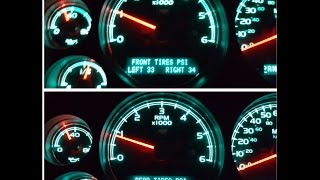
- The tire pressure display for the left front tire shows dashes (--) instead of a pressure reading.
- Intermittent no-crank or no-start condition with the security light on (if the RCDLR module is the root cause).
- Poor key fob range.
- Replacing the Body Control Module (BCM) when the fault is with a single TPMS sensor or the RCDLR.
- Replacing only one TPMS sensor when all are near the end of their battery life, leading to another failure shortly after.
- Ignoring RF interference from a phone charger or other plug-in device, leading to unnecessary parts replacement.
Most Likely Causes
- Dead TPMS Sensor Battery 🔴 High Probability → Shop Tire Pressure Monitoring System (TPMS) Sensor The original sensors have a finite battery life of 5-10 years. For a 2007-2013 model, most original sensors are at or beyond their expected service life, making battery failure the most common culprit.
How to confirm: Use a TPMS activation tool (like an EL-50448) to try and read the sensor. If the tool cannot get a response, or shows a low battery status, the battery is almost certainly dead.
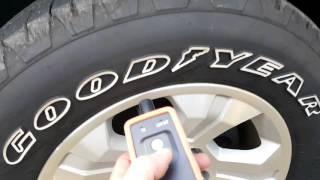
Typical fix: Replace the left front TPMS sensor. It is often recommended to replace all four sensors at the same time, as the others are likely to fail soon. A TPMS relearn procedure must be performed after replacement. 🎬 Watch: How to use the EL-50448 tool for a TPMS relearn.
Est. part cost: $40-$80 per sensor - Faulty Remote Control Door Lock Receiver (RCDLR) ⚪ Low Probability → Shop Keyless Entry Receiver This module handles both TPMS and keyless entry signals. Several TSBs point to internal failures or antenna connection issues with this module causing TPMS codes. Water intrusion from heavy rains has been anecdotally linked to module failure in some cases.
How to confirm: This is more likely if multiple TPMS codes (e.g., C0750, C0755, C0760) are present, or if you also experience poor key fob range or no-start/security issues. A professional scan tool will show a failure to communicate with the RCDLR.
Typical fix: Replace the RCDLR module and have it programmed to the vehicle. 🎬 See this walkthrough on replacing and programming the door lock module. This is a common repair noted in forum and video repair logs for these symptoms.
Est. part cost: $100-$200 - Damaged TPMS Sensor ⚪ Low Probability → Shop Tire Pressure Monitoring System (TPMS) Sensor Sensors can be physically damaged during tire changes or by road hazards. Aftermarket wheels with incorrect valve stem locations can also cause sensor malfunction.
How to confirm: Visual inspection after dismounting the tire. If the sensor is physically broken, it must be replaced. A TPMS tool may also fail to read a damaged sensor.
Typical fix: Replace the damaged TPMS sensor and perform the relearn procedure.
Est. part cost: $40-$80
Rare But Worth Checking
- Radio Frequency (RF) Interference: Aftermarket electronic devices, such as phone chargers, dash cams, USB power banks, or even some LED lighting, can emit radio frequencies (315 MHz, 433 MHz) that interfere with the TPMS signal. TSB PIC5650M specifically calls this out as a possible cause for a group of codes including C0750, often leading to an intermittent and hard-to-diagnose condition.
- Disconnected RCDLR Antenna: TSB 16-NA-061 notes that the coax cable for the RCDLR antenna can become disconnected at the module, at the antenna amplifier, or at the antenna itself (in the rear glass), leading to TPMS codes. A disconnect at the amplifier may cause codes for the sensors furthest away (like the left front), while the closest sensor (right rear) may still read correctly.
- Broken Wire in Door Sill Plate: In some GMT900 trucks, wiring for the RCDLR runs under the driver or passenger door sill plates. This wiring can become chafed, cut, or broken by the plastic trim over time, leading to a loss of communication and TPMS codes.
Diagnosis Steps
- Verify tire pressures manually with a quality gauge to rule out an actual low tire.
- Scan for all DTCs in all modules. Note if other TPMS (C07xx) or Body (B-prefix) codes are present, as this points towards a central fault.
- Unplug all aftermarket electronic devices (phone chargers, dash cams, LED lights, etc.) to eliminate Radio Frequency Interference (RFI) as a cause.
- Use a TPMS diagnostic tool (like an EL-50448 or similar) to attempt to activate and read the left front sensor. Hold the tool against the tire sidewall near the valve stem.
- If the sensor does not respond or shows a bad battery, it has failed. The fix is to replace the sensor and perform the relearn procedure.
- If the sensor responds to the tool but the code persists, 🎬 Watch: How to fix a service tire monitor message that won't clear. the issue may be with the receiver (RCDLR) or its wiring.
- If multiple TPMS codes or key fob issues are present, inspect the RCDLR module and its antenna connections. The module is typically behind the rear seats. Check for disconnected coax cables as described in TSB 16-NA-061.
- Inspect wiring harnesses under the door sill plates for any signs of damage, chafing, or breaks.
- If the RCDLR is suspected, diagnosis with an advanced scan tool is required to verify communication before replacing and programming the module.
Parts You'll Likely Need
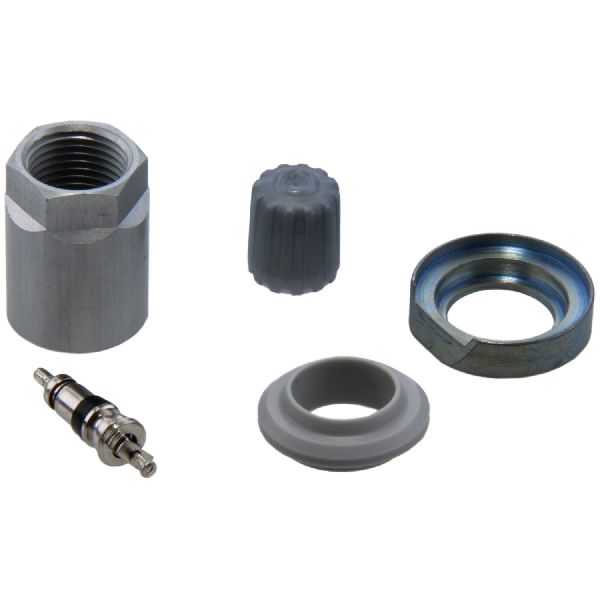
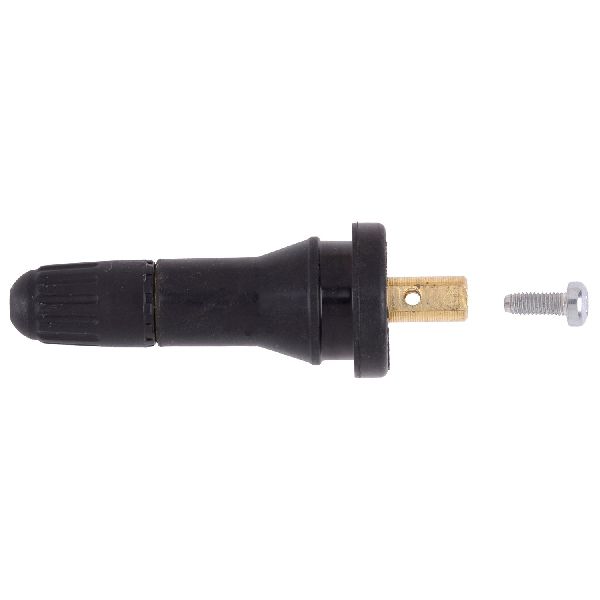
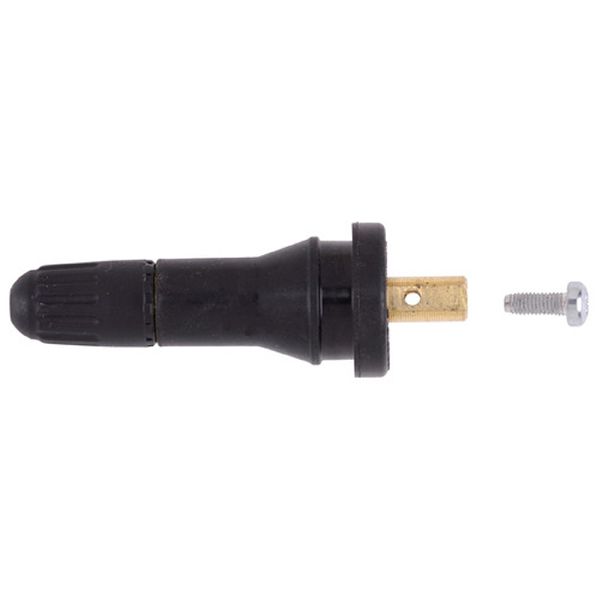
- Tire Pressure Monitoring System (TPMS) Sensor
(OEM #13540600)— This is the most common failure point, usually due to an expired internal battery. The battery is rated for up to 10 years of normal use.
Trusted brands: ACDelco, Schrader, Dorman, VDO
OEM price range: $60-$100
Aftermarket price range: $40-$80 - Remote Control Door Lock Receiver (RCDLR)
(OEM #20863945)— This is the likely cause if multiple TPMS codes are set, or if key fob issues are also present. Requires programming after installation.
Trusted brands: ACDelco (GM Genuine)
OEM price range: $100-$200
Aftermarket price range: N/A - TPMS Relearn Tool
(OEM #EL-50448)— Required to perform the TPMS relearn procedure after replacing a sensor. This tool activates each sensor in sequence, allowing the RCDLR to learn its new ID and position.
Trusted brands: ACDelco, VXDAS, JDIAG
OEM price range: $70-$90
Aftermarket price range: $15-$30
Related Codes That Often Appear With This One
- C0755, C0760, C0765 — These are the codes for the other three wheel sensors (RF, LR, RR). If they appear together, it strongly points to a central issue like a faulty RCDLR module or a disconnected antenna, rather than all four sensors failing at once.
- B3055, B3060, B3935 — These are security and key-related codes. Their presence alongside C0750 is a strong indicator of an RCDLR module failure or significant RF interference, as noted in TSB PIC5650M.
Technical Service Bulletins (TSBs) & Recalls
- PIC5650M: Addresses intermittent no-crank/no-start, security light, and TPMS codes (including C0750) caused by Radio Frequency Interference or a faulty RCDLR.
- 16-NA-061: Details how a disconnected RCDLR antenna can cause TPMS codes and poor key fob range. It provides diagrams of the antenna, amplifier
Platform-Specific Known Issues
- A known issue, documented in TSB PIC5650M, links TPMS codes like C0750 to intermittent no-start conditions and security light illumination due to either a faulty RCDLR or radio frequency interference from aftermarket devices.
- Another TSB, PI1085, specifically calls out poor RKE transmitter range and TPMS codes on 2012-2013 models, recommending replacement of the RCDLR module.
- RCDLR Antenna Connection Failure: TSB 16-NA-061 provides detailed diagnostics for a disconnected RCDLR antenna system, which can cause C0750, especially if the disconnect is at the antenna amplifier module, affecting sensors that are farthest away.
Hidden / Shadow Codes Worth Checking
- C0750 :29: Too Few Pulses. This indicates the RCDLR is not receiving the expected number of data transmissions from the TPMS sensor. TSB 16-NA-396 specifically references this symptom byte for RCDLR failures, especially when seen with codes for all four tires. (see via GM GDS2, Tech2, or equivalent professional scan tool.)
- C0750 :08: Signal Invalid / Bus Signal or Message Failure. This means the RCDLR received a signal from the sensor, but the data was corrupt, malformed, or otherwise unusable. This can point to a failing sensor transmitter or significant RF interference. (see via GM GDS2, Tech2, or equivalent professional scan tool.)
Scan Tool Commands That Help
- GDS2 / Tech2: RCDLR Module Reset — When experiencing simultaneous TPMS and key fob issues, a module reset can sometimes restore function without parts replacement. This is often attempted before replacing the RCDLR. A common owner-reported method is to pull the 'DSM' (Driver Seat Module) fuse, which can power cycle the RCDLR.
- Bi-directional Scan Tool (e.g., Launch, Autel): Rewrite Tire Type and Pressure — In cases where the TPMS sensors learn correctly but are 'forgotten' after an ignition cycle. This indicates the RCDLR may have lost its configuration. A user successfully fixed this by using a bi-directional scanner to rewrite the tire type (e.g., P-metric) and recommended pressure into the module, which forced it to retain the sensor IDs.
- GDS2 / Tech2: TPMS Relearn Procedure — This is the mandatory final step after replacing any TPMS sensor or the RCDLR module. The tool initiates the learn mode, allowing the vehicle to associate each sensor's unique ID with its position on the vehicle (LF, RF, RR, LR).
Wiring & Ground Locations
- RCDLR Module — Located in the driver's side rear D-pillar on SUV models like the Avalanche. Access requires removing the rear interior trim panels.. This is the central receiving unit for the TPMS signals. All wiring and antenna connections terminate here. Its location can make it susceptible to damage or loose connections if rear trim has been removed for other work.
- G303 / G304 — G303 is on the left (driver's side) B-pillar behind the trim panel. G304 is in the same location on the right (passenger) side B-pillar.. These are key interior ground points for various modules. While not directly for the RCDLR, a poor ground in this area can introduce electrical noise or cause voltage drops affecting nearby modules and wiring harnesses that run along the pillars and roofline.
- RCDLR Power Wire (via DSM Fuse) — The power for the RCDLR often comes from a fuse labeled 'DSM' (Driver Seat Module) in the instrument panel fuse box.. If the RCDLR is completely unresponsive (no TPMS, no key fobs), checking for power at this fuse is a critical first step before condemning the module. A blown fuse or a bad connection at the fuse block will cause a total loss of function.
Real Owner Repair Stories
- Tahoe Yukon Forum (2007 Chevrolet Tahoe (GMT900 Platform)) — Both keyless entry fobs and the Tire Pressure Monitoring System stopped working at the same time.
❌ Tried (didn't work) Initial diagnosis suggested replacing TPMS sensors or the RCDLR module.
✅ What actually fixed it The owner pulled the 'DSM' fuse from the instrument panel fuse box, waited a moment, and reinstalled it. This reset the RCDLR module, and both the key fobs and TPMS began working correctly again. - Tahoe Yukon Forum (GMT900 SUV) — Could successfully program TPMS sensors and see pressures on the DIC, but the vehicle would 'forget' all sensors after the ignition was turned off and back on, showing '--' for all tires.
❌ Tried (didn't work) Re-running the relearn procedure multiple times with a proper tool.
✅ What actually fixed it The RCDLR had lost its memory configuration. The owner used a bi-directional Launch scanner to access the RCDLR's settings and rewrite the tire type to 'P-metric' and the suggested pressure to 36psi. This action forced the module to save its configuration, and it retained the sensor IDs correctly on subsequent ignition cycles.
Model Year Variations Within This Range
- 2007-2013: While the RCDLR is used across the entire 2007-2013 GMT900 platform, some forum discussions suggest that on certain truck models (like Silverado/Sierra), the RCDLR function was integrated into the driver's door master switch, whereas on SUV models (Tahoe/Yukon/Avalanche), it is a separate module in the rear D-pillar. This is a point of common confusion, but for the Avalanche, the rear D-pillar location is correct.
Helpful Videos
We Have This Part in Stock


The information in this article is provided for general reference and educational purposes only. Vehicle specifications, procedures, and part compatibility can vary by production date, trim level, and region. Always consult your vehicle's factory service manual and verify part numbers before purchasing or performing repairs. Safety-critical components such as airbags, seat belts, and braking systems should be installed by a qualified professional.
- Chevrolet AVALANCHE:
- 🧭 Diagnostic Flowchart
- 🎬 Helpful Videos
- 🛍️ Shop This Part
- What's Unique About the 2007-2013 Chevrolet AVALANCHE
- Symptoms You May Notice
- Most Likely Causes
- Rare But Worth Checking
- Diagnosis Steps
- Parts You'll Likely Need
- Related Codes That Often Appear With This One
- Technical Service Bulletins (TSBs) & Recalls
- Platform-Specific Known Issues
- Hidden / Shadow Codes Worth Checking
- Scan Tool Commands That Help
- Wiring & Ground Locations
- Real Owner Repair Stories
- Model Year Variations Within This Range
- 🎟️ Get 5% Off