

C0750 on 2019-2024 Chevrolet Camaro: TPMS Faults, Causes, and Fixes
Code C0750 on a 2019-2024 Camaro means there's a problem with the left front Tire Pressure Monitoring System (TPMS) sensor. The most likely cause is a dead sensor battery. Expect to pay $50-$100 for a new sensor and have it installed and programmed at a tire shop. In some cases, this code can appear with key fob and starting issues, pointing to a different faulty module.
- C0750 means the left front TPMS sensor is failing, most likely due to a dead battery.
- The fix is almost always replacing the sensor itself, unless key fob or starting problems are also present.
- If key fob or starting issues accompany the C0750 code, the problem is likely the shared Remote Control Door Lock Receiver (RCDLR) module or Radio Frequency Interference (RFI).
- Diagnosing the difference between a bad sensor and a bad RCDLR is key to avoiding unnecessary repairs.
What's Unique About the 2019-2024 Chevrolet CAMARO
On this generation of Camaro and its platform mates, the TPMS sensors communicate with the same module as the keyless entry and ignition systems—the Remote Control Door Lock Receiver (RCDLR). Because of this shared hardware, a C0750 code can sometimes appear alongside much more serious symptoms like a "No Remote Detected" message, poor key fob range, or even an intermittent no-start or stalling condition. This is often caused by either a failing RCDLR module, as detailed in GM TSB 16-NA-396, or radio frequency interference (RFI) from aftermarket devices like phone chargers or LED lights, a problem outlined in TSB PIC5650M.
Diagnostic Flowchart
Tap your situation to follow the diagnostic path that matches what you're seeing on this vehicle.
Symptoms You May Notice
- TPMS warning light flashes for 60-90 seconds, then stays illuminated.
- Driver Information Center (DIC) shows dashes (--) for the left front tire pressure reading.
- "Service Tire Monitor System" message on the DIC.
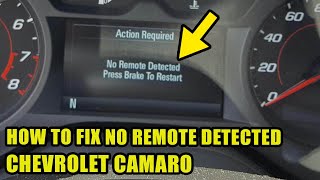
- Intermittent "No Remote Detected" message on the DIC.
- Poor or non-functional key fob range for lock/unlock/remote start.
- Intermittent no-crank/no-start condition, which may be temporarily resolved by placing the key fob in the center console pocket/cupholder. 🎬 See how to start your car with a 'No Remote Detected' message.
- Replacing the Body Control Module (BCM) when the issue is actually the RCDLR or a simple sensor. The RCDLR is the direct receiver for TPMS signals, not the BCM.
- Ignoring the TPMS code when a no-start condition is present, without realizing the two are linked through the RCDLR module on this vehicle.
- Replacing only the TPMS sensor when key fob problems are also present, which strongly indicates an RCDLR issue.
Most Likely Causes
- Dead TPMS Sensor Battery 🔴 High Probability → Shop Tire Pressure Monitoring System (TPMS) Sensor TPMS sensors use sealed, non-replaceable batteries. The original ACDelco sensors have a stated lifespan of up to 10 years, and vehicles from the 2019 model year are now well within the window for age-related battery failure.
How to confirm: A professional tire shop can use a TPMS diagnostic tool (like an Autel or Schrader tool) to ping the sensor. If the tool cannot read the sensor or explicitly shows a low battery status, the sensor has failed. This is the most common scenario when no other key fob issues are present.
Typical fix: Replace the left front TPMS sensor and perform the TPMS relearn procedure using a relearn tool (like the EL-50448 for GM vehicles). 🎬 Watch: How to perform the TPMS relearn procedure on your Camaro.
Est. part cost: $40-$90 - Faulty Remote Control Door Lock Receiver (RCDLR) 🟡 Medium Probability → Shop Keyless Entry Receiver As documented in GM Technical Service Bulletin 16-NA-396, the RCDLR module can fail internally, causing it to lose communication with both the TPMS sensors and key fobs. This issue is prevalent enough that multiple TSBs address its symptoms and forum users report frequent replacement.
How to confirm: This is the prime suspect when TPMS codes (like C0750, often with others) are present along with keyless entry or starting problems. A technician can use a GM GDS2 scan tool to check for communication loss with the RCDLR. The module is located in the trunk, on the right side under the floor cover.
Typical fix: Replace the RCDLR module and program the new unit to the vehicle, which includes relearning the key fobs and TPMS sensors using GDS2.
Est. part cost: $80-$150 - Radio Frequency Interference (RFI) ⚪ Low Probability The RCDLR is sensitive to RFI from aftermarket devices operating on or creating harmonics near the 315 MHz and 433 MHz frequencies. TSB PIC5650M and its successors specifically list cheap USB chargers, aftermarket LED lights, dash cams, and even non-vehicle electronic passes as potential sources of interference that can "jam" the signal.
How to confirm: If the problem is intermittent, unplug all aftermarket 12V and USB devices. If the code and symptoms disappear, one of the devices was the cause. Technicians may use an RF signal meter (like the EL-52545 tool) to sniff out the source of interference.
Typical fix: Remove or replace the interfering aftermarket device with a higher-quality, properly shielded one.
Est. part cost: $0
Rare But Worth Checking
- Damaged TPMS Sensor: → Shop Tire Pressure Monitoring System (TPMS) Sensor The sensor can be physically damaged during tire installation, by hitting a large pothole, or from using unapproved tire sealant that clogs the sensor's pressure port. This is distinct from battery failure.
- Wiring/Connector Issue: In rare cases, a loose connector or damaged wiring harness leading to the RCDLR module could cause intermittent signal loss. A user on a Camaro forum reported a wiggling connector under the dash was the ultimate culprit after multiple module replacements failed to fix the issue. A technician would check for 12V power and a solid ground at the RCDLR connector before replacing the module.
Diagnosis Steps
- Verify the tire pressure in the left front tire is correct using a quality gauge.
- Use a TPMS diagnostic tool to attempt to read the left front sensor. Check its reported pressure, temperature, and battery status. This is the most crucial first step.
- If the sensor does not respond or reports a low battery, and key fobs work normally, the sensor needs to be replaced. This is the most common fix.
- If the sensor responds correctly OR if key fob/starting issues are also present, proceed to check for interference.
- Unplug ALL aftermarket electronic devices (phone chargers, dash cams, LED bulbs, toll passes). Clear the codes and drive the vehicle to see if the issue resolves. This is a key step recommended by GM TSBs.
- If symptoms persist and include key fob issues or no-start conditions, suspect the Remote Control Door Lock Receiver (RCDLR). A professional diagnosis with a GM GDS2 scan tool is needed to confirm if the RCDLR is communicating properly and to check for symptom codes like :29 (Too Few Pulses).
- Inspect wiring and connectors to the RCDLR module, which is located in the trunk on the right side. Check for 12V power and ground at the connector before condemning the module.
- After replacing any parts (sensor or RCDLR), perform the required relearn procedure as specified in the service information. The TPMS relearn requires a tool, and RCDLR replacement requires programming and key fob registration via GDS2.
Parts You'll Likely Need
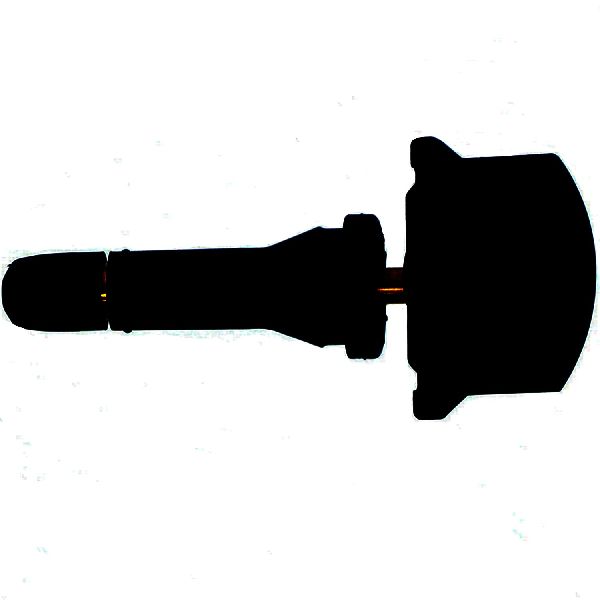
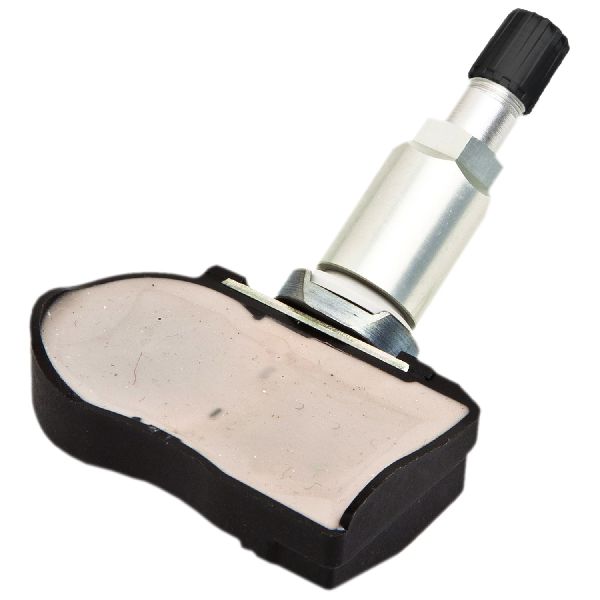
- Tire Pressure Monitoring System (TPMS) Sensor
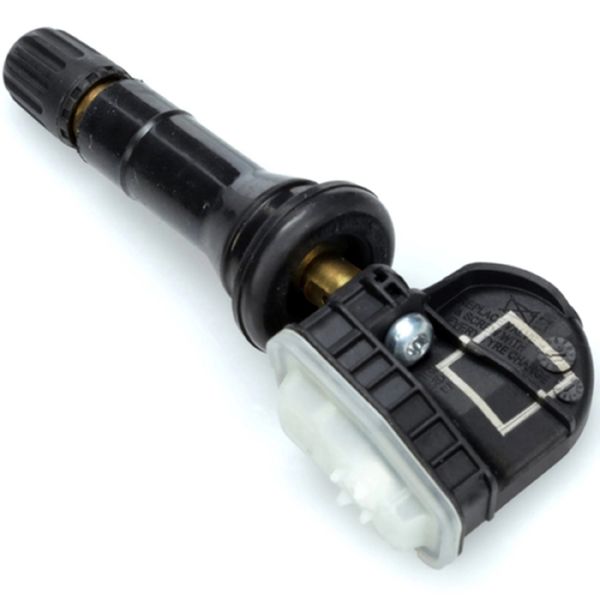
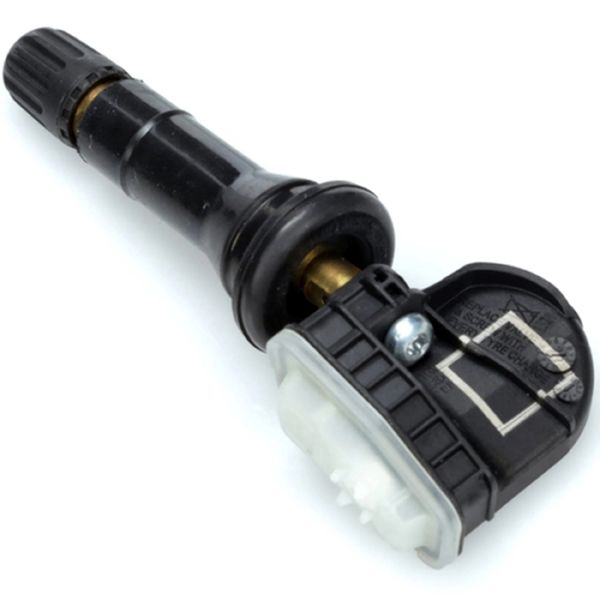
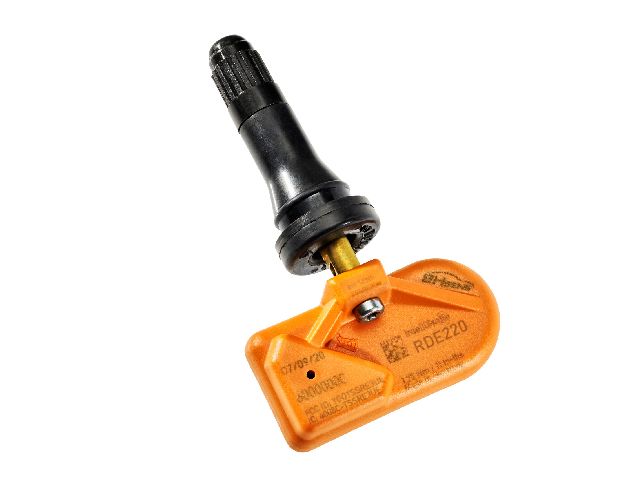
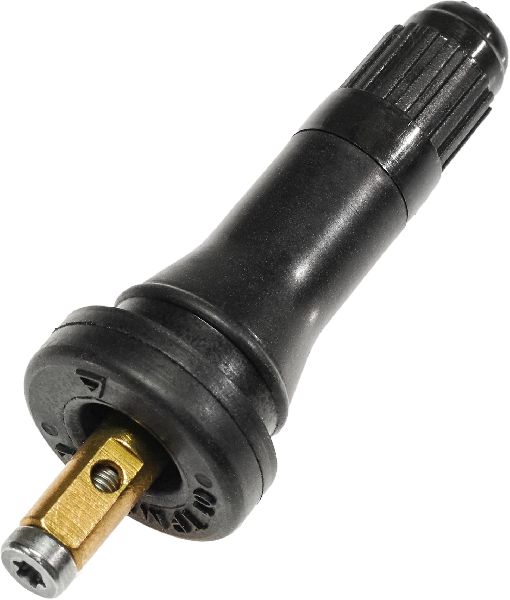
(OEM #13540605 (supersedes 13598463))— This is the most common failure point due to battery life. For the 2019-2024 Camaro, this sensor operates at 433 MHz.
Trusted brands: ACDelco (GM Genuine), VDO, Schrader, Huf
OEM price range: $60-$100
Aftermarket price range: $35-$70 - Remote Control Door Lock Receiver (RCDLR)
(OEM #84566393 (Note: Part numbers can be superseded, e.g., TSB 16-NA-396 mentions replacing 13509518 with 13595511 on older models. Always verify with VIN.))— The second most common cause, especially when TPMS and key fob issues occur together.
Trusted brands: ACDelco (GM Genuine)
OEM price range: $80-$150
Aftermarket price range: N/A
Related Codes That Often Appear With This One
- C0755, C0760, C0765 — These are the codes for the other three TPMS sensors (RF, LR, RR). They often appear when the RCDLR module is failing or when significant RFI is present, as it affects communication with all sensors.
- B3055, B3060, B3935 — These are security and key-related codes. Their presence with C0750 strongly points towards RFI or a failing RCDLR module, as described in TSB PIC5650M and its revisions.
Technical Service Bulletins (TSBs) & Recalls
- PIC5650M: Diagnostic tip for intermittent no crank/no start, security light, and TPMS codes (C0750, C0755, etc.) caused by radio frequency interference from devices like USB chargers and aftermarket LEDs.
- 16-NA-396: Addresses intermittent loss of Key Fob functions and TPMS indicator illumination with DTCs C0750, C0755, C0760, and C0765, pointing to a faulty Remote Control Door Lock Receiver and providing replacement instructions.
- PIC6227: An earlier TSB also noting the link between RCDLR software abnormalities, TPMS codes, and key fob issues, suggesting a battery disconnect to temporarily reset the module.
Platform-Specific Known Issues
- TSB PIC5650M and its revisions document how C0750 can be linked to intermittent no-start conditions due to Radio Frequency Interference from aftermarket devices.
- TSB 16-NA-396 identifies that a faulty Remote Control Door Lock Receiver (RCDLR) can cause TPMS codes, including C0750, along with passive entry and remote start failures. The bulletin specifically mentions symptom code :29 (Too Few Pulses) with the DTCs.
- Owners on Camaro6.com have confirmed the RCDLR is located in the trunk area, typically on the right side under the floor and cover, near the fuse block.
Mechanic-Grade Diagnostic Values
- TPMS/RKE Operating Frequency — expected: 433 MHz for TPMS sensors on this vehicle. The RCDLR also monitors 125 kHz for passive entry.. Failure: Using a 315 MHz replacement sensor will result in a no-communication fault like C0750.
- RCDLR Power and Ground — expected: With the ignition on, there should be battery voltage (approx. 12.6V) at the power pin and less than 0.1V (good ground) at the ground pin of the RCDLR connector.. Failure: No voltage or high resistance on the ground circuit indicates a wiring problem, not a failed module.
Hidden / Shadow Codes Worth Checking
- C0750:29: Too Few Pulses. This is the most common and important symptom code for this issue. It explicitly means the RCDLR is not receiving the expected number of data packets from the sensor, strongly pointing to a reception issue (RCDLR fault, RFI) rather than a dead sensor. (see via GM GDS2 or other professional scan tool capable of reading manufacturer-specific symptom bytes.)
- C0750:03: Low Voltage. This code indicates the RCDLR has specifically detected that the TPMS sensor's internal battery voltage is below the threshold for reliable operation. (see via GM GDS2 or other professional scan tool.)
- C0750:08: Signal Invalid. This suggests the RCDLR is receiving a signal, but the data is corrupt, garbled, or not in the expected format, which can be caused by a faulty sensor transmitter or significant RFI. (see via GM GDS2 or other professional scan tool.)
Scan Tool Commands That Help
- GDS2: Module Diagnostics > RCDLR > Data Display — To view the status of each TPMS sensor, see learned sensor IDs, and check for the presence of symptom codes (:29, :03, etc.) that are not visible on standard OBD-II readers.
- GDS2: Module Replacement and Setup > RCDLR — This is a required procedure after physically replacing the RCDLR module. It configures the new module to the vehicle's specific options.
- GDS2: Immobilizer Learn / Theft Deterrent System Learn — Must be performed after RCDLR replacement to re-link the security system and key fobs to the new module. The vehicle will not start until this is completed.
- GDS2 or TPMS Tool: Tire Pressure Monitor Learn — After replacing a TPMS sensor or the RCDLR, this procedure is used to teach the vehicle the unique ID of each sensor in its specific location (LF, RF, RR, LR).
Wiring & Ground Locations
- RCDLR Module — In the trunk (luggage compartment), located on the right side under the floor cover, near the rear fuse block.. This is the central module for the fault. Physical access is required for inspection of the connector and for replacement.
- Primary Trunk Ground — The large, unpainted stud where the main negative battery cable bolts to the vehicle chassis in the trunk.. The RCDLR and other modules in the trunk use this or nearby studs for their ground connection. A loose or corroded ground here can cause intermittent and difficult-to-diagnose electronic issues, including C0750 and key fob problems.
Real Owner Repair Stories
- Camaro6.com user report (2017 Chevrolet Camaro) — Intermittent "No Remote Detected" message, key fobs not working, TPMS light on.
❌ Tried (didn't work) Replacing key fob batteries., Waiting for the problem to resolve on its own (sometimes worked temporarily).
✅ What actually fixed it The dealership replaced the Remote Control Door Lock Receiver (RCDLR). The user noted that there had been three new part numbers for the receiver since 2017, indicating GM had revised the part multiple times. The fix required reprogramming. - Camaro6.com user report (2016/2017 Chevrolet Camaro) — Sudden failure of both key fobs and simultaneous TPMS system failure warning.
❌ Tried (didn't work) Replacing key fob batteries., Using the backup key fob.
✅ What actually fixed it The problem was intermittent but linked directly to a faulty RCDLR module. One user had the issue resolve temporarily on its own, while another confirmed the fix was RCDLR replacement under TSB 16-NA-396. The symptoms matched the TSB exactly (TPMS and key fob failure together).
"I Checked Everything" — The Actual Cause
- The electronic equivalent of this scenario is when all hardware (TPMS sensor, RCDLR module) tests as functional, yet the problem persists intermittently. For code C0750, this is almost always caused by Radio Frequency Interference (RFI). A cheap, poorly-shielded USB phone charger, an aftermarket LED interior light bulb, or even a garage door opener left in the car can emit 'noise' on the 433 MHz frequency, 'jamming' the signal between the TPMS sensor and the RCDLR. The fix is not to replace any car parts, but to identify and remove the offending electronic device, as detailed in GM TSB PIC5650.
OEM Part Supersession History
13598463→13540605— Standard part revision and consolidation.
Heads up: Both are 433 MHz sensors for the 6th Gen Camaro. The newer part number is the current recommended replacement.e.g., 13595511 (from TSB 16-NA-396 for early 6th Gen)→84566393 (current for this year range)— Internal hardware and firmware updates to address reliability issues causing simultaneous TPMS and key fob failure.
Heads up: Using an older, un-revised RCDLR may lead to a repeat failure. It is critical to use the latest part number specified for the vehicle's VIN.
Model Year Variations Within This Range
- 2016-2019 (early 6th Gen): The Remote Control Door Lock Receiver (RCDLR) in earlier 6th Gen Camaros was more prone to the failure described in TSB 16-NA-396. The part has been superseded multiple times. While a 2019+ model can still experience the failure, it was more common on earlier models with the original hardware.
Helpful Videos
We Have This Part in Stock

The information in this article is provided for general reference and educational purposes only. Vehicle specifications, procedures, and part compatibility can vary by production date, trim level, and region. Always consult your vehicle's factory service manual and verify part numbers before purchasing or performing repairs. Safety-critical components such as airbags, seat belts, and braking systems should be installed by a qualified professional.
- Chevrolet CAMARO:
- 🧭 Diagnostic Flowchart
- 🎬 Helpful Videos
- 🛍️ Shop This Part
- What's Unique About the 2019-2024 Chevrolet CAMARO
- Symptoms You May Notice
- Most Likely Causes
- Rare But Worth Checking
- Diagnosis Steps
- Parts You'll Likely Need
- Related Codes That Often Appear With This One
- Technical Service Bulletins (TSBs) & Recalls
- Platform-Specific Known Issues
- Mechanic-Grade Diagnostic Values
- Hidden / Shadow Codes Worth Checking
- Scan Tool Commands That Help
- Wiring & Ground Locations
- Real Owner Repair Stories
- "I Checked Everything" — The Actual Cause
- OEM Part Supersession History
- Model Year Variations Within This Range
- 🎟️ Get 5% Off