

C0750 on 2007-2014 Chevrolet Corvette: Left Front TPMS Fault and No-Start Causes
Code C0750 on a C6 or C7 Corvette almost always means the battery in the left front tire pressure (TPMS) sensor has died. If you also have key fob issues or a "No Fob Detected" message, the underlying cause could be a failing Remote Control Door Lock Receiver (RCDLR) module, a more complex repair.
- C0750 points to the left front TPMS sensor.
- The most likely cause is a dead sensor battery, a common issue for cars of this age.
- If you also have problems with your key fob or starting the car, the issue is likely the RCDLR module, not just the sensor.
- Replacing the sensor requires tire removal; replacing the RCDLR requires special programming tools.
- For a simple TPMS fault, consider replacing all four sensors at once to avoid future repeat repairs.
What's Unique About the 2007-2014 Chevrolet CORVETTE
On the C6 and C7 Corvette, the TPMS sensors do not communicate directly with the main computer. Instead, they send radio frequency signals to the Remote Control Door Lock Receiver (RCDLR) module. This same module is responsible for receiving signals from your key fob for passive entry and push-button start. Because of this shared architecture, a fault in the RCDLR can manifest as both TPMS codes like C0750 and severe starting/security issues, a connection that is unique and often confusing for owners. A GM TechLink article specifically identifies an internal transistor failure within the RCDLR as a cause for the 'No Fob Detected' message, which often appears alongside TPMS codes.
Diagnostic Flowchart
Tap your situation to follow the diagnostic path that matches what you're seeing on this vehicle.
Generation note: This range covers the late C6 generation (2007-2013) and the first year of the C7 generation (2014). While the system's principle is the same, the specific part numbers for TPMS sensors and the RCDLR module are different between the C6 and C7. The RCDLR failure causing a no-start condition is a widely documented issue for the C6 generation. C6 RCDLR modules are also specific to year groupings (e.g., 2005-07, 2008-09, 2010-13) and are not interchangeable.
Symptoms You May Notice
- "Service Tire Monitor System" message on the Driver Information Center (DIC)
- TPMS warning light flashes for a minute and then stays on solid
- DIC shows dashes (--) instead of a pressure reading for the left front tire
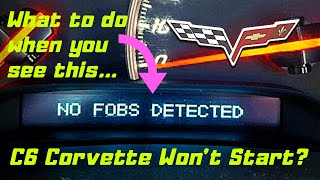
- Intermittent "No Fob Detected" message
- Key fob functions (lock/unlock) work intermittently or not at all
- Vehicle fails to crank or start, sometimes accompanied by a security light [Bulletin #PIC5650M]
- Car only starts when the key fob is placed in the glovebox slot 🎬 Watch: How to fix the 'No Fobs Detected' error
- Reduced range for the key fob
- Replacing the car's main battery. While a weak battery can cause many electrical issues, it will not typically isolate a fault to a single TPMS sensor.
- Replacing the Body Control Module (BCM). While the BCM is involved in the communication chain, the RCDLR is the more direct and common point of failure for this specific set of symptoms.
Most Likely Causes
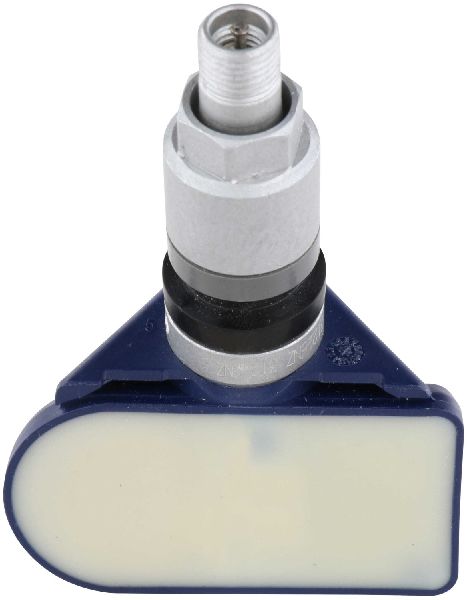
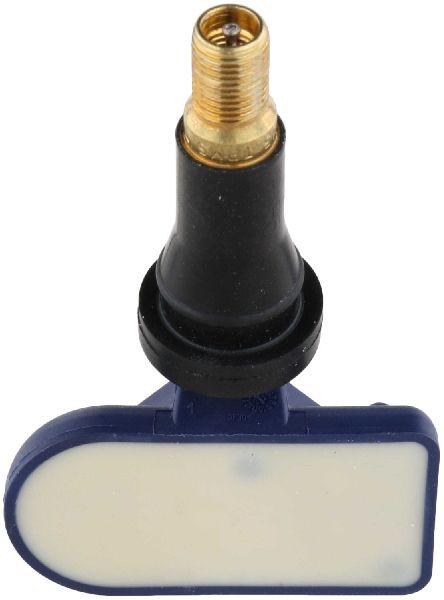
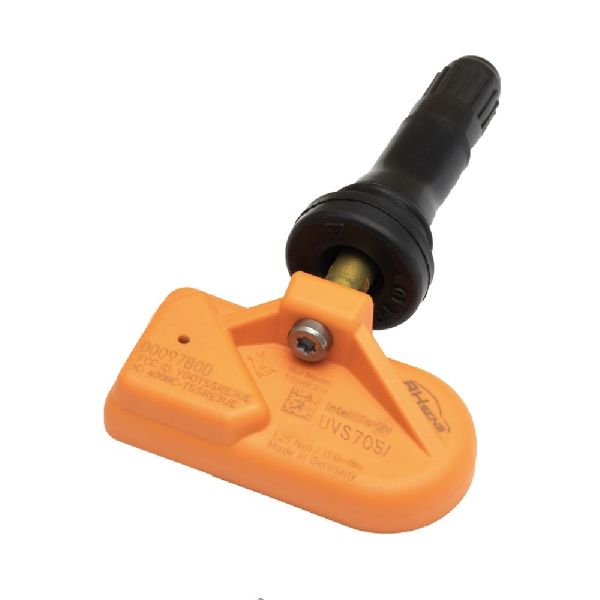
- Dead TPMS Sensor Battery 🔴 High Probability → Shop Tire Pressure Monitoring System (TPMS) Sensor The batteries inside the sensors have a finite lifespan of approximately 10 years, which aligns with the age of these vehicles.
How to confirm: A professional tire shop or dealership can use a TPMS tool to attempt to activate the sensor. If the sensor does not respond, its battery is almost certainly dead.
Typical fix: Replace the left front TPMS sensor and perform the TPMS relearn procedure. It is often recommended to replace all four sensors at once since their batteries will likely fail around the same time.
Est. part cost: $40-$90 per sensor - Faulty Remote Control Door Lock Receiver (RCDLR) Module 🟡 Medium Probability → Shop Keyless Entry Receiver This module is a known failure point on C6 Corvettes, causing a cascade of electrical issues. TSBs confirm a faulty RCDLR can cause TPMS codes. Forum discussions frequently point to internal failures like bad solder joints on the header pins or a faulty transistor as the root cause.
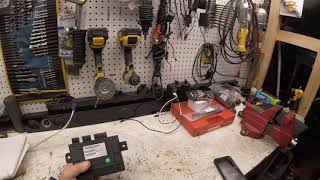
How to confirm: This is diagnosed by confirming the presence of other related symptoms (fob issues, no-start) and using a GM Tech 2 scan tool to check for communication errors with the RCDLR. A key diagnostic step is to listen for clicks from the RCDLR (located above the radio) when pressing the start button; a series of clicks is normal, while a single click strongly indicates an internal RCDLR failure. 🎬 See this detailed discussion on RCDLR no-crank issues
Typical fix: Replace the RCDLR module. The new module must be programmed to the vehicle's VIN and have the key fobs relearned by a technician with the proper equipment. Some owners with electronics skills have successfully repaired the module by re-soldering the header pins.
Est. part cost: $150-$300 for the module, though new parts are becoming scarce. - Damaged TPMS Sensor ⚪ Low Probability → Shop Tire Pressure Monitoring System (TPMS) Sensor
How to confirm: Visual inspection after dismounting the tire. Damage often occurs during tire replacement.
Typical fix: Replace the damaged sensor.
Est. part cost: $40-$90
Rare But Worth Checking
- Disconnected RCDLR Antenna Coax Cable:
Diagnosis Steps
- Check for other symptoms. Are you experiencing any key fob issues or no-start problems? If yes, suspect the RCDLR.
- If a 'No Fob Detected' message appears, try starting the car by placing the fob in the glovebox slot. If it starts, this strongly points to a communication issue between the fob and the RCDLR, not the fob itself.
- With a known good fob, press the start button and listen for clicks from the RCDLR module behind the radio. A series of clicks is normal. A single click indicates an internal RCDLR failure.
- Use a TPMS diagnostic tool to try and read the signal from the left front sensor. If the tool cannot get a reading, the sensor is bad (likely a dead battery).
- If the sensor appears to be transmitting but the code persists, or if RCDLR failure is suspected, use a professional scan tool (GM Tech 2 or equivalent) to check for communication DTCs with the RCDLR.
- If the RCDLR is unresponsive or has internal fault codes, it needs to be replaced and programmed. This requires a Tech 2 and TIS2000 or TDS software to marry the new module to the BCM.
- If the sensor is confirmed bad, have the tire dismounted and replace the TPMS sensor.
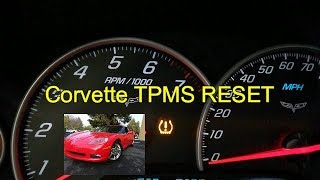
- After replacing the sensor(s), perform the vehicle's TPMS relearn procedure using a TPMS tool to register the new sensor ID with the RCDLR. 🎬 Watch: A simple walkthrough of the TPMS reset procedure
Parts You'll Likely Need
- Tire Pressure Monitoring System (TPMS) Sensor
(OEM #Varies by year. 20925924 (2010-2013 C6), 13586335 (2005-2009 C6), 13598775 (2014 C7).)— This is the most common failure point. The internal battery dies, requiring full sensor replacement. Part numbers are year-specific. For 2010-2013 C6, use 20925924. Earlier C6 models (2005-2009) may use 13586335. The 2014 C7 uses 13598775.
Trusted brands: ACDelco, Schrader
OEM price range: $60-$90
Aftermarket price range: $35-$60 - Remote Control Door Lock Receiver (RCDLR)
(OEM #C6: 25971235 (2010-13), 25940664 (2005-07). C7: 13587438 (2014).)— This module is the second most likely cause, especially if key fob or starting issues are also present. It's a known failure point on the C6 platform. Part numbers are year-specific and have been superseded multiple times; for example, a 2013 C6 uses 25971235, while a 2007 may use 25940664. The 2014 C7 uses part number 13587438. New units are becoming difficult to find.
Trusted brands: ACDelco (GM Genuine)
OEM price range: $150-$300
Related Codes That Often Appear With This One
- C0755 — Relates to the Right Front TPMS sensor. Often appears if multiple sensor batteries are failing simultaneously or if there is an RCDLR-related issue.
- C0760 — Relates to the Left Rear TPMS sensor. Often appears if multiple sensor batteries are failing simultaneously or if there is an RCDLR-related issue.
- C0765 — Relates to the Right Rear TPMS sensor. Often appears if multiple sensor batteries are failing simultaneously or if there is an RCDLR-related issue.
- B3055 — A key fob-related code that can appear when the RCDLR module is failing, as cited in TSB PIC5650M.
Technical Service Bulletins (TSBs) & Recalls
- PIC5650M: Mentions C0750 in a list of DTCs related to an intermittent no crank, no start, or start/stall concern with the security light on.
- 16-NA-396: Details how an internal RCDLR issue can cause intermittent key fob operation, "No Remote Detected" messages, and set TPMS DTCs including C0750, C0755, C0760, and C0765. It explicitly states the cause may be 'issues internal to the Remote Control Door Lock Receiver' and the correction is to replace the module.
- GM TechLink (Feb 2014): Describes the 'No Fob Detected' message on 2005-2013 Corvettes, linking it to an internal RCDLR transistor failure and outlining the 'single click' diagnostic test.
- 16-NA-061 / PIT5446A: Explains how a disconnected RCDLR antenna coax cable can cause TPMS codes (including C0750) and key fob issues.
Platform-Specific Known Issues
- A known issue on C6 Corvettes involves an internal transistor failure in the RCDLR, leading to a "No Fob Detected" message and preventing the car from starting unless the fob is placed in the glovebox slot. This issue often presents alongside TPMS codes.
- The RCDLR module is a central communication hub for multiple wireless functions, making it a critical point of failure that can cause seemingly unrelated symptoms to appear simultaneously.
- Some owners on CorvetteForum report that the RCDLR failu
Mechanic-Grade Diagnostic Values
- RCDLR Voltage Drop — expected: Less than 0.2V difference between battery positive terminal and the RCDLR's power feed pin (Pin H on the connector).. Failure: A voltage drop greater than 0.2V indicates excessive resistance in the power supply circuit, potentially from a poor connection or failing fuse block. A Tech 2 may report a module voltage (e.g., 11.89V) significantly lower than the battery voltage (e.g., 12.4V).
- Key Fob Battery Voltage — expected: 2.0 to 3.0 volts.. Failure: Voltage below 2.0V can cause intermittent or no function. A fresh CR2032 battery should read slightly above 3.0V.
Hidden / Shadow Codes Worth Checking
- C0750:03: Indicates the RCDLR has detected the TPMS sensor's internal battery voltage is low. (see via GM Tech 2 or GDS2 scan tool.)
- C0750:08: Indicates the RCDLR has lost communication with the TPMS sensor. (see via GM Tech 2 or GDS2 scan tool.)
- C0750:29: Indicates the RCDLR is not receiving the expected number of data transmissions ('Too Few Pulses') from the sensor. (see via GM Tech 2 or GDS2 scan tool.)
Scan Tool Commands That Help
- GM Tech 2: Module Setup: RCDLR — After physically installing a new RCDLR, this function must be performed. It is found under Body & Accessories > Keyless Entry > Module Setup. This is a prerequisite to programming the module to the car.
- Tech 2 with TIS2000 or TIS2WEB: Service Programming System (SPS): Replace and Reprogram ECU — This is the main programming function used to 'marry' a new RCDLR to the vehicle's BCM. It downloads the correct software and VIN to the module. TIS2000 software is used for models up to 2008, while TIS2WEB is required for 2009 and newer. The Radio and HVAC fuses must be pulled before starting this procedure.
- GM Tech 2: Theft Deterrent System Relearn — After a new RCDLR is installed and programmed via SPS, a 10 or 30-minute security relearn procedure is required to sync the module with the BCM and enable starting.
Wiring & Ground Locations
- RCDLR Connector — The main electrical connector on the RCDLR module, located above the radio in the dashboard.. Pin H (Circuit 2440, typically a red or pink wire) is the main battery positive voltage feed from Fuse 11 in the underhood fuse block. Pin S is the ground. Testing for voltage drop between the battery and these pins is a key diagnostic step for RCDLR-related issues.
- G104 — On the frame rail in the engine compartment, next to the battery.. This is a primary ground point for the Remote Control Door Lock Receiver (RCDLR). A poor connection here can cause low voltage to the module, leading to TPMS codes and 'No Fob Detected' messages.
- G202 — At the bottom of the right-side (passenger) A-pillar, behind the plastic kick panel.. This is a ground point for the Body Control Module (BCM). While not the direct ground for the RCDLR, a poor connection here can cause a wide range of communication issues on the data bus, potentially affecting the RCDLR's operation.
Real Owner Repair Stories
- Reddit user in r/Corvette (2010 C6 Corvette) — 'No FOB Detected' message after replacing a dead car battery. Passive entry and key fob buttons were also intermittent.
❌ Tried (didn't work) Replacing key fob batteries, Using the glovebox fob slot, Standard key reprogramming procedures, Replacing the RCDLR module (initially seemed to work, then failed again after battery disconnect)
✅ What actually fixed it The root cause was RF (Radio Frequency) interference from aftermarket accessories. The previous owner had installed an aftermarket SiriusXM unit and an RF detector. Even with the accessories powered off, they had to be completely disconnected and removed from the vehicle to resolve the 'No Fob Detected' issue.
OEM Part Supersession History
25865823, 15912858→25938511— Part revision and consolidation by GM.
Heads up: While 25938511 is the correct replacement for an '08/'09, it is not compatible with 2005-2007 or 2010-2013 models, which use different part numbers. RCDLR modules must be replaced with a part designated for the specific year group.
Model Year Variations Within This Range
- 2007-2009 vs. 2010-2013: The TPMS sensors are not interchangeable between these groups. 2007-2009 models use sensor P/N 25758220 (or equivalent), while 2010-2013 models use P/N 15268606 (superseded by 20925924). The relearn procedure for 2010+ sensors can be triggered by changing tire pressure, whereas earlier C6 models require an RF activation tool.
- 2007-2008 vs. 2009-2013: The software tool required for programming a new RCDLR changes. Models up to 2008 can be programmed using a Tech 2 with the older TIS2000 software. 2009 and newer models require the Tech 2 to be used with the modern, online TIS2WEB subscription service for SPS programming.
- North America vs. Export: The operating frequency for the TPMS and RKE systems differs. North American vehicles use 315 MHz. Most European and other export models use 433 MHz. The TPMS sensors and key fobs for these two systems are not interchangeable.
Helpful Videos
We Have This Part in Stock

The information in this article is provided for general reference and educational purposes only. Vehicle specifications, procedures, and part compatibility can vary by production date, trim level, and region. Always consult your vehicle's factory service manual and verify part numbers before purchasing or performing repairs. Safety-critical components such as airbags, seat belts, and braking systems should be installed by a qualified professional.
- Chevrolet CORVETTE:
- 🧭 Diagnostic Flowchart
- 🎬 Helpful Videos
- 🛍️ Shop This Part
- What's Unique About the 2007-2014 Chevrolet CORVETTE
- Symptoms You May Notice
- Most Likely Causes
- Rare But Worth Checking
- Diagnosis Steps
- Parts You'll Likely Need
- Related Codes That Often Appear With This One
- Technical Service Bulletins (TSBs) & Recalls
- Platform-Specific Known Issues
- Mechanic-Grade Diagnostic Values
- Hidden / Shadow Codes Worth Checking
- Scan Tool Commands That Help
- Wiring & Ground Locations
- Real Owner Repair Stories
- OEM Part Supersession History
- Model Year Variations Within This Range
- 🎟️ Get 5% Off