

C0750 on 2007-2014 Chevy Silverado 3500: TPMS Fault and No-Start Link Explained
Code C0750 indicates a fault with the left front Tire Pressure Monitoring System (TPMS) sensor. On these trucks, this can surprisingly cause a no-start condition with the security light on. The most common fix is replacing the faulty TPMS sensor, which costs about $25-$60 for an aftermarket part. The issue stems from the TPMS sensor signal being processed by the same module that handles key fob security, the Remote Control Door Lock Receiver (RCDLR).
- C0750 means your truck's left front TPMS sensor has a problem, most likely a dead battery.
- Don't be surprised if this code appears with a no-start problem and a security light; it's a known quirk on these trucks.
- Before replacing expensive parts for a no-start issue, check for this and other TPMS codes first.
- The most common fix is replacing the TPMS sensor in the left front wheel and performing a relearn procedure.
- If the problem is intermittent, try removing all aftermarket phone chargers and gadgets to rule out radio interference before heading to a mechanic.
What's Unique About the 2007-2014 Chevrolet SILVERADO 3500
The unique issue on this GMT900 platform is the bizarre link between the Tire Pressure Monitoring System (TPMS) and the vehicle's starting and security systems. The TPMS sensors communicate with the Remote Control Door Lock Receiver (RCDLR), the same module that handles key fob signals for remote entry and starting authorization. As documented in TSB PIC5650M and its subsequent revisions, interference or faults within this shared system can cause the RCDLR to fail to recognize the key, leading to a no-start condition even though the root cause is a simple tire sensor. This issue is common across the entire GMT900 family, including the GMC Sierra, Tahoe, Yukon, and Escalade.
Diagnostic Flowchart
Tap your situation to follow the diagnostic path that matches what you're seeing on this vehicle.
Symptoms You May Notice
- TPMS warning light is illuminated or flashing on the instrument cluster.
- Driver Information Center (DIC) shows dashes (--) for the left front tire pressure reading.
- Intermittent no-crank or no-start condition.
- Security/theft deterrent system light is on.
- Message on DIC such as "Service Tire Monitor System" or "No Remote Detected".
- Remote keyless entry (RKE) works poorly or not at all.
- Engine starts for a couple of seconds and then shuts off, particularly when using remote start.
- Replacing the battery, starter, or ignition switch for a no-start condition without checking for chassis codes like C0750 first. The link to the security system is not intuitive, leading many to chase powertrain or theft-system parts when the issue is with the TPMS.
- Assuming the TPMS light is just a nuisance and ignoring it, only to be stranded later by the related no-start condition.
- Replacing the RCDLR module when the actual fault is a broken power wire in the door sill harness or a disconnected antenna cable.
Most Likely Causes
- Dead TPMS Sensor Battery 🔴 High Probability → Shop Tire Pressure Monitoring System (TPMS) Sensor TPMS sensors use sealed, non-replaceable batteries with a finite lifespan, typically 7-10 years. For vehicles in this year range, many original sensors are now failing due to age. This is the most frequent cause for a single TPMS sensor code like C0750.
How to confirm: Use a TPMS diagnostic tool to attempt to read the sensor. If the tool cannot get a reading or shows a low battery status, the sensor has failed. A scan tool may also show a 'Low Voltage' or 'Too Few Pulses' status for the sensor. If the relearn procedure fails repeatedly on that one wheel, the sensor is bad.
Typical fix: Replace the left front TPMS sensor. The new sensor must be 'relearned' to the vehicle using a TPMS tool or the vehicle's built-in procedure.
Est. part cost: $25-$60 - Faulty Remote Control Door Lock Receiver (RCDLR) 🟡 Medium Probability → Shop Keyless Entry Receiver The RCDLR is the central hub for all RF signals, including TPMS and key fobs. Internal failures in this module can cause widespread issues, including setting multiple TPMS codes and causing no-start problems, as noted in GM TSB 16-NA-396. The module is often located behind trim in the rear of the cabin, making it susceptible to issues but also replaceable.
How to confirm: If multiple TPMS sensors fail simultaneously, or if you also experience poor key fob range and a no-start condition that is bypassed by placing the fob in the transmitter pocket, the RCDLR is a likely suspect. A professional diagnosis with a scan tool showing no communication with the RCDLR module confirms the failure.
Typical fix: Replace the RCDLR module. This part requires programming to the vehicle by a dealer or a well-equipped independent shop.
Est. part cost: $50-$150 - Radio Frequency Interference (RFI) ⚪ Low Probability As detailed in TSB PIC5650M, aftermarket electronics like phone chargers, dash cams, LED lights, and even non-GM key fobs on the same keychain can emit RFI that jams the 315 MHz signal used by the TPMS and keyless entry systems. The sensitivity of the RCDLR makes these trucks prone to such interference.
How to confirm: Remove all aftermarket electronic devices from the vehicle (especially those plugged into 12V outlets or USB ports). Remove non-essential items from your keychain. If the problem disappears, reintroduce devices one by one to find the culprit. The problem may be intermittent and hard to duplicate.
Typical fix: Remove the offending aftermarket device from the vehicle.
Est. part cost: $0
Rare But Worth Checking
- Damaged Sensor from Tire Service: The sensor is located inside the wheel, attached to the valve stem. It can be easily broken during tire mounting or dismounting if the technician is not careful.
- Disconnected RCDLR Antenna Coax Cable: TSB 16-NA-061 describes how the coax cable for the RCDLR antenna can become disconnected at the receiver, at the antenna amplifier module, or at the antenna itself (often in the rear glass). This can cause dashes for tire pressures and poor key fob range.
- Broken Power Wire to RCDLR: The power wire for the RCDLR, typically a red/white wire, can break or corrode where it runs in the harness along the driver's side door sill. This will cause the RCDLR to lose power, disabling TPMS and key fob functions, and may not blow a fuse.
Diagnosis Steps
- Verify the TPMS light is on and the DIC shows a fault or dashes (--) for the left front tire.
- Use a TPMS activation tool to try and read the left front sensor. If it does not respond or shows a dead battery, the sensor is almost certainly bad.
- If a no-start condition is present, check if placing the key fob in the designated transmitter pocket (often in the center console compartment) allows the vehicle to start. This is a bypass feature that points to an RF communication issue (RFI, bad RCDLR, or bad fob battery).
- Check for RFI by unplugging all aftermarket devices (phone chargers, dash cams, LED lights, etc.) and removing extra fobs or access cards from the vehicle and keychain. Retest the system.
- If multiple TPMS sensors show faults or key fob range is poor, inspect the RCDLR antenna coax cable for secure connections at the module, the antenna amplifier, and the rear glass antenna per TSB 16-NA-061.
- Using a scan tool, check for communication with the RCDLR. If it doesn't communicate, check the 'DSM' 10A fuse in the interior fuse panel. If the fuse is good, backprobe the red/white wire at the RCDLR connector for 12V power. If power is absent, inspect the wiring harness in the driver's door sill for breaks or corrosion.
- If the sensor responds to the tool but the vehicle won't learn it, or if multiple sensors are showing faults and RFI/wiring is ruled out, suspect an internal failure of the Remote Control Door Lock Receiver (RCDLR).
- If the sensor is confirmed bad, replace it.
- After replacement, perform the TPMS relearn procedure. On many GMT900 trucks, this can be done without a special tool by using the DIC controls or key fob to enter learn mode, then letting air out of the tires in sequence (LF, RF, RR, LR) until the horn chirps for each one. 🎬 Watch: Step-by-step guide to resetting your TPMS sensors.
Parts You'll Likely Need
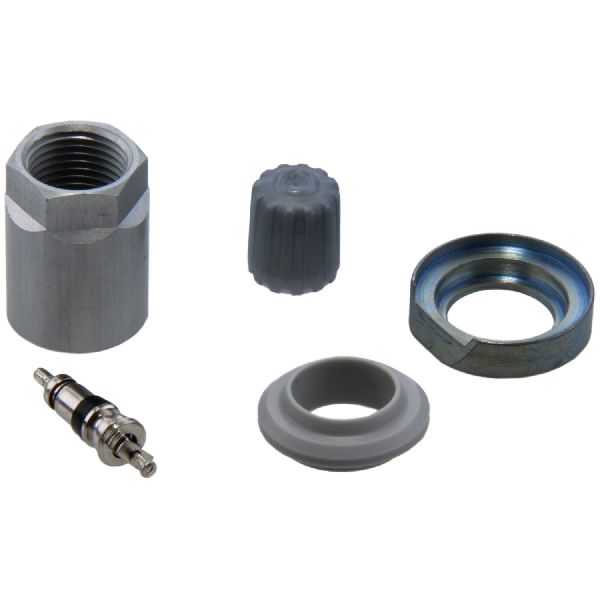
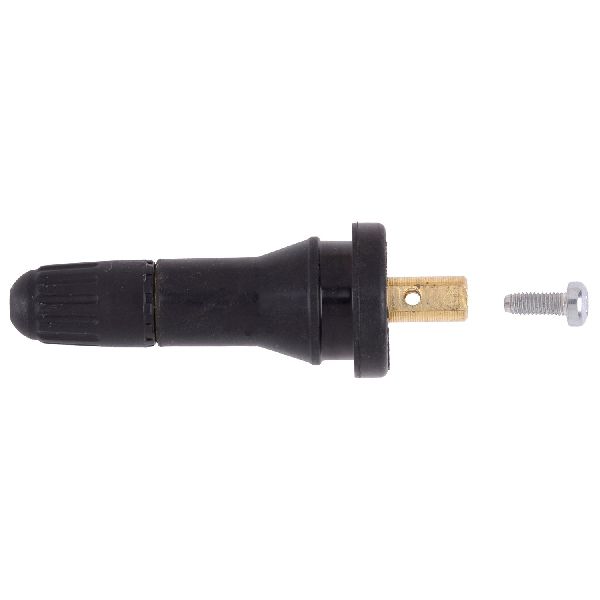
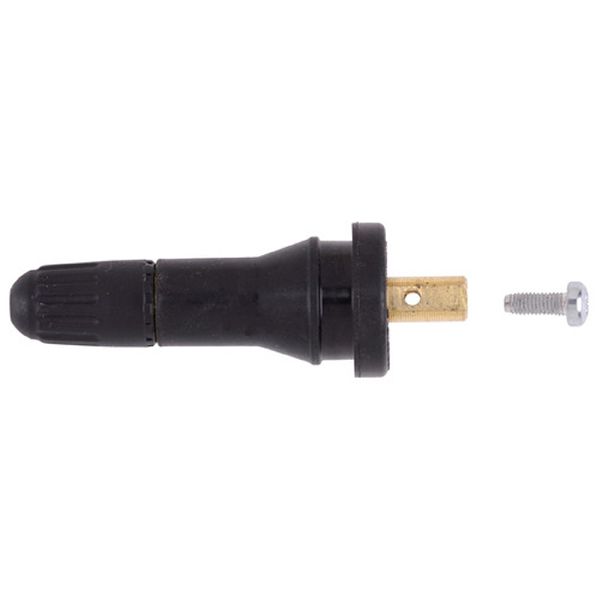
- Tire Pressure Monitoring System (TPMS) Sensor
(OEM #13598771)— This is the direct cause of the code. The internal battery dies, or the sensor itself fails, requiring replacement. This part number is a 315MHz sensor used across many GM vehicles. It may supersede older numbers like 13586335 and is itself superseded by 13540600.
Trusted brands: ACDelco, Schrader, Dorman, Bosch, Huf
OEM price range: $50-$80
Aftermarket price range: $25-$60 - Remote Control Door Lock Receiver (RCDLR)
(OEM #13595511)— This module is the cause when multiple TPMS codes appear with key fob and starting issues. TSB 16-NA-396 specifically calls for its replacement. This part number is superseded by 13540045. Verifying the correct part number by VIN is critical as several versions exist.
Trusted brands: ACDelco (GM Genuine)
OEM price range: $50-$150
Related Codes That Often Appear With This One
- C0755, C0760, C0765 — These are the codes for the other three tire pressure sensors (Right Front, Left Rear, Right Rear). Seeing them together can point to a systemic issue like a failing RCDLR, a disconnected antenna, or widespread RFI, as described in TSB 16-NA-396.
- B3055, B3060 — These codes relate to the vehicle immobilizer key. They are often triggered alongside C0750 during a no-start event because the RCDLR is failing to authenticate the key's transponder signal, as described in TSB PIC5650M.
Technical Service Bulletins (TSBs) & Recalls
- PIC5650M (and earlier revisions): Diagnostic tip for intermittent no-crank/no-start, security light on, and various DTCs including C0750, often related to Radio Frequency Interference.
- 16-NA-396: Addresses intermittent key fob operation and TPMS codes (C0750, C0755, etc. with symptom byte :29) caused by internal RCDLR failure.
- 16-NA-061: Provides diagnostic steps for TPMS/key fob issues caused by a disconnected RCDLR antenna system, advising to check connections before replacing the module.
Platform-Specific Known Issues
- TSB PIC5650 (revisions C, J, K, M) is the primary document outlining the bizarre link between TPMS codes (including C0750), RFI, and intermittent no-start/start-stall conditions with the security light on.
- TSB 16-NA-396 points to internal failures of the Remote Control Door Lock Receiver (RCDLR) as a cause for simultaneous TPMS and key fob/passive entry issues, providing a specific part number for the fix.
- Owner Experience: A user on a Tahoe/Yukon forum described having the no-start and TPMS issue. After being advised not to buy an 'upgraded' part number for the RCDLR, they had a dealer replace and program the correct module for $190, which resolved the issue.
Mechanic-Grade Diagnostic Values
- Scan Tool Parameter: Tire Pressure Sensor Rolling Count — expected: Above 50%. Failure: A value below 50% indicates a potential sensor or communication issue.
- DTC Set Condition (Time) — expected: Sensor must transmit periodically.. Failure: DTC C0750 sets if a sensor does not transmit for 18 minutes while vehicle speed is above 25 mph (40 km/h).
- RCDLR Power Supply Voltage — expected: 12V+ at the Red/White wire on the RCDLR connector.. Failure: 0V indicates a break in the power supply wire or a blown fuse.
Hidden / Shadow Codes Worth Checking
- C0750 :29: Too Few Pulses. This is the most common symptom, indicating the RCDLR is not receiving the expected number of data transmissions from the sensor. It's specifically mentioned in TSB 16-NA-396. (see via GM Tech2 or GDS2 professional scan tool.)
- C0750 :03: Low Voltage. This indicates the RCDLR has detected that the TPMS sensor's internal battery voltage is low. (see via GM Tech2 or GDS2 professional scan tool.)
- C0750 :08: Signal Invalid / Bus Signal or Message Failure. The RCDLR received a signal, but it was corrupt, malformed, or otherwise unusable. (see via GM Tech2 or GDS2 professional scan tool.)
- C0750 :39: Internal Malfunction. This points to an internal failure within the TPMS sensor itself, rather than a communication or battery issue. (see via GM Tech2 or GDS2 professional scan tool.)
Scan Tool Commands That Help
- GDS2 / Tech2: RCDLR Replacement & Programming — This function is mandatory after replacing the RCDLR. It programs the new module to the vehicle's VIN and security system. Failure to program will result in a no-start condition and/or inoperative key fobs.
- GDS2 / Tech2: TPM Learn Mode Simulation — To test the RCDLR independently. The scan tool enables learn mode, and a TPMS tool (e.g., EL-46079) is used to send simulated sensor signals. If the scan tool displays the simulated data, the RCDLR and its antenna are working; if not, the RCDLR is likely faulty.
Wiring & Ground Locations
- RCDLR Power Wire — Red/White wire at the RCDLR connector. The harness runs along the driver's side floor and door sill.. A common, but often missed, point of failure is a break or corrosion in this wire within the door sill harness, which cuts power to the RCDLR, causing C0750 and other related codes.
- RCDLR Ground Wire — Black/White wire at the RCDLR connector. The main body ground point is often under the driver's side floorboard, connected to the frame.. A poor ground can cause intermittent module operation, leading to communication loss with TPMS sensors and key fobs.
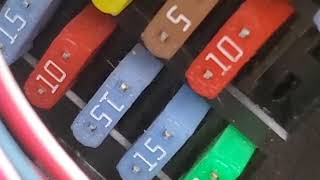
- DSM Fuse — 10A fuse located in the instrument panel fuse block (inside the cabin).. This fuse supplies power to the RCDLR. If it's blown, the module will be dead, causing TPMS and key fob failure.
- RCDLR Antenna Coax Cable — Runs from the RCDLR module (often in the rear C-pillar area) to an antenna amplifier, and then to the antenna embedded in the rear glass.. A disconnect at any of the three connection points (RCDLR, amplifier, or glass) can cause poor signal reception, leading to code C0750, especially for sensors furthest away.
Real Owner Repair Stories
- YouTube channel 'Just The Drip' (2011 Chevrolet Silverado) — Key fobs do not work. Scan tool shows no communication with the Remote Control Door Lock Receiver (RCDLR).
❌ Tried (didn't work) Initially suspected a faulty RCDLR module.
✅ What actually fixed it Found and repaired a broken/corroded Red/White power wire for the RCDLR. The break was located in the wiring harness running along the driver's side door sill. - Cadillac XLR Forums user (2004 Cadillac XLR (similar GM electronics)) — RCDLR was going in and out, key fobs intermittent.
❌ Tried (didn't work) Simply installing the new RCDLR and programming the fobs allowed the doors to lock/unlock but resulted in a no-start condition.
✅ What actually fixed it After installing the new RCDLR and programming the fobs, the 30-minute vehicle security relearn procedure (3 cycles of turning the key to 'ON' for 10 minutes until the security light goes out) had to be performed to sync the new RCDLR with the ECU, which then allowed the car to start.
OEM Part Supersession History
13586335 / 13598771→13540600— Standard part evolution and consolidation for the 315MHz TPMS sensor.
Heads up: These are generally interchangeable for the specified vehicle generation, but always verify with VIN.13509518→13595511 (and later 13540045)— Internal revisions to the RCDLR module to improve reliability, as referenced in TSB 16-NA-396.
Heads up: Using the wrong RCDLR can lead to system malfunctions. Part number must be matched to the vehicle's specific year and options (e.g., with/without remote start).
Model Year Variations Within This Range
- 2007-2008 (early models): On some very early GMT900 models, the TPMS signals were interpreted by the Passenger Door Module (PDM) instead of a dedicated RCDLR. However, for the majority of the 2007-2014 generation, the RCDLR is the correct module to diagnose for this issue.
Helpful Videos
We Have This Part in Stock


The information in this article is provided for general reference and educational purposes only. Vehicle specifications, procedures, and part compatibility can vary by production date, trim level, and region. Always consult your vehicle's factory service manual and verify part numbers before purchasing or performing repairs. Safety-critical components such as airbags, seat belts, and braking systems should be installed by a qualified professional.
- Chevrolet SILVERADO 3500:
- 🧭 Diagnostic Flowchart
- 🎬 Helpful Videos
- 🛍️ Shop This Part
- What's Unique About the 2007-2014 Chevrolet SILVERADO 3500
- Symptoms You May Notice
- Most Likely Causes
- Rare But Worth Checking
- Diagnosis Steps
- Parts You'll Likely Need
- Related Codes That Often Appear With This One
- Technical Service Bulletins (TSBs) & Recalls
- Platform-Specific Known Issues
- Mechanic-Grade Diagnostic Values
- Hidden / Shadow Codes Worth Checking
- Scan Tool Commands That Help
- Wiring & Ground Locations
- Real Owner Repair Stories
- OEM Part Supersession History
- Model Year Variations Within This Range
- 🎟️ Get 5% Off