

C0750 on 2007-2014 Chevrolet Tahoe: TPMS Faults, Causes, and Fixes
On a 2007-2014 Tahoe, code C0750 almost always means the Tire Pressure Monitoring System (TPMS) sensor in the left front wheel has failed, usually due to a dead battery. Expect to pay $30-$60 for an aftermarket sensor or $60-$110 for an OEM part. While sensor replacement is the common fix, if you also have key fob or starting issues, the problem could be the Remote Control Door Lock Receiver (RCDLR).
- C0750 means the left front TPMS sensor is not communicating with the vehicle.
- The most likely cause is a dead battery inside the sensor, which is a common failure on vehicles of this age.
- If your key fob also doesn't work, the problem is more likely the Remote Control Door Lock Receiver (RCDLR) module, not the sensor.
- Replacing the sensor requires tire dismounting and balancing, making it a job for a tire shop or an advanced DIYer.
- A TPMS relearn procedure is required after replacing the sensor.
What's Unique About the 2007-2014 Chevrolet TAHOE
For the GMT900 platform, which includes the 2007-2014 Tahoe, the Remote Control Door Lock Receiver (RCDLR) is the module responsible for receiving signals from both the TPMS sensors and your key fobs. Because of this shared function, a failure within the RCDLR can cause seemingly unrelated issues. It's a known issue where a faulty RCDLR can trigger TPMS codes like C0750 for all four wheels while also causing the key fobs to stop working. The RCDLR is typically located in the driver's side rear D-pillar, behind the interior trim panel. Furthermore, the provided NHTSA TSB PIC5650M links C0750 to no-start and security light issues, suggesting that broader electrical problems with the Body Control Module (BCM), which interprets the RCDLR signals, can also be a root cause.
Diagnostic Flowchart
Tap your situation to follow the diagnostic path that matches what you're seeing on this vehicle.
Symptoms You May Notice
- TPMS warning light illuminated on the dashboard
- "Service Tire Monitor System" message on the Driver Information Center (DIC)
- Inability to see the left front tire pressure reading on the DIC, often showing as "--"
- Intermittently, may be present with a no-start/stalling condition and security light (per TSB PIC5650M).
- If the RCDLR is the root cause, symptoms will also include key fobs not working (lock/unlock/remote start) and potentially a "No Fob Detected" message.
- Replacing the tire when the issue is the sensor inside it.
- Replacing only the TPMS sensor when the key fobs are also dead, indicating a faulty RCDLR module.
- Assuming the sensor is bad when the relearn procedure fails, without considering that the RCDLR may be the component unable to receive the signal.
Most Likely Causes
- Dead TPMS Sensor Battery 🔴 High Probability → Shop Tire Pressure Monitoring System (TPMS) Sensor TPMS sensor batteries are non-rechargeable and have a finite lifespan of about 7-10 years. The entire 2007-2014 Tahoe model range is now at an age where battery failure is the most common cause. The sensor only transmits when the vehicle is in motion to preserve battery life.
How to confirm: Use a TPMS diagnostic tool to attempt to activate the left front sensor. If the tool cannot get a response, or if it reads a 'low battery' status, the sensor has failed. If the other three sensors respond correctly, it isolates the fault to the single sensor.
Typical fix: Replace the left front TPMS sensor. The tire must be dismounted, the old sensor removed, the new one installed, and the tire remounted and balanced. A TPMS relearn procedure must then be performed.
Est. part cost: $30-$110 - Failed TPMS Sensor 🟡 Medium Probability → Shop Tire Pressure Monitoring System (TPMS) Sensor Sensors can fail from physical damage during tire service, from road impacts, or internal electronic faults. Using unapproved tire sealants can also clog and damage the sensor's pressure port.
How to confirm: The sensor will fail to respond to a TPMS activation tool, even if the battery status is not explicitly 'low'. Visual inspection after dismounting the tire may reveal physical damage or corrosion.
Typical fix: Replace the damaged TPMS sensor and perform the relearn procedure.
Est. part cost: $30-$110 - Faulty Remote Control Door Lock Receiver (RCDLR) ⚪ Low Probability → Shop Keyless Entry Receiver As documented in GM TSBs, the RCDLR module can fail internally or suffer from a software glitch where it 'goes to sleep' and doesn't wake up, causing it to lose communication with TPMS sensors and key fobs. Sometimes this can be temporarily resolved by pulling the associated fuse (often labeled DSM) to reset the module. 🎬 Watch: How to fix combined TPMS and remote start issues.
How to confirm: Check if key fob functions (lock, unlock, remote start) are also inoperative. Scan for codes C0755, C0760, and C0765. If all TPMS codes are present and key fobs don't work, the RCDLR is the likely culprit.
Typical fix: Replace the RCDLR module. This part is located in the driver's side rear D-pillar and requires programming by a dealer or a properly equipped independent shop.
Est. part cost: $80-$150
Rare But Worth Checking
- Body Control Module (BCM) or Wiring Issue: The TSB PIC5650M links C0750 with security and no-start codes (like B3055). This points to a possible underlying electrical issue, such as a bad ground or a fault within the BCM, that affects multiple systems simultaneously. Diagnosis should focus on the BCM and its wiring if these other codes are present.
- Radio Frequency (RF) Interference: Aftermarket electronic devices like dash cams, phone chargers, or even some LED replacement bulbs can emit RF interference that disrupts the 315 MHz signal between the TPMS sensor and the RCDLR. TSB PIC5650G specifically calls out checking for these devices. Try unplugging all aftermarket electronics to see if the code clears.
- Disconnected RCDLR Antenna: TSB 16-NA-061 and PIT5446A describe how the coaxial antenna for the RCDLR can become disconnected at the module, at the antenna amplifier, or at the rear glass. A disconnect at the RCDLR itself would cause all sensors and fobs to fail, while a disconnect further away might only cause the furthest sensors (like the left front) to drop out intermittently.
Diagnosis Steps
- Verify the tire pressure in the left front tire is correct using a quality pressure gauge.
- Use a TPMS diagnostic tool to attempt to activate and read the left front sensor. Note the sensor ID, pressure, temperature, and battery status.
- If the tool cannot get a response from the LF sensor but can from the other three, the LF sensor is faulty and needs replacement.
- If the tool gets no response from ANY of the four sensors, AND the key fobs do not work, suspect a faulty Remote Control Door Lock Receiver (RCDLR) or its antenna connection.
- Attempt a TPMS relearn procedure. For 2007-2014 Tahoes, this can be initiated by putting the ignition to 'RUN' (engine off) and holding the lock/unlock buttons on the key fob for 5 seconds until the horn chirps twice. For models with DIC buttons, you can navigate to the 'Tire Pressure' screen and hold the set/clear button.
- Once in learn mode, use a TPMS tool to activate the sensors in order: LF, RF, RR, LR. A horn chirp confirms each sensor. 🎬 Watch: A step-by-step walkthrough of the TPMS relearn procedure. If the relearn fails specifically at the left front wheel, the sensor is confirmed to be bad.
- If the relearn procedure can't be initiated or fails for all wheels, and key fobs are also dead, inspect the RCDLR fuse (often labeled 'DSM') and its connections in the driver's side rear D-pillar.
- If other security or communication codes are present (e.g., B3055), inspect the BCM wiring, connectors, and ground points for corrosion or damage, and check for aftermarket RF-emitting devices as suggested by TSB PIC5650M.
Parts You'll Likely Need
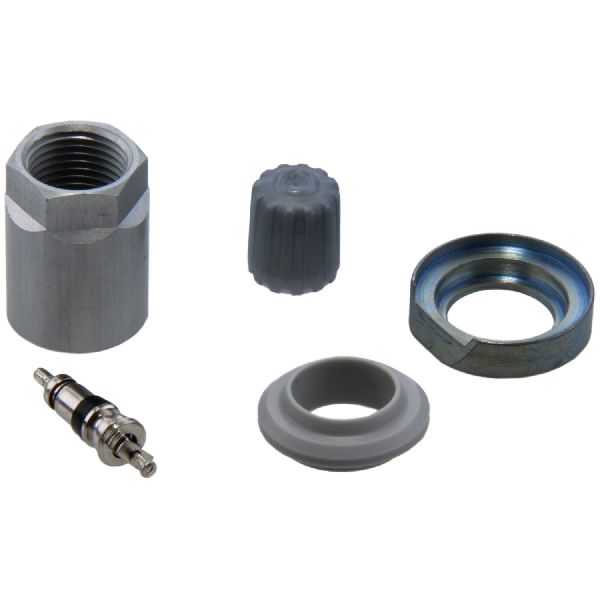
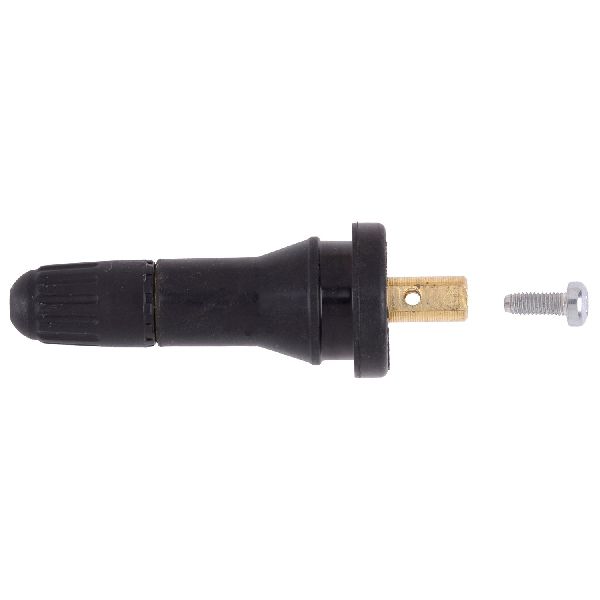
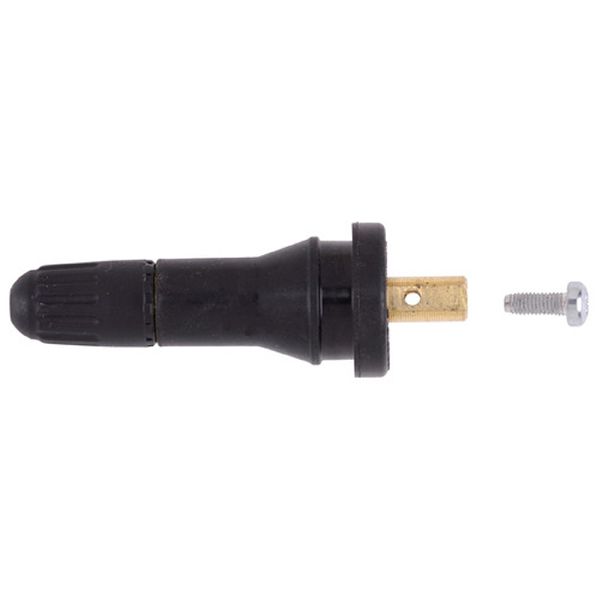
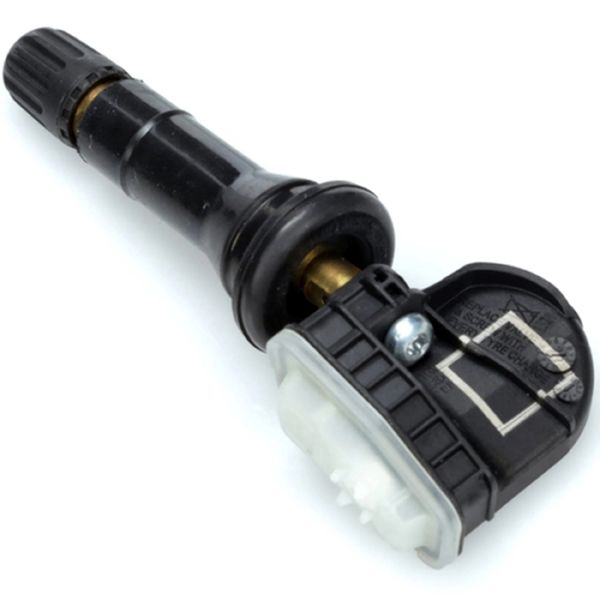
- Tire Pressure Monitoring System (TPMS) Sensor
(OEM #13598771)— This is the direct replacement for the original sensor. The most common failure mode for C0750 is the sensor itself, typically due to an expired internal battery. This part number supersedes several older numbers including 13586335, 22853741, and 25920615.
Trusted brands: ACDelco (OEM), Schrader (Often the original manufacturer for GM), Dorman 974-007, Autel
OEM price range: $60-$110
Aftermarket price range: $30-$60
Related Codes That Often Appear With This One
- C0755, C0760, C0765 — These are the codes for the other three TPMS sensors (RF, RR, LR). When all four appear together, it strongly suggests a central problem with the receiver (RCDLR) or its antenna, not four simultaneously failed sensors.
- B3055, B3060 — As cited in TSB PIC5650M, these vehicle security/immobilizer codes can appear alongside C0750 during a no-start condition, pointing to a more complex electrical fault, likely involving the BCM or related wiring and potentially caused by RF interference.
Technical Service Bulletins (TSBs) & Recalls
- PIC5650M: Notes that C0750 can be found with security codes (B3055, B3060, etc.) during intermittent no-crank, no-start, or stalling conditions, pointing to a potential BCM or electrical issue, often related to Radio Frequency Interference (RFI) from aftermarket devices.
- 16-NA-061 / PIT5446A: Details how a disconnected RCDLR antenna can cause TPMS codes and poor key fob range on similar GM SUVs, a relevant diagnostic path for the Tahoe.
- 16-NA-396: Confirms that an internal failure of the RCDLR can cause simultaneous loss of key fob and TPMS functions, often setting all four TPMS codes (C0750, C0755, C0760, C0765) with a ':29 – Too Few Pulses' symptom descriptor.
Platform-Specific Known Issues
- The shared function of the Remote Control Door Lock Receiver (RCDLR) for both TPMS and key fobs is a key characteristic of this platform. A failure of this module can lead to a misdiagnosis where individual sensors are blamed.
- A known software glitch can cause the RCDLR to 'fall asleep' and not wake up, disabling both TPMS and key fob functions. A temporary fix reported by owners is to pull the 'DSM' fuse in the instrument panel fuse box to reset the module.
- The RCDLR is located in the driver's side rear D-pillar, requiring removal of interior trim panels for access, which can be time-consuming.
Hidden / Shadow Codes Worth Checking
- C0750 with symptom :29: Too Few Pulses. This indicates the RCDLR is not receiving the expected number of data transmissions from the TPMS sensor. (see via A professional GM scan tool (Tech 2 or GDS2) can display these symptom-byte codes. TSB 16-NA-396 specifically references this for RCDLR failures.)
- C0750 with symptom :08: Signal Invalid. This indicates the data being received from the sensor is corrupt or not in the expected format. (see via Visible on a professional GM scan tool. This points to a faulty sensor transmission rather than a complete loss of signal.)
Scan Tool Commands That Help
- Tech 2 / GDS2: RCDLR Setup — This procedure is required after replacing the Remote Control Door Lock Receiver (RCDLR) to configure the new module to the vehicle's options and BCM.
- Tech 2 / GDS2: Theft Deterrent System Relearn — Must be performed after replacing the RCDLR. The RCDLR is part of the vehicle's immobilizer system, and this procedure (either 10 or 30 minutes) is necessary to allow the vehicle to start.
- Tech 2 / GDS2: TPMS Learn — After replacing the RCDLR or any TPMS sensor, this function is used to teach the vehicle the unique ID codes of each sensor in their specific locations on the vehicle.
- Tech 2 / GDS2: RCDLR Output Controls — This diagnostic function allows a technician to command the RCDLR and related components (like the antenna) to test their operation without relying on a signal from a TPMS sensor or key fob.
Wiring & Ground Locations
- RCDLR Fuse — In the instrument panel fuse block, located on the driver's side of the dashboard, accessible when the door is open. The fuse is commonly labeled 'DSM' (Driver Seat Module).. A known software glitch can cause the RCDLR to 'go to sleep' and not wake up. Pulling this fuse for a minute and reinstalling it can reset the module and temporarily restore both TPMS and key fob functionality, confirming the RCDLR is the source of the issue.
- RCDLR Module — Behind the interior trim panel in the driver's side rear D-pillar, near the rear hatch/liftgate.. This is the physical location of the receiver module itself. Access is required for replacement or to check its connector and coaxial antenna connection.
- G303 / G402 — G303 is a ground point on the left side B-pillar (behind the trim between front and rear doors). G402 is on the right D-pillar behind the trim panel.. These are major ground points for rear body electronics. The RCDLR is located in the D-pillar, making these grounds critical for its proper operation. A loose or corroded ground here can cause intermittent RCDLR failure, mimicking a bad module.
- RCDLR Antenna Coax — A coaxial cable runs from the RCDLR module in the D-pillar to an antenna amplifier, and then to the antenna grid which is integrated into the right rear quarter glass.. This antenna receives the signals from the TPMS sensors. A loose connection at the RCDLR, the amplifier, or the glass can cause loss of signal from one or more sensors. A loose connection at the amplifier might only cause the furthest sensor (LF) to drop out.
Real Owner Repair Stories
- Tahoe Yukon Forum user 'R_Sharpe' (2007 Chevrolet Tahoe) — Both keyless entry fobs and the Tire Pressure Monitoring System stopped working simultaneously.
❌ Tried (didn't work) Initial diagnosis pointed towards replacing sensors or the RCDLR module.
✅ What actually fixed it Following advice related to a TSB, the owner pulled the 'DSM' fuse from the instrument panel fuse box, waited a moment, and reinstalled it. This reset the RCDLR module, and both the key fobs and TPMS began working correctly again. - GMTNation forum user 'navigator' (GM Truck (likely Tahoe/Yukon family)) — Remote lock, unlock, and remote start features stopped working.
❌ Tried (didn't work) Initial confusion about which module was responsible.
✅ What actually fixed it The user identified the fuse labeled 'DSM' in the dash by the driver's door kick panel, pulled it for one minute, and re-installed it. After 15 minutes, all remote key fob functions were restored. This points to the same RCDLR 'sleep' issue. - Tahoe Yukon Forum user 'Joseph Garcia' (2007 Yukon XL Denali) — Service tire monitor message, TPMS relearn process would not initiate (failed at the first step, LF wheel), and key fobs were not working.
❌ Tried (didn't work) Scanning for codes did not point to a specific wheel sensor., The symptoms strongly suggested a failed RCDLR module since the entire system was down.
✅ What actually fixed it The actual cause was a single failed TPMS sensor on the right rear wheel. Even though the relearn process starts at the left front, the bad sensor on a different wheel was preventing the RCDLR from properly entering learn mode at all. Replacing the one bad sensor fixed all issues.
When the Usual Fixes Don't Work
- While the common diagnostic wisdom states that having all four TPMS codes (C0750, C0755, C0760, C0765) plus dead key fobs points directly to a failed RCDLR module, this is not always the case. There are owner-confirmed instances where a single, faulty TPMS sensor created a fault on the communication bus that prevented the RCDLR from entering the relearn mode and communicating with any sensors or fobs. This made it appear as if the central RCDLR module had failed. Replacing just the one bad sensor restored full functionality to the entire system. Therefore, even with symptoms of a total system failure, it is still worth attempting to test individual sensors with a capable TPMS tool before condemning the RCDLR.
OEM Part Supersession History
13586335, 22853741, 25920615, 20923680→13598771 (and later 13540600)— Standard part evolution for improved reliability and manufacturing.
Heads up: All these part numbers operate at 315 MHz and are generally interchangeable for the 2007-2014 Tahoe. However, it is always best to use the latest superseded part number available from the dealer.
Model Year Variations Within This Range
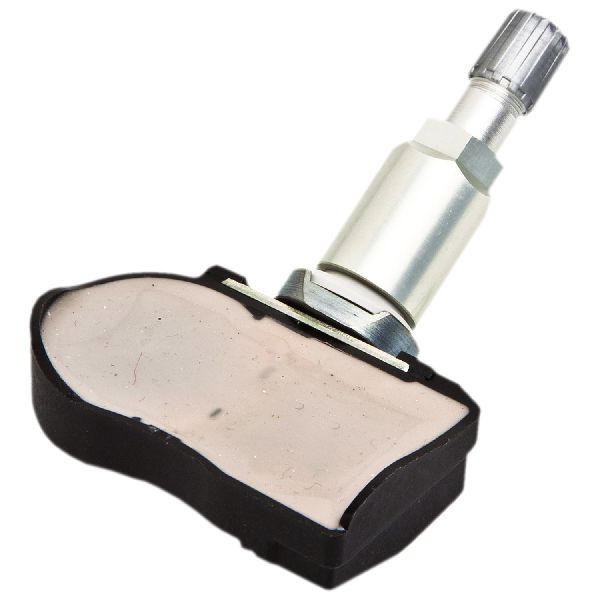
- 2007 (early models): Early 2007 models were often equipped with TPMS sensors that had metal (aluminum) clamp-in valve stems. These were found to be susceptible to corrosion and seizing, particularly in rust-belt states. GM later used sensors with rubber snap-in valve stems to mitigate this issue, though they later returned to metal stems.
Helpful Videos
We Have This Part in Stock


The information in this article is provided for general reference and educational purposes only. Vehicle specifications, procedures, and part compatibility can vary by production date, trim level, and region. Always consult your vehicle's factory service manual and verify part numbers before purchasing or performing repairs. Safety-critical components such as airbags, seat belts, and braking systems should be installed by a qualified professional.
- Chevrolet TAHOE:
- 🧭 Diagnostic Flowchart
- 🎬 Helpful Videos
- 🛍️ Shop This Part
- What's Unique About the 2007-2014 Chevrolet TAHOE
- Symptoms You May Notice
- Most Likely Causes
- Rare But Worth Checking
- Diagnosis Steps
- Parts You'll Likely Need
- Related Codes That Often Appear With This One
- Technical Service Bulletins (TSBs) & Recalls
- Platform-Specific Known Issues
- Hidden / Shadow Codes Worth Checking
- Scan Tool Commands That Help
- Wiring & Ground Locations
- Real Owner Repair Stories
- When the Usual Fixes Don't Work
- OEM Part Supersession History
- Model Year Variations Within This Range
- 🎟️ Get 5% Off