

C0750 on 2015-2022 GMC Canyon: TPMS Faults, Causes, and Fixes
Code C0750 on a 2015-2022 GMC Canyon indicates a fault with the left front tire pressure sensor. The most common cause is a dead battery inside the sensor itself. A replacement sensor costs $25-$75, but requires a tire shop to install and program. If key fob issues are also present, the fault is likely the central RCDLR module.
- C0750 means there is a fault with the left front tire pressure sensor.
- The most likely fix is to replace the sensor, which has a dead internal battery.
- If you also have key fob problems or a no-start issue, the problem is more likely the Remote Control Door Lock Receiver (RCDLR) or radio interference.
- Replacing a sensor requires a tire shop to dismount the tire and program the new part.
- Before expensive repairs, unplug all aftermarket devices like phone chargers to rule out radio interference.
What's Unique About the 2015-2022 Gmc CANYON
On this generation of GMC Canyon and its twin, the Chevrolet Colorado, the TPMS sensors communicate with the Remote Control Door Lock Receiver (RCDLR), the same module that manages the key fobs and vehicle immobilizer. This module is typically located behind the rear passenger-side interior trim panel. Because of this shared module, a simple TPMS sensor code like C0750 can sometimes appear alongside seemingly unrelated, serious issues like a "No Remote Detected" message or even a no-start condition. This is a known issue documented in GM Technical Service Bulletins, where a failing RCDLR or its antenna can cause both TPMS and security system problems simultaneously.
Diagnostic Flowchart
Tap your situation to follow the diagnostic path that matches what you're seeing on this vehicle.
Symptoms You May Notice
- TPMS warning light flashing for 60-90 seconds on startup, then staying on solid.
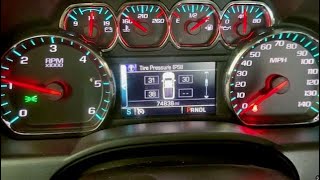
- "Service Tire Monitor System" message on the Driver Information Center (DIC).
- The pressure reading for the left front tire shows as dashes (--) on the DIC.
- In rare cases related to module failure, may be accompanied by key fob inoperability or a "No Remote Detected" message.
- Reduced or non-functional remote keyless entry (RKE) range.
- Replacing the Body Control Module (BCM). While the BCM sets the code, the fault is almost always with the sensor or the RCDLR that receives the signal, not the BCM itself.
Most Likely Causes
- Dead TPMS Sensor Battery 🔴 High Probability → Shop Tire Pressure Monitoring System (TPMS) Sensor TPMS sensors use a sealed, non-replaceable battery with a finite lifespan of 5-10 years. Vehicles in the 2015-2022 range are now old enough for original sensor batteries to be failing.
How to confirm: Use a TPMS diagnostic tool to attempt to 'wake up' or read the left front sensor. If the tool cannot get a response, the sensor is almost certainly dead. If only C0750 is present and key fobs work perfectly, the sensor is the most likely culprit.
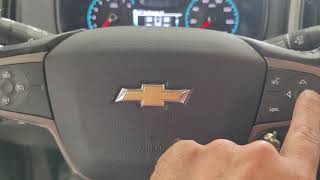
Typical fix: Replace the left front TPMS sensor. The tire must be dismounted from the wheel to access it. 🎬 See this clever trick to replace sensors without removing the wheel. The new sensor must then be programmed to the vehicle using a TPMS relearn tool. 🎬 Watch: How to reset TPMS sensors on your Canyon or Colorado.
Est. part cost: $25-$75 - Faulty Remote Control Door Lock Receiver (RCDLR) or its Antenna 🟡 Medium Probability → Shop Keyless Entry Receiver GM has issued service bulletins regarding internal RCDLR failures and disconnected antenna wiring causing TPMS and keyless entry issues on this platform. The issue is common enough that TSB 16-NA-396 recommends outright replacement of the module if multiple TPMS and key fob issues are present.
How to confirm: This is a likely cause if multiple TPMS codes (C0750, C0755, C0760, C0765) are present simultaneously, and/or if you are also experiencing key fob range issues or no-start problems. A diagnostic scan tool would show a loss of communication with the RCDLR. A key first step is to inspect the coaxial antenna cable connection at the RCDLR module itself, which is located behind the rear passenger-side interior trim.
Typical fix: Inspect the RCDLR antenna coaxial cable for secure connections. If connections are good, the RCDLR module itself likely needs to be replaced and programmed. The OEM part number for the receiver module cited in TSB 16-NA-396 is 13595511.
Est. part cost: $60-$150 - Radio Frequency Interference (RFI) ⚪ Low Probability The RCDLR operates on a 315 MHz frequency that can be 'jammed' by aftermarket electronics like cheap cell phone chargers, dash cams, aftermarket LED headlight/taillight bulbs, or even some toll passes. Owners on forums have specifically reported issues disappearing after unplugging a USB charger from a 12V socket.
How to confirm: Remove all aftermarket plug-in devices (phone chargers, dash cams, etc.) from the vehicle. Clear the codes and see if the problem disappears. The issue may be intermittent and only occur when the interfering device is active.
Typical fix: Identify and remove the source of the RFI. No parts replacement is necessary.
Est. part cost: $0
Rare But Worth Checking
- Damaged TPMS Sensor: → Shop Tire Pressure Monitoring System (TPMS) Sensor The sensor can be physically damaged during tire installation, by hitting a large pothole, or from corrosion. This is less common than battery failure but is still possible.
- Weak Vehicle Battery: A failing 12V vehicle battery can cause low voltage conditions for various modules, including the BCM and RCDLR, leading to erratic behavior and spurious trouble codes like C0750. If the truck is slow to crank and has TPMS issues, the main battery should be tested.
Diagnosis Steps
- Check the tire pressure display in the Driver Information Center. Confirm that only the left front reading is missing. If multiple or all readings are missing, proceed to step 4.
- Use a TPMS diagnostic tool to attempt to read the signal from the left front sensor. If it fails to respond, the sensor is the primary suspect.
- If the sensor does respond to the tool, attempt a TPMS relearn procedure 🎬 Watch: Using a diagnostic scan tool to perform a TPMS relearn. as described in the owner's manual. If the relearn fails for that specific sensor, it confirms a sensor fault.
- If you have other TPMS codes (C0755, etc.) or are experiencing key fob problems, suspect a wider issue. Unplug all aftermarket 12V and USB devices (chargers, dashcams, LED lights) to eliminate Radio Frequency Interference.
- If symptoms persist, inspect the wiring and antenna connection at the Remote Control Door Lock Receiver (RCDLR). On the Canyon/Colorado, this is located behind the rear passenger-side interior trim panel. TSB 16-NA-061 specifically calls out checking the coaxial cable connection at the module and at the antenna amplifier.
- If wiring is secure and RFI has been ruled out, the RCDLR module itself is the likely cause and may require replacement and programming, as per TSB 16-NA-396.
Parts You'll Likely Need
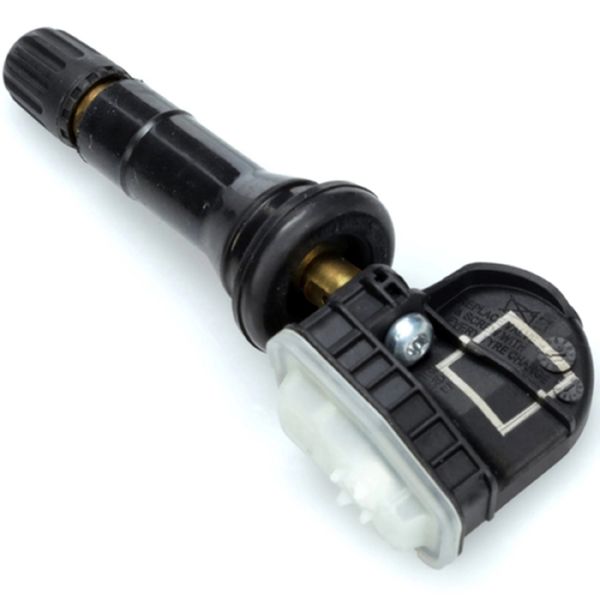
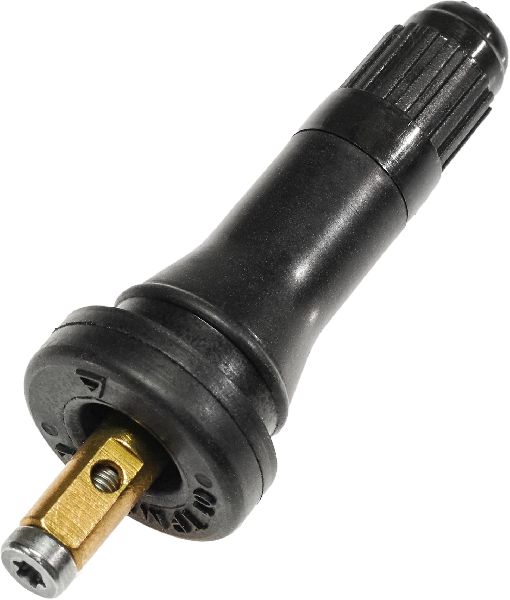
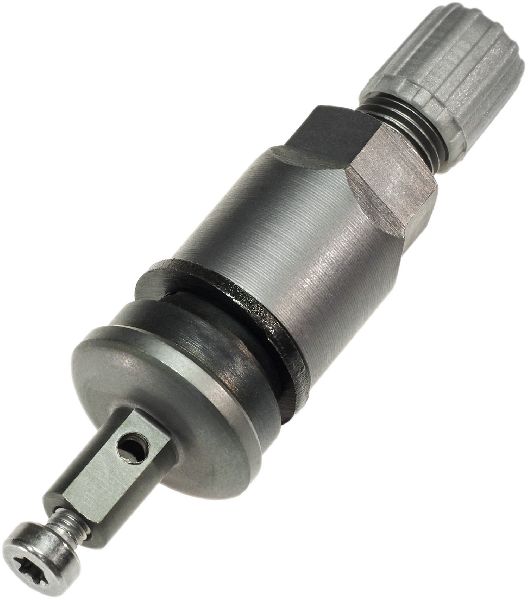
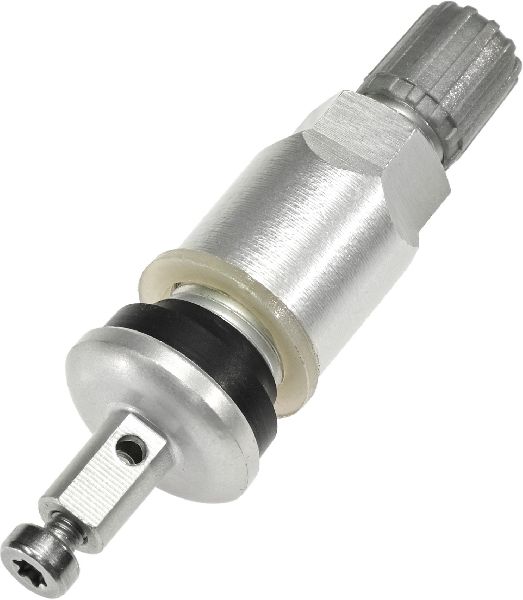
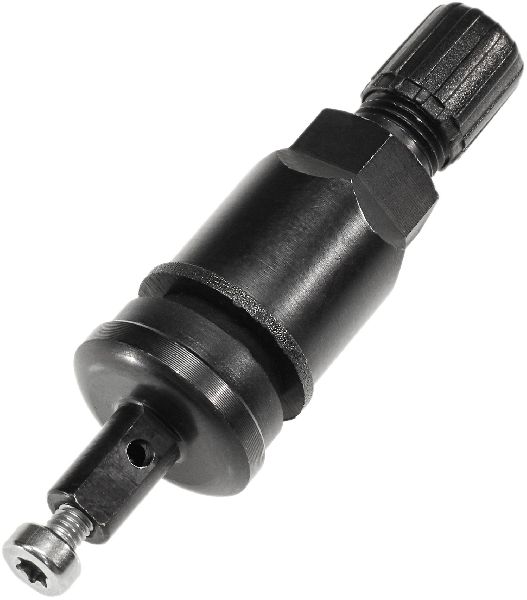
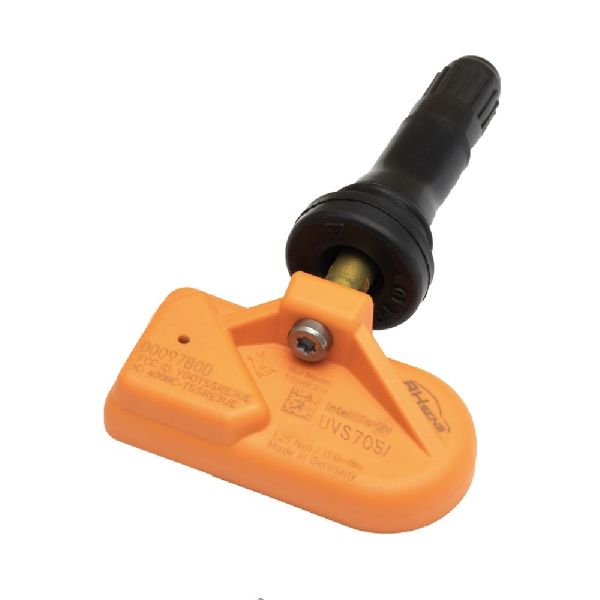
- Tire Pressure Monitoring System (TPMS) Sensor
(OEM #13598771)— This is the most common failure point. The internal battery dies, requiring the entire sensor to be replaced.
Trusted brands: ACDelco, Schrader, Dorman
OEM price range: $50-$75
Aftermarket price range: $25-$50 - Remote Control Door Lock Receiver (RCDLR)
(OEM #13595511)— This module receives signals from all TPMS sensors and key fobs. It is the root cause when multiple TPMS codes are set or when key fob issues occur simultaneously.
Trusted brands: ACDelco
OEM price range: $60-$150
Related Codes That Often Appear With This One
- C0755, C0760, C0765 — These are the codes for the other three tire pressure sensors (RF, RR, LR). When all four appear together, it strongly points to a central receiver problem (the RCDLR) or its antenna, rather than four simultaneously failed sensors.
- B3055, B3060, B3935 — These are vehicle security codes related to the key and immobilizer system. Their presence with C0750 is a key indicator of a fault with the RCDLR module or significant RFI, as documented in TSB PIC5650M.
Technical Service Bulletins (TSBs) & Recalls
- PIC5650M: Diagnostic aid for intermittent no-crank/no-start, security lights, and TPMS messages (including C0750) caused by Radio Frequency Interference or other issues.
- 16-NA-061: Addresses TPMS codes (including C0750) and key fob issues caused by a poor or disconnected RCDLR antenna connection.
- 16-NA-396: Addresses TPMS codes (including C0750) and keyless entry problems caused by an internally failing RCDLR module.
Platform-Specific Known Issues
- GM Technical Service Bulletin PIC5650M explicitly links C0750 with intermittent no-crank or start-stall conditions, security lights, and other TPMS codes, pointing to either RFI or a module-level fault.
- TSB 16-NA-061 details how a disconnected antenna for the RCDLR can cause C0750 and other TPMS codes, along with poor key fob range. It provides specific examples: a disconnect far from the module may only cause short range, while a disconnect at the module will cause all TPMS sensors to stop reporting.
- TSB 16-NA-396 identifies internal failure of the RCDLR as a cause for C0750 and other TPMS codes, recommending module replacement. It specifically mentions this can cause a "No Remote Detected" message.
Mechanic-Grade Diagnostic Values
- TPMS Sensor Signal Frequency — expected: 315 MHz. Failure: No signal detected by TPMS tool or scan tool.
- Scan Tool RCDLR Sensor Hit Rate — expected: A high percentage (e.g., >80-90%). Failure: A low Hit Rate percentage indicates the RCDLR is struggling to receive the sensor's signal, which could be due to RFI or a failing sensor/receiver.
Hidden / Shadow Codes Worth Checking
- C0750:29: Too Few Pulses. This specific symptom byte is documented in TSB 16-NA-396 and points directly to an internal fault within the Remote Control Door Lock Receiver (RCDLR). It often appears with codes for all four sensors (C0755, C0760, C0765). (see via A professional scan tool capable of reading GM-specific symptom bytes, such as a GM GDS2/Tech2.)
- C0750:08: Bus Signal/Message Failure. This indicates a general communication failure between the BCM and the TPMS sensor, which could be a wiring issue or a module fault. (see via A professional scan tool capable of reading GM-specific symptom bytes, such as a GM GDS2/Tech2.)
- C0750:03: Voltage Below Threshold. This indicates the control module has detected that the sensor's internal battery voltage is too low for reliable operation, confirming a dead sensor battery. (see via A GM-specific scan tool like a Tech2 or GDS2 capable of reading BCM symptom bytes.)
Scan Tool Commands That Help
- GM GDS2/Tech2: RCDLR Data Display — Use this to view the live data from the RCDLR, including the reported battery status ('OK' or 'Low Battery') and signal 'Hit Rate' for each individual TPMS sensor. This can confirm a dead sensor battery without needing a separate TPMS tool.
- GM GDS2/Tech2: Tire Pressure Sensor Learn — This is the dealer-level command to initiate the TPMS relearn procedure after replacing a sensor or rotating tires. It forces the BCM/RCDLR to learn the new sensor IDs and their positions.
- GM GDS2 with SPS (Service Programming System): RCDLR Module Replacement/Programming — When replacing the RCDLR module, it must be programmed to the vehicle. This requires an online connection via GM's Service Programming System (SPS) to configure the new module to the vehicle's VIN and security settings.
Wiring & Ground Locations
- RCDLR Module — Located behind the rear passenger-side interior trim panel, near the B-pillar or C-pillar area.. This is the central receiver for all TPMS and key fob signals. All wiring and the coaxial antenna connection converge here. A loose connection is a primary point of failure.
- RCDLR Antenna — The coaxial antenna wire runs from the RCDLR module, often up the C-pillar to an antenna amplifier or the antenna itself, which may be integrated into the rear glass.. A disconnected or damaged antenna cable is a known cause for losing all TPMS signals simultaneously, as documented in TSB 16-NA-061.
- G303 / G304 — G303 is on the left (driver's side) B-pillar behind the trim panel. G304 is on the right (passenger's side) B-pillar behind the trim panel.. These are the primary body ground points in the rear passenger cabin area. A corroded or loose ground at G304 could cause intermittent power issues for the nearby RCDLR module, leading to erratic behavior.
- Passenger Compartment Fuse Block — Located behind a small door on the passenger side of the instrument panel, accessible when the passenger door is open.. The fuse for the RCDLR (often labeled K84 Keyless Entry Control Module in schematics) is located here. A blown fuse will cause a total loss of communication.
Real Owner Repair Stories
- ColoradoFans.com Forum (2016 Chevrolet Colorado) — "Service Tire Pressure System" message, all four tire pressure readings showed dashes (---), and both key fobs were completely inoperative.
❌ Tried (didn't work) The user did not report trying other fixes before taking it to the dealer.
✅ What actually fixed it The dealer diagnosed a failed Remote Control Door Lock Receiver (RCDLR). They replaced the RCDLR module and programmed it, which resolved all TPMS and key fob issues simultaneously.
OEM Part Supersession History
13598771→13540600— Standard part lifecycle update by GM.
Heads up: The original part number 13598771 is widely cross-referenced and was used on many GM vehicles. The superseding part 13540600 should be a direct replacement. Always verify fitment with VIN.13595511 (RCDLR Module)→13540045— Standard part lifecycle update by GM.
Heads up: Part 13595511 is the RCDLR module cited in TSBs for this issue. It was superseded by 13540045. Both require programming to the vehicle upon installation.
Model Year Variations Within This Range
- 2015-2022: All models within this range use a 315 MHz frequency for the TPMS sensors. This is consistent across the generation, unlike some other GM platforms that switched to 433 MHz mid-cycle.
Helpful Videos
![[HOW TO] Reset Tire Pressure Monitoring Sensors (TPMS) on 2015-2022 on GM Vehicles (Colorado/Canyon)](https://img.youtube.com/vi/Z-GOeyDAkfs/mqdefault.jpg)
We Have This Part in Stock

The information in this article is provided for general reference and educational purposes only. Vehicle specifications, procedures, and part compatibility can vary by production date, trim level, and region. Always consult your vehicle's factory service manual and verify part numbers before purchasing or performing repairs. Safety-critical components such as airbags, seat belts, and braking systems should be installed by a qualified professional.
- Gmc CANYON:
- 🧭 Diagnostic Flowchart
- 🎬 Helpful Videos
- 🛍️ Shop This Part
- What's Unique About the 2015-2022 Gmc CANYON
- Symptoms You May Notice
- Most Likely Causes
- Rare But Worth Checking
- Diagnosis Steps
- Parts You'll Likely Need
- Related Codes That Often Appear With This One
- Technical Service Bulletins (TSBs) & Recalls
- Platform-Specific Known Issues
- Mechanic-Grade Diagnostic Values
- Hidden / Shadow Codes Worth Checking
- Scan Tool Commands That Help
- Wiring & Ground Locations
- Real Owner Repair Stories
- OEM Part Supersession History
- Model Year Variations Within This Range
- 🎟️ Get 5% Off