

C0750 on 2007-2014 GMC Yukon: TPMS Sensor Fault Causes and Fixes
Code C0750 on a 2007-2014 GMC Yukon almost always means the battery in the left front tire pressure (TPMS) sensor has died. Replacing the sensor is the typical fix. Expect to pay $30-$60 for an aftermarket sensor or $60-$90 for an OEM ACDelco part (original P/N 13598771, now superseded by 13540600). If key fob issues are also present, the problem is likely the Remote Control Door Lock Receiver (RCDLR) or its antenna connection.
- C0750 points to a problem with the left front TPMS sensor.
- The most likely cause is a dead battery inside the sensor, which is over 7-10 years old.
- If you also have key fob problems, the cause is almost certainly the shared RCDLR module or its antenna wiring.
- The fix is either replacing the specific sensor or diagnosing and repairing the RCDLR system.
- The correct OEM replacement sensor part number is 13540600, which replaces the older 13598771.
What's Unique About the 2007-2014 Gmc YUKON
What's unique about the GMT900 platform (including the Yukon, Tahoe, and Suburban) is that the TPMS sensors communicate with the Remote Control Door Lock Receiver (RCDLR)—the same module that receives signals from your key fob. Because of this shared module, a C0750 code can sometimes appear alongside key fob problems, a "No Fob Detected" message, or even a rare but documented no-start condition. This means a simple TPMS code could point to a wider electrical issue with the RCDLR module or its complex antenna system, a known issue on these trucks detailed in TSB 16-NA-061.
Diagnostic Flowchart
Tap your situation to follow the diagnostic path that matches what you're seeing on this vehicle.
Symptoms You May Notice
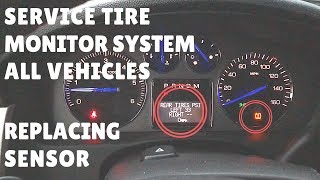
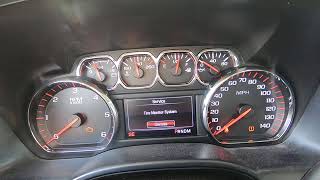
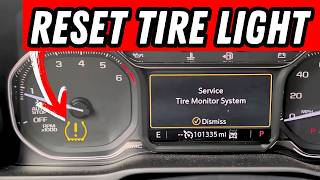
- "Service Tire Monitor System" message on the Driver Information Center (DIC).
- TPMS warning light on the dashboard (often flashes for one minute, then stays solid).
- The left front tire pressure reading displays as dashes (--) on the DIC.
- Poor key fob range (if the RCDLR module or its antenna is the root cause).
- "No Fob Detected" message on the DIC (less common, but related to RCDLR issues).
- Only the right rear tire pressure displays correctly, with others showing dashes (symptom of a loose coax cable at the RCDLR antenna amplifier).
- Replacing the Body Control Module (BCM) when the issue is with the RCDLR or the sensor itself.
- Assuming the tire is low when the warning light is on. A flashing light that stays on indicates a system fault, not low pressure.
Most Likely Causes
- Dead battery in the left front TPMS sensor 🔴 High Probability → Shop Tire Pressure Monitoring System (TPMS) Sensor TPMS sensor batteries have a finite lifespan, typically 7-10 years. Vehicles in this 2007-2014 year range are at or beyond the expected life of the original sensors.
How to confirm: Use a TPMS diagnostic tool to attempt to read the sensor. If the tool cannot get a signal, or shows a 'low battery' status from the left front sensor but can read the other three, the sensor has failed.
Typical fix: Replace the left front TPMS sensor and perform the TPMS relearn procedure. It is often recommended to replace all four sensors at once if they are original, as the others are likely to fail soon.
Est. part cost: $30-$90 - Faulty Remote Control Door Lock Receiver (RCDLR) or Antenna Connection 🟡 Medium Probability → Shop Keyless Entry Receiver Several GM Technical Service Bulletins (TSBs) document issues with the RCDLR module and its antenna connections on this platform, causing both TPMS and keyless entry problems.
How to confirm: Check for other TPMS codes (C0755, C0760, C0765) and simultaneous key fob issues. Inspect the RCDLR, located behind the driver-side D-pillar trim panel near the rear speaker, and its coaxial antenna cable connections. Per TSB 16-NA-061, check for loose connections at the module itself, at the antenna amplifier module, and at the rear glass antenna. In rare cases, owners have found broken power wires for the RCDLR in the driver's door wiring harness.
Typical fix: Secure the antenna connections or replace the RCDLR module if it has failed internally. A relearn/programming procedure is required afterward. A temporary fix mentioned by owners is pulling the 'DSM' (Driver Seat Module) or a related fuse to reset the module.
Est. part cost: $0 (if connection is loose) - $250 (for a new RCDLR, plus programming)
Rare But Worth Checking
- Damaged sensor from tire service: The sensor is located inside the wheel and can be easily broken when a tire is being mounted or dismounted.
- Use of aftermarket tire sealant: Sealants not approved by GM can clog the sensor's pressure port, leading to failure.
- Aftermarket window tint: Metallic window tint on the rear quarter glass where the TPMS/RKE antenna is located can interfere with signal reception, causing intermittent issues.
Diagnosis Steps
- Read the codes: Confirm C0750 is present. Note any other TPMS or B-prefix codes. If multiple TPMS codes and key fob issues exist, proceed to step 4.
- Test the Sensor: Use a TPMS diagnostic tool to check for a signal from the left front sensor. If it's not transmitting or shows a dead battery, the sensor has failed and needs replacement.
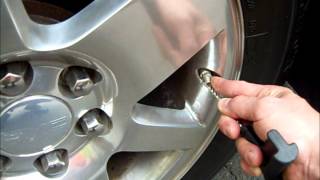
- Attempt TPMS Relearn: If the sensor appears to be transmitting, try the relearn procedure. Use the vehicle's DIC menu or key fob (holding lock/unlock) to enter 'Tire Learning Active' mode. Use a TPMS tool to activate the sensor at the left-front tire until the horn chirps. If it fails 🎬 Watch: A quick walkthrough of the TPMS relearn procedure. here, it further confirms a bad sensor.
- Inspect RCDLR Connections: If multiple TPMS codes or key fob issues are present, investigate the RCDLR. Remove the driver-side rear D-pillar trim panel to access the module. Per TSB 16-NA-061, inspect the three coaxial antenna connection points: at the RCDLR module, at the antenna amplifier, and at the rear glass. Ensure they are all secure.
- Check RCDLR Power: If connections are good, check for power and ground at the RCDLR connector. A forum user reported finding a broken power wire in the flexible boot between the driver's door and the body.
- Replace the Faulty Component: If the sensor is bad, have it replaced. If an RCDLR connection is loose, secure it. If the RCDLR module itself is faulty (confirmed with a diagnostic scan tool), it will need replacement and programming.
- Final Relearn: After any component replacement, a successful TPMS relearn procedure must be performed to program the new sensor ID(s) to the vehicle.
Parts You'll Likely Need
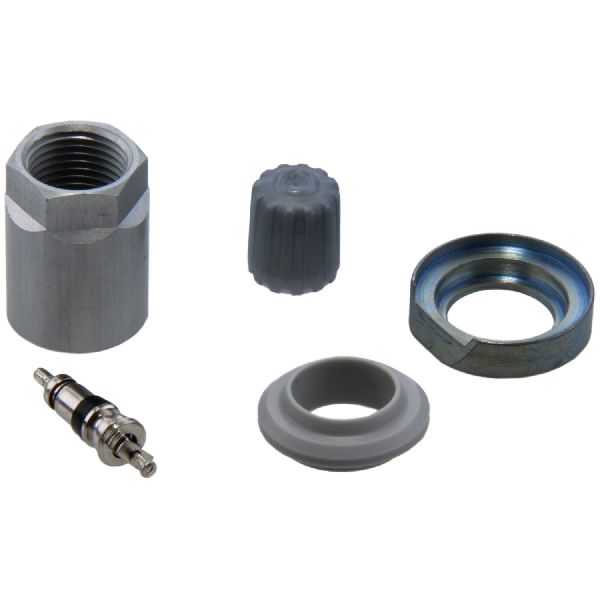
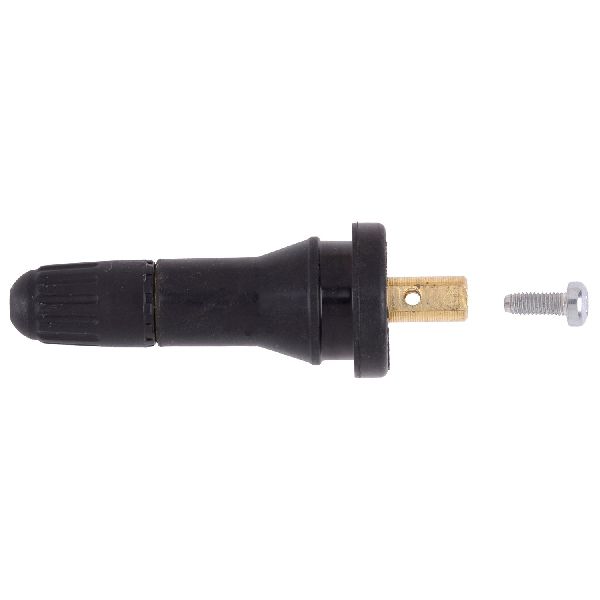
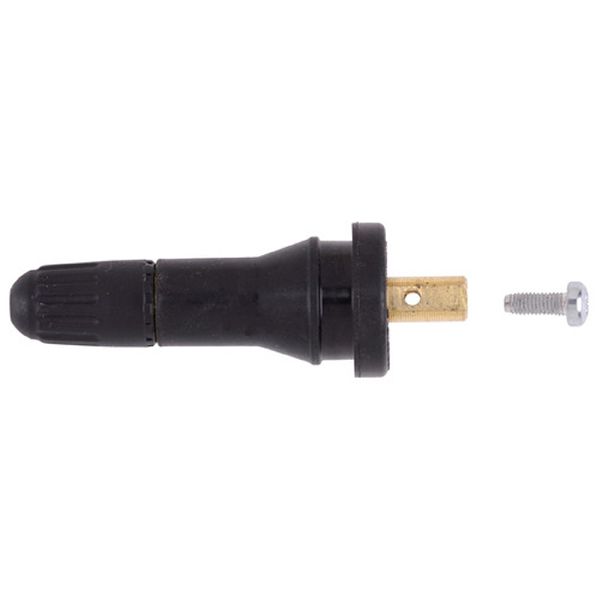
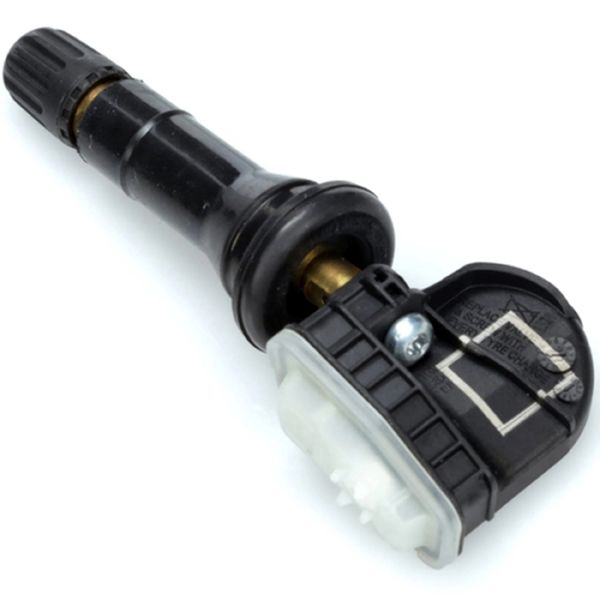
- Tire Pressure Monitoring System (TPMS) Sensor
(OEM #13540600 (supersedes 13598771))— This is the most common failure point. The internal, non-replaceable battery dies after 7-10 years, requiring replacement of the entire sensor unit.
Trusted brands: ACDelco (OEM), Schrader (often the OEM supplier, P/N 33500), Dorman, Bosch
OEM price range: $60-$90
Aftermarket price range: $30-$60 - Remote Control Door Lock Receiver (RCDLR) — The central module responsible for receiving both TPMS and key fob signals. It can fail internally or suffer from poor antenna connections. Replacement requires programming.
Trusted brands: ACDelco (OEM)
OEM price range: $100-$180 (part only)
Related Codes That Often Appear With This One
- C0755, C0760, C0765 — These are the codes for the other three TPMS sensors (RF, RR, LR). If they appear together, it strongly points to a central receiver (RCDLR) issue rather than four simultaneously failed sensors.
- B3055, B3060, B3935 — As noted in TSB PIC5650M, these security and key-related codes can appear with TPMS codes when there is a complex RCDLR or communication bus issue leading to a no-start condition.
Technical Service Bulletins (TSBs) & Recalls
- PIC5650M: Links C0750 with other TPMS and security codes to a no-start or stall condition.
- 16-NA-061 / PIT5446: Details diagnosis of C0750 and other TPMS codes caused by a disconnected RCDLR antenna. It explains how a disconnect closer to the module causes more severe symptoms, like total signal loss, versus a disconnect at the glass antenna which may only shorten key fob range.
- 16-NA-396: Points to internal failure of the RCDLR as a cause for TPMS codes and 'No Remote Detected' messages, recommending module replacement if specific symptom bytes are present.
Platform-Specific Known Issues
- A known issue, documented in TSB 16-NA-061, involves the RCDLR antenna coax cable becoming disconnected. A disconnect at the RCDLR causes all TPMS/RKE functions to fail. A disconnect at the antenna amplifier may only cause the three furthest sensors (LF, RF, LR) to drop out, while the closest (RR) still works.
- TSB PIC5650M notes that C0750 can be part of a larger electrical issue involving the security system that results in a no-crank or stall condition.
- TSB 16-NA-396 points to internal failure of the RCDLR as a cause for TPMS codes (with symptom byte :29) and 'No Remote Detected' messages, recommending module replacement.
- Some early models in this generation had an issue where the RCDLR would go to 'sleep' and not wake up, requiring a fuse pull (often the DSM fuse) to reset it.
Hidden / Shadow Codes Worth Checking
- C0750 00: Indicates the RCDLR has not received a transmission from the sensor for 18 minutes while driving over 25 mph, often due to a dead battery or completely failed sensor. (see via GM GDS2 or other professional-grade scan tool with manufacturer-specific code capabilities.)
- C0750 08: Indicates the RCDLR has received an invalid signal from the sensor. The sensor is transmitting, but the data is corrupt or not in the expected format. (see via GM GDS2 or other professional-grade scan tool with manufacturer-specific code capabilities.)
- C0765 29: This code for the Right Rear sensor with symptom byte :29 ('Too Few Pulses') points towards an internal RCDLR failure, as documented in TSB 16-NA-396. While this example is for C0765, the same logic applies if seen with C0750. (see via GM GDS2 or other professional-grade scan tool with manufacturer-specific code capabilities.)
Scan Tool Commands That Help
- GDS2 (GM Global Diagnostic System 2): Module Diagnostics > Remote Control Door Lock Receiver > Configuration/Reset Functions > Add/Replace Key Fobs — This command path is used to program new or existing key fobs to the RCDLR module. It is necessary after replacing the RCDLR or when adding a new fob. This function confirms the RCDLR is powered and communicating.
- GDS2 (GM Global Diagnostic System 2): Module Diagnostics > BCM > Data Display > Keyless Entry Data — Used to monitor the status and signal strength of key fobs as seen by the vehicle. This is useful for diagnosing whether a 'No Fob Detected' message is due to a weak fob battery, RCDLR issue, or RF interference.
- Tech2/GDS2: SPS (Service Programming System) > Reprogram ECU — When a new RCDLR is installed, it must be programmed to the vehicle's BCM and VIN. This requires an online subscription to GM's SPS via Tis2Web. Failure to program a new module will result in it not functioning.
Wiring & Ground Locations
- RCDLR Module — Behind the driver-side D-pillar trim panel, near the rear speaker.. This is the central receiving module for all TPMS signals. Its location and antenna connections are the primary focus when multiple TPMS codes are present or when key fob issues occur simultaneously.
- RCDLR Antenna Coax — Runs from the RCDLR module in the D-pillar to an antenna amplifier, and then to the antenna grid in the right rear quarter glass.. A disconnect at any of the three connection points (RCDLR, amplifier, glass) will cause loss of TPMS signals. A disconnect closer to the RCDLR module will cause more sensors to drop out.
- G402 — Located on the right 'D' pillar, behind the trim panel.. This is a key body ground point in the rear of the vehicle. While not directly specified for the RCDLR in the available documents, its proximity to the antenna and module makes it a potential source of electrical issues if corroded or loose.
- DSM Fuse — In the interior fuse block, located on the driver's side of the instrument panel.. In some cases, the RCDLR is powered by the same circuit as the Driver Seat Module (DSM). A blown fuse (often a 25A fuse) will cause the RCDLR to lose power, resulting in no communication and TPMS codes.
Real Owner Repair Stories
- YouTube user 'Phillip Bailey' (2017 GM 2500HD (Similar GMT platform)) — Keyless entry not working and 'Service Tire Monitor System' message on the dash.
❌ Tried (didn't work) Initial scan showed no communication with the RCDLR.
✅ What actually fixed it A broken power wire for the RCDLR was found under the driver's door rocker panel/sill plate cover. The wire had been chafed and cut by the plastic trim. Repairing the broken wire restored power to the RCDLR and fixed both the TPMS and keyless entry issues.
OEM Part Supersession History
13598771, 15254101, 20923680, 22853741, 13586335→13540600— Part consolidation and design updates by GM/ACDelco.
Heads up: While many part numbers have been used, they all operate on the required 315 MHz frequency for this vehicle generation.
Model Year Variations Within This Range
- 2007-2014: All models within this generation use a 315 MHz TPMS system. While specific RCDLR part numbers may have been updated over the years, the fundamental system architecture (sensors reporting to the RCDLR) remained the same.
Helpful Videos
We Have This Part in Stock


The information in this article is provided for general reference and educational purposes only. Vehicle specifications, procedures, and part compatibility can vary by production date, trim level, and region. Always consult your vehicle's factory service manual and verify part numbers before purchasing or performing repairs. Safety-critical components such as airbags, seat belts, and braking systems should be installed by a qualified professional.
- Gmc YUKON:
- 🧭 Diagnostic Flowchart
- 🎬 Helpful Videos
- 🛍️ Shop This Part
- What's Unique About the 2007-2014 Gmc YUKON
- Symptoms You May Notice
- Most Likely Causes
- Rare But Worth Checking
- Diagnosis Steps
- Parts You'll Likely Need
- Related Codes That Often Appear With This One
- Technical Service Bulletins (TSBs) & Recalls
- Platform-Specific Known Issues
- Hidden / Shadow Codes Worth Checking
- Scan Tool Commands That Help
- Wiring & Ground Locations
- Real Owner Repair Stories
- OEM Part Supersession History
- Model Year Variations Within This Range
- 🎟️ Get 5% Off