

C0750 on 2007-2014 GMC Yukon XL: TPMS Faults, No Start, and Fixes
Code C0750 on a 2007-2014 Yukon XL points to a problem with the left front TPMS sensor. The most common causes are a dead sensor battery or a faulty Remote Control Door Lock Receiver (RCDLR). If your key fob is also acting up, the RCDLR is the likely culprit. This module is a known failure point and is located behind the driver's side rear interior trim panel.
- C0750 means there's a problem with the left front tire pressure sensor.
- The most likely cause on a 2007-2014 model is simply a dead battery inside the sensor itself.
- If your key fobs are also not working, the problem is almost certainly the Remote Control Door Lock Receiver (RCDLR) module or its wiring.
- Before replacing parts, remove all aftermarket phone chargers or accessories to rule out radio frequency interference.
- Replacing a TPMS sensor is a DIY-friendly job with a cheap relearn tool, but replacing the RCDLR requires expensive professional programming.
What's Unique About the 2007-2014 Gmc YUKON XL
On this generation of GMC Yukon XL and its GMT900 platform mates (Tahoe, Suburban, Escalade), the Tire Pressure Monitoring System (TPMS) and the Remote Keyless Entry (RKE) system are linked. Both the tire pressure sensors and the key fobs send their signals to the same module: the Remote Control Door Lock Receiver (RCDLR), which is located behind the interior trim in the driver's side rear D-pillar. A failure in this single module or its wiring can cause a strange combination of symptoms: a "Service Tire Monitor System" message, key fobs that don't work, and even a no-start condition with the security light on, as documented in GM Technical Service Bulletin #PIC5650M.
Diagnostic Flowchart
Tap your situation to follow the diagnostic path that matches what you're seeing on this vehicle.
Symptoms You May Notice
- "Service Tire Pressure Monitor System" message on the Driver Information Center (DIC)
- TPMS warning light is illuminated (may flash for one minute then stay solid)
- The tire pressure reading for the left front tire shows dashes (--) on the DIC
- Key fob intermittently or completely fails to lock/unlock doors.
- "No Remote Detected" message on the DIC.
- Intermittent no-crank or no-start condition.
- Security light illuminated on the dashboard.
- TPMS sensor data is successfully learned but is forgotten after turning the ignition off and on.
- Replacing only the key fob batteries when the RCDLR is the actual cause of the keyless entry failure.
- Replacing the Body Control Module (BCM) when the issue is a faulty RCDLR or its wiring.
- Replacing TPMS sensors repeatedly when the RCDLR is faulty and not retaining their learned IDs.
Most Likely Causes
- Dead or Failing TPMS Sensor Battery 🔴 High Probability → Shop Tire Pressure Monitoring System (TPMS) Sensor The TPMS sensors contain non-replaceable batteries with a finite lifespan of 5-10 years. Vehicles in this 2007-2014 year range are at an age where battery failure is very common. The battery is designed to last up to 10 years under normal use.
How to confirm: Use a TPMS diagnostic tool to attempt to activate the sensor. If the tool cannot get a response from the sensor, the sensor has likely failed, usually due to a dead battery.
Typical fix: Replace the left front TPMS sensor and perform the TPMS relearn procedure.
Est. part cost: $30-$70 - Faulty Remote Control Door Lock Receiver (RCDLR) 🟡 Medium Probability → Shop Keyless Entry Receiver This module is a known failure point on GM trucks and SUVs of this era. It is responsible for receiving signals from both TPMS sensors and key fobs, so its failure affects both systems. TSBs PIC5604C and 16-NA-396 directly point to internal RCDLR failure as the cause 🎬 Watch: How to fix combined TPMS and remote entry issues. for simultaneous TPMS and key fob issues.
How to confirm: If TPMS codes (especially for multiple wheels) are present along with key fob problems or no-start issues, the RCDLR is a prime suspect. A professional scan tool (like a Tech2) can be used to check for communication with the RCDLR and any internal fault codes.
Typical fix: Replace the RCDLR module and have it professionally programmed to the vehicle.
Est. part cost: $150-$250 - Damaged Wiring or Antenna Connection ⚪ Low Probability
How to confirm: Visually inspect the wiring harness leading to the RCDLR in the driver's side rear D-pillar. Per TSB 16-NA-061, there are three key connection points to check: the coax cable at the RCDLR, the coax cable at the antenna amplifier module, and the amplifier's connection to the antenna in the rear glass. A loose connection at the amplifier may only cause issues with the furthest sensors (like the LF), while a loose connection at the RCDLR itself will cause all TPMS and key fob functions to fail. One owner on a forum discovered that broken power wires in the flexible boot between the driver's door and the body were the cause of their RCDLR failure.
Typical fix: Repair the broken wire or reconnect the loose antenna cable. This may involve running a new power wire if the break is in a difficult-to-access location.
Est. part cost: $5-$100 for wiring repair supplies - Radio Frequency Interference (RFI) ⚪ Low Probability As noted in GM TSB PIC5650M, aftermarket electronic devices like phone chargers, dash cams, aftermarket LED lights, and even some building access cards can emit radio frequencies that jam the 315MHz signals from the TPMS sensors and key fobs.
How to confirm: Remove all aftermarket plug-in devices from the vehicle (USB chargers, dash cams, etc.). If the problem disappears, one of the devices was causing interference. Re-introduce them one by one to find the culprit.
Typical fix: Remove or replace the interfering aftermarket device.
Est. part cost: $0-$50
Rare But Worth Checking
- RCDLR Memory Loss / Incorrect Configuration:
Diagnosis Steps
- Check the tire pressure in the left front tire manually to rule out an actual low-pressure situation.
- Use a TPMS tool to try and activate the left front sensor. If it activates, the sensor is likely good. If not, the sensor battery is likely dead.
- If the sensor is good, check for any aftermarket devices (phone chargers, LED lights) plugged into the vehicle. Remove them and see if the code clears and symptoms resolve.
- If symptoms persist, check for other TPMS codes (C0755, C0760, C0765) and test the key fobs. If multiple TPMS codes and key fob issues are present, suspect the RCDLR or its wiring.
- Attempt the TPMS relearn procedure. On base models, turn the key to ON and hold the lock/unlock buttons on the key fob until the horn chirps. On higher trims (LT/LTZ), use the DIC buttons to find and activate the 'Relearn Tire Positions' menu. If the procedure fails or the sensor data is lost on the next startup, this points strongly to an RCDLR or wiring issue.
- Inspect the wiring and antenna connections to the RCDLR, located behind the trim panel in the driver's side rear cargo area (D-pillar). Check for power and ground at the connector, and inspect the driver's door jamb boot for broken wires.
- If wiring is intact, use a bi-directional scan tool to check for communication with the RCDLR. If the module is unresponsive or shows internal faults, it needs to be replaced and programmed.
Parts You'll Likely Need
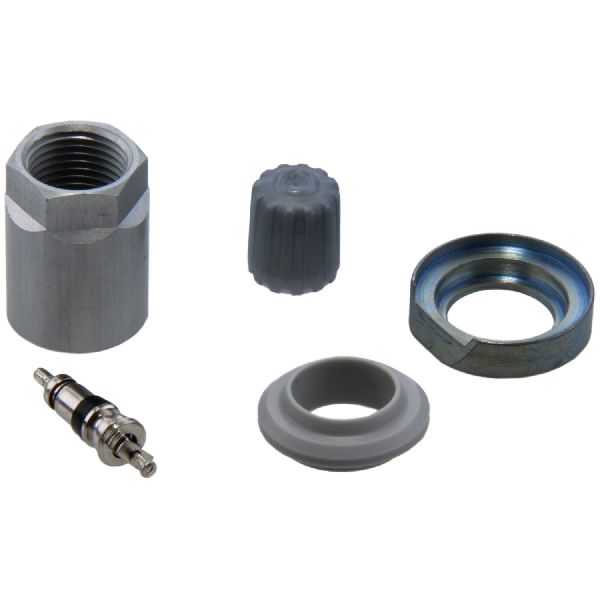
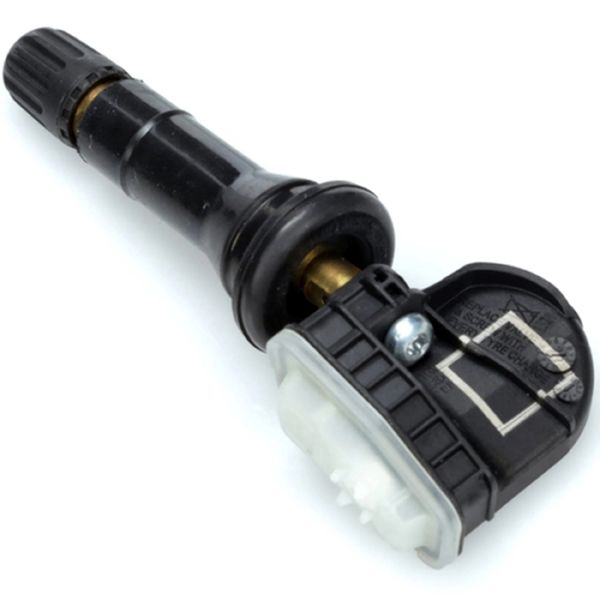
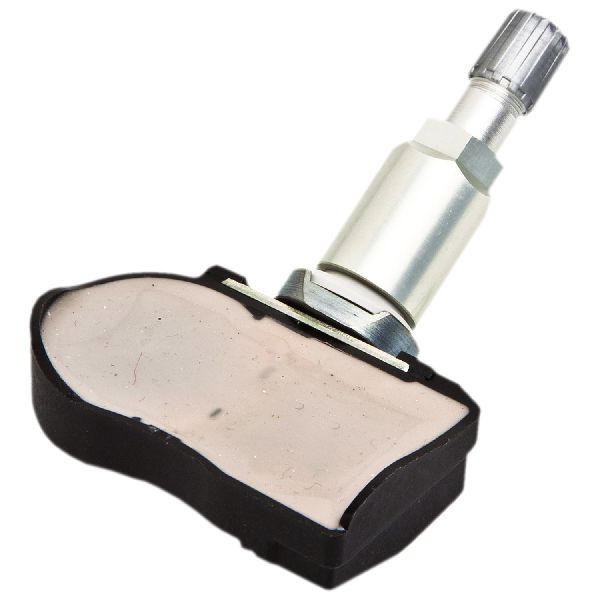
- Tire Pressure Monitoring System (TPMS) Sensor
(OEM #13598771, 13586335)— This is the most common failure point, usually due to the internal battery dying after 5-10 years.
Trusted brands: ACDelco (GM Genuine), Schrader (OEM Supplier), Standard Motor Products, Dorman
OEM price range: $50-$90
Aftermarket price range: $30-$60 - Remote Control Door Lock Receiver (RCDLR)
(OEM #20803735 (supersedes 15287331, 15782376, 15807816, 15857831, 15946938, 25771044, 25808837, 25852909, 25855007, 25896497, 92201608))— This module is the second most likely cause, especially if key fob issues or no-start problems are also present. It's the common link between the TPMS and remote entry systems.
Trusted brands: ACDelco (GM Genuine)
OEM price range: $180-$250
Related Codes That Often Appear With This One
- C0755 — Right Front TPMS sensor fault. Often appears with other TPMS codes when the RCDLR module is failing.
- C0760 — Left Rear TPMS sensor fault. Often appears with other TPMS codes when the RCDLR module is failing.
- C0765 — Right Rear TPMS sensor fault. Often appears with other TPMS codes when the RCDLR module is failing.
- B3055 — An immobilizer code related to the key not being recognized. This can be set when a faulty RCDLR causes communication issues on the vehicle's data network.
Technical Service Bulletins (TSBs) & Recalls
- PIC5650M: Describes intermittent no-crank/no-start conditions with security light and TPMS codes (including C0750) present, pointing towards RFI or module issues.
- 16-NA-061: Details the RCDLR antenna system and explains how disconnected coax cables can cause TPMS and RKE symptoms, sometimes only for the tires furthest from the receiver.
- 16-NA-396: Confirms that an internal failure of the RCDLR is a known cause for simultaneous TPMS warnings and key fob/passive entry failure.
- PIC5604C: For 2012 models, this bulletin explicitly recommends replacing the RCDLR module if the vehicle has poor key fob range and TPMS codes like C0750.
Platform-Specific Known Issues
- A known issue, documented in TSB PIC5650M, links TPMS codes like C0750 with security system codes (B3055, B3060) and no-start conditions due to failures or interference with the Remote Control Doo
Mechanic-Grade Diagnostic Values
- RCDLR Power Supply Voltage — expected: 11-14 Volts (Battery Voltage). Failure: 0V or significantly lower than battery voltage indicates a wiring or fuse issue.
- RCDLR Ground Circuit Voltage Drop — expected: Less than 0.2 Volts. Failure: Voltage reading higher than 0.2V between the ground pin and the negative battery terminal indicates high resistance in the ground circuit.
Hidden / Shadow Codes Worth Checking
- C0750 29: Too Few Pulses. This specific symptom code indicates the RCDLR is not receiving the expected number of data transmissions from the left front TPMS sensor. (see via GM Tech2 or GDS2 scan tool.)
- C0750 03: Low Voltage. This indicates the RCDLR has detected that the TPMS sensor's internal battery voltage is low. (see via GM Tech2 or GDS2 scan tool.)
- C0750 39: Internal Malfunction. This points to an internal failure within the TPMS sensor itself, rather than a communication or battery issue. (see via GM Tech2 or GDS2 scan tool.)
Scan Tool Commands That Help
- GM Tech2 / GDS2: RCDLR Data Display — To monitor the live status of each TPMS sensor, including pressure, temperature, and sensor mode ('Wake' or 'Drive'). This helps confirm if the module is receiving any data from the suspect sensor.
- GM Tech2 / GDS2: Module Setup > RCDLR > Tire Type/Pressure Selection — Used after replacing the RCDLR or if the module has lost its configuration. This function writes the correct tire placard information to the module, which is required for it to properly interpret sensor data and retain learned IDs.
- GM Tech2 / GDS2: Special Functions > Tire Pressure Monitor Learn — To initiate the TPMS relearn procedure from the scan tool. This is a more reliable method than the manual DIC/key fob procedure and is required after replacing a sensor or the RCDLR.
Wiring & Ground Locations
- RCDLR Connector — Behind the interior trim panel in the driver's side rear cargo area (D-pillar).. This is the main connection point for the module. Checking for battery voltage on the Red/White wire and a good ground on the Black wire are the first steps in diagnosing a dead RCDLR.
- RCDLR Antenna Coax — A coaxial cable running from the RCDLR module to an antenna amplifier, which then connects to the rear window glass antenna.. A loose connection at either the RCDLR or the amplifier can cause intermittent or total loss of signal from the TPMS sensors, especially those furthest away like the left front.
- G305 / G400 — Body ground points located on the left rear body mount or frame rail area, near the RCDLR's location.. The RCDLR relies on a clean chassis ground to function. Corrosion or looseness at these ground points can cause intermittent module operation, leading to TPMS and key fob issues.
Real Owner Repair Stories
- Tahoe Yukon Forum user 'Joseph Garcia' (2007 GMC Yukon XL Denali) — TPMS light on, unable to complete the TPMS relearn procedure. The process would not get past the front left wheel sensor.
❌ Tried (didn't work) Scanning for codes (initial scans did not point to a specific sensor)., Assuming it was a module (RCDLR) issue due to the relearn failure.
✅ What actually fixed it Replacing the right rear wheel TPMS sensor. Despite the relearn procedure failing at the left front, the actual faulty component was the right rear sensor, which was preventing the entire system from operating correctly.
OEM Part Supersession History
15287331, 15782376, 15807816, 15857831, 15946938, 25771044, 25808837, 25852909, 25855007, 25896497→20803735, 92201608— GM frequently updates electronic modules to improve reliability, address software bugs, or account for changes in component suppliers. Early modules may have been more prone to internal failure or software glitches causing them to lose communication or memory.
Heads up: While all listed part numbers are for the same RCDLR module, it is critical to use the latest available part number when replacing. After replacement, the new module MUST be programmed to the vehicle using GM's Service Programming System (SPS) to learn the vehicle's specific configuration and key fob data.
Helpful Videos
We Have This Part in Stock


The information in this article is provided for general reference and educational purposes only. Vehicle specifications, procedures, and part compatibility can vary by production date, trim level, and region. Always consult your vehicle's factory service manual and verify part numbers before purchasing or performing repairs. Safety-critical components such as airbags, seat belts, and braking systems should be installed by a qualified professional.
- Gmc YUKON XL:
- 🧭 Diagnostic Flowchart
- 🎬 Helpful Videos
- 🛍️ Shop This Part
- What's Unique About the 2007-2014 Gmc YUKON XL
- Symptoms You May Notice
- Most Likely Causes
- Rare But Worth Checking
- Diagnosis Steps
- Parts You'll Likely Need
- Related Codes That Often Appear With This One
- Technical Service Bulletins (TSBs) & Recalls
- Platform-Specific Known Issues
- Mechanic-Grade Diagnostic Values
- Hidden / Shadow Codes Worth Checking
- Scan Tool Commands That Help
- Wiring & Ground Locations
- Real Owner Repair Stories
- OEM Part Supersession History
- 🎟️ Get 5% Off