

C0755 on 2013-2020 Buick Encore: Right Front TPMS Fault, Causes, and Fixes
Code C0755 on a Buick Encore means a fault with the right front tire pressure sensor. If only the TPMS light is on, replace the sensor (~$50-$100 part). If you also have key fob or starting issues, the Remote Control Door Lock Receiver (RCDLR) is likely the cause, which is a more complex repair.
- C0755 points to a problem with the right front TPMS sensor.
- If your key fob is also acting up, the problem is likely the Remote Control Door Lock Receiver (RCDLR), not the sensor in the tire.
- If only the TPMS light is on, the sensor's battery has likely died (a common 7-10 year wear item).
- Replacing a sensor requires dismounting the tire and using a special tool to 'relearn' the new sensor to the car.
- Replacing the RCDLR requires professional programming by a dealer or equipped independent shop.
What's Unique About the 2013-2020 Buick ENCORE
On many GM platforms like the Encore, the Tire Pressure Monitoring System (TPMS) is not a standalone system. It shares a receiver module, the Remote Control Door Lock Receiver (RCDLR), with the keyless entry and remote start functions. This module is typically located behind the rear passenger-side interior trim panel, near the C-pillar. A failure in this shared RCDLR module is a well-documented issue that can cause TPMS codes like C0755 to appear alongside seemingly unrelated problems like the key fob not working, a "No Remote Detected" message, or even a no-start condition. This is a critical distinction, as the problem may not be the tire sensor at all.
Diagnostic Flowchart
Tap your situation to follow the diagnostic path that matches what you're seeing on this vehicle.
Symptoms You May Notice
- TPMS light flashing for 60 seconds at startup, then staying on solid.
- "Service Tire Monitor System" message in the driver information center.
- Tire pressure reading for the right front tire shows dashes or is incorrect.
- Intermittent issues with the key fob (remote lock/unlock/start not working).
- Significantly reduced key fob operational range.
- "No Remote Detected" message on the dash, especially on push-to-start models.
- In rare cases tied to a faulty RCDLR, a no-crank or engine stall condition with the security light on. [TSB #PIC5650M]
- Replacing the TPMS sensor when the RCDLR is the actual fault. If key fob issues are present, investigate the RCDLR first to avoid wasting money on a sensor that won't fix the root cause.
Most Likely Causes
- Dead Battery in Right Front TPMS Sensor 🔴 High Probability → Shop Tire Pressure Monitoring System (TPMS) Sensor TPMS sensor batteries are non-serviceable and have a finite lifespan of 7-10 years. Vehicles in this year range are reaching the end of that life cycle.
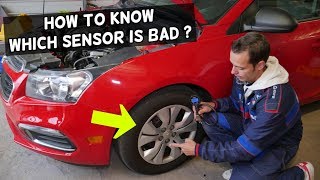
How to confirm: Use a TPMS diagnostic tool to attempt to read the sensor. If the tool cannot get a signal from the RF sensor 🎬 Watch: How to identify which TPMS sensor has failed. but can read the others, the sensor has failed. This is the most likely cause if key fobs are working normally.
Typical fix: Replace the right front TPMS sensor and perform the TPMS relearn procedure.
Est. part cost: $35-$75 - Faulty Remote Control Door Lock Receiver (RCDLR) 🟡 Medium Probability → Shop Keyless Entry Receiver This module is a known failure point on several GM platforms, as documented in TSB 16-NA-396. It processes signals for both TPMS and key fobs. An internal fault causes it to stop receiving signals properly.
How to confirm: This is the probable cause if you have TPMS codes (C0750, C0755, etc.) AND intermittent key fob problems. A professional scan tool can check for communication errors with the RCDLR. A real-world sign is when a locksmith confirms a new, programmed key fob is recognized by their tools but not by the car.
Typical fix: Replace the RCDLR module, which is located behind the rear passenger-side interior trim. This part must be programmed to the vehicle by a dealer or a qualified independent shop using GM's Service Programming System (SPS).
Est. part cost: $70-$180
Rare But Worth Checking
- Radio Frequency Interference (RFI): As per TSB PIC5650F, aftermarket devices like phone chargers, dash cams, toll passes, or other electronics can 'jam' the 315 MHz frequency used by the TPMS and key fobs, preventing the RCDLR from receiving signals. A key symptom is that the car may start if the fob is placed in the dedicated transmitter pocket but won't be detected otherwise. The fix is to remove the interfering device.
- Damaged TPMS Sensor: → Shop Tire Pressure Monitoring System (TPMS) Sensor The sensor can be physically damaged during tire installation, by hitting a large pothole, or from corrosion.
- Wiring or Connector Issue: A damaged wire or corroded connector at the RCDLR module could prevent the signal from being received, though this is less common than sensor or module failure.
Diagnosis Steps
- Check for Radio Frequency Interference (RFI). Remove all aftermarket electronics (phone chargers, dash cams, etc.) from the car. Remove any non-essential items from your keychain. If symptoms persist, try starting the car by placing the key fob in the transmitter pocket (often in the center console or cup holder). If it starts this way, RFI is the likely cause as per TSB PIC5650F.
- Check for other symptoms. Are you having any issues with your key fob (poor range, 'No Remote Detected' message)? If yes, suspect the RCDLR. If no, suspect the sensor itself.
- Use a TPMS diagnostic tool to scan the right front sensor. If it fails to read, the sensor's battery is dead or the unit has failed.
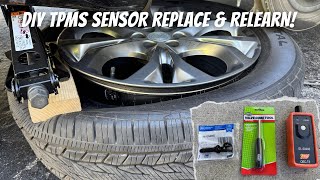
- If the sensor is confirmed bad, replace it. The tire must be dismounted for access. 🎬 See how to replace the sensor without a tire machine.
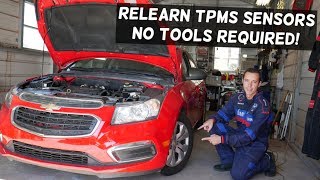
- After installing a new sensor, perform the mandatory GM TPMS relearn procedure using a relearn tool (like the EL-50448). 🎬 Watch: How to relearn TPMS sensors without using any tools. The vehicle will not automatically detect the new sensor without this step.
- If the sensor is good or was replaced and the code persists, and especially if key fob issues are present, the RCDLR needs to be professionally diagnosed. This involves accessing the module behind the rear trim to check connections and using a GM scan tool to check for internal faults before ordering a replacement.
Parts You'll Likely Need
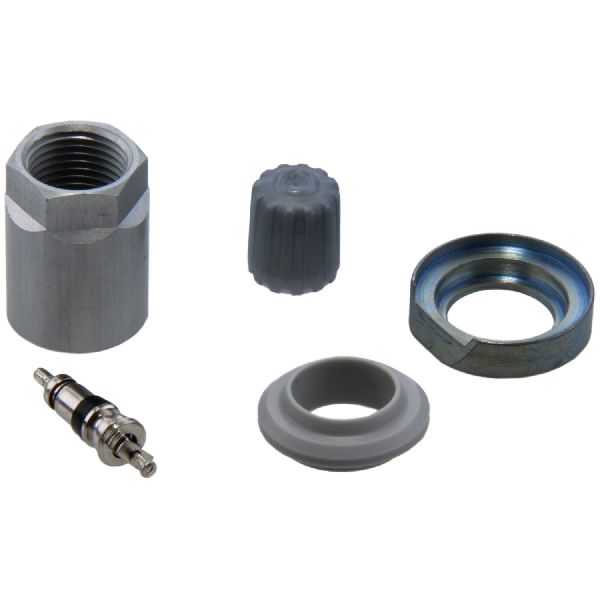
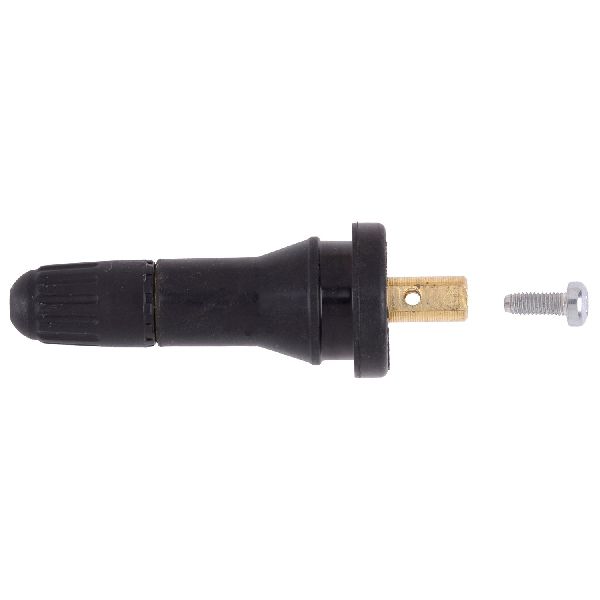
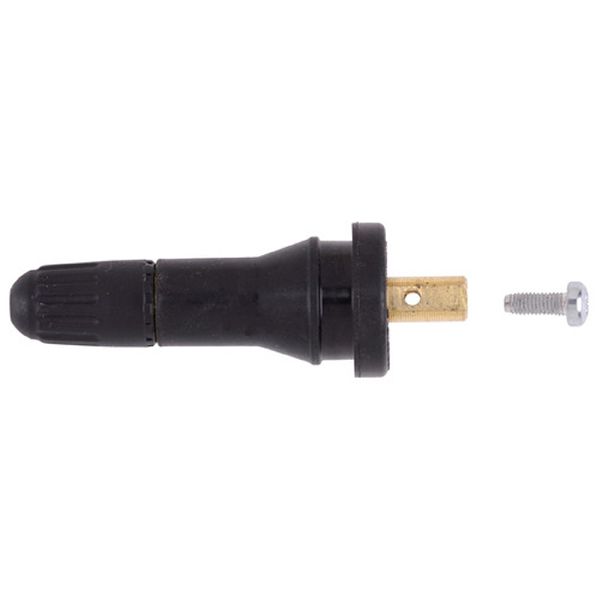
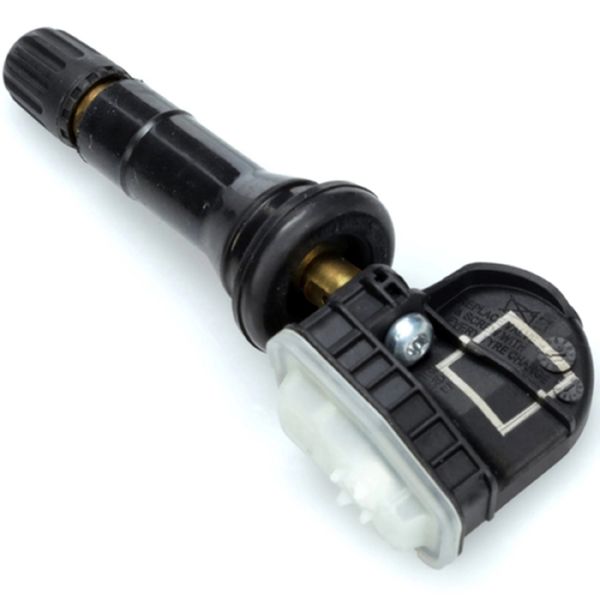
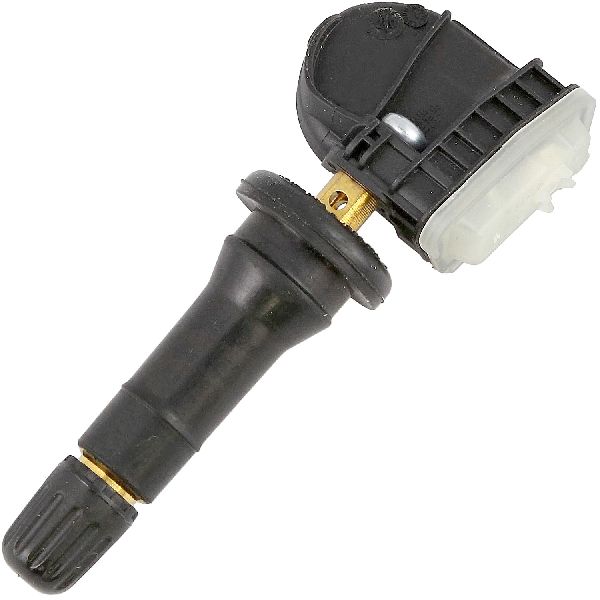
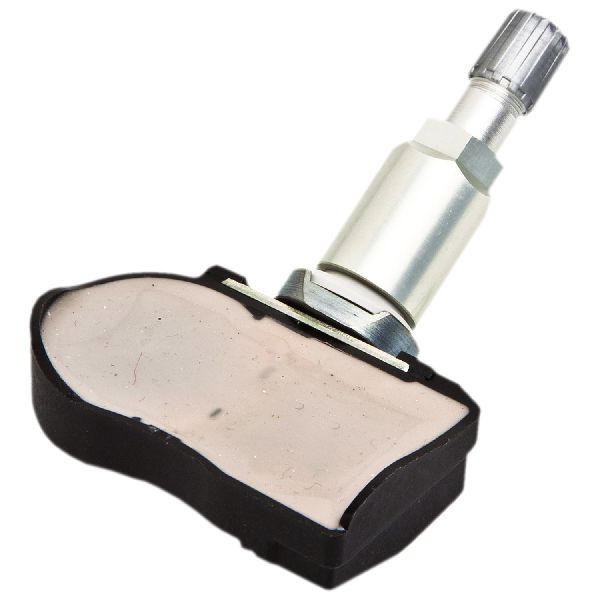
- Tire Pressure Monitoring System (TPMS) Sensor
(OEM #13540601)— This is the most common failure point. The internal battery dies, requiring replacement of the whole unit. This part number is a common replacement for the Encore.
Trusted brands: ACDelco, Schrader, Continental/VDO, Standard Motor Products
OEM price range: $50-$80
Aftermarket price range: $35-$60 - Remote Control Door Lock Receiver (RCDLR)
(OEM #13595511)— This module is the second most likely cause, especially if key fob issues are also present. TSB 16-NA-396 identifies an internal fault in this part as the root cause.
Trusted brands: ACDelco, General Motors
OEM price range: $70-$180
Aftermarket price range: $40-$90
Related Codes That Often Appear With This One
- C0750, C0760, C0765 — These are the codes for the other three tire pressure sensors (LF, LR, RR). They often appear when the RCDLR module fails, as it stops communicating with all sensors.
- B3055, B3060, B3935 — These are security and key-related codes that may appear with C0755 when there is a no-start or stall condition, as noted in TSB PIC5650M, pointing towards a BCM or related module issue, often triggered by RFI or a failing RCDLR.
Technical Service Bulletins (TSBs) & Recalls
- PIC5650F: Mentions C0755 in a list of codes related to no-crank/no-start or security light concerns, pointing to Radio Frequency Interference as a possible cause.
- 16-NA-396: Addresses intermittent key fob operation and TPMS codes (including C0755) caused by a faulty Remote Control Door Lock Receiver (RCDLR) and provides a replacement part number.
Platform-Specific Known Issues
- A known issue, documented in TSB 16-NA-396, involves an internal fault in the Remote Control Door Lock Receiver (RCDLR) causing both TPMS codes and intermittent loss of key fob functions. The bulletin advises replacing the RCDLR with part number 13595511 to correct the concern.
- TSB PIC5650F (superseding PIC5650M) links C0755 with a group of other codes that can lead to a no-crank or 'No Remote Detected' message. It highlights that Radio Frequency Interference (RFI) from common aftermarket accessories can mimic a failed RCDLR.
Mechanic-Grade Diagnostic Values
- RCDLR Battery Positive Voltage — expected: Should be equal to battery voltage (approx. 12.6V with engine off).. Failure: A scan tool showing a lower voltage (e.g., 11.89V) at the RCDLR despite a fully charged car battery points to a wiring or internal module issue.
- Voltage Drop Test on RCDLR Ground Circuit — expected: Less than 0.1V (100mV).. Failure: A reading higher than 0.1V indicates high resistance in the ground circuit, which can cause intermittent module operation. This is tested by placing one DVM lead on the RCDLR ground pin and the other on a known good chassis ground.
Hidden / Shadow Codes Worth Checking
- C0755 with Symptom Byte 29: Indicates 'Too Few Pulses' received from the sensor. This is the specific sub-code mentioned in TSB #16-NA-396 when the RCDLR is failing. (see via GM's GDS2 or a comparable professional scan tool that can read manufacturer-specific symptom codes.)
- C0755 with Symptom Byte 39: Indicates an 'Internal Malfunction' within the TPMS sensor itself. (see via GM's GDS2 or a comparable professional scan tool.)
- C0755 with Symptom Byte 03: Indicates 'Low Voltage', typically pointing to a dying sensor battery. (see via GM's GDS2 or a comparable professional scan tool.)
Scan Tool Commands That Help
- GDS2 / Tech 2: TPMS Data Display — To view live data from each TPMS sensor, including its unique ID, reported pressure, and battery status. This is the primary step to confirm if a specific sensor is dead or if the entire system is offline.
- GDS2 / Tech 2: RCDLR Module Setup / Programming — This function is required after replacing the Remote Control Door Lock Receiver (RCDLR). The new module must be programmed to the vehicle to recognize the existing key fobs and vehicle configuration.
- GDS2 / Tech 2: Setup New RCDLR — A specific service function used to initiate the programming sequence for a new RCDLR module, linking it to the BCM and immobilizer system.
Wiring & Ground Locations
- RCDLR Module — Located behind the rear passenger-side interior trim panel, near the C-pillar. On some similar GM platforms, it can be in the headliner above the 2nd/3rd row seats.. This is the physical location of the receiver. Access is required to test power, ground, and antenna connections, or to replace the module.
- G303 / G304 — On similar GM platforms, grounds G303 (left side B-pillar) and G304 (right side B-pillar) are located behind the trim panels. G103, on the cowl above the brake booster, is also noted to ground the RCDLR on some vehicles.. The RCDLR relies on a solid ground connection to function. A corroded or loose ground at one of these locations can cause intermittent communication loss, mimicking a failed module and setting code C0755.
Real Owner Repair Stories
- Reddit user on r/Buick (2020 Buick Encore) — Car suddenly stopped detecting the key fob. 'No remote detected' message on the dash.
❌ Tried (didn't work) Replacing the battery in the original key fob., Purchasing a new compatible fob and having it professionally programmed., Jumping the car and disconnecting the battery to reset modules.
✅ What actually fixed it The locksmith who programmed the new fob concluded the issue was not the fob but the car's receiver (the RCDLR). The fob was transmitting correctly, but the vehicle was not receiving the signal, pointing to a definitive RCDLR failure.
OEM Part Supersession History
13595511→13540045— Part number update/revision by GM.
Model Year Variations Within This Range
- 2013-2020: The TPMS sensors for the Buick Encore in this range operate on 315 MHz. It's important to note that on some other GM platforms, a switch to 433 MHz occurred in later model years (e.g., 2021+ on the GMC Yukon XL). Always verify the frequency before purchasing replacement sensors.
Helpful Videos
We Have This Part in Stock

The information in this article is provided for general reference and educational purposes only. Vehicle specifications, procedures, and part compatibility can vary by production date, trim level, and region. Always consult your vehicle's factory service manual and verify part numbers before purchasing or performing repairs. Safety-critical components such as airbags, seat belts, and braking systems should be installed by a qualified professional.
- Buick ENCORE:
- 🧭 Diagnostic Flowchart
- 🎬 Helpful Videos
- 🛍️ Shop This Part
- What's Unique About the 2013-2020 Buick ENCORE
- Symptoms You May Notice
- Most Likely Causes
- Rare But Worth Checking
- Diagnosis Steps
- Parts You'll Likely Need
- Related Codes That Often Appear With This One
- Technical Service Bulletins (TSBs) & Recalls
- Platform-Specific Known Issues
- Mechanic-Grade Diagnostic Values
- Hidden / Shadow Codes Worth Checking
- Scan Tool Commands That Help
- Wiring & Ground Locations
- Real Owner Repair Stories
- OEM Part Supersession History
- Model Year Variations Within This Range
- 🎟️ Get 5% Off