

C0755 on 2007-2014 Cadillac CTS: Right Front TPMS Fault Causes and Fixes
Code C0755 on a 2007-2014 Cadillac CTS means there's a problem with the right front tire pressure sensor. This is usually due to a dead sensor battery, requiring a new sensor for about $30-$70. If seen with security system codes, the issue may be a faulty Remote Control Door Lock Receiver (RCDLR) module, which is a known failure point.
- C0755 means the right front TPMS sensor is not communicating correctly.
- The most likely cause on a vehicle of this age is a dead battery inside the sensor, requiring sensor replacement.
- If you also have key fob problems or a security light on, the issue is more likely the Remote Control Door Lock Receiver (RCDLR) module or radio interference.
- Replacing a TPMS sensor requires tire service, and replacing the RCDLR requires programming, so professional service is recommended for either fix.
What's Unique About the 2007-2014 Cadillac CTS
On this generation of Cadillac CTS and other GM vehicles, the Tire Pressure Monitoring System is integrated with the keyless entry and security systems through a single module: the Remote Control Door Lock Receiver (RCDLR). This module, typically located in the headliner or near the rear of the vehicle, processes signals from both the TPMS sensors and your key fob. Because of this shared architecture, a failing RCDLR can cause a confusing mix of seemingly unrelated trouble codes. As noted in TSB #PIC5650M, it's not uncommon to see TPMS codes like C0755 appear alongside security system codes (like B3055) and no-start conditions, all pointing back to a single faulty RCDLR or related radio frequency interference.
Diagnostic Flowchart
Tap your situation to follow the diagnostic path that matches what you're seeing on this vehicle.
Generation note: This range covers the end of the first-generation CTS (2007) and the full second generation (2008-2014). While the TPMS and RCDLR systems are conceptually similar, specific part numbers and diagnostic procedures may vary slightly. TSB #08-03-16-002 specifically addresses a radio interference issue on early 2008 models due to missing harness shielding. The RCDLR is the central receiver for both the 315 MHz TPMS sensors and the key fobs. For 2008+ models, a manual (stationary) relearn or an OBD relearn procedure can be used.
Symptoms You May Notice
- "Service Tire Monitor System" message on the Driver Information Center (DIC).
- TPMS warning light flashing for one minute, then staying on solid.
- Right front tire pressure reading shows "--" on the DIC.
- If related to a failing RCDLR, you may also experience a "No Fob Detected" message, poor key fob range, or a no-crank/no-start condition with the security light on.
- Replacing only the TPMS sensor when the actual fault lies with the RCDLR module, especially when multiple TPMS or security codes are present.
- Replacing the Body Control Module (BCM) when the RCDLR is the true source of the problem.
- Assuming the new TPMS sensor is bad when the relearn procedure fails, without first checking for RFI from aftermarket devices or a faulty RCDLR.
Most Likely Causes
- Dead TPMS Sensor Battery 🔴 High Probability → Shop Tire Pressure Monitoring System (TPMS) Sensor TPMS sensors use sealed, non-replaceable batteries with a finite lifespan, typically 7-10 years. Vehicles in this 2007-2014 range are at an age where original sensor batteries are expected to fail.
How to confirm: A professional TPMS diagnostic tool can attempt to activate the sensor. If the tool cannot get a response, the sensor is almost certainly dead. A scan tool like GM's GDS2 can also sometimes read a 'low battery' status or a specific symptom byte for low voltage directly from the module data.
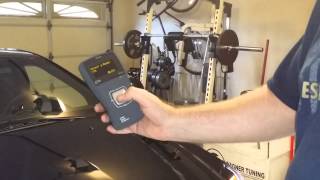
Typical fix: Replace the right front TPMS sensor and perform the TPMS relearn procedure. It is often recommended to replace all four sensors at once since their batteries fail around the same time. The relearn procedure can sometimes be done without a tool by letting air out of the tires in sequence. 🎬 Watch: A walkthrough of the manual TPMS relearn procedure.
Est. part cost: $30-$70 per sensor - Faulty Remote Control Door Lock Receiver (RCDLR) 🟡 Medium Probability → Shop Keyless Entry Receiver This module is a known point of failure that can cause TPMS, keyless entry, and security issues simultaneously. TSBs #PIC5650M and #16-NA-061 directly link TPMS codes to RCDLR-related problems. Owners on forums often report that replacing the RCDLR solved a mystery of multiple TPMS codes appearing at once.
How to confirm: This is the likely cause if C0755 appears with other TPMS codes (C0750, C0760, C0765) and/or key fob/security codes (B3055, B3060). A scan tool will show a loss of communication with multiple sensors, not just one. A real-world example involved a GMC truck where a dealer replaced sensors unsuccessfully, but the issue was a faulty RCDLR that was not communicating.
Typical fix: Replace the RCDLR module. This part must be programmed to the vehicle by a dealer or a properly equipped independent shop using the Service Programming System (SPS).
Est. part cost: $80-$200 - Radio Frequency Interference (RFI) ⚪ Low Probability As described in TSB #08-03-16-002 for 2008 models, the RCDLR harness may lack proper shielding, making it susceptible to RFI. TSB #PIC5650M also notes that aftermarket electronics like phone chargers, USB power banks, or even low-quality LED lights can jam the 315 MHz signals the RCDLR needs to receive.
How to confirm: Remove all aftermarket plug-in devices (chargers, dash cams, etc.) from the car and see if the problem disappears after driving. If the problem is intermittent, ask the customer about any devices they might use. For the shielding issue, a technician must inspect the RCDLR harness near the rear shelf.
Typical fix: Remove the source of interference. If the harness shielding is missing, add automotive-grade foil tape to the RCDLR wiring harness as per TSB #08-03-16-002.
Est. part cost: $5-$15
Rare But Worth Checking
- Damaged TPMS Sensor: → Shop Tire Pressure Monitoring System (TPMS) Sensor The sensor can be physically damaged during tire installation, by hitting a large pothole, or by using unapproved tire sealant that clogs the sensor's pressure port.
- Disconnected RCDLR Antenna: TSB #16-NA-061 notes that the coaxial antenna cable for the RCDLR can become disconnected at the module, the antenna amplifier, or the antenna itself (in the rear glass), causing intermittent or total loss of TPMS and key fob signals. The symptoms will be more severe the closer the disconnection is to the RCDLR module itself.
- Incorrect Sensor Frequency: While less common, installing a replacement TPMS sensor that operates on the wrong radio frequency (e.g., 433 MHz instead of 315 MHz, or vice-versa) will prevent it from communicating with the RCDLR, setting this code. All 2007-2014 CTS models use a 315 MHz frequency. This was the subject of a recall for other GM vehicles where incorrect parts were supplied.
Diagnosis Steps
- Scan for all DTCs in all modules. Note if C0755 is present alone or with other TPMS, security, or communication codes.
- If security codes (like B3055), multiple TPMS codes (C0750, C0760, C0765), and starting issues are present, investigate the RCDLR module and potential RFI sources first, per TSB #PIC5650M. Unplug all aftermarket chargers and accessories.
- If C0755 is the only code, use a TPMS activation tool to attempt to read the right front sensor. If the tool gets no signal, the sensor has failed (likely a dead battery). A scan tool can also be used to check for a 'low battery' status in the BCM data.
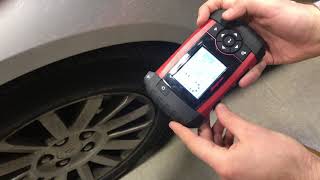
- If the sensor activates with the tool but the car doesn't recognize it, attempt a TPMS relearn procedure. This can be initiated through the DIC or key fob and may require a tool or simply deflating each tire in sequence until the horn chirps. 🎬 Watch: How to perform a TPMS relearn using a diagnostic tool.
- If the relearn procedure fails for the right front wheel but works for others, the sensor is faulty or the wrong frequency.
- If the relearn procedure fails for all wheels, or if multiple TPMS codes are stored, suspect a problem with the RCDLR module or its antenna connection.
- Inspect the RCDLR coaxial antenna cable at the module, antenna amplifier, and rear glass connection for a secure fit, as detailed in TSB #16-NA-061.
- If the RCDLR is suspected, replacement and programming via GM's SPS is the final step.
Parts You'll Likely Need
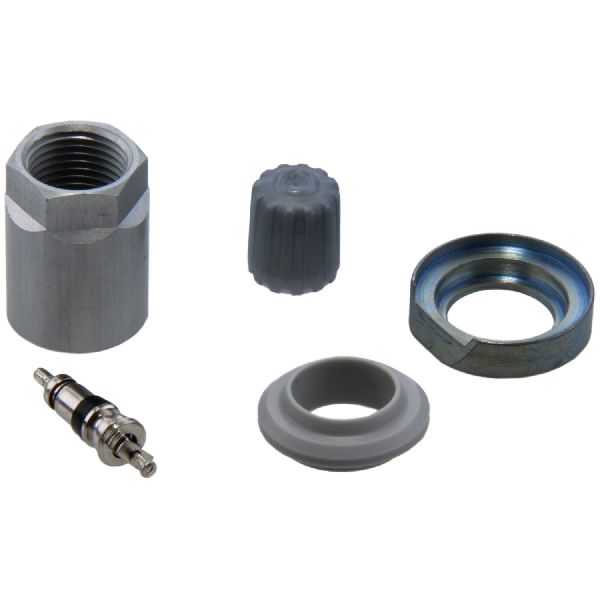
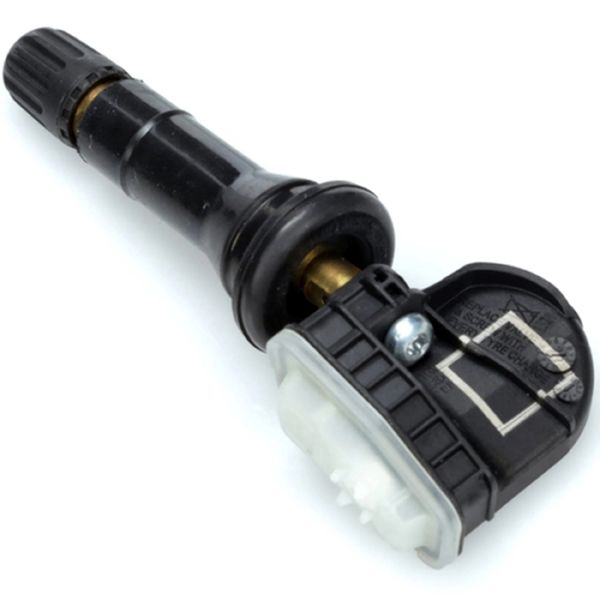
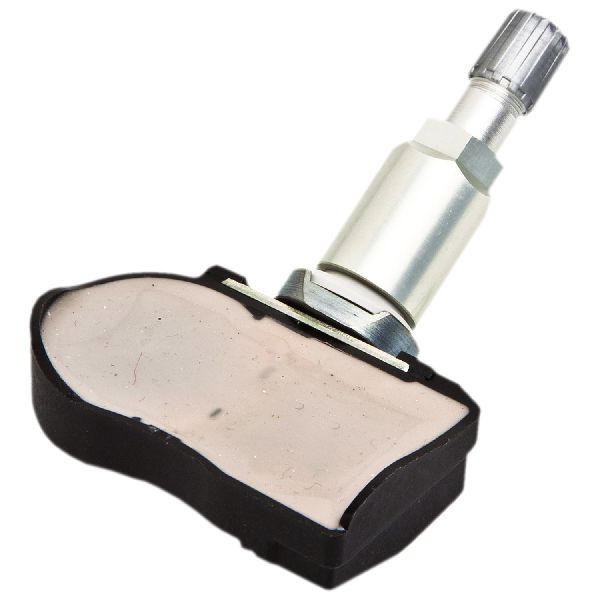
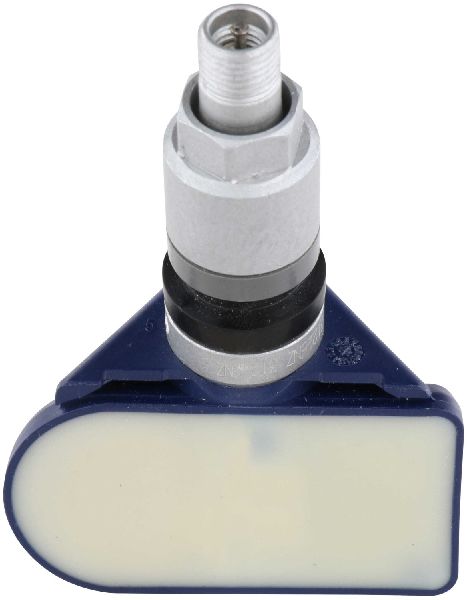
- Tire Pressure Monitoring System (TPMS) Sensor
(OEM #13598772)— This is the most common failure point, typically due to the internal battery's 7-10 year lifespan.
Trusted brands: ACDelco, Schrader, Continental
OEM price range: $50-$90
Aftermarket price range: $30-$70 - Remote Control Door Lock Receiver (RCDLR)
(OEM #22868115)— This module is the central receiver for the TPMS signals. It's a known failure point when multiple TPMS and/or keyless entry codes appear together. Requires programming after installation.
Related Codes That Often Appear With This One
- C0750 — Indicates a fault with the Left Front TPMS sensor. Seeing multiple TPMS codes together points towards a central receiver issue (RCDLR) rather than multiple simultaneous sensor failures.
- C0760 — Indicates a fault with the Left Rear TPMS sensor.
- C0765 — Indicates a fault with the Right Rear TPMS sensor.
- B3055 — A key-related security code. Its presence with C0755 is a strong indicator of a failing RCDLR module or significant RFI, as noted in TSB #PIC5650M.
Technical Service Bulletins (TSBs) & Recalls
- PIC5650M: No crank, no start, or start stall concern with the security light coming on. Technician may find Diagnostic Trouble Codes B3055, B3060, B3935, C0750, C0755, C0760, C0765, and/or C0775.
- 08-03-16-002: Addresses 'Service Tire Monitor System' messages on 2008 CTS models due to RFI from an unshielded RCDLR wire harness.
- 16-NA-061: Details how a disconnected RCDLR antenna can cause TPMS and key fob communication issues.
Platform-Specific Known Issues
- TSB #PIC5650M: Documents that a no-start condition with security codes can occur alongside TPMS codes like C0755, often due to Radio Frequency Interference from aftermarket devices or a faulty module.
- TSB #08-03-16-002: Specific to 2008 models, this bulletin identifies that missing foil shielding on the RCDLR wire harness can cause RFI, leading to multiple TPMS codes being set.
- TSB #16-NA-061: Points to disconnected antenna coax cables for the RCDLR as a cause for simultaneous TPMS and key fob issues. It details a 4-part antenna system (RCDLR, coax, amplifier, glass antenna) and how a disconnect at different points creates different symptoms.
Mechanic-Grade Diagnostic Values
- RCDLR Battery Positive Voltage (at module connector) — expected: Should be equal to battery voltage (approx. 12.6V with engine off).. Failure: A voltage reading significantly lower than battery voltage points to a wiring or internal module issue.
- Voltage Drop Test on RCDLR Ground Circuit — expected: Less than 0.1V (100mV).. Failure: A reading higher than 0.1V indicates high resistance in the ground circuit (e.g., G200, G201), which can cause intermittent module operation.
Hidden / Shadow Codes Worth Checking
- C0755 03: Indicates 'Low Voltage', specifically pointing to a dying TPMS sensor battery. (see via GM GDS2 or a professional scan tool capable of reading manufacturer-specific symptom bytes.)
- C0755 29: Indicates 'Too Few Pulses' received from the sensor. This sub-code is often linked to a failing RCDLR module per TSB #16-NA-396. (see via GM GDS2 or a professional scan tool capable of reading manufacturer-specific symptom bytes.)
- C0755 39: Indicates an 'Internal Malfunction' within the TPMS sensor itself, confirming the sensor needs replacement. (see via GM GDS2 or a professional scan tool capable of reading manufacturer-specific symptom bytes.)
Scan Tool Commands That Help
- GM Tech 2 / GDS2: TPMS Data Display — Use this as the first step to view live data from each TPMS sensor, including its unique ID, reported pressure, and battery status. This confirms if a specific sensor is dead or if the entire system is offline.
- GM Tech 2 / GDS2: RCDLR Module Setup / Programming — This function is required after replacing the RCDLR. The new module must be programmed to the vehicle to recognize existing key fobs and TPMS sensors.
- GM Tech 2 / GDS2: TPM Sensor Learn — After replacing a sensor or the RCDLR, this guided function is used to teach the new sensor IDs and their positions to the module.
- Bi-directional Scan Tool: Rewrite Tire Type and Pressure Settings — In a rare case where a new RCDLR seems to 'forget' learned sensors after an ignition cycle, rewriting these settings to the module's memory can force it to retain the data.
Wiring & Ground Locations
- RCDLR — For the 2008-2014 CTS, the RCDLR is typically located in the headliner or behind the left D-pillar trim in the rear of the vehicle.. This module is the central receiver for all TPMS signals. Its power, ground, and antenna connections are critical. A fault here can cause C0755 and other related codes.
- RCDLR Antenna — The antenna is often integrated into the rear glass, connected via a coax cable to an antenna amplifier, which then runs to the RCDLR module.. A disconnected coax cable at the RCDLR, amplifier, or glass is a known cause of intermittent TPMS codes, especially for sensors furthest away like the right front, as noted in TSB 16-NA-061.
- G200 — Behind the left kick panel.. This is a major interior ground point. A loose or corroded G200 can cause issues for multiple modules, including the RCDLR, leading to intermittent communication and codes like C0755.
- G201 — Behind the right kick panel.. Similar to G200, this is another key interior ground point. Poor connection here can cause a variety of difficult-to-diagnose electronic issues.
Real Owner Repair Stories
- Tahoe Yukon Forum user (2015+ GM SUV (similar platform)) — RCDLR would not retain learned TPMS sensor IDs after an ignition cycle, causing codes to return.
❌ Tried (didn't work) Replacing the RCDLR module., Repeatedly performing the standard relearn procedure.
✅ What actually fixed it Using a bi-directional scan tool to rewrite the specific tire type and pressure settings to the RCDLR's memory. This action forced the module to save the configuration permanently and resolved the issue.
OEM Part Supersession History
20923680, 22854866, 13586335→13598772— Consolidation and updates to the TPMS sensor design by GM/ACDelco.
Heads up: While these parts are generally interchangeable for the 2007-2014 CTS, always use the latest part number (13598772) when available. Ensure the frequency is 315 MHz.
Model Year Variations Within This Range
- 2007 vs 2008-2014: The 2007 model is the last year of the first generation, while 2008-2014 is the second generation. While they share the 315 MHz TPMS system, interior trim, module locations (like the RCDLR), and wiring harnesses can differ significantly, affecting diagnostic and repair procedures.
- 2011-2014: Starting around 2011, GM removed the ability to perform the TPMS relearn procedure by simply letting air out of the tires. These later models require a TPMS activation tool (like the EL-50448) to trigger the sensors during the relearn process.
Helpful Videos
We Have This Part in Stock


The information in this article is provided for general reference and educational purposes only. Vehicle specifications, procedures, and part compatibility can vary by production date, trim level, and region. Always consult your vehicle's factory service manual and verify part numbers before purchasing or performing repairs. Safety-critical components such as airbags, seat belts, and braking systems should be installed by a qualified professional.
- Cadillac CTS:
- 🧭 Diagnostic Flowchart
- 🎬 Helpful Videos
- 🛍️ Shop This Part
- What's Unique About the 2007-2014 Cadillac CTS
- Symptoms You May Notice
- Most Likely Causes
- Rare But Worth Checking
- Diagnosis Steps
- Parts You'll Likely Need
- Related Codes That Often Appear With This One
- Technical Service Bulletins (TSBs) & Recalls
- Platform-Specific Known Issues
- Mechanic-Grade Diagnostic Values
- Hidden / Shadow Codes Worth Checking
- Scan Tool Commands That Help
- Wiring & Ground Locations
- Real Owner Repair Stories
- OEM Part Supersession History
- Model Year Variations Within This Range
- 🎟️ Get 5% Off