

C0755 on 2015-2022 Cadillac Escalade: Right Front TPMS Fault Causes & Fixes
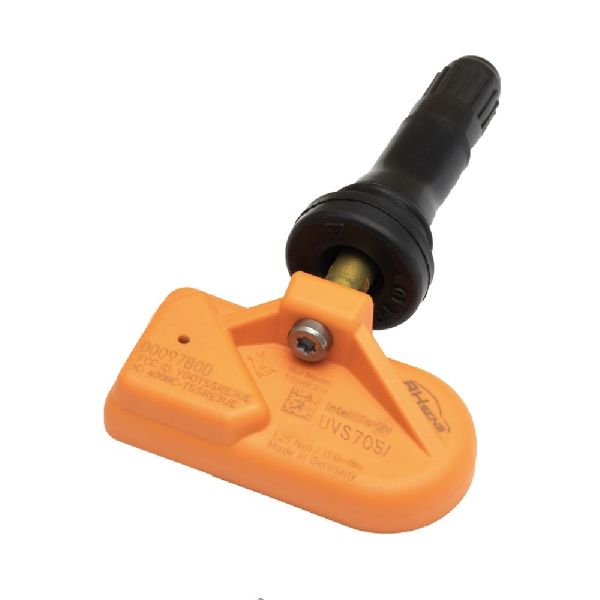
Code C0755 on a 2015-2022 Escalade means there's a problem with the Right Front Tire Pressure Sensor (TPMS). The most common fix is replacing the sensor itself (OEM Part #13542523, ~$30-$60 aftermarket, ~$70-$100 OEM). However, before replacing it, check the RCDLR antenna connections in the right rear of the vehicle, as loose connections are a known issue documented in TSBs PIT5446A and 16-NA-061 that can trigger this code.
- C0755 points to a fault with the Right Front tire pressure sensor.
- The most common cause is a dead battery in the sensor, requiring sensor replacement.
- Before replacing the sensor, inspect the RCDLR antenna connections in the right rear cargo area, as a loose cable is a known GM issue that triggers this code.
- If you also have key fob range problems or 'No Fob Detected' messages, the issue is more likely with the RCDLR system than the sensor itself.
- A flashing TPMS light indicates a system fault (like this code), while a solid light just means one of your tires is low on air.
What's Unique About the 2015-2022 Cadillac ESCALADE
What's unique to this generation of Escalade and its platform mates (Tahoe, Yukon, Suburban) is how TPMS faults are often linked to the Remote Control Door Lock Receiver (RCDLR) and its antenna system. This single module handles signals from both the tire sensors and your key fob. A disconnected antenna coax cable in the right rear C-pillar area is a well-documented issue in TSBs PIT5446A and 16-NA-061. This cheap fix is often overlooked, leading to unnecessary sensor replacement. The issue is so common that forum users on Tahoe Yukon Forum frequently advise checking this connection first.
Diagnostic Flowchart
Tap your situation to follow the diagnostic path that matches what you're seeing on this vehicle.
Generation note: This range covers the end of the fourth generation (2015-2020, K2XX platform) and the beginning of the fifth (2021-2022, T1XX platform). The documented issues with the RCDLR antenna system are most commonly associated with the 2015-2018 models per TSBs PIT5446A and 16-NA-061. Sensor battery failure is common across all years as vehicles age. The TPMS sensor frequency changed from 315 MHz on the K2XX platform to 433 MHz for the T1XX platform (2021+).
Symptoms You May Notice
- TPMS warning light flashing for approximately one minute at startup, then staying on solid.
- Driver Information Center (DIC) message like 'Service Tire Monitor System'.
- Tire pressure reading for the right front tire shows dashes ('--') instead of a number.
- Reduced range for the key fob (RKE).
- In rare cases, a 'No Fob Detected' message or a no-start/stall condition. [Bulletin #PIC5650M, 1]
- Replacing the TPMS sensor when the actual fault is a loose RCDLR antenna connection. The TSBs strongly advise checking the antenna wiring before replacing any hardware.
- Replacing the Body Control Module (BCM) when the fault lies with the sensor or the RCDLR system.
Most Likely Causes
- Failed Right Front TPMS Sensor 🔴 High Probability → Shop Tire Pressure Monitoring System (TPMS) Sensor TPMS sensors are powered by a small, non-replaceable 3-volt lithium battery with a finite lifespan, typically 7-10 years. As these vehicles age, battery failure becomes the most common reason for this code. A sensor can also be damaged during tire service.
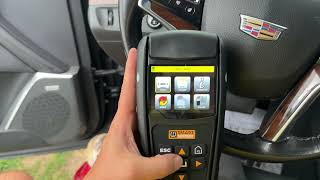
How to confirm: Use a TPMS activation tool to try and read the sensor. If the tool cannot get a response or shows a low battery status, the sensor has failed. A tire shop can also perform this test quickly.
Typical fix: Replace the right front TPMS sensor. The tire must be unseated from the wheel to access it. A new sensor must be installed and then programmed to the vehicle using a TPMS relearn procedure.
Est. part cost: $30-$100 - Disconnected RCDLR Antenna Coax Cable 🟡 Medium Probability TSBs PIT5446A and 16-NA-061 specifically call out this issue on 2015-2018 models. The antenna system for the RCDLR has several connection points that can become loose. The most common failure point is the coax cable connection at the antenna amplifier module located in the right rear C-pillar, behind the trim. 🎬 Watch: Step-by-step guide to repairing the RCDLR antenna connection.
How to confirm: Inspect the three connection points for the RCDLR antenna system as outlined in TSB PIT5446A/16-NA-061: 1) the connection at the RCDLR module itself, 2) the coax cable connection at the antenna amplifier, and 3) the connection from the amplifier to the antenna in the right rear quarter glass.
Typical fix: Securely reconnect the loose coax cable or connector. This is a check-and-fix procedure that requires accessing trim panels in the rear cargo area. No parts are typically needed.
Est. part cost: $0 - Faulty Remote Control Door Lock Receiver (RCDLR) ⚪ Low Probability → Shop Keyless Entry Receiver TSB 16-NA-396 notes that internal RCDLR failures can cause TPMS codes along with intermittent key fob and passive start/entry issues. In some cases, the module can lose its memory, requiring reprogramming even if it hasn't failed completely.
How to confirm: This is a diagnosis of exclusion. If the sensor is confirmed to be transmitting and the antenna wiring is secure, but TPMS and key fob issues persist across multiple sensors, the RCDLR module itself is the likely culprit. A scan tool may show other related codes or fail to communicate with the module.
Typical fix: Replace the RCDLR module. This requires programming to the vehicle using dealer-level tools (GDS2/SPS).
Est. part cost: $80-$200
Rare But Worth Checking
- Radio Frequency (RF) Interference: Aftermarket devices, such as phone chargers, dash cameras, or power inverters plugged into the vehicle's outlets can sometimes emit RF noise that interferes with the RCDLR's ability to receive the sensor's signal. Before starting repairs, unplug all aftermarket electronics and see if the issue resolves.
- Incorrectly Programmed RCDLR Memory: A user on the Tahoe Yukon Forum reported an issue where the RCDLR would 'forget' the learned sensors after an ignition cycle. The fix was not to replace the module, but to use a bi-directional scan tool to rewrite the tire type and pressure settings to its memory, which resolved the problem.
Diagnosis Steps
- Confirm the code with an OBD-II scanner capable of reading C-codes (chassis codes).
- Use a TPMS activation tool to test the right front sensor. If it does not respond or shows a low battery, the sensor has failed and needs replacement.
- If the sensor responds, attempt a TPMS relearn procedure. If the right front sensor fails to learn, proceed to the next step.
- Unplug any aftermarket electronic devices (phone chargers, dash cams, etc.) to eliminate potential RF interference.
- Following TSB PIT5446A/16-NA-061, inspect the RCDLR antenna system. Remove the right rear (passenger side) C-pillar and quarter panel trim to access the RCDLR module and antenna amplifier. Check for a disconnected coax cable at both the module and the amplifier.
- If antenna connections are secure and the sensor is known to be good, but the code persists (especially with key fob issues), the RCDLR module is the primary suspect.
- If sensors fail to be remembered after an ignition cycle, attempt to rewrite tire type/pressure settings to the RCDLR using a capable scan tool before replacing the module.
- After any repair, clear the DTCs and perform the TPMS relearn procedure to confirm the fix.
Parts You'll Likely Need
- Tire Pressure Monitoring System (TPMS) Sensor
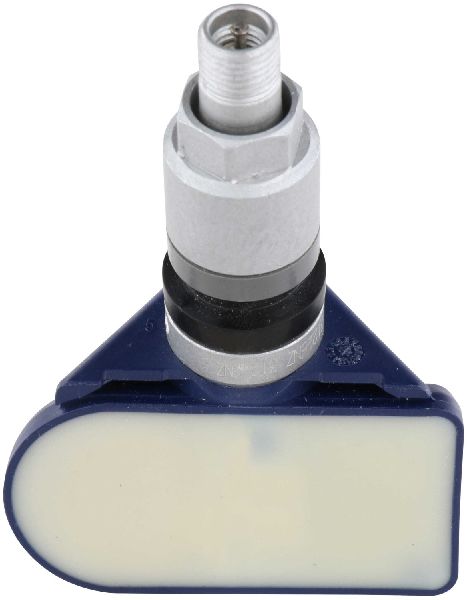
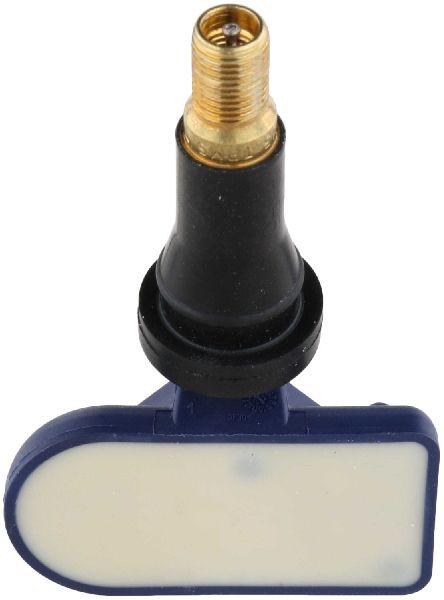
(OEM #13542523)— The internal battery has a limited lifespan (7-10 years) and is the most frequent point of failure for this code. This part number supersedes older versions like 13533166 and 13549919.
Trusted brands: ACDelco (GM Genuine), Schrader, Continental
OEM price range: $70-$100
Aftermarket price range: $30-$60 - Remote Control Door Lock Receiver (RCDLR)
(OEM #84542923)— If multiple TPMS sensors and key fobs are malfunctioning, and the antenna wiring is intact, the receiver module itself may have failed internally, as noted in TSB 16-NA-396. This part requires programming.
Trusted brands: ACDelco (GM Genuine)
OEM price range: $80-$200
Aftermarket price range: $60-$150
Related Codes That Often Appear With This One
- C0750, C0760, C0765 — These are the codes for the other three tire pressure sensors (LF, LR, RR). If they appear with C0755, it strongly suggests a systemic problem with the RCDLR or its antenna, rather than four simultaneously failed sensors.
- B3055, B3060, B3935 — These codes relate to the key fob and vehicle immobilizer system. Their presence alongside C0755 points to a fault in the RCDLR module, which controls both TPMS and vehicle security functions, and may lead to a no-start condition. [Bulletin #PIC5650M]
Technical Service Bulletins (TSBs) & Recalls
- PIC5650M: Links TPMS codes C0750, C0755, C0760, C0765 to no-crank, no-start, or stall conditions with security system codes.
- PIT5446A: Identifies C0755 and other TPMS codes as potentially being caused by a disconnected RCDLR antenna system and advises checking connections before replacing parts.
- 16-NA-061: Supersedes earlier bulletins, expands the model years to 2018, and provides detailed examples of symptoms based on which antenna connection is loose.
Platform-Specific Known Issues
- A known issue, documented in TSBs PIT5446A and 16-NA-061, involves the RCDLR antenna system becoming disconnected. There are three primary locations to check: the coax cable at the RCDLR module, the coax at the antenna amplifier module, and the amplifier's connection to the antenna in the right rear quarter glass. A disconnected coax at the amplifier is the most common scenario causing issues with the front and left-side sensors while the right-rear sensor (closest to the RCDLR) may still work.
Mechanic-Grade Diagnostic Values
- TPMS Sensor Battery Voltage — expected: 3V (new). Failure: A significantly lower voltage reading or a 'low battery' status on a TPMS scan tool indicates the sensor needs replacement.
- RCDLR Power Supply Voltage — expected: 12V+ (key-on). Failure: No voltage at the RCDLR power input pin (typically a Red/White wire) indicates a wiring or fuse issue, not a faulty module.
Hidden / Shadow Codes Worth Checking
- C0755 03: Right Front Tire Pressure Sensor Low Voltage. This often points to a dying internal battery in the sensor. (see via A professional-grade scan tool like the GM GDS2/Tech2 is required to see these symptom codes.)
- C0755 29: Right Front Tire Pressure Sensor Too Few Pulses. This indicates the sensor is not transmitting signals as expected, which could be due to internal failure or heavy RF interference. (see via A professional-grade scan tool like the GM GDS2/Tech2 is required to see these symptom codes.)
- C0755 39: Right Front Tire Pressure Sensor Internal Malfunction. This explicitly points to a failed sensor unit. (see via A professional-grade scan tool like the GM GDS2/Tech2 is required to see these symptom codes.)
Scan Tool Commands That Help
- GM GDS2 (Global Diagnostic System 2): TPMS Data Display — Use this function to view live data from each TPMS sensor, including pressure, temperature, and sensor ID. This helps confirm if the BCM is receiving any signal from the suspect sensor, even if it's invalid.
- GM GDS2 (Global Diagnostic System 2): TPMS Learn Mode — This function initiates the vehicle's relearn procedure after replacing a sensor or rotating tires. It commands the BCM to listen for new sensor IDs in a specific sequence. Failure to learn a new, known-good sensor points towards a reception issue (RCDLR/antenna).
Wiring & Ground Locations
- RCDLR Module — Located in the right rear of the vehicle, behind the C-pillar trim panel for the K2XX platform (2015-2020).. This module receives the signal from all TPMS sensors. Its location makes it susceptible to issues from the nearby antenna coax cable connections.
- RCDLR Antenna Amplifier — Located near the RCDLR module, behind the right rear C-pillar trim, connecting the main coax cable to the antenna in the quarter glass.. A disconnected coax cable at this amplifier is a primary cause of TPMS codes for the front tires, as documented in TSB 16-NA-061.
- G218 — Under the driver's side of the dashboard, near the base of the A-pillar.. This is a primary ground for the Body Control Module (BCM). While not directly for the RCDLR, a poor connection here (a known issue per TSB PIT5405C) can cause a wide range of communication codes and erratic behavior in systems the BCM controls, including TPMS.
- G402 / G303 (platform dependent) — Typically located on the frame or body structure in the rear quarter panel area, often near the D-pillar.. This is the chassis ground for the RCDLR module and its antenna system. Corrosion or a loose connection at this point can cause a weak signal or intermittent operation, leading to TPMS codes.
Real Owner Repair Stories
- Tahoe Yukon Forum (2007 Yukon XL Denali (similar K2-based platform)) — Could not complete the TPMS relearn procedure; it would fail on the very first sensor (left front). No specific sensor was flagged as faulty by the scanner.
❌ Tried (didn't work) Scanning for codes, which did not isolate the problem to a single sensor.
✅ What actually fixed it The problem was ultimately a single failed TPMS sensor (right rear wheel), even though the diagnostic relearn process was failing on a different wheel. Replacing the one bad sensor allowed the entire relearn process to complete successfully.
OEM Part Supersession History
13533166, 13549919→13542523— Standard part evolution for improved reliability and manufacturing consistency.
Model Year Variations Within This Range
- 2015-2020 (K2XX Platform): These models use a 315 MHz TPMS sensor (Part #13542523). The RCDLR antenna issue documented in TSB 16-NA-061 is most prevalent in this generation.
- 2021-2022 (T1XX Platform): These models switched to a 433 MHz TPMS sensor. While the RCDLR concept is the same, the part numbers for sensors and the RCDLR module itself are different from the previous generation.
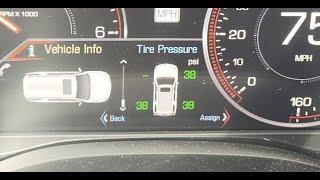
Helpful Videos
We Have This Part in Stock

The information in this article is provided for general reference and educational purposes only. Vehicle specifications, procedures, and part compatibility can vary by production date, trim level, and region. Always consult your vehicle's factory service manual and verify part numbers before purchasing or performing repairs. Safety-critical components such as airbags, seat belts, and braking systems should be installed by a qualified professional.
- Cadillac ESCALADE:
- 🧭 Diagnostic Flowchart
- 🎬 Helpful Videos
- 🛍️ Shop This Part
- What's Unique About the 2015-2022 Cadillac ESCALADE
- Symptoms You May Notice
- Most Likely Causes
- Rare But Worth Checking
- Diagnosis Steps
- Parts You'll Likely Need
- Related Codes That Often Appear With This One
- Technical Service Bulletins (TSBs) & Recalls
- Platform-Specific Known Issues
- Mechanic-Grade Diagnostic Values
- Hidden / Shadow Codes Worth Checking
- Scan Tool Commands That Help
- Wiring & Ground Locations
- Real Owner Repair Stories
- OEM Part Supersession History
- Model Year Variations Within This Range
- 🎟️ Get 5% Off