

C0755 on 2007-2014 Cadillac Escalade ESV: Right Front TPMS Fault Explained
Code C0755 on a 2007-2014 Escalade ESV indicates a problem with the Right Front Tire Pressure Monitoring System (TPMS) sensor. The most common fix is to replace the sensor, which has a non-serviceable battery that dies over time. Expect to pay $40-$80 for an aftermarket sensor or $90-$150 for an OEM part, plus labor for tire dismounting/mounting. In some cases, the fault can be with the central receiver module (RCDLR).
- C0755 specifically points to the right front TPMS sensor.
- The most likely cause on a 2007-2014 Escalade is a dead battery inside the sensor, which requires replacing the entire sensor unit.
- A flashing TPMS light indicates a system fault (like this code), while a solid light just means low pressure.
- Professional help is recommended because replacing the sensor requires tire service equipment and a TPMS programming tool.
- If you also have key fob or starting issues, the problem may be the central RCDLR module, not the sensor.
What's Unique About the 2007-2014 Cadillac ESCALADE ESV
The 2007-2014 Escalade (GMT900 platform) uses a direct TPMS system where each sensor sends a unique radio frequency signal. The module responsible for receiving these signals, the RCDLR, also manages the key fobs and vehicle security system. This is why a TSB for a no-start condition (PIC5650M) can list TPMS codes like C0755 alongside security codes; a failing RCDLR module can cause both seemingly unrelated issues simultaneously. Furthermore, TSBs like PIT5446 reveal that the RCDLR's antenna connection is a weak point; a loose coax cable can cause the sensors furthest away (like the right front) to drop out first.
Diagnostic Flowchart
Tap your situation to follow the diagnostic path that matches what you're seeing on this vehicle.
Symptoms You May Notice
- TPMS warning light on the dashboard (may be solid or flashing).
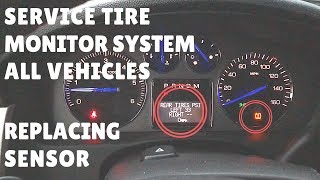
- Driver Information Center (DIC) shows a "Service Tire Monitor System" message.
- The pressure reading for the right front tire shows dashes (--) on the DIC.
- In cases of a faulty RCDLR antenna connection, the front tires and left rear tire may show dashes while the right rear (closest to the RCDLR) still reads correctly.
- In rare cases involving a faulty RCDLR module, this code may appear alongside a no-start or key fob recognition issue, as noted in TSB PIC5650M.
- Replacing the Body Control Module (BCM) instead of the RCDLR. On these vehicles, the RCDLR receives the signal and sends the data to the BCM; the RCDLR or the sensor itself is the more likely culprit.
- Replacing the wrong sensor. Always use a TPMS tool to trigger each sensor and confirm its position before replacement. Tire rotations can mix up sensor locations if a relearn procedure was not performed correctly.
Most Likely Causes
- Dead TPMS Sensor Battery 🔴 High Probability → Shop Tire Pressure Monitoring System (TPMS) Sensor TPMS sensor batteries are not rechargeable or replaceable and have a finite lifespan, typically 7-10 years. Vehicles in this 2007-2014 range are now at an age where original sensor batteries are expected to fail.
How to confirm: A professional TPMS diagnostic tool can read the battery status of the sensor directly. A scan tool may also show a 'low battery' status for the specific sensor.
Typical fix: Replace the right front TPMS sensor and perform the TPMS relearn procedure. A YouTube user with a 2008 Escalade documented this exact failure and had a tire shop replace the single sensor, which fixed the issue. 🎬 Watch: A walkthrough of replacing a sensor on an Escalade.
Est. part cost: $40-$150 - Damaged TPMS Sensor 🟡 Medium Probability → Shop Tire Pressure Monitoring System (TPMS) Sensor Sensors can be easily damaged during tire replacement, pothole impacts, or by using unapproved tire sealants that clog the sensor's pressure port.
How to confirm: Visual inspection after dismounting the tire. If a TPMS tool cannot activate the sensor at all, and the battery status is unknown, damage is likely.
Typical fix: Replace the damaged TPMS sensor and perform the relearn procedure.
Est. part cost: $40-$150 - Faulty Remote Control Door Lock Receiver (RCDLR) or its Antenna ⚪ Low Probability → Shop Keyless Entry Receiver While less common than a sensor failure, the RCDLR is the single point of failure for all TPMS sensors and key fobs. TSBs 16-NA-061 and PIT5446 specifically call out poor or disconnected antenna connections to the RCDLR as a cause for TPMS codes.
How to confirm: If multiple TPMS codes (e.g., C0750, C0755, C0760, C0765) are present simultaneously, or if you also have issues with keyless entry, this points to the RCDLR. Specifically, check the coaxial antenna cable connection at the RCDLR module and at the antenna amplifier in the right rear of the vehicle. In one documented case on a TahoeYukonForum, sensors would learn but be forgotten after restarting the vehicle; the fix was rewriting the tire configuration to the RCDLR with a bidirectional scanner, indicating a module memory issue.
Typical fix: First, inspect and secure all RCDLR antenna connections. If connections are good, the RCDLR module may need to be replaced and programmed by a dealer or a well-equipped independent shop. In cases of memory corruption, reprogramming the existing module may work.
Est. part cost: $100-$250
Rare But Worth Checking
- Radio Frequency (RF) Interference: Aftermarket electronic devices can interfere with the TPMS signal. TSB PIC5650G specifically warns that aftermarket LED interior lights, USB phone chargers, dash cams, and 12V power inverters can 'jam' the signal received by the RCDLR. Before replacing parts, unplug all non-factory electronic accessories to see if the code clears.
- Low Pressure in Spare Tire: Many GMT900 SUVs include a TPMS sensor in the spare tire. If the spare tire's pressure drops significantly, it can trigger a general 'Service Tire Monitor System' message without specifying the spare's location. This can be confusing if the four main road tires all have correct pressure. Always check the spare tire's pressure before assuming a sensor or module has failed.
Diagnosis Steps
- Check the TPMS display in the Driver Information Center (DIC) to confirm which tire is not reporting. Note if multiple tires, especially the ones furthest from the right rear, are showing dashes (--).
- Use a TPMS diagnostic tool to attempt to read the sensor data (ID, pressure, temperature, battery status) from the right front wheel. This is the fastest way to confirm a dead or faulty sensor.
- If the tool cannot activate the sensor, the sensor is likely dead or damaged.
- If the tool reads 'low battery', the sensor needs to be replaced.
- If the sensor appears to be transmitting but the vehicle doesn't see it, check for any aftermarket electronics that could cause RF interference per TSB PIC5650G.
- If multiple sensors are not reading (especially if C0750, C0755, C0760 are present but C0765 is not), suspect the Remote Control Door Lock Receiver (RCDLR) antenna. Inspect the coaxial cable connection at the RCDLR module and the antenna amplifier per TSB PIT5446.
- If a new sensor is installed and can be learned, but the DIC forgets the position after a key cycle, the RCDLR may have a software/memory issue. A bidirectional scan tool may be needed to rewrite the tire type and pressure settings to the module.
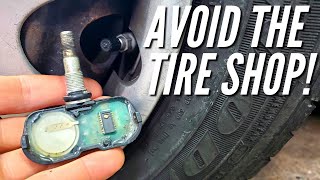
- If replacing the sensor, the new sensor must be 'relearned' to the vehicle. On GMT900 trucks, this is typically done through the DIC menu, which will prompt you to activate each sensor in sequence (starting with the left front) using either a TPMS tool or by letting air out of the tire until the horn chirps. 🎬 See how to perform a DIY TPMS relearn without tools.
Parts You'll Likely Need
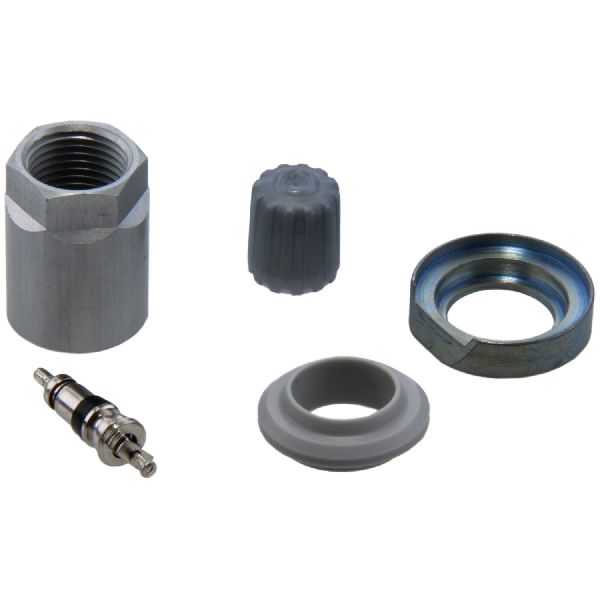
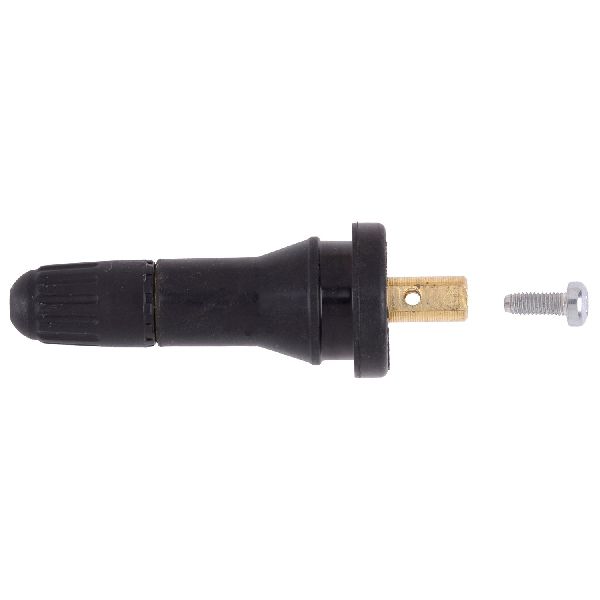
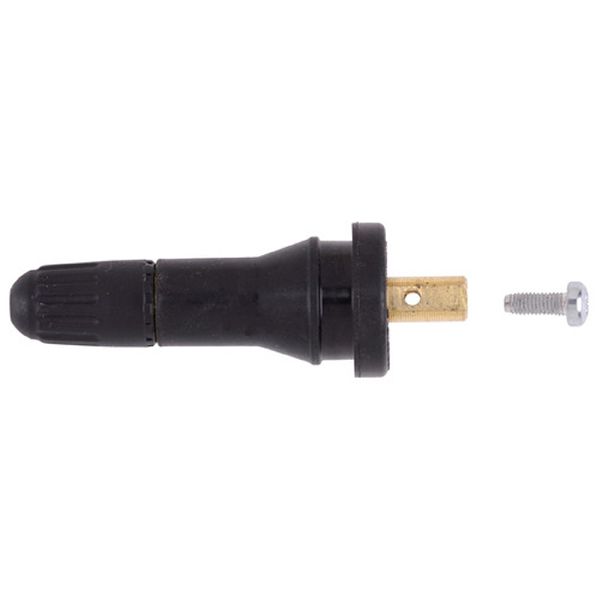
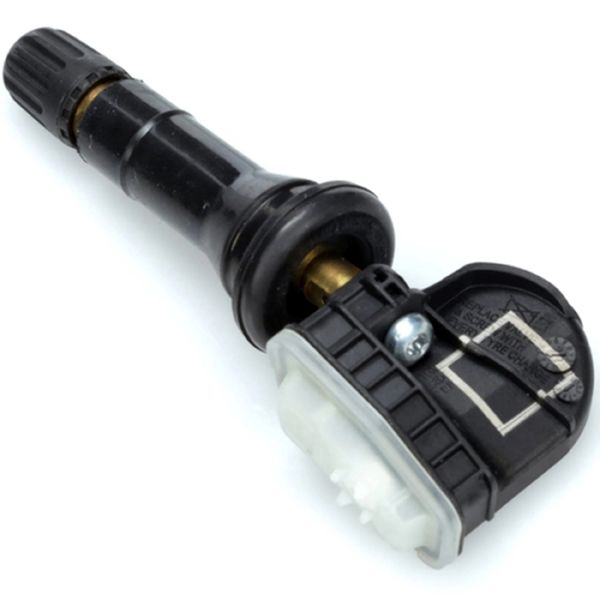
- Tire Pressure Monitoring System (TPMS) Sensor
(OEM #13598772 (supercedes 13586335, 13581558))— The internal battery is non-replaceable and has a finite lifespan. This is the most common point of failure for code C0755.
Trusted brands: ACDelco (GM Original Equipment), Schrader (Often the OEM manufacturer), Continental, Dorman
OEM price range: $90-$150
Aftermarket price range: $40-$80
Related Codes That Often Appear With This One
- C0750, C0760, C0765 — These are the codes for the other three tire pressure sensors (Left Front, Right Rear, Left Rear). If all appear together, it strongly suggests a problem with the central receiver (RCDLR) or its antenna, rather than four simultaneously failed sensors.
- B3055, B3060 — As cited in TSB #PIC5650M, these are key-related security codes. Their presence with C0755 points toward a fault in the shared Remote Control Door Lock Receiver (RCDLR) module, which handles both TPMS and vehicle security/key fob functions.
Technical Service Bulletins (TSBs) & Recalls
- PIC5650M (and its revisions): Mentions that C0755 may be found with security codes (like B3055) in cases of a no-start or start/stall condition, suggesting a link via a common control module. Also warns about RF interference from aftermarket electronics.
- PIT5446 / 16-NA-061: Details how a disconnected RCDLR antenna can cause dashes to appear for one or more tires and provides diagnostic steps for checking the antenna system before replacing modules.
- 16-NA-396: Notes that an internal failure of the RCDLR can cause a group of TPMS codes (C0750, C0755, C0760, C0765) along with key fob issues.
Platform-Specific Known Issues
- A known issue documented in TSB #PIC5650M involves a potential no-crank or start-and-stall condition that may be accompanied by a group of DTCs, including C0755. This points to the Remote Control Door Lock Receiver (RCDLR) as a possible point of failure affecting both the TPMS and security systems.
- Per TSBs PIT5446 and 16-NA-061, the coaxial antenna cable for the RCDLR can become disconnected at the module, at the antenna amplifier, or at the glass-mounted antenna itself. This can cause intermittent loss of signal from the sensors furthest from the receiver, often mimicking individual sensor failure.
Mechanic-Grade Diagnostic Values
- RCDLR Power Supply Voltage — expected: 12V (battery voltage). Failure: 0V or significantly less than 12V indicates a wiring or fuse issue.
- TPMS Sensor Nut Torque — expected: 62-71 in-lbs (for clamp-in style sensors). Failure: Under-torquing can cause leaks; over-torquing can damage the sensor or valve stem.
Hidden / Shadow Codes Worth Checking
- C0755 03: Right Front Tire Pressure Sensor Low Voltage. This indicates a potential issue with the sensor's internal battery or power circuit. (see via A dealer-level scan tool like a GM Tech 2 or GDS2 is required to view these two-digit symptom codes (also called failure bytes).)
- C0755 29: Right Front Tire Pressure Sensor Too Few Pulses. The RCDLR is not receiving the expected number of signal transmissions from the sensor. (see via A dealer-level scan tool like a GM Tech 2 or GDS2.)
- C0755 39: Right Front Tire Pressure Sensor Internal Malfunction. The sensor has reported an internal fault to the RCDLR. (see via A dealer-level scan tool like a GM Tech 2 or GDS2.)
- C0755 08: Right Front Low Tire Pressure Sensor Signal Invalid. The RCDLR is receiving a signal, but the data is corrupt or nonsensical. (see via A dealer-level scan tool like a GM Tech 2 or GDS2.)
Scan Tool Commands That Help
- Tech 2 / GDS2: RCDLR Setup / Module Setup — This function must be performed after installing a new RCDLR module to configure it for the specific vehicle's options.
- TIS-2-WEB (with Tech 2 or other J2534 device): Replace and Reprogram ECU — This is the specific software function used to flash the correct firmware onto a new RCDLR. It is a 'Pass Through' programming method that requires an active GM software subscription.
- Tech 2 / GDS2: Theft Deterrent System Learn — After replacing and programming the RCDLR, the vehicle's anti-theft system must be relearned to the new module. This is a mandatory step.
Wiring & Ground Locations
- RCDLR Module — Located in the driver's side rear upper D-pillar. Access requires opening the rear liftgate and removing the upper interior trim panel.. This is the central receiver for all TPMS signals. A faulty module or loose connection here will cause TPMS codes.
- G302 — A ground stud located on the floor under the passenger side front door sill plate area.. This is a primary ground point for the Remote Control Door Lock Receiver (RCDLR). A poor connection here can cause intermittent or total failure of the RCDLR, leading to TPMS and key fob issues.
- RCDLR Antenna — The antenna system consists of a coax cable from the RCDLR to an antenna amplifier module, which then connects to an antenna grid in the right rear quarter glass.. A loose coax connection at any of these three points (RCDLR, amplifier, or glass) can cause intermittent signal loss, especially from the sensors furthest away, like the right front.
Real Owner Repair Stories
- Compilation of reports from Tahoe/Yukon/Escalade Forums (2007-2009 GMT900 SUVs (Tahoe, Yukon XL, Escalade)) — Key fobs stopped working intermittently or completely, accompanied by a 'Service Tire Monitor System' message and dashes for multiple tire pressure readings on the DIC.
❌ Tried (didn't work) Replacing key fob batteries, Replacing individual TPMS sensors, Performing the TPMS relearn procedure multiple times
✅ What actually fixed it The root cause was a failed Remote Control Door Lock Receiver (RCDLR). Replacing the RCDLR module and having it programmed by a dealer with a Tech 2 scanner resolved both the key fob and TPMS issues simultaneously.
"I Checked Everything" — The Actual Cause
- A common scenario is where a TPMS tool fails to read the right front sensor, leading a technician to replace it. However, the code returns intermittently. The actual cause, as outlined in GM TSB 16-NA-061, is often a poor or loose connection in the RCDLR's coaxial antenna cable. The signal from the sensor furthest from the receiver (often the front tires) becomes too weak to be reliably received, mimicking a failed sensor. The correct diagnosis is to inspect the antenna connections at the RCDLR, the amplifier, and the rear glass before replacing more parts.
OEM Part Supersession History
13586335, 13581558→13598772— Part consolidation and potential minor revisions by the manufacturer.
Heads up: While sensors within the 2007-2014 generation (both clamp-in and snap-in styles) are generally interchangeable, sensors from the next generation (2015+ K2XX platform) are not compatible. They operate on a different system and will not be recognized by the GMT900's RCDLR, even if they physically fit the wheel.
Model Year Variations Within This Range
- 2007-2014: Throughout this generation, two styles of TPMS sensors were used: a clamp-in style with a metal valve stem and a snap-in (or 'pull-through') style with a rubber valve stem. While they mount to the wheel differently, they are electronically compatible and can be intermixed on the same vehicle as long as they are the correct 315 MHz sensors for the GMT900 platform.
Helpful Videos

We Have This Part in Stock


The information in this article is provided for general reference and educational purposes only. Vehicle specifications, procedures, and part compatibility can vary by production date, trim level, and region. Always consult your vehicle's factory service manual and verify part numbers before purchasing or performing repairs. Safety-critical components such as airbags, seat belts, and braking systems should be installed by a qualified professional.
- Cadillac ESCALADE ESV:
- 🧭 Diagnostic Flowchart
- 🎬 Helpful Videos
- 🛍️ Shop This Part
- What's Unique About the 2007-2014 Cadillac ESCALADE ESV
- Symptoms You May Notice
- Most Likely Causes
- Rare But Worth Checking
- Diagnosis Steps
- Parts You'll Likely Need
- Related Codes That Often Appear With This One
- Technical Service Bulletins (TSBs) & Recalls
- Platform-Specific Known Issues
- Mechanic-Grade Diagnostic Values
- Hidden / Shadow Codes Worth Checking
- Scan Tool Commands That Help
- Wiring & Ground Locations
- Real Owner Repair Stories
- "I Checked Everything" — The Actual Cause
- OEM Part Supersession History
- Model Year Variations Within This Range
- 🎟️ Get 5% Off