

C0755 on 2015-2022 Cadillac Escalade ESV: Right Front TPMS Fault Explained
Code C0755 on a 2015-2022 Cadillac Escalade ESV indicates a problem with the right front tire pressure sensor. The most common fix is to replace the sensor itself, which has a battery that dies over time. Expect to pay $40-$80 for an aftermarket sensor or $70-$120 for an OEM part. However, a known issue with the receiver antenna can also cause this code and should be investigated.
- C0755 means there's a fault with the right front tire pressure sensor.
- The most common cause is a dead battery inside the sensor, which requires replacing the entire sensor unit.
- Before replacing the sensor, check for any aftermarket electronics that could be causing radio interference.
- A GM Technical Service Bulletin suggests that a faulty remote keyless entry receiver (RCDLR) antenna can also cause this code.
- When replacing, ensure you buy a sensor that is compatible with your specific year of Escalade, as frequencies and protocols can change between generations.
What's Unique About the 2015-2022 Cadillac ESCALADE ESV
On these GM SUVs, the Tire Pressure Monitoring System (TPMS) is integrated with the Remote Control Door Lock Receiver (RCDLR). This single module processes signals from both the tire sensors and your key fob. Because of this shared design, a GM Technical Service Bulletin (TSB #PIT5446A/16-NA-061) points out that issues with the RCDLR antenna system can sometimes mimic a failed TPMS sensor, causing codes like C0755. The antenna wiring, particularly the coax cable running to the right rear quarter glass, is a known weak point that can become disconnected or damaged, interrupting the signal from the sensors before it ever reaches the module.
Diagnostic Flowchart
Tap your situation to follow the diagnostic path that matches what you're seeing on this vehicle.
Generation note: This range covers the end of the fourth generation (2015-2020) and the start of the fifth generation (2021-2022) Escalade ESV. While the TPMS technology is similar (operating at 315 MHz in the US or 433 MHz), the specific part numbers for the sensors may differ. For 2015-2020 models, look for numbers like 13540601 or 22853740. For 2021+ models, numbers like 13533166 and 13542523 are common, with some overlap. Always verify the part number for your specific model year before purchasing.
Symptoms You May Notice
- Flashing, then solid TPMS warning light on the instrument cluster.
- "Service Tire Monitor System" message on the Driver Information Center (DIC).
- The DIC shows dashes (--) instead of a pressure reading for the right front tire.
- Potentially reduced range or intermittent operation of the key fob (remote lock/unlock/start), as it uses the same RCDLR receiver.
- Replacing the tire itself. The sensor is the issue, not the rubber tire.
- Assuming any aftermarket TPMS sensor will work. GM vehicles can be sensitive to the specific frequency (315 MHz or 433 MHz) and protocol of the sensor. Using the wrong one will prevent it from being learned by the vehicle.
- Replacing the right front sensor without a relearn. If tires were rotated previously without performing the TPMS relearn procedure, the sensor for the 'right front' position in the BCM's memory might now be physically located on a different wheel. Always perform a relearn first to confirm which sensor is not responding.
Most Likely Causes
- Failed TPMS Sensor (Dead Battery) 🔴 High Probability → Shop Tire Pressure Monitoring System (TPMS) Sensor TPMS sensors are powered by small, non-rechargeable batteries with a finite lifespan, typically 7-10 years. Vehicles in this year range are now old enough for original sensor batteries to be failing.
How to confirm: Use a TPMS diagnostic tool to attempt to activate the sensor. If the tool cannot get a reading (ID, pressure, temperature), the sensor has failed. A professional scan tool can also check for a 'low battery' status from the sensor.
Typical fix: Replace the right front TPMS sensor and perform the TPMS relearn procedure. It is often recommended to replace all four sensors at once if they are original, as the others are likely to fail soon.
Est. part cost: $40-$120 - Faulty Remote Control Door Lock Receiver (RCDLR) or Antenna 🟡 Medium Probability → Shop Keyless Entry Receiver As noted in GM TSB #PIT5446A and #16-NA-061, the RCDLR antenna system is a common point of failure, leading to TPMS codes. The coax cable and its connections are susceptible to becoming loose or damaged.
How to confirm: A technician would follow the TSB by inspecting three specific locations: 1. The connection between the antenna amplifier module and the antenna in the right rear quarter glass. 2. The coax cable connection at the antenna amplifier module. 3. The coax cable connection at the RCDLR module itself. If a disconnect is found, reconnecting it may solve the problem. A visual inspection may reveal damage to the coax cable.
Typical fix: Inspect and reconnect any loose connections in the RCDLR antenna system. If the coax cable is damaged, it may need to be repaired or replaced. In some cases, the RCDLR module itself may need replacement and programming.
Est. part cost: $50-$200 - Damaged TPMS Sensor ⚪ Low Probability → Shop Tire Pressure Monitoring System (TPMS) Sensor Sensors can be physically damaged during tire changes, by hitting a large pothole, or from using unapproved tire sealants that clog the sensor's port.
How to confirm: Visual inspection of the sensor after dismounting the tire. If tire sealant was used, it will be obvious upon inspection.
Typical fix: Replace the damaged TPMS sensor.
Est. part cost: $40-$120
Rare But Worth Checking
- Radio Frequency (RF) Interference: Aftermarket electronic devices like dash cams, phone chargers, or CB radios can sometimes interfere with the 315 MHz TPMS signals, preventing the RCDLR from receiving them correctly. Before replacing parts, try unplugging all aftermarket electronics and see if the code clears.
- Body Control Module (BCM) Fault: → Shop Body Control Module In rare cases, the BCM, which is the central computer for this system, can fail. This usually presents with multiple other seemingly unrelated electrical issues and codes, not just C0755.
Diagnosis Steps
- Verify the tire pressure in all four tires with a quality gauge to rule out an actual low-pressure situation.
- Initiate the vehicle's TPMS relearn procedure to confirm which sensor is failing. On the DIC, navigate to the tire pressure screen and press and hold the checkmark button until the horn chirps twice and the 'Tire Learning Active' message appears.
- Use a TPMS diagnostic tool (like the EL-50448) to activate each sensor, starting with the left front and moving clockwise. The vehicle will honk to confirm each successful read. If the horn does not chirp for the right front wheel, the sensor is the most likely culprit.
- If you do not have a TPMS tool, a relearn can sometimes be initiated by letting air out of each tire in sequence, but this is less reliable and not recommended for these model years.
- Inspect for any aftermarket electronics that could cause RF interference. Unplug them and re-test.
- If a new sensor is installed and still won't learn, the problem likely lies with the RCDLR, its antenna, or the wiring. Following TSB #PIT5446A / 16-NA-061, inspect the three antenna connection points between the RCDLR module and the right rear quarter glass.
- If all else fails, professional diagnosis with a GM-specific scan tool is recommended to check for BCM communication issues.
Parts You'll Likely Need
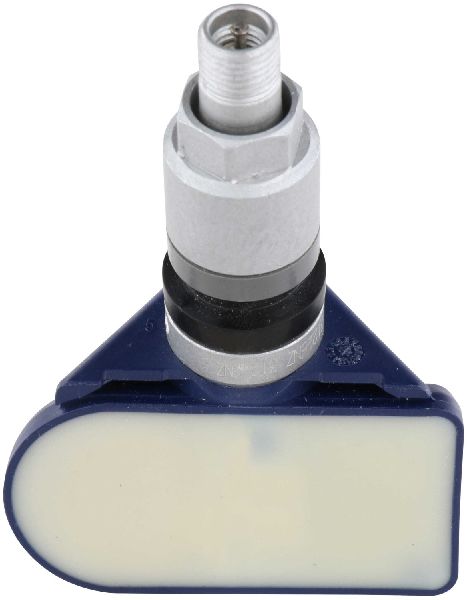
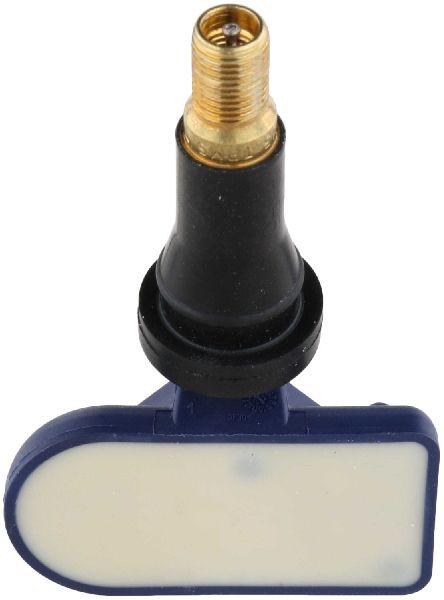
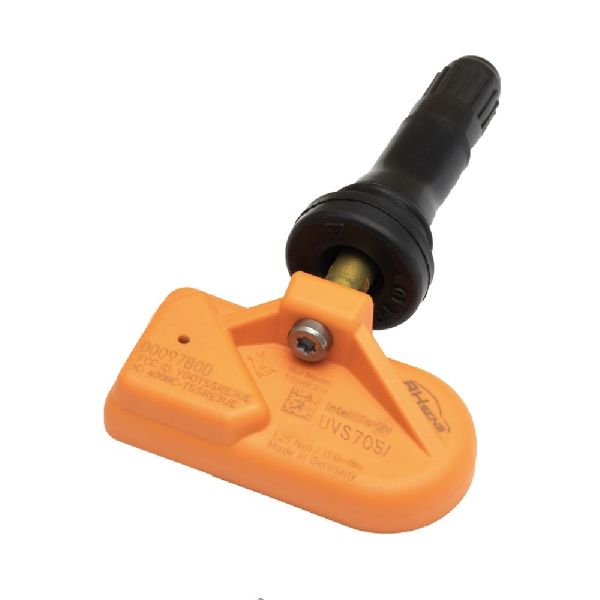
- Tire Pressure Monitoring System (TPMS) Sensor
(OEM #13542523 (spans generations), 13540601 (2015-20), 13533166 (2021+))— This is the most common failure point. The internal battery dies, or the sensor itself malfunctions, requiring replacement.
Trusted brands: ACDelco GM Original Equipment, Schrader, Continental
OEM price range: $70-$120
Aftermarket price range: $40-$80 - TPMS Relearn Tool
(OEM #EL-50448 (or similar))— Required to make the vehicle learn the new or existing sensor IDs after replacement or tire rotation. This is an essential tool for DIY diagnosis and repair of this system.
Trusted brands: VXDAS, JDIAG, ATEQ
OEM price range: $50-$70
Aftermarket price range: $15-$30
Related Codes That Often Appear With This One
- C0750 — This code is for the Left Front Tire Pressure Sensor. Seeing both may indicate a systemic issue with the RCDLR or BCM, or simply that multiple sensor batteries are failing at the same time.
- C0760 — This code is for the Left Rear Tire Pressure Sensor. It's common for multiple sensors to fail around the same time due to battery life.
- C0765 — This code is for the Right Rear Tire Pressure Sensor. It's common for multiple sensors to fail around the same time due to battery life.
Technical Service Bulletins (TSBs) & Recalls
- PIC5650M: Mentions C0755 in a group of codes related to no-start/stall conditions and the security system.
- PIT5446A: Advises checking the RCDLR antenna system when TPMS codes including C0755 are present.
- 16-NA-061: An updated version of PIT5446A, expanding the model years and providing more detail on symptoms related to the RCDLR antenna disconnect, such as poor key fob range.
Platform-Specific Known Issues
- TSB PIT5446A / 16-NA-061: RCDLR Antenna Connection Failure: This critical TSB highlights that for codes C0750, C0755, C0760, and C0765, technicians should inspect the Remote Control Door Lock Receiver (RCDLR) antenna system before replacing any TPMS sensors. The TSB identifies three common failure points for the antenna's coax cable: at the RCDLR module, at the antenna amplifier, and at the antenna itself in the right rear quarter glass. A loose connection here is a very common cause for this code.
- TSB PIC5650M: Broader Electrical Issue Symptom: This TSB lists C0755 among several other codes related to a no-start or stalling condition. In this context, the TPMS code is likely a secondary symptom of a broader electrical or security system problem, possibly related to the BCM, and not the primary fault. [NHTSA Citation]
Mechanic-Grade Diagnostic Values
- A/C Pressure Sensor Reference Voltage (VREF) — expected: 4 - 6 volts. Failure: Voltage outside this range can indicate a short or open in the sensor circuit, which may be shared.
- TPMS Sensor Battery Status — expected: OK. Failure: A 'Low' or 'Fail' status on a GDS2 or equivalent scan tool indicates the sensor needs replacement.
Hidden / Shadow Codes Worth Checking
- C0755 with symptom code 0x03: Indicates 'voltage below threshold'. This points towards a sensor battery failure or a wiring issue causing a voltage drop before the signal reaches the RCDLR. (see via GM GDS2 or other professional scan tools that can read manufacturer-specific symptom codes.)
- C0755 with symptom code 0x29: Indicates 'too few pulses'. This suggests the sensor is transmitting intermittently or its signal is being corrupted or interfered with, preventing the RCDLR from receiving a complete data packet. (see via GM GDS2 or other professional scan tools that can read manufacturer-specific symptom codes.)
Scan Tool Commands That Help
- GDS2 (GM Global Diagnostic System 2): Module Diagnostics > RCDLR > Diagnostic Data — Use this to view live data from all TPMS sensors, including their unique ID, reported pressure, temperature, and crucially, the sensor battery status. This can confirm if the sensor is transmitting at all.
- GDS2 (GM Global Diagnostic System 2): Module Setup > RCDLR > Copy and Paste TPM Information — When replacing the RCDLR module, this function must be used BEFORE removing the old module. It copies the existing sensor IDs to the scan tool, allowing you to paste them into the new module after installation, avoiding the need for a full TPMS relearn procedure.
Wiring & Ground Locations
- RCDLR Module — For 2015-2020 models, it is typically located behind the rear quarter trim panel, often on the driver's side D-pillar. For 2021+ models, its location may vary with the new architecture but remains in the rear of the vehicle.. This is the receiver for the TPMS signals. TSB 16-NA-061 points to the coax cable connection at this module as a primary point of failure.
- RCDLR Antenna — The antenna is integrated into the right rear quarter glass. An amplifier module connects the main coax cable to this glass antenna.. A disconnect between the coax cable and the amplifier, or the amplifier and the glass, will cause weak or no signal reception, triggering TPMS codes.
- G103 — Located on the cowl at the left rear of the engine compartment, often near the brake booster.. This is a major ground point that serves the Body Control Module (BCM) and the Remote Control Door Lock Receiver (RCDLR). A poor connection here can cause erratic behavior in both modules.
- G304 — Located near the base of the right-hand B-pillar, under the trim/carpet.. This is a body ground point in the general vicinity of the RCDLR antenna system. Corrosion or looseness can cause intermittent electrical issues.
Real Owner Repair Stories
- Tahoe Yukon Forum user Joseph Garcia (2007 Yukon XL Denali) — TPMS light on, unable to complete the TPMS relearn procedure. The process would fail on the very first step (left front tire), even though the code might be for a different tire.
❌ Tried (didn't work) Attempting the standard relearn procedure multiple times., Scanning for codes which did not isolate the specific faulty sensor.
✅ What actually fixed it The actual cause was a failed right rear wheel sensor. Despite the relearn process failing at the left front wheel, replacing the non-responsive right rear sensor allowed the entire system to function and relearn correctly.
"I Checked Everything" — The Actual Cause
- In the context of TPMS, the 'relearn procedure' is the equivalent of a system function test. A common failure pattern occurs when the relearn process fails immediately on the first sensor (left front), leading the technician to suspect an issue with that sensor or the RCDLR itself. However, as seen in real-world repairs, a single failed sensor elsewhere in the system (e.g., the right rear) can halt the entire sequential relearn process, making it seem like the problem is at the starting point. The true cause is the first sensor in the sequence that fails to respond, which may not be the first one tested.
Model Year Variations Within This Range
- 2021-2022: These models use GM's new Vehicle Intelligence Platform (VIP), also known as Global B architecture. While the RCDLR still handles TPMS and key fob signals, it communicates with other modules over a much faster, more complex network. Diagnostics require up-to-date GDS2 software that can communicate with this new architecture, and some diagnostic approaches may differ from the earlier 2015-2020 models.
We Have This Part in Stock

The information in this article is provided for general reference and educational purposes only. Vehicle specifications, procedures, and part compatibility can vary by production date, trim level, and region. Always consult your vehicle's factory service manual and verify part numbers before purchasing or performing repairs. Safety-critical components such as airbags, seat belts, and braking systems should be installed by a qualified professional.
- Cadillac ESCALADE ESV:
- 🧭 Diagnostic Flowchart
- 🛍️ Shop This Part
- What's Unique About the 2015-2022 Cadillac ESCALADE ESV
- Symptoms You May Notice
- Most Likely Causes
- Rare But Worth Checking
- Diagnosis Steps
- Parts You'll Likely Need
- Related Codes That Often Appear With This One
- Technical Service Bulletins (TSBs) & Recalls
- Platform-Specific Known Issues
- Mechanic-Grade Diagnostic Values
- Hidden / Shadow Codes Worth Checking
- Scan Tool Commands That Help
- Wiring & Ground Locations
- Real Owner Repair Stories
- "I Checked Everything" — The Actual Cause
- Model Year Variations Within This Range
- 🎟️ Get 5% Off