

C0755 on 2007-2014 Chevrolet Express 2500: Right Front TPMS Fault Guide
Code C0755 on a 2007-2014 Chevy Express 2500 means there's a problem with the right front tire pressure sensor. The most common cause is a dead sensor battery, requiring a new sensor (~$25-$60) to be installed and relearned at a tire shop. If key fob issues are also present, the Remote Control Door Lock Receiver (RCDLR) is the likely culprit.
- C0755 means the right front TPMS sensor has failed, most likely due to a dead battery.
- The symptom is a TPMS light that flashes for a minute at startup before staying on.
- The fix is to replace the sensor, which requires a tire shop to dismount the tire.
- After replacement, a 'relearn' procedure is mandatory to sync the new sensor with the van.
- While rare, this code can be linked to starting issues if the shared RCDLR module is the cause.
What's Unique About the 2007-2014 Chevrolet EXPRESS 2500
On the Chevrolet Express van, the TPMS sensor signals are received by the Remote Control Door Lock Receiver (RCDLR), which also handles key fob inputs. A unique issue, noted in manufacturer technical service bulletin PIC5650M, is that a fault within this shared system can sometimes be associated with seemingly unrelated problems like a no-crank, no-start, or stalling condition accompanied by a security light. Another TSB, 16-NA-061, explains that a poor or disconnected antenna connection for the RCDLR can cause TPMS codes for the sensors furthest from the receiver (like the front tires) and result in poor key fob range.
Diagnostic Flowchart
Tap your situation to follow the diagnostic path that matches what you're seeing on this vehicle.
Symptoms You May Notice
- TPMS warning light flashing for approximately one minute at startup, then staying on solid.
- "Service Tire Monitor System" message displayed on the Driver Information Center (DIC).
- The pressure reading for the right front tire shows dashes (--) or is blank on the DIC.
- Inability to complete the TPMS relearn procedure for the right front wheel.
- Poor key fob range or intermittent function (if the RCDLR is the root cause).
- Replacing the Body Control Module (BCM) when the fault is a simple sensor failure or an issue with the RCDLR.
- Assuming the TPMS light means low tire pressure when a flashing light indicates a system fault.
- Replacing the wrong sensor because a tire rotation was performed without a subsequent relearn procedure.
Most Likely Causes
- Dead TPMS Sensor Battery 🔴 High Probability → Shop Tire Pressure Monitoring System (TPMS) Sensor TPMS sensors use sealed, non-replaceable batteries with a finite lifespan of 5-10 years. Vehicles in the 2007-2014 range are now at an age where battery failure is very common, a frequent complaint among fleet owners of Express vans.
How to confirm: Use a dedicated TPMS diagnostic tool to attempt to activate or 'wake up' the sensor. If the tool cannot get a response, the sensor's battery is almost certainly dead. If the relearn procedure fails specifically at the right front wheel, the sensor is the primary suspect.
Typical fix: Replace the right front TPMS sensor. The tire must be dismounted to access it. It's often recommended to replace all four sensors at once if they are original, as the others are likely to fail soon.
Est. part cost: $25-$75 - Faulty TPMS Sensor 🟡 Medium Probability → Shop Tire Pressure Monitoring System (TPMS) Sensor Sensors can fail from internal electronic faults or physical damage during tire service. Using incorrect or cheap aftermarket sensors can also lead to programming and communication failures.
How to confirm: Even if a TPMS tool can 'wake' the sensor, it may transmit corrupted data or fail intermittently. If a relearn procedure consistently fails at the right front wheel even with a new sensor, the issue may lie elsewhere, but failure to respond to a TPMS tool points directly to the sensor.
Typical fix: Replace the faulty TPMS sensor located in the right front wheel. Use a quality OEM or aftermarket sensor (e.g., ACDelco, Schrader).
Est. part cost: $25-$75 - Failed TPMS Relearn Procedure ⚪ Low Probability This is not a part failure, but an operational issue. If tires were recently rotated or replaced and the relearn procedure was not performed, the BCM will expect the sensor to be in its old position, triggering a fault code for the location it can't find.
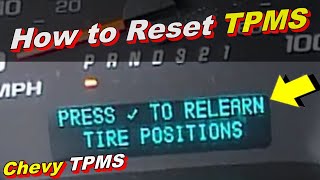
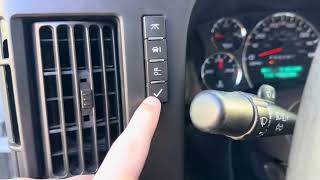
How to confirm: Perform the TPMS relearn procedure as outlined in the owner's manual. For Express vans with DIC buttons, this involves navigating to the 'RELEARN TIRE POSITIONS' screen and pressing the set button. For models without DIC buttons, other methods like using the trip odometer stem or key fob may be required.
Typical fix: Correctly perform the TPMS relearn procedure. This can often be done without tools by letting air out of each tire in sequence (LF, RF, RR, LR) until the horn chirps for each one.
Est. part cost: $0
Rare But Worth Checking
- Faulty Remote Control Door Lock Receiver (RCDLR): → Shop Keyless Entry Receiver The RCDLR is the module that receives signals from both the TPMS sensors and key fobs. A fault in this module can prevent it from receiving the sensor's signal, often affecting the front sensors first due to distance. This might also cause issues with key fob range or function. TSBs PIC5650M and 16-NA-396 link RCDLR issues to starting problems and TPMS codes with symptom byte :29 (Too Few Pulses).
- Wiring Harness Issue: A break or short in the wiring between the RCDLR and the Body Control Module (BCM), or a disconnected RCDLR antenna coax cable, can prevent the sensor data from being processed, leading to the code. TSB 16-NA-061 specifically calls out checking the coax connections at the RCDLR and the antenna amplifier module before replacing any parts. This is rare but possible, especially if other aftermarket electronics have been installed.
- Radio Frequency Interference (RFI): Aftermarket electronic devices, such as phone chargers, dash cams, or LED lighting, can sometimes emit radio frequencies that interfere with the 315MHz signal from the TPMS sensors, preventing the RCDLR from receiving it properly. This is mentioned as a possibility in GM diagnostic procedures.
Diagnosis Steps
- Verify code C0755 with an OBD-II scanner capable of reading Chassis (C) codes.
- Check the TPMS display in the Driver Information Center (DIC). Note if the right front reading is blank or shows dashes.
- Attempt a TPMS relearn procedure. On the Express, this is typically initiated through the DIC menu by selecting 'RELEARN TIRE POSITIONS'. The horn will chirp twice to indicate learn mode is active.
- If the relearn procedure fails when it gets to the right front tire (no horn chirp after letting air out), the sensor is the primary suspect. Note that some later models may require a TPMS tool and cannot be relearned by adjusting pressure.
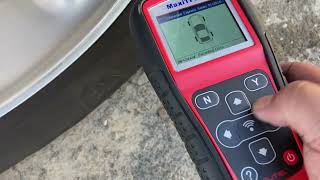
- Use a dedicated TPMS activation tool to try and read the sensor directly. If the tool gets no response, the sensor has failed (likely a dead battery).
- If multiple TPMS codes are present and/or key fob issues exist, suspect the Remote Control Door Lock Receiver (RCDLR). Check for related TSBs like 16-NA-061 and 16-NA-396.
- Before replacing the RCDLR, inspect its coaxial antenna connections for looseness or damage, as this can mimic a failed module.
- If a new sensor is installed and still won't learn, and the RCDLR and wiring are confirmed good, professional diagnosis is recommended.
Parts You'll Likely Need
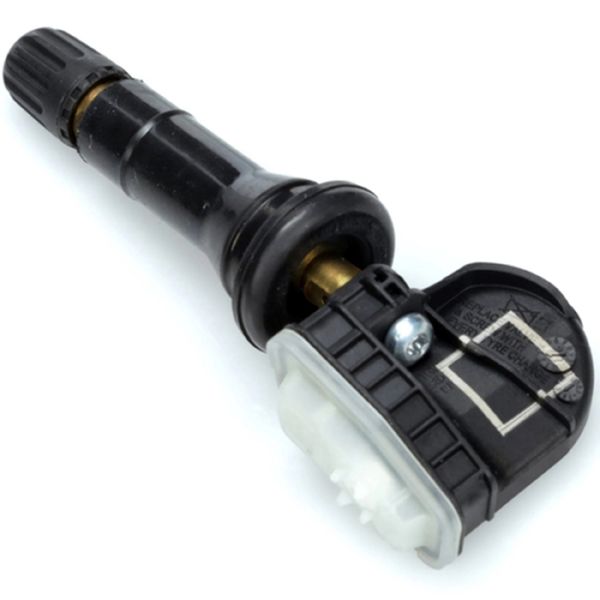
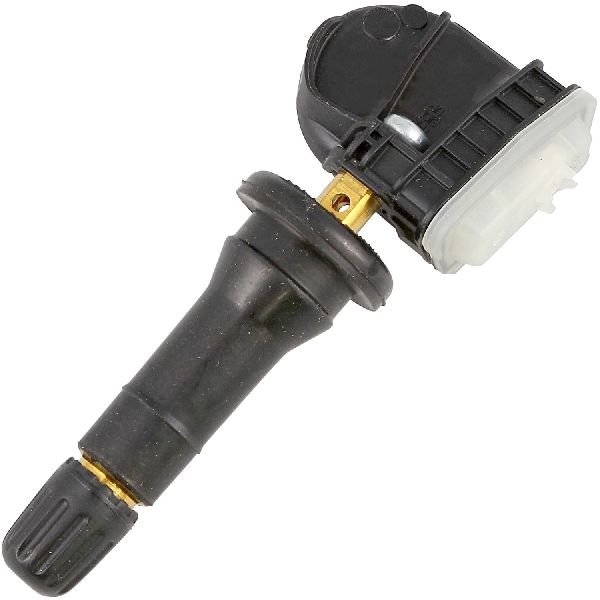
- Tire Pressure Monitoring System (TPMS) Sensor
(OEM #15136883)— This is the most common failure point. The internal battery dies after 5-10 years, requiring the replacement of the entire sealed sensor unit. This part number may be superseded by others.
Trusted brands: ACDelco, Schrader, Dorman
OEM price range: $50-$80
Aftermarket price range: $25-$60
Related Codes That Often Appear With This One
- C0750 — This code indicates a fault with the Left Front TPMS sensor. It's common to see multiple TPMS codes together as the sensor batteries have a similar lifespan and tend to fail around the same time.
- C0760 — This code indicates a fault with the Left Rear TPMS sensor. Seeing multiple codes suggests a systemic issue like battery age or an RCDLR fault rather than a single random failure.
- C0765 — This code indicates a fault with the Right Rear TPMS sensor. When multiple TPMS codes are present, it's cost-effective to replace all four sensors at once.
- B3055, B3060, B3935 — As cited in TSB PIC5650M, these security and key-related codes can appear alongside TPMS codes if the root cause is a malfunctioning RCDLR or related wiring, which handles both systems.
Technical Service Bulletins (TSBs) & Recalls
- PIC5650M: Notes that a no crank, no start, or stall concern with the security light on can be accompanied by DTC C0755, among others, suggesting a potential link to the vehicle's security/remote receiver module.
- 16-NA-061: Details how a disconnected or faulty RCDLR antenna or coax cable can cause TPMS codes (C0750, C0755, etc.) and poor key fob range, as the receiver struggles to pick up signals from sensors far away.
- 16-NA-396: Addresses intermittent key fob and passive entry/start is
Platform-Specific Known Issues
- Per TSB #PIC5650M, a C0755 code can be part of a larger group of DTCs related to a no-start or stalling condition, pointing to a fault in the Remote Control Door Lock Receiver (RCDLR) or its associated wiring, which is shared by the TPMS and security systems.
- A fleet owner on ChevroletForum.com reported constant TPMS issues across multiple Express vans, highlighting the frustration with getting sensors to program and the high cost quoted by shops ($60+ per sensor plus labor).
- An owner on Reddit detailed a complex repair on a 2008 Express, which involved replacing all four sensors and the RCDLR module. Even with a Tech2 scan tool, the van would not enter learn mode via the dash controls, indicating potential BCM communication issues in some cases.
Hidden / Shadow Codes Worth Checking
- C0755 with Symptom Byte :03: Indicates 'Low Voltage' from the sensor, directly pointing to a dying internal battery. (see via GM Tech2 or GDS2 scan tool, or equivalent professional scanner that can read manufacturer-specific symptom bytes.)
- C0755 with Symptom Byte :29: Indicates 'Too Few Pulses' were received from the sensor. This sub-code is specifically called out in TSBs as pointing towards an internal failure of the Remote Control Door Lock Receiver (RCDLR). (see via GM Tech2 or GDS2 scan tool, or equivalent professional scanner.)
- C0755 with Symptom Byte :39: Indicates an 'Internal Malfunction' within the TPMS sensor itself, suggesting a failure other than the battery. (see via GM Tech2 or GDS2 scan tool, or equivalent professional scanner.)
Scan Tool Commands That Help
- Tech2 / GDS2: Module Setup / Replace and Reprogram ECU — This function is required after physically replacing the Remote Control Door Lock Receiver (RCDLR). It programs the new module to the vehicle's VIN and configures it.
- Tech2 / GDS2: Theft Deterrent System Learn — Must be performed after replacing and setting up a new RCDLR, as the receiver is part of the vehicle's security system.
- Tech2 / GDS2: TPM Sensor Learn — Used to command the vehicle into learn mode and register the TPMS sensor IDs to their positions after sensor replacement or tire rotation. This is often used in conjunction with a separate TPMS activation tool.
Wiring & Ground Locations
- RCDLR Module — Located behind the center of the instrument panel (dash).. This is the receiver for the TPMS signals. Physical access is needed to check its connections or replace it, which is a common fix when multiple TPMS codes and key fob issues are present.
- G302 — Located behind the left kick panel, near the driver's left foot.. This is a primary ground point for the dash wiring harness, which includes the RCDLR. A poor connection at G302 can cause intermittent and difficult-to-diagnose electronic issues, including faults with the RCDLR.
Real Owner Repair Stories
- Chevrolet Forum user 'jamesm113' (2013 Express 2500) — Intermittent 'Service Tire Pressure Monitor System' light. One sensor not reporting.
❌ Tried (didn't work) Replaced a sensor, but it was the wrong one due to a previous tire rotation not being relearned., Attempting the relearn procedure by letting air out of the tires; the van would not chirp or recognize any sensor.
✅ What actually fixed it Purchasing and using a cheap TPMS relearn tool from Amazon. The tool successfully forced the van to recognize the sensors when the manual air-release method failed. - Chevrolet Forum user '2012 express' (2012 Express 2500, no key fob) — After replacing a TPMS sensor, the van would not enter relearn mode via the Driver Information Center (DIC). The option was missing.
❌ Tried (didn't work) Cycling through all DIC options., Cycling parking lights on/off., Disconnecting the battery and touching the terminals together.
✅ What actually fixed it The user concluded a dedicated TPMS activation tool was necessary, recalling that a tire shop had used one successfully in the past for a previous repair. This indicates that for some configurations, the DIC relearn option is not available and a tool is mandatory.
OEM Part Supersession History
Not specified→20803735— Standard part number for RCDLR on this platform.
Heads up: When replacing the RCDLR, programming with a Tech2 or GDS2 is required for it to function with the vehicle's security system and TPMS sensors.
Model Year Variations Within This Range
- 2007-2011 (approx.): Many vehicles in this range can have their TPMS sensors relearned by initiating learn mode via the DIC and then increasing/decreasing the pressure at each tire until the horn chirps.
- 2012-2014 (approx.): Vehicles in this range, and some earlier models depending on configuration, are more likely to require a dedicated TPMS activation tool (e.g., EL-50448) to trigger the sensors during the relearn procedure. The pressure change method is often no longer effective.
- 2013-2014: Diagnostic and programming functions may require the newer GM GDS2 software platform instead of the older Tech2/Tech2Win, which was used for most of the generation.
Helpful Videos
We Have This Part in Stock


The information in this article is provided for general reference and educational purposes only. Vehicle specifications, procedures, and part compatibility can vary by production date, trim level, and region. Always consult your vehicle's factory service manual and verify part numbers before purchasing or performing repairs. Safety-critical components such as airbags, seat belts, and braking systems should be installed by a qualified professional.
- Chevrolet EXPRESS 2500:
- 🧭 Diagnostic Flowchart
- 🎬 Helpful Videos
- 🛍️ Shop This Part
- What's Unique About the 2007-2014 Chevrolet EXPRESS 2500
- Symptoms You May Notice
- Most Likely Causes
- Rare But Worth Checking
- Diagnosis Steps
- Parts You'll Likely Need
- Related Codes That Often Appear With This One
- Technical Service Bulletins (TSBs) & Recalls
- Platform-Specific Known Issues
- Hidden / Shadow Codes Worth Checking
- Scan Tool Commands That Help
- Wiring & Ground Locations
- Real Owner Repair Stories
- OEM Part Supersession History
- Model Year Variations Within This Range
- 🎟️ Get 5% Off