

C0755 on 2015-2022 Chevrolet Express 3500: Right Front TPMS and No-Start Link
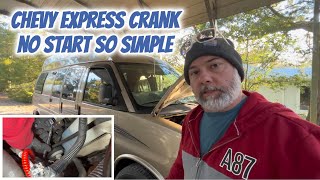
Code C0755 indicates a fault with the right front tire pressure (TPMS) sensor. While often just a dead sensor battery causing a TPMS light, a manufacturer bulletin (PIC5650M) links it to a more serious issue with the remote control receiver (RCDLR) that can cause a no-start or stalling. A simple sensor replacement costs ~$75-$150, while a module replacement can be $300-$500. The RCDLR is the most likely cause if key fob issues occur at the same time.
- C0755 means there's a fault with your right front TPMS sensor.
- If you also have a security light or starting problems, the issue is likely not the sensor itself, but the shared RCDLR module or radio interference.
- The simplest cause is a dead battery in the TPMS sensor, which has a 5-10 year life.
- Replacing a TPMS sensor requires a tire shop to dismount the tire.
- If the RCDLR module is the cause, it must be replaced and programmed by a professional with the correct tools.
What's Unique About the 2015-2022 Chevrolet EXPRESS 3500
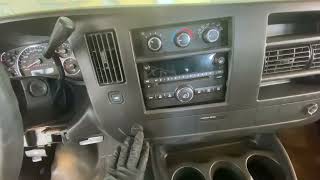
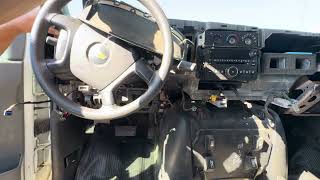
On this generation of Express van, the Tire Pressure Monitoring System (TPMS) and the vehicle's security/keyless entry system are both managed by the same module: the Remote Control Door Lock Receiver (RCDLR). A critical Technical Service Bulletin (TSB #PIC5650M) highlights that an internal failure of the RCDLR can create a confusing mix of trouble codes, including TPMS codes like C0755 and security system codes. This means a simple TPMS code could be the first sign of a more complex module failure that can leave you stranded. The RCDLR is located under the top plate of the dashboard, behind and above the instrument cluster.
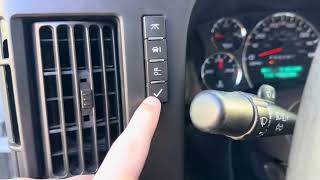
🎬 See this step-by-step guide to removing the instrument clusterDiagnostic Flowchart
Tap your situation to follow the diagnostic path that matches what you're seeing on this vehicle.
Symptoms You May Notice
- Flashing TPMS warning light, which then stays on solid.
- "Service Tire Monitor System" message on the Driver Information Center (DIC).
- Pressure reading for the right front tire shows dashes "--" on the DIC.
- Security light illuminated on the instrument panel.
- Engine will not crank or start.
- Engine starts and immediately stalls.
- Key fob (remote) functions intermittently or not at all.
- "No Remote Detected" message on the DIC.
- Replacing the Body Control Module (BCM) when the issue is actually the separate RCDLR module.
- Replacing the key fob battery when the RCDLR receiver is the actual point of failure.
- Replacing only the TPMS sensor when the RCDLR is faulty, leading to the problem returning.
- Replacing the ignition switch for a no-start condition when the RCDLR is the root cause of the security system fault.
Most Likely Causes
- Dead TPMS Sensor Battery 🔴 High Probability → Shop Tire Pressure Monitoring System (TPMS) Sensor TPMS sensor batteries have a finite lifespan, typically 5-10 years. Vehicles in the 2015-2022 range are now reaching the age where battery failure is common.
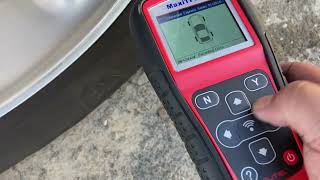
How to confirm: Use a TPMS activation tool to attempt to read the sensor. If the tool cannot get a response from the right front sensor but can from others, the sensor has likely failed. A professional scan tool may show a sub-code like :03 for low voltage.
Typical fix: Replace the right front TPMS sensor. It's often recommended to replace all four sensors at the same time, as the others are likely near the end of their service life.
Est. part cost: $35-$70 per sensor - Faulty Remote Control Door Lock Receiver (RCDLR) 🟡 Medium Probability → Shop Keyless Entry Receiver As documented in GM TSBs PIC5650M and 16-NA-396, the RCDLR module is known to fail, causing a combination of TPMS, keyless entry, and security system issues. The module can go into a 'sleep' state and not wake up to recognize signals.
How to confirm: This is diagnosed when multiple related codes are present (e.g., C0750, C0755, B3055) and key fob issues occur simultaneously. A professional scan tool may show a symptom code like :29 (Too Few Pulses), which TSB 16-NA-396 directly attributes to an internal RCDLR failure.
Typical fix: Replace the RCDLR module and program it to the vehicle. This requires specialized tools. In some cases, a simple battery disconnect and reconnect can temporarily reset the module and restore function.
Est. part cost: $180-$340 - Radio Frequency Interference (RFI) ⚪ Low Probability TSB PIC5650M notes that aftermarket electronic devices (like cell phone chargers, USB power banks, or LED lights) can interfere with the signals between the key fob, TPMS sensors, and the RCDLR.
How to confirm: Remove all aftermarket plug-in devices from the vehicle. If the symptoms disappear, one of the devices was causing interference.
Typical fix: Identify and remove the interfering device.
Est. part cost: $0 - Poor RCDLR Antenna Connection ⚪ Low Probability TSB PIT5446A and 16-NA-061 describe how the coaxial cable connecting the RCDLR to its antenna can become disconnected at the module, at the antenna amplifier, or at the antenna itself (located in the right rear quarter glass). This can cause intermittent signal loss.
How to confirm: If TPMS signals from sensors farther from the RCDLR (like the front tires) drop out while the closest (right rear) remains active, it could indicate a partial antenna disconnect. A full disconnect will cause all sensors and the key fob to fail.
Typical fix: Inspect the coaxial antenna cable connections at the RCDLR (under the dash) and the antenna amplifier (in the rear of the vehicle) and reconnect if loose.
Est. part cost: $0
Diagnosis Steps
- Read all trouble codes from all vehicle modules. Note if any security (B-codes), communication (U-codes), or other TPMS codes are present with C0755.
- Check for simultaneous key fob problems. If the remote entry is also failing, the RCDLR is a high probability cause.
- If only C0755 is present and the key fob works, use a TPMS tool to try and activate the right front sensor. If it fails to respond, the sensor is the primary suspect.
- If the sensor responds, check the tire pressure against the door jamb sticker. Recall 18V255 (NHTSA 18V509) notes that some 2018 models had incorrect RCDLR calibrations causing false warnings.
- If multiple TPMS and/or security codes are present, follow TSB PIC5650M: remove all aftermarket electronic devices (chargers, dash cams, etc.) and re-test to rule out Radio Frequency Interference (RFI).
- If codes persist, inspect the RCDLR antenna connections. Per TSB PIT5446A, check the coax cable at the RCDLR module (under the top of the dash) and at the antenna amplifier in the rear of the vehicle.
- If RFI and antenna connections are ruled out, the Remote Control Door Lock Receiver (RCDLR) is the most likely cause.
- Confirm the RCDLR has power and ground before replacement. A blown fuse or broken wire can mimic a failed module.
- If the RCDLR is confirmed faulty, it must be replaced and programmed by a qualified technician using dealer-level software.
Parts You'll Likely Need
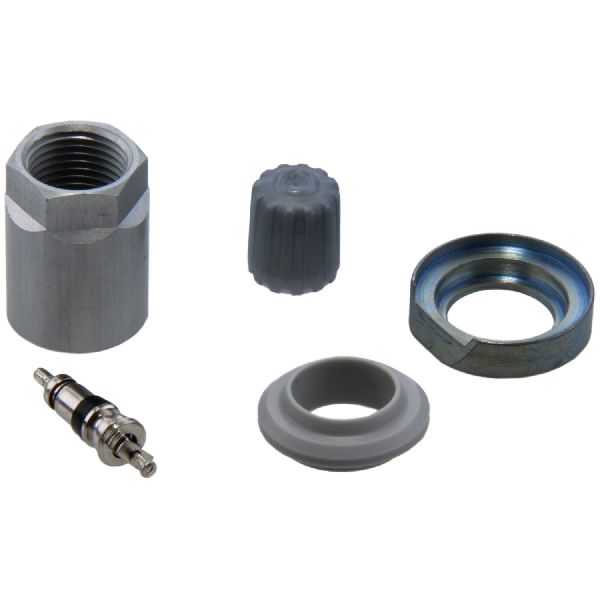
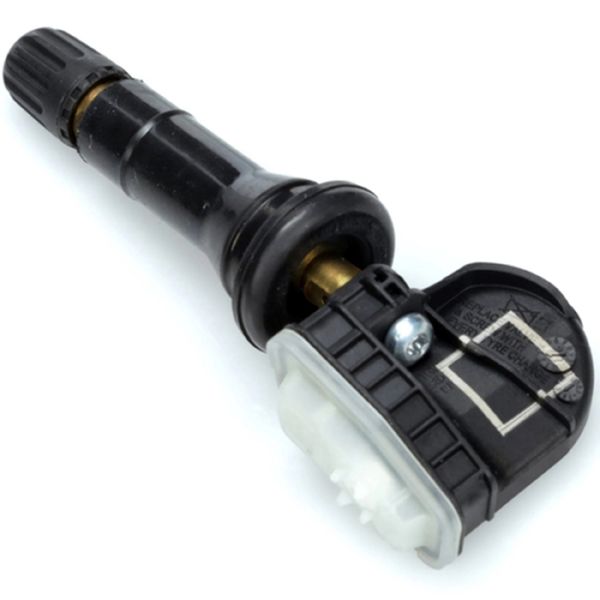
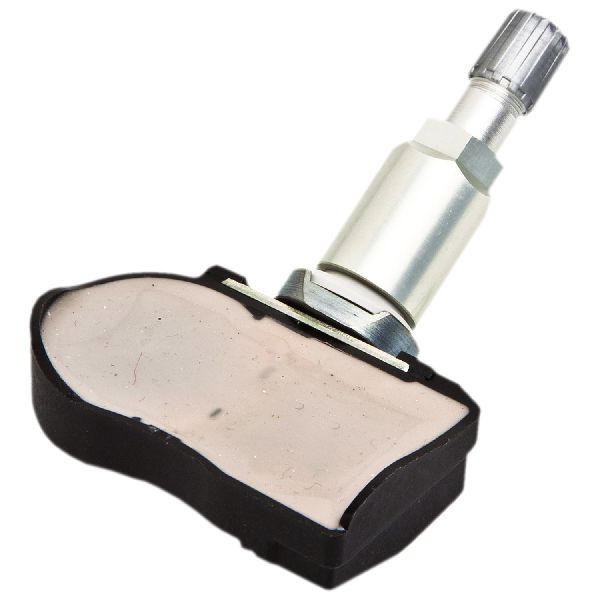
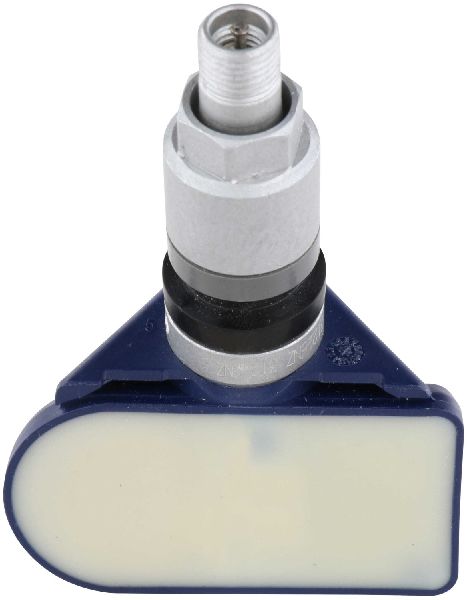
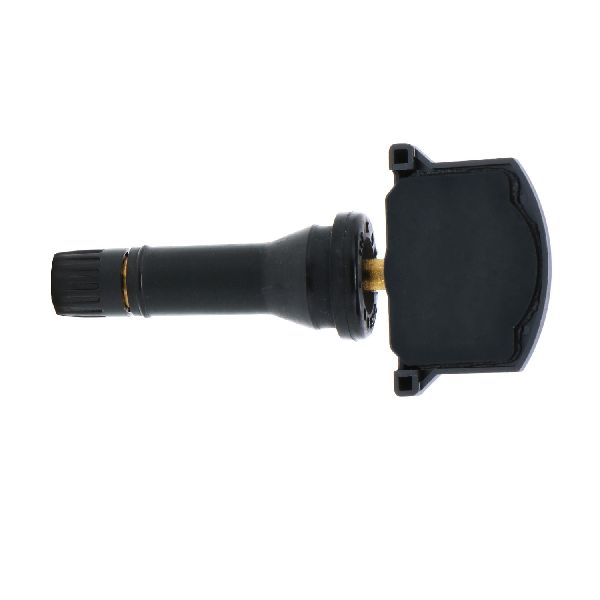
- Tire Pressure Monitoring System (TPMS) Sensor
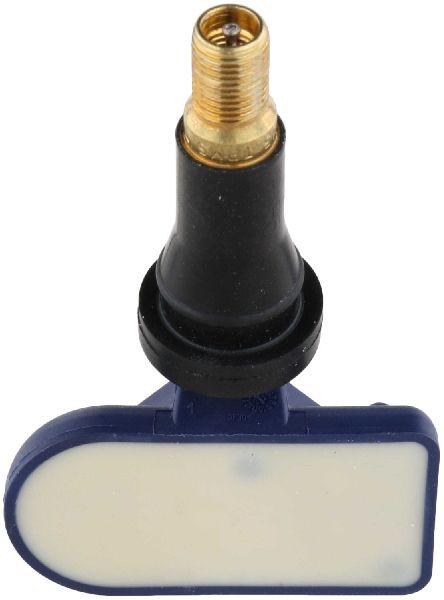
(OEM #13598773)— This is the most common failure point, usually due to an exhausted internal battery with a 5-10 year lifespan. This part operates at 433 MHz.
Trusted brands: ACDelco (GM OE), Schrader, Continental/VDO
OEM price range: $50-$80
Aftermarket price range: $30-$55 - Remote Control Door Lock Receiver (RCDLR)
(OEM #20803735)— This module is the known cause for the combined TPMS and security/no-start issues as per GM service bulletins. It receives signals from both the TPMS sensors and key fobs. This part number supersedes many previous versions.
Trusted brands: ACDelco (GM Genuine)
OEM price range: $185-$340
Related Codes That Often Appear With This One
- C0750 — Fault code for the Left Front TPMS sensor. Often appears with C0755 if there is a systemic issue like a failing RCDLR module.
- C0760 — Fault code for the Left Rear TPMS sensor.
- C0765 — Fault code for the Right Rear TPMS sensor.
- B3055 — A security system code related to the key transponder. Its presence alongside C0755 strongly points to a faulty RCDLR or RFI as described in TSB PIC5650M.
- U0422 — Indicates invalid data received from the Body Control Module. This can occur when the RCDLR fails and stops sending proper signals to the BCM.
Technical Service Bulletins (TSBs) & Recalls
- PIC5650M: Addresses a no crank, no start, or start stall concern with the security light coming on, accompanied by DTCs B3055, B3060, B3935, C0750, C0755, C0760, C0765, and/or C0775.
- 16-NA-396: Details intermittent key fob operation and TPMS codes C075x due to an internal RCDLR fault, requiring module replacement.
- PIT5446A: Outlines diagnosis for TPMS/RKE issues caused by a disconnected RCDLR antenna coax cable.
- PI1085: An earlier bulletin for 2012-2013 vehicles with similar poor RKE range and TPMS issues, also recommending RCDLR replacement.
Platform-Specific Known Issues
- TSB PIC5650M: No-Start/Stall with TPMS & Security Codes: Documents an issue where a combination of TPMS codes (C075x) and security codes (B3055, etc.) can be caused by either RFI from aftermarket accessories or a faulty RCDLR, leading to a no-crank, no-start, or stall condition.
- TSB 16-NA-396: Intermittent Key Fob & TPMS Faults: Addresses intermittent operation of key fobs, "No Remote Detected" messages, and TPMS lights with codes C0750, C0755, C0760, C0765. It identifies the cause as an internal failure of the RCDLR and instructs technicians to replace the module.
- Recall 18V509 (GM #18255): Some 2018 models had an incorrectly calibrated RCDLR that would trigger the TPMS light at the wrong pressure (37 psi instead of 41 psi). The fix was to reprogram the RCDLR with the correct values.
- TSB PIT5446A: Antenna Connection Issues: Details how a poor or disconnected RCDLR antenna coax cable can cause "Service Tire Monitor System" messages, dashes for tire pressures, and poor key fob range. It advises checking connections before replacing parts.
Mechanic-Grade Diagnostic Values
- RCDLR Power Supply Voltage — expected: ~12.6V (Battery Positive Voltage). Failure: 0V or significantly low voltage indicates an open in the power circuit or a blown fuse (often labeled 'DSM' or 'RDO/S-BAND/VICS' in the instrument panel fuse block).
- RCDLR Ground Circuit Resistance — expected: Less than 1.0 Ohm. Failure: High resistance or an 'OL' (Open Loop) reading on a multimeter indicates a poor or broken ground connection, which can cause intermittent module operation.
Hidden / Shadow Codes Worth Checking
- C0755 :03: Right Front Tire Pressure Sensor Low Voltage. This symptom byte strongly suggests the internal battery of the TPMS sensor has failed. (see via GM GDS2 or other professional scan tool capable of reading manufacturer-specific symptom bytes.)
- C0755 :29: Right Front Tire Pressure Sensor Too Few Pulses. TSB 16-NA-396 directly links this symptom byte to an internal failure of the RCDLR module, not the sensor itself. (see via GM GDS2 or other professional scan tool capable of reading manufacturer-specific symptom bytes.)
- C0755 :39: Right Front Tire Pressure Sensor Internal Malfunction. This points to a fault within the sensor's electronics, separate from just a low battery. (see via GM GDS2 or other professional scan tool capable of reading manufacturer-specific symptom bytes.)
Scan Tool Commands That Help
- GDS2 (GM): Module Diagnostics > RCDLR > Configuration/Reset Functions > Replace and Reprogram ECU — This function is mandatory after replacing the RCDLR. It programs the new module to the vehicle's BCM and immobilizer system.
- GDS2 (GM): Module Diagnostics > RCDLR > Data Display — Used to view live data from the RCDLR, including the received signal status of each TPMS sensor and key fobs. This helps confirm if the module is receiving signals at all.
- GDS2 (GM): Module Diagnostics > RCDLR > Special Functions > TPM Sensor Learn — Used to initiate the TPMS relearn procedure, teaching the system the new sensor IDs and their locations after sensor replacement or tire rotation.
Wiring & Ground Locations
- RCDLR Connector — Located under the top center of the dashboard, above and behind the instrument panel cluster. It is a 16-pin connector.. This is the primary point for testing power (Pin 8, typically Red/White wire) and ground (Pin 16, typically Black wire) directly at the module to rule out wiring issues before condemning the RCDLR.
- G218 / G219 — Common instrument panel ground points located under the dashboard, often near the A-pillars or steering column support.. A loose or corroded instrument panel ground can cause intermittent RCDLR failure and a host of other seemingly unrelated electrical issues. Verifying ground integrity is a key step.
- RCDLR Antenna Coaxial Cable — Runs from the RCDLR module under the dash to the antenna, which is typically integrated into the right rear quarter glass.. Damage to this shielded cable, such as pinching or a loose connection at either end, will prevent the RCDLR from receiving signals from the TPMS sensors and key fobs, mimicking a failed module.
Real Owner Repair Stories
- Chevrolet Forum user (2016 Chevrolet Express Van) — TPMS light on with codes C0755 and C0765, intermittent no-start condition, and key fobs not working.
❌ Tried (didn't work) Replacing the TPMS sensors., Replacing the key fob batteries.
✅ What actually fixed it The owner replaced the Remote Control Door Lock Receiver (RCDLR) module and had it programmed by a dealer. This single repair resolved all symptoms, including the TPMS codes and the no-start condition. - Mechanic case study (2011 Chevrolet Silverado (similar system)) — Remotes don't work, no communication with RCDLR on scan tool.
❌ Tried (didn't work) Initially ordered a new RCDLR module assuming it had failed.
✅ What actually fixed it Before installing the new part, a voltage test at the RCDLR connector found no power on the Red/White wire. The fault was traced to a break in the power wire between the fuse box and the module. Repairing the wire restored power and function without needing to replace the module.
OEM Part Supersession History
25974398, 22860421, 15946938, 25855007→20803735— Part consolidation and design updates to improve reliability.20803735→84430153— Further design revision and part number update in the GM catalog.
Heads up: Always verify the correct part number with a VIN at a GM dealer, as different frequencies and options may apply. Using the wrong part may cause programming failure or inoperation.
Model Year Variations Within This Range
- 2018: A specific recall (GM #18255, NHTSA #18V509) was issued for some 2018 models due to an incorrect RCDLR software calibration that caused the TPMS light to illuminate at the wrong pressure. The fix was a software update (reprogramming) of the existing RCDLR, not a part replacement.
- 2015-2017: Earlier models in this range were more likely to be equipped from the factory with older, less reliable versions of the RCDLR (e.g., 22860421, 25974398) that were later superseded. Later models (2019+) likely came with more robust, updated part numbers.
Helpful Videos
We Have This Part in Stock

The information in this article is provided for general reference and educational purposes only. Vehicle specifications, procedures, and part compatibility can vary by production date, trim level, and region. Always consult your vehicle's factory service manual and verify part numbers before purchasing or performing repairs. Safety-critical components such as airbags, seat belts, and braking systems should be installed by a qualified professional.
- Chevrolet EXPRESS 3500:
- 🧭 Diagnostic Flowchart
- 🎬 Helpful Videos
- 🛍️ Shop This Part
- What's Unique About the 2015-2022 Chevrolet EXPRESS 3500
- Symptoms You May Notice
- Most Likely Causes
- Diagnosis Steps
- Parts You'll Likely Need
- Related Codes That Often Appear With This One
- Technical Service Bulletins (TSBs) & Recalls
- Platform-Specific Known Issues
- Mechanic-Grade Diagnostic Values
- Hidden / Shadow Codes Worth Checking
- Scan Tool Commands That Help
- Wiring & Ground Locations
- Real Owner Repair Stories
- OEM Part Supersession History
- Model Year Variations Within This Range
- 🎟️ Get 5% Off