

C0755 on 2015-2022 Chevrolet Suburban: Right Front TPMS Fault Causes and Fixes
Code C0755 on a 2015-2022 Suburban means there's a problem with the right front tire pressure sensor. The most common fix is to replace the sensor, which has a battery life of about 10 years. If key fob issues are also present, the fault is likely the Remote Control Door Lock Receiver (RCDLR). Expect to pay $40-$80 for an aftermarket sensor or $60-$100 for an OEM one, plus labor for tire dismounting.
- C0755 means the right front TPMS sensor has failed, most likely due to an expired battery.
- You will need a TPMS activation tool (around $15 online) to perform the relearn procedure and confirm the sensor is bad.
- Replacing the sensor requires having a tire shop break the bead of the tire.
- If you also have issues with your key fob not being detected, the problem is likely the Remote Control Door Lock Receiver (RCDLR), not the sensor itself.
What's Unique About the 2015-2022 Chevrolet SUBURBAN
On this generation of Suburban (and its platform mates like the Tahoe, Yukon, and Escalade), the TPMS sensors communicate with the Remote Control Door Lock Receiver (RCDLR), the same module that receives signals from your key fob. Because of this shared component, a failing RCDLR can cause TPMS codes like C0755, often accompanied by key fob problems like the 'No Remote Detected' message. GM has issued service bulletins (like #PIT5446A, #16-NA-061, and #16-NA-396) highlighting this connection, making it a crucial diagnostic point that is often missed.
Diagnostic Flowchart
Tap your situation to follow the diagnostic path that matches what you're seeing on this vehicle.
Generation note: This range covers the end of the 11th generation (2015-2020, K2XX platform) and the start of the 12th generation (2021-2022, T1XX platform). The direct TPMS architecture, where sensors signal the RCDLR which then communicates with the BCM, is consistent across both generations, as are the common causes for code C0755. The key fob battery type changed between generations, from CR2032 (2015-2020) to CR2450 (2021-2022).
🎬 Watch: How to replace the battery in your 2015-2020 key fob.Symptoms You May Notice
- Tire pressure monitor indicator light is illuminated on the instrument cluster (flashes for approximately one minute at startup, then stays solid).
- "Service Tire Monitor System" message appears on the Driver Information Center (DIC).
- The pressure reading for the right front tire shows dashes (--) on the DIC.
- Intermittent problems with the key fob (inoperative lock/unlock, remote start failure) or passive entry system.
- "No Remote Detected" message on the DIC, especially when multiple TPMS codes are present.
- Replacing the tire itself. The tire has no bearing on the sensor's electronic function.
- Assuming the TPMS warning light is for low pressure without checking for codes. A flashing light indicates a system fault, not low pressure.
- Replacing a single TPMS sensor when multiple TPMS codes are present. This scenario strongly points to a central receiver issue (RCDLR) rather than multiple simultaneous sensor failures.
Most Likely Causes
- Dead or Failing TPMS Sensor 🔴 High Probability → Shop Tire Pressure Monitoring System (TPMS) Sensor The sensor's internal, non-replaceable battery has a finite lifespan, typically around 10 years. Vehicles from the beginning of this year range (2015-2016) are now at an age where battery failure is a very common cause of this code.
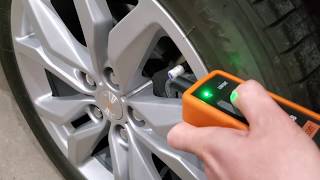
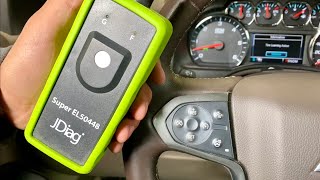
How to confirm: Use a TPMS activation tool (like an EL-50448) during the vehicle's relearn procedure. If the tool cannot trigger a response from the right front sensor (indicated by no horn chirp), the sensor is bad. 🎬 See how to use the EL-50448 tool to test sensors. A professional scan tool can also read sub-codes or symptom bytes like 'Low Voltage' or 'Too Few Pulses' which point to a sensor failure.
Typical fix: Replace the right front TPMS sensor and perform the TPMS relearn procedure.
Est. part cost: $40-$100 - Faulty Remote Control Door Lock Receiver (RCDLR) 🟡 Medium Probability → Shop Keyless Entry Receiver As documented in GM Technical Service Bulletins #16-NA-396 and #16-NA-061, the RCDLR module, which receives signals from both the TPMS sensors and key fobs, can fail internally, causing a loss of communication. This is a known issue on this platform.
How to confirm: This is often diagnosed when a new TPMS sensor does not fix the issue, or when TPMS codes appear alongside key fob problems like 'No Remote Detected'. A professional scan tool will show a 'No Communication' status with the RCDLR. The diagnosis is confirmed if multiple TPMS codes (C0750, C0755, C0760, C0765) are present simultaneously.
Typical fix: Replace the RCDLR module. This requires programming by a dealer or qualified shop to sync with the vehicle and key fobs. The RCDLR is typically located in the rear of the vehicle, often behind the D-pillar trim panel on the driver's side. On the K2XX platform, it is specifically located in the headliner above the 2nd/3rd row seats.
Est. part cost: $70-$150 - Radio Frequency (RF) Interference ⚪ Low Probability The TPMS sensors transmit a weak radio signal that can be disrupted by other devices. Aftermarket accessories like phone chargers, dash cams, or even some types of metallic window tint can interfere with the RCDLR's ability to receive the signal. GM TSB PIC5650M specifically calls out this issue.
How to confirm: Unplug all aftermarket 12-volt accessories and remove any metallic window tint. Clear the codes and drive the vehicle to see if the fault returns. If the code disappears, one of the accessories was the cause. An RFI detector can also be used to pinpoint the source.
Typical fix: Remove or relocate the source of the RF interference.
Est. part cost: $0
Rare But Worth Checking
- Damaged TPMS Sensor: → Shop Tire Pressure Monitoring System (TPMS) Sensor The sensor can be physically damaged during a tire change or by hitting a large pothole. This is less common than battery failure but should be considered if the fault appeared immediately after a tire service.
- Faulty Body Control Module (BCM): → Shop Body Control Module While the RCDLR is the primary receiver, the BCM processes the data. A BCM failure is rare but possible if all other components have been ruled out. This is an expensive repair and requires programming.
- Disconnected RCDLR Antenna Coax Cable: TSB #16-NA-061 and #PIT5446A detail how the antenna system for the RCDLR can become disconnected at one of three points: at the RCDLR module itself, at the antenna amplifier module, or where the amplifier connects to the antenna in the right rear quarter glass. A disconnected coax at the amplifier can cause intermittent loss of signal from the sensors furthest away, like the right front.
Diagnosis Steps
- Read the codes with an OBD-II scanner capable of reading BCM/Chassis codes to confirm C0755 is the active fault. Note any other TPMS or keyless entry codes.
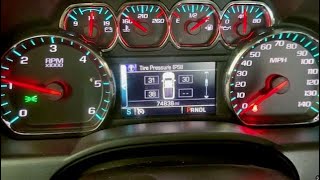
- Check the tire pressure display on the Driver Information Center (DIC). Confirm the right front reading is blank or shows dashes.
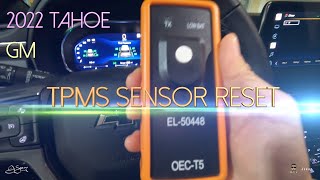
- Initiate the TPMS relearn procedure. On the DIC, navigate to the tire pressure screen, then press and hold the center checkmark button until the horn chirps twice. 🎬 Watch: How to initiate the TPMS reset on a Suburban. The left front turn signal will illuminate.
- Using a TPMS activation tool (like an EL-50448), start at the left front tire and proceed clockwise (LF -> RF -> RR -> LR). Hold the tool against the tire sidewall near the valve stem and press the button.
- Listen for a horn chirp at each wheel. If the horn chirps for the other three sensors but not for the right front, the right front sensor is faulty and needs replacement.
- If a new sensor does not resolve the issue, or if multiple TPMS codes (C0750, C0755, etc.) and/or key fob issues are present, the RCDLR is the primary suspect.
- Per TSB #16-NA-061, inspect the RCDLR antenna system. The RCDLR is typically in the rear driver's side D-pillar. Check the coax cable connection at the module itself, at the antenna amplifier (located under the trim on the passenger side rear quarter glass), and at the antenna in the right rear quarter glass.
- If wiring is secure, the RCDLR module is the likely culprit and should be replaced and programmed by a professional.
Parts You'll Likely Need
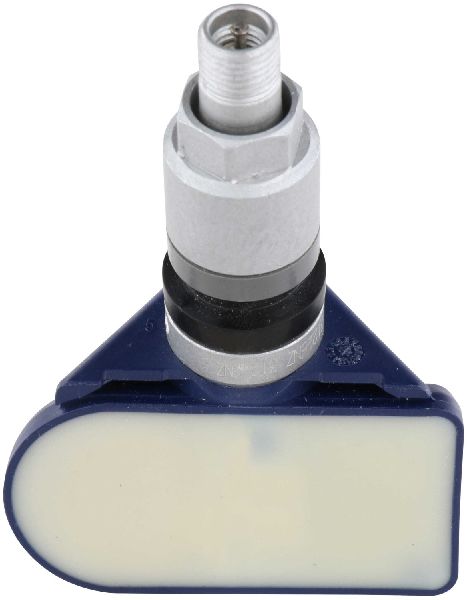
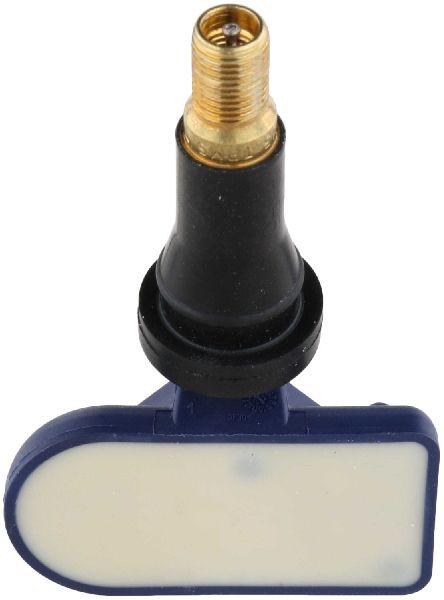
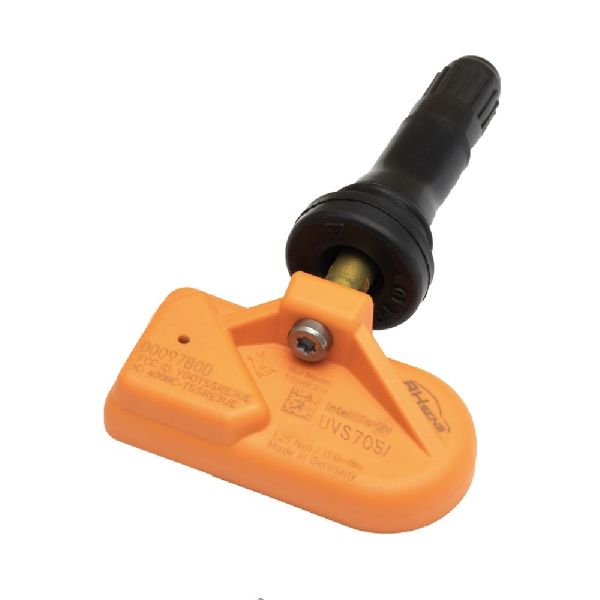
- Tire Pressure Monitoring System (TPMS) Sensor
(OEM #13542523)— This is the most common failure point due to the sensor's limited battery life of around 10 years. It is the direct component identified by code C0755. This part number supersedes 13533166 and 13549919.
Trusted brands: ACDelco, GM Genuine Parts, Schrader, Bosch, Huf
OEM price range: $60-$100
Aftermarket price range: $20-$80 - Remote Control Door Lock Receiver (RCDLR)
(OEM #13595511)— This module is the second most likely cause, especially if multiple TPMS codes or key fob issues are present, as documented in GM service bulletins #16-NA-396 and #16-NA-061. This part number is specified as the replacement for the original part 13509518 in TSB #16-NA-396.
Trusted brands: GM Genuine Parts
OEM price range: $70-$150
Related Codes That Often Appear With This One
- C0750 — Relates to the Left Front TPMS sensor. Seeing multiple TPMS codes together (C0750, C0755, C0760, C0765) points more strongly toward a central issue like a faulty RCDLR module rather than multiple simultaneous sensor failures.
- C0760 — Relates to the Left Rear TPMS sensor. Seeing multiple TPMS codes together points toward a central issue like a faulty RCDLR module.
- C0765 — Relates to the Right Rear TPMS sensor. Seeing multiple TPMS codes together points toward a central issue like a faulty RCDLR module.
- B3055 — This code relates to the key fob transponder not being read. Since the RCDLR handles both TPMS and key fob signals, seeing B3055 and C0755 together is a strong indicator that the RCDLR is the root cause, as noted in TSB #PIC5650M.
Technical Service Bulletins (TSBs) & Recalls
- PIC5650M: Mentions C0755 in a list of codes related to no-start or start/stall conditions, pointing to a potential BCM or security system link.
- PIT5446A: Directly links C0755 (and other TPMS codes) to the tire pressure sensors and instructs checking the Remote Control Door Lock Receiver (RCDLR) antenna system before part replacement. This TSB is superseded by 16-NA-061.
- 16-NA-396: Details how an internal failure of the RCDLR can cause intermittent key fob issues and set TPMS codes C0750, C0755, C0760, and C0765. Specifies replacement of the RCDLR module.
- 16-NA-061: Provides detailed diagnostic steps for checking the RCDLR antenna system, including the coax cable and amplifier, as a potential cause for TPMS codes and poor key fob range.
Platform-Specific Known Issues
- Per TSB #16-NA-061 (which supersedes PIT5446A), a disconnected coax cable for the RCDLR antenna system is a known issue. A disconnect at the antenna amplifier may only affect the sensors furthest away (like the right front), while a disconnect at the RCDLR module itself will cause all sensors and the key fob to fail.
Hidden / Shadow Codes Worth Checking
- Symptom Code 29: Too Few Pulses. This sub-code indicates the sensor is transmitting but the signal is weak or incomplete, often due to a failing battery or internal fault. (see via A professional GM-specific scan tool like a Tech2 or software like GDS2 is required to view these symptom bytes.)
Scan Tool Commands That Help
- GDS2 / Tech 2: Copy and Paste TPM Information — When replacing the RCDLR module, this function allows the technician to copy the existing tire pressure sensor IDs from the old module and paste them into the new one. This avoids the need to perform a full, manual TPMS relearn procedure for all four wheels.
Wiring & Ground Locations
- RCDLR Module — For the 2015-2020 (K2XX) Suburban, the RCDLR is located in the headliner, above the second and third-row seats. Access requires removing the headliner.. This is the central receiver for all TPMS and key fob signals. A failure or poor connection here is a primary cause of C0755, especially when accompanied by other TPMS codes or key fob issues.
- RCDLR Antenna Amplifier — Attached to the passenger side (right) rear quarter glass, underneath the interior trim panel.. This module boosts the signal from the antenna in the glass before sending it to the RCDLR via a coax cable. TSB #16-NA-061 notes that a disconnected coax cable at this amplifier is a common failure point that can cause intermittent loss of signal from the sensors furthest away, such as the right front.
- Rear Body Grounds (G400 series) — Ground points in the rear of the vehicle, typically on the frame behind the rear tires or behind the D-pillar trim panels, are used by rear-mounted modules like the RCDLR. For example, G402 may be behind the right D-pillar trim.. A poor or corroded ground connection for the RCDLR can cause intermittent operation or complete failure, leading to TPMS and keyless entry faults.
Real Owner Repair Stories
- Chevrolet Forum user cherie1109 (2013 Chevy Suburban 1500 (similar K2XX architecture)) — RCDLR went bad, causing TPMS and key fob issues.
❌ Tried (didn't work) Attempting a manual key fob relearn procedure (turning key 8 times) did not work after replacing the RCDLR.
✅ What actually fixed it Replacing the RCDLR immediately fixed the TPMS issue, but the key fobs remained inoperative. The user was stuck because the new module required professional programming to relearn the key fobs; the DIY methods were not sufficient for the new module.
OEM Part Supersession History
13509518→13595511— Updated part to address internal failures causing intermittent TPMS and key fob issues, as referenced in TSBs like #16-NA-396.13595511→13540045— Standard part number evolution and component updates by the manufacturer.
Model Year Variations Within This Range
- 2015-2020 (K2XX Platform): These models use the K2XX architecture. The RCDLR is located in the headliner. The key fob uses a CR2032 battery.
- 2021-2022 (T1XX Platform): These models use the newer T1XX platform with the Global B electrical architecture. While the TPMS/RCDLR system functions similarly, part numbers and module locations may differ slightly. The key fob for this generation uses a CR2450 battery.
Helpful Videos
We Have This Part in Stock

The information in this article is provided for general reference and educational purposes only. Vehicle specifications, procedures, and part compatibility can vary by production date, trim level, and region. Always consult your vehicle's factory service manual and verify part numbers before purchasing or performing repairs. Safety-critical components such as airbags, seat belts, and braking systems should be installed by a qualified professional.
- Chevrolet SUBURBAN:
- 🧭 Diagnostic Flowchart
- 🎬 Helpful Videos
- 🛍️ Shop This Part
- What's Unique About the 2015-2022 Chevrolet SUBURBAN
- Symptoms You May Notice
- Most Likely Causes
- Rare But Worth Checking
- Diagnosis Steps
- Parts You'll Likely Need
- Related Codes That Often Appear With This One
- Technical Service Bulletins (TSBs) & Recalls
- Platform-Specific Known Issues
- Hidden / Shadow Codes Worth Checking
- Scan Tool Commands That Help
- Wiring & Ground Locations
- Real Owner Repair Stories
- OEM Part Supersession History
- Model Year Variations Within This Range
- 🎟️ Get 5% Off